
 Click main image to view in full screen. Unlock all 32 preview images:
Design Thinking Essentials: 1-Day Workshop Slide Deck – PowerPoint PPTX Template
PowerPoint (PPTX) 108 Slides


BENEFITS OF THIS DOWNLOADABLE POWERPOINT DOCUMENT
- Align Teams Instantly: Establish a shared human-centered language to standardize customer experiences across every department, from initial login to final support.
- Accelerate Practical Innovation: Rapidly identify friction points and prototype immediate improvements for modern digital and retail journeys in a single, high-impact day.
- Stop Service Revenue Leaks: Minimize the hidden "cost of inaction" by optimizing customer touchpoints to reduce inefficiencies and boost long-term retention.
DESIGN THINKING PPT TEMPLATE DESCRIPTION
DESIGN THINKING ESSENTIALS: 1-DAY WORKSHOP FOR SERVICE EXCELLENCE
Standardize your customer experience from login to support. This high-impact, one-day essentials workshop is engineered to align customer-facing teams around a common human-centered language. By focusing on modern digital and retail personas, this resource provides a streamlined path to identifying friction points and prototyping immediate improvements in the service journey.
The Challenge of Rising Service Expectations
In an era of digital modernization, regulators and customers alike are demanding faster, simpler, and more transparent services. Failing to adapt risks organizational irrelevance and significant human impact—where process delays frustrate staff and customers, ultimately eroding brand trust. Small unresolved service frictions compound into a high "cost of inaction," draining time, money, and team energy if left unaddressed.
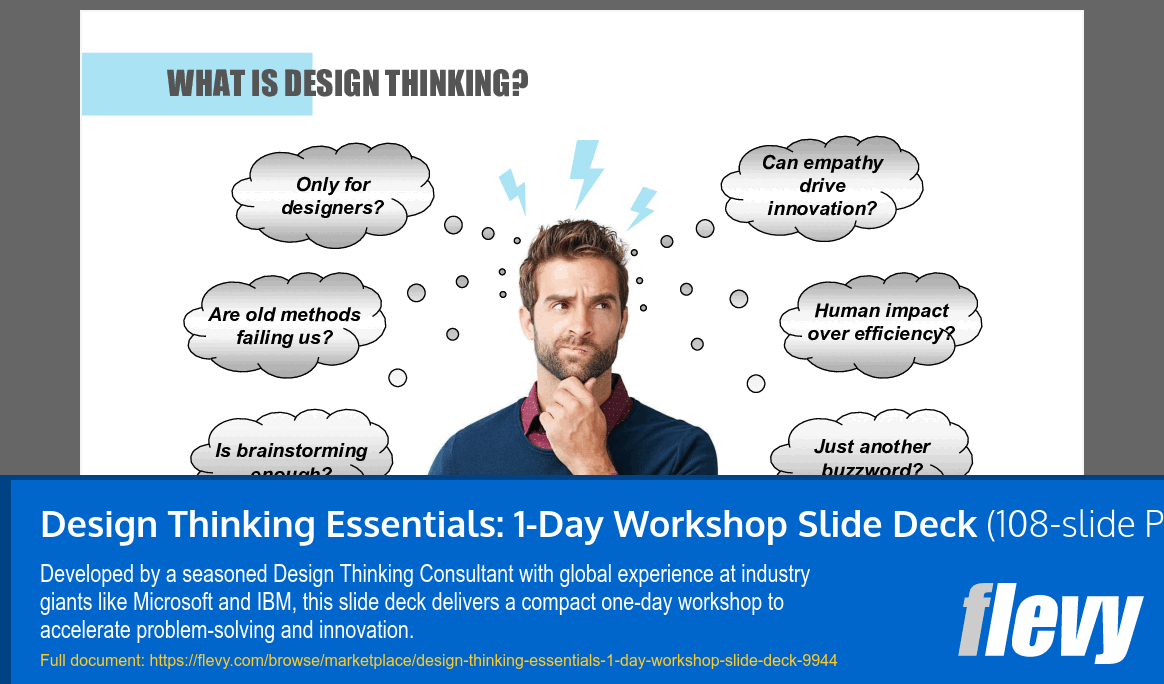
What is Design Thinking?
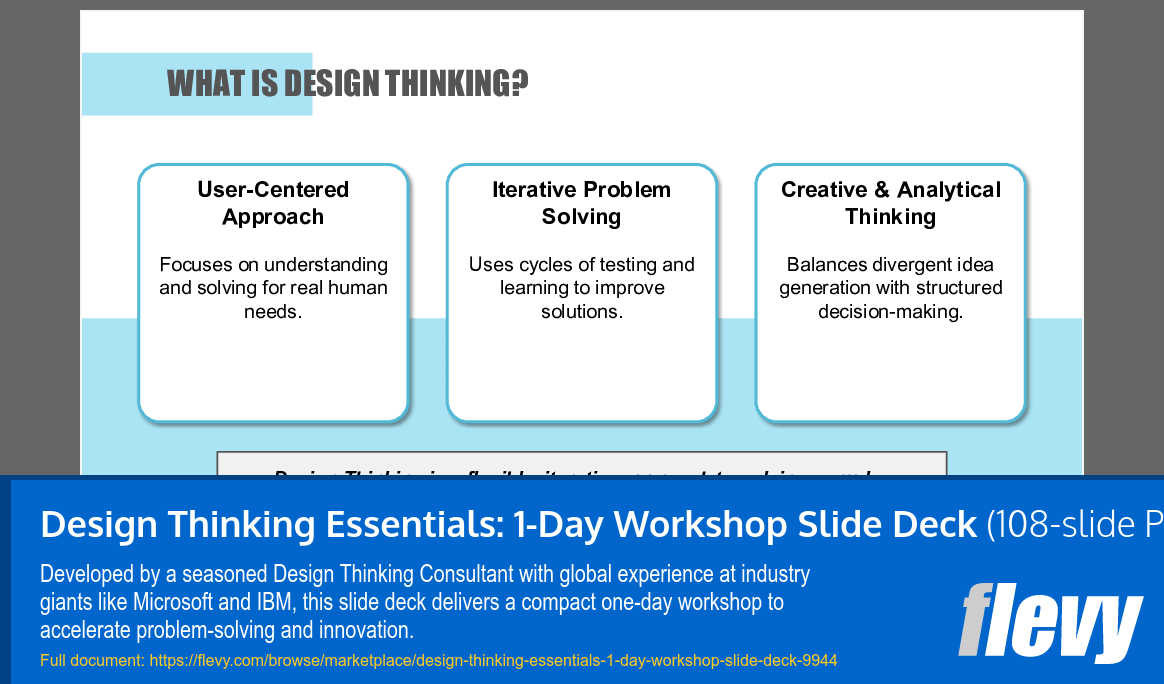
Design Thinking is a flexible, human-centered, and iterative approach to solving complex service problems using empathy and creativity. It balances creative and analytical thinking to ensure that service innovations meet the three critical lenses of success: Desirability (what people need), Feasibility (what is technically possible), and Viability (what is sustainable for the organization).
Benefits of the 1-Day Essentials Workshop
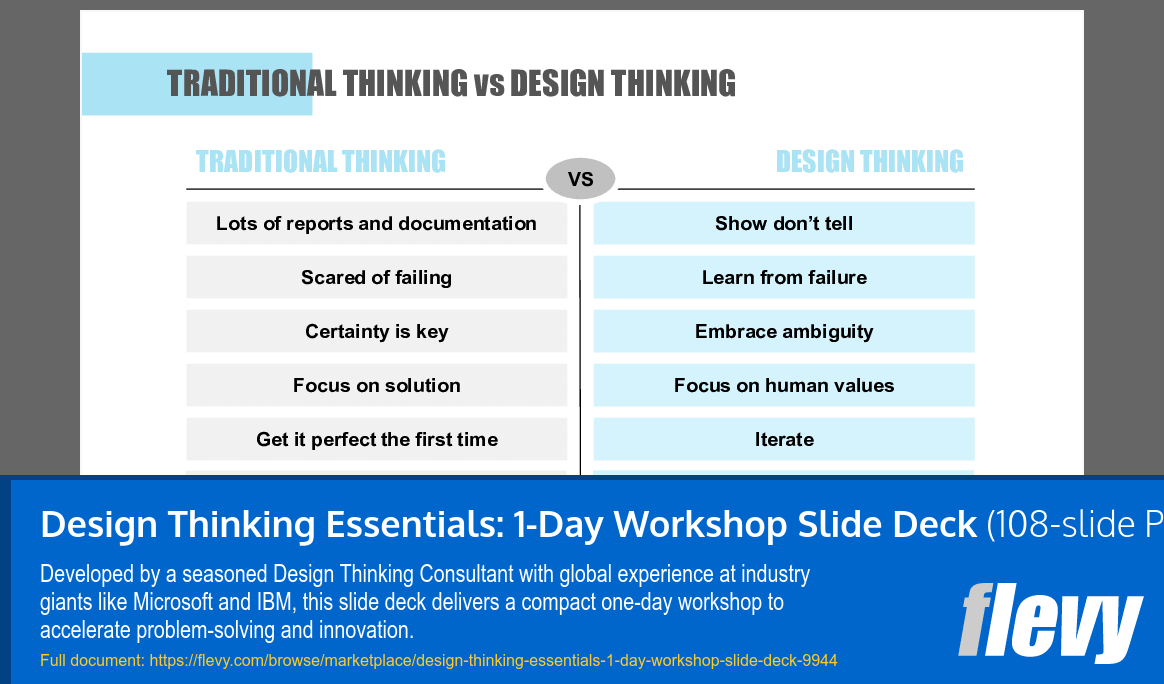
By utilizing this presentation, your organization can foster a collaborative culture that breaks down departmental silos. You will graduate teams that no longer just "firefight" symptoms but instead possess a shared language for reducing inefficiencies and improving customer retention. This toolkit ensures your team moves faster from ideation to tangible action, resulting in cheaper decisions with significantly less rework.
TARGET AUDIENCE
This essentials workshop is strategically developed for Retail Managers, Digital Product Teams, Frontline Supervisors, and Customer Experience Leads. It is ideal for teams needing to quickly align on customer-facing workflows and those tasked with leading digital transformations in service-heavy environments.
LEARNING OBJECTIVES FOR SERVICE TEAMS
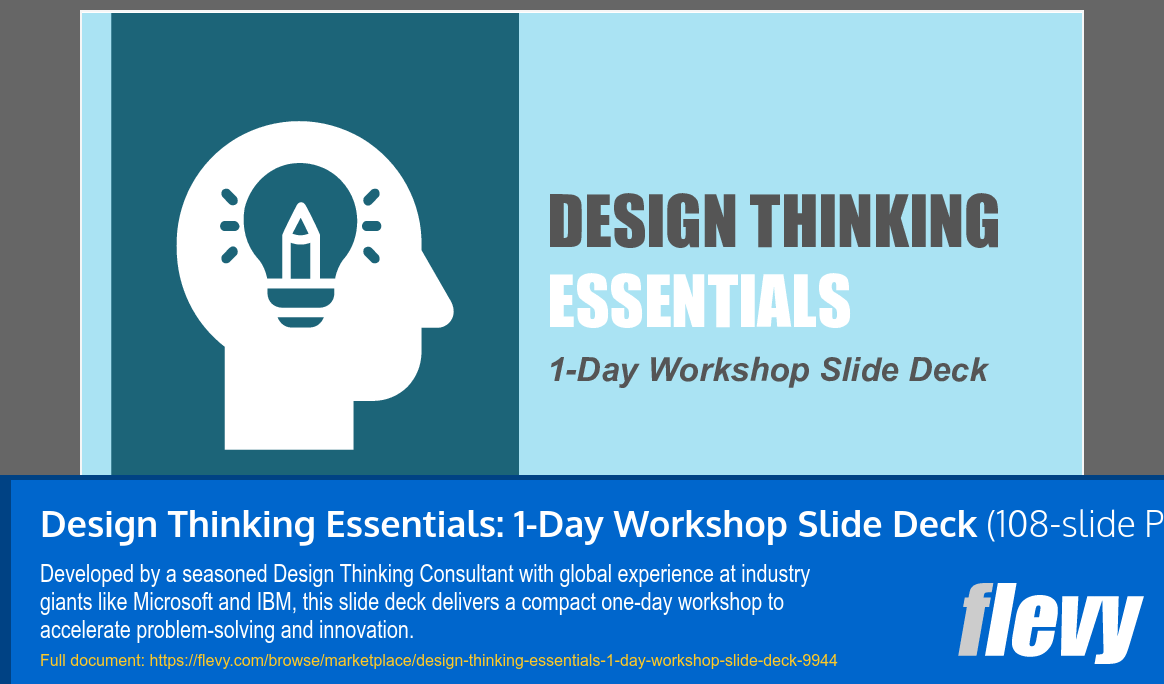
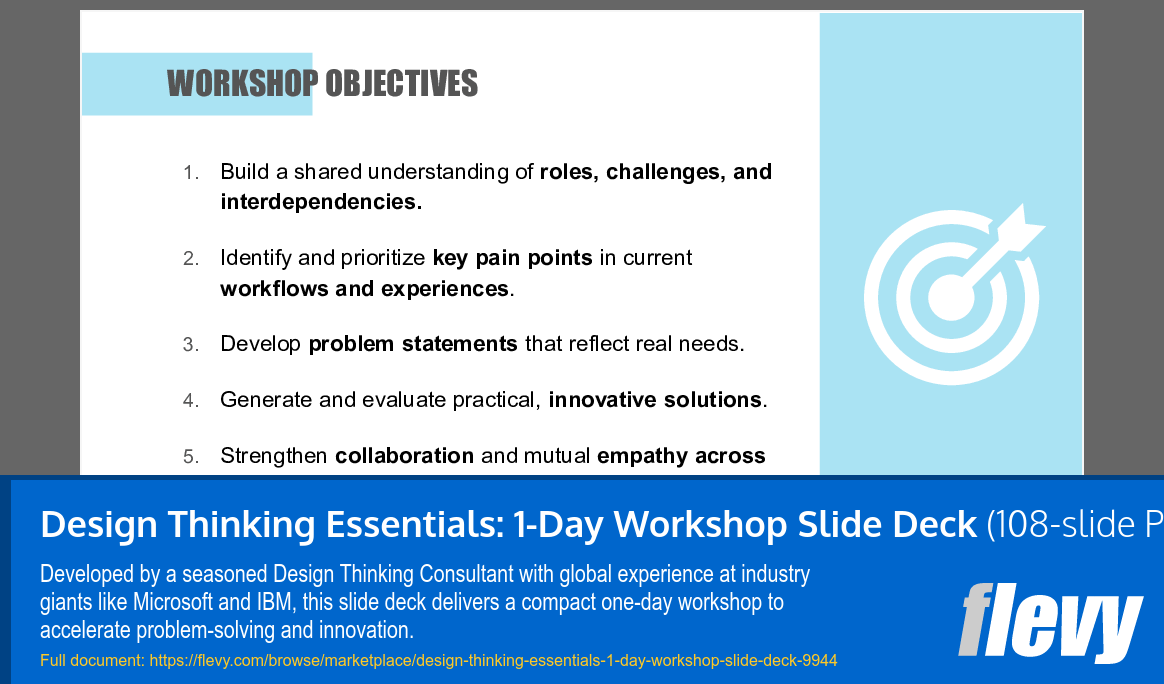
• Build Team Alignment: Establish a shared understanding of service roles, challenges, and interdependencies.
• Prioritize Pain Points: Identify key friction areas in current workflows and digital customer experiences.
• Develop Real POV Statements: Formulate problem statements that reflect actual human needs rather than rigid policy assumptions.
• Generate Practical Solutions: Use structured ideation to create innovative, actionable service fixes.
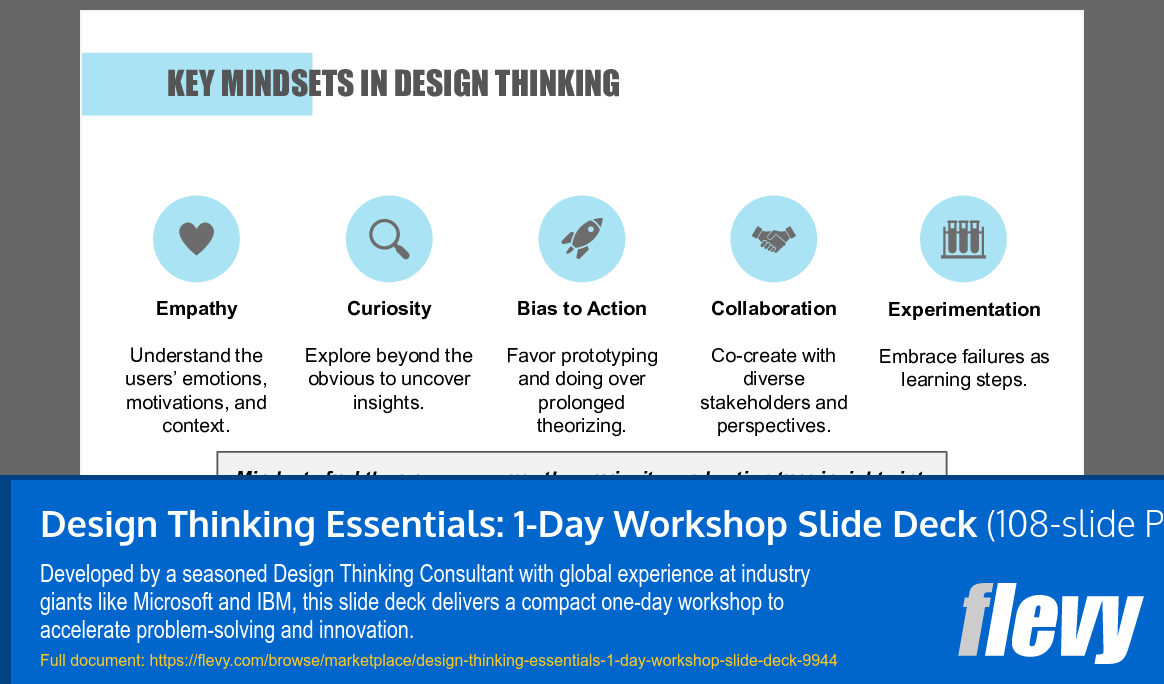
• Strengthen Collaboration: Enhance mutual empathy and co-creation across cross-functional service and support teams.
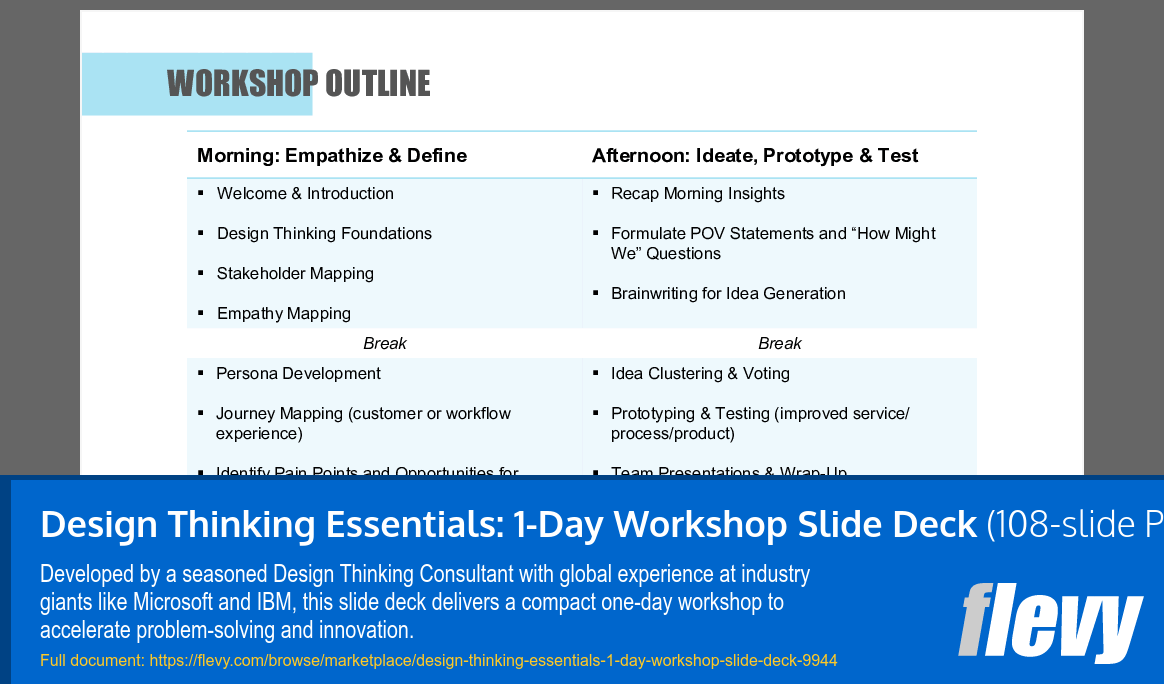
1-DAY TRAINING CURRICULUM
1. Foundations of Service Innovation: Understand the global benchmarks for user-first services and the risk of organizational irrelevance.
2. Service Stakeholder Mapping: Visualize the full service ecosystem, from internal IT support to external regulators.
3. Empathy Mapping & Personas: Deep-dive into modern service users like Emily (Online Shopper) and Rajesh (Digital Banking User) to understand their specific pains and gains.
4. Journey Mapping: Trace the end-to-end experience—from initial "Browsing" to "Post-Purchase Support"—to uncover emotional highs and lows.
5. Touchpoints vs. Channels: Learn to differentiate between interaction points and the mediums (mobile, branch, phone) that define them.
6. POV & "How Might We" Questions: Reframe pain points into springboards for innovation, such as simplifying secure login or providing real-time delivery visibility.
7. Service Prototyping: Bring concepts to life quickly through wireframing, storyboarding, or role-playing improved interactions.
8. Feedback & Testing: Gather real peer feedback to refine service concepts and ensure usability before final rollout.
Got a question about the product? Email us at support@flevy.com or ask the author directly by using the "Ask the Author a Question" form. If you cannot view the preview above this document description, go here to view the large preview instead.
PRESENTATION DEEP DIVE ANALYSIS
This deep-dive analysis was generated from the full 108-slide PowerPoint presentation.
Source: Best Practices in Design Thinking PowerPoint Slides: Design Thinking Essentials: 1-Day Workshop Slide Deck PowerPoint (PPTX) Presentation Slide Deck, Operational Excellence Consulting
ABOUT THE AUTHOR

Operational Excellence Consulting, founded in 2009 by Allan Ung, draws from extensive experience at Microsoft, IBM, and Underwriters Laboratories (UL). We specialize in strategy deployment, customer experience design, and operational excellence, applying Design Thinking, Lean, and Systems Thinking to maximize customer value and minimize waste.
Our
... [read more]
Ask the Author a Question
You must be logged in to contact the author.




























