
This framework is developed by a team of former McKinsey and Big 4 consultants. The presentation follows the headline-body-bumper slide format used by global consulting firms.
Editor Summary
21-slide PowerPoint presentation by PPT Lab titled "Dimensions of Core Competence" presenting a framework to identify and enhance organizational core competencies across 4 dimensions: Skills & Knowledge, Technical Systems, Managerial Systems, and Values & Norms.
Read moreIncludes deliverables and templates such as a Core Competence identification framework template, strategic intent articulation guide, competency enhancement action plan, managerial systems evaluation checklist, and values & norms assessment tool. Used by corporate executives, integration leaders, consultants, and business unit managers for strategic planning, workshops, and competency assessments; sold as a digital download on Flevy with immediate digital download.
Use this deck when your organization must define or realign the capabilities that underpin long-term competitive advantage — for example during strategic planning, post-merger integration, or capability-improvement workshops.
Corporate executives defining strategic intent and allocating resources to prioritized competencies during annual strategy reviews.
Integration leaders mapping and aligning managerial systems and technical systems across merged business units to preserve key capabilities.
Consultants facilitating competency clarification sessions and applying the three-step Core Competence Clarification to test candidate competencies.
Business unit managers identifying skills gaps and proposing targeted investments to strengthen core capabilities.
The three-step clarification approach, with tests for market access, customer benefit, and imitability, contrasts with outside-in tools like Porter’s Five Forces and the BCG Matrix.
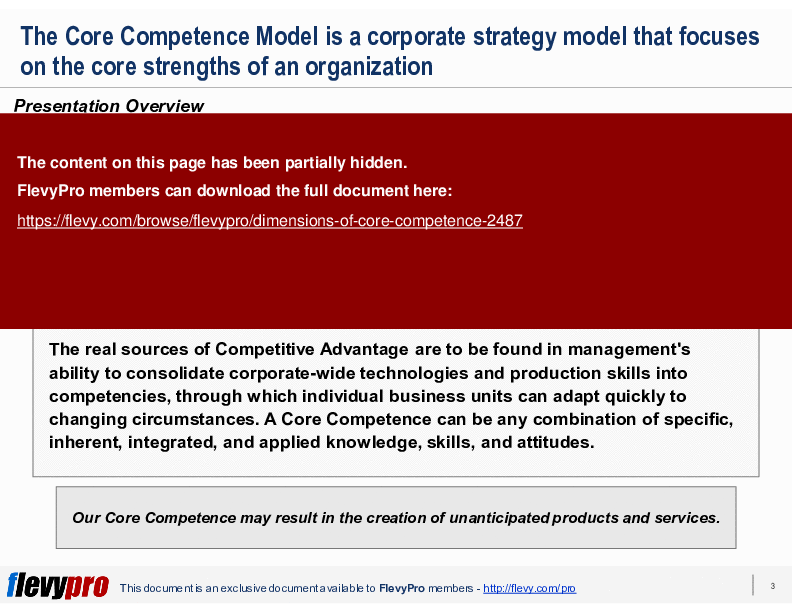
The Core Competence Model is a corporate strategy model that starts the strategy process by thinking about the core strengths of an organization.
Whereas the traditional outside-in approach (e.g. Porter’s Five Forces, BCG Matrix) places the market, competition, and customer at the starting point of the strategy process, the Core Competence Model does the opposite. It states that in the long run, competitiveness derives from an ability to build a Core Competence at lower cost and more quickly than competitors.
The real sources of Competitive Advantage are to be found in management's ability to consolidate corporate-wide technologies and production skills into competencies, through which individual business units can adapt quickly to changing circumstances. A Core Competence can be any combination of specific, inherent, integrated, and applied knowledge, skills, and attitudes. Our Core Competence may result in the creation of unanticipated products and services.
This presentation discusses the 4 dimensions of a Core Competence:
• Skills and Knowledge Base
• Technical Systems
• Managerial Systems
• Values & Norms
This PPT delves into the intricate process of identifying and clarifying Core Competencies, following a structured three-step approach. It emphasizes the importance of articulating Strategic Intent, setting challenges, and empowering the Strategic Intent to align the entire organization towards common goals. The presentation also provides three critical tests to identify Core Competencies, ensuring they provide access to multiple markets, revolve around customer benefits, and are difficult for competitors to imitate.
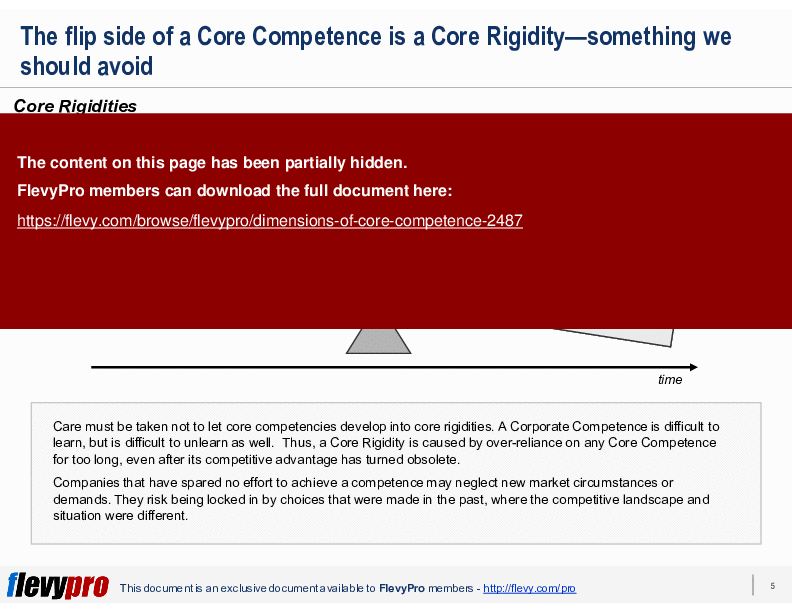
The document further explores the concept of Core Rigidity, cautioning against the pitfalls of allowing Core Competencies to become obsolete due to over-reliance. It highlights the need for continuous enhancement of Core Competencies by redesigning the organization's architecture. This resource is indispensable for executives aiming to build world leadership in fundamental competencies and avoid the stagnation that comes with Core Rigidities.
This synopsis was written by Marcus [?] based on the analysis of the full 21-slide presentation.
Executive Summary
The "Dimensions of Core Competence" presentation provides a comprehensive framework for understanding and leveraging core competencies within an organization. It emphasizes the importance of identifying and enhancing these competencies to maintain a competitive advantage in the market. By utilizing this presentation, corporate executives and consultants can effectively articulate their strategic intent, identify essential core competencies, and implement strategies to enhance these capabilities, ensuring long-term organizational success.
Who This Is For and When to Use
• Corporate executives focused on strategic planning and competitive advantage
• Integration leaders responsible for aligning organizational capabilities
• Consultants advising clients on competency development and strategic alignment
• Business unit managers seeking to optimize their team's performance
Best-fit moments to use this deck:
• During strategic planning sessions to define and align core competencies
• In workshops aimed at enhancing organizational capabilities
• When assessing the effectiveness of current competencies and identifying areas for improvement
Learning Objectives
• Define core competencies and their significance in organizational strategy
• Identify the 4 dimensions of core competence: skills & knowledge, technical systems, managerial systems, and values & norms
• Articulate a clear strategic intent that aligns with core competencies
• Enhance core competencies through targeted investments and resource allocation
• Foster a core competence mindset across the organization
Table of Contents
• Overview (page 3)
• Dimensions to a Core Competence (page 7)
• Core Competence Clarification (page 13)
• Core Competence Mindset (page 18)
Primary Topics Covered
• Core Competence Model - A strategic framework that emphasizes the importance of core competencies over traditional market-driven approaches.
• Four Dimensions of Core Competence - Skills & Knowledge, Technical Systems, Managerial Systems, and Values & Norms, which collectively define an organization’s capabilities.
• Core Competence Clarification Process - A structured approach to articulate strategic intent, identify, and enhance core competencies.
• Strategic Intent - The long-term vision that guides the development and enhancement of core competencies.
• Core Competence Mindset - Encouraging a culture that prioritizes collaboration and resource sharing across organizational boundaries.
Deliverables, Templates, and Tools
• Core Competence identification framework template
• Strategic intent articulation guide
• Competency enhancement action plan
• Managerial systems evaluation checklist
• Values and norms assessment tool
Slide Highlights
• Visual representation of the 4 dimensions of core competence
• Flowchart outlining the core competence clarification process
• Comparison table between Strategic Business Unit (SBU) and core competence thinking
• Key attributes of strategic intent and their importance
Potential Workshop Agenda
Core Competence Identification Session (90 minutes)
• Define strategic intent and its attributes
• Identify current core competencies and gaps
• Discuss potential enhancements and resource allocation
Core Competence Enhancement Workshop (60 minutes)
• Review existing competencies and their effectiveness
• Brainstorm strategies for investment in required technologies
• Develop action plans for infusing resources across business units
Customization Guidance
• Tailor the strategic intent section to reflect your organization’s specific goals and vision
• Adjust the core competence identification framework to align with industry-specific competencies
• Incorporate organizational values and norms into the assessment tools
Secondary Topics Covered
• The relationship between core competencies and competitive advantage
• The impact of managerial systems on knowledge creation and control
• Strategies for avoiding core rigidities that hinder adaptability
Topic FAQ
What are the core dimensions I should assess when mapping organizational competencies?
Core competency assessment typically covers 4 dimensions: Skills & Knowledge, Technical Systems, Managerial Systems, and Values & Norms. Evaluating each dimension helps reveal how embedded capabilities combine to create advantage, specifically the 4 dimensions listed in the model.
How should I define strategic intent when building competencies?
Strategic intent is a long-term vision that guides resource allocation and competency development, articulating the challenges the organization will pursue and the capabilities required. The presentation includes a strategic intent articulation guide to support this process.
What tests can I use to determine whether a capability qualifies as a core competence?
Use 3 critical tests: the capability should provide access to multiple markets, contribute significantly to customer benefits, and be difficult for competitors to imitate. The deck explains these 3 tests for identification.
What are core rigidities and how do they arise?
Core rigidities occur when organizations become overly reliant on existing competencies, reducing adaptability and causing stagnation; the presentation recommends redesigning organizational architecture to avoid such rigidity and preserve adaptability.
What features should I expect from a practical core-competence toolkit for executives?
A practical toolkit should include a clear core competence model, identification framework template, strategic intent guide, competency enhancement action plan, and evaluation tools for managerial systems and values, exemplified by the Core Competence identification framework template included in the deck.
How should I evaluate the cost versus value of buying competency templates and slide decks?
Evaluate whether templates accelerate workshop design, clarify strategic intent, and include actionable tools such as checklists and action plans; the "Dimensions of Core Competence" deck provides templates and a workshop agenda to judge relative value, including a managerial systems evaluation checklist.
How much facilitator time is typically needed to run a core-competence workshop with ready materials?
The presentation supplies sample agendas for common sessions, such as a 90-minute Core Competence Identification session and a 60-minute Core Competence Enhancement workshop, which define facilitator time and participant activities.
I need to align competencies across multiple business units after an acquisition — what approach should I take?
Start by articulating a shared strategic intent, identify candidate competencies using the 3 tests, evaluate managerial systems and technical systems for integration points, and plan resource infusions; the Core Competence Clarification process supports these steps.
How can managers actively enhance competencies rather than rely on existing strengths?
Managers should invest in required technologies, infuse resources across business units, pursue strategic alliances where needed, and redesign architecture to support knowledge flows and capability renewal, for example by following the competency enhancement action plan.
Document FAQ
These are questions addressed within this presentation.
What are core competencies?
Core competencies are the unique capabilities that provide a competitive advantage and are essential for achieving strategic goals.
How can we identify our core competencies?
Identify core competencies by assessing which capabilities provide access to multiple markets, contribute significantly to customer benefits, and are difficult for competitors to imitate.
What is the significance of strategic intent?
Strategic intent articulates the long-term vision of the organization, guiding resource allocation and competency development.
How do we enhance our core competencies?
Enhance core competencies by investing in required technologies, infusing resources through business units, and forging strategic alliances.
What are the 4 dimensions of core competence?
The 4 dimensions are skills & knowledge, technical systems, managerial systems, and values & norms.
How can we foster a core competence mindset?
Encourage collaboration across business units, identify projects that embody core competencies, and gather managers to discuss next-generation competencies.
What are core rigidities?
Core rigidities occur when organizations become overly reliant on existing competencies, hindering their ability to adapt to changing market conditions.
How does managerial systems influence core competencies?
Managerial systems create and control knowledge flows, impacting how competencies are developed and utilized within the organization.
Glossary
• Core Competence - Unique capabilities that provide a competitive advantage.
• Strategic Intent - Long-term vision guiding organizational strategy.
• Core Rigidities - Inflexibility resulting from over-reliance on established competencies.
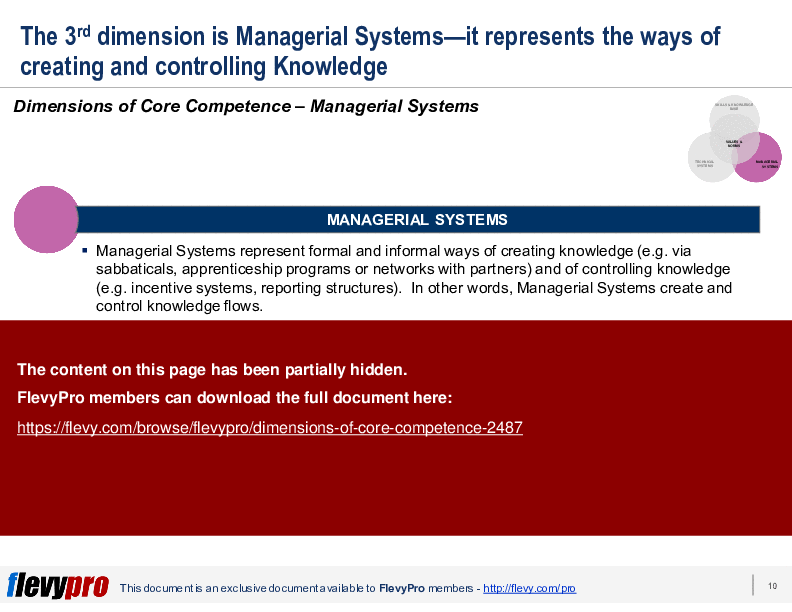
• Managerial Systems - Structures that create and control knowledge within an organization.
• Values & Norms - Organizational beliefs that influence behavior and decision-making.
• Technical Systems - Embedded knowledge within production or information systems.
• Skills & Knowledge - The expertise and understanding embodied in employees.
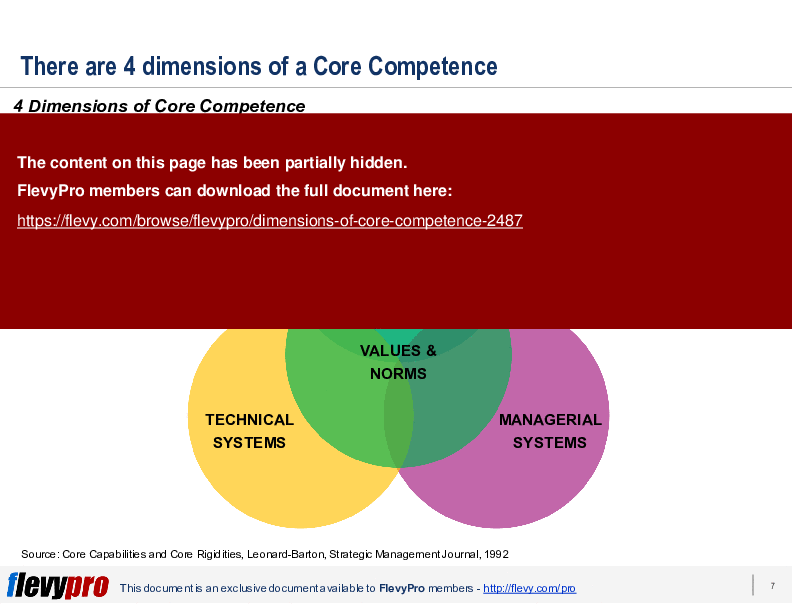
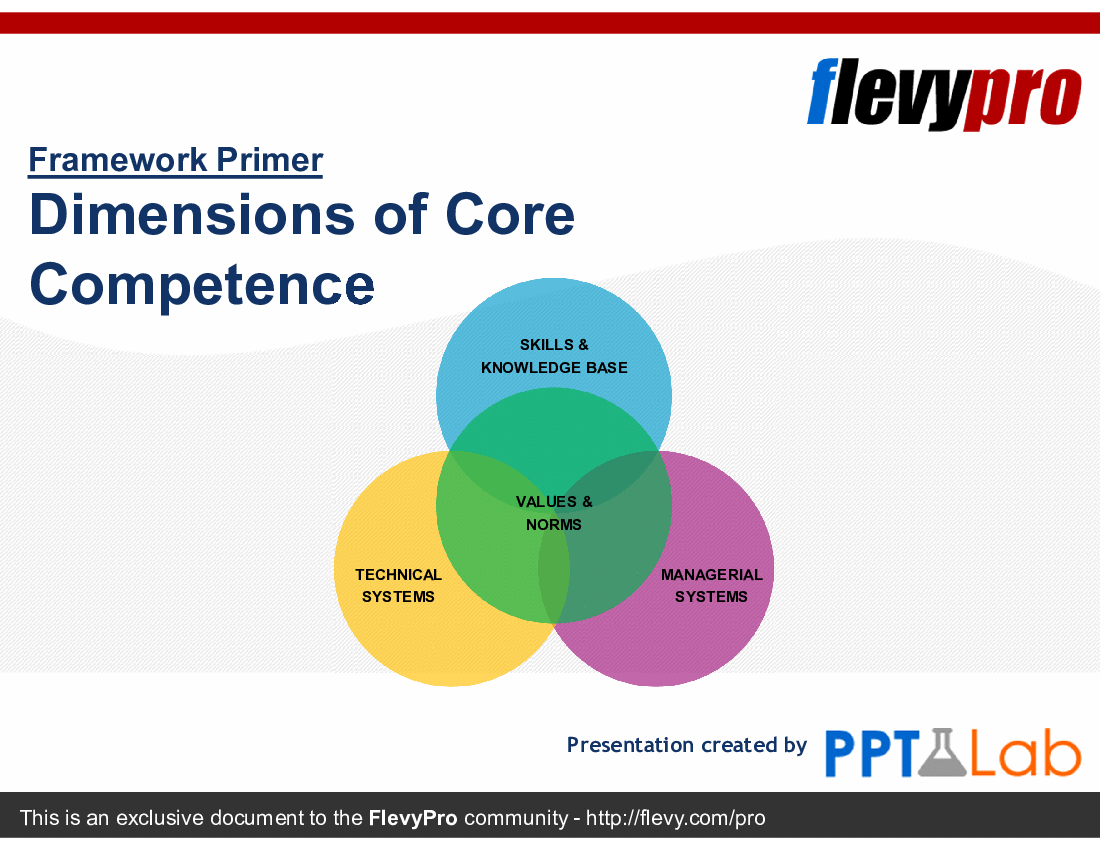
This PPT slide outlines a framework of 4 key dimensions defining an organization's core competence: "Skills & Knowledge Base," "Values & Norms," "Managerial Systems," and "Technical Systems."
"Skills & Knowledge Base" emphasizes the expertise and intellectual assets necessary for innovation and efficiency.
"Values & Norms" shapes employee interactions and influences organizational culture, fostering collaboration and commitment.
"Managerial Systems" refers to the processes governing decision-making and resource allocation, ensuring smooth operations and adaptability to market changes.
"Technical Systems" includes tools and technologies that enhance productivity and maintain competitiveness.
Leveraging these dimensions enables organizations to assess strengths, identify improvement areas, and align strategic initiatives with core competencies for better performance and sustainable growth.
This PPT slide outlines a framework for identifying core competencies essential for strategic intent, featuring guiding questions and 3 definitive tests. The guiding questions provoke critical thinking about how the absence of specific competencies affects industry dominance, future opportunities, market access, and customer benefits. The first test requires competencies to provide access to diverse markets, enabling exploration of multiple growth avenues. The second test assesses the contribution of competencies to customer-perceived benefits, ensuring alignment with customer needs. The third test emphasizes the difficulty of imitation by competitors, highlighting the necessity for unique capabilities. Few organizations can achieve world leadership across multiple core competencies, indicating the need for focused strategic development.
Values and norms play a critical role within the Core Competence framework, shaping the content and structure of organizational knowledge. They influence knowledge approaches, contrasting open source and proprietary systems, as well as formal education and experiential learning methods. Values manifest in organizational practices, embedding culture within operational frameworks. Foundational beliefs and norms leave a lasting imprint on an organization’s identity and decision-making processes. This alignment of values with strategic objectives enhances decision-making and strengthens organizational culture. The 4 dimensions reflect accumulated behaviors and beliefs, indicating that core competencies are rooted in historical context and cultural frameworks, guiding executives in evaluating and improving their organizations.
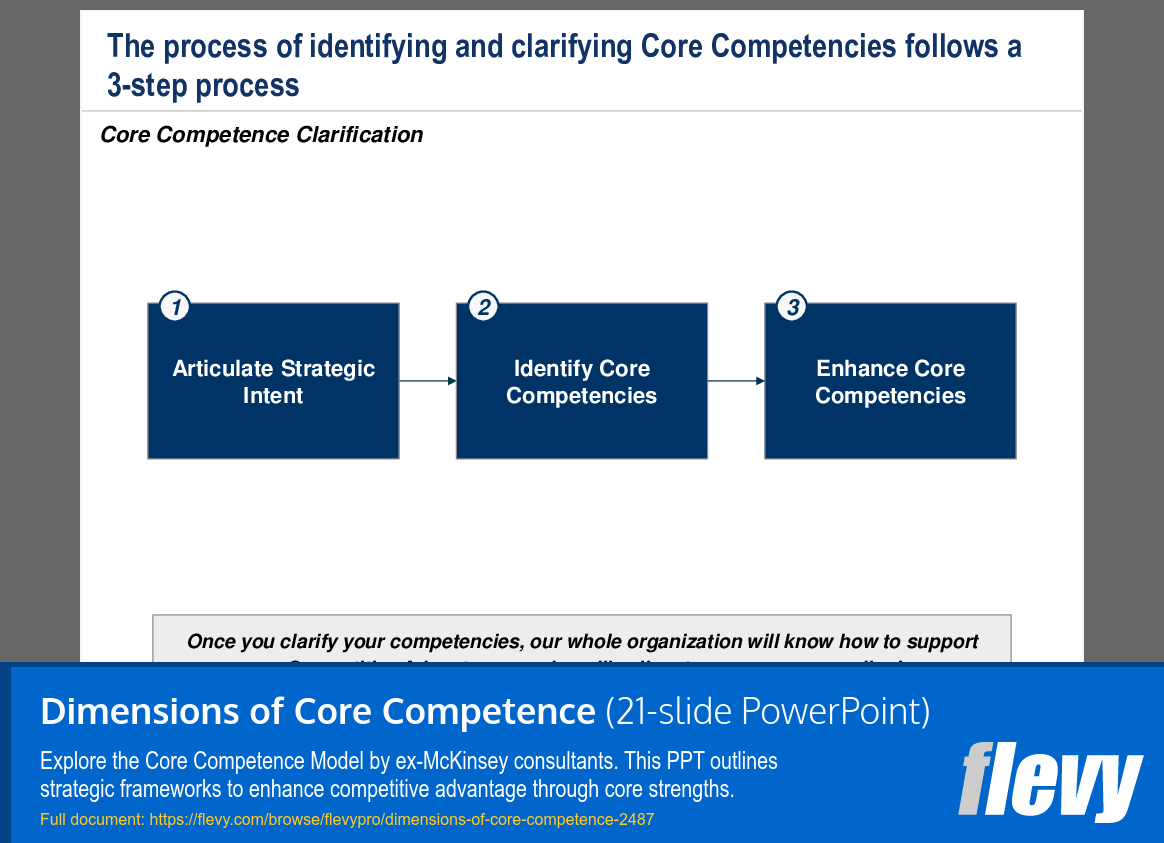
This PPT slide outlines a three-step process for identifying and clarifying core competencies within an organization. The first step, "Articulate Strategic Intent," involves defining overarching goals and objectives to align actions with the strategic vision. The second step, "Identify Core Competencies," focuses on analyzing specific strengths and capabilities that differentiate the organization in its market, contributing to its unique value proposition. The final step, "Enhance Core Competencies," advocates for proactive development through investments in training, technology, or process improvements. This structured approach drives organizational effectiveness and positions the organization to meet strategic goals and respond to market demands.
This PPT slide outlines a strategic approach to fostering a Core Competence mindset within organizations. It emphasizes collaboration across business units, urging leaders to stop viewing Strategic Business Units (SBUs) as isolated entities. As SBUs evolve, they develop unique competencies, which can lead to a narrow focus and stifle talent. Identifying projects and individuals that exemplify core competencies signals that these are corporate assets, not confined to specific SBUs. Reallocating resources to those embodying these competencies ensures talent is directed toward promising opportunities, preventing skill atrophy. Management must gather insights on next-generation competencies, assessing investment needs and capital allocation across divisions to sustain growth and innovation. This framework promotes a culture of shared resources and long-term thinking, breaking down barriers between units to leverage collective strengths.
This PPT slide focuses on the first dimension of core competence: Knowledge and Skills of the employee base, which is closely tied to Core Capabilities. This dimension encompasses competencies such as firm-specific techniques, scientific understanding, internal knowledge, technical skills, and business capabilities. A strong knowledge and skills base is essential for New Product Development (NPD), indicating that companies should invest in training initiatives to enhance their workforce's technical and business skills. Recognizing the foundational role of employee competencies is crucial for achieving strategic goals and driving product success, leading to improved performance and innovation outcomes.
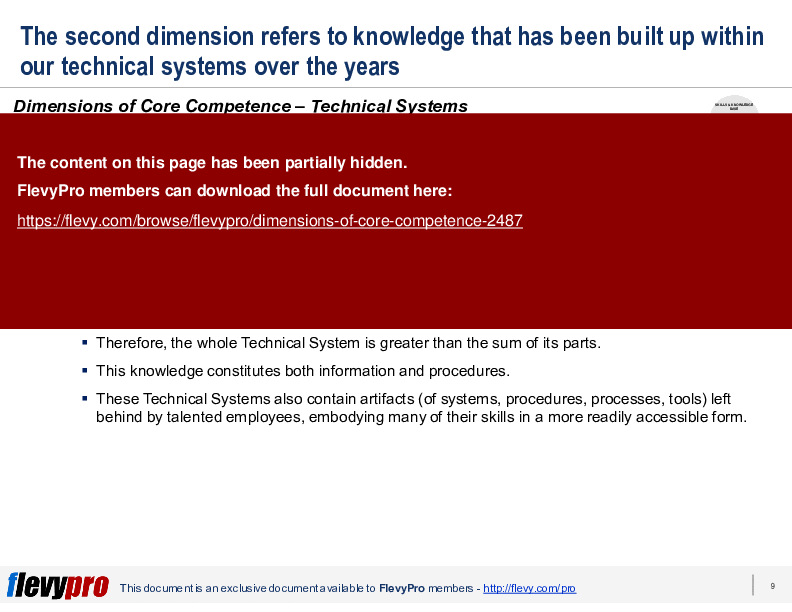
Technical Systems are a vital component of core competence, representing the accumulation and structuring of tacit knowledge over time. These systems integrate both physical production and information systems, synthesizing knowledge that enhances organizational capabilities and efficiencies. They encompass information and procedural elements essential for operational effectiveness and include artifacts left by skilled employees, such as systems, procedures, and tools that embody expertise. Leveraging Technical Systems can improve decision-making and strategic initiatives, capitalizing on existing competencies to enhance operational frameworks.
Source: Best Practices in Competitive Advantage, Core Competences PowerPoint Slides: Dimensions of Core Competence PowerPoint (PPT) Presentation Slide Deck, PPT Lab
This framework is developed by a team of former McKinsey and Big 4 consultants. The presentation follows the headline-body-bumper slide format used by global consulting firms.
For $10.00 more, you can download this document plus 2 more FlevyPro documents. That's just $13 each.
ABOUT FLEVYPRO
This document is part of the FlevyPro Library, a curated knowledge base of documents for our FlevyPro subscribers.
FlevyPro is a subscription service for on-demand business frameworks and analysis tools. FlevyPro subscribers receive access to an exclusive library of curated business documents—business framework primers, presentation templates, Lean Six Sigma tools, and more—among other exclusive benefits.
The average daily rate of a McKinsey consultant is $6,625 (not including expenses). The average price of a Flevy document is $65.
Trusted by over 10,000+ Client Organizations
Since 2012, we have provided business templates to over 10,000 businesses and organizations of all sizes, from startups and small businesses to the Fortune 100, in over 130 countries.
"FlevyPro provides business frameworks from many of the global giants in management consulting that allow you to provide best in class solutions for your clients."
– David Harris, Managing Director at Futures Strategy
"As a niche strategic consulting firm, Flevy and FlevyPro frameworks and documents are an on-going reference to help us structure our findings and recommendations to our clients as well as improve their clarity, strength, and visual power. For us, it is an invaluable resource to increase our impact and value."
– David Coloma, Consulting Area Manager at Cynertia Consulting
"As an Independent Management Consultant, I find Flevy to add great value as a source of best practices, templates and information on new trends. Flevy has matured and the quality and quantity of the library is excellent. Lastly the price charged is reasonable, creating a win-win value for
the customer, Flevy and the various authors. This is truly a service that benefits the consulting industry and associated clients. Thanks for providing this service.
"
– Jim Schoen, Principal at FRC Group
"FlevyPro has been a brilliant resource for me, as an independent growth consultant, to access a vast knowledge bank of presentations to support my work with clients. In terms of RoI, the value I received from the very first presentation I downloaded paid for my subscription many times over! The
quality of the decks available allows me to punch way above my weight – it's like having the resources of a Big 4 consultancy at your fingertips at a microscopic fraction of the overhead.
"
– Roderick Cameron, Founding Partner at SGFE Ltd
"Flevy is now a part of my business routine. I visit Flevy at least 3 times each month.
Flevy has become my preferred learning source, because what it provides is practical, current, and useful in this era where the business world is being rewritten.

many challenges and there is the need to make the right decisions in a short time, with so much scattered information, we are fortunate to have Flevy. Flevy investigates, selects, and puts at our disposal the best of the best to help us be successful in our work.
"
– Omar Hernán Montes Parra, CEO at Quantum SFE
"As a small business owner, the resource material available from FlevyPro has proven to be invaluable. The ability to search for material on demand based our project events and client requirements was great for me and proved very beneficial to my clients. Importantly, being able to easily edit and tailor
the material for specific purposes helped us to make presentations, knowledge sharing, and toolkit development, which formed part of the overall program collateral. While FlevyPro contains resource material that any consultancy, project or delivery firm must have, it is an essential part of a small firm or independent consultant's toolbox.
"
– Michael Duff, Managing Director at Change Strategy (UK)
"As a consultant requiring up to date and professional material that will be of value and use to my clients, I find Flevy a very reliable resource.
The variety and quality of material available through Flevy offers a very useful and commanding source for information. Using Flevy saves me time, enhances my expertise and ends up being a good decision."
– Dennis Gershowitz, Principal at DG Associates
"I have found Flevy to be an amazing resource and library of useful presentations for lean sigma, change management and so many other topics. This has reduced the time I need to spend on preparing for my performance consultation. The library is easily accessible and updates are regularly provided. A wealth of great information."
– Cynthia Howard RN, PhD, Executive Coach at Ei Leadership
Download our free compilation of 50+ Strategy & Transformation slides and templates. Frameworks include McKinsey 7-S, Balanced Scorecard, Disruptive Innovation, BCG Curve, and many more.