
This framework is developed by a team of former McKinsey and Big 4 consultants. The presentation follows the headline-body-bumper slide format used by global consulting firms.
Editor Summary
Digital Talent Lifecycle is a 24-slide PowerPoint (PPTX) deck by LearnPPT Consulting that outlines a recurring four-phase approach to managing digital skills: Talent Planning, Talent Acquisition, Talent Development, and Talent Retention.
Read moreThe deck explains planning required skills, sourcing via social media and a careers website, delivering digital learning and measuring outputs, and includes slide templates for presentations. Intended users include HR leaders, talent acquisition specialists, and learning & development managers; sold as a digital download on Flevy with immediate digital download.
Use this deck when an organization is shifting toward digital-native operations and needs to align workforce skills, hiring, learning, and retention to its digital strategy.
HR leaders mapping required capabilities to business strategy and creating a Talent Planning roadmap that defines skills and measurements.
Talent acquisition specialists designing social-media sourcing campaigns and a well-planned careers site to attract digital talent.
Learning & development managers defining the employee journey, delivering learning digitally, and measuring learning outputs.
HR managers building retention programs that provide growth opportunities and engagement.
The four-phase lifecycle mirrors standard HR talent lifecycle practice used in talent management consulting.
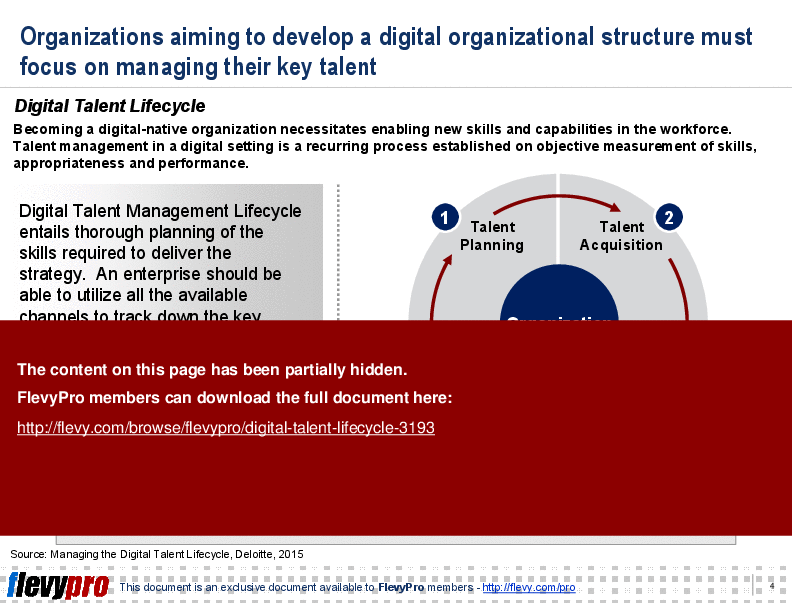
Becoming a digital-native organization warrants enabling new skills and capabilities in the workforce. An organization focused on building a digital structure must not forget its employees. Talent management in a digital setting is a continuous process established on objective measurement of skills, appropriateness, and performance.
Digital Talent Management Lifecycle involves thorough planning of the skills required to deliver the strategy. An enterprise should be able to utilize all the available channels to track down the key talent to bring the needed new capabilities onboard, as well as build the capacity of the existing workforce to master digital capabilities and retain people by providing the right opportunities for them.
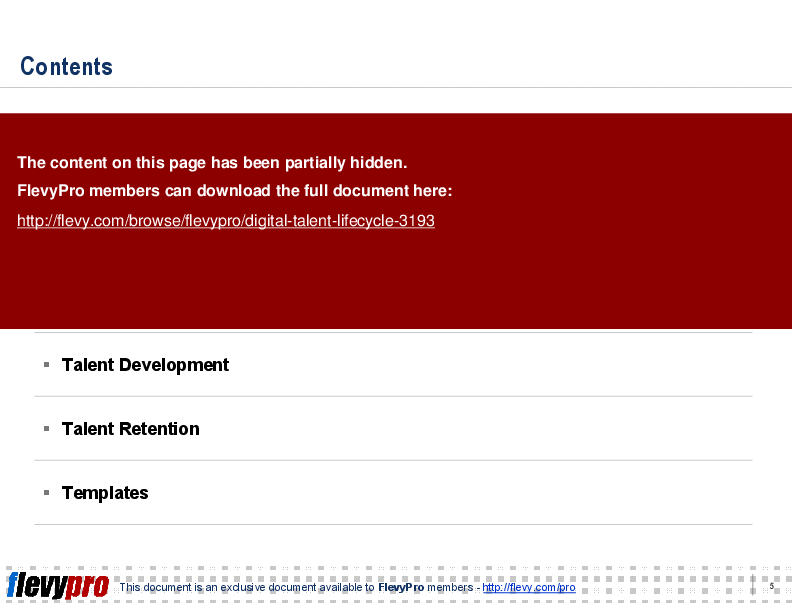
This deck deliberates on how to manage Digital Talent, the Digital Talent Lifecycle, and its 4 recurring phases:
The slide deck also includes some slide templates for you to use in your own business presentations.
This presentation provides a comprehensive overview of the Digital Talent Lifecycle, emphasizing the importance of strategic talent planning, acquisition, development, and retention. It offers actionable insights into aligning talent strategy with digital goals, leveraging social media for talent acquisition, and fostering a culture of continuous learning and development. The PPT also highlights the significance of retaining top talent by creating an engaging and growth-oriented work environment.
Key actions for talent acquisition include getting acquainted with digital talent, utilizing social media, and developing a well-planned website. For talent development, the focus is on defining the employee journey, delivering learning digitally, and measuring outputs effectively. The presentation also addresses the challenges of talent retention, suggesting strategies to keep employees engaged and motivated. This deck is an essential guide for organizations looking to build and sustain a digitally skilled workforce.
What are the typical phases of a digital talent lifecycle?
A digital talent lifecycle commonly comprises 4 recurring phases: Talent Planning (defining skills needed for strategy), Talent Acquisition (sourcing and hiring), Talent Development (digital learning and skill measurement), and Talent Retention (engagement and career opportunities). These 4 phases structure ongoing talent management.
How do you plan the skills required to deliver a digital strategy?
Skills planning begins by mapping capabilities to strategic outcomes, identifying gaps, and establishing objective measures of skills, appropriateness, and performance. The process should produce role-level skill requirements and assessment criteria to guide hiring, development, and deployment in the Talent Planning phase.
Which channels are effective for sourcing digital talent?
Effective channels include social media recruiting, a well-planned careers website, and leveraging all available sourcing channels to find key talent. Flevy’s Digital Talent Lifecycle presentation specifically highlights getting acquainted with digital talent and utilizing social media alongside a careers site for acquisition through social media and a well-planned website.
How should organizations measure digital learning and development outcomes?
Measurement should focus on objective outputs: skills acquired, appropriateness for roles, and performance improvements following learning delivery. Digital delivery should be tracked against those outputs to evaluate effectiveness and guide future development investments, emphasizing measuring outputs effectively.
What should I look for in a digital talent lifecycle slide deck or toolkit?
Look for explicit lifecycle phases, practical guidance on acquisition channels (social media, careers site), frameworks for planning and skill measurement, templates for internal presentations, and development/retention actions. Flevy’s Digital Talent Lifecycle is a 24-slide PPTX that includes slide templates and lifecycle guidance in a deck format.
How much internal resource is typically required to run a digital talent lifecycle program?
Resource needs vary,, but running a lifecycle is a continuous, cross-functional effort involving HR, talent acquisition, and L&D teams. Activities span the 4 recurring phases—planning, acquisition, development, and retention—so designating stakeholders across those functions is essential to sustain the program across the 4 recurring phases.
We acquired a digital-native startup — how should we integrate their talent?
Start by mapping the acquired skills against strategic needs, use internal channels to place talent where they add value, define employee journeys and digital learning to scale capabilities, and apply retention initiatives to keep key people. Integration work focuses on Talent Development and Talent Retention phases.
What retention tactics work best for digitally skilled employees?
Retention tactics include creating an engaging, growth-oriented environment, providing clear development pathways and challenging assignments, and measuring progress to show career advancement. The approach focuses on offering the right opportunities and continuous learning to maintain engagement and motivation through engagement and growth opportunities.
This PPT slide addresses talent acquisition challenges for traditional employers in attracting digital talent. While modern training methods enhance efficiency and reduce costs, retraining existing employees into digital roles is resource-intensive. A significant barrier is poor employer awareness among potential candidates regarding organizational culture, leading to perceptions of traditional organizations as outdated. The absence of physical recruiting agencies in key areas further complicates hiring. To overcome these challenges, organizations should implement 6 key actions: understand digital talent, leverage social media, enhance website visibility, adopt new candidate selection methods, invest in training programs, and recruit in groups. Addressing employer awareness and organizational attractiveness is vital for refining recruitment strategies and engaging digital talent effectively.
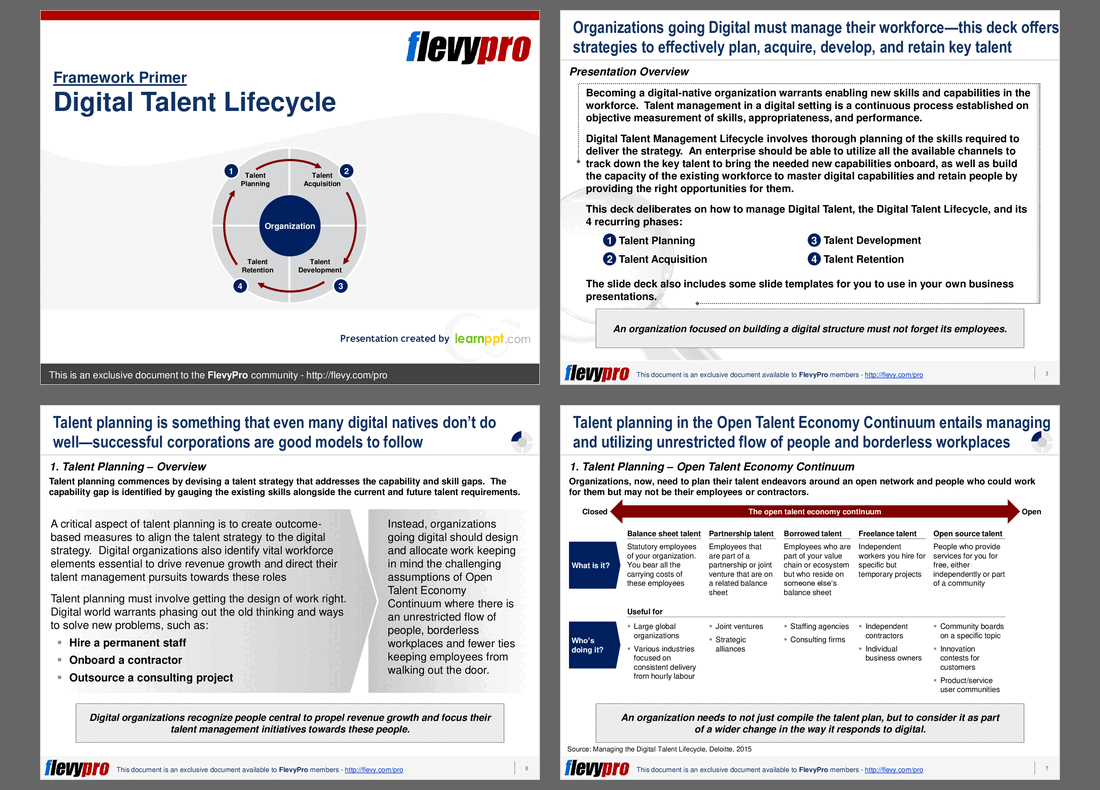
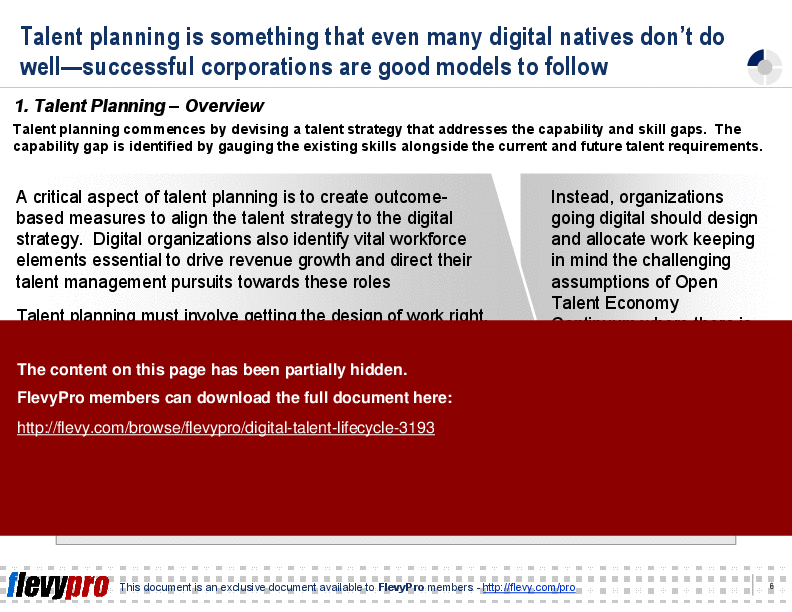
Effective talent planning in digital organizations requires a well-defined talent strategy that identifies capability and skill gaps by assessing existing skills against current and future needs. Successful talent management drives revenue growth and must align with the overarching digital strategy. Traditional workforce management methods—hiring permanent staff, onboarding contractors, and outsourcing consulting projects—are increasingly outdated. The "Open Talent Economy Continuum" reflects the need for a fluid workforce, emphasizing talent mobility and borderless workplaces. Organizations must adapt to a rapidly changing environment by embracing new workforce design models to meet digital age challenges, fostering innovation and growth while aligning talent management with business objectives.
This PPT slide focuses on talent development in the digital economy, emphasizing the importance of leveraging existing workforce legacy knowledge. Four key actions for effective talent development are outlined:
1. "Define the Employee Journey" involves mapping career paths and identifying touchpoints that enhance employee engagement.
2. "Deliver Learning Digitally" shifts training to digital platforms, ensuring accessibility and scalability for diverse workforces.
3. "Learn from Digital Natives" highlights the insights younger, tech-savvy employees bring, fostering a collaborative learning environment.
4. "Measure the Outputs" stresses the need for metrics and feedback to evaluate the effectiveness of talent development initiatives, ensuring tangible improvements in workforce capability.
This framework helps organizations adapt to digital trends while valuing existing knowledge.
This PPT slide outlines talent planning within the Open Talent Economy Continuum, which spans from "Closed" to "Open" talent categories. "Balance sheet talent" refers to statutory employees, emphasizing financial responsibilities for large organizations. "Partnership talent" includes employees tied to joint ventures, promoting collaborative talent management. "Borrowed talent" consists of individuals in the value chain, but not directly employed, suitable for staffing agencies. "Freelance talent" represents independent contractors hired for specific projects, allowing access to specialized skills. "Open source talent" signifies community-driven contributions, leveraging external resources for organizational benefit. Organizations are urged to rethink talent plans in response to digital transformations and evolving workforce dynamics.
Source: Best Practices in Digital Transformation, Talent Strategy, Talent Management PowerPoint Slides: Digital Talent Lifecycle PowerPoint (PPTX) Presentation Slide Deck, LearnPPT Consulting
This framework is developed by a team of former McKinsey and Big 4 consultants. The presentation follows the headline-body-bumper slide format used by global consulting firms.
For $10.00 more, you can download this document plus 2 more FlevyPro documents. That's just $13 each.
ABOUT FLEVYPRO
This document is part of the FlevyPro Library, a curated knowledge base of documents for our FlevyPro subscribers.

FlevyPro is a subscription service for on-demand business frameworks and analysis tools. FlevyPro subscribers receive access to an exclusive library of curated business documents—business framework primers, presentation templates, Lean Six Sigma tools, and more—among other exclusive benefits.
The average daily rate of a McKinsey consultant is $6,625 (not including expenses). The average price of a Flevy document is $65.
Trusted by over 10,000+ Client Organizations
Since 2012, we have provided business templates to over 10,000 businesses and organizations of all sizes, from startups and small businesses to the Fortune 100, in over 130 countries.
"[Flevy] produces some great work that has been/continues to be of immense help not only to myself, but as I seek to provide professional services to my clients, it gives me a large "tool box" of resources that are critical to provide them with the quality of service and outcomes they are expecting."
– Royston Knowles, Executive with 50+ Years of Board Level Experience
"My FlevyPro subscription provides me with the most popular frameworks and decks in demand in today’s market. They not only augment my existing consulting and coaching offerings and delivery, but also keep me abreast of the latest trends, inspire new products and service offerings for my practice, and educate me
in a fraction of the time and money of other solutions. I strongly recommend FlevyPro to any consultant serious about success.
"
– Bill Branson, Founder at Strategic Business Architects
"I have found Flevy to be an amazing resource and library of useful presentations for lean sigma, change management and so many other topics. This has reduced the time I need to spend on preparing for my performance consultation. The library is easily accessible and updates are regularly provided. A wealth of great information."
– Cynthia Howard RN, PhD, Executive Coach at Ei Leadership
"As a consultant requiring up to date and professional material that will be of value and use to my clients, I find Flevy a very reliable resource.
The variety and quality of material available through Flevy offers a very useful and commanding source for information. Using Flevy saves me time, enhances my expertise and ends up being a good decision."
– Dennis Gershowitz, Principal at DG Associates
"If you are looking for great resources to save time with your business presentations, Flevy is truly a value-added resource. Flevy has done all the work for you and we will continue to utilize Flevy as a source to extract up-to-date information and data for our virtual and onsite presentations!"
– Debbi Saffo, President at The NiKhar Group
"As a young consulting firm, requests for input from clients vary and it's sometimes impossible to provide expert solutions across a broad spectrum of requirements. That was before I discovered Flevy.com.
Through subscription to this invaluable site of a plethora of topics that are key and crucial to consulting, I
have been able to exceed expectations and deliver quality advice and solutions to my clients. The quality and expertise of the authors are exemplary and gives me great confidence to use as part of my service offerings.
I highly recommend this company for any consultant wanting to apply international best practice standards in their service offerings.
"
– Nishi Singh, Strategist and MD at NSP Consultants
"FlevyPro provides business frameworks from many of the global giants in management consulting that allow you to provide best in class solutions for your clients."
– David Harris, Managing Director at Futures Strategy
"One of the great discoveries that I have made for my business is the Flevy library of training materials.
As a Lean Transformation Expert, I am always making presentations to clients on a variety of topics: Training, Transformation, Total Productive Maintenance, Culture, Coaching, Tools, Leadership Behavior, etc. Flevy
It is well worth the money to purchase these presentations. Sure, I have the knowledge and information to make my point. It is another thing to create a presentation that captures what I want to say. Flevy has saved me countless hours of preparation time that is much better spent with implementation that will actually save money for my clients.
"
– Ed Kemmerling, Senior Lean Transformation Expert at PMG
Download our free compilation of 50+ slides and templates on Organizational Design, Change Management, and Corporate Culture. Methodologies include ADKAR, Burke-Litwin Change Model, McKinsey 7-S, Competing Values Framework, etc.