 Click main image to view in full screen.
Designing and Delivering Focus Interviews – PowerPoint PPT Template
PowerPoint (PPT) 13 Slides


INTERVIEWING PPT TEMPLATE DESCRIPTION
This document teaches the proper way to design and deliver focus interviews. A focus interview is a confidential, one-on-one 90 minute structured interview.
Focus interviews delve into the interviewee's technical / domain knowledge. They may have some "quiz" types of questions (e.g. exploring a technical subject), or it might be more free form discussion of the interviewee's experience and knowledge for his or her area and level.
Focus interviews are necessary tool used by management consultants when in the data / information collection phase of the project. In addition to merely gathering information, it is used to foster credibility with clients, build rapport / relationships with clients, and build commitment / support for the project.
This presentation covers the following topics:
• Purpose of focus interviews
• Focus interview questions (objectives and standard question areas)
• Focus interview results storyboard
• Designing a focus interview guide
• Preparing a focus interview
• Conducting a focus interview
• Building trust during the focus interview
• Introducing the focus interview
• Handling difficult situations
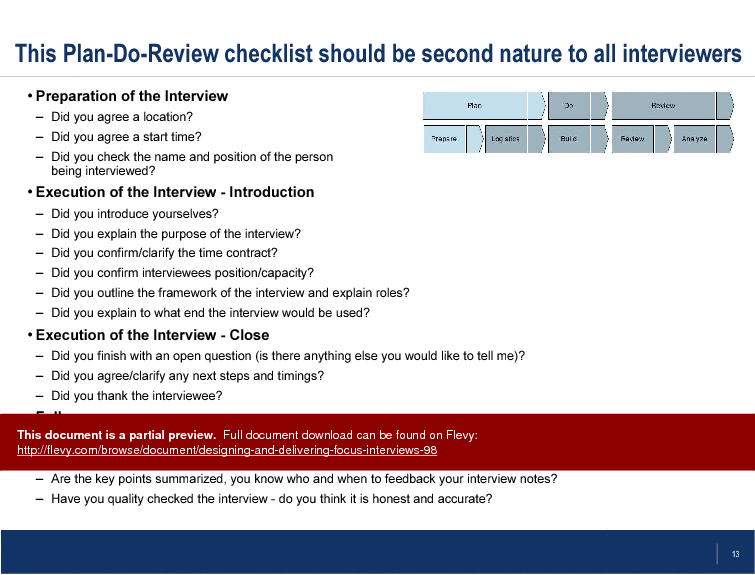
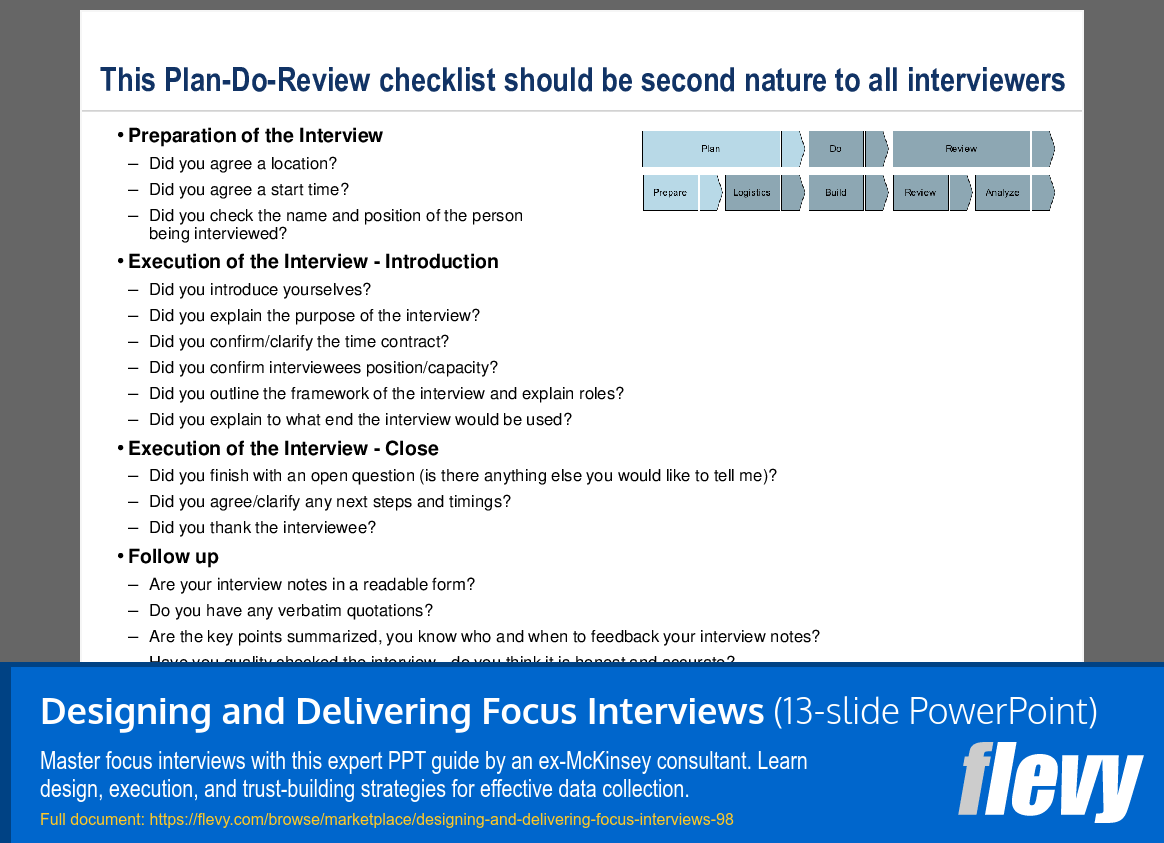
• Plan-Do-Review checklist
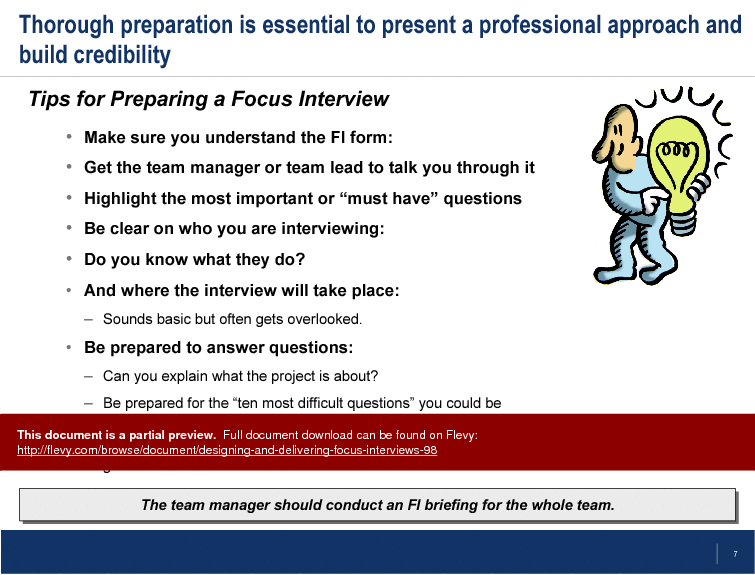
This document also emphasizes the importance of thorough preparation and building trust during focus interviews. It provides actionable tips for preparing, such as understanding the focus interview form, highlighting key questions, and being clear on the interviewee's role and location. The guide stresses the need to be prepared to answer questions about the project and to handle difficult questions effectively.
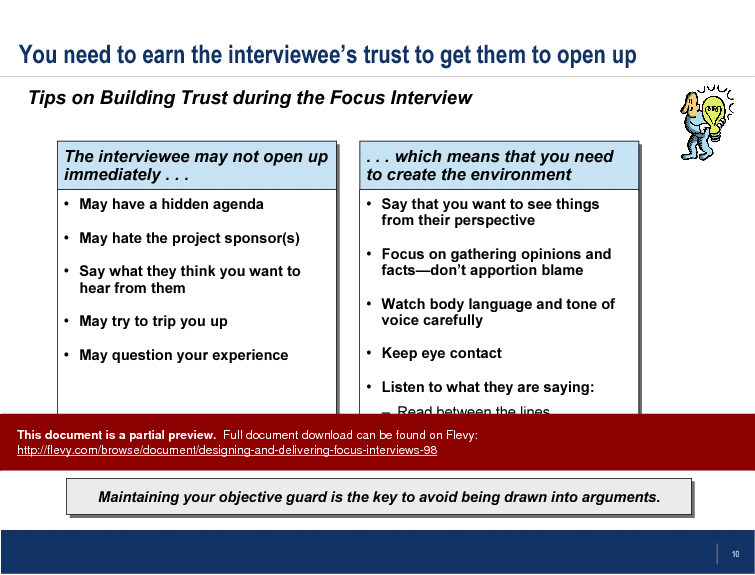
To build trust, the document advises on creating a conducive environment by focusing on gathering opinions and facts without assigning blame, maintaining eye contact, and reading between the lines. It also includes a comprehensive Plan-Do-Review checklist to ensure all aspects of the interview are covered, from preparation and execution to follow-up. This checklist serves as a vital tool for interviewers to ensure they conduct thorough and effective focus interviews.
Got a question about the product? Email us at support@flevy.com or ask the author directly by using the "Ask the Author a Question" form. If you cannot view the preview above this document description, go here to view the large preview instead.
MARCUS OVERVIEW
This synopsis was written by Marcus [?] based on the analysis of the full 13-slide presentation.
Executive Summary
This presentation, "Designing and Delivering Focus Interviews," provides a structured approach to conducting focus interviews, essential for gathering qualitative insights early in a project. Crafted in a consulting-grade format akin to McKinsey, Bain, or BCG-quality, this guide equips professionals with the necessary tools to validate hypotheses, identify areas for improvement, and build relationships within the organization. Users will learn to design effective interviews, prepare thoroughly, and create an environment conducive to open dialogue, ultimately enhancing project credibility and support.
Who This Is For and When to Use
• Corporate executives seeking to understand organizational strengths and weaknesses
• Project managers needing to validate initial hypotheses and gather qualitative data
• Consultants aiming to build relationships and support for their projects
• Team leaders looking to enhance their network and gain insights from stakeholders
Best-fit moments to use this deck:
• At the beginning of a project to establish credibility and gather initial insights
• During project planning phases to identify areas for improvement
• When building commitment and support from key stakeholders
Learning Objectives
• Define the purpose and structure of a focus interview
• Develop effective focus interview questions to gather relevant data
• Build trust with interviewees to facilitate open communication
• Identify key themes and insights from focus interview results
• Create a professional environment that encourages candid feedback
• Prepare thoroughly for interviews to enhance credibility and effectiveness
Table of Contents
• Introduction to Focus Interviews (page 2)
• Purpose of Focus Interviews (page 3)
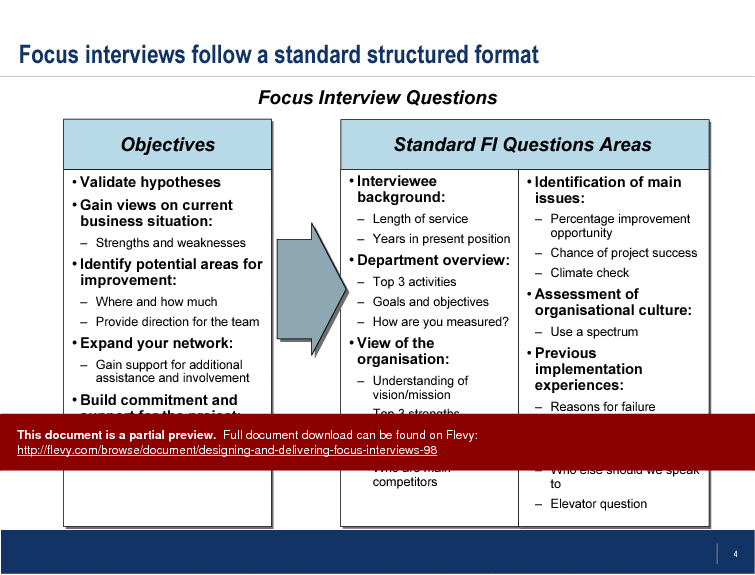
• Standard Focus Interview Format (page 4)
• Focus Interview Objectives (page 4)
• Key Elements of Focus Interviews (page 5)
• Tips for Designing a Focus Interview Guide (page 6)
• Preparation for Focus Interviews (page 7)
• Conducting Focus Interviews (page 8)
• Building Trust with Interviewees (page 9)
• Handling Difficult Situations (page 10)
• Summary of Key Takeaways (page 12)
• Plan-Do-Review Checklist (page 13)
Primary Topics Covered
• Purpose of Focus Interviews - Focus interviews serve to validate hypotheses, identify strengths and weaknesses, and build relationships within the organization.
• Standard Format - A focus interview is a structured, confidential one-on-one session lasting approximately 90 minutes, designed to gather qualitative insights.
• Interview Objectives - Objectives include validating hypotheses, gaining insights into the current business situation, and identifying areas for improvement.
• Key Elements - Essential elements include a structured approach, open-ended questions, and a focus on building trust with interviewees.
• Designing Interview Questions - Effective questions should be clear, non-threatening, and aimed at eliciting detailed responses.
• Preparation and Execution - Thorough preparation is crucial for success, including understanding the interview format and the interviewee's background.
Deliverables, Templates, and Tools
• Focus Interview Guide template for structuring interviews
• Standardized question sets to ensure comprehensive coverage of topics
• Preparation checklist to ensure all logistical aspects are addressed
• Trust-building techniques to enhance interviewee openness
• Post-interview summary template for capturing insights and key points
• Plan-Do-Review checklist for evaluating interview effectiveness
Slide Highlights
• Overview of focus interview objectives and structure
• Key elements of a successful focus interview
• Tips for building trust and handling difficult situations
• Summary slide emphasizing the importance of preparation and insights
• Plan-Do-Review checklist for interviewers to ensure thorough follow-up
Potential Workshop Agenda
Introduction to Focus Interviews (60 minutes)
• Overview of focus interview purpose and structure
• Discussion on the importance of qualitative data
Designing Effective Interview Questions (90 minutes)
• Workshop on crafting open-ended questions
• Role-playing to practice trust-building techniques
Conducting Focus Interviews (60 minutes)
• Tips for setting the scene and managing interviews
• Strategies for handling difficult situations
Customization Guidance
• Tailor the focus interview questions to align with specific project objectives
• Adjust the interview format based on the organizational culture and interviewee preferences
• Incorporate company-specific terminology and context into the interview guide
Secondary Topics Covered
• Techniques for analyzing focus interview results
• Strategies for expanding the interviewee network
• Importance of confidentiality and trust in interviews
• Methods for generating actionable insights from qualitative data
• Follow-up strategies to maintain engagement with interviewees
Topic FAQ
What are the core components of a focus interview and how long should it take?
A focus interview is a structured, confidential one-on-one session designed to gather qualitative insights. Core components include a clear interview format, open-ended questions, trust-building, thorough preparation, and follow-up via a Plan-Do-Review process. The standard duration described is approximately 90 minutes and includes a Plan-Do-Review checklist.How do you design effective focus interview questions?
Effective questions are clear, non-threatening, and open-ended to elicit detailed responses about strengths, weaknesses, and improvement opportunities. Design involves aligning questions to interview objectives and coverage areas; using standardized question sets helps ensure consistency. This approach is illustrated with standardized question sets in the Flevy's Designing and Delivering Focus Interviews presentation.How should interviewers prepare to build credibility before a focus interview?
Preparation includes understanding the interview format, researching the interviewee’s role and background, highlighting key questions, and being ready to answer project-related queries. Logistical readiness and clarity on objectives improve credibility. The presentation provides a preparation checklist to guide these steps.What techniques help build trust and manage difficult interviewees?
Recommended techniques include creating a non-threatening environment, active listening, focusing on opinions and facts without assigning blame, maintaining eye contact, and allowing concerns to be expressed before redirecting to constructive topics. The deck contains guidance on handling difficult situations and specific trust-building techniques.What should I look for when choosing a focus-interview template or toolkit?
Choose a toolkit that provides a structured interview guide, standardized question sets, a preparation checklist, post-interview summary templates, and a Plan-Do-Review checklist. Also look for customization guidance to adapt questions to your context; Flevy's Designing and Delivering Focus Interviews includes these specific templates and guidance.How can I assess the cost versus value of buying a focus-interview deck or templates?
Evaluate whether included deliverables save time and improve consistency: look for a Focus Interview Guide template, standardized questions, a preparation checklist, trust-building techniques, and post-interview summary templates. Compare those included items against internal effort and timelines to determine value, for example the Focus Interview Guide template.I need to validate initial project hypotheses during kickoff—what interview format should I use?
Use a structured, confidential one-on-one focus interview of about 90 minutes that emphasizes hypothesis validation through open-ended questioning and trust-building. The format should include preparation steps and a Plan-Do-Review follow-up; Flevy's Designing and Delivering Focus Interviews explains the standard focus interview format and objectives.How can I turn qualitative notes from focus interviews into actionable insights?
Identify recurring themes, map strengths and weaknesses, summarize key points in a post-interview summary, and use a Plan-Do-Review checklist to prioritize follow-up actions and validate findings. The presentation covers a results storyboard and post-interview summary template to support this synthesis process.Document FAQ
These are questions addressed within this presentation.
What is the primary purpose of a focus interview?
The primary purpose is to validate hypotheses, identify strengths and weaknesses, and gather qualitative insights to guide project direction.
How long does a focus interview typically last?
A focus interview is structured to last approximately 90 minutes, allowing for in-depth discussion.
What types of questions should be included in a focus interview?
Questions should be open-ended, designed to elicit detailed responses, and cover areas such as organizational strengths, weaknesses, and improvement opportunities.
How can I build trust with interviewees?
Building trust involves creating a non-threatening environment, actively listening, and demonstrating genuine interest in the interviewee's perspective.
What should I do if an interviewee becomes hostile?
Maintain composure, allow them to express their concerns, and redirect the conversation to focus on constructive feedback.
What is the significance of the Plan-Do-Review checklist?
The checklist ensures that interviewers prepare adequately, execute effectively, and follow up on insights gathered during the interview.
How can I ensure the confidentiality of interviewee responses?
Assure interviewees that their comments will remain confidential and will not be attributed to them personally.
What types of insights should I look for during focus interviews?
Focus on qualitative insights that reveal organizational culture, potential areas for improvement, and the overall climate regarding the project.
Glossary
• Focus Interview - A structured, confidential one-on-one interview designed to gather qualitative insights.
• Qualitative Data - Non-numerical information that provides insights into opinions, motivations, and experiences.
• Trust-Building - Techniques used to establish rapport and encourage open communication with interviewees.
• Plan-Do-Review - A structured approach to preparing, executing, and evaluating interviews.
• Open-Ended Questions - Questions designed to elicit detailed responses rather than simple yes/no answers.
• Interview Objectives - Specific goals that guide the focus interview process.
• Confidentiality - Assurance that interviewee responses will not be disclosed or attributed to them.
• Interview Preparation - The process of organizing and planning for effective focus interviews.
• Stakeholder Engagement - The involvement of individuals or groups who have an interest in the project.
• Organizational Culture - The values, beliefs, and behaviors that shape how work is done within an organization.
• Improvement Opportunities - Areas identified during interviews where enhancements can be made.
• Climate Check - An assessment of the current organizational environment and readiness for change.
INTERVIEWING PPT TEMPLATES
Source: Best Practices in Interviewing, Focus Interviewing PowerPoint Slides: Designing and Delivering Focus Interviews PowerPoint (PPT) Presentation Slide Deck, Process Consulting
ABOUT THE AUTHOR
Process Consulting specializes in consulting training presentations focused on core consulting skills, from structured problem solving to presentation development to process mapping. Our materials are based on the frameworks utilized by global consulting firms.
The firm is managed by a seasoned professional with over 15 years of experience at Capgemini and Deloitte, followed by a decade
... [read more]
Ask the Author a Question
You must be logged in to contact the author.




























