
This framework is developed by a team of former McKinsey and Big 4 consultants. The presentation follows the headline-body-bumper slide format used by global consulting firms.
Editor Summary
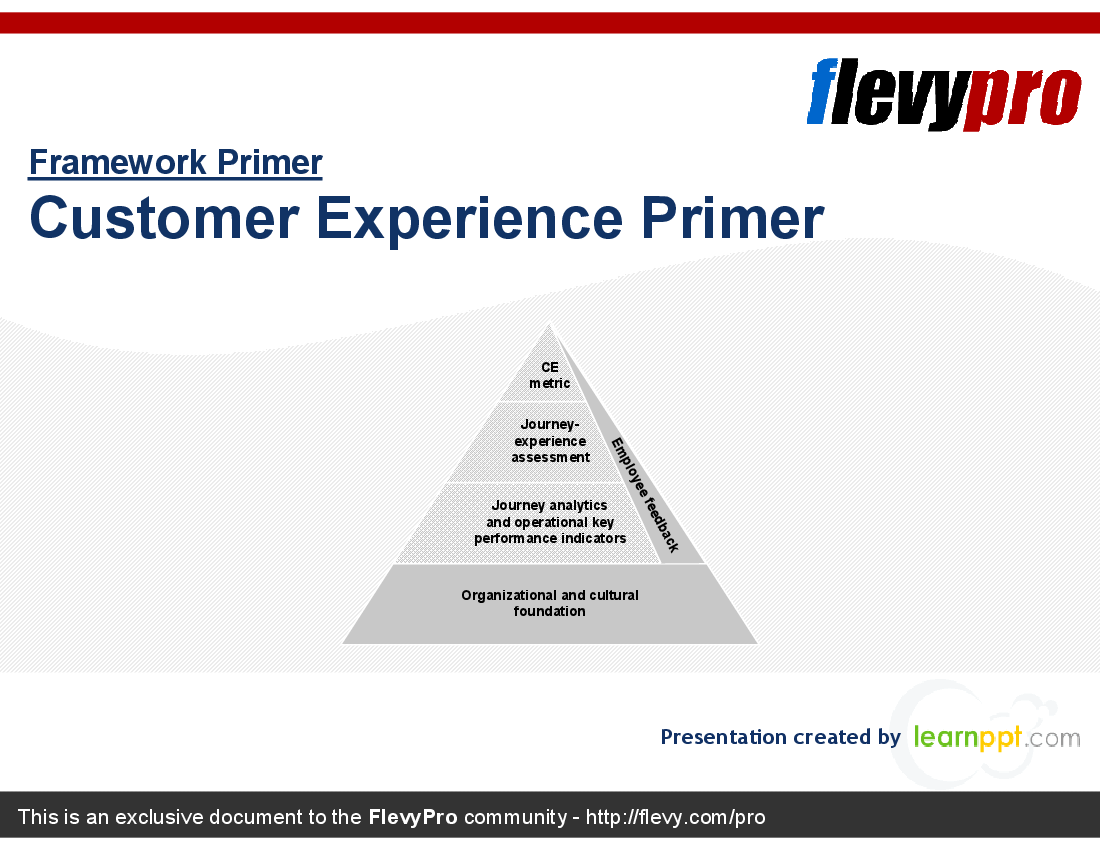
Customer Experience Primer is a 23-slide PowerPoint deck by LearnPPT Consulting that presents a three-step CX framework—Observe, Shape, Perform—and includes reusable slide templates for business presentations.
Read moreIt guides users through understanding customer interactions, redesigning processes from the customer back, and aligning the organization to deliver outcomes. Targeted at executives and CX teams, the PPT is sold as a digital download on Flevy and intended for customer-journey and CX strategy work.
Use this deck when your organization needs to move from isolated touchpoint fixes to a journey-level Customer Experience redesign—whether to reverse declining satisfaction, standardize delivery, or realign operations around customer outcomes.
Executives setting CX strategy who need a concise narrative and slides to brief stakeholders on journey-level priorities and outcomes.
Customer experience teams mapping end-to-end journeys and identifying interaction blind spots during the Observe phase.
Transformation or operations leads redesigning processes and applying behavioral insights to improve interactions in the Shape phase.
Program managers establishing feedback loops and organizational alignment to sustain improvements in the Perform phase.
The three-step Observe→Shape→Perform structure reflects a consulting-style journey-mapping and organizational-alignment approach used in CX engagements.
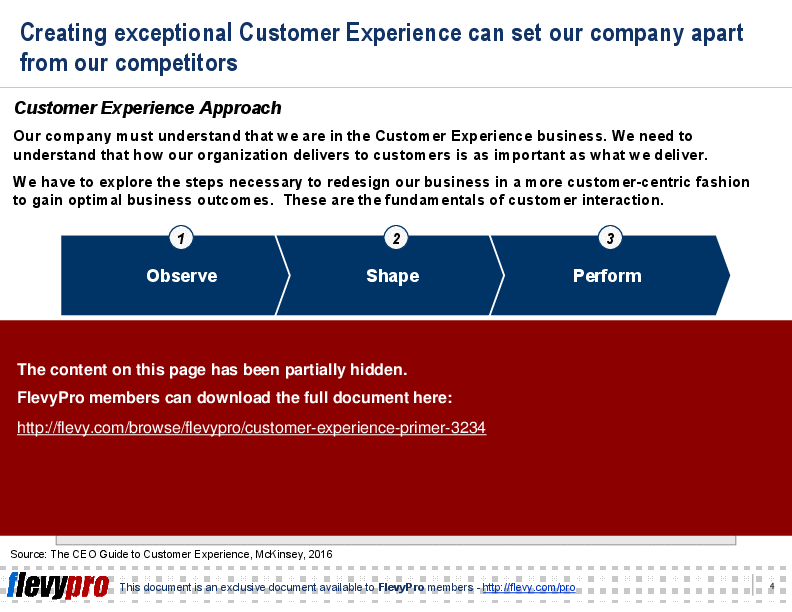
Our company must create exceptional Customer Experiences that set us apart from our competitors.
The starting point of every Customer Experience is to know what our customers want. Delivering what our customers want must now be substantially supported by how we deliver what our customers wants.
Essentially, our company must first learn the fundamentals of customer interaction. Knowing the steps necessary to redesign our business in a more customer-centric fashion keeps us ahead of the race.
Focusing on individual customer touchpoints has ceased to be a competitive edge. Customer Experience of today has moved from individual customer touchpoints to a more holistic approach spanning the entire Customer Journey.
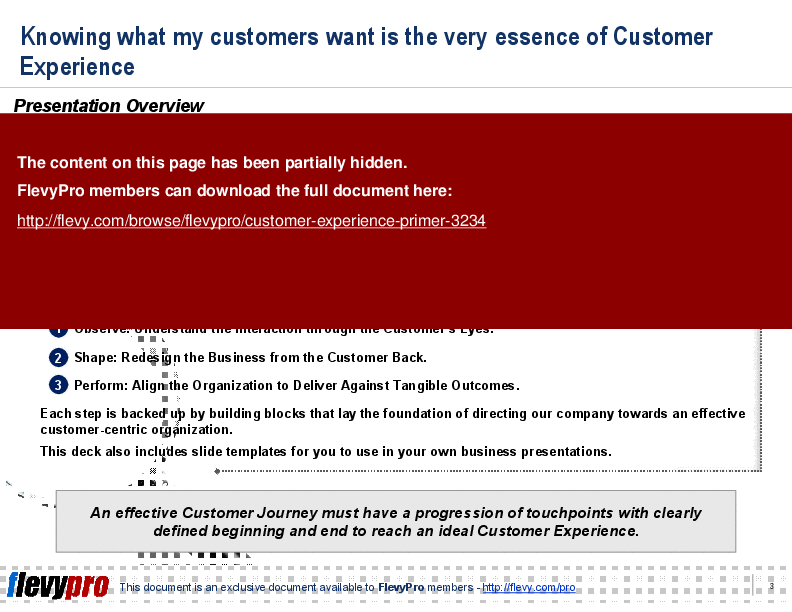
Reaching an ideal Customer Experience requires a journey of three progressive steps.
1. Observe: Understand the Interaction through the Customer’s Eyes.
2. Shape: Redesign the Business from the Customer Back.
3. Perform: Align the Organization to Deliver Against Tangible Outcomes.
Each step is backed up by building blocks that lay the foundation of directing our company towards an effective customer-centric organization.
This deck also includes slide templates for you to use in your own business presentations.
This presentation delves into the critical phases of the Customer Experience journey: Observe, Shape, and Perform. Each phase is meticulously broken down into actionable steps and building blocks, ensuring that your organization can effectively transition to a customer-centric model. The Observe phase emphasizes understanding customer interactions and identifying key touchpoints. Shape focuses on redesigning business processes from the customer's perspective, leveraging behavioral psychology to enhance interactions.
The Perform phase is about aligning your organization to deliver on customer expectations consistently. It includes strategies for capturing customer feedback and using it to drive continuous improvement. This PPT is an essential toolkit for any executive looking to elevate their company's Customer Experience strategy. It provides not just theoretical insights, but practical templates that can be directly applied to your business operations.
What are the core phases of a customer experience transformation?
A common, actionable sequence starts with observing current interactions from the customer’s perspective, then reshaping processes and offerings from the customer back, and finally aligning the organization to deliver outcomes and continuous improvement — a three-phase model: Observe, Shape, Perform.
How do I map a customer journey beyond individual touchpoints?
Move from isolated touchpoint analysis to mapping the end-to-end flow of interactions, noting transitions, emotions, and pain points from the customer’s viewpoint. This approach is central to the Observe phase and shifts focus to the entire Customer Journey rather than single touchpoints.
How can behavioral psychology improve customer interactions?
Behavioral principles help redesign choice architecture, nudges, and cues in customer flows so interactions are easier and more aligned with desired outcomes. Embedding these changes during the Shape phase targets measurable behavior shifts in customer interactions and decision points.
What are practical methods for capturing customer feedback to drive improvement?
Combine direct feedback channels, observational research, and outcome metrics to validate design changes and inform iterations. Use feedback loops to prioritize fixes and measure impact as part of organizational alignment and continuous improvement in the Perform phase.
What should I look for when choosing a CX slide deck or toolkit?
Prioritize a deck that frames CX at the journey level (not only touchpoints), provides a phased methodology, and supplies ready-to-use templates for stakeholder presentations. Also check format and length—this resource is a PowerPoint file with 23 slides.
How should I think about timeline and team effort for a CX redesign?
Timelines vary by scope,, but structure the work around understanding interactions, redesigning processes, and aligning the organization—allocating separate effort to Observe, Shape, and Perform activities helps sequence work across teams and governance in 3 phases.
I need to redesign CX after falling retention—what framework should I follow?
Start by observing customer interactions to surface reasons for churn, then reshape processes and offers to address behavioral drivers, and finally align teams and feedback mechanisms to sustain changes; Flevy's Customer Experience Primer organizes guidance around these 3 phases: Observe, Shape, Perform.
Are slide templates worth buying for CX presentations?
Slide templates save time and standardize communication when you must present journey findings, redesign proposals, and alignment plans to stakeholders. If you need a ready presentation format, a resource that includes slide templates and a 23-slide PPT can be practically useful.
This PPT slide outlines "Shape" as the second step in redesigning business operations through a customer-centric approach. It emphasizes the importance of prioritizing a clear purpose and focusing on key aspects of the customer journey. Redesigning customer experience involves reshaping interactions, often starting with smaller initiatives, suggesting a phased transformation. Digitizing processes is essential for enhancing customer interactions, reflecting a trend towards leveraging technology. Two key building blocks for this transformation are the application of behavioral psychology to understand customer motivations and the digitization of customer journeys, integrating technology into the customer experience framework. This approach requires a commitment to cultural shifts and ongoing refinement based on customer feedback.
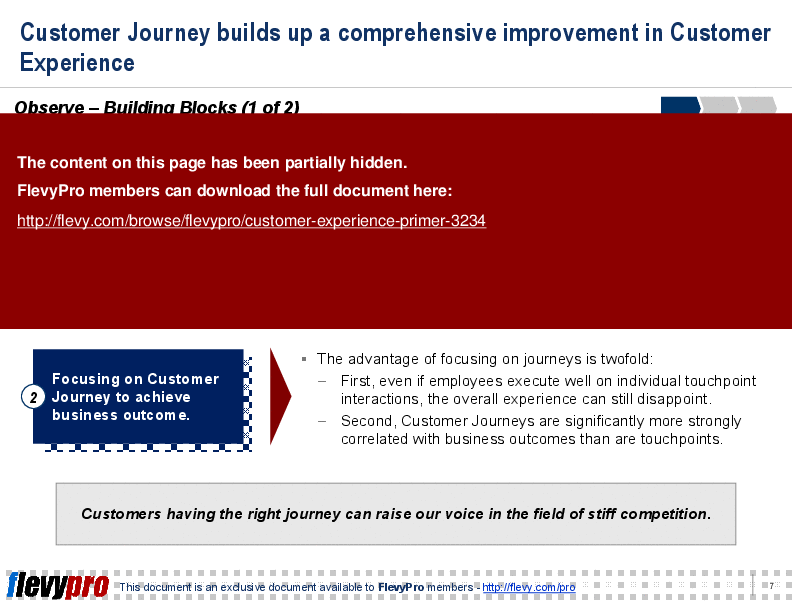
This PPT slide emphasizes the significance of understanding customer journeys over isolated touchpoints. While individual touchpoints, such as sales onboarding and problem resolution, may achieve high satisfaction ratings—90% for agents and 85% for web support—the overall journey satisfaction can plummet to 60%. This highlights the need for a holistic evaluation of customer experience. The framework presented aligns employees with customer needs, advocating for a journey-focused strategy. Statistics indicate that measuring customer journeys can boost satisfaction by 56% to 117% and increase willingness to recommend services by 58% to 104%. This data supports the transition from isolated touchpoint assessments to comprehensive customer experience management.
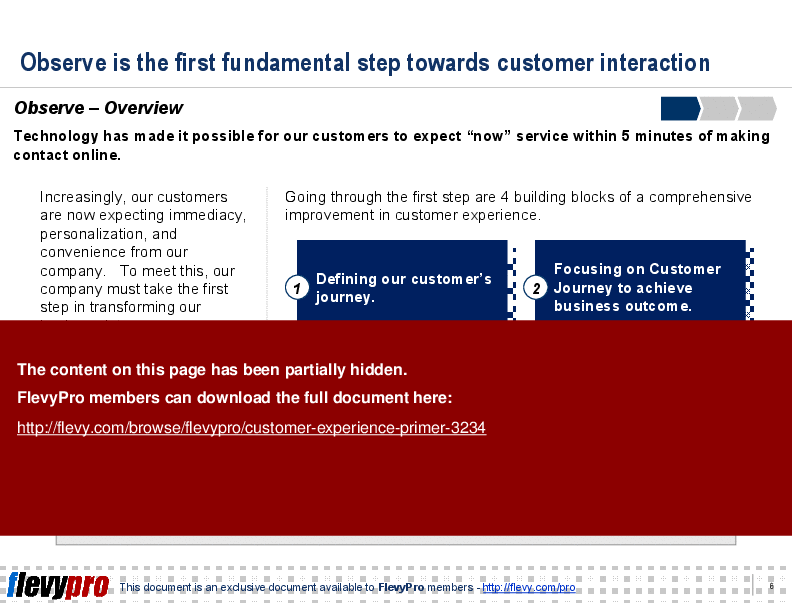
Observation is critical for enhancing customer interaction, as evolving customer expectations demand immediacy, personalization, and convenience. Organizations must transform into customer-centered entities, starting with "To Observe," which emphasizes understanding customer interactions from their perspective.
Four foundational building blocks guide this process:
1. "Defining our customer’s journey" involves mapping the entire customer experience to identify touchpoints for optimization.
2. "Focusing on Customer Journey to achieve business outcomes" highlights the direct implications of understanding the customer journey on business results.
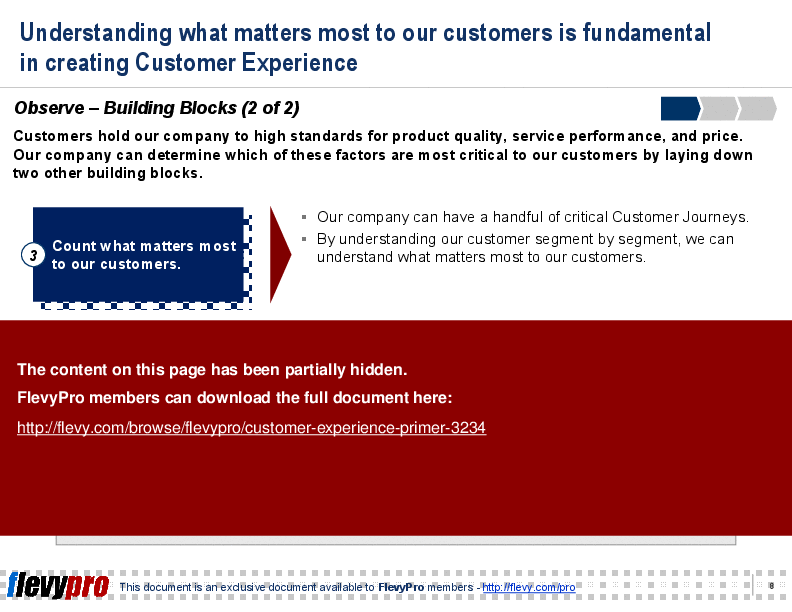
3. "Count what matters most to our customers" stresses measuring customer satisfaction and preferences to prioritize resonant features and services.
4. "Know your Customer Experience aspiration and common purpose" underscores the need for a unified vision within the organization to enhance overall effectiveness.
Observing customer interactions is a fundamental shift for organizations to meet modern expectations.
Source: Best Practices in Customer Experience, Customer Journey PowerPoint Slides: Customer Experience Primer PowerPoint (PPT) Presentation Slide Deck, LearnPPT Consulting
This framework is developed by a team of former McKinsey and Big 4 consultants. The presentation follows the headline-body-bumper slide format used by global consulting firms.
For $10.00 more, you can download this document plus 2 more FlevyPro documents. That's just $13 each.
ABOUT FLEVYPRO
This document is part of the FlevyPro Library, a curated knowledge base of documents for our FlevyPro subscribers.

FlevyPro is a subscription service for on-demand business frameworks and analysis tools. FlevyPro subscribers receive access to an exclusive library of curated business documents—business framework primers, presentation templates, Lean Six Sigma tools, and more—among other exclusive benefits.
The average daily rate of a McKinsey consultant is $6,625 (not including expenses). The average price of a Flevy document is $65.
Trusted by over 10,000+ Client Organizations
Since 2012, we have provided business templates to over 10,000 businesses and organizations of all sizes, from startups and small businesses to the Fortune 100, in over 130 countries.
"I have used FlevyPro for several business applications. It is a great complement to working with expensive consultants. The quality and effectiveness of the tools are of the highest standards."
– Moritz Bernhoerster, Global Sourcing Director at Fortune 500
"As a niche strategic consulting firm, Flevy and FlevyPro frameworks and documents are an on-going reference to help us structure our findings and recommendations to our clients as well as improve their clarity, strength, and visual power. For us, it is an invaluable resource to increase our impact and value."
– David Coloma, Consulting Area Manager at Cynertia Consulting
"As an Independent Management Consultant, I find Flevy to add great value as a source of best practices, templates and information on new trends. Flevy has matured and the quality and quantity of the library is excellent. Lastly the price charged is reasonable, creating a win-win value for
the customer, Flevy and the various authors. This is truly a service that benefits the consulting industry and associated clients. Thanks for providing this service.
"
– Jim Schoen, Principal at FRC Group
"As a consultant requiring up to date and professional material that will be of value and use to my clients, I find Flevy a very reliable resource.
The variety and quality of material available through Flevy offers a very useful and commanding source for information. Using Flevy saves me time, enhances my expertise and ends up being a good decision."
– Dennis Gershowitz, Principal at DG Associates
"FlevyPro provides business frameworks from many of the global giants in management consulting that allow you to provide best in class solutions for your clients."
– David Harris, Managing Director at Futures Strategy
"[Flevy] produces some great work that has been/continues to be of immense help not only to myself, but as I seek to provide professional services to my clients, it gives me a large "tool box" of resources that are critical to provide them with the quality of service and outcomes they are expecting."
– Royston Knowles, Executive with 50+ Years of Board Level Experience
"The wide selection of frameworks is very useful to me as an independent consultant. In fact, it rivals what I had at my disposal at Big 4 Consulting firms in terms of efficacy and organization."
– Julia T., Consulting Firm Owner (Former Manager at Deloitte and Capgemini)
"If you are looking for great resources to save time with your business presentations, Flevy is truly a value-added resource. Flevy has done all the work for you and we will continue to utilize Flevy as a source to extract up-to-date information and data for our virtual and onsite presentations!"
Download our FREE Digital Transformation Templates
Download our free compilation of 50+ Digital Transformation slides and templates. DX concepts covered include Digital Leadership, Digital Maturity, Digital Value Chain, Customer Experience, Customer Journey, RPA, etc.