
 Click main image to view in full screen. Unlock all 7 preview images:
Customer Decision Journey and Social Media Strategy – PowerPoint PPT Template
PowerPoint (PPT) 16 Slides FlevyPro Document
Sorry, this document is currently only available to FlevyPro subscribers.
You can join FlevyPro for only $39/month.
DIGITAL TRANSFORMATION PPT TEMPLATE DESCRIPTION
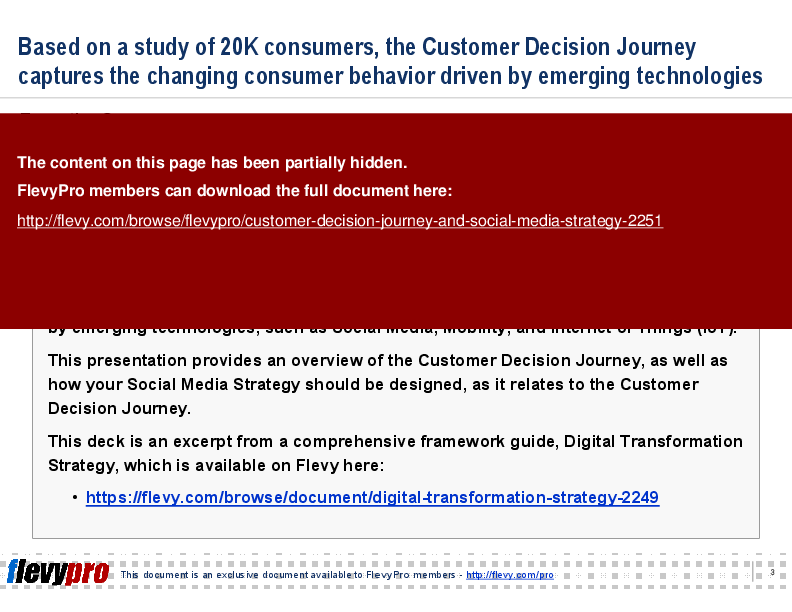
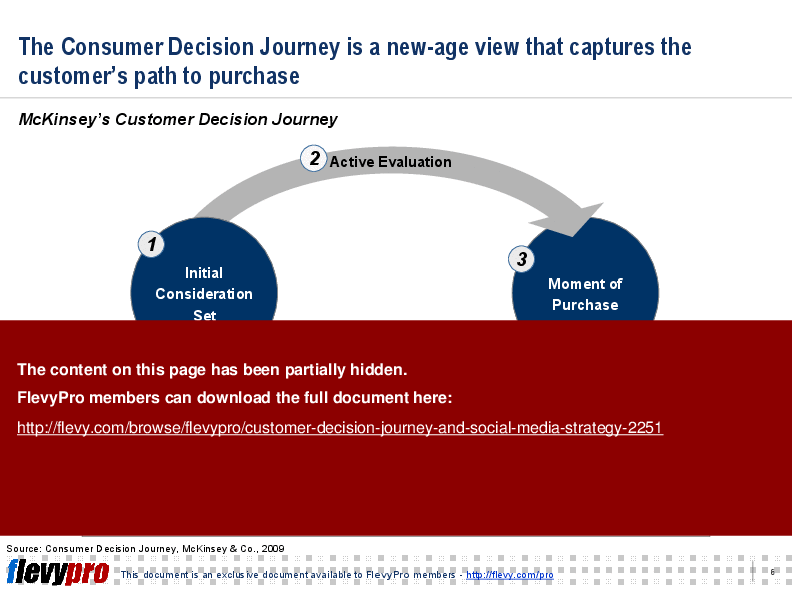
The Customer Decision Journey is a framework developed by McKinsey & Co. The management consulting firm developed this framework based on research of the purchase decisions of almost 20,000 consumers across 5 industries and 3 continents.
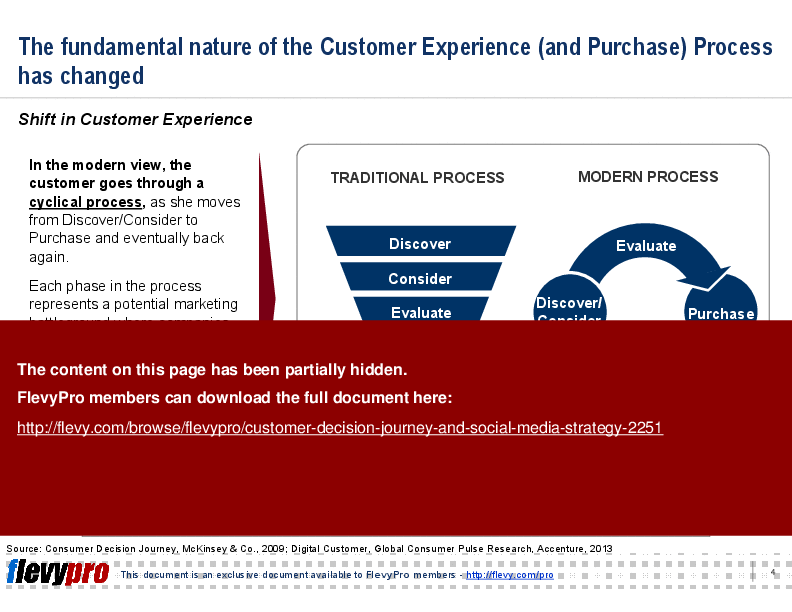
The Customer Decision Journey captures the changing behavior in consumer purchasing and experience from a linear process (with few touch points) to a continuous, circular process (with constant touch points). This shift is largely driven by emerging technologies, such as Social Media, Mobility, and Internet of Things (IoT).
This presentation provides an overview of the Customer Decision Journey, as well as how your Social Media Strategy should be designed, as it relates to the Customer Decision Journey.
This deck is an excerpt from our more comprehensive framework, Digital Transformation Strategy.
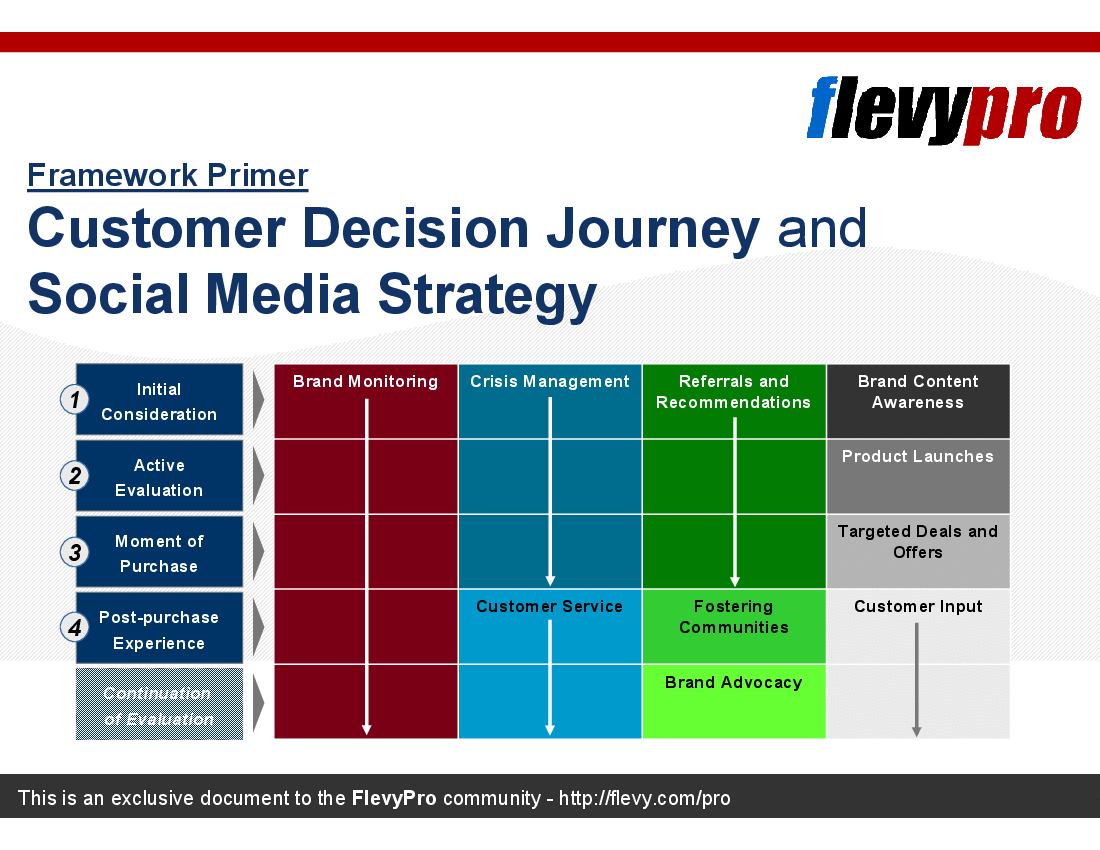
This PPT delves into the intricacies of the Customer Decision Journey, emphasizing the shift from a traditional linear process to a modern cyclical model. It highlights how each phase of the journey, from initial consideration to post-purchase experience, serves as a crucial marketing battleground. The presentation underscores the importance of understanding these phases to craft a more effective and responsive marketing strategy.
The deck also explores the role of social media in the Customer Decision Journey. It provides actionable insights on how to monitor, respond, amplify, and lead customer interactions across various touchpoints. By leveraging social media, businesses can enhance brand awareness, manage crises, and drive customer engagement, ultimately influencing purchasing decisions and fostering long-term loyalty.
This presentation is a must-have for executives looking to stay ahead in the digital age. It offers a comprehensive guide to aligning your social media strategy with the evolving customer journey, ensuring your marketing efforts are both targeted and impactful. Download this document to gain a competitive edge and transform your approach to customer engagement.
Got a question about this document? Email us at flevypro@flevy.com.
TOPIC FAQ
What are the main phases of the Customer Decision Journey?
The Customer Decision Journey reframes buying behavior from a linear funnel to a continuous, circular process with multiple marketing battlegrounds. It covers phases spanning initial consideration, evaluation and purchase, through to the post-purchase experience, treating each phase as an ongoing touchpoint across the customer lifecycle from initial consideration to post-purchase experience.How does social media influence the Customer Decision Journey?
Social media intersects the journey at constant touchpoints by enabling organizations to monitor sentiment, respond to inquiries or crises, amplify positive content, and lead conversations. These activities support brand awareness, crisis management, engagement, and influence over purchasing decisions, summarized as monitor, respond, amplify, and lead.What evidence supports using the Customer Decision Journey model?
The Customer Decision Journey was developed by McKinsey & Co. based on empirical research of almost 20,000 consumers across 5 industries and 3 continents. The findings showed a shift from few touchpoints in a linear funnel to continuous interactions driven by technologies like social media and IoT, backed by the almost 20,000-consumer study.What should I look for in a template covering customer journey and social media strategy?
Seek a template that maps journey phases (consideration to post-purchase), defines social media roles across touchpoints (monitor/respond/amplify/lead), and links tactics to outcomes like awareness, crisis management, engagement, and loyalty. Flevy’s Customer Decision Journey and Social Media Strategy provides an overview and social media guidance in a 16-slide PPT.How much time or budget should I expect to use a slide-deck template to align social media with the journey?
Time and budget depend on organizational scope, readiness, and the effort required to operationalize monitoring, response, and amplification capabilities; the slide deck itself provides conceptual framing and guidance. For a compact reference, Flevy’s Customer Decision Journey and Social Media Strategy presents the overview and guidance in a 16-slide PPT.I need to redesign our social media approach after a product crisis — what framework should I use?
Apply the Customer Decision Journey to identify which touchpoints were affected and deploy routines to monitor signals, respond quickly to issues, amplify corrective messaging, and lead with credibility. The framework treats post-purchase reputation and recovery as part of the continuous journey and emphasizes monitor/respond/amplify/lead.How do I map social media activities to phases like consideration and post-purchase?
Assign amplification and awareness-building content to the initial consideration phase; engagement and comparison content to evaluation and purchase phases; and monitoring, customer support, and crisis response to post-purchase. The Journey frames touchpoints as continuous, so map social roles such as amplify, respond, and monitor across these phases.What practical social media actions help influence purchasing decisions in this model?
Practical actions include continuous monitoring of conversations, rapid response to customer issues or crises, amplifying positive user-generated content and campaigns, and leading with thought leadership to shape perceptions. These actions aim to enhance brand awareness, drive engagement, influence purchases, and foster loyalty through monitor, respond, amplify, and lead.Source: Best Practices in Digital Transformation, Social Media Strategy, Customer Experience, Customer Journey PowerPoint Slides: Customer Decision Journey and Social Media Strategy PowerPoint (PPT) Presentation Slide Deck, LearnPPT Consulting
Sorry, this document is currently only available to FlevyPro subscribers.
You can join FlevyPro for only $39/month.
Did you need more documents?
Consider a FlevyPro subscription from $39/month. View plans here.




























