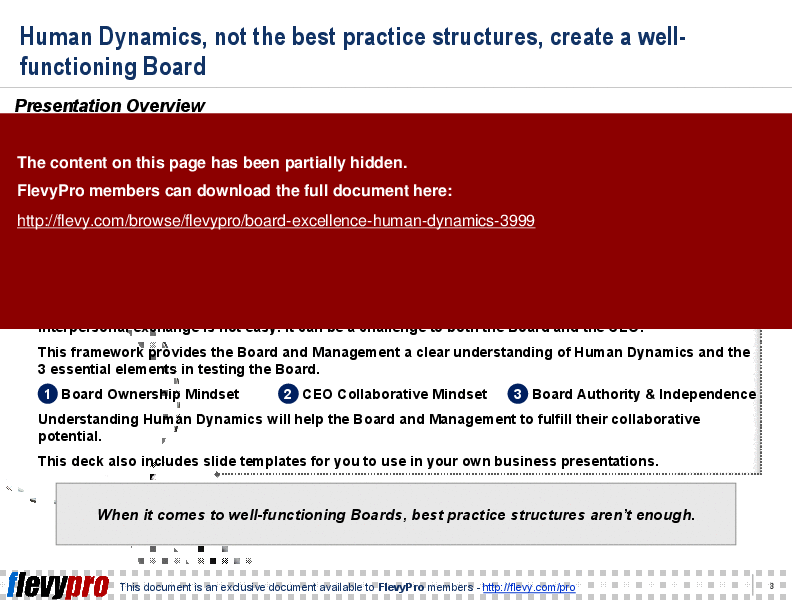

Many Boards have improved their structures and processes. Yet, despite all the Corporate Governance reforms undertaken, many Boards failed the test of the financial crisis. This shows that even if the Board is stacked with high qualified members and best practices, these are not enough.
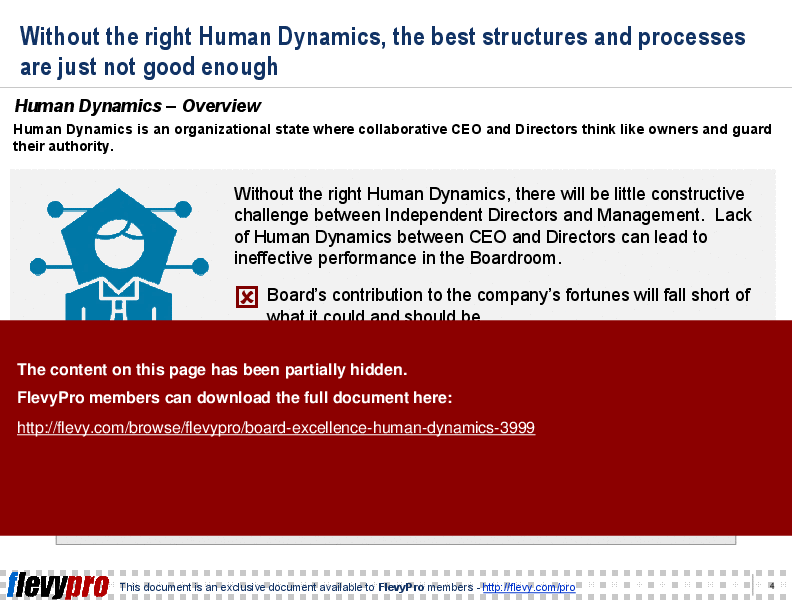
Human Dynamics has come to the forefront in today's business environment. Without the right Human Dynamics, there will be little constructive challenge between independent Directors and Management, no matter how good a Board's processes are.
Without Human Dynamics, the Board's contribution to the company's fortune is likely to fall short of what it could and should. This is also a concern for executives who are not Directors but report to the Board. Without Human Dynamics, it makes it difficult for them to develop healthy and productive relationships with their Boards. Indeed, understanding and identifying the contours of such a fluid interpersonal exchange is not easy. It can be a challenge to both the Board and the CEO.
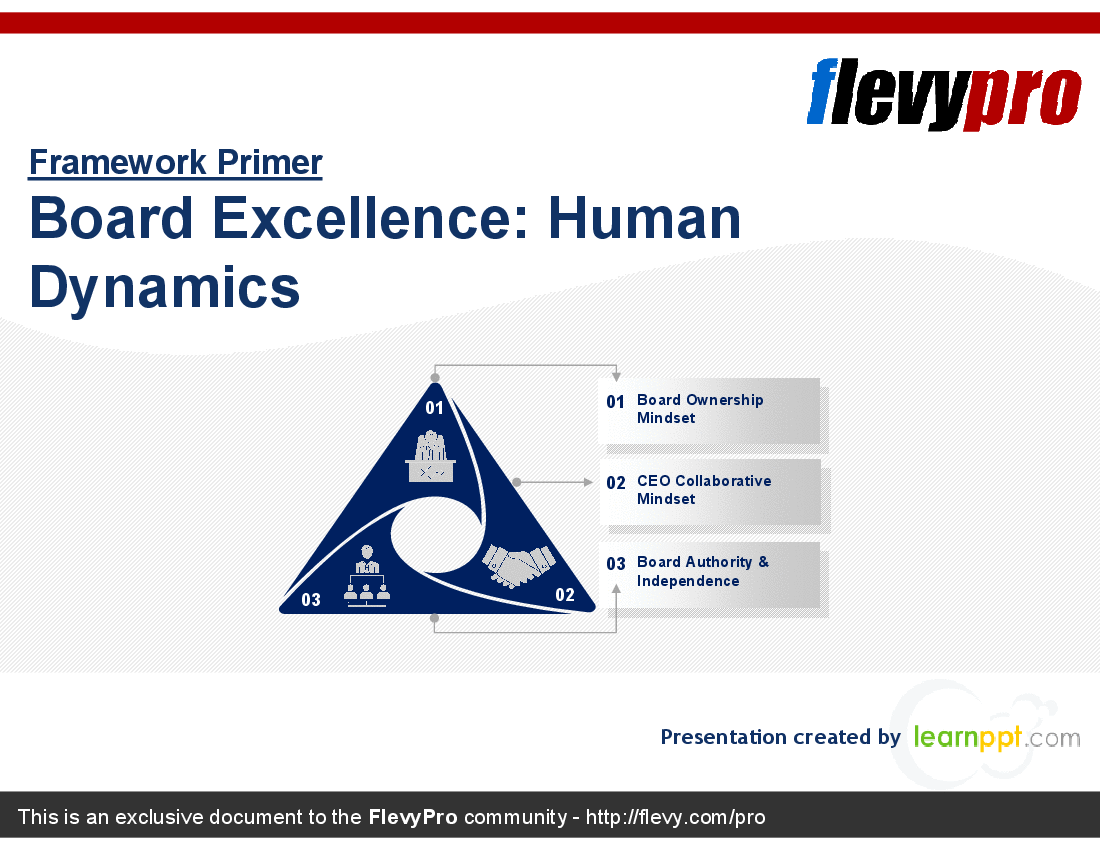
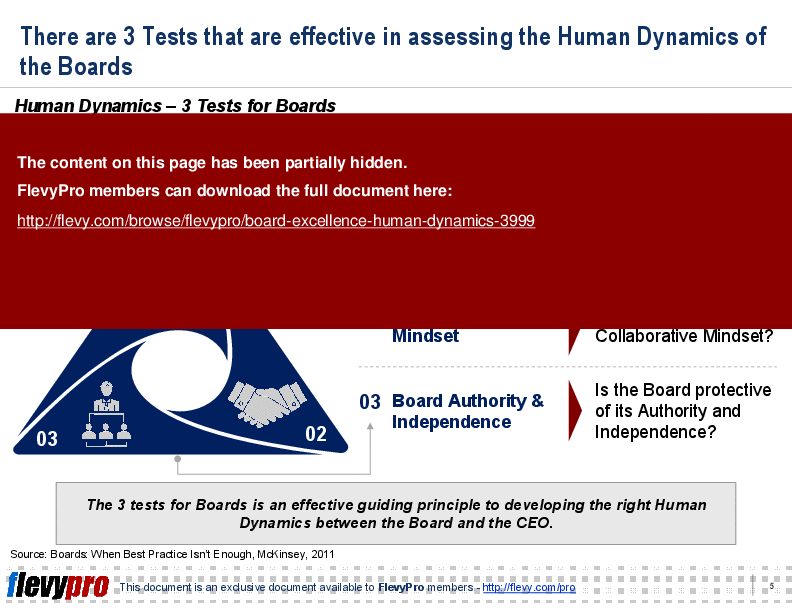
This framework provides the Board and Management a clear understanding of Human Dynamics and the 3 essential elements in testing the Board"
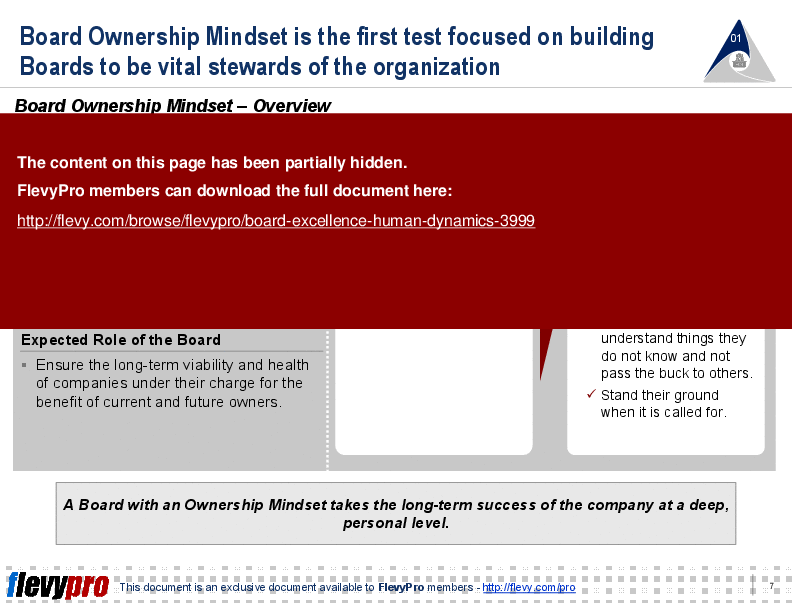
1. Board Ownership Mindset
2. CEO Collaborative Mindset
3. Board Authority & Independence
Understanding Human Dynamics will help the Board and Management to fulfill their collaborative potential.
This deck also includes slide templates for you to use in your own business presentations.
This presentation delves into the critical aspects of Board Ownership Mindset, CEO Collaborative Mindset, and Board Authority & Independence. It offers actionable insights and practical steps for Boards to enhance their effectiveness. The deck is structured to facilitate a deep understanding of these dynamics, ensuring that Boards are not just compliant, but also strategically aligned with the company's long-term goals. The included slide templates are designed to be easily customizable, enabling you to integrate these best practices into your own presentations seamlessly. This resource is indispensable for Boards aiming to elevate their governance standards and drive sustainable success.
Got a question about this document? Email us at flevypro@flevy.com.
Executive Summary
The "Board Excellence: Human Dynamics" presentation offers a strategic framework developed by former McKinsey and Big 4 consultants, focusing on enhancing board governance through improved human dynamics. This resource emphasizes the importance of fostering a collaborative environment between board members and management, highlighting 3 critical tests: Board Ownership Mindset, CEO Collaborative Mindset, and Board Authority & Independence. By implementing these insights, corporate executives can enhance board effectiveness, drive constructive challenges, and ultimately contribute to the organization's success.
Who This Is For and When to Use
• Corporate executives seeking to improve board governance and dynamics
• Integration leaders focused on aligning management and board objectives
• Consultants advising organizations on governance best practices
• Board members aiming to enhance their effectiveness and authority
Best-fit moments to use this deck:
• During board retreats or strategic planning sessions
• When onboarding new board members to establish expectations
• In workshops aimed at improving collaboration between management and the board
• For governance reviews and assessments of board effectiveness
Learning Objectives
• Define the concept of Human Dynamics and its impact on board effectiveness
• Assess the current state of board dynamics using the 3 tests
• Develop strategies to foster a Board Ownership Mindset among directors
• Identify traits of a collaborative CEO and their importance in governance
• Establish practices to protect board authority and independence
• Create actionable plans to enhance collaboration between the board and management
Table of Contents
• Overview (page 3)
• Board Ownership Mindset (page 7)
• CEO Collaborative Mindset (page 11)
• Board Authority & Independence (page 14)
• Templates (page 18)
Primary Topics Covered
• Board Ownership Mindset - This section explores the necessity for board members to adopt an ownership mentality, ensuring long-term success and accountability for the organization.
• CEO Collaborative Mindset - Focuses on the importance of a CEO who actively collaborates with the board, fostering trust and open communication to enhance governance.
• Board Authority & Independence - Discusses strategies for maintaining the board's authority against potential overreach by a successful CEO, ensuring robust governance practices.
• Human Dynamics - Examines the overall impact of interpersonal relationships within the boardroom and between management and directors on organizational performance.
• Three Tests for Boards - Introduces a framework for assessing board dynamics through the lenses of ownership mindset, collaboration, and authority.
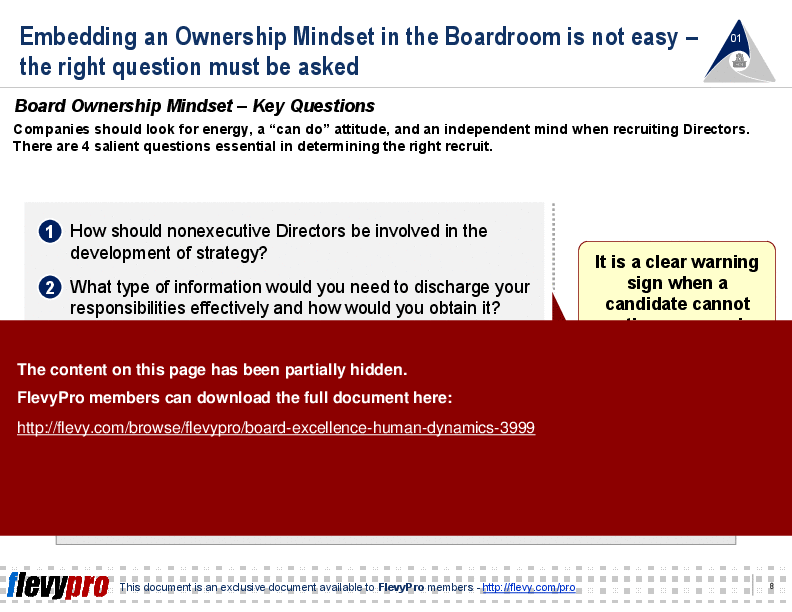
• Key Questions for Board Recruitment - Provides essential questions to guide the selection of board members who will contribute positively to governance.
Deliverables, Templates, and Tools
• Board Ownership Mindset assessment template
• CEO Collaborative Mindset evaluation framework
• Board Authority & Independence checklist
• Key questions guide for recruiting board members
• Action plan template for enhancing board dynamics
• Presentation slides for internal workshops on governance
Slide Highlights
• Overview of Human Dynamics and its significance in board effectiveness
• Visual representation of the 3 tests for assessing board dynamics
• Key questions for evaluating potential board members
• Strategies for fostering a collaborative environment between the board and management
• Framework for protecting board authority and independence
Potential Workshop Agenda
Board Dynamics Assessment Session (90 minutes)
• Review current board dynamics and identify areas for improvement
• Discuss the 3 tests for assessing board effectiveness
• Develop action items based on assessment findings
Collaborative Leadership Workshop (60 minutes)
• Explore the traits of a collaborative CEO
• Share best practices for enhancing communication between the board and management
• Identify strategies for building trust and accountability
Customization Guidance
• Tailor the assessment templates to reflect specific organizational goals and challenges
• Adjust the workshop agenda to focus on particular areas of concern within the board
• Incorporate company-specific metrics and terminology in the deliverables
• Modify case studies and examples to align with the industry context of the organization
Secondary Topics Covered
• The role of non-executive directors in governance
• Strategies for effective succession planning
• Importance of industry knowledge among board members
• Techniques for fostering constructive debate in the boardroom
• Best practices for onboarding new directors
Topic FAQ
Document FAQ
These are questions addressed within this presentation.
What is the significance of Human Dynamics in board governance?
Human Dynamics refers to the interpersonal relationships and collaborative spirit between board members and management. It is crucial for fostering effective governance and ensuring that the board can challenge management constructively.
How can we assess our board's current dynamics?
Utilize the 3 tests outlined in the presentation to evaluate the board's ownership mindset, the CEO's collaborative mindset, and the board's authority and independence.
What are the key traits to look for in a collaborative CEO?
A collaborative CEO should be open to feedback, provide transparent communication, and actively involve the board in significant decisions.
How can we protect the board's authority?
Implement strategies such as limiting the CEO's tenure, ensuring robust questioning of management proposals, and maintaining a clear distinction between the roles of the board and management.
What templates are included in this presentation?
The presentation includes templates for assessing board dynamics, evaluating CEO collaboration, and guiding the recruitment of board members.
How can we foster an Ownership Mindset among board members?
Encourage board members to take personal responsibility for the organization's success, engage deeply in strategic discussions, and challenge management when necessary.
What should we do if a board member is not contributing effectively?
Evaluate their fit for the board using the key questions provided and consider whether additional training or support is needed to enhance their contributions.
How often should we review our board dynamics?
Regular assessments, ideally annually or semi-annually, can help ensure that the board remains effective and aligned with organizational goals.
Glossary
• Human Dynamics - The interpersonal relationships and collaborative spirit within the boardroom.
• Board Ownership Mindset - A mentality where board members take personal responsibility for the organization's success.
• CEO Collaborative Mindset - The approach of a CEO who actively engages with the board and values their input.
• Board Authority - The power and independence of the board to govern effectively.
• Non-Executive Director - A board member who does not engage in the day-to-day management of the organization.
• Succession Planning - The process of identifying and developing new leaders to replace old leaders when they leave or retire.
• Constructive Debate - Healthy discussions that challenge ideas and lead to better decision-making.
• Key Questions for Recruitment - Essential inquiries to assess potential board members' fit and contributions.
• Board Evaluation - The process of assessing the effectiveness and performance of the board.
• Governance Practices - Established methods and procedures for managing and directing an organization.
• Trust - The foundation of effective governance, built through transparency and consistent interactions.
• Accountability - The obligation of board members to take responsibility for their actions and decisions.
• Collaboration - Working together to achieve common goals and improve organizational performance.
• Authority - The legitimate power granted to the board to make decisions and govern the organization.
• Engagement - The involvement and commitment of board members in governance activities.
• Transparency - Openness in communication and decision-making processes within the board.
• Performance Metrics - Standards used to measure the effectiveness and success of the board.
• Independence - The ability of the board to operate free from undue influence or control by management.
• Strategic Planning - The process of defining an organization's direction and making decisions on allocating resources.
• Board Retreat - A meeting held away from the usual environment to focus on strategic issues and team building.
• Governance Review - An assessment of the effectiveness of governance structures and practices within an organization.
Source: Best Practices in Board PowerPoint Slides: Board Excellence: Human Dynamics PowerPoint (PPT) Presentation Slide Deck, LearnPPT Consulting
Did you need more documents?
Consider a FlevyPro subscription from $39/month. View plans here.
For $10.00 more, you can download this document plus 2 more FlevyPro documents. That's just $13 each.
|
Download our FREE Strategy & Transformation Framework Templates
Download our free compilation of 50+ Strategy & Transformation slides and templates. Frameworks include McKinsey 7-S, Balanced Scorecard, Disruptive Innovation, BCG Curve, and many more. |