
Designed by a firm of ex-consultants from McKinsey, E&Y, and Bearing Point, this presentation breaks down a consulting framework on Value-based Pricing. Value-based Pricing is a superior approach to Cost-based and Competitive Pricing.
Focuses on value--the value that your new product brings to the customer.
Provides insights into new, innovative ways of delivering your product.
Construct a pricing structure that allows you to capture more profit from each sale.
PRICING STRATEGY PPT DESCRIPTION
Editor Summary
Value-based Pricing Strategy is a 47-slide PowerPoint presentation developed by a team of ex-consultants from McKinsey, E&Y, and Bearing Point that explains a consulting-style, 4-phase value-based pricing methodology.
Read moreIncludes templates and tools such as a Pricing Staircase diagram, Benefits Matrix, Customer Segmentation model, Pricing Strategy Framework, and a case study on an automated call center. Targeted at Pricing Strategy Managers, Product Managers, Sales Leaders, and Marketing Teams for market entry, new product launches, pricing adjustments, and workshops; sold as a digital download on Flevy.
Use this deck when an organization needs to move from cost- or competition-led pricing to pricing aligned with customer value — for example during market entry, product launches, or when reassessing pricing strategy.
Pricing Strategy Managers building a pricing strategy that aligns price with customer-perceived value using the 4-phase methodology.
Product Managers defining pricing levels and value propositions for a new offering via the Pricing Staircase and Benefits Matrix.
Sales Leaders preparing value-based sales messaging and sales team alignment around value delivery and equitable value split.
Marketing Teams segmenting customers by willingness to pay and economic impact to set differentiated prices.
The structured, phase-based approach — from value ceiling to pricing structure — follows hypothesis-driven consulting practice seen in firms like McKinsey and E&Y.
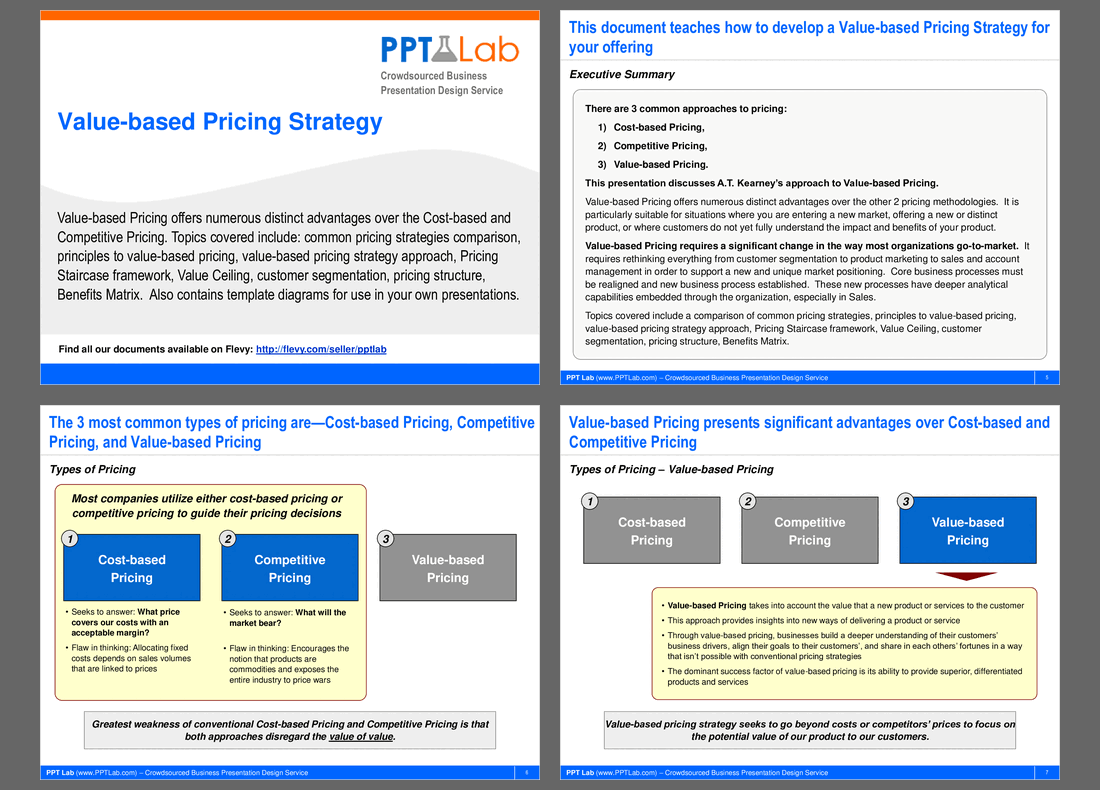
There are 3 common approaches to pricing: Cost-based Pricing, Competitive Pricing, and Value-based Pricing.
Value-based Pricing offers numerous distinct advantages over the other 2 pricing methodologies. It is particularly suitable for situations where you are entering a new market, offering a new or distinct product, or where customers do not yet fully understand the impact and benefits of your product. Value-based pricing allows companies to build a deeper understanding of their customers' business drivers, align their goals with the customers' goals, and, ultimately, share in each others' attained value in a way that isn't possible with traditional pricing approaches.
Value-based Pricing requires a significant change in the way most organizations go-to-market. It requires rethinking everything from customer segmentation to product marketing to sales and account management in order to support a new and unique market positioning. Core business processes must be realigned and new business process established. These new processes have deeper analytical capabilities embedded through the organization, especially in Sales.
Topics covered include a comparison of common pricing strategies, principles to value-based pricing, value-based pricing strategy approach, Pricing Staircase framework, Value Ceiling, customer segmentation, pricing structure, Benefits Matrix.
This PPT delves into the intricacies of implementing a value-based pricing strategy, outlining a comprehensive 4-phase approach. It emphasizes the importance of determining the value ceiling, creating customer segments, determining an equitable split, and developing a robust pricing structure. The step-by-step methodology ensures that businesses can effectively align their pricing strategies with customer value, thereby maximizing profitability and customer satisfaction.
The presentation also includes a detailed case study on an automated call center solution, showcasing the practical application of the value-based pricing strategy. This real-world example highlights how advanced speech recognition technology can enhance customer interactions and operational efficiency. Key performance metrics and areas of value creation are meticulously analyzed, providing actionable insights for businesses looking to adopt a value-based pricing approach.
Got a question about the product? Email us at support@flevy.com or ask the author directly by using the "Ask the Author a Question" form. If you cannot view the preview above this document description, go here to view the large preview instead.
MARCUS OVERVIEW
This synopsis was written by Marcus [?] based on the analysis of the full 47-slide presentation.
Executive Summary
The Value-based Pricing Strategy presentation is crafted by a team of ex-consultants from McKinsey, E&Y, and Bearing Point, offering a consulting-grade resource that empowers organizations to redefine their pricing strategies. This presentation elucidates the advantages of Value-based Pricing over traditional Cost-based and Competitive Pricing methods. It is particularly beneficial for companies entering new markets or launching unique products. By leveraging this framework, buyers will gain insights into customer value perception, enabling them to realign their pricing strategies and optimize revenue generation.
Who This Is For and When to Use
• Pricing Strategy Managers aiming to enhance revenue models
• Product Managers launching new offerings or entering new markets
• Sales Leaders seeking to communicate product value effectively
• Marketing Teams focused on aligning pricing with customer expectations
Best-fit moments to use this deck:
• During strategic planning sessions for new product launches
• When conducting market analysis for pricing adjustments
• In workshops focused on customer segmentation and value communication
• For training sessions on implementing Value-based Pricing frameworks
Learning Objectives
• Define Value-based Pricing and its advantages over traditional methods
• Build a comprehensive pricing strategy that aligns with customer value
• Establish customer segments based on value perception and willingness to pay
• Create a pricing structure that reflects the value delivered to customers
• Develop a Benefits Matrix to quantify financial and non-financial gains
• Implement the Pricing Staircase framework to identify optimal pricing strategies
Primary Topics Covered
• Value-based Pricing Overview - An introduction to the concept of Value-based Pricing and its significance in modern pricing strategies.
• Value-based Pricing Strategy Approach - A structured methodology for developing a Value-based Pricing strategy, including key phases.
• Pricing Staircase Framework - A visual representation of the steps involved in determining optimal pricing levels.
• Customer Segmentation - Techniques for identifying and categorizing customers based on their value perceptions and needs.
• Benefits Matrix - A tool for assessing both financial and non-financial benefits associated with pricing decisions.
• Case Example - A real-world application of the Value-based Pricing strategy in an automated call center solution.
Deliverables, Templates, and Tools
• Pricing Strategy Framework template for structuring Value-based Pricing approaches
• Customer Segmentation model to categorize clients based on value perception
• Benefits Matrix template for quantifying and qualifying value delivered
• Pricing Staircase diagram to visualize pricing strategy development
• Case Study documentation to illustrate practical application of the strategy
• Presentation slides for internal training on Value-based Pricing concepts
Slide Highlights
• Overview of Value-based Pricing advantages over traditional pricing methods
• Detailed explanation of the Pricing Staircase framework
• Customer segmentation strategies and their implications on pricing
• Real-world case study showcasing successful implementation of Value-based Pricing
• Visual templates for Benefits Matrix and Pricing Structure development
Potential Workshop Agenda
Value-based Pricing Strategy Workshop (2 hours)
• Introduction to Value-based Pricing concepts and benefits
• Group activity on customer segmentation and value identification
• Discussion on developing a Benefits Matrix for pricing decisions
Case Study Analysis Session (1 hour)
• Review of the automated call center solution case study
• Breakout groups to discuss insights and applications
• Presentation of group findings and recommendations
Customization Guidance
• Tailor the Benefits Matrix to reflect specific industry metrics and customer needs
• Adjust customer segmentation criteria based on market research and insights
• Modify the Pricing Staircase framework to align with organizational goals and strategies
• Incorporate company-specific examples into case studies for relevance
Secondary Topics Covered
• Comparison of Cost-based, Competitive, and Value-based Pricing strategies
• Insights into customer economics and how they influence pricing decisions
• Challenges in articulating and quantifying product value
• Techniques for communicating value effectively to customers
• Strategies for managing pricing integrity and sales team alignment
Topic FAQ
What are the main phases of a value-based pricing approach?
A value-based pricing approach typically follows 4 phases: finding the value ceiling (maximum willingness to pay), creating customer segments based on value perception, determining an equitable split of value between seller and buyer, and developing a pricing structure that reflects delivered value, summarized in a 4-phase approach.
How does a Benefits Matrix support pricing decisions?
A Benefits Matrix categorizes and quantifies both financial and non-financial benefits that a product delivers, helping to translate customer impact into price justification. It aids cross-functional alignment between product, sales, and finance and is provided as a Benefits Matrix template.
What is the Pricing Staircase and how is it used?
The Pricing Staircase is a visual framework that maps incremental pricing options and value steps to identify optimal price points based on customer value. It helps teams decide tiering, bundling, and thresholds and is illustrated in the presentation as a Pricing Staircase diagram.
What should I look for when buying a value-based pricing toolkit?
Look for a clear methodology with defined phases, practical templates for segmentation and benefits quantification, a worked case study, and guidance for workshops and customization. Flevy's Value-based Pricing Strategy includes a 4-phase approach, templates, a case example, and 47 slides of guidance.
For a small product team on a tight budget, when does buying a pricing template make sense?
Purchasing templates is appropriate when the team is preparing a market entry or new product launch that requires structured customer segmentation, benefit quantification, and sales alignment rather than ad-hoc pricing. Flevy's Value-based Pricing Strategy supplies a Customer Segmentation model and Benefits Matrix template.
I need to price a new SaaS product — what value-based steps should I follow?
Follow the 4 phases: estimate the value ceiling for typical customers, segment customers by economic impact and willingness to pay, define an equitable split of created value, and construct a pricing structure using tools like a Benefits Matrix and the Pricing Staircase.
How can customer segmentation be used to set different prices for different customers?
Segment customers by criteria such as economic impact, urgency of need, and willingness to pay, then assign pricing tiers or bundles that reflect each segment's value. This approach is operationalized with a Customer Segmentation model and linked to quantified benefits in a Benefits Matrix.
How do case studies help when implementing value-based pricing?
Case studies demonstrate practical application, show which metrics and value drivers to measure, and provide worked examples for internal buy-in. The presentation includes a real-world automated call center case study that analyzes key performance metrics and areas of value creation.
Document FAQ
These are questions addressed within this presentation.
What is Value-based Pricing?
Value-based Pricing is a strategy that sets prices primarily based on the perceived or estimated value of a product or service to the customer rather than on the cost of production or competitive prices.
How does Value-based Pricing differ from Cost-based Pricing?
Cost-based Pricing focuses on covering production costs plus a margin, while Value-based Pricing emphasizes the value that the product delivers to the customer, allowing for potentially higher pricing.
What are the key phases in developing a Value-based Pricing strategy?
The key phases include finding the value ceiling, creating customer segments, determining an equitable split of value, and developing a pricing structure that reflects the value delivered.
How can I effectively communicate value to customers?
Communicating value involves understanding customer needs, articulating the benefits of your product, and demonstrating how it meets their specific requirements and improves their bottom line.
What is a Benefits Matrix?
A Benefits Matrix is a tool used to categorize and quantify the financial and non-financial benefits of a product or service, helping to justify pricing decisions.
How do I segment customers for Value-based Pricing?
Customer segmentation can be based on factors such as economic impact, urgency of needs, and willingness to pay, allowing for tailored pricing strategies that reflect the unique value for each segment.
What challenges might I face when implementing Value-based Pricing?
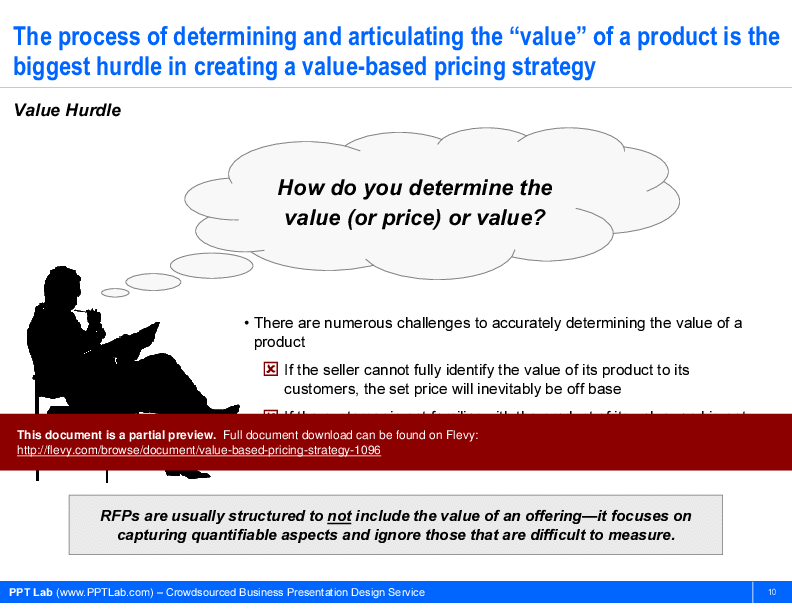
Challenges include accurately determining the value of your product, aligning internal processes to support the strategy, and effectively communicating value to customers who may not fully understand it.
How can the Pricing Staircase framework assist in pricing decisions?
The Pricing Staircase framework provides a structured approach to evaluating pricing options, ensuring that all relevant factors are considered in determining optimal pricing levels.
What role does customer feedback play in Value-based Pricing?
Customer feedback is crucial for understanding perceived value, refining pricing strategies, and ensuring that the pricing structure aligns with customer expectations and market conditions.
Glossary
• Value-based Pricing - A pricing strategy that sets prices based on the perceived value to the customer.
• Cost-based Pricing - A pricing method that determines price based on production costs plus a margin.
• Competitive Pricing - A strategy that sets prices based on competitors' pricing.
• Benefits Matrix - A tool for assessing financial and non-financial benefits of a product.
• Customer Segmentation - The process of dividing customers into groups based on shared characteristics.
• Pricing Staircase - A framework for determining optimal pricing levels through structured evaluation.
• Value Ceiling - The maximum price a customer is willing to pay based on perceived value.
• Equitable Split - The division of value created between the seller and the customer.
• Total Cost of Ownership (TCO) - The total cost of acquiring, operating, and maintaining a product over its lifecycle.
• Return on Investment (ROI) - A measure used to evaluate the efficiency of an investment.
• Key Performance Indicators (KPIs) - Metrics used to assess the success of an organization or a particular activity.
• Economic Model - A representation of the economic factors that influence customer decisions and value perception.
• Performance-based Fees - Charges that are contingent on the performance outcomes achieved by the product or service.
• Bundled Solutions - A combination of products or services offered together at a single price.
• Market Positioning - The process of establishing a brand or product in the minds of consumers.
• Sales Team Alignment - Ensuring that the sales team understands and adheres to the pricing strategy.
• Non-price Discounting - Strategies that offer value without reducing the price, such as enhanced service or features.
• Sensitivity Analysis - An analysis used to predict the outcome of a decision given a certain range of variables.
• Customer Economics - The financial aspects that influence customer purchasing decisions.
• Value Proposition - A statement that explains how a product solves customers' problems or improves their situation.
This PPT slide outlines 3 primary pricing strategies: Cost-based Pricing, Competitive Pricing, and Value-based Pricing. Cost-based Pricing determines a price that covers costs and ensures a profit margin, but relies on sales volume assumptions, which can lead to inaccuracies. Competitive Pricing answers what the market can bear, often resulting in reactive pricing based on competitors, which can trigger price wars and diminish profitability. Value-based Pricing aligns pricing with perceived customer value, suggesting a more strategic approach compared to the first 2 methods. The limitations of traditional pricing methods highlight the need for businesses to adopt Value-based Pricing for enhanced profitability and market positioning.
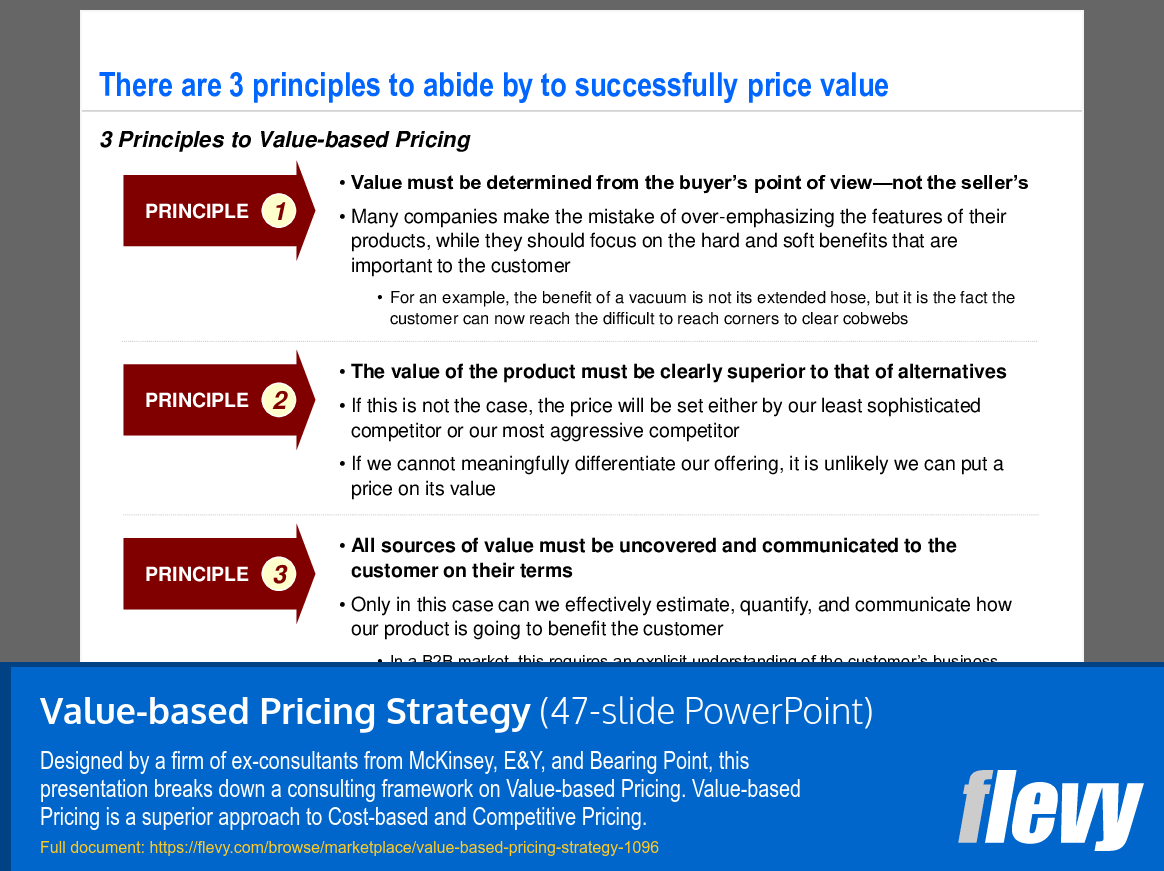
Three essential principles for implementing a value-based pricing strategy are outlined. First, value should be assessed from the buyer's perspective, focusing on customer benefits rather than product features. For example, a vacuum cleaner's true value lies in its ability to clean hard-to-reach areas, not just its specifications. Second, a product's value must be distinctly superior to market alternatives; without differentiation, pricing will be influenced by competitors. Third, identifying and communicating all sources of value to the customer is crucial, requiring a deep understanding of their business needs. Effectively communicating this value enables accurate pricing strategy estimation and justification. These principles guide organizations in aligning pricing strategies with customer perceptions of value.
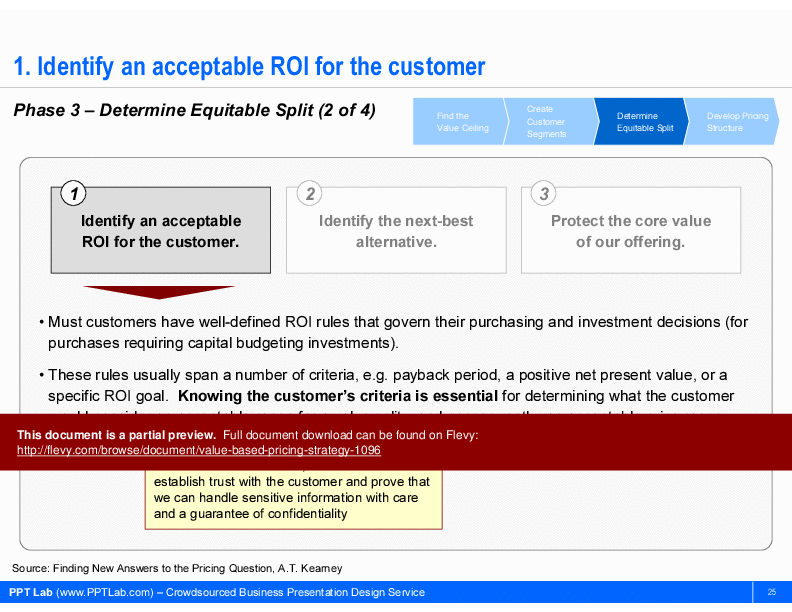
This PPT slide focuses on identifying acceptable return on investment (ROI) for customers within a value-based pricing strategy. Customers must have clearly defined ROI rules, such as payback periods, positive net present values, or specific ROI targets, which influence their purchasing decisions, especially for capital expenditures. Knowing these criteria is essential for determining a fair value split and acceptable price range for offerings. Establishing trust with customers is crucial before discussing sensitive ROI issues, as it enables gathering insights into customer criteria. This step is part of a broader pricing strategy framework aimed at determining an equitable value split, leading to subsequent steps like identifying the next-best alternative and protecting core value.
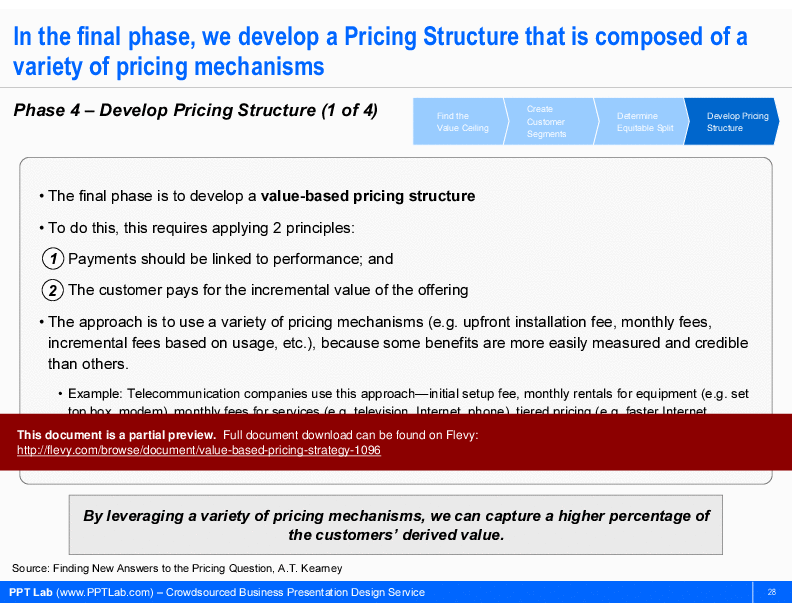
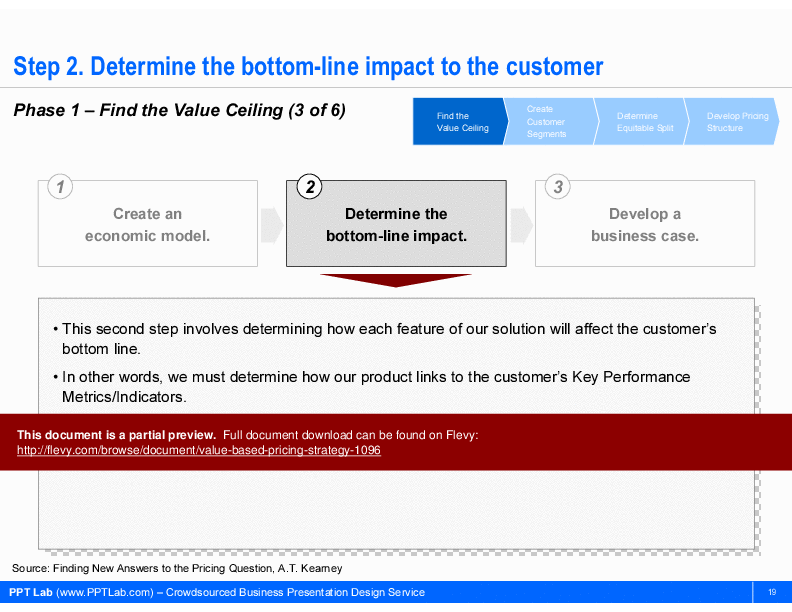
This PPT slide outlines a four-phase approach to developing a value-based pricing strategy. The first phase, "Find the Value Ceiling," focuses on understanding the maximum price customers are willing to pay by creating an economic model and assessing the bottom-line impact. The second phase, "Create Customer Segments," identifies distinct customer segments based on economic impact and time to realize benefits, tailoring offerings to enhance engagement. The third phase, "Determine Equitable Split," identifies acceptable returns on investment for customers while protecting core value. Finally, the fourth phase, "Develop Pricing Structure," advocates for a diversified pricing mechanism linked to performance, ensuring customers pay for incremental value while maintaining pricing simplicity and aligning with market expectations. This structured approach enhances pricing effectiveness and strengthens customer relationships.
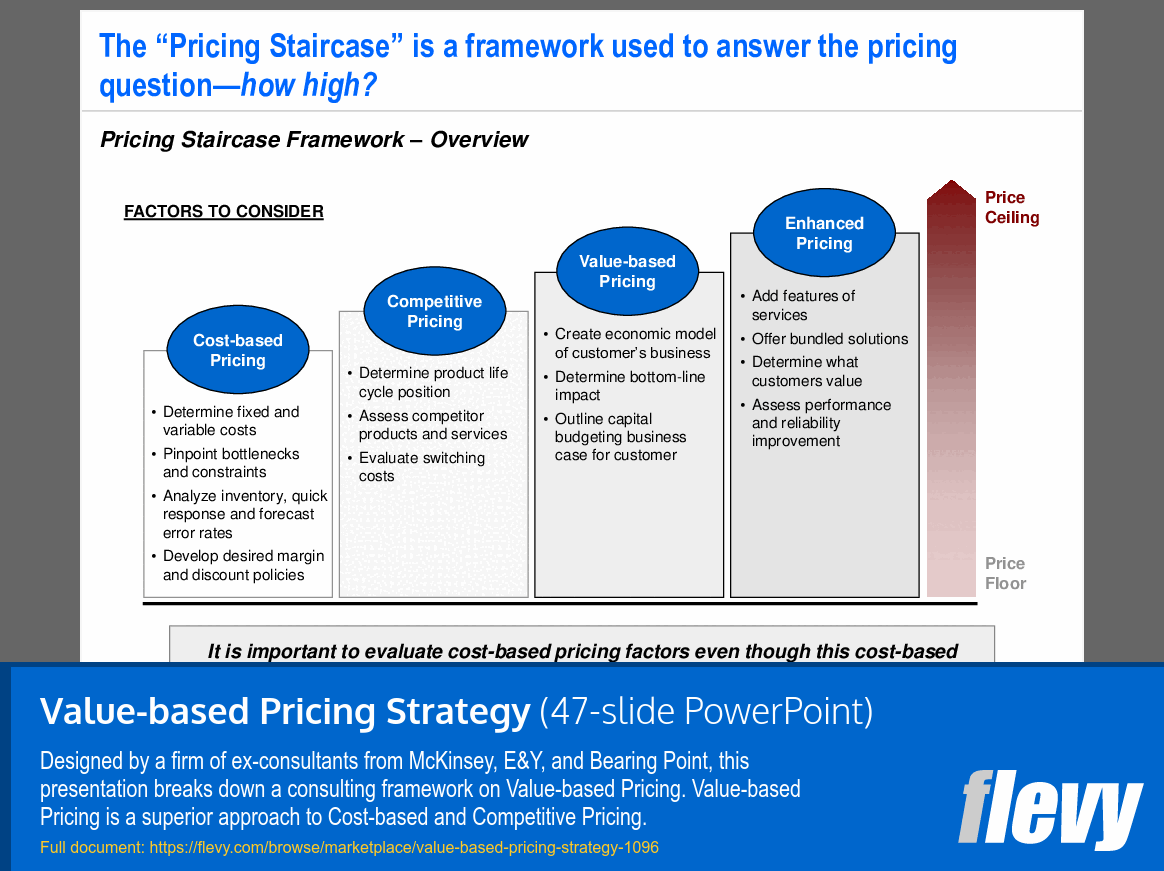
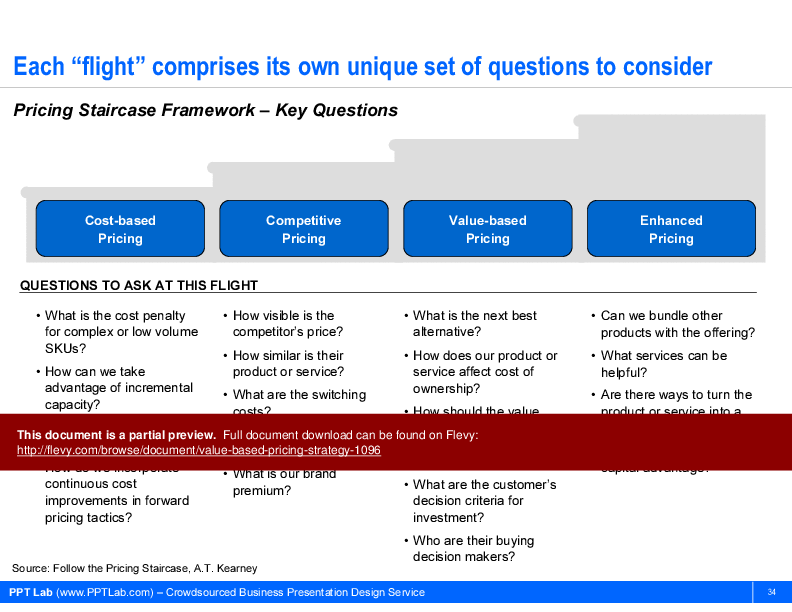
This PPT slide illustrates a structured approach to pricing strategies, represented as a staircase with distinct methodologies: Cost-based Pricing, Competitive Pricing, Value-based Pricing, and Enhanced Pricing. Climbing the staircase signifies the importance of progressing through these strategies to uncover pricing opportunities. A comprehensive understanding of all pricing methods is essential for identifying sustainable price ceilings, focusing on long-term profitability over short-term gains. The slide advocates for a methodical examination of each pricing tier, encouraging organizations to reassess their pricing frameworks and fully explore the implications of their pricing decisions.
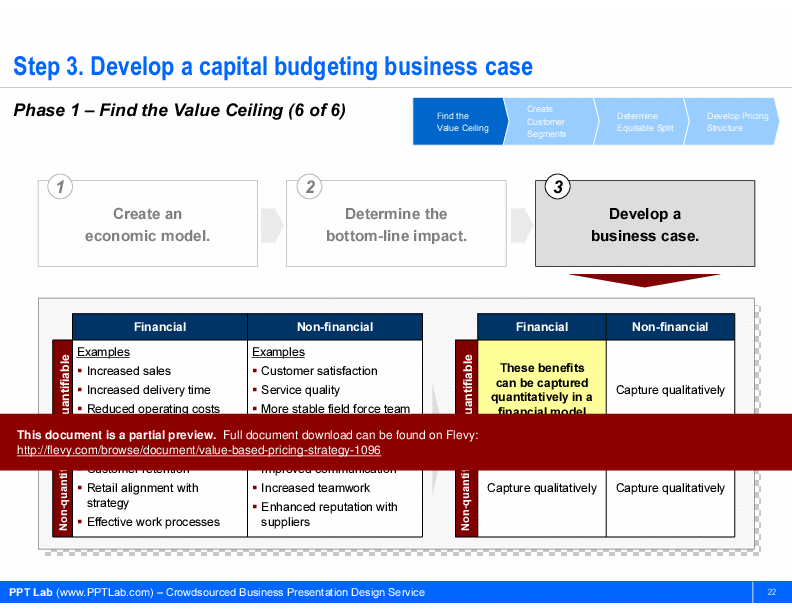
This PPT slide outlines a structured approach to developing a capital budgeting business case, focusing on the "Find the Value Ceiling" phase. Key steps include creating an economic model, determining bottom-line impact, and developing a business case. The central tool is the Benefits Matrix, which categorizes benefits into 5 areas: Revenue Enhancement, Cost Reduction, Cost Avoidance, Capital Reduction, and Capital Avoidance. The matrix distinguishes between financial and non-financial benefits, further classified as quantifiable or non-quantifiable. Financial benefits include scenarios with identifiable impacts and those with unmeasurable impacts. Non-financial benefits, while lacking direct financial metrics, still have measurable impacts. This dual focus ensures a comprehensive evaluation of potential investments.
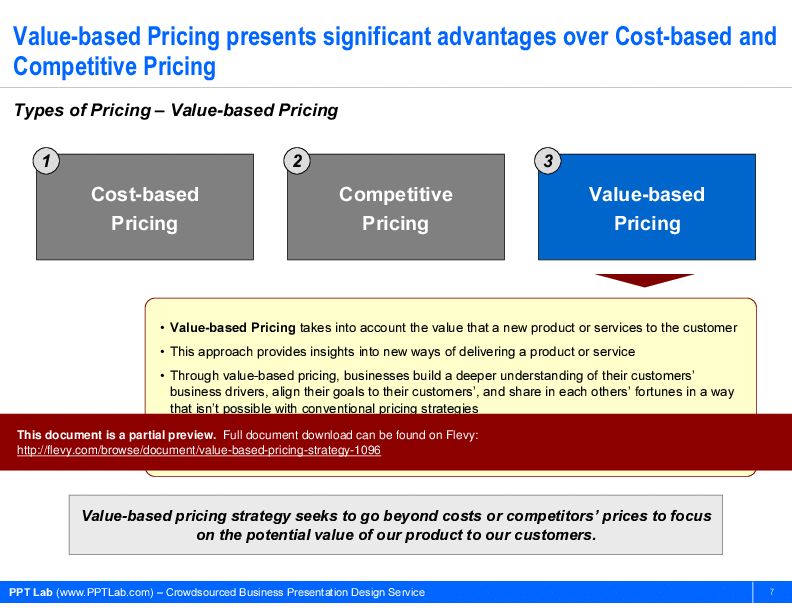
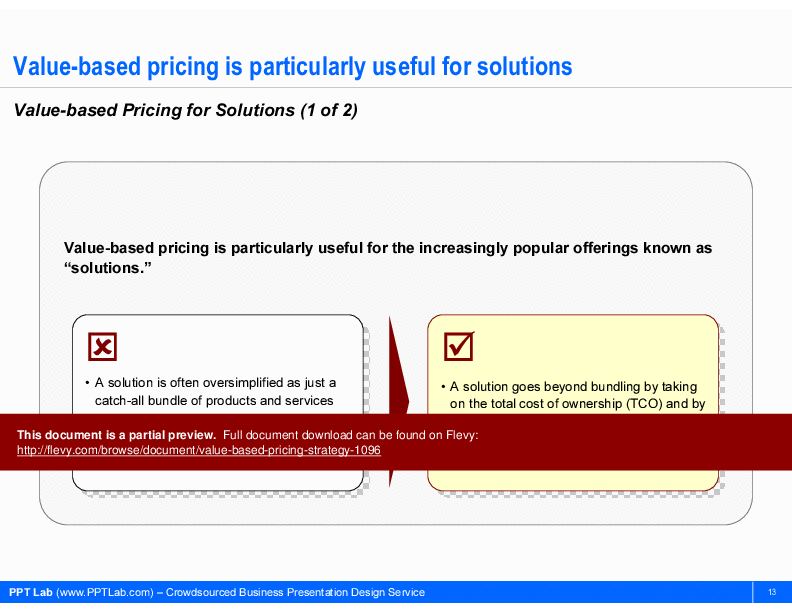
This PPT slide presents a framework for pricing strategies, focusing on value-based pricing and its advantages over cost-based and competitive pricing. Value-based pricing considers the perceived value of a product or service to the customer, fostering a collaborative relationship that traditional methods often lack. Success with value-based pricing lies in delivering superior and differentiated products, potentially capturing greater market share and enhancing customer loyalty. Shifting to a value-based pricing model can lead to a more strategic approach in pricing decisions, enhancing profitability and strengthening customer relationships, ultimately driving long-term business success.
The "Pricing Staircase" framework outlines 3 primary pricing methodologies: Cost-based Pricing, Competitive Pricing, and Value-based Pricing.
Cost-based Pricing focuses on fixed and variable costs, identifying bottlenecks, and developing desired margins and discount policies to align pricing with cost structures.
Competitive Pricing assesses market positioning, product life cycles, competitor offerings, and customer switching costs to inform pricing strategies based on market realities.
Value-based Pricing centers on the customer’s perspective, creating an economic model that reflects how pricing impacts their bottom line and ensuring pricing aligns with the value delivered.
Enhanced Pricing builds on these strategies by adding features and bundling services, maximizing perceived value to potentially allow for higher pricing.
Evaluating cost-based factors remains essential, even when employing other pricing strategies.
This PPT slide outlines a structured approach to developing a capital budgeting business case, focusing on the first phase: "Find the Value Ceiling." This phase includes 3 steps: creating an economic model, determining bottom-line impact, and developing a business case. It distinguishes between financial metrics—such as increased sales, reduced operating costs, and improved delivery times—and non-financial metrics like customer satisfaction and employee morale. Both quantifiable and non-quantifiable benefits should be captured; quantifiable benefits can be integrated into a financial model, while non-quantifiable benefits should be documented qualitatively. A comprehensive analysis of both types ensures a robust business case that aligns strategic objectives with operational realities, supporting informed decision-making.
Source: Best Practices in Pricing Strategy PowerPoint Slides: Value-based Pricing Strategy PowerPoint (PPT) Presentation Slide Deck, PPT Lab
Designed by a firm of ex-consultants from McKinsey, E&Y, and Bearing Point, this presentation breaks down a consulting framework on Value-based Pricing. Value-based Pricing is a superior approach to Cost-based and Competitive Pricing.
PPT Lab is a presentation design firm specializing in business frameworks and PowerPoint templates. Our team is comprised of ex-consultants from McKinsey, E&Y, Bearing Point, and boutique consulting firms. We have worked with hundreds of clients globally, ranging from mid-size manufacturing companies to global Fortune 500 conglomerates.
All of our documents are of the
... [read more] same quality produced by top-tier consulting firms and utilize the Consulting Presentation Framework.
Since 2012, we have provided business templates to over 10,000 businesses and organizations of all sizes, from startups and small businesses to the Fortune 100, in over 130 countries.
Read Customer Testimonials
"Last Sunday morning, I was diligently working on an important presentation for a client and found myself in need of additional content and suitable templates for various types of graphics. Flevy.com proved to be a treasure trove for both content and design at a reasonable price, considering the time I
saved. I encountered a download issue during the ordering process. However, a quick email to Flevy's support team, even on a Sunday (!!!), resulted in assistance within less than an hour, allowing me to download the content I needed. Fantastic job, Flevy! I give 5 stars for both content/price and customer service. Thank you!
"
– M. E., Chief Commercial Officer, International Logistics Service Provider
"As a young consulting firm, requests for input from clients vary and it's sometimes impossible to provide expert solutions across a broad spectrum of requirements. That was before I discovered Flevy.com.
Through subscription to this invaluable site of a plethora of topics that are key and crucial to consulting, I
have been able to exceed expectations and deliver quality advice and solutions to my clients. The quality and expertise of the authors are exemplary and gives me great confidence to use as part of my service offerings.
I highly recommend this company for any consultant wanting to apply international best practice standards in their service offerings.
"
– Nishi Singh, Strategist and MD at NSP Consultants
"As an Independent Management Consultant, I find Flevy to add great value as a source of best practices, templates and information on new trends. Flevy has matured and the quality and quantity of the library is excellent. Lastly the price charged is reasonable, creating a win-win value for
the customer, Flevy and the various authors. This is truly a service that benefits the consulting industry and associated clients. Thanks for providing this service.
"
– Jim Schoen, Principal at FRC Group
"My FlevyPro subscription provides me with the most popular frameworks and decks in demand in today’s market. They not only augment my existing consulting and coaching offerings and delivery, but also keep me abreast of the latest trends, inspire new products and service offerings for my practice, and educate me
in a fraction of the time and money of other solutions. I strongly recommend FlevyPro to any consultant serious about success.
"
– Bill Branson, Founder at Strategic Business Architects
"Flevy is now a part of my business routine. I visit Flevy at least 3 times each month.
Flevy has become my preferred learning source, because what it provides is practical, current, and useful in this era where the business world is being rewritten.
many challenges and there is the need to make the right decisions in a short time, with so much scattered information, we are fortunate to have Flevy. Flevy investigates, selects, and puts at our disposal the best of the best to help us be successful in our work.
"
– Omar Hernán Montes Parra, CEO at Quantum SFE
"[Flevy] produces some great work that has been/continues to be of immense help not only to myself, but as I seek to provide professional services to my clients, it gives me a large "tool box" of resources that are critical to provide them with the quality of service and outcomes they are expecting."
– Royston Knowles, Executive with 50+ Years of Board Level Experience
"I have found Flevy to be an amazing resource and library of useful presentations for lean sigma, change management and so many other topics. This has reduced the time I need to spend on preparing for my performance consultation. The library is easily accessible and updates are regularly provided. A wealth of great information."
– Cynthia Howard RN, PhD, Executive Coach at Ei Leadership
"If you are looking for great resources to save time with your business presentations, Flevy is truly a value-added resource. Flevy has done all the work for you and we will continue to utilize Flevy as a source to extract up-to-date information and data for our virtual and onsite presentations!"
– Debbi Saffo, President at The NiKhar Group
Save with Bundles
This document is available as part of the following discounted bundle(s):
Download our free compilation of 50+ Strategy & Transformation slides and templates. Frameworks include McKinsey 7-S, Balanced Scorecard, Disruptive Innovation, BCG Curve, and many more.