Adaptive Business Resilience Toolkit   19-slide PPT PowerPoint presentation template (PPTX)
$499.00

Adaptive Business Resilience Toolkit (19-slide PPT PowerPoint presentation slide deck (PPTX)) Preview Image
Flevy is the marketplace for business best practices.
Adaptive Business Resilience Toolkit (19-slide PPT PowerPoint presentation slide deck (PPTX)) Preview Image
Arrow   Click main image to view in full screen.

Adaptive Business Resilience Toolkit – PowerPoint PPTX Template

PowerPoint (PPTX) + Zip archive file (ZIP) 19 Slides

#2 in Business Resilience $499.00

Add to Cart


Immediate download
Fully editable PowerPoint
Free lifetime updates

BUSINESS RESILIENCE PPT TEMPLATE DESCRIPTION

Editor Summary Adaptive Business Resilience Toolkit is a 19-slide PowerPoint (PPTX) with a supplemental ZIP developed by Adaptive US Inc., sold as a digital download on Flevy. Read more

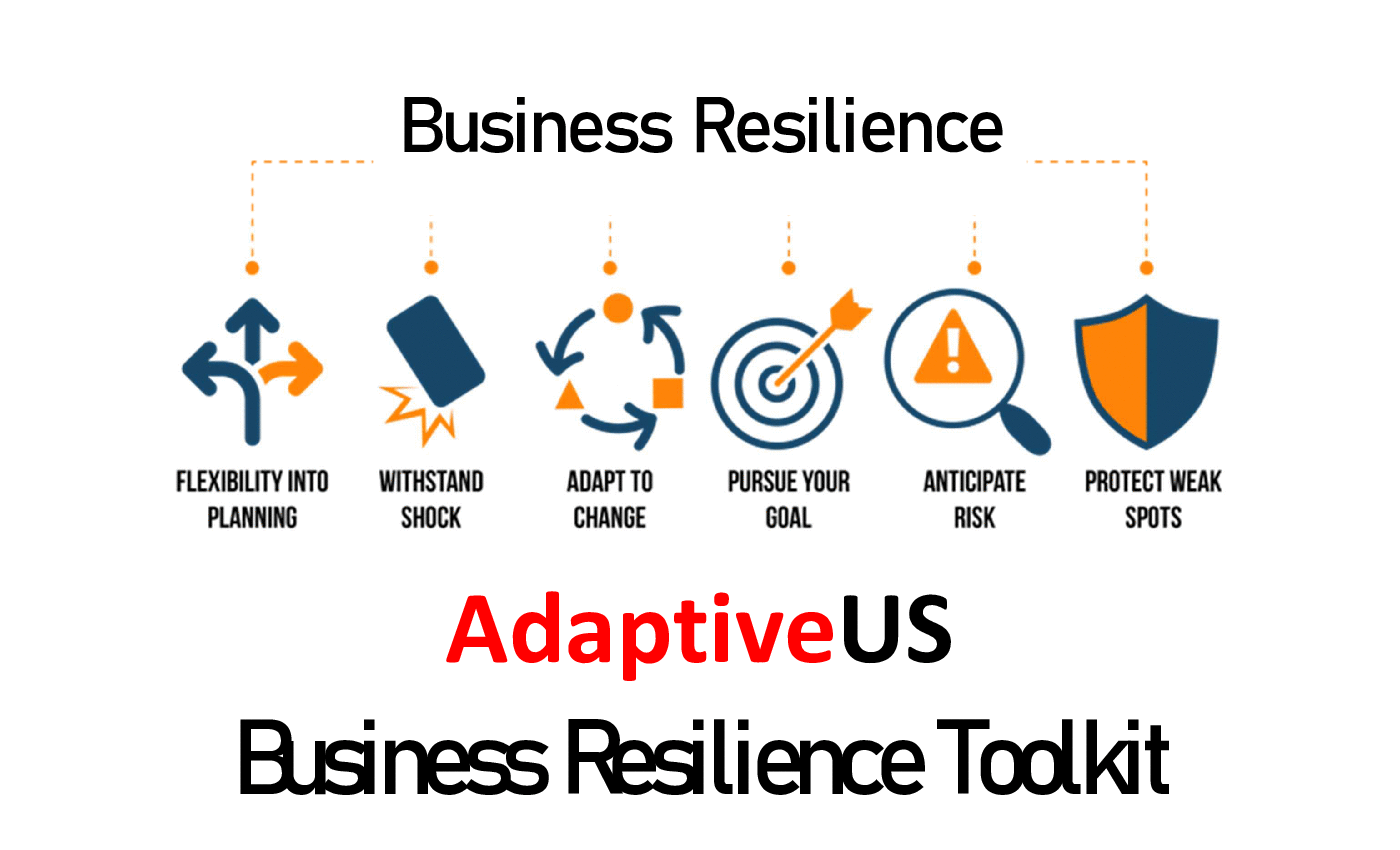
Every organization faces many serious threats. Serious threats jeopardize organization's very survival. Business resilience management enables organizations to stay prepared against serious threats. We distinguish between regular threats and risks from serious threats as those risks which can have some impact on business but won't make it go bankrupt.

Some examples of serious threats are:
1. Serious economic downturn
2. Entry of a formidable competitor
3. Emergence of a new business model
4. Technological substitution with much better solutions
5. A new regulation prohibiting business operations
6. Social unrest
7. Pandemic outbreak
8. Terrorist attack
9. Serious internal fraud
10. etc.

Organizations stay resilient by identifying serious threats, analyzing them, working on preventive measures, modifying aspects of resilience management on a continual manner. Throughout this process, they communicate and consult with stakeholders and monitor, review and test resilience measures.

This Business Resilience Toolkit describes this systematic and logical process in detail. While most organizations manage resilience to some degree, this Business Resilience Toolkit establishes a number of practices that need to be satisfied to make resilience management effective.

This Business Resilience Toolkit recommends that organizations develop, implement and continuously improve a business resilience system whose purpose is to integrate the process for managing resilience into the organization's overall strategy, planning, governance, management, reporting processes, policies, values and culture.

The Adaptive US Business Resilience Toolkit provides comprehensive policies, processes, templates, guidelines, checklists and implementation plan to ensure an effective Business Resilience System.

The full toolkit includes the following:

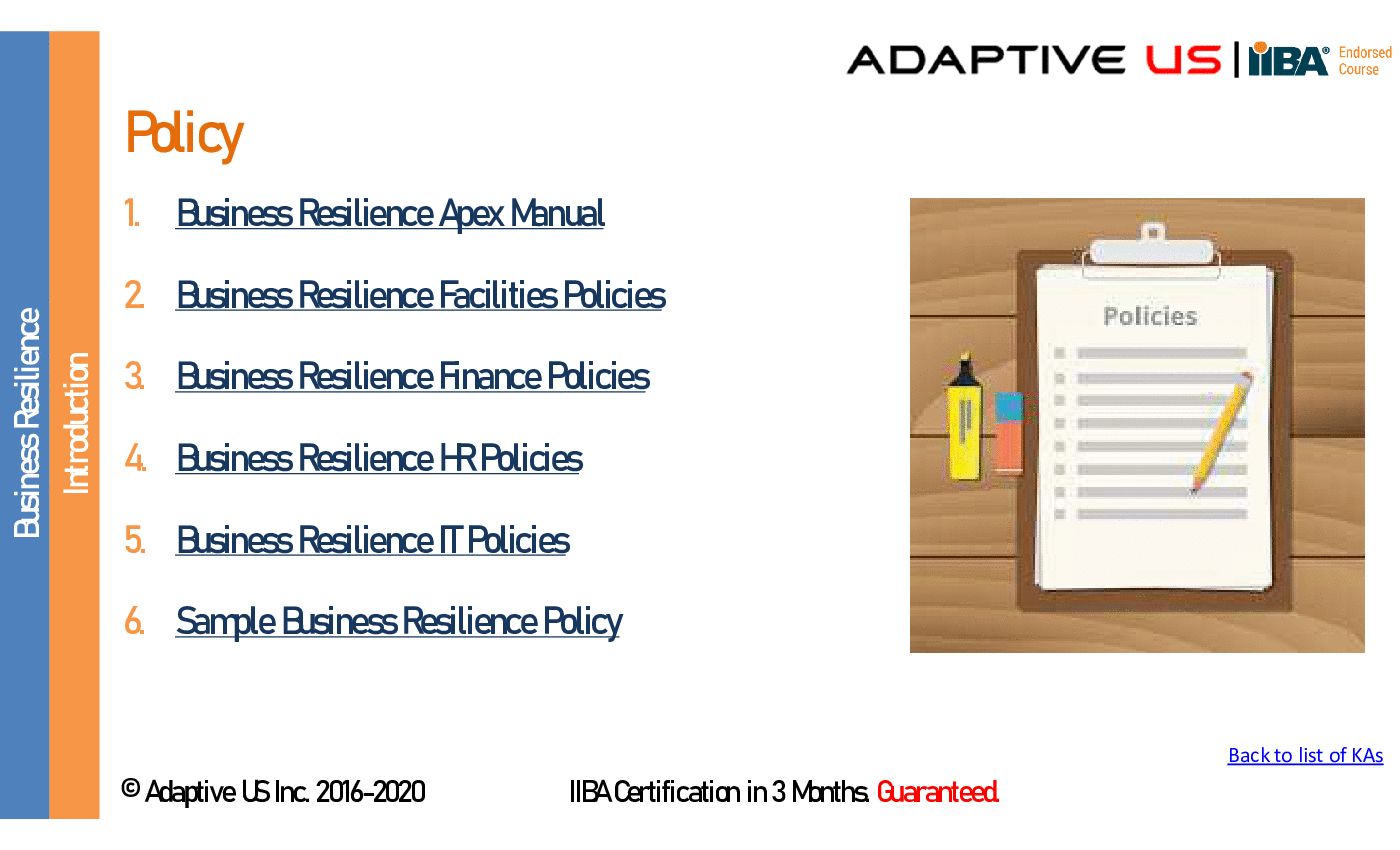
POLICIES

Business Resilience Apex Manual
Business Resilience Facilities Policies
Business Resilience Finance Policies
Business Resilience HR Policies
Business Resilience IT Policies
Sample Business Resilience Policy

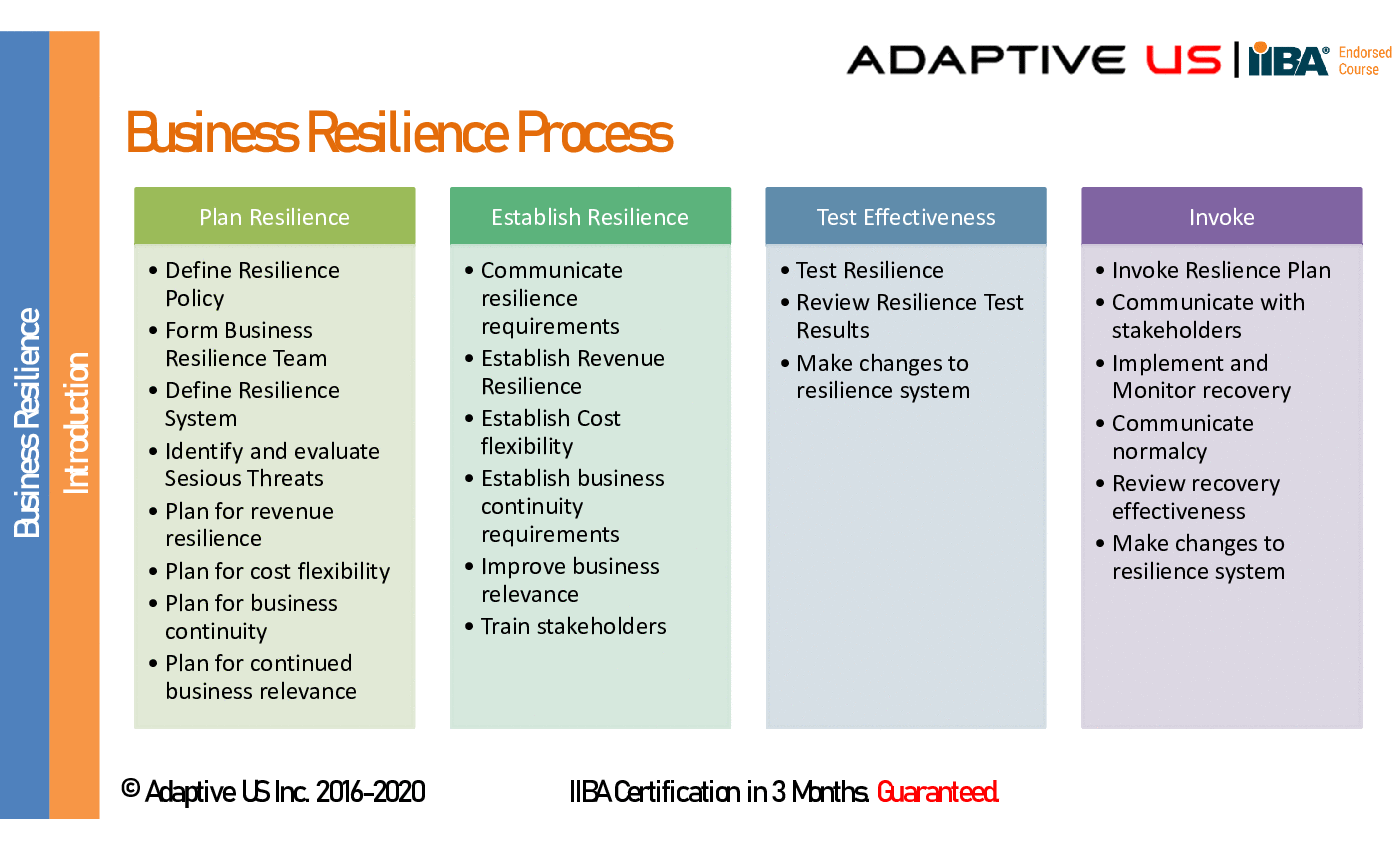
PROCESSES

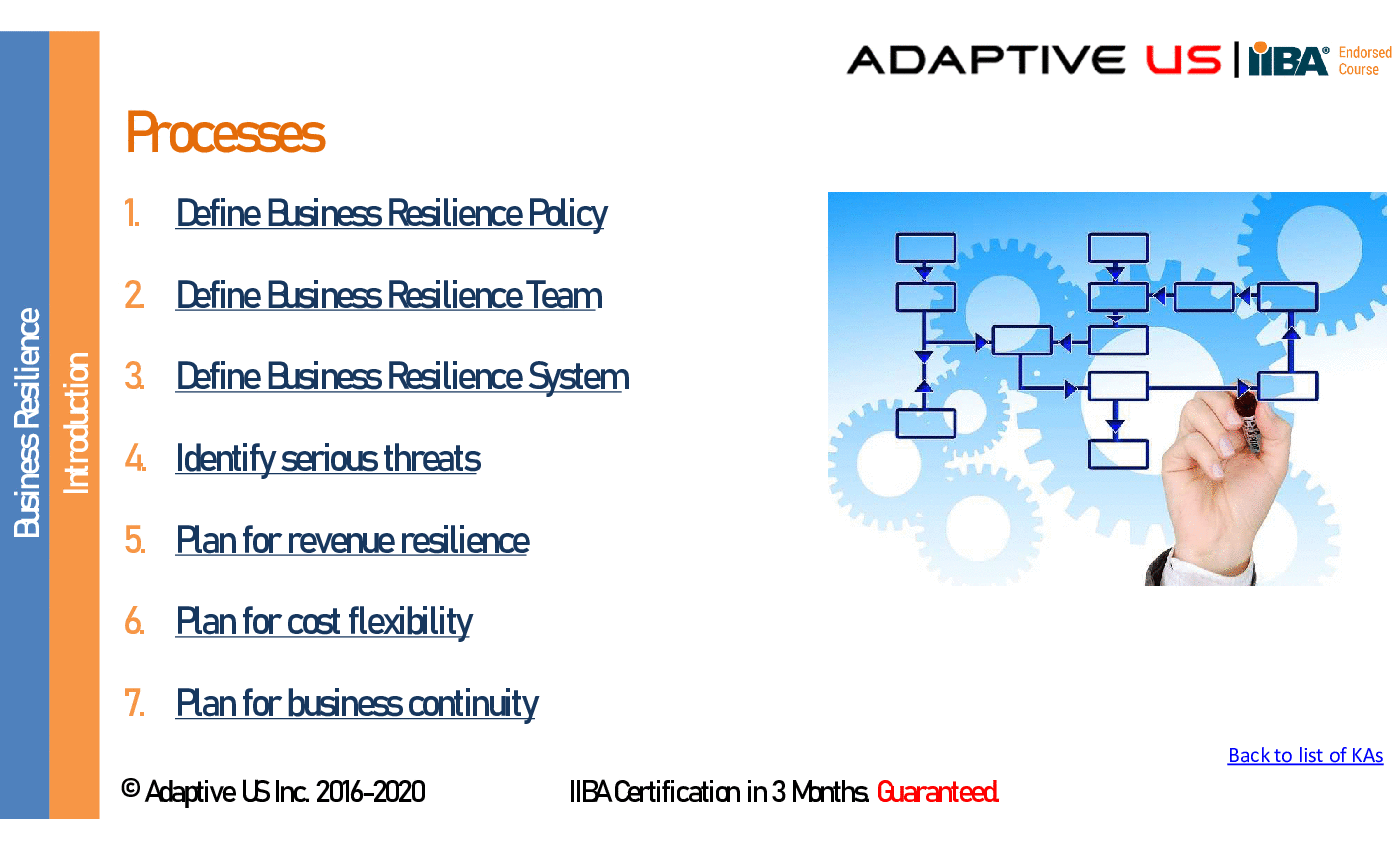
Define Business Resilience Policy
Define Business Resilience Team
Define Business Resilience System
Identify serious threats
Plan for revenue resilience
Plan for cost flexibility
Plan for business continuity
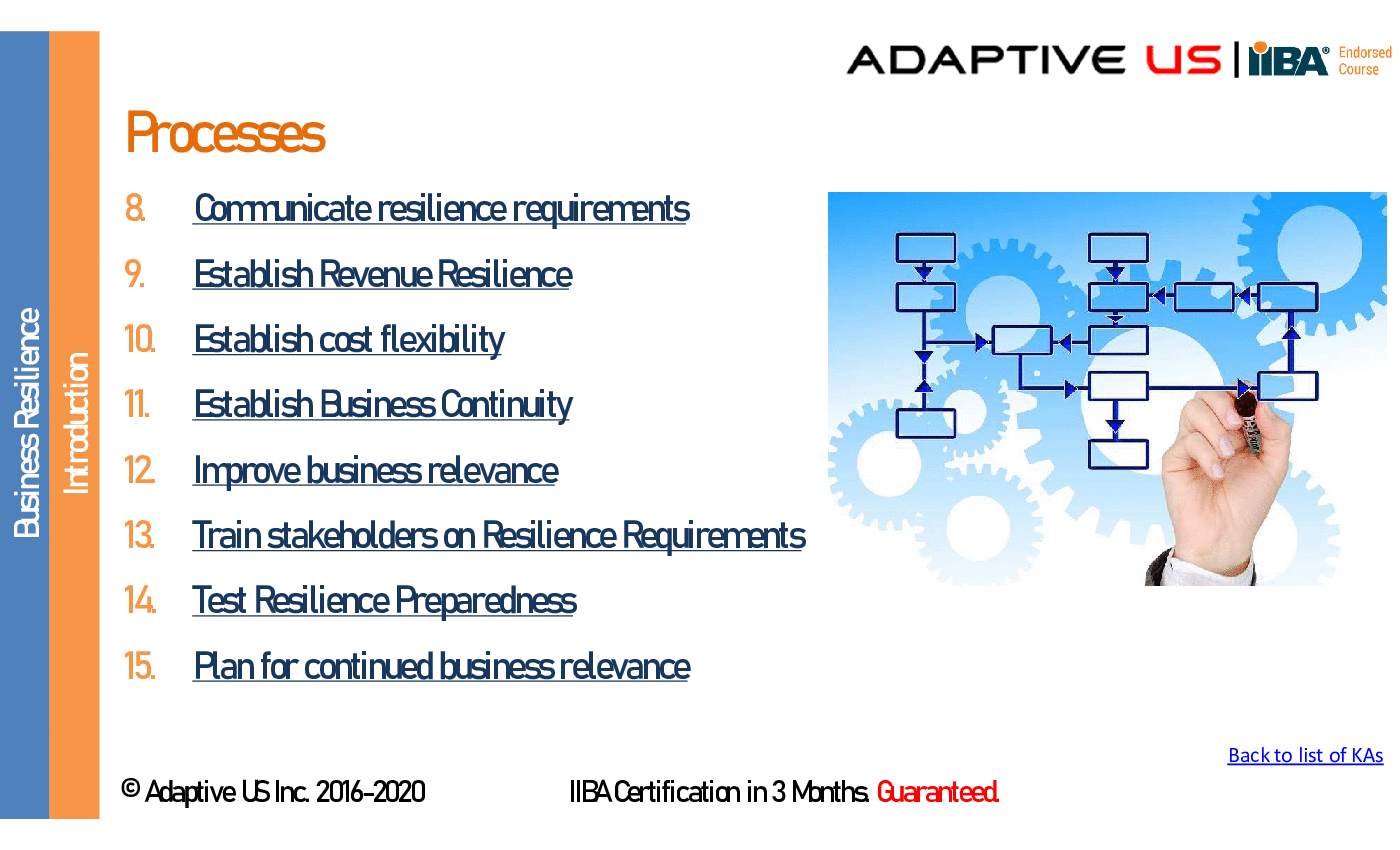
Communicate resilience requirements
Establish Revenue Resilience
Establish cost flexibility
Establish Business Continuity
Improve business relevance
Train stakeholders on Resilience Requirements
Test Resilience Preparedness
Plan for continued business relevance
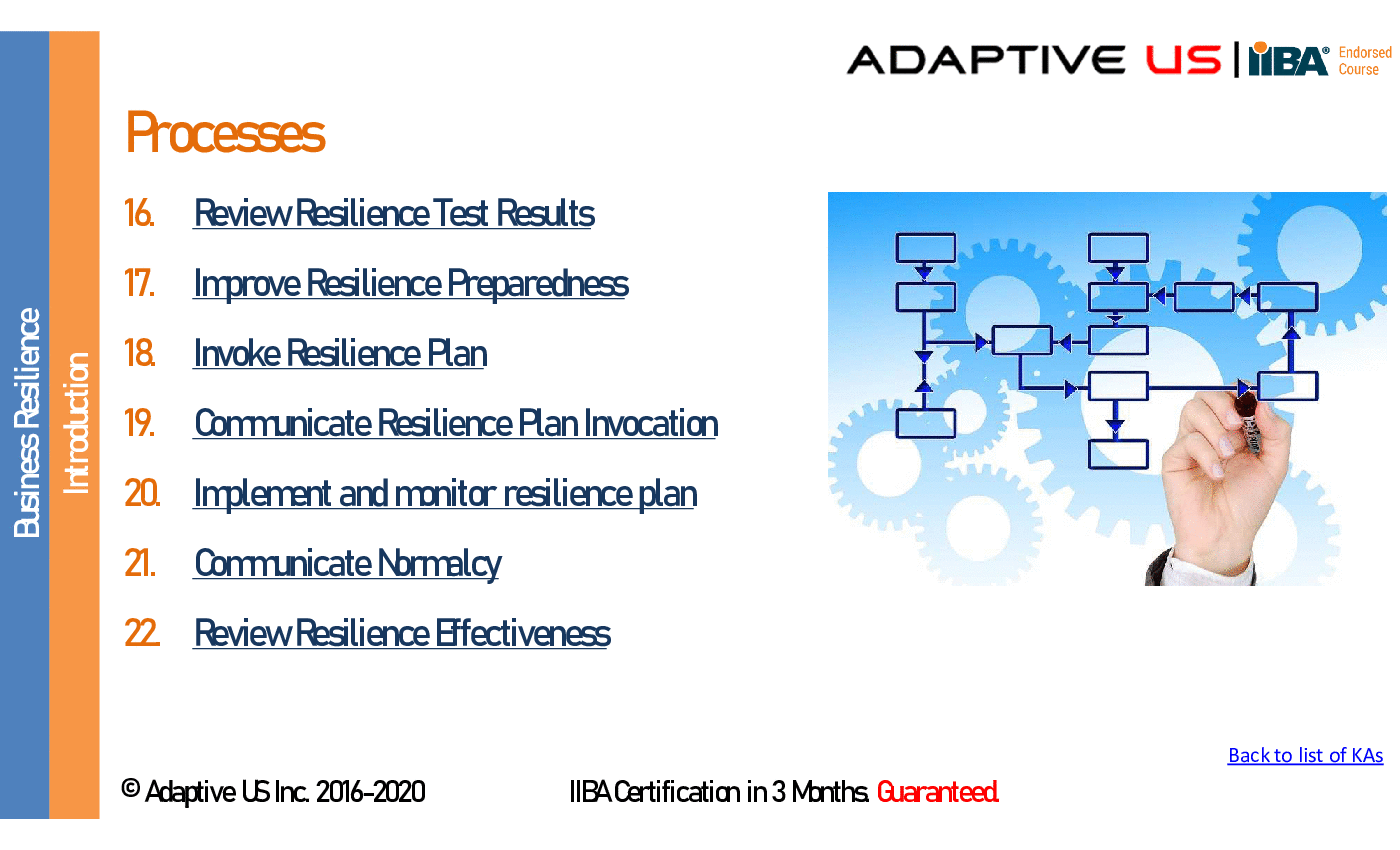
Review Resilience Test Results
Improve Resilience Preparedness
Invoke Resilience Plan
Communicate Resilience Plan Invocation
Implement and monitor resilience plan
Communicate Normalcy
Review Resilience Effectiveness

TEMPLATES

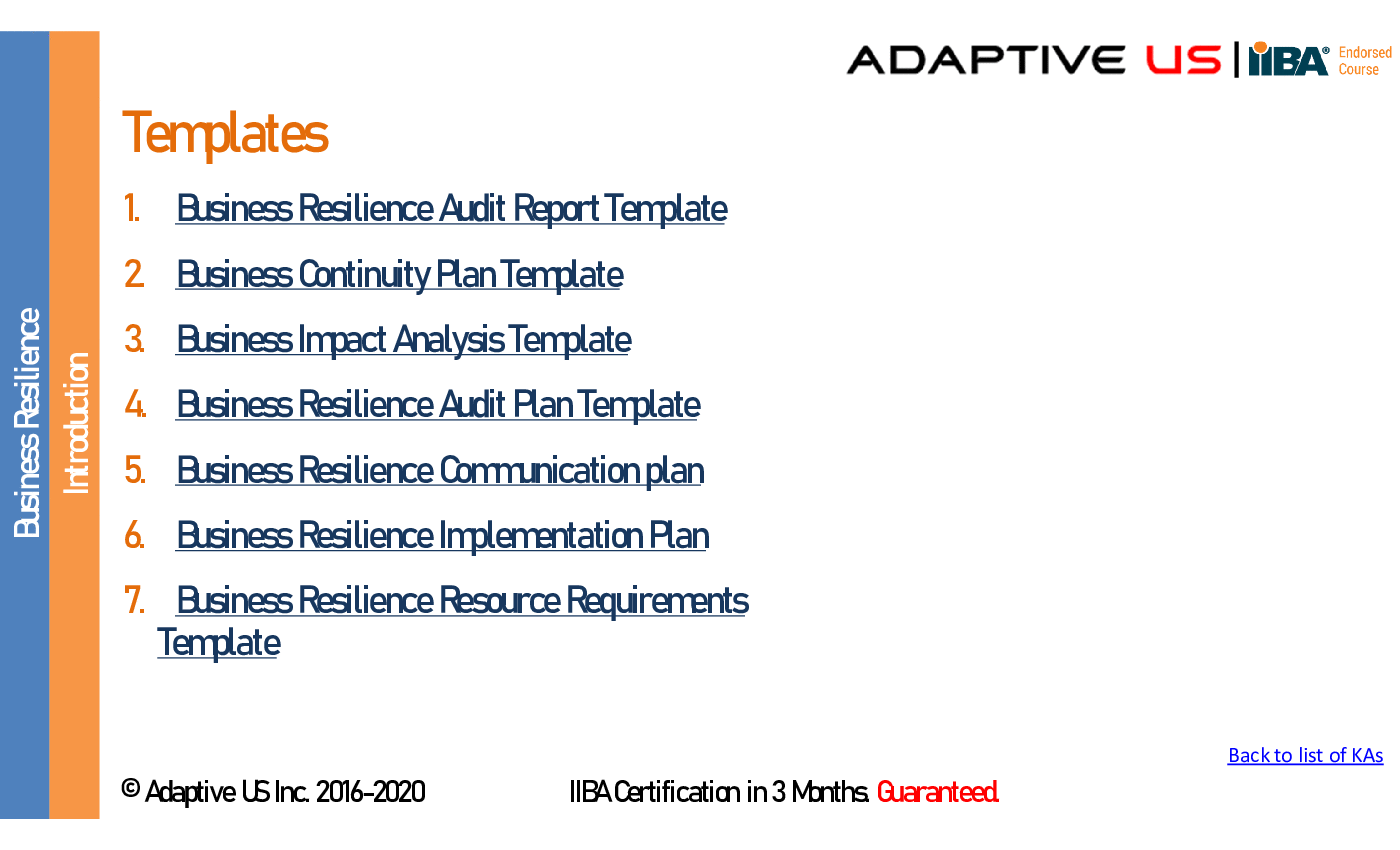
Business Resilience Audit Report Template
Business Continuity Plan Template
Business Impact Analysis Template
Business Resilience Audit Plan Template
Business Resilience Communication plan
Business Resilience Implementation Plan
Business Resilience Resource Requirements Template
Business Resilience Review Template
Business Resilience Test Plan
Business Resilience Test Report
Business Resilience Testing Report
Cash Flow Statement Template
Contract Register
Cost Management Plan
Critical Asset Register Template
Contract Resilience Compliance Tracker Template
Cost register
Critical Asset Register Template
Emergency Contacts List
Employee Details
Issue Tracker Template
Margin Analysis Template
Master List of Documents Template
Minutes of Meeting Template
Physical Audit Checklist
Plan for business continuity
Plan for continued business relevance

GUIDELINES

Business Impact Analysis Guidelines
Business Resilience Plan Testing Guidelines
Business Resilience Test Selection Guidelines
Disaster Assessment Guidelines
First Aid Guidelines
Guidelines for business continuity
Guidelines for communication
Guidelines for cost flexibility
Guidelines for improving business relevance
Guidelines for resilience team selection
Guidelines for revenue resilience
Guidelines for sources of serious threat information
Root Cause Analysis Guidelines
...

Got a question about the product? Email us at support@flevy.com or ask the author directly by using the "Ask the Author a Question" form. If you cannot view the preview above this document description, go here to view the large preview instead.

MARCUS OVERVIEW

This synopsis was written by Marcus [?] based on the analysis of the full 19-slide presentation.


Executive Summary
The Adaptive Business Resilience Toolkit is designed to equip organizations with essential policies, processes, templates, and guidelines to effectively manage serious threats and enhance business resilience. This toolkit provides a structured approach that enables businesses to plan, establish, evaluate, and act upon resilience strategies. By utilizing this toolkit, organizations can ensure operational continuity, maintain relevance in changing environments, and safeguard their assets against potential disruptions.

Who This Is For and When to Use
•  Business continuity managers responsible for developing resilience strategies
•  Risk management teams focused on identifying and mitigating threats
•  Executives seeking to enhance organizational agility and responsiveness
•  HR leaders involved in training and stakeholder communication
•  IT professionals tasked with ensuring system reliability during disruptions

Best-fit moments to use this deck:
•  During the development of a business continuity plan
•  When evaluating existing resilience strategies and identifying gaps
•  In training sessions for stakeholders on resilience requirements
•  At the initiation of a risk assessment process

Learning Objectives
•  Define a comprehensive business resilience policy tailored to organizational needs
•  Establish a dedicated business resilience team to oversee implementation
•  Identify and evaluate serious threats to business operations
•  Develop plans for revenue resilience and cost flexibility
•  Communicate resilience requirements effectively to all stakeholders
•  Test and review the effectiveness of resilience strategies
•  Implement and monitor recovery plans during disruptions
•  Ensure continued business relevance through proactive planning

Table of Contents
•  Introduction to Business Resilience (page 3)
•  Business Resilience Process Overview (page 4)
•  Policies for Business Resilience (page 6)
•  Processes for Establishing Resilience (page 7)
•  Templates for Implementation (page 10)
•  Guidelines for Effective Resilience (page 14)
•  About Adaptive US (page 16)

Primary Topics Covered
•  Business Resilience Policy - A structured framework outlining the necessary policies to guide resilience efforts across the organization.
•  Business Resilience Team Formation - Guidelines for establishing a dedicated team responsible for resilience planning and execution.
•  Threat Identification and Evaluation - Processes for recognizing and assessing serious threats that could impact business operations.
•  Revenue Resilience Planning - Strategies to ensure consistent revenue generation even during disruptions.
•  Cost Flexibility Strategies - Approaches to manage costs effectively while maintaining operational capacity.
•  Business Continuity Requirements - Essential elements for ensuring continuity of operations during crises.

Deliverables, Templates, and Tools
•  Business Resilience Audit Report Template
•  Business Continuity Plan Template
•  Business Impact Analysis Template
•  Business Resilience Communication Plan
•  Business Resilience Implementation Plan
•  Business Resilience Test Plan Template
•  Emergency Contacts List Template

Slide Highlights
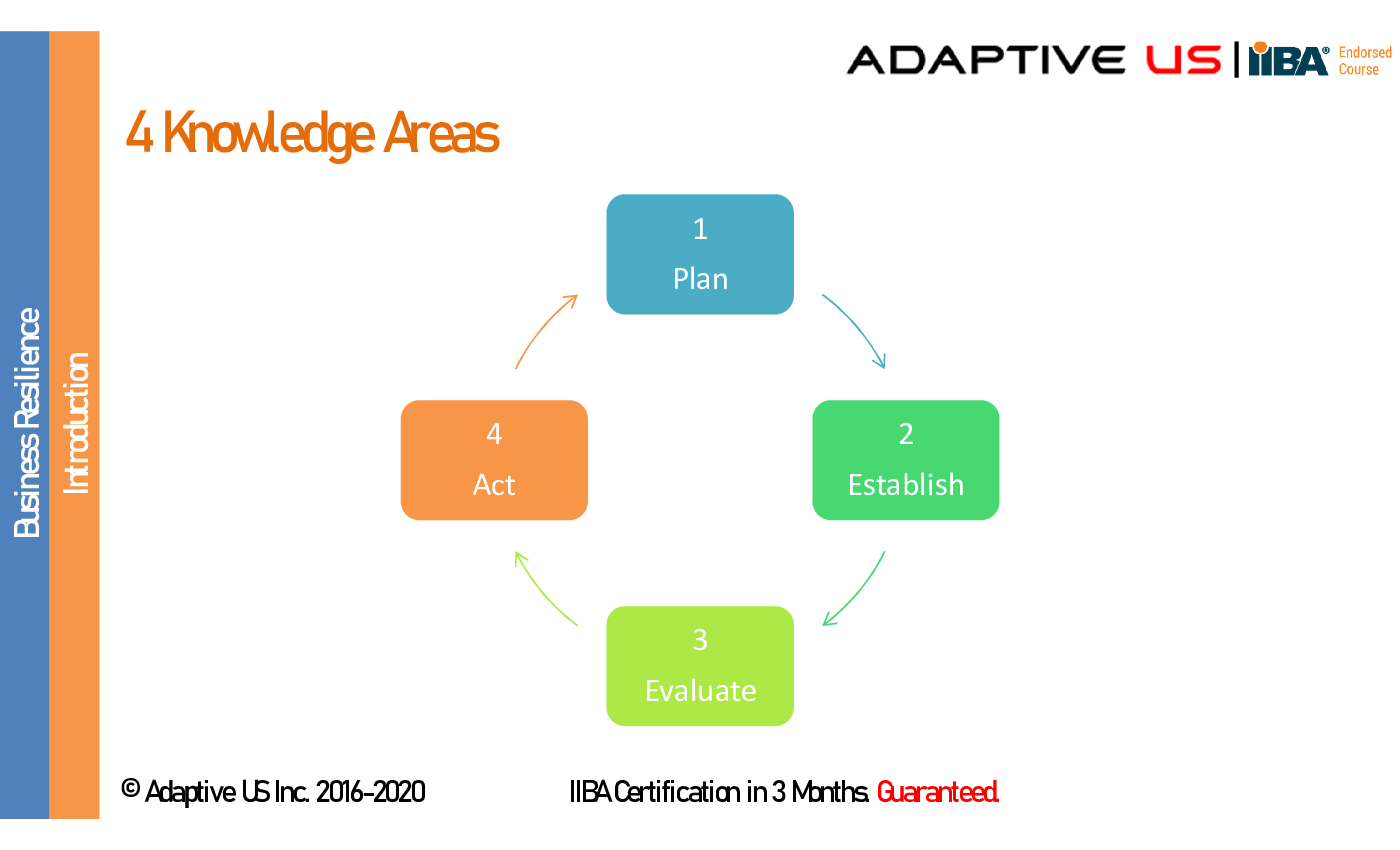
•  Overview of the Business Resilience Process, detailing the 4 key phases: Plan, Establish, Evaluate, and Act.
•  Visual representation of the knowledge areas essential for building resilience within an organization.
•  Comprehensive list of policies necessary for a robust business resilience framework.
•  Templates designed for practical application in resilience planning and testing.

Potential Workshop Agenda
Business Resilience Overview Session (60 minutes)
•  Introduce the concept of business resilience and its importance
•  Discuss the components of a business resilience policy
•  Identify key stakeholders and their roles

Resilience Planning Workshop (90 minutes)
•  Collaboratively define serious threats and vulnerabilities
•  Develop action plans for revenue resilience and cost flexibility
•  Establish communication strategies for stakeholder engagement

Testing and Evaluation Session (60 minutes)
•  Review resilience test results and identify areas for improvement
•  Discuss the invocation of the resilience plan during disruptions
•  Plan for ongoing monitoring and adjustments to the resilience strategy

Customization Guidance
•  Tailor the business resilience policy to reflect specific organizational values and operational contexts.
•  Modify templates to align with unique business processes and reporting structures.
•  Adjust communication plans to suit the needs of different stakeholder groups.

Secondary Topics Covered
•  Disaster assessment guidelines for evaluating potential impacts
•  Root cause analysis techniques for identifying underlying issues
•  Guidelines for improving business relevance in changing markets
•  Strategies for effective communication during crises

Topic FAQ

What are the key phases of a business resilience program?

A typical business resilience program follows 4 core phases: Plan (define policy and identify threats), Establish (set up teams, processes, and resources), Evaluate (test preparedness and review results), and Act (invoke and implement recovery plans and improvements). The Adaptive Business Resilience Toolkit organizes activities across these 4 phases.

How do I identify serious threats that could threaten business survival?

Identify threats by scanning external and internal environments, consulting stakeholders, and using structured threat lists. Examples provided include serious economic downturn, technological substitution, regulatory prohibitions, pandemic outbreak, and internal fraud, which should be captured and assessed using a threat identification process and templates such as the Business Impact Analysis Template.

What should a business impact analysis (BIA) assess?

A BIA should document critical assets, timelines for recovery, operational impacts of disruptions, dependencies, and recovery priorities. It quantifies effects on revenue and operations to guide continuity and resilience planning. Use a Business Impact Analysis Template to capture recovery time objectives, critical functions, and impact assessments.

How should I evaluate toolkits when buying a resilience template package on a budget?

Prioritize toolkits that provide core policy, BIA, continuity, communication, and test-plan templates so you can implement quickly and iterate. Confirm the package includes templates for audit, implementation, and testing. Flevy’s Adaptive Business Resilience Toolkit bundles a 19-slide PPTX plus a supplemental ZIP with 20+ templates including a Business Continuity Plan Template.

What testing approach should I use to validate resilience preparedness?

Use a structured test plan to exercise procedures, capture results, review gaps, and apply corrective actions. Tests should be documented, results reviewed, and plans updated. The Adaptive Business Resilience Toolkit provides a Business Resilience Test Plan Template and Test Report templates to record scenarios, outcomes, and improvement actions.

What practical value do prebuilt resilience templates provide versus building from scratch?

Prebuilt templates embed consistent policy structure, predefined checklists, and reporting formats that align resilience with strategy, governance, and monitoring processes. They speed adoption of standard practices and aid audits and reviews. Relevant templates include Business Resilience Audit Report Template and Business Resilience Implementation Plan.

After a merger, how should I prioritize resilience actions across combined operations?

Begin with a consolidated business impact analysis to identify critical assets and dependencies, then assess revenue risks and cost flexibility across units. Prioritize actions that protect critical functions and revenue streams, and use tools like the Critical Asset Register Template and Margin Analysis Template to sequence recovery priorities.

What types of serious threats should resilience planning explicitly cover?

Resilience planning should cover externally and internally driven existential threats such as serious economic downturn, entry of a formidable competitor, emergence of new business models, technological substitution, regulatory prohibitions, social unrest, pandemic outbreaks, terrorist attacks, and serious internal fraud; these examples are enumerated in the toolkit.

Document FAQ
These are questions addressed within this presentation.

What is the purpose of the Business Resilience Toolkit?
The toolkit provides comprehensive resources to help organizations develop and implement effective resilience strategies, ensuring continuity during disruptions.

How can this toolkit benefit my organization?
By utilizing the toolkit, organizations can enhance their ability to withstand shocks, maintain operational continuity, and improve overall business relevance.

What types of templates are included in the toolkit?
The toolkit includes various templates such as business continuity plans, impact analysis reports, and communication plans tailored for resilience.

How do I establish a business resilience team?
The toolkit provides guidelines for forming a dedicated team that will oversee the planning and execution of resilience strategies within the organization.

What processes are recommended for testing resilience?
The toolkit outlines processes for testing resilience preparedness, reviewing test results, and making necessary adjustments to the resilience plan.

How can I ensure my organization remains relevant during disruptions?
The toolkit emphasizes the importance of planning for continued business relevance through proactive strategies and stakeholder engagement.

What are the key components of a business continuity plan?
A business continuity plan should include threat identification, response strategies, communication plans, and recovery procedures.

What guidelines are provided for effective communication during crises?
The toolkit offers communication guidelines to ensure clear and timely information is shared with all stakeholders during disruptions.

Glossary
•  Business Resilience - The ability of an organization to anticipate, prepare for, respond to, and recover from disruptions.
•  Business Continuity Plan - A strategic plan outlining how an organization will continue operating during and after a disruption.
•  Threat Assessment - The process of identifying and evaluating potential threats to business operations.
•  Revenue Resilience - Strategies aimed at maintaining revenue streams during adverse conditions.
•  Cost Flexibility - The ability to adjust costs in response to changing business conditions.
•  Stakeholder Communication - The process of informing and engaging stakeholders regarding resilience efforts and strategies.
•  Resilience Testing - The evaluation of an organization’s preparedness to respond to and recover from disruptions.
•  Implementation Plan - A detailed plan outlining the steps necessary to execute resilience strategies.
•  Emergency Contacts List - A compiled list of key contacts to be reached during a crisis.
•  Root Cause Analysis - A method for identifying the underlying causes of issues to prevent recurrence.
•  Disaster Assessment - The evaluation of potential impacts and necessary responses to disasters affecting the organization.
•  Guidelines for Business Continuity - Recommended practices for ensuring operational continuity during disruptions.
•  Business Impact Analysis - An assessment of the effects of potential disruptions on business operations.
•  Resilience Team - A dedicated group responsible for overseeing business resilience initiatives.
•  Testing Report - Documentation of the results from resilience testing activities.
•  Policy Manual - A comprehensive document outlining the policies governing business resilience efforts.
•  Implementation Guidelines - Instructions for effectively executing resilience strategies.
•  Communication Plan - A strategy for disseminating information to stakeholders during a crisis.
•  Audit Report - A formal assessment of the effectiveness of resilience strategies and practices.
•  Critical Asset Register - A list of essential assets that are vital for business operations.
•  Cost Management Plan - A strategy for managing and controlling costs during disruptions.
•  Margin Analysis - An evaluation of profit margins to assess financial health during crises.

Source: Best Practices in Business Resilience PowerPoint Slides: Adaptive Business Resilience Toolkit PowerPoint (PPTX) Presentation Slide Deck, Adaptive US Inc.


$499.00

Add to Cart
  

ABOUT THE AUTHOR

Additional documents from author: 382

Adaptive US Inc. provides CBAP®, CCBA®, ECBA® online trainings, question banks, study guides, simulators, flash cards, audio books, digital learning packs across the globe.

Adaptive US Inc. is the only training organization to offer success guarantee and all-inclusive plans for its workshops.


Key facts about us:
World's largest BA publisher and assessments provider
Premiere Partner to ... [read more]

Ask the Author a Question

You must be logged in to contact the author.

Click here to log in Click here register

Did you know?
The average daily rate of a McKinsey consultant is $6,625 (not including expenses). The average price of a Flevy document is $65.


Trusted by over 10,000+ Client Organizations
Since 2012, we have provided business templates to over 10,000 businesses and organizations of all sizes, from startups and small businesses to the Fortune 100, in over 130 countries.
AT&T GE Cisco Intel IBM Coke Dell Toyota HP Nike Samsung Microsoft Astrazeneca JP Morgan KPMG Walgreens Walmart 3M Kaiser Oracle SAP Google E&Y Volvo Bosch Merck Fedex Shell Amgen Eli Lilly Roche AIG Abbott Amazon PwC T-Mobile Broadcom Bayer Pearson Titleist ConEd Pfizer NTT Data Schwab


Read Customer Testimonials

 
"Flevy is now a part of my business routine. I visit Flevy at least 3 times each month.

Flevy has become my preferred learning source, because what it provides is practical, current, and useful in this era where the business world is being rewritten.

In today's environment where there are so "

– Omar Hernán Montes Parra, CEO at Quantum SFE
 
"If you are looking for great resources to save time with your business presentations, Flevy is truly a value-added resource. Flevy has done all the work for you and we will continue to utilize Flevy as a source to extract up-to-date information and data for our virtual and onsite presentations!"

– Debbi Saffo, President at The NiKhar Group
 
"Flevy.com has proven to be an invaluable resource library to our Independent Management Consultancy, supporting and enabling us to better serve our enterprise clients.

The value derived from our [FlevyPro] subscription in terms of the business it has helped to gain far exceeds the investment made, making a subscription a no-brainer for any growing consultancy – or in-house strategy team."

– Dean Carlton, Chief Transformation Officer, Global Village Transformations Pty Ltd.
 
"I have found Flevy to be an amazing resource and library of useful presentations for lean sigma, change management and so many other topics. This has reduced the time I need to spend on preparing for my performance consultation. The library is easily accessible and updates are regularly provided. A wealth of great information."

– Cynthia Howard RN, PhD, Executive Coach at Ei Leadership
 
"Last Sunday morning, I was diligently working on an important presentation for a client and found myself in need of additional content and suitable templates for various types of graphics. Flevy.com proved to be a treasure trove for both content and design at a reasonable price, considering the time I "

– M. E., Chief Commercial Officer, International Logistics Service Provider
 
"[Flevy] produces some great work that has been/continues to be of immense help not only to myself, but as I seek to provide professional services to my clients, it gives me a large "tool box" of resources that are critical to provide them with the quality of service and outcomes they are expecting."

– Royston Knowles, Executive with 50+ Years of Board Level Experience
 
"The wide selection of frameworks is very useful to me as an independent consultant. In fact, it rivals what I had at my disposal at Big 4 Consulting firms in terms of efficacy and organization."

– Julia T., Consulting Firm Owner (Former Manager at Deloitte and Capgemini)
 
"I have used FlevyPro for several business applications. It is a great complement to working with expensive consultants. The quality and effectiveness of the tools are of the highest standards."

– Moritz Bernhoerster, Global Sourcing Director at Fortune 500


Customers Also Bought These Documents


Customers Also Like These Documents

Explore Templates on Related Management Topics


Your Recently Viewed Documents
Receive our FREE presentation on Operational Excellence

This 50-slide presentation provides a high-level introduction to the 4 Building Blocks of Operational Excellence. Achieving OpEx requires the implementation of a Business Execution System that integrates these 4 building blocks.








