
Supply Chain "resilience" is the Supply Chain's ability to respond and recover quickly to potential disruptions. It can return to its original situation or grow by moving to a new, more desirable state in order to increase customer service, market share, and financial performance.
Resilience is currently an increasing concern in Supply Chain caused by globalization and, most recently, the COVID-19 pandemic. Our Supply Chain is globally being subject to diverse types of disturbances. The largest disruption to global Supply Chains in modern history is the 2020 COVID-19 pandemic, followed by the 2011 earthquake and tsunami in Japan. With the rising level of logistical complexity, the resiliency of the Supply Chain has not kept pace. These disturbances need to be handled in the right way, compelling the use of tools and approaches that can support resilient Supply Chain decisions.
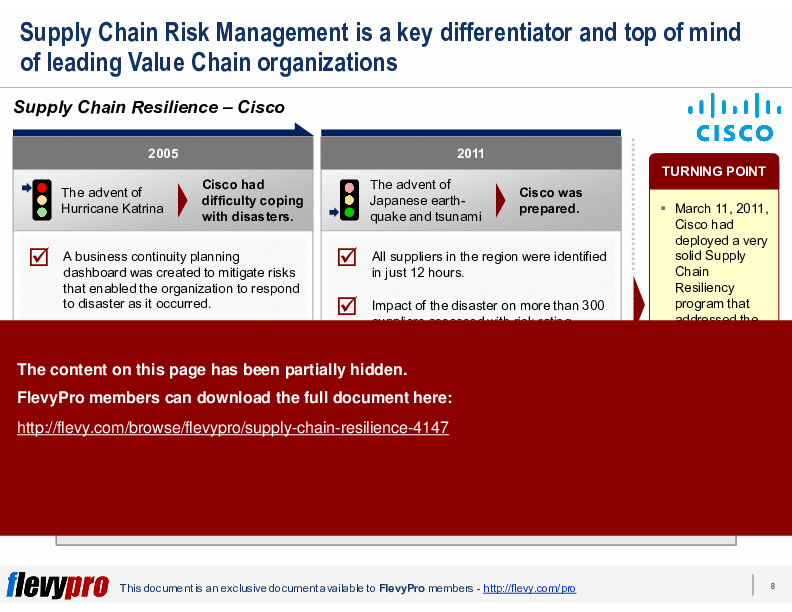
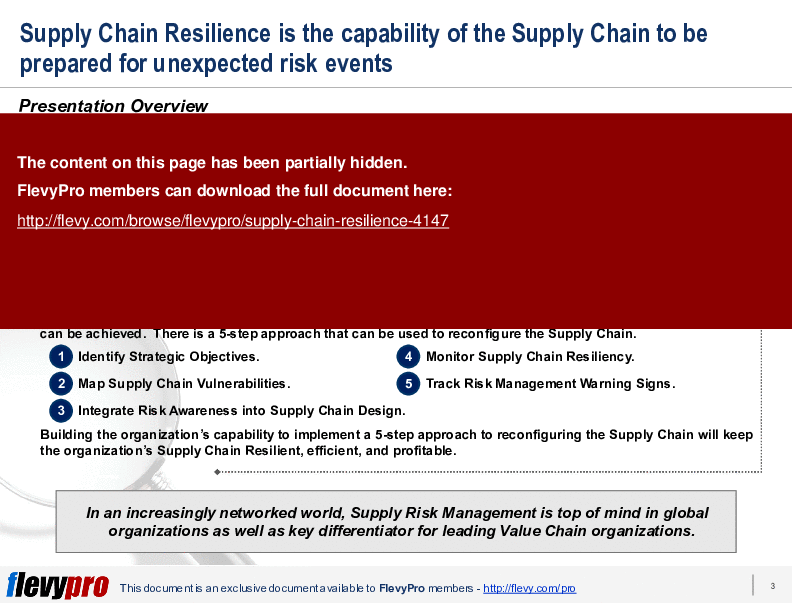
In an increasingly networked world, Supply Risk Management is top of mind in global organizations as well as key differentiator for leading Value Chain organizations.
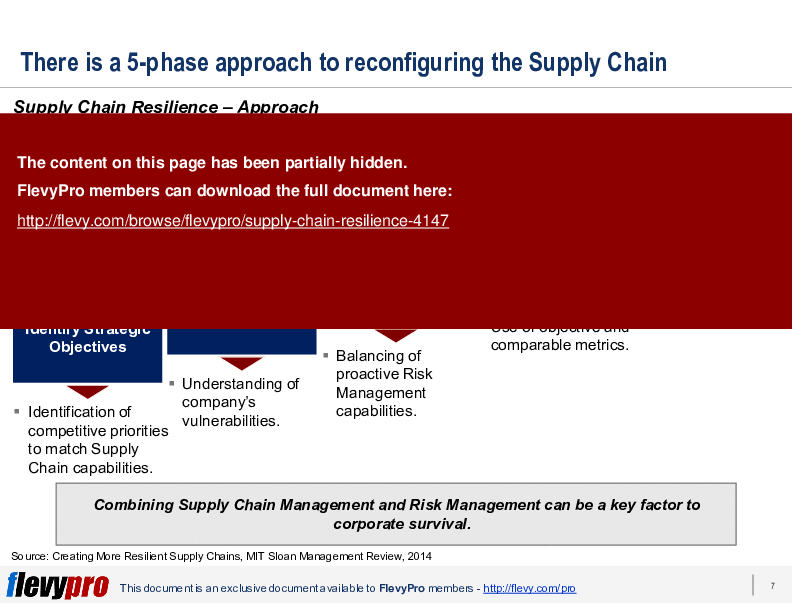
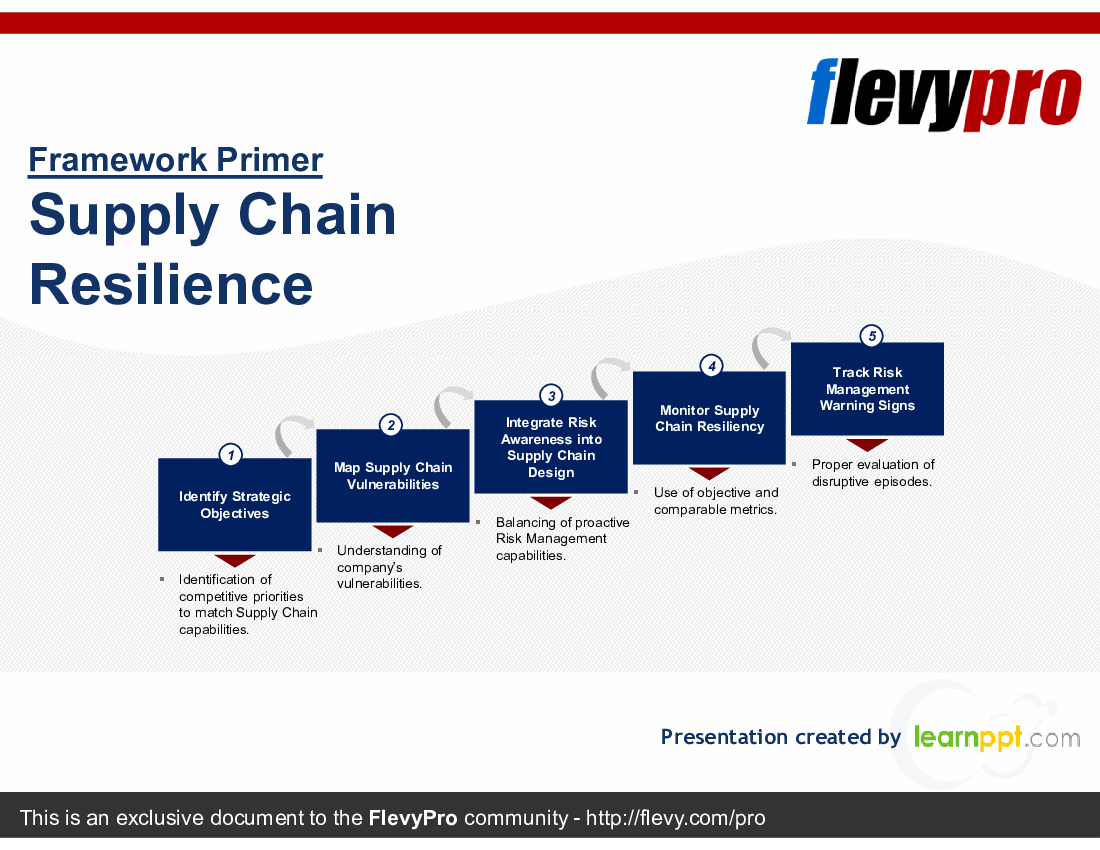
This presentation provides businesses the essential approach to improving Supply Chain Resilience. Through proper understanding and planning of increased risks of disruptions from events, reconfiguring of Supply Chain can be achieved. There is a 5-step approach that can be used to reconfigure the Supply Chain.
1. Identify Strategic Objectives.
2. Map Supply Chain Vulnerabilities.
3. Integrate Risk Awareness into Supply Chain Design.
4. Monitor Supply Chain Resiliency.
5. Track Risk Management Warning Signs.
Building the organization's capability to implement a 5-step approach to reconfiguring the Supply Chain will keep the organization's Supply Chain Resilient, efficient, and profitable.
This deck also includes slide templates for you to use within your own business presentations.
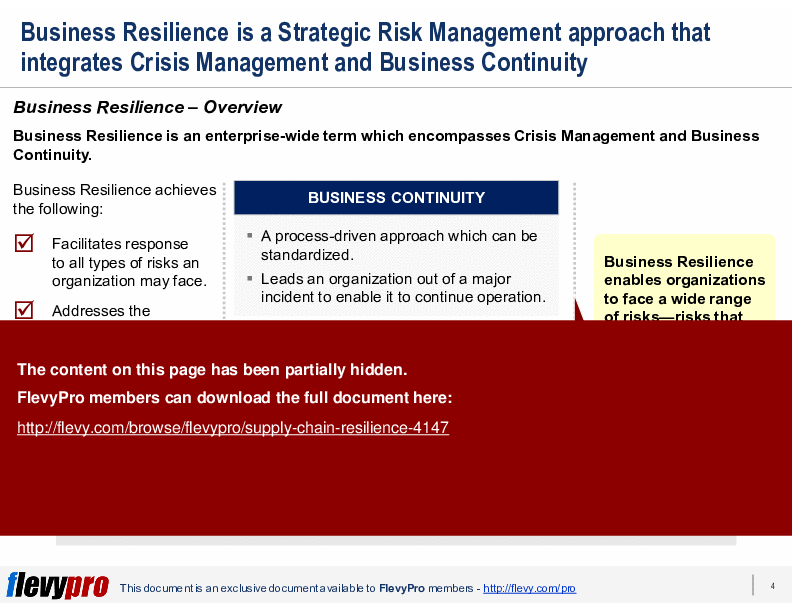
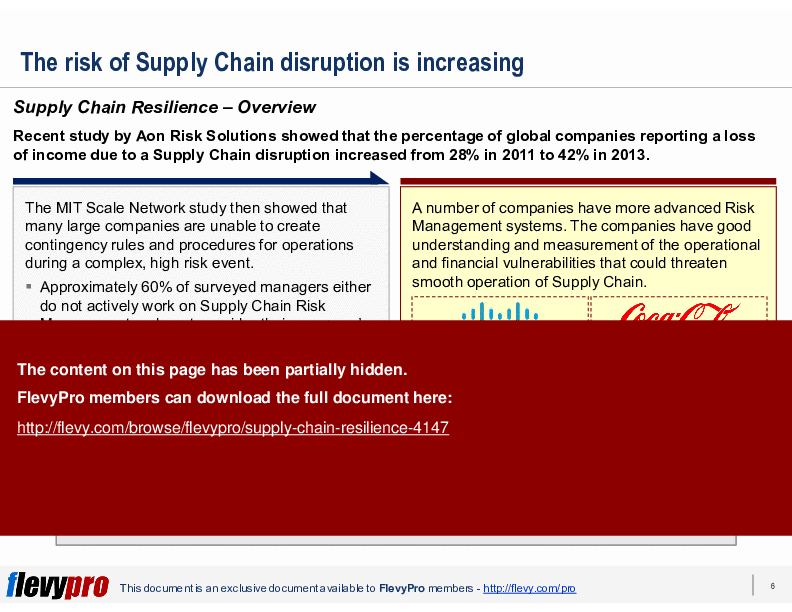
The PPT delves into the strategic integration of Crisis Management and Business Continuity, enabling organizations to face a wide range of risks. It highlights the increasing risk of Supply Chain disruptions and provides a comprehensive approach to mitigate these challenges.
Got a question about this document? Email us at flevypro@flevy.com.
Executive Summary
The Supply Chain Resilience presentation provides a structured approach to enhancing supply chain robustness against unexpected disruptions. It outlines a five-step methodology designed to identify strategic objectives, map vulnerabilities, integrate risk awareness, monitor resilience, and track risk management warning signs. This framework is essential for organizations aiming to improve operational efficiency, customer service, and financial performance in an increasingly complex global environment.
Who This Is For and When to Use
• Supply Chain Managers focused on risk management and operational continuity
• Business Continuity Planners responsible for crisis management strategies
• Operations Executives looking to enhance supply chain efficiency
• Risk Management Professionals seeking frameworks for proactive risk assessment
Best-fit moments to use this deck:
• During strategic planning sessions to align supply chain capabilities with business objectives
• When assessing vulnerabilities in existing supply chain frameworks
• In crisis management workshops to develop actionable resilience strategies
• For training sessions aimed at integrating risk awareness into supply chain design
Learning Objectives
• Define the concept of supply chain resilience and its importance in modern business
• Identify strategic objectives that align supply chain capabilities with competitive priorities
• Map vulnerabilities within the supply chain to enhance responsiveness
• Integrate risk awareness into supply chain design for proactive management
• Monitor supply chain resiliency using objective and comparable metrics
• Track risk management warning signs to prepare for disruptive events
Table of Contents
• Overview (page 3)
• Supply Chain Resilience (page 3)
• Phases to Supply Chain Resilience (page 7)
• Templates (page 18)
Primary Topics Covered
• Supply Chain Resilience - The capability of a supply chain to prepare for and recover from unexpected risk events.
• Phases to Supply Chain Resilience - A five-step approach including identifying strategic objectives, mapping vulnerabilities, integrating risk awareness, monitoring resiliency, and tracking warning signs.
• Risk Management Practices - Best practices for integrating risk management into supply chain operations.
• Crisis Management - Strategies for responding to and recovering from disruptive incidents.
• Business Continuity Planning - Frameworks for ensuring operational continuity during crises.
• Case Studies - Real-world examples, including Cisco's response to disasters, illustrating effective supply chain resilience strategies.
Deliverables, Templates, and Tools
• Strategic objectives identification template for aligning supply chain capabilities
• Vulnerability mapping framework to assess supply chain weaknesses
• Risk awareness integration checklist for proactive supply chain design
• Monitoring metrics index for evaluating supply chain resiliency
• Risk management warning signs assessment tool
• Crisis management playbook template for responding to disruptions
Slide Highlights
• Overview of the five-step approach to supply chain resilience
• Detailed mapping of supply chain vulnerabilities
• Integration of risk awareness into supply chain design
• Monitoring systems for assessing supply chain resiliency
• Case study on Cisco’s effective response to supply chain disruptions
Potential Workshop Agenda
Supply Chain Resilience Overview (60 minutes)
• Discuss the importance of supply chain resilience
• Review the five-step approach to enhancing resilience
Vulnerability Mapping Session (90 minutes)
• Identify and map vulnerabilities in current supply chain frameworks
• Develop mitigation strategies for identified vulnerabilities
Risk Management Integration Workshop (90 minutes)
• Explore methods for integrating risk awareness into supply chain design
• Create actionable plans for monitoring and tracking risk management
Customization Guidance
• Tailor strategic objectives to align with specific organizational goals
• Adapt vulnerability mapping frameworks to reflect unique supply chain structures
• Modify monitoring metrics to suit industry-specific requirements
• Incorporate organizational terminology into risk management templates
Secondary Topics Covered
• The impact of globalization on supply chain resilience
• Strategies for enhancing flexibility in supply chain operations
• The role of technology in monitoring supply chain performance
• Best practices for stakeholder communication during crises
Topic FAQ
Document FAQ
These are questions addressed within this presentation.
What is supply chain resilience?
Supply chain resilience refers to the ability of a supply chain to prepare for, respond to, and recover from unexpected disruptions, ensuring continuity of operations.
Why is mapping vulnerabilities important?
Mapping vulnerabilities helps organizations identify weaknesses in their supply chain, allowing them to implement targeted strategies to enhance resilience and responsiveness.
How can risk awareness be integrated into supply chain design?
Risk awareness can be integrated by proactively identifying potential disruptions and designing supply chain processes that include built-in resiliency measures.
What metrics should be used to monitor supply chain resiliency?
Metrics should include time-to-recover assessments, supplier performance evaluations, and overall supply chain efficiency indicators.
How can organizations track risk management warning signs?
Organizations can track warning signs by establishing a framework for evaluating disruptive episodes and implementing reactive tools to respond effectively.
What role does crisis management play in supply chain resilience?
Crisis management is essential for preparing organizations to respond to and recover from disruptions, ensuring minimal impact on operations.
Can you provide examples of companies with effective supply chain resilience strategies?
Cisco is highlighted as a case study for its proactive measures in enhancing supply chain resilience, particularly in response to natural disasters.
What are the key components of a business continuity plan?
Key components include risk assessment, crisis response strategies, communication plans, and recovery procedures to ensure operational continuity during disruptions.
Glossary
• Supply Chain Resilience - The ability of a supply chain to prepare for and recover from disruptions.
• Risk Management - The process of identifying, assessing, and mitigating risks.
• Crisis Management - Strategies for responding to and managing crises.
• Business Continuity - Planning to ensure critical business functions continue during and after a disaster.
• Vulnerability Mapping - The process of identifying weaknesses in a supply chain.
• Monitoring Metrics - Measurements used to assess the performance and resilience of a supply chain.
• Proactive Measures - Actions taken to prevent disruptions before they occur.
• Reactive Tools - Tools used to respond to disruptions as they happen.
• Stakeholder Communication - The process of informing and engaging stakeholders during crises.
• Operational Continuity - The ability to maintain essential functions during a disruption.
• Recovery Procedures - Steps taken to restore operations after a disruption.
• Supply Chain Design - The planning and structuring of supply chain processes and components.
• Performance Evaluation - Assessing the effectiveness of supply chain operations.
• Disruptive Episodes - Events that significantly impact supply chain operations.
• Risk Assessment - The process of identifying and evaluating risks.
• Crisis Response - Actions taken to address and manage a crisis situation.
• Resiliency Planning - Developing strategies to enhance supply chain resilience.
• Operational Efficiency - The ability to deliver products and services effectively with minimal waste.
• Flexibility - The capacity to adapt to changes and disruptions in the supply chain.
• Globalization - The increasing interconnectedness of economies and supply chains worldwide.
• Supply Chain Dynamics - The interactions and relationships within a supply chain.
Source: Best Practices in Supply Chain Management, Risk Management, Business Resilience PowerPoint Slides: Supply Chain Resilience PowerPoint (PPTX) Presentation Slide Deck, LearnPPT Consulting
Did you need more documents?
Consider a FlevyPro subscription from $39/month. View plans here.
For $10.00 more, you can download this document plus 2 more FlevyPro documents. That's just $13 each.
|
Receive our FREE presentation on Operational Excellence
This 50-slide presentation provides a high-level introduction to the 4 Building Blocks of Operational Excellence. Achieving OpEx requires the implementation of a Business Execution System that integrates these 4 building blocks. |