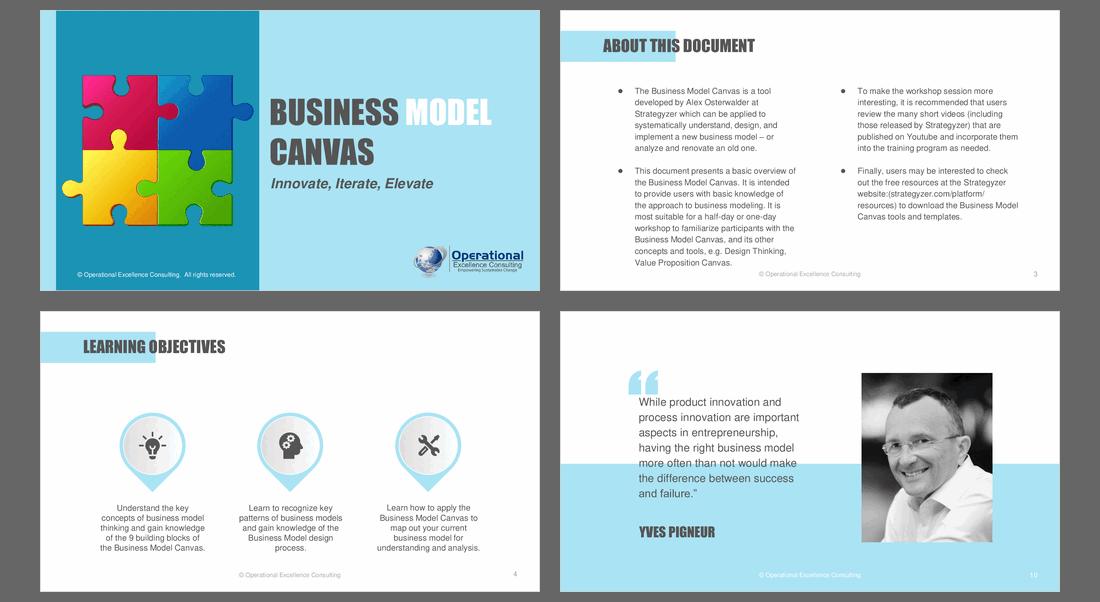

The Business Model Canvas (BMC) is a modern, adaptive strategic framework designed for developing new or redesigning existing business models to create a competitive advantage in today's fast-changing economy. Unlike Porter's Five Forces, which is often too static for digital-era disruptions, BMC provides a more dynamic, iterative approach, making it highly relevant for market shifts and innovation.

Rooted in Strategyzer's strategic framework, BMC serves as a flexible, visual tool, structured around nine essential building blocks that cover an organization's core operations, infrastructure, customer engagement, and financial dimensions. These key elements include Customer Segments, Value Propositions, Channels, Customer Relationships, Revenue Streams, Key Resources, Key Activities, Key Partnerships, and Cost Structure—creating a comprehensive roadmap for business success.
Beyond these core blocks, this presentation explores the strategic brilliance behind successful business models, analyzing real-world exemplars like Apple, Facebook, Amazon, and other innovative leaders. Understanding these key business model patterns enhances strategic thinking and equips participants with actionable insights into effective business model innovation.
Designed for collaborative environments, this presentation is a foundational guide to BMC and complements essential methodologies like Design Thinking and the Value Proposition Canvas. Whether delivered in a half-day or full-day session, it serves as an immersive introduction to modern business modeling approaches, ensuring participants grasp the practical applications of BMC in today's evolving business landscape.
This presentation also includes two hands-on workshop experience:
• Workshop 1: Participants embark on creating a current-state canvas, strategically assessing existing landscapes to grasp their organization's standing before pivotal disruptions.
• Workshop 2: The subsequent exercise propels participants to construct a future-state canvas, encouraging forward-thinking to navigate the evolving business landscape.
||||||||||||||||||||||||||||||||||||||||||||||||||||||||||||||||||||||||||||||||||||||||||||||||||||||||||||||||||||||||||||||||||||||||||||||||||||||
This training package includes:
1. Business Model Canvas training presentation (PowerPoint format)
2. Business Model Canvas templates (PowerPoint format)
3. Business Model Canvas poster (PDF format, in color and monochrome, printable in A3/A4 size)
||||||||||||||||||||||||||||||||||||||||||||||||||||||||||||||||||||||||||||||||||||||||||||||||||||||||||||||||||||||||||||||||||||||||||||||||||||||
LEARNING OBJECTIVES
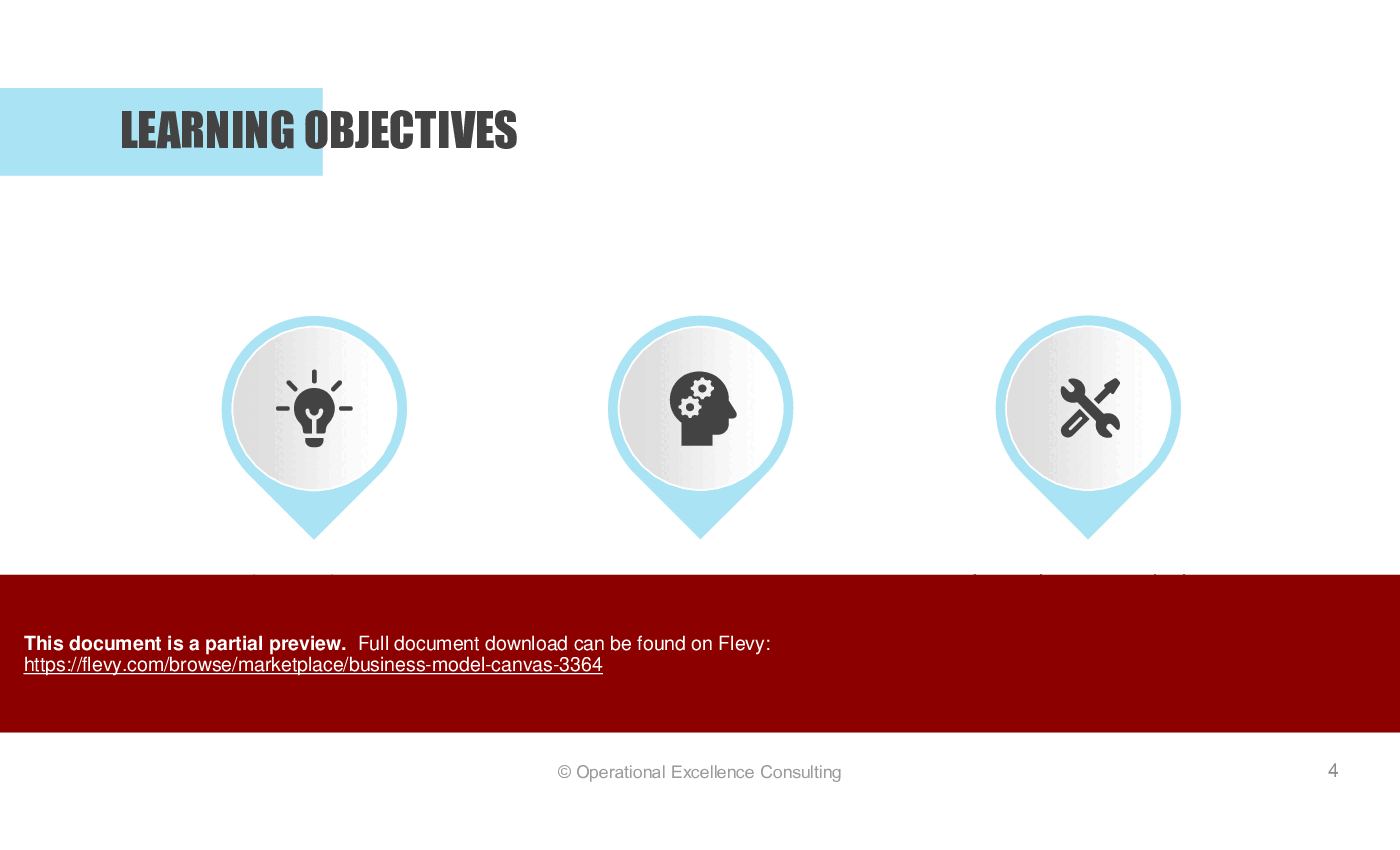
1. Understand the key concepts of business model thinking.
2. Acquire knowledge of the 9 building blocks of the Business Model Canvas for value creation.
3. Learn to recognize key patterns of business models.
4. Learn how to apply the Business Model Canvas to map out your current business model for understanding and analysis.
5. Gain basic knowledge of the Business Model design process and related frameworks.
CONTENTS
1. Introduction to Business Model Thinking
2. Basics of Design Thinking
3. The 9 Building Blocks
4. Key Patterns of Business Models
5. The Business Model Canvas
6. The Value Proposition Canvas
7. Business Model Design Process
8. Presenting the Business Model Canvas – Do's and Don'ts
Appendix: Additional Slides & Templates
Got a question about the product? Email us at support@flevy.com or ask the author directly by using the "Ask the Author a Question" form. If you cannot view the preview above this document description, go here to view the large preview instead.
Executive Summary
The Business Model Canvas (BMC) presentation is a strategic management tool designed to help organizations systematically understand, design, and implement new business models or analyze and renovate existing ones. Developed by Alex Osterwalder, this framework provides a visual representation of the essential components of a business model, enabling users to identify relationships, assumptions, and risks. This presentation is ideal for workshops aimed at fostering innovation and strategic alignment, allowing participants to map their current business models effectively.
Who This Is For and When to Use
• Corporate executives seeking to innovate or refine their business models
• Strategy consultants facilitating workshops on business model design
• Product managers aiming to align offerings with customer needs
• Business analysts conducting market assessments
Best-fit moments to use this deck:
• During strategic planning sessions to align teams on business model innovation
• In workshops focused on understanding customer segments and value propositions
• When assessing current business models for potential improvements
Learning Objectives
• Define the nine building blocks of the Business Model Canvas
• Build a comprehensive understanding of business model design processes
• Analyze current business models to identify strengths and weaknesses
• Apply the Business Model Canvas to enhance strategic decision-making
• Recognize key patterns in successful business models
Table of Contents
• Introduction to Business Model Thinking (page 6)
• Basics of Design Thinking (page 22)
• The 9 Building Blocks (page 51)
• Key Patterns of Business Models (page 66)
• The Business Model Canvas (page 75)
• The Value Proposition Canvas (page 104)
• Business Model Design Process (page 117)
• Presenting the Business Model Canvas (page 135)
Primary Topics Covered
• Business Model Canvas Overview - A strategic management framework for developing business models, focusing on key components such as customer segments, value propositions, and revenue streams.
• Design Thinking Principles - An approach for creative problem-solving that emphasizes human-centered design and iterative processes.
• Nine Building Blocks - Detailed exploration of the components that make up a business model, including key partners, activities, resources, customer relationships, and cost structures.
• Key Patterns of Business Models - Insights into various successful business model patterns, such as freemium, subscription, and marketplace models.
• Value Proposition Canvas - A tool for aligning products and services with customer needs to enhance value delivery.
• Business Model Design Process - A structured approach to innovating and refining business models through research, design, and implementation phases.
Deliverables, Templates, and Tools
• Business Model Canvas template for mapping business models
• Value Proposition Canvas template for aligning offerings with customer needs
• Empathy Map template for gaining insights into customer perspectives
• Workshop facilitation guides for conducting effective sessions
• Case studies of successful business models for reference
Slide Highlights
• Visual representation of the Business Model Canvas, illustrating its nine building blocks
• Key questions for each building block to guide analysis and design
• Examples of successful business models, including Skype and Apple
• Frameworks for integrating design thinking into business model innovation
• Guidelines for presenting the Business Model Canvas effectively
Potential Workshop Agenda
Introduction to Business Model Canvas (30 minutes)
• Overview of the Business Model Canvas and its importance
• Discussion on the nine building blocks
Hands-On Activity: Mapping Your Business Model (60 minutes)
• Participants create their current state canvas
• Group presentations and feedback
Exploring Value Propositions (45 minutes)
• Introduction to the Value Proposition Canvas
• Workshop on aligning value propositions with customer needs
Design Thinking Integration (30 minutes)
• Overview of design thinking principles
• Group discussion on applying design thinking to business model innovation
Customization Guidance
• Tailor the Business Model Canvas to reflect specific industry contexts and customer segments
• Adjust the templates to incorporate organizational terminology and metrics
• Modify workshop activities to align with team dynamics and objectives
Secondary Topics Covered
• Environmental scanning for market trends and dynamics
• Techniques for validating business model assumptions with customers
• Strategies for fostering organizational alignment around business model innovation
• Insights into managing multiple business models within an organization
FAQ
What is the Business Model Canvas?
The Business Model Canvas is a strategic management tool that provides a visual framework for developing, analyzing, and refining business models.
How can I apply the Business Model Canvas in my organization?
Use the canvas to map out your current business model, identify areas for improvement, and explore new opportunities for innovation.
What are the nine building blocks of the Business Model Canvas?
The nine building blocks include customer segments, value propositions, channels, customer relationships, revenue streams, key resources, key activities, key partnerships, and cost structure.
How does design thinking relate to the Business Model Canvas?
Design thinking emphasizes a human-centered approach to problem-solving, which complements the Business Model Canvas by ensuring that business models are aligned with customer needs.
Can the Business Model Canvas be customized?
Yes, the Business Model Canvas can be tailored to fit specific organizational contexts, including terminology, metrics, and industry-specific considerations.
What are some examples of successful business models?
Examples include the freemium model used by Dropbox, the subscription model used by Netflix, and the marketplace model exemplified by Airbnb.
How do I facilitate a workshop using the Business Model Canvas?
Begin with an overview of the canvas, guide participants through mapping their business models, and encourage group discussions and feedback.
What resources are available for further learning?
Additional resources include the Strategyzer website, which offers tools, templates, and videos related to the Business Model Canvas and design thinking.
Glossary
• Business Model - A framework describing how an organization creates, delivers, and captures value.
• Value Proposition - The bundle of products and services that create value for a specific customer segment.
• Customer Segment - A group of people or organizations an enterprise aims to reach and serve.
• Key Activities - The most important actions a company must take to operate successfully.
• Key Resources - The assets required to offer and deliver the previously described elements.
• Key Partnerships - The network of suppliers and partners that make the business model work.
• Cost Structure - The costs incurred to operate a business model.
• Revenue Streams - The cash a company generates from each customer segment.
• Design Thinking - A human-centered approach to innovation that emphasizes understanding customer needs.
• Empathy Map - A tool for gaining insights into customer perspectives by exploring their thoughts, feelings, and behaviors.
• Freemium Model - Offering a basic version of a product for free, with the option to upgrade to a premium version.
• Subscription Model - Providing continuous access to a product or service for a recurring fee.
• Marketplace Model - A platform where buyers and sellers can interact, facilitating transactions between them.
Source: Best Practices in Business Model Canvas PowerPoint Slides: Business Model Canvas (BMC) PowerPoint (PPTX) Presentation Slide Deck, Operational Excellence Consulting
This document is available as part of the following discounted bundle(s):
Save %!
Business Model Innovation Toolkit
This bundle contains 2 total documents. See all the documents to the right.
Save %!
Business Model Design & Innovation Toolkit
This bundle contains 3 total documents. See all the documents to the right.
Save %!
Complete Service Design & Innovation Toolkit
This bundle contains 5 total documents. See all the documents to the right.
|
Download our FREE Strategy & Transformation Framework Templates
Download our free compilation of 50+ Strategy & Transformation slides and templates. Frameworks include McKinsey 7-S, Balanced Scorecard, Disruptive Innovation, BCG Curve, and many more. |