
 Click main image to view in full screen. Unlock all 12 preview images:
System Architecture Overview – Word DOCX
Word (DOCX) + PowerPoint (PPTX) 72 Pages


BENEFITS OF THIS DOWNLOADABLE WORD DOCUMENT
- Turn architecture diagrams into decision-ready documentation. Capture system context, component responsibility, data/state authority, interfaces, trust boundaries, deployment choices, architectural decisions, risks, and validation conditions in one mainta
- Reduce expensive implementation ambiguity before it hardens into the system. Identify ownership conflicts, hidden dependencies, unclear authority, boundary assumptions, integration risks, resilience gaps, and unresolved design decisions while they are sti
- Create architecture that remains useful after design meetings end. Use requirement allocation, ADR-style decision records, risk and tradeoff tracking, validation hooks, governance checks, and future-decision criteria to support implementation, modernizati
INFORMATION TECHNOLOGY WORD DESCRIPTION
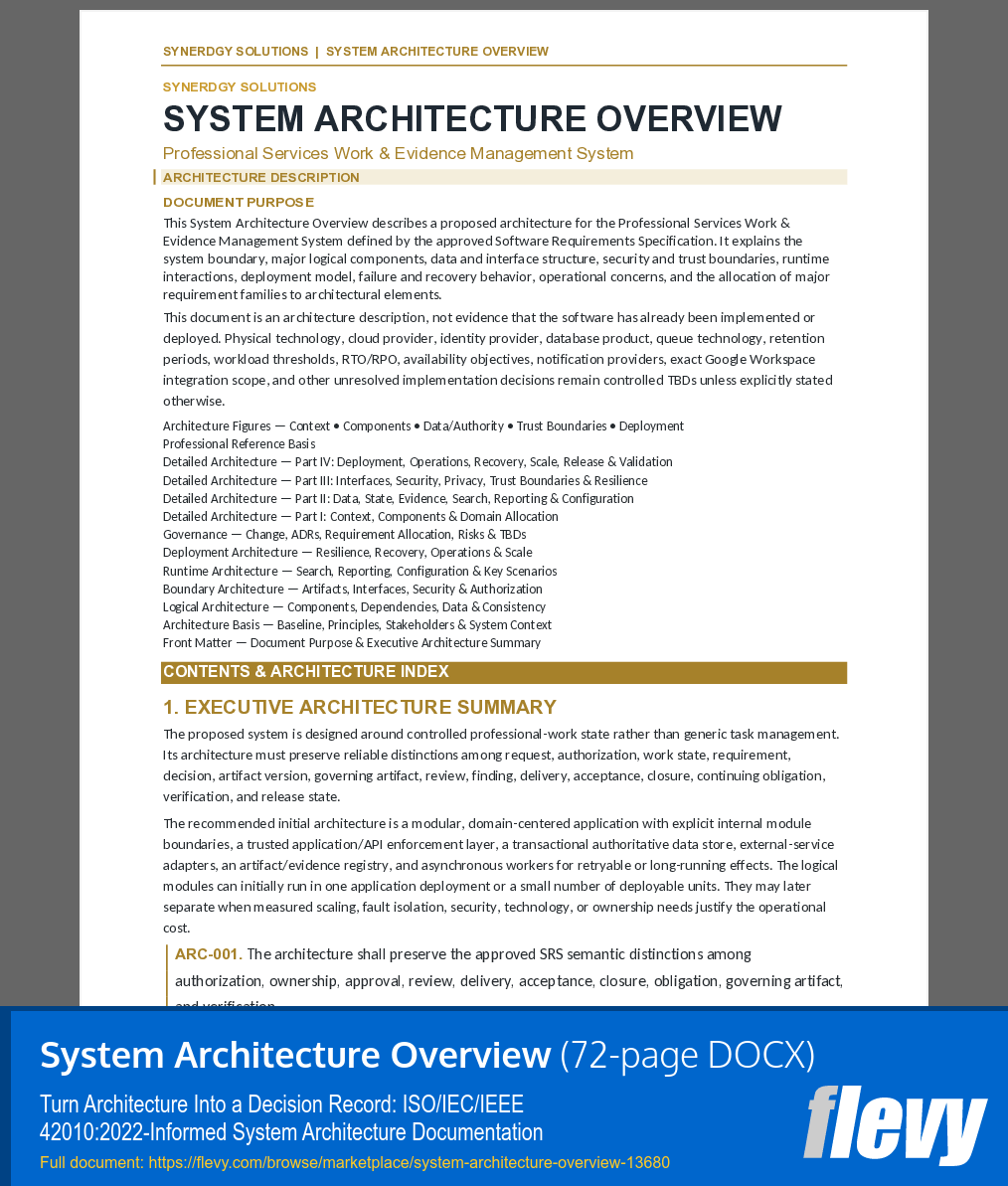
System Architecture Overview is a 73-page editable, provider-neutral architecture document for organizations that need more than a box-and-arrow diagram to explain how a software system is structured, where authority resides, how components interact, what dependencies matter, and which architectural decisions must remain controlled as implementation evolves.
Architecture documentation often fails in one of two directions. It is either so lightweight that it communicates little beyond component names, or so framework-heavy that the documentation becomes harder to maintain than the system itself.
This document is designed for the middle ground: a practical system architecture overview, software architecture document, solution architecture template, technical architecture document, and architecture governance baseline that is detailed enough to support implementation and review without requiring a specific cloud provider, programming framework, database, diagramming notation, identity platform, repository, queue service, or observability stack.
The document treats architecture as a controlled decision record, not a decorative system diagram.
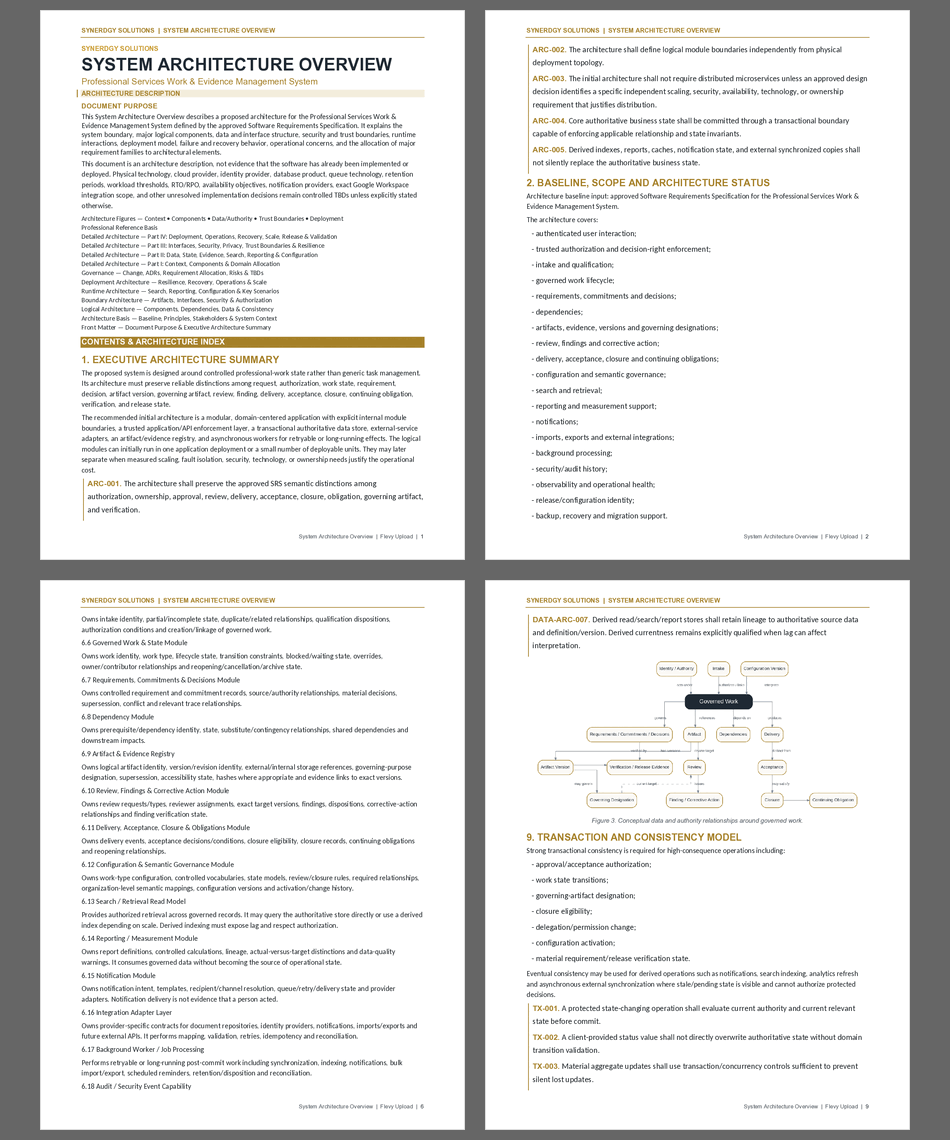
A useful architecture description should help a reader determine what the system contains, what sits outside the system boundary, which components own which responsibilities, where authoritative data and state reside, how information moves across interfaces, where trust changes, how deployment and recovery are expected to work, which design decisions are deliberate, and what evidence will be needed before implementation can be considered consistent with the intended architecture.
That is the purpose of this System Architecture Overview.
It provides a structured architecture baseline spanning system context, logical architecture, component architecture, domain allocation, data architecture, state authority, interface contracts, external dependencies, identity and authorization, trust boundaries, privacy and security considerations, deployment architecture, resilience, recovery, operational architecture, architecture decision records, requirement allocation, architectural risks and tradeoffs, validation, and future architecture governance.
The underlying document was built as a 73-page editable Microsoft Word resource and includes architecture coverage extending from executive-level context through implementation-oriented decision structures.
Architecture Starts With the System Boundary
Before teams argue about technologies, services, databases, or deployment patterns, they need agreement on what system is actually being described.
The System Architecture Overview establishes the system boundary, relevant actors, external systems, major dependencies, architectural concerns, and the operating environment around the architecture.
This helps prevent one of the most common architecture problems: different teams using the same system name while mentally describing different things.
A system context should make it possible to distinguish:
what is inside the architecture, what is outside it, who interacts with it, which external systems it depends on, which relationships are operationally material, and where responsibility changes hands.
That provides a stronger foundation for system context diagrams, software architecture documentation, solution architecture, implementation planning, modernization initiatives, technical onboarding, and architecture reviews.
Define Logical Components Before Implementation Details Take Over
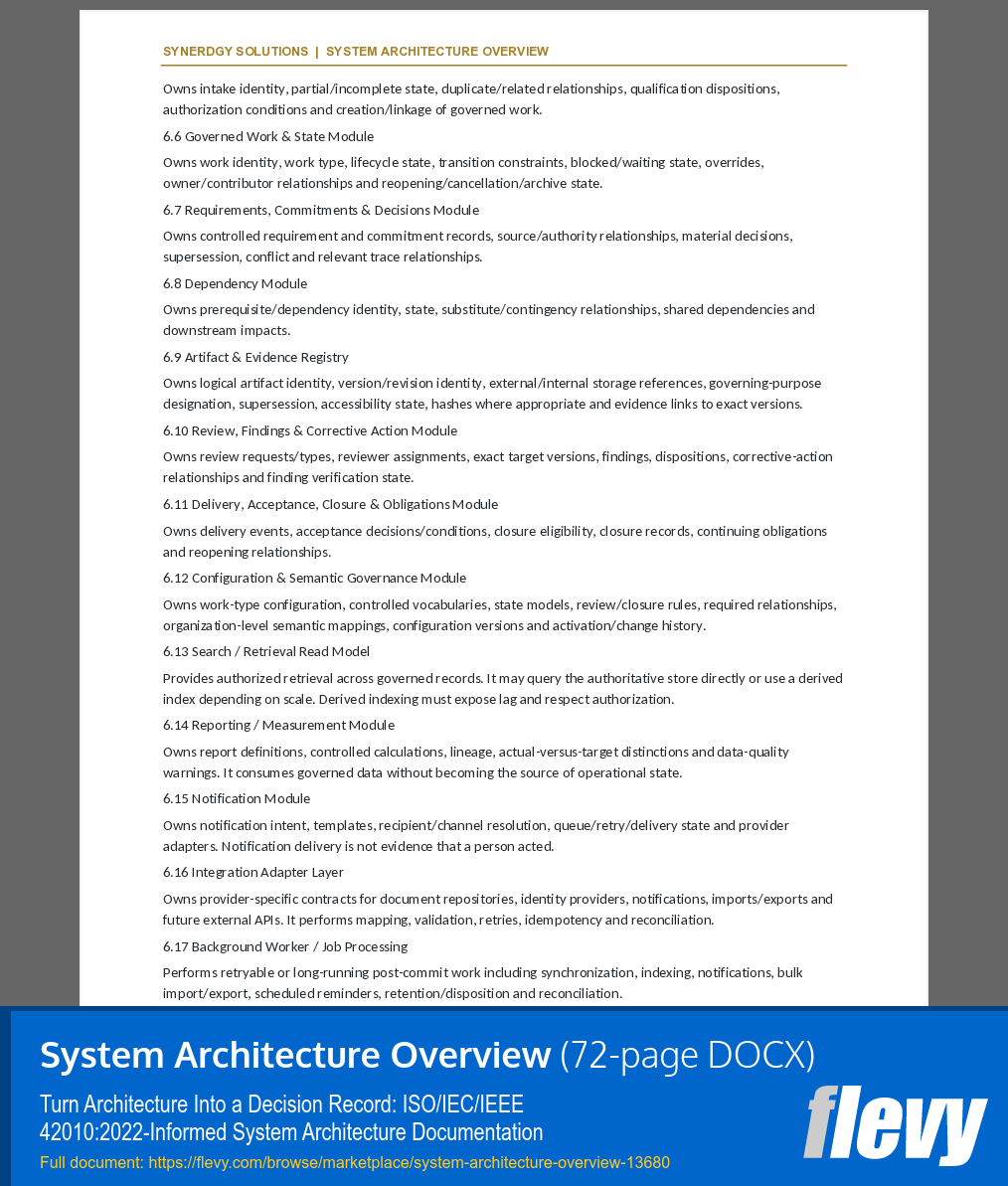
The document establishes a logical component architecture that separates responsibilities before those responsibilities become inseparable from a particular implementation.
Components can be mapped to functions, domains, services, data responsibilities, workflows, or other meaningful architectural units without prematurely assuming that every logical component must become a separate microservice, deployment unit, database, or vendor product.
This distinction helps teams preserve architectural intent even when implementation choices change.
It also gives reviewers a way to ask whether each component has a coherent responsibility, whether important functions lack an owner, whether multiple components are claiming authority over the same state, and whether unnecessary coupling has been introduced.
The result is a more useful logical architecture document, particularly for systems that are still being designed, modernized, decomposed, integrated, or prepared for implementation.
Establish Data and State Authority
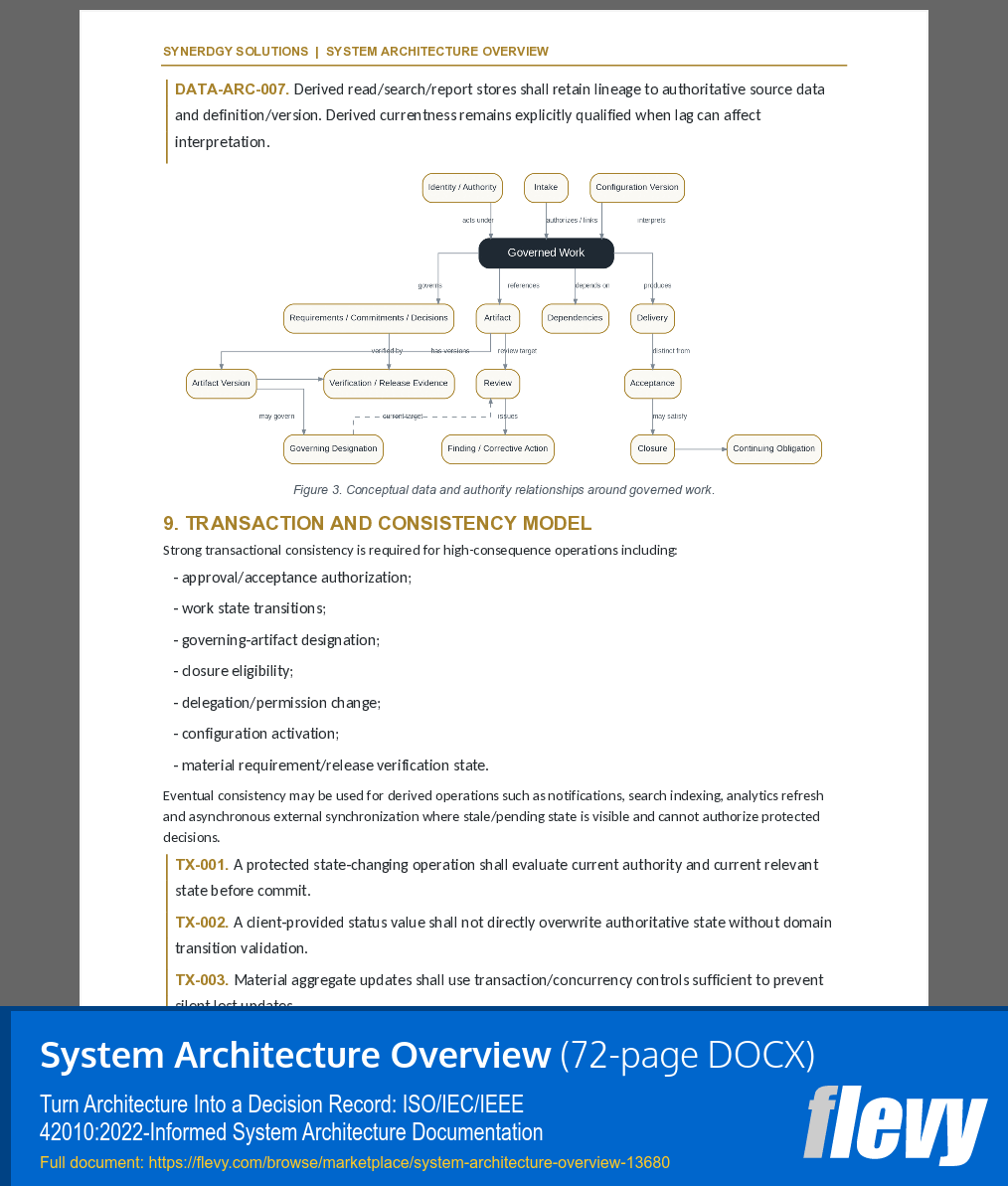
Architecture becomes much more consequential when several services or systems can read, copy, modify, cache, transform, or report on the same information.
The System Architecture Overview therefore addresses data architecture and authoritative state, not simply where a database icon appears on a diagram.
Teams can document which component is authoritative for a record or decision state, which systems hold derived or cached copies, where consistency expectations matter, how semantic meaning is preserved, how versions and configuration affect interpretation, and where search, reporting, export, or downstream use creates additional architecture considerations.
This supports buyers searching for a data architecture template, system-of-record documentation, data ownership architecture, authoritative source documentation, state management architecture, software data architecture, or system architecture template with data flows and responsibilities.
It also helps prevent an expensive implementation question from being answered accidentally:
Which system wins when two systems disagree?
Make Interfaces and Dependencies Explicit
Architecture quality is often determined at boundaries.
The document captures interfaces, integrations, external dependencies, identity interactions, authorization boundaries, imports, exports, service relationships, and technical contracts that connect components internally or connect the system to outside providers.
A dependency should not merely appear as a line between boxes. Architecture documentation should help explain what the dependency provides, why the system relies on it, what authority crosses that boundary, what happens when the dependency changes, and what implementation or operational consequence follows if it becomes unavailable.
That makes the document valuable for API architecture, integration architecture, dependency documentation, interface architecture, service architecture, distributed system design, and third-party system governance.
For buyers who need deeper interface-level controls after this architectural baseline is established, the related System Integration Requirements & Control Specification carries those decisions into detailed integration requirements and acceptance conditions.
Document Trust Boundaries, Identity, Security, and Privacy
Trust is an architectural property.
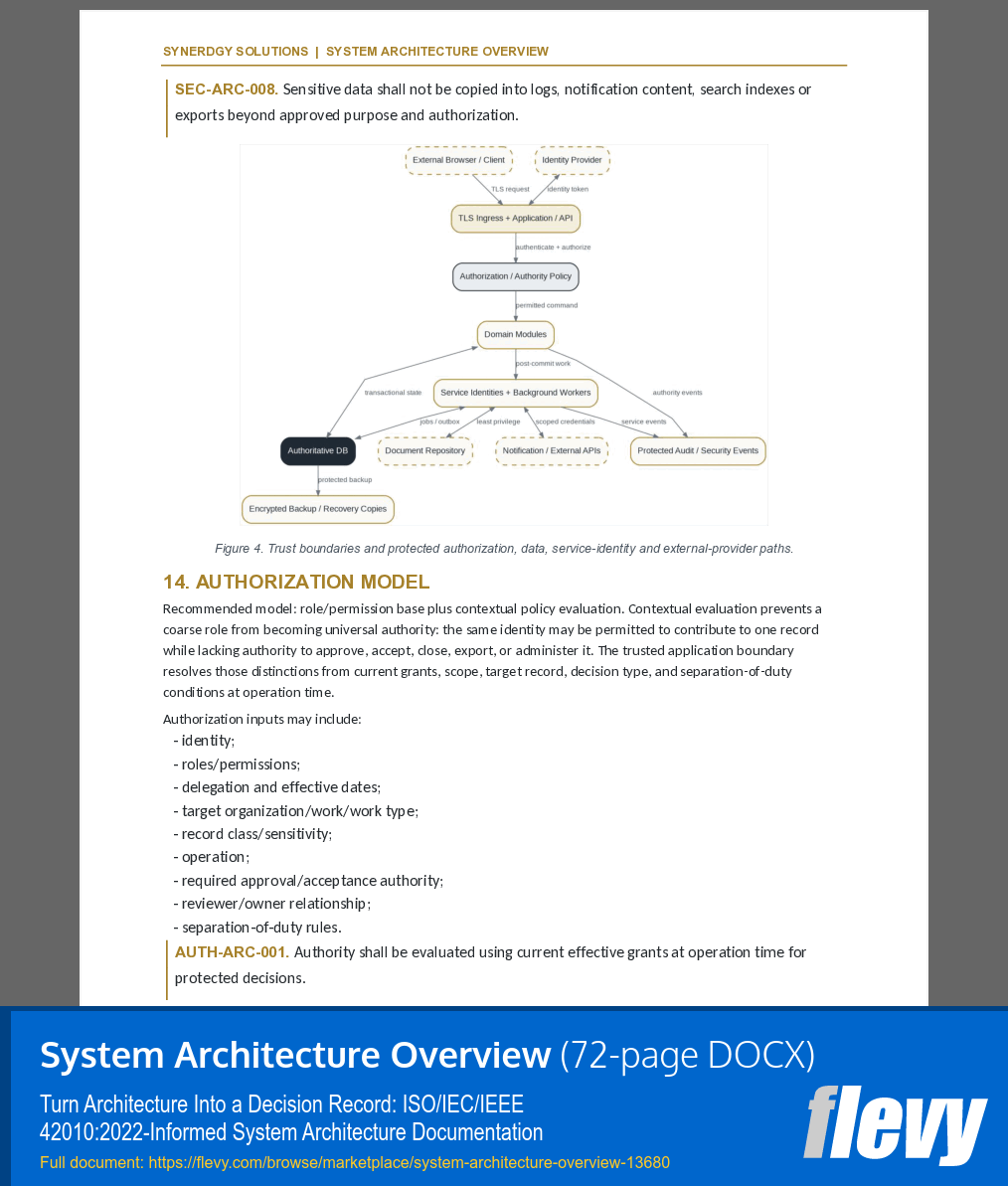
The System Architecture Overview provides structure for documenting where authentication occurs, where authorization decisions are enforced, how identities cross components or external boundaries, where privileged functions reside, where sensitive information moves, and where trust assumptions change.
This supports trust boundary documentation, security architecture, identity architecture, authorization design, privacy-aware system architecture, and architecture review without attempting to replace a dedicated security program.
The purpose is to make security-relevant architecture visible enough that implementation teams, reviewers, operators, and governance stakeholders can identify the decisions that need stronger controls.
Capture Deployment Architecture Without Locking Into One Vendor
The document is intentionally provider-neutral.
It does not require AWS, Azure, Google Cloud, Kubernetes, a specific database platform, a specific message broker, a particular identity provider, or any single architecture diagram notation.
Instead, it establishes the decisions that a deployment architecture should explain:
deployment zones, runtime responsibilities, environmental boundaries, infrastructure dependencies, scale considerations, database behavior, queue or background-job behavior, configuration, monitoring relationships, release considerations, migration, rollback, backup, restore, and recovery.
That makes the architecture reusable across technology changes while preserving the reasoning that matters.
Organizations can therefore adapt the resource as a cloud architecture template, SaaS architecture document, internal application architecture, enterprise software architecture overview, modernization architecture document, implementation architecture, or provider-neutral technical architecture.
Build Resilience and Recovery Into the Architecture
Resilience cannot be added meaningfully after every major architecture decision has already been made.
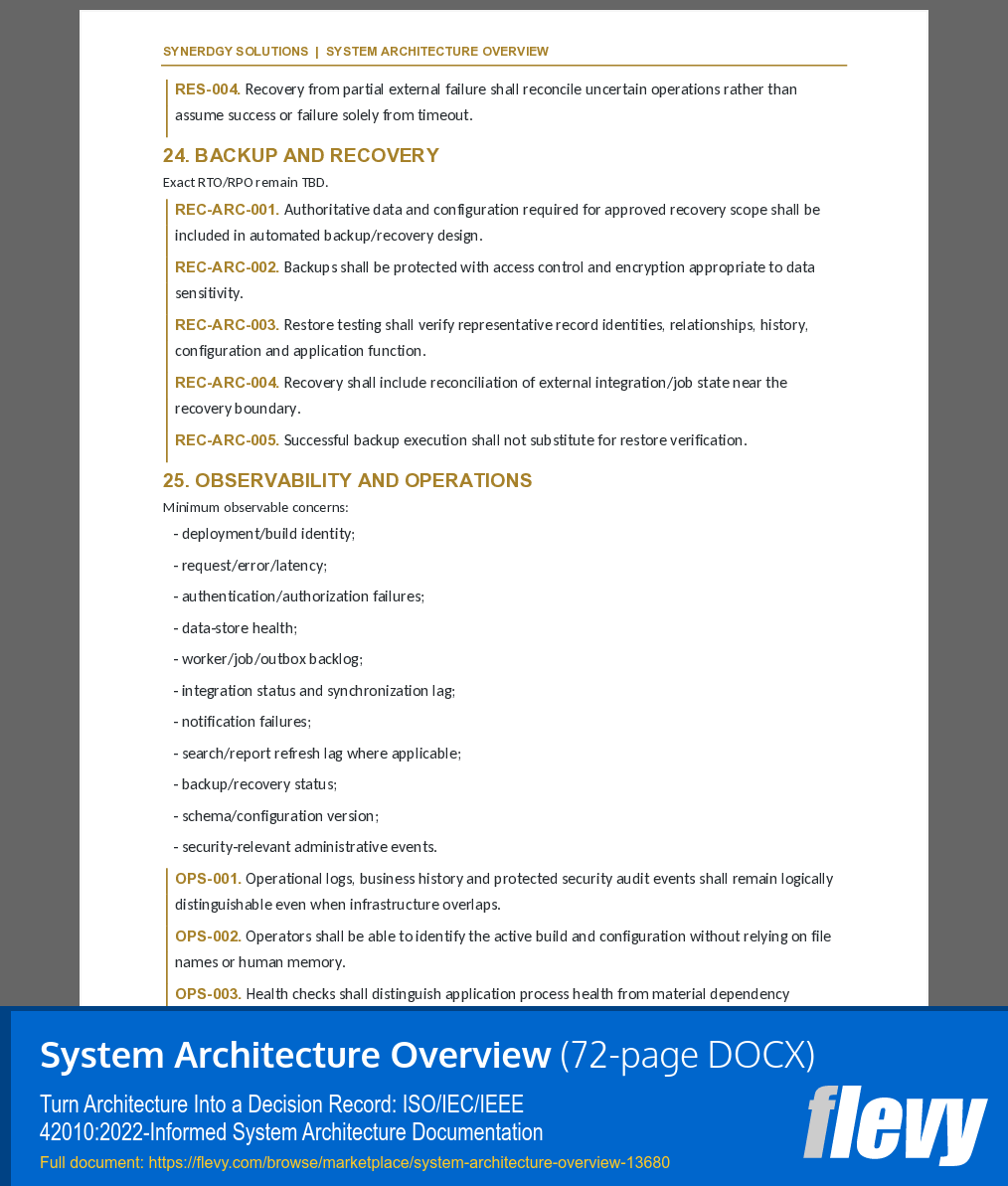
The System Architecture Overview incorporates architectural consideration of failure domains, dependency failure, backup and restore, recovery, queues and asynchronous processing, deployment behavior, rollback, migration, operational continuity, and resilience assumptions.
It does not attempt to prescribe one universal recovery architecture.
Instead, it helps teams identify where recovery decisions exist and which architecture elements must support them.
That creates a natural bridge to the Application Monitoring, Observability & Performance Plan and Technical Error Handling & Recovery Procedure, which govern the ongoing detection and runtime recovery layers once the architecture has established the environment those controls operate within.
Preserve Architecture Decisions and Tradeoffs
Good architecture documentation should explain not only what exists, but why significant decisions were made.
The document includes architecture decision structures for recording important choices, alternatives, constraints, consequences, dependencies, assumptions, and conditions that could cause a decision to be revisited.
This gives teams a foundation for Architecture Decision Records (ADRs), ADR templates, architecture decision logs, design rationale, technical decision documentation, architecture risk management, and architecture tradeoff analysis.
That historical context becomes especially valuable during modernization, staff turnover, vendor changes, audits, incident reviews, major integrations, and redesign efforts.
Without it, teams often inherit an architecture whose reasoning has vanished while its consequences remain enthusiastically alive.
Connect Requirements to Architecture
Architecture should be traceable to the requirements it is supposed to satisfy.
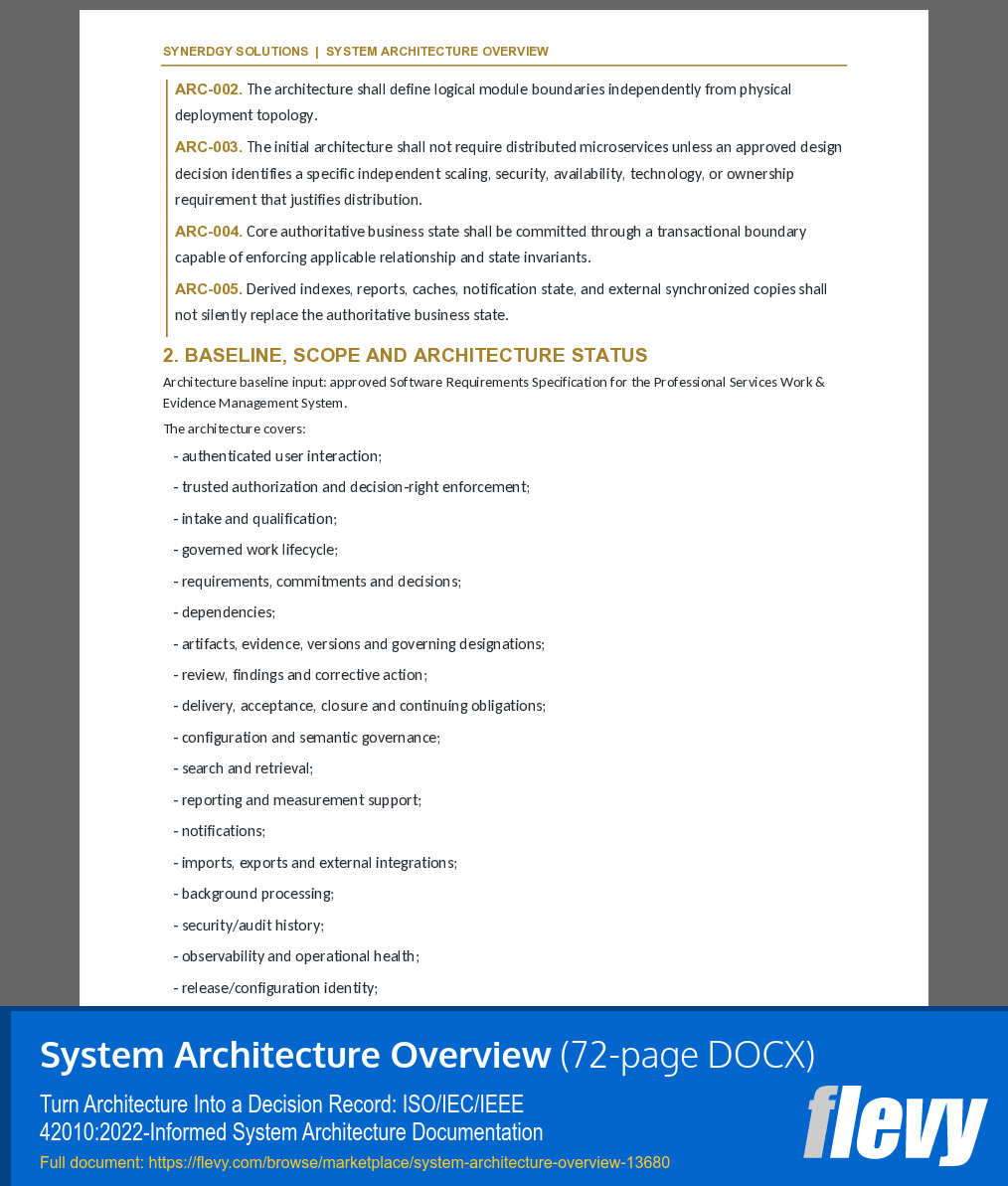
The System Architecture Overview includes requirement allocation so major requirement families can be associated with architectural components, interfaces, data structures, deployment decisions, or other architectural elements.
This helps reviewers determine whether important requirements have an architectural home and whether a design decision actually supports the behavior or quality expected from the system.
It is useful for software requirements traceability, architecture-to-requirements mapping, solution design, implementation readiness, technical assurance, and system validation.
Validate Architecture Before Treating It as Settled
Architecture documentation is not evidence that a system has already been implemented correctly.
The resource therefore includes architecture-oriented validation checks, scenario validation, architecture test hooks, implementation governance checks, risk review, and future decision criteria.
A system may have a polished diagram and still contain unresolved authority conflicts, undocumented dependencies, untestable assumptions, contradictory interface expectations, or recovery conditions that have never been evaluated.
Architecture validation asks whether the description remains internally coherent and whether its important assumptions can eventually be verified during implementation.
That makes the document useful as an architecture validation checklist, architecture review template, implementation-readiness artifact, design assurance document, and software architecture governance tool.
Built for Professional and Client-Facing Use
The strongest fit includes:
software and solution architects, engineering leaders, product leaders, implementation consultants, fractional CTO and technical advisory practices, SaaS teams, internal-tool teams, modernization programs, compliance and governance functions, operations leaders, and consultants producing technical documentation for client delivery.
The architecture can be used before a new build, during modernization, during integration planning, when replacing undocumented legacy knowledge, when preparing for implementation, when onboarding technical teams, or when an organization needs a professional architecture baseline that can survive beyond the person who originally understood the system.
The original commercialization package positions the document specifically between lightweight diagram templates and highly specialized enterprise-architecture frameworks: more detailed than a diagram, more implementation-oriented than a strategy deck, and more adaptable than a vendor-specific reference architecture.
ISO/IEC/IEEE 42010:2022-Informed Architecture Documentation
The professional reference basis includes ISO/IEC/IEEE 42010:2022, which defines requirements for the structure and expression of architecture descriptions and addresses concepts such as architecture viewpoints, model kinds, architecture description frameworks, and relationships within an architecture description. The current ISO listing identifies the 2022 edition as published.
The SyNERDgy resource uses the standard as a professional reference basis, together with architecture communication and software/security engineering practices.
Purchase of this resource does not represent ISO certification, third-party conformity assessment, or automatic compliance with ISO/IEC/IEEE 42010:2022.
What the Buyer Receives
The buyer receives a 73-page editable Microsoft Word System Architecture Overview covering executive architecture context, architectural basis and scope, principles, stakeholders and concerns, system context, logical components, data and state authority, interfaces, trust boundaries, identity and authorization, security and privacy considerations, deployment, operations, monitoring relationships, resilience, backup, restore and recovery, release and migration considerations, architectural decisions, requirement allocation, risks and tradeoffs, scenario validation, implementation governance, and future architecture decisions.
The paid file also preserves the more detailed architecture test hooks, requirement-allocation structures, scenario-validation material, risk and tradeoff inventory, governance checks, and future-decision criteria that should remain primarily inside the purchased resource.
The underlying Flevy package confirms the 73-page editable Word format and the provider-neutral scope spanning system components, interfaces, data/state authority, dependencies, trust boundaries, deployment, architectural decisions, risks, validation, and implementation governance.
Works Well With Other SyNERDgy Resources
System Architecture Overview serves as the broad architectural entry point for the SyNERDgy Technical Reliability & Assurance shelf.
Pair it with System Integration Requirements & Control Specification when architectural interfaces and external dependencies need to become explicit integration contracts covering authority, data meaning, failure behavior, lifecycle controls, and acceptance.
Pair it with Application Monitoring, Observability & Performance Plan when the architecture needs an operating model for service health, telemetry, SLIs/SLOs, alerting, capacity, performance, and monitoring validation.
Pair it with Technical Error Handling & Recovery Procedure when identified architectural failure paths need runtime controls for classification, timeout handling, retry, idempotency, containment, fallback, partial failure, escalation, reconciliation, and verified recovery.
Pair it with Software Testing & Acceptance Protocol when architecture, integration, resilience, and operational requirements need to become testable evidence supporting an authorized release or acceptance decision.
Together, the technical reliability sequence becomes:
System Architecture Overview → System Integration Requirements & Control Specification → Application Monitoring, Observability & Performance Plan → Technical Error Handling & Recovery Procedure → Software Testing & Acceptance Protocol
Operationally:
Architect → Define → Detect → Recover → Prove
System Architecture Overview provides a reusable professional baseline for teams that need their architecture to remain explainable, reviewable, traceable, and useful throughout implementation.
The objective is not simply to show where the boxes go.
It is to document what the system is, where authority lives, how components relate, what assumptions matter, what decisions have been made, what can fail, and what must remain true as the architecture becomes a real system.
—-
THREE BUYER BENEFITS
1. Turn architecture diagrams into decision-ready documentation. Capture system context, component responsibility, data/state authority, interfaces, trust boundaries, deployment choices, architectural decisions, risks, and validation conditions in one maintainable architecture baseline.
2. Reduce expensive implementation ambiguity before it hardens into the system. Identify ownership conflicts, hidden dependencies, unclear authority, boundary assumptions, integration risks, resilience gaps, and unresolved design decisions while they are still cheaper to change.
3. Create architecture that remains useful after design meetings end. Use requirement allocation, ADR-style decision records, risk and tradeoff tracking, validation hooks, governance checks, and future-decision criteria to support implementation, modernization, onboarding, review, and long-term architecture governance.
Got a question about the product? Email us at support@flevy.com or ask the author directly by using the "Ask the Author a Question" form. If you cannot view the preview above this document description, go here to view the large preview instead.
Source: Best Practices in Information Technology, Enterprise Architecture Word: System Architecture Overview Word (DOCX) Document, SyNERDgy Solutions | R&D Systems
ABOUT THE AUTHOR

SyNERDgy Solutions develops proprietary enterprise frameworks and professional systems for complex organizational and technical environments.
Our work spans operational excellence, governance and risk, enterprise architecture, systems and AI, assurance, implementation, evidence analysis, and financial decision support.
SyNERDgy products are independently developed and subsequently cross-mapped
... [read more]
Ask the Author a Question
You must be logged in to contact the author.




























