
 Click main image to view in full screen. Unlock all 24 preview images:
AI Bubble Strategy Action Plan – Word DOCX
Word (DOCX) 254 Pages


BENEFITS OF THIS DOWNLOADABLE WORD DOCUMENT
- Provides a roadmap to navigate the AI bubble while maximizing strategic and financial advantage.
- Equips leaders with practical tools for building resilient human–AI collaboration and talent pipelines.
- Offers actionable insights to turn market downturns into opportunities for long-term growth and competitive dominance.
ARTIFICIAL INTELLIGENCE WORD DESCRIPTION
Curated by McKinsey-trained Executives
🚀 The AI Bubble Strategy Action Plan
*Turn AI Hype into Real Profit Before the Bubble Bursts*
The AI revolution is accelerating faster than ever—but not every opportunity will survive the hype. Most businesses, investors, and executives are blind to the real risks hidden beneath the surface. That's where *The AI Bubble Strategy Action Plan* comes in: the only guide you need to navigate the AI boom safely, avoid catastrophic mistakes, and position yourself to dominate the next wave of AI growth.
Why This Guide Is a Game-Changer
Forget shallow trend reports and speculative forecasts. This is a comprehensive, actionable blueprint that shows you exactly how to:
• Read the AI market like a seasoned investor.
• Identify technologies, players, and strategies that truly create value.
• Protect your capital, assets, and core revenue streams from bubble-driven volatility.
• Build high-performing human–AI teams that multiply productivity without overspending.
• Navigate regulatory, infrastructure, and talent risks with confidence.
Turn Downturns into Strategic Advantage
When the AI bubble bursts, winners emerge not by luck—but by design and preparation. This guide reveals how to:
• Acquire undervalued AI assets at the bottom of the market.
• Rebuild your business with disciplined, sustainable growth.
• Detect early signals of the next wave and position your organization for long-term success.
Who This Is For
Whether you are an entrepreneur, corporate leader, or investor, this guide gives you the tools, frameworks, and checklists to survive hype cycles, capitalize on opportunity, and turn risk into reward.
What You'll Gain
• Confidence to make evidence-based, high-stakes decisions in a volatile AI market.
• A step-by-step strategy for human–AI collaboration, talent building, and capability development.
• Practical playbooks to maximize ROI, preserve optionality, and build lasting competitive advantage.
• The insider knowledge to anticipate market shifts before they happen.
CONTENT OVERVIEW
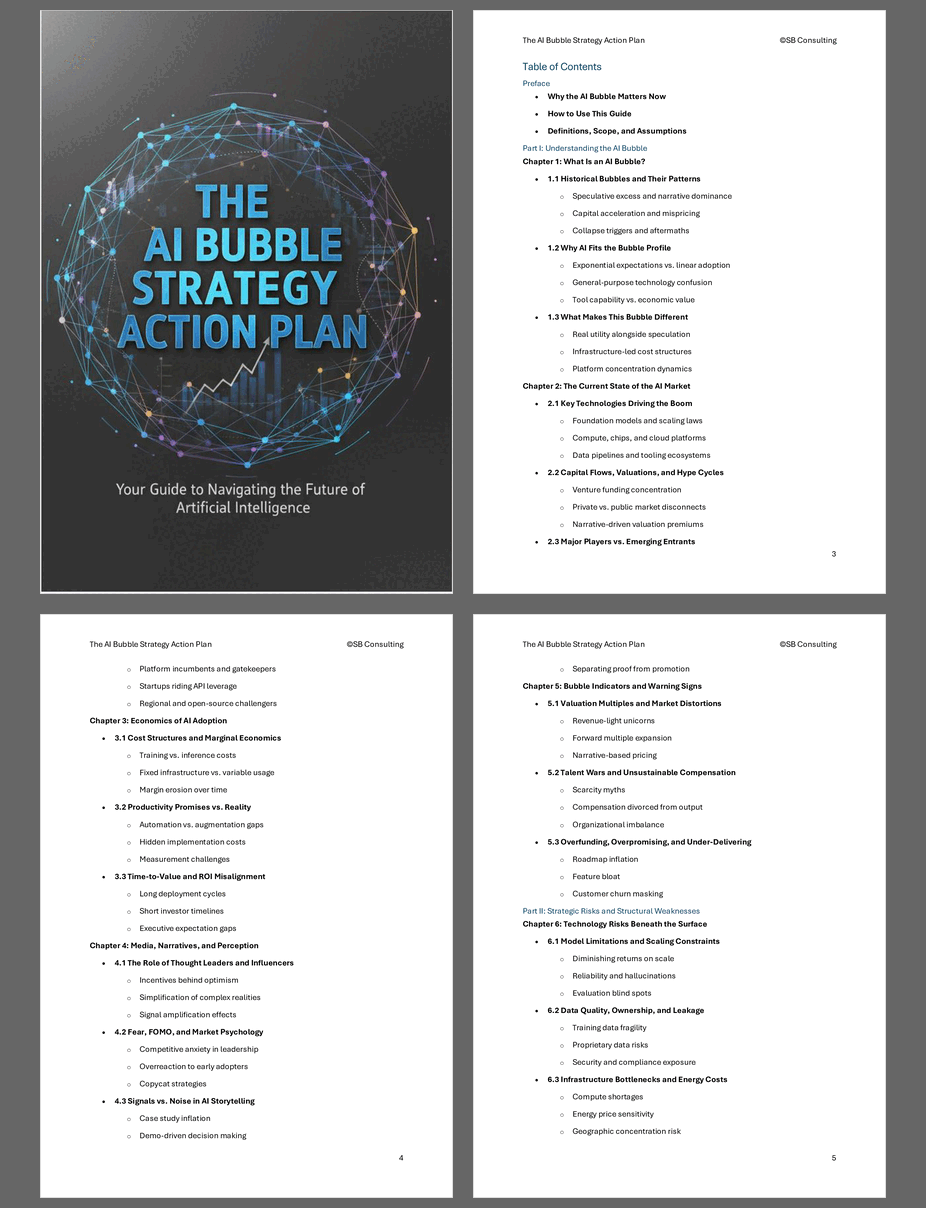
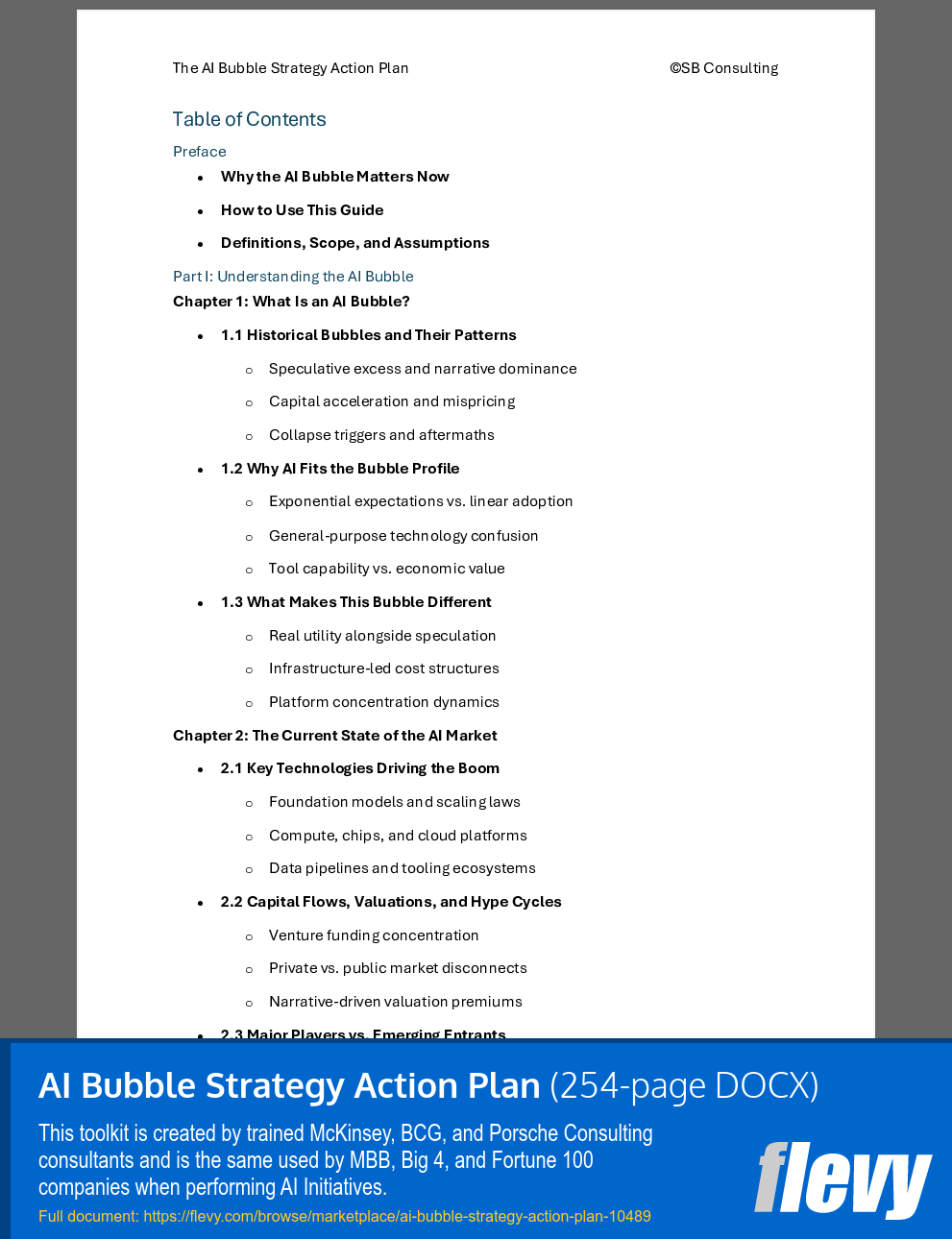
Chapter 1: What Is an AI Bubble?
1.1 Historical Bubbles and Their Patterns
1.2 Why AI Fits the Bubble Profile
1.3 What Makes This Bubble Different
Chapter 2: The Current State of the AI Market
2.1 Key Technologies Driving the Boom
2.2 Capital Flows, Valuations, and Hype Cycles
2.3 Major Players vs. Emerging Entrants
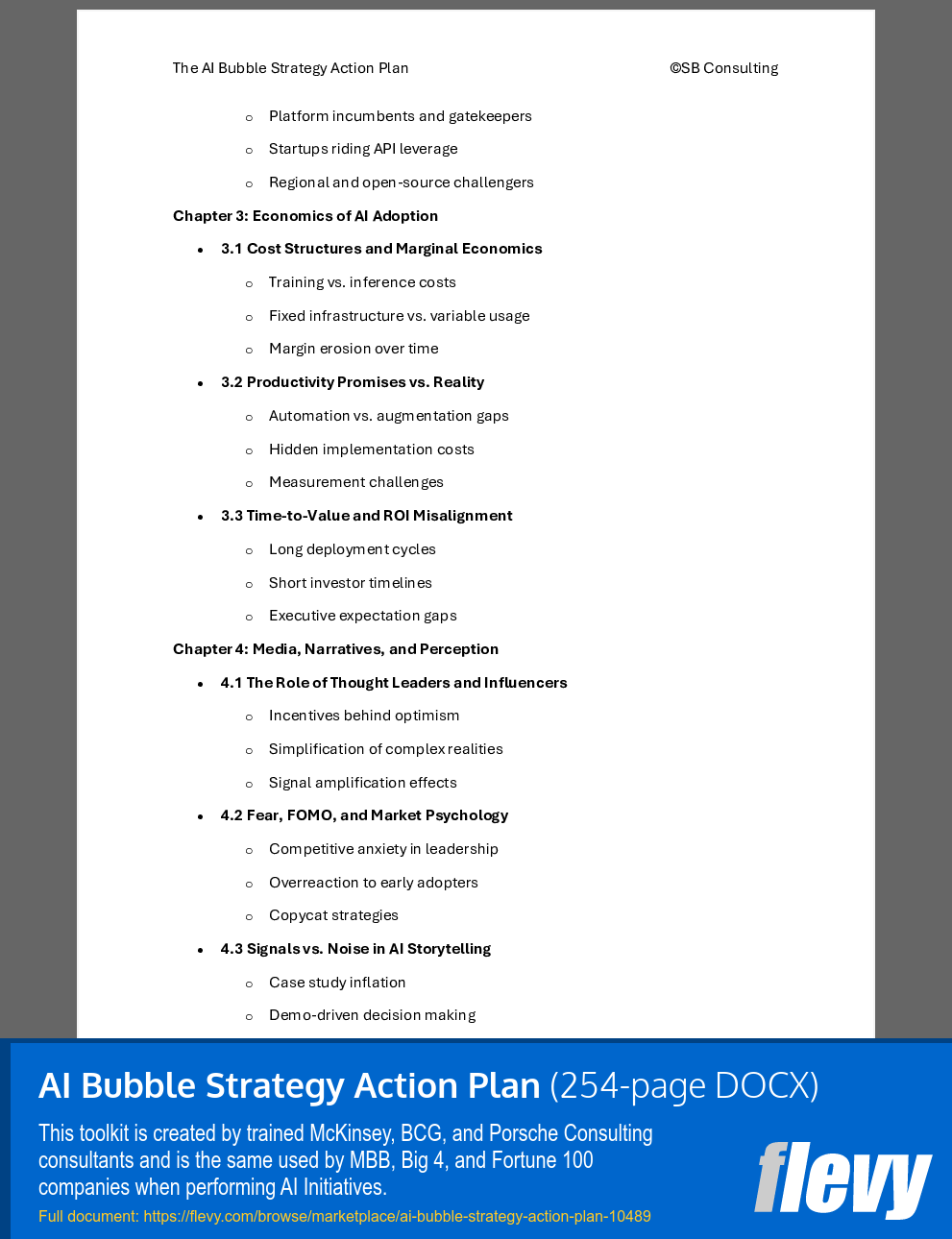
Chapter 3: Economics of AI Adoption
3.1 Cost Structures and Marginal Economics
3.2 Productivity Promises vs. Reality
3.3 Time-to-Value and ROI Misalignment
Chapter 4: Media, Narratives, and Perception
4.1 The Role of Thought Leaders and Influencers
4.2 Fear, FOMO, and Market Psychology
4.3 Signals vs. Noise in AI Storytelling
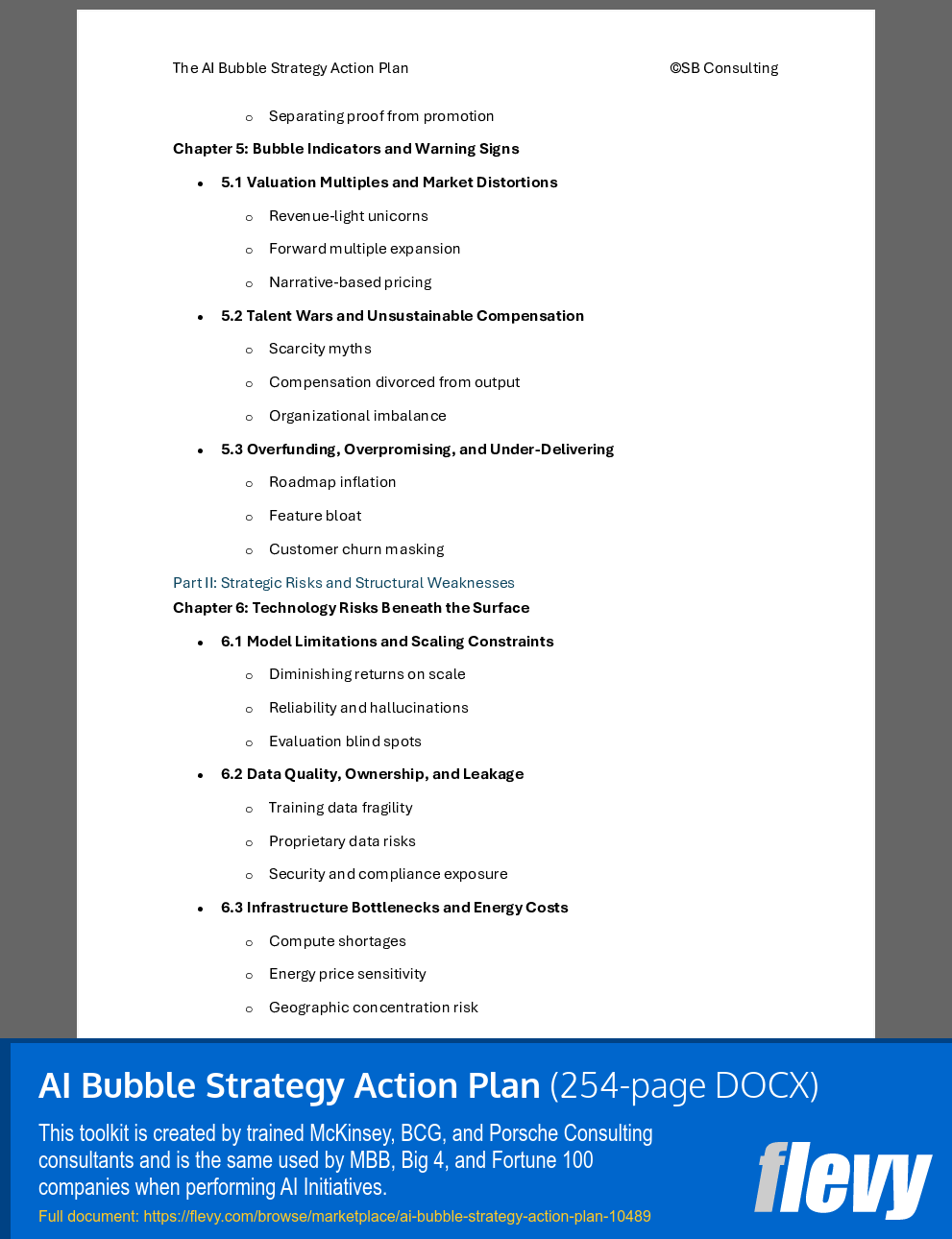
Chapter 5: Bubble Indicators and Warning Signs
5.1 Valuation Multiples and Market Distortions
5.2 Talent Wars and Unsustainable Compensation
5.3 Overfunding, Overpromising, and Under-Delivering
Part II: Strategic Risks and Structural Weaknesses
Chapter 6: Technology Risks Beneath the Surface
6.1 Model Limitations and Scaling Constraints
6.2 Data Quality, Ownership, and Leakage
6.3 Infrastructure Bottlenecks and Energy Costs
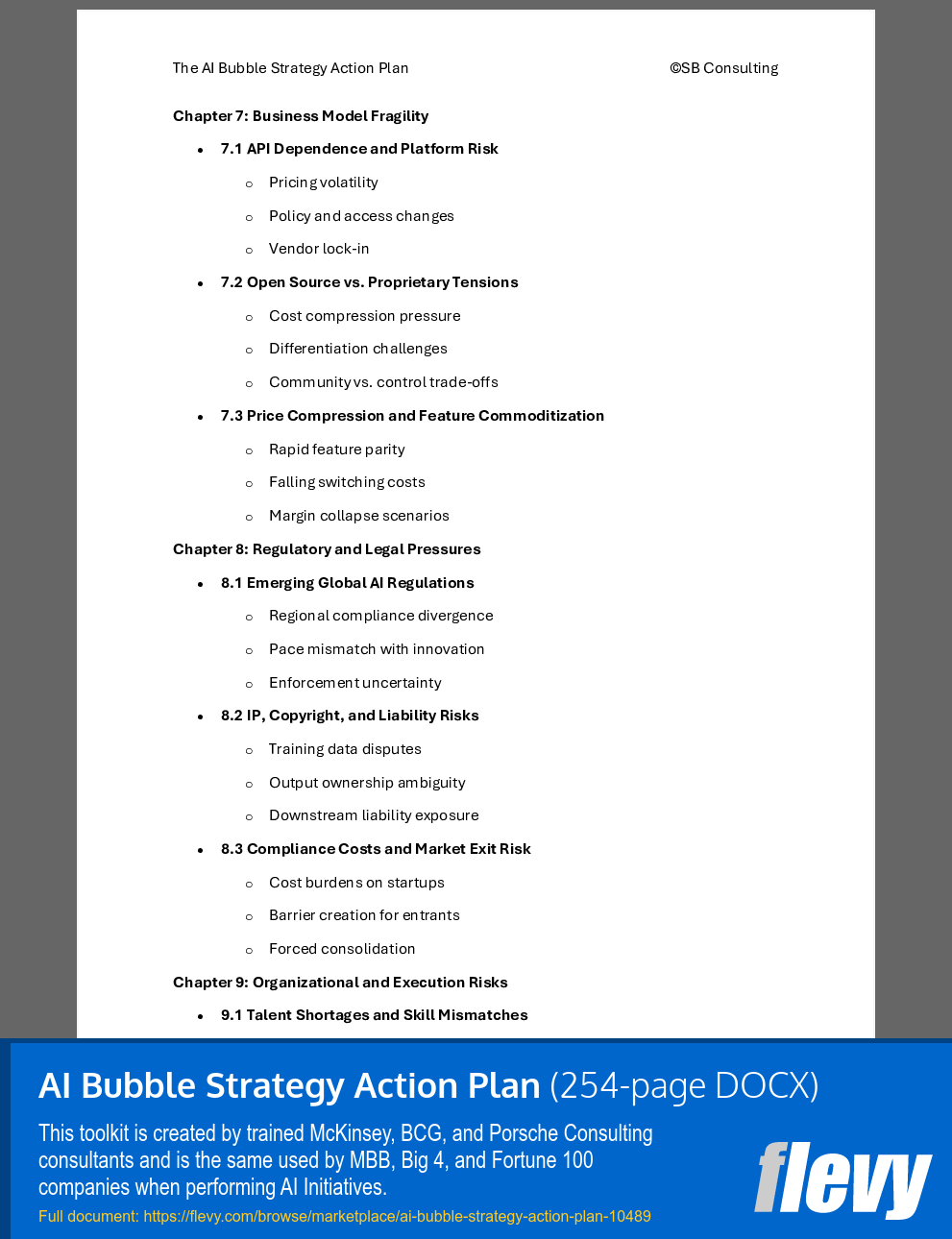
Chapter 7: Business Model Fragility
7.1 API Dependence and Platform Risk
7.2 Open Source vs. Proprietary Tensions
7.3 Price Compression and Feature Commoditization
Chapter 8: Regulatory and Legal Pressures
8.1 Emerging Global AI Regulations
8.2 IP, Copyright, and Liability Risks
8.3 Compliance Costs and Market Exit Risk
Chapter 9: Organizational and Execution Risks
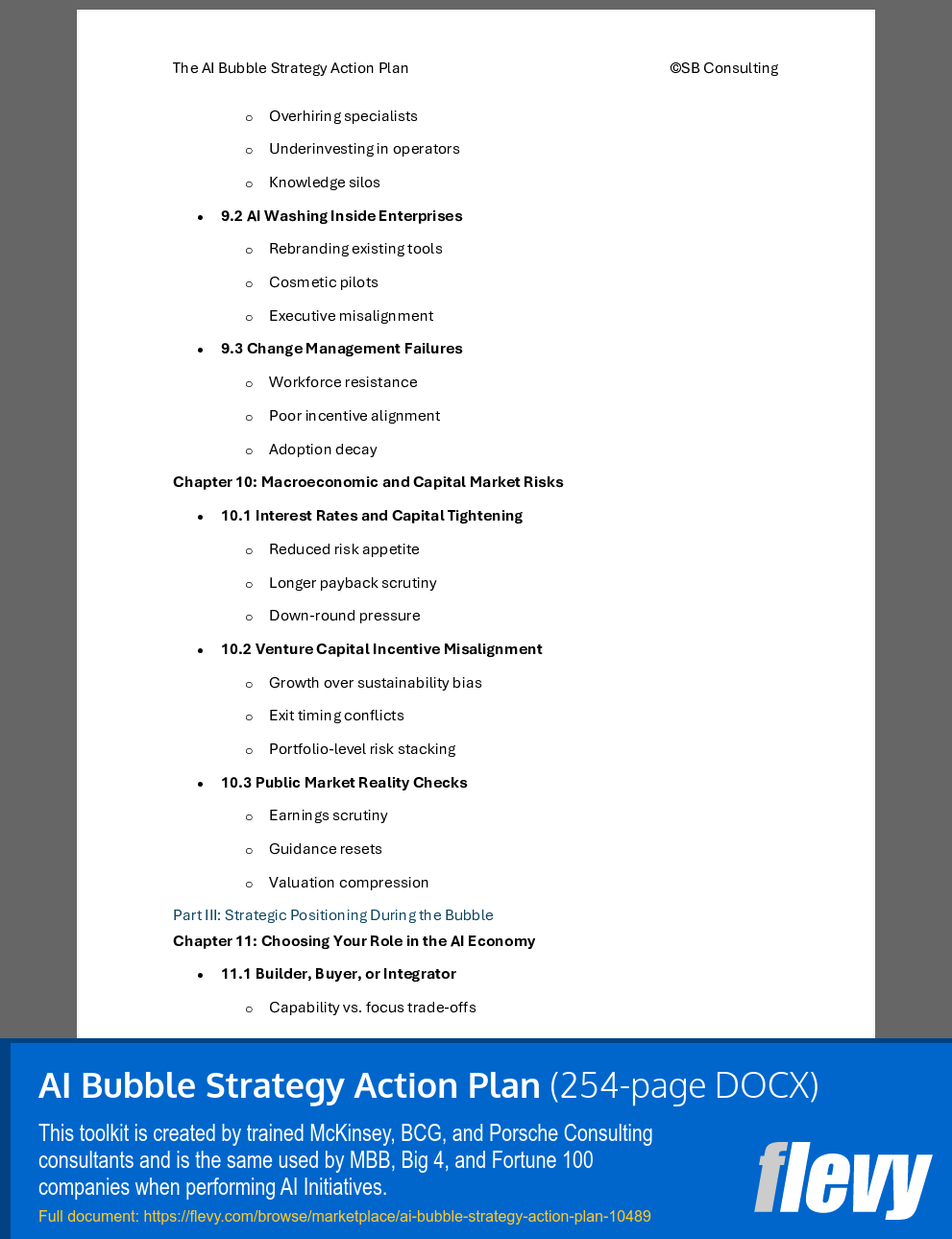
9.1 Talent Shortages and Skill Mismatches
9.2 AI Washing Inside Enterprises
9.3 Change Management Failures
Chapter 10: Macroeconomic and Capital Market Risks
10.1 Interest Rates and Capital Tightening
10.2 Venture Capital Incentive Misalignment
10.3 Public Market Reality Checks
Part III: Strategic Positioning During the Bubble
Chapter 11: Choosing Your Role in the AI Economy
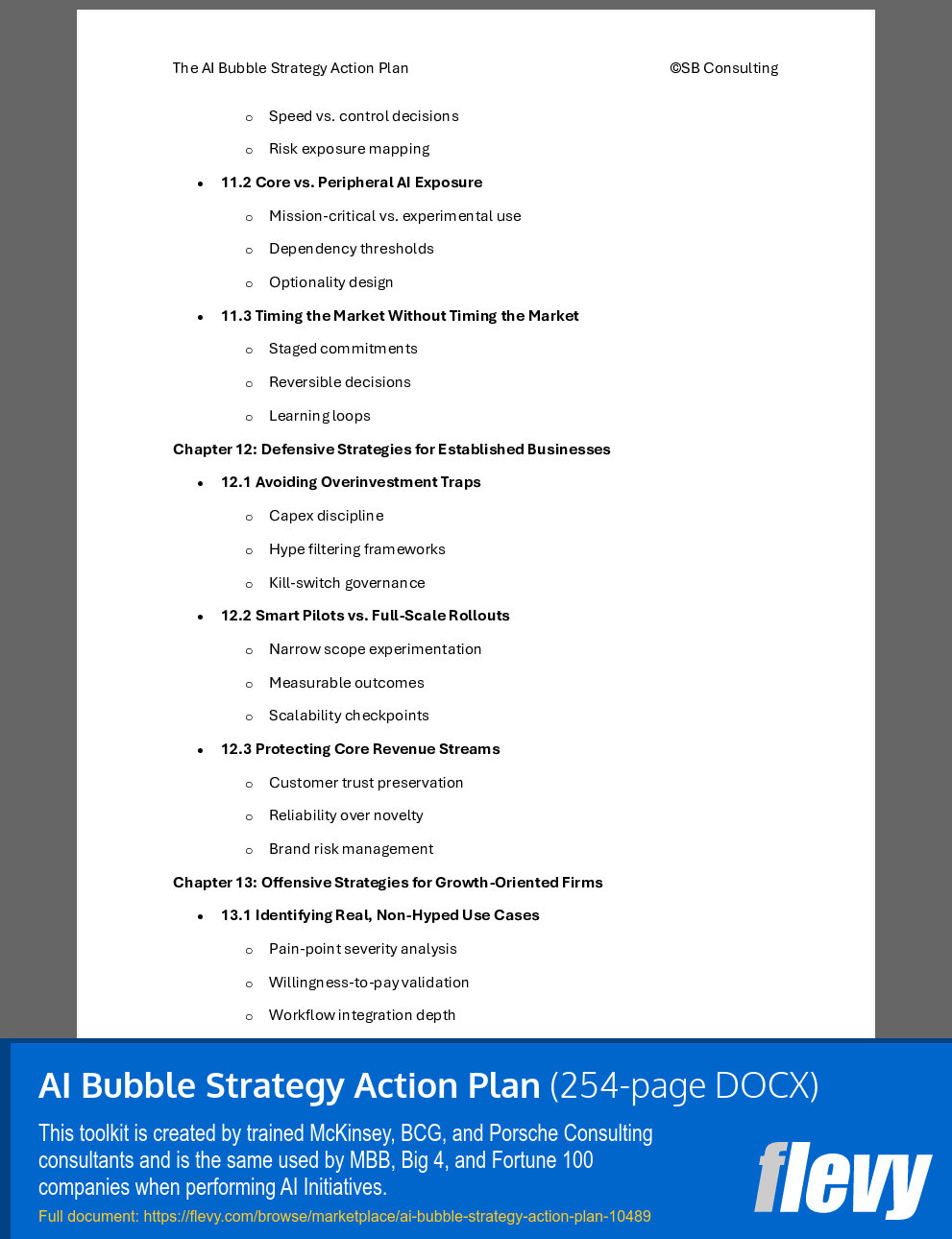
11.1 Builder, Buyer, or Integrator
11.2 Core vs. Peripheral AI Exposure
11.3 Timing the Market Without Timing the Market
Chapter 12: Defensive Strategies for Established Businesses
12.1 Avoiding Overinvestment Traps
12.2 Smart Pilots vs. Full-Scale Rollouts
12.3 Protecting Core Revenue Streams
Chapter 13: Offensive Strategies for Growth-Oriented Firms
13.1 Identifying Real, Non-Hyped Use Cases
13.2 Speed, Focus, and Strategic Restraint
13.3 Building Moats Beyond Models
Chapter 14: Capital Allocation and Investment Strategy
14.1 Internal Investment Decision Frameworks
14.2 M&A, Partnerships, and Acqui-hires
14.3 When to Wait, When to Act
Chapter 15: Metrics That Actually Matter
15.1 Measuring AI Impact Beyond Demos
15.2 Unit Economics and Long-Term Viability
15.3 Kill Metrics and Exit Triggers
Part IV: Scenario Planning for the Bubble's Outcome
Chapter 16: Soft Landing Scenarios
16.1 Gradual Market Rationalization
16.2 Winners, Losers, and Survivors
16.3 Strategic Adjustments in a Cooling Market
Chapter 17: Hard Crash Scenarios
17.1 Rapid Capital Withdrawal
17.2 Technology Layoffs and Consolidation
17.3 Business Continuity Under Stress
Chapter 18: Regulatory Shock Scenarios
18.1 Sudden Policy Shifts
18.2 Geographic Fragmentation of AI Markets
18.3 Strategic Relocation and Re-Architecture
Chapter 19: Technological Breakthrough Scenarios
19.1 Breakthroughs That Justify the Hype
19.2 Cost Collapse and Capability Expansion
19.3 Redefining Competitive Advantage
Chapter 20: Black Swan and Second-Order Effects
20.1 Unexpected Uses and Misuses of AI
20.2 Societal and Labor Market Disruptions
20.3 Strategic Optionality Under Uncertainty
Part V: Building Post-Bubble Advantage
Chapter 21: Lessons from Past Technology Cycles
21.1 Dot-Com Survivors and Why They Won
21.2 Patterns of Enduring Value Creation
21.3 Translating History to AI
Chapter 22: Designing Resilient AI Strategies
22.1 Modularity and Flexibility by Design
22.2 Vendor Independence and Redundancy
22.3 Continuous Learning Organizations
Chapter 23: Leadership in an AI-Saturated World
23.1 Decision-Making with Imperfect AI
23.2 Ethical Leadership and Trust
23.3 Communicating Strategy Internally and Externally
Chapter 24: Talent, Culture, and Capability Building
24.1 Hiring for Adaptability, Not Hype
24.2 Human–AI Collaboration Models
24.3 Long-Term Skill Development
Chapter 25: Turning the Bust into Opportunity
25.1 Acquiring Assets at the Bottom
25.2 Rebuilding with Discipline
25.3 Positioning for the Next Wave
💡 Don't Wait for the Bubble to Burst Around You
The next wave of AI value rewards strategic, informed, and disciplined action. This guide gives you everything you need to survive the hype, thrive in uncertainty, and lead the AI era.
Step ahead of the crowd. Dominate the AI market. Transform risk into opportunity.
Key Words:
Strategy & Transformation, Growth Strategy, Strategic Planning, Strategy Frameworks, Innovation Management, Pricing Strategy, Core Competencies, Strategy Development, Business Transformation, Marketing Plan Development, Product Strategy, Breakout Strategy, Competitive Advantage, Mission, Vision, Values, Strategy Deployment & Execution, Innovation, Vision Statement, Core Competencies Analysis, Corporate Strategy, Product Launch Strategy, BMI, Blue Ocean Strategy, Breakthrough Strategy, Business Model Innovation, Business Strategy Example, Corporate Transformation, Critical Success Factors, Customer Segmentation, Customer Value Proposition, Distinctive Capabilities, Enterprise Performance Management, KPI, Key Performance Indicators, Market Analysis, Market Entry Example, Market Entry Plan, Market Intelligence, Market Research, Market Segmentation, Market Sizing, Marketing, Michael Porter's Value Chain, Organizational Transformation, Performance Management, Performance Measurement, Platform Strategy, Product Go-to-Market Strategy, Reorganization, Restructuring, SWOT, SWOT Analysis, Service 4.0, Service Strategy, Service Transformation, Strategic Analysis, Strategic Plan Example, Strategy Deployment, Strategy Execution, Strategy Frameworks Compilation, Strategy Methodologies, Strategy Report Example, Value Chain, Value Chain Analysis, Value Innovation, Value Proposition, Vision Statement, Corporate Strategy, Business Development, Business plan pdf, business plan, PDF, Business Plan DOC, Business Plan Template, PPT, Market strategy playbook, strategic market planning, competitive analysis tools, market segmentation frameworks, growth strategy templates, product positioning strategy, market execution toolkit, strategic alignment playbook, KPI and OKR frameworks, business growth strategy guide, cross-functional strategy templates, market risk management, market strategy PowerPoint dec, guide, ebook, e-book ,McKinsey Change Playbook, Organizational change management toolkit, Change management frameworks 2025, Influence model for change, Change leadership strategies, Behavioral change in organizations, Change management PowerPoint templates, Transformational leadership in change, supply chain KPIs, supply chain KPI toolkit, supply chain PowerPoint template, logistics KPIs, procurement KPIs, inventory management KPIs, supply chain performance metrics, manufacturing KPIs, supply chain dashboard, supply chain strategy KPIs, reverse logistics KPIs, sustainability KPIs in supply chain, financial supply chain KPIs, warehouse KPIs, digital supply chain KPIs, 1200 KPIs, supply chain scorecard, KPI examples, supply chain templates, Corporate Finance SOPs, Finance SOP Excel Template, CFO Toolkit, Finance Department Procedures, Financial Planning SOPs, Treasury SOPs, Accounts Payable SOPs, Accounts Receivable SOPs, General Ledger SOPs, Accounting Policies Template, Internal Controls SOPs, Finance Process Standardization, Finance Operating Procedures, Finance Department Excel Template, FP&A Process Documentation, Corporate Finance Template, Finance SOP Toolkit, CFO Process Templates, Accounting SOP Package, Tax Compliance SOPs, Financial Risk Management Procedures.
NOTE: Our digital products are sold on an "as is" basis, making returns and refunds unavailable post-download. Please preview and inquire before purchasing. Please contact us before purchasing if you have any questions! This policy aligns with the standard Flevy Terms of Usage.
Got a question about the product? Email us at support@flevy.com or ask the author directly by using the "Ask the Author a Question" form. If you cannot view the preview above this document description, go here to view the large preview instead.
Source: Best Practices in Artificial Intelligence Word: AI Bubble Strategy Action Plan Word (DOCX) Document, SB Consulting
ABOUT THE AUTHOR

SB Consulting is dedicated to empowering businesses to communicate their ideas with impact. This consulting firm specializes in teaching organizations how to create effective corporate and management presentations. With training from top-tier global consulting firms, including McKinsey, BCG, and Porsche Consulting, extensive expertise in presentation design and ... [read more]
Ask the Author a Question
You must be logged in to contact the author.




























