Introducing Enterprise Architecture (Utility Example)   16-page PDF document
$20.00

Introducing Enterprise Architecture (Utility Example) (16-page PDF document) Preview Image
Flevy is the marketplace for business best practices.
Introducing Enterprise Architecture (Utility Example) (16-page PDF document) Preview Image
Arrow   Click main image to view in full screen.

Introducing Enterprise Architecture (Utility Example) (PDF)

PDF document 16 Pages

#3 in Enterprise Architecture $20.00

Add to Cart


Immediate download
Editable with PDF editor
Free lifetime updates

BENEFITS OF THIS PDF DOCUMENT

  1. Provides guidance on the difference between enterprise architecture components
  2. Functional model for the utilities industry
  3. Utilities enterprise architecture

MIS PDF DESCRIPTION

Editor Summary Introducing Enterprise Architecture (Utility Example) is a 16-page PDF introducing enterprise architecture models for the energy sector, illustrated via a fictional EnergyServiceCo. Read more

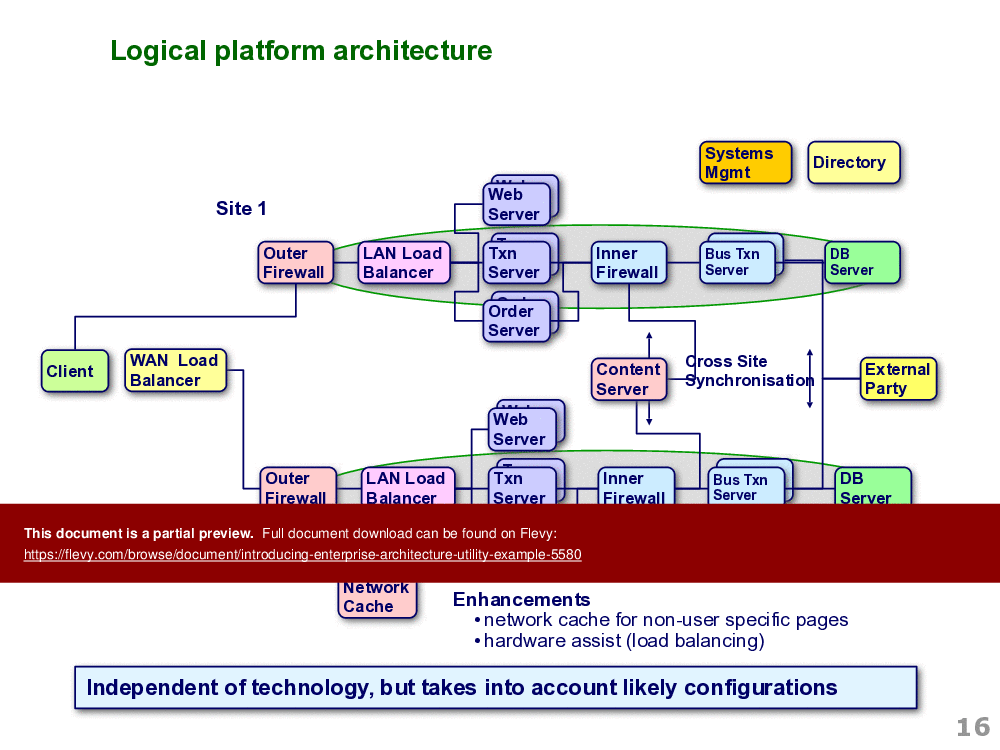
This deck introduces the key models used in enterprise architecture. Business model, process model, application, data and infrastructure are all discussed and brought to life through an example of a utility operating in an energy market. The deck provides functional and data models for this industry and shows how the different aspects of enterprise architecture can be used to tell a story of the technology enablement of the business through a differing lens. The importance of understanding and mapping out customer and staff interactions is also discussed and an example shown users types and what process, function and data they consume and when they consume it. These are critical questions to answer when designing the alternative views of enterprise architecture. Finally, an example is provided of web-based architecture at a logical and physical level. This brings to life the application of the stated architecture principles agreed with business stakeholders.

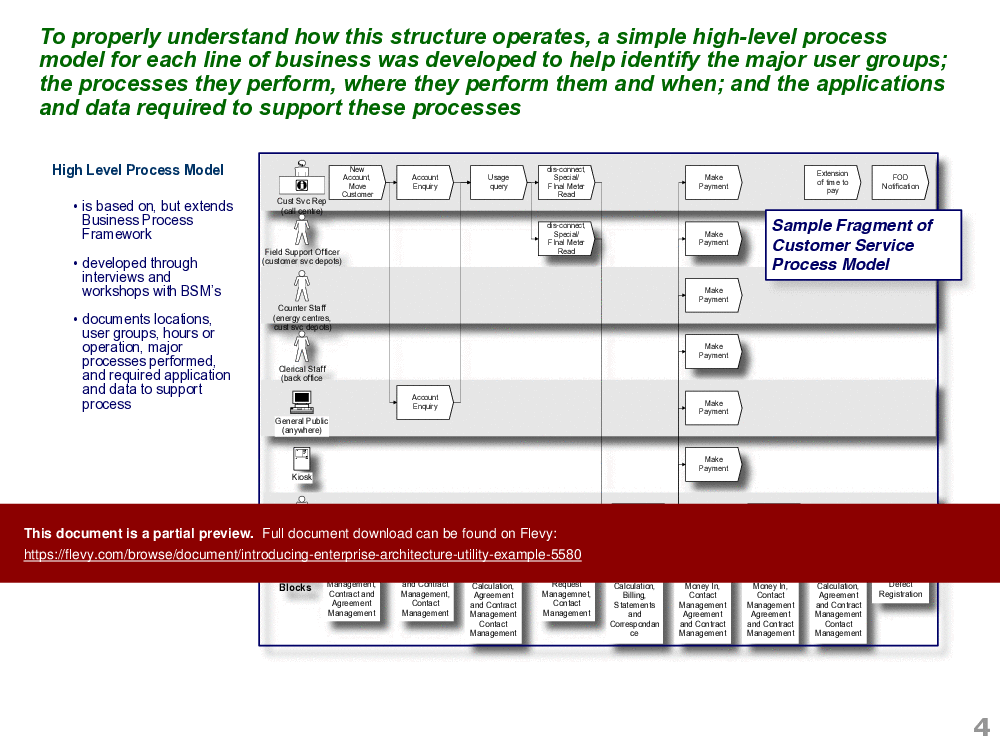
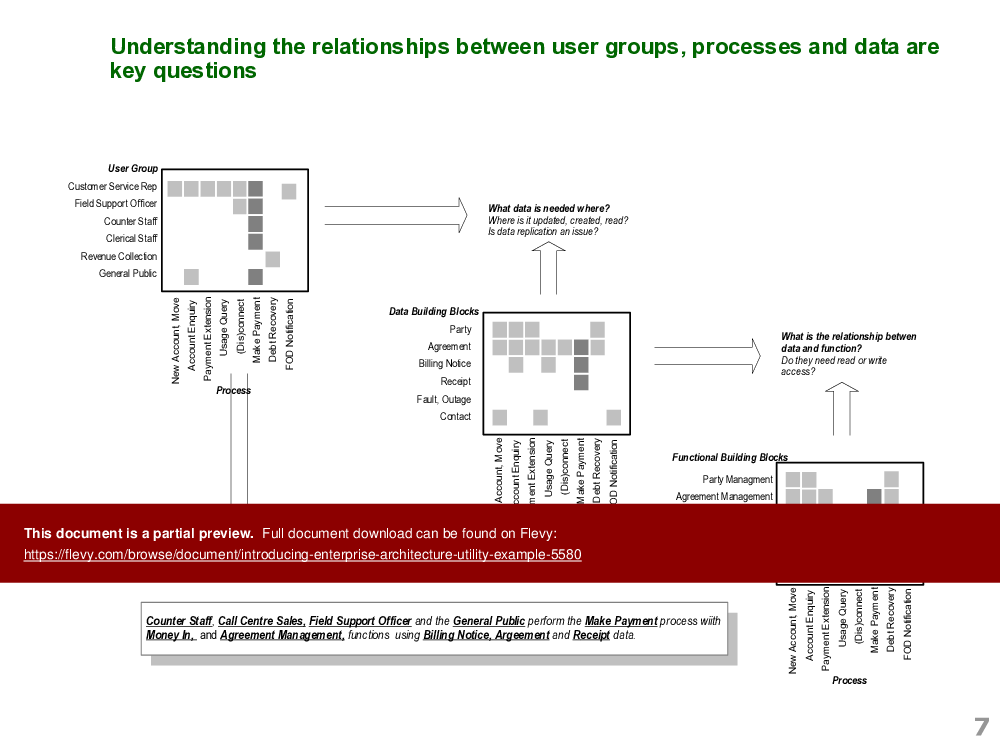
This PDF dives deep into the intricacies of enterprise architecture, focusing on the relationships between user groups, processes, and data. It provides a high-level process model that extends the Business Process Framework, developed through interviews and workshops with Business Service Managers (BSMs). The model meticulously documents locations, user groups, hours of operation, major processes performed, and the required applications and data to support these processes. This approach ensures a comprehensive understanding of how different components interact within the enterprise.

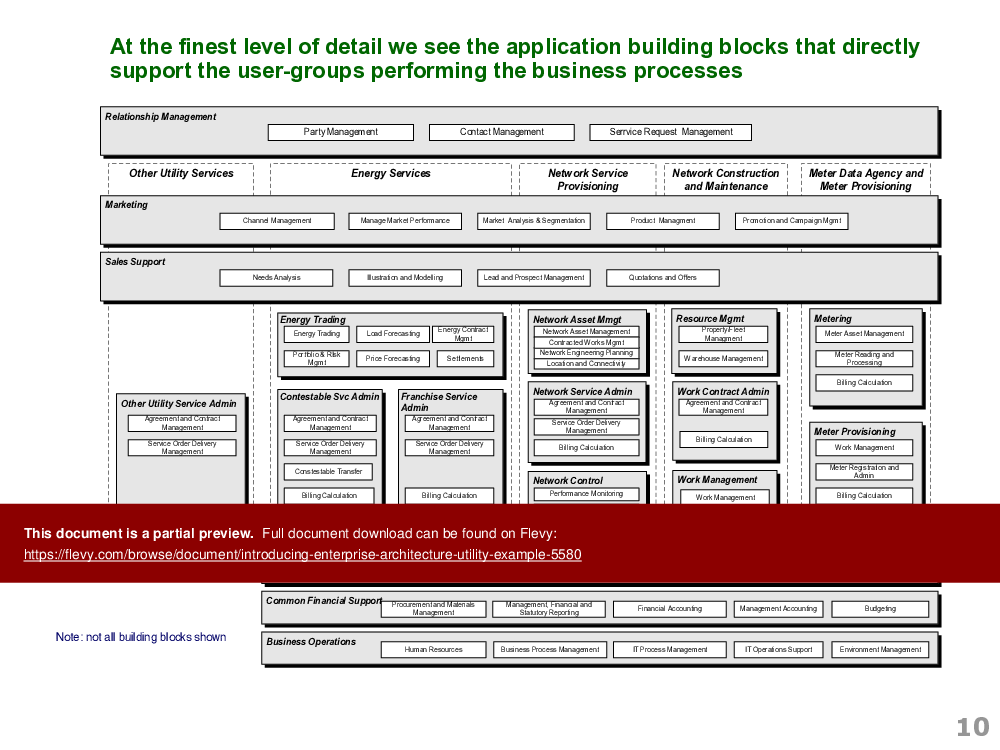
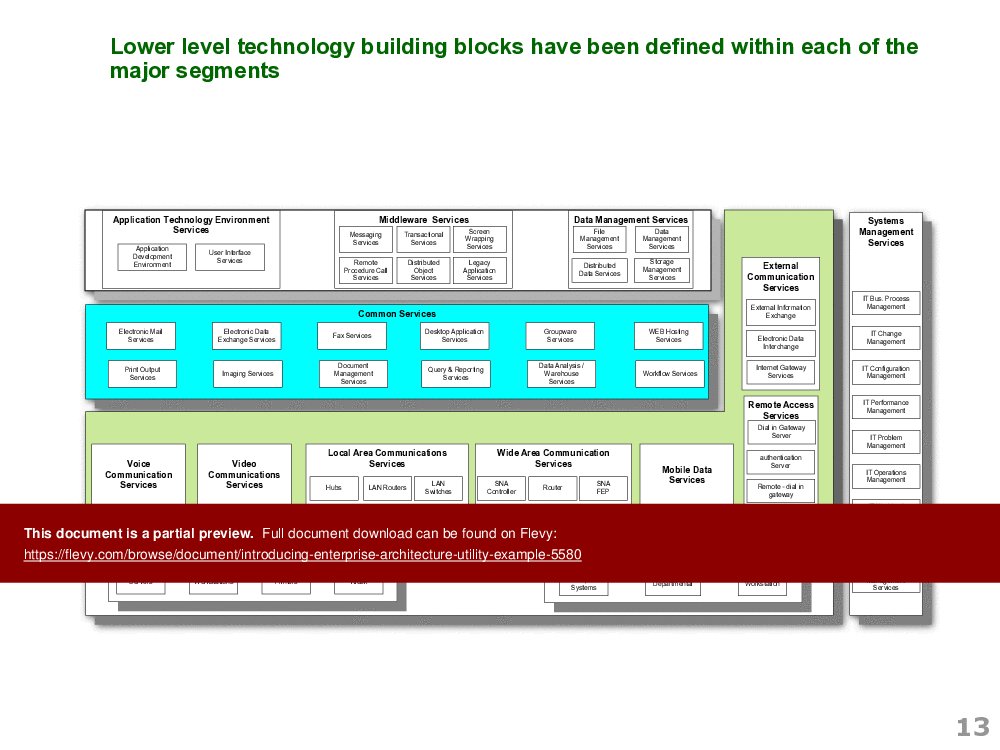
The document also breaks down the application building blocks that support user groups in performing business processes. It includes detailed segments on relationship management, energy services, network service provisioning, and more. Lower-level technology building blocks are defined within each major segment, covering areas such as application technology environment services, data management services, and external communication services. This detailed breakdown provides a clear view of the logical platform architecture, independent of technology, but taking into account likely configurations.

Got a question about the product? Email us at support@flevy.com or ask the author directly by using the "Ask the Author a Question" form. If you cannot view the preview above this document description, go here to view the large preview instead.

MARCUS OVERVIEW

This synopsis was written by Marcus [?] based on the analysis of the full 16-slide presentation.


Executive Summary
The "Introducing Enterprise Architecture (Utility Example)" PDF provides a comprehensive overview of enterprise architecture tailored for the energy sector, specifically through the lens of a fictional company, EnergyServiceCo. This document outlines the critical components of business architecture, including the roles of market participants, major processes, and the integration of IT strategy with management information systems (MIS). Buyers will gain insights into how to structure their enterprise architecture to optimize resources, enhance flexibility, and support multi-utility operations. The framework presented serves as a foundational guide for decision-making and managing technology change across various initiatives.

Who This Is For and When to Use
•  Corporate executives in the energy sector looking to implement enterprise architecture frameworks.
•  IT leaders and architects responsible for aligning technology with business processes.
•  Consultants specializing in utility management and enterprise transformation.
•  Project managers overseeing the integration of IT and business strategies.

Best-fit moments to use this deck:
•  During strategic planning sessions for enterprise architecture implementation.
•  When assessing current business processes and identifying areas for optimization.
•  In workshops aimed at aligning IT strategy with business objectives.

Learning Objectives
•  Define enterprise architecture and its significance in the utility sector.
•  Build a comprehensive business architecture model that aligns with market structures.
•  Establish the roles of various market participants and their interdependencies.
•  Identify key processes and data requirements necessary for operational efficiency.
•  Develop a framework for integrating IT strategy with business goals.
•  Analyze the application and data architectures to support business operations effectively.

Table of Contents
•  Introduction to Enterprise Architecture (page 1)
•  Overview of EnergyServiceCo (page 2)
•  Business Architecture Framework (page 3)
•  High-Level Process Model (page 4)
•  IT Architecture Planning (page 5)
•  Application and Data Architecture (page 9)
•  Infrastructure Architecture (page 12)
•  Governance Framework (page 14)
•  Solution Architecture Models (page 14)
•  Web-Based Applications Architecture (page 15)
•  Logical Platform Architecture (page 16)

Primary Topics Covered
•  Enterprise Architecture Overview - An introduction to the concept of enterprise architecture and its importance in the utility sector.
•  Business Architecture Framework - A detailed model illustrating how EnergyServiceCo operates within the National Energy Market.
•  High-Level Process Model - A framework identifying major user groups and their respective processes.
•  IT Architecture Planning - Guidelines for aligning digital technology strategies with business objectives.
•  Application Architecture - The building blocks required to support business processes through applications.
•  Data Architecture - An overview of the data structures necessary for operational efficiency.
•  Infrastructure Architecture - The underlying technology infrastructure that supports application and data services.
•  Governance Framework - Processes for managing technology change and guiding multiple initiatives.
•  Solution Architecture Models - Various models to facilitate communication and understanding of enterprise architecture.

Deliverables, Templates, and Tools
•  Business architecture model template for utility companies.
•  High-level process model for identifying user groups and their interactions.
•  IT architecture planning checklist to align technology with business goals.
•  Application architecture framework detailing the necessary components for service delivery.
•  Data architecture schema to support business processes effectively.
•  Infrastructure architecture blueprint for technology deployment.

Slide Highlights
•  Overview of EnergyServiceCo's role in the National Energy Market.
•  High-level process model showcasing user interactions and data requirements.
•  IT architecture planning slide outlining key components for digital strategy.
•  Application architecture detailing the building blocks for service delivery.
•  Infrastructure architecture slide illustrating the technology framework.

Potential Workshop Agenda
Enterprise Architecture Introduction (60 minutes)
•  Discuss the importance of enterprise architecture in the utility sector.
•  Review the business architecture framework of EnergyServiceCo.
•  Identify key roles and processes within the market structure.

Process Modeling Session (90 minutes)
•  Develop a high-level process model for user interactions.
•  Identify data requirements and application needs for operational efficiency.
•  Discuss integration points between IT and business processes.

IT Strategy Alignment (60 minutes)
•  Review IT architecture planning guidelines.
•  Discuss the application and data architecture frameworks.
•  Identify governance processes for managing technology change.

Customization Guidance
•  Tailor the business architecture model to reflect specific organizational structures.
•  Adjust the high-level process model to include unique user groups and processes.
•  Modify IT architecture planning guidelines to align with specific technology stacks.
•  Adapt application and data architecture frameworks to meet organizational needs.

Secondary Topics Covered
•  Market participant roles and their interactions within the energy sector.
•  Optimization of resources across business units.
•  Flexibility in supplier and service provider selection.
•  Compliance and standards in enterprise architecture.
•  Change management processes related to technology implementation.

Topic FAQ

What are the core components of enterprise architecture for a utility company?

Enterprise architecture for a utility typically includes business architecture (roles, processes, market participants), high-level process models, application architecture, data architecture, infrastructure architecture, governance frameworks, and solution architecture models, as exemplified by the business architecture model template and infrastructure architecture blueprint.

What is a high-level process model and why is it useful in utilities?

A high-level process model identifies major user groups, their processes, locations, hours of operation, and the applications and data required to support those processes. In utilities it clarifies user interactions and data flows and is documented through the high-level process model template.

How do application and data architecture support business processes in energy companies?

Application architecture defines the building blocks that enable user groups to perform processes, while data architecture structures the data needed for those processes. Together they ensure required services and data elements are available to support operations, as described by the application architecture framework and data architecture schema.

What should I look for when buying an enterprise architecture template for a utility?

Prioritize templates that cover business architecture, a high-level process model, an IT architecture planning checklist, application and data frameworks, and an infrastructure blueprint. Introducing Enterprise Architecture (Utility Example) explicitly lists those deliverables and is provided as a 16-page PDF.

How much time should I budget to run workshops that build enterprise architecture artifacts?

The sample workshop agenda suggests discrete sessions: a 60-minute Enterprise Architecture Introduction, a 90-minute Process Modeling Session, and a 60-minute IT Strategy Alignment meeting, totaling about 3.5 hours across 3 focused workshops.

We're integrating IT systems after a merger of 2 utilities — what EA focus areas should we prioritize?

Prioritize mapping business architecture and market participant roles, harmonizing data requirements via a data architecture schema, establishing governance frameworks for technology change, and defining an infrastructure architecture blueprint to support combined services and supplier flexibility.

How can I map customer and staff interactions to support application design?

Use interviews and workshops with business service managers to document user types, processes, locations, hours, and required applications and data. The deck demonstrates this through a Business Process Framework–based high-level process model derived from stakeholder workshops.

Are templates useful for accelerating enterprise architecture work compared with building from scratch?

Templates can structure decision-making and speed design by providing a ready business architecture model, process model, IT planning checklist, and application/data frameworks; Introducing Enterprise Architecture (Utility Example) offers those artifacts to inform EA development and governance.

Document FAQ
These are questions addressed within this presentation.

What is enterprise architecture?
Enterprise architecture is a strategic framework that aligns business processes with IT infrastructure to optimize operations and facilitate decision-making.

How does EnergyServiceCo illustrate enterprise architecture?
EnergyServiceCo serves as a model to demonstrate how a utility company can structure its business architecture, identify market roles, and integrate IT strategy effectively.

What are the key components of the business architecture framework?
The framework includes roles of market participants, major processes, data requirements, and the integration of IT strategy with business goals.

How can this document assist in IT strategy alignment?
The document provides guidelines for aligning digital technology strategies with business objectives, ensuring that IT initiatives support overall business goals.

What is the significance of the high-level process model?
The high-level process model helps identify user groups, their processes, and the applications and data required to support these processes, facilitating operational efficiency.

How can organizations customize the frameworks presented?
Organizations can tailor the models to reflect their unique structures, processes, and technology stacks, ensuring relevance and applicability.

What governance processes are suggested in the document?
The document outlines governance frameworks for managing technology change and guiding multiple initiatives, ensuring alignment with business objectives.

What are the expected outcomes of implementing enterprise architecture?
Implementing enterprise architecture can lead to optimized resources, enhanced flexibility, improved decision-making, and better alignment between IT and business strategies.

Glossary
•  Enterprise Architecture - A strategic framework for aligning business processes with IT infrastructure.
•  Business Architecture - The structure of an organization that defines its roles, processes, and interactions.
•  IT Architecture - The framework that outlines the technology infrastructure supporting business operations.
•  Application Architecture - The components and services required to deliver applications effectively.
•  Data Architecture - The structure and organization of data needed to support business processes.
•  Infrastructure Architecture - The underlying technology framework that supports applications and data services.
•  Governance Framework - Processes for managing technology change and guiding initiatives.
•  Solution Architecture - Models that facilitate understanding and communication of enterprise architecture.
•  Market Participant - Entities involved in the energy market, such as generators, retailers, and network service providers.
•  Process Model - A representation of the processes performed by user groups within an organization.
•  Optimization - The process of making the best or most effective use of resources.
•  Compliance - Adherence to established standards and regulations within enterprise architecture.
•  Change Management - The approach to transitioning individuals, teams, and organizations to a desired future state.
•  User Group - Specific groups of individuals who interact with business processes and systems.
•  Data Requirement - The specific data needed to support business processes effectively.
•  Application Service - A service provided by an application to support business functions.
•  Technology Stack - The combination of technologies used to build and run applications.
•  Multi-Utility - An organization that provides multiple utility services, such as electricity, gas, and water.
•  Flexibility - The ability to adapt to changing circumstances or requirements in business operations.
•  Resource Management - The process of allocating and managing resources efficiently within an organization.

Source: Best Practices in MIS, Enterprise Architecture PDF: Introducing Enterprise Architecture (Utility Example) PDF (PDF) Document, eAffinity3142


$20.00

Add to Cart
  

ABOUT THE AUTHOR

Author: eAffinity3142

Ask the Author a Question

You must be logged in to contact the author.

Click here to log in Click here register

Did you know?
The average daily rate of a McKinsey consultant is $6,625 (not including expenses). The average price of a Flevy document is $65.


Trusted by over 10,000+ Client Organizations
Since 2012, we have provided business templates to over 10,000 businesses and organizations of all sizes, from startups and small businesses to the Fortune 100, in over 130 countries.
AT&T GE Cisco Intel IBM Coke Dell Toyota HP Nike Samsung Microsoft Astrazeneca JP Morgan KPMG Walgreens Walmart 3M Kaiser Oracle SAP Google E&Y Volvo Bosch Merck Fedex Shell Amgen Eli Lilly Roche AIG Abbott Amazon PwC T-Mobile Broadcom Bayer Pearson Titleist ConEd Pfizer NTT Data Schwab


Read Customer Testimonials

 
"I have found Flevy to be an amazing resource and library of useful presentations for lean sigma, change management and so many other topics. This has reduced the time I need to spend on preparing for my performance consultation. The library is easily accessible and updates are regularly provided. A wealth of great information."

– Cynthia Howard RN, PhD, Executive Coach at Ei Leadership
 
"I am extremely grateful for the proactiveness and eagerness to help and I would gladly recommend the Flevy team if you are looking for data and toolkits to help you work through business solutions."

– Trevor Booth, Partner, Fast Forward Consulting
 
"Flevy.com has proven to be an invaluable resource library to our Independent Management Consultancy, supporting and enabling us to better serve our enterprise clients.

The value derived from our [FlevyPro] subscription in terms of the business it has helped to gain far exceeds the investment made, making a subscription a no-brainer for any growing consultancy – or in-house strategy team."

– Dean Carlton, Chief Transformation Officer, Global Village Transformations Pty Ltd.
 
"FlevyPro has been a brilliant resource for me, as an independent growth consultant, to access a vast knowledge bank of presentations to support my work with clients. In terms of RoI, the value I received from the very first presentation I downloaded paid for my subscription many times over! The "

– Roderick Cameron, Founding Partner at SGFE Ltd
 
"As a small business owner, the resource material available from FlevyPro has proven to be invaluable. The ability to search for material on demand based our project events and client requirements was great for me and proved very beneficial to my clients. Importantly, being able to easily edit and tailor "

– Michael Duff, Managing Director at Change Strategy (UK)
 
"I like your product. I'm frequently designing PowerPoint presentations for my company and your product has given me so many great ideas on the use of charts, layouts, tools, and frameworks. I really think the templates are a valuable asset to the job."

– Roberto Fuentes Martinez, Senior Executive Director at Technology Transformation Advisory
 
"If you are looking for great resources to save time with your business presentations, Flevy is truly a value-added resource. Flevy has done all the work for you and we will continue to utilize Flevy as a source to extract up-to-date information and data for our virtual and onsite presentations!"

– Debbi Saffo, President at The NiKhar Group
 
"As a niche strategic consulting firm, Flevy and FlevyPro frameworks and documents are an on-going reference to help us structure our findings and recommendations to our clients as well as improve their clarity, strength, and visual power. For us, it is an invaluable resource to increase our impact and value."

– David Coloma, Consulting Area Manager at Cynertia Consulting


Customers Also Bought These Documents


Customers Also Like These Documents

Explore Templates on Related Management Topics


Your Recently Viewed Documents
Download our FREE Digital Transformation Templates

Download our free compilation of 50+ Digital Transformation slides and templates. DX concepts covered include Digital Leadership, Digital Maturity, Digital Value Chain, Customer Experience, Customer Journey, RPA, etc.










