Sales force effectiveness is one of the most important business levers in almost all business scenarios. This deck lists the top-10 tools & analysis used by top-tier management consultants to diagnose & improve the key improvement areas in a typical organizational landscape. The deck is structured to ensure that the user is able to leverage the analysis in a series for a complete transformation in sales force effectiveness.
This framework delves into the granular aspects of sales force productivity, offering a comprehensive analysis of performance variances between face-to-face and inside salespeople. It identifies potential opportunities for improvement by comparing performance levels across different percentiles. The insights provided enable organizations to pinpoint specific areas where productivity can be enhanced, ensuring a targeted approach to boosting sales effectiveness.
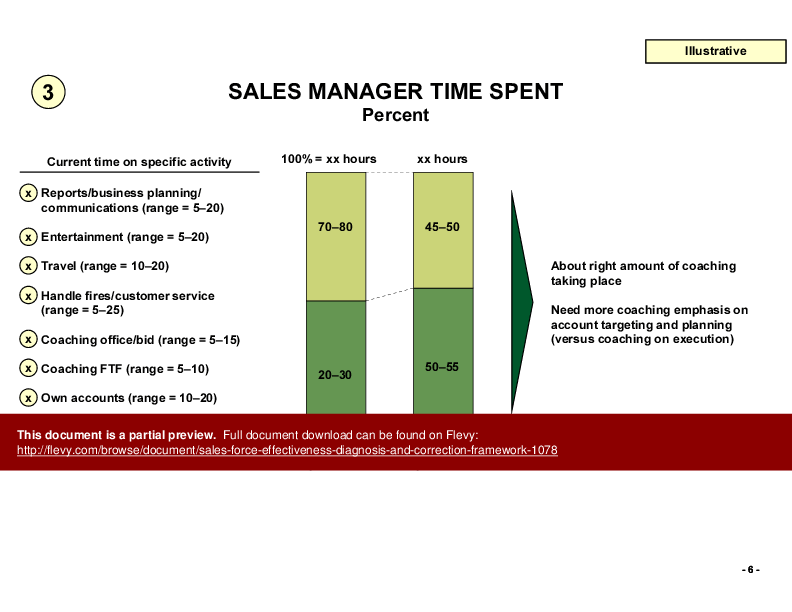
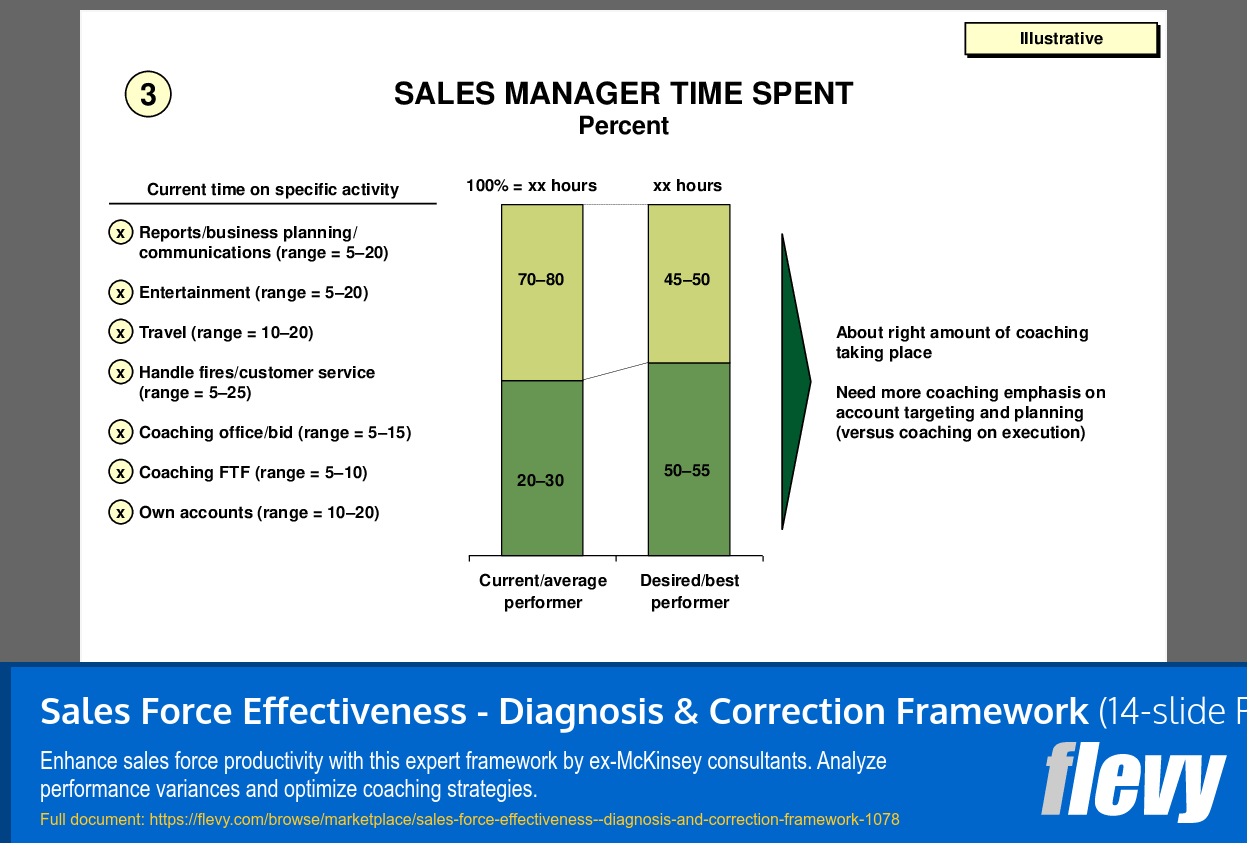
The document also examines how sales managers allocate their time across various activities, highlighting the need for a balanced focus on coaching and account planning. It underscores the importance of strategic time management to optimize sales force performance. By understanding where time is currently spent, organizations can reallocate resources to areas that drive the most value, such as targeted coaching and strategic account management.
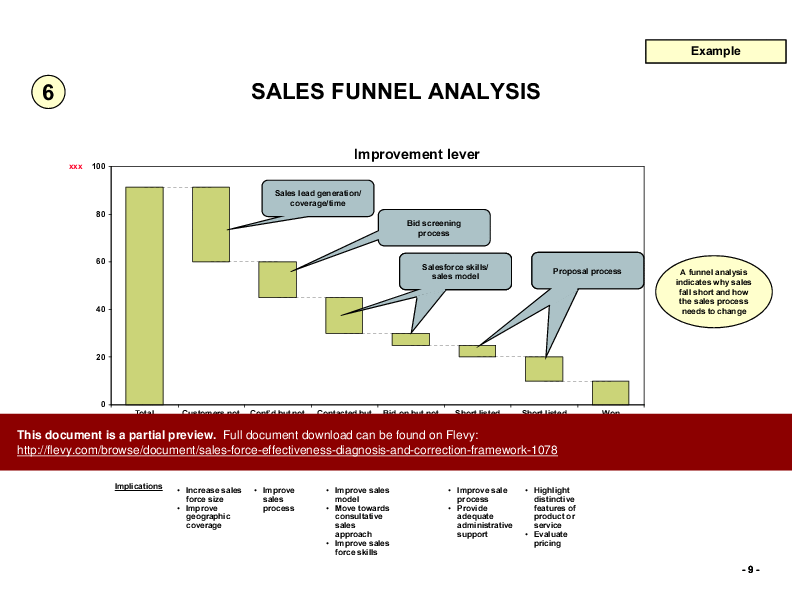
A detailed sales funnel analysis is included, illustrating where sales processes may fall short and identifying key improvement levers. This analysis helps organizations understand the critical stages in the sales process that require attention, from lead generation to proposal processes. By addressing these areas, companies can streamline their sales operations, improve conversion rates, and ultimately drive higher revenue.
Got a question about the product? Email us at support@flevy.com or ask the author directly by using the "Ask the Author a Question" form. If you cannot view the preview above this document description, go here to view the large preview instead.
Executive Summary
The Sales Force Effectiveness - Diagnosis & Correction Framework is designed to enhance sales force productivity through a structured analysis of performance variances. Developed by former McKinsey consultants, this framework provides actionable insights for corporate executives and consultants to optimize coaching strategies, improve sales processes, and ultimately drive revenue growth. By employing rigorous diagnostic tools, users can identify skill gaps, assess time allocation, and prioritize accounts effectively, ensuring that sales teams operate at peak efficiency.
Who This Is For and When to Use
• Sales executives seeking to improve team performance and productivity
• Sales managers responsible for coaching and development
• Business consultants focused on sales optimization strategies
• Corporate leaders aiming to align sales activities with strategic objectives
Best-fit moments to use this deck:
• During quarterly performance reviews to assess sales effectiveness
• When launching new sales initiatives or restructuring teams
• In training sessions aimed at enhancing sales skills and capabilities
Learning Objectives
• Define key performance metrics for sales force effectiveness
• Analyze time allocation for sales representatives and managers
• Identify skill gaps and prioritize training needs
• Develop strategies for optimizing the sales funnel
• Assess account prioritization based on profitability and potential
• Implement a sales coverage model that maximizes efficiency
Table of Contents
• Key Analyses for Salesforce Diagnostic (page 1)
• Example Tools for Salesforce Diagnostic (page 2)
• Drivers of Salesforce Productivity (page 4)
• Sales Representative Time Spent (page 6)
• Sales Manager Time Spent (page 7)
• Skills Gap Analysis: Prioritization (page 8)
• How Many and Which Representatives and Managers Have Needed Capabilities (page 9)
• Sales Funnel Analysis (page 10)
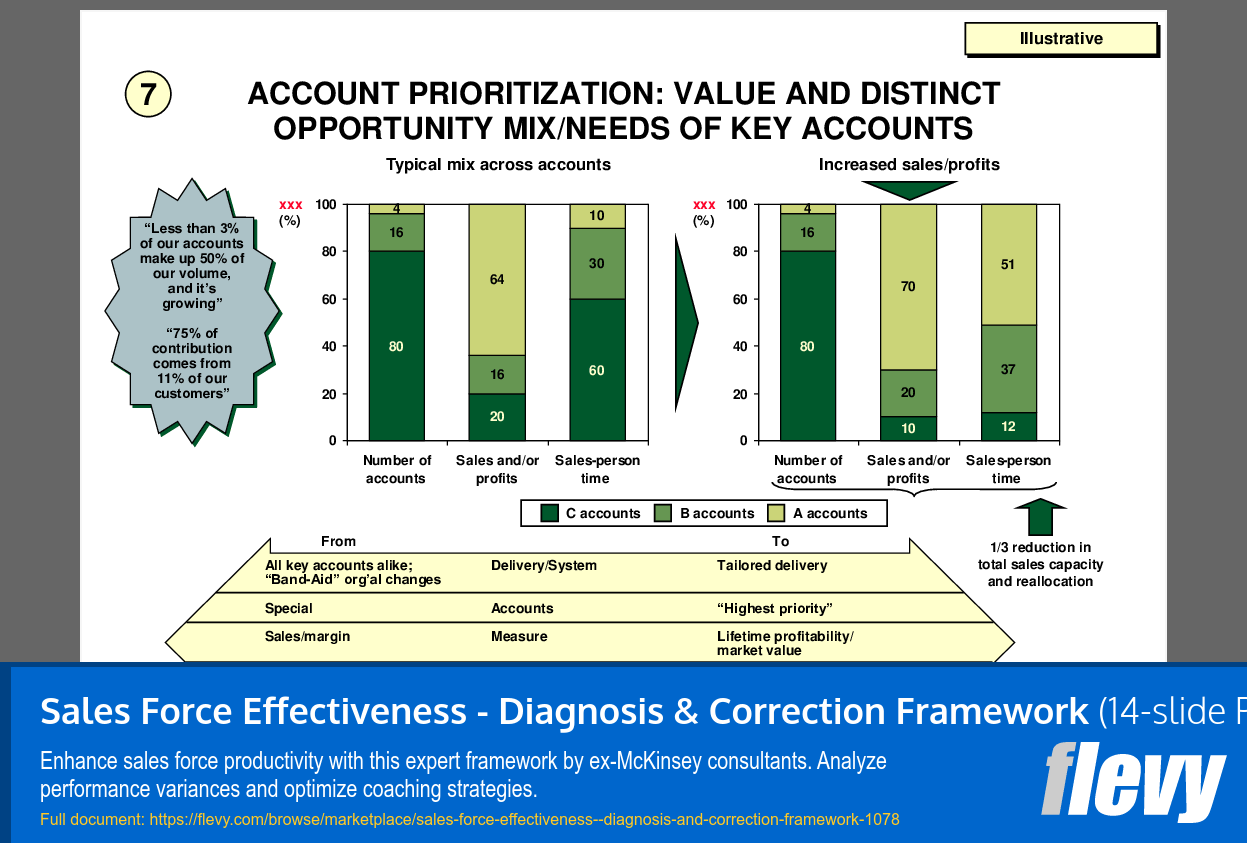
• Account Prioritization: Value and Distinct Opportunity Mix/Needs of Key Accounts (page 11)
• Group Variance Analyses: Sales Productivity Across LOBs or Geographies (page 12)
• Sales Capacity Required: Account Sales/Service Options (page 13)
• Sales Coverage Model (page 14)
Primary Topics Covered
• Salesforce Productivity - An analysis of sales productivity performance variance, focusing on revenue per salesperson and identifying top performers.
• Time Allocation Analysis - Examination of how sales representatives and managers allocate their time between revenue-generating and non-revenue-generating activities.
• Skills Gap Analysis - A framework to assess current skill levels against future requirements, prioritizing training needs for sales representatives.
• Sales Funnel Optimization - Insights into the sales process, identifying bottlenecks and areas for improvement to enhance conversion rates.
• Account Prioritization - Strategies for identifying high-value accounts and optimizing resource allocation based on potential profitability.
• Sales Coverage Model - Evaluation of current sales coverage against account needs, ensuring effective territory management and resource deployment.
Deliverables, Templates, and Tools
• Salesforce productivity analysis template for measuring performance variance
• Time allocation models for sales representatives and managers
• Skills gap analysis framework to identify training priorities
• Sales funnel analysis tools to optimize conversion strategies
• Account prioritization matrix for effective resource allocation
• Sales coverage model template to assess territory effectiveness
Slide Highlights
• Visual representation of sales productivity performance variance across different sales roles
• Time allocation charts illustrating current versus desired activity distribution for sales reps and managers
• Skills gap analysis matrix highlighting critical training needs
• Funnel analysis showing conversion rates and areas for process improvement
• Account prioritization diagrams demonstrating the impact of focusing on high-value accounts
Potential Workshop Agenda
Sales Performance Review Session (90 minutes)
• Review sales productivity metrics and identify performance gaps
• Discuss time allocation and its impact on sales effectiveness
• Set actionable goals for improving sales processes
Skills Development Workshop (60 minutes)
• Identify key skills gaps and prioritize training initiatives
• Develop a plan for ongoing coaching and development
Account Strategy Planning (90 minutes)
• Analyze account performance and prioritize based on profitability
• Align sales strategies with key account needs and opportunities
Customization Guidance
• Tailor the time allocation models to reflect your sales team's specific activities and benchmarks
• Adjust the skills gap analysis to focus on skills relevant to your industry and sales environment
• Modify the account prioritization criteria based on your organization's strategic objectives and market conditions
Secondary Topics Covered
• Variance analysis across different lines of business or geographic regions
• Techniques for improving sales process efficiency
• Strategies for enhancing sales team motivation and engagement
• Best practices for effective coaching and development of sales staff
Topic FAQ
Document FAQ
These are questions addressed within this presentation.
What are the key analyses included in the framework?
The framework includes analyses of sales productivity variance, time allocation for sales reps and managers, skills gap assessments, and sales funnel evaluations.
How can I assess my sales team's productivity?
Utilize the provided templates to analyze performance metrics, time allocation, and skill levels, allowing for targeted improvements.
What is the importance of account prioritization?
Prioritizing accounts ensures that resources are allocated effectively, focusing efforts on high-value opportunities that drive revenue growth.
How can I improve my sales funnel?
The framework provides tools for identifying weaknesses in the sales process and implementing strategies to enhance conversion rates.
What types of deliverables can I expect from this framework?
You can expect templates for productivity analysis, time allocation models, skills gap assessments, and account prioritization matrices.
How often should I conduct a sales force diagnostic?
Regular diagnostics, ideally quarterly, can help maintain focus on performance improvement and align sales strategies with business objectives.
What role does coaching play in sales effectiveness?
Coaching is critical for developing skills, addressing performance gaps, and ensuring that sales representatives are aligned with strategic goals.
Can this framework be customized for different industries?
Yes, the framework is adaptable and can be tailored to meet the specific needs and challenges of various industries.
Glossary
• Salesforce Productivity - Measure of revenue generated per salesperson.
• Time Allocation - Distribution of time spent on revenue-generating versus non-revenue-generating activities.
• Skills Gap Analysis - Assessment of current skills against future requirements.
• Sales Funnel - Visual representation of the sales process from lead generation to conversion.
• Account Prioritization - Process of identifying and focusing on high-value accounts.
• Sales Coverage Model - Framework for assessing territory management and resource deployment.
• Variance Analysis - Comparison of performance across different segments or regions.
• Coaching - Ongoing support and training provided to sales representatives to enhance performance.
• Conversion Rate - Percentage of leads that result in successful sales.
• Key Accounts - High-value customers that contribute significantly to revenue.
• Revenue Growth - Increase in sales revenue over a specified period.
• Performance Metrics - Quantitative measures used to assess sales effectiveness.
• Training Initiatives - Programs designed to develop specific skills within the sales team.
• Resource Allocation - Distribution of sales resources to maximize effectiveness.
• Sales Process - Steps taken from lead generation to closing a sale.
• Performance Gaps - Discrepancies between current performance and desired outcomes.
• Sales Strategy - Plan for achieving sales goals and objectives.
• Territory Management - Organization of sales efforts across geographic areas.
• Customer Needs - Requirements and expectations of customers that drive sales strategies.
• Sales Team Motivation - Factors that influence the engagement and performance of sales representatives.
Source: Best Practices in Sales, Sales Force PowerPoint Slides: Sales Force Effectiveness - Diagnosis & Correction Framework PowerPoint (PPTX) Presentation Slide Deck, ksd123
|
Download our FREE Strategy & Transformation Framework Templates
Download our free compilation of 50+ Strategy & Transformation slides and templates. Frameworks include McKinsey 7-S, Balanced Scorecard, Disruptive Innovation, BCG Curve, and many more. |










