Programming Culture   4-page PDF document
$29.00

Programming Culture (4-page PDF document) Preview Image
Flevy is the marketplace for business best practices.
Programming Culture (4-page PDF document) Preview Image
Arrow   Click main image to view in full screen.

Programming Culture (PDF)

PDF document 4 Pages

$29.00

Add to Cart


Immediate download
Editable with PDF editor
Free lifetime updates

BENEFITS OF THIS PDF DOCUMENT

  1. You will read all the steps that lead to a successful reprogramming of your organizational behavior and people's habits.
  2. A step by step approach that is very practical to implement, starting from tomorrow.

CORPORATE CULTURE PDF DESCRIPTION

Editor Summary Programming Culture is a 4-page PDF strategic guide by Gert and Harry - Envisioning that outlines steps to reprogram organizational behavior and corporate culture within a 9–15 month timeframe. Read more

Programming your culture is possible in a relatively short time, within 9-15 months.
Culture is not the elusive factor as many managers call it.
You will read all the steps that lead to a successful reprogramming of your organizational behavior and people's habits.

Got a question about the product? Email us at support@flevy.com or ask the author directly by using the "Ask the Author a Question" form. If you cannot view the preview above this document description, go here to view the large preview instead.

MARCUS OVERVIEW

This synopsis was written by Marcus [?] based on the analysis of the full 4-slide presentation.


Executive Summary
The "Programming Culture" PDF serves as a strategic guide for corporate leaders aiming to transform organizational behavior and corporate culture within a timeframe of 9 to 15 months. This document outlines actionable steps to instill new values and behaviors, emphasizing the importance of consistent communication and leadership engagement. By following the recommended strategies, executives can effectively address cultural challenges, enhance employee collaboration, and foster a positive work environment that aligns with the organization's vision.

Who This Is For and When to Use
•  Corporate executives seeking to drive cultural change within their organizations
•  Change management leaders responsible for implementing new organizational behaviors
•  HR professionals focused on employee engagement and cultural alignment
•  Team leaders aiming to enhance collaboration and communication among staff

Best-fit moments to use this deck:
•  During organizational restructuring or leadership transitions
•  When addressing cultural misalignments affecting performance
•  In preparation for strategic initiatives requiring employee buy-in

Learning Objectives
•  Define the key components of a successful cultural transformation
•  Build a clear vision for the desired organizational culture
•  Establish core values that support the new culture
•  Communicate effectively to engage employees in the change process
•  Identify and reinforce desired behaviors across all levels of the organization
•  Implement consistent management practices to support cultural change

Table of Contents
•  Introduction to Cultural Programming (page 2)
•  Steps for Successful Cultural Change (page 2)
•  Importance of Leadership in Culture (page 3)
•  Communication Strategies for Change (page 3)
•  The Role of Storytelling in Cultural Transformation (page 4)
•  Characteristics of Effective Leadership (page 4)

Primary Topics Covered
•  Cultural Transformation Timeline - A structured approach to reprogramming organizational culture within 9 to 15 months, emphasizing urgency and consistent messaging.
•  Core Values Identification - A process for determining essential values such as openness, trust, and collaboration that will guide the new culture.
•  Behavioral Expectations - Clear definitions of behaviors associated with each core value, ensuring all employees understand what is expected.
•  Leadership Engagement - The necessity for leaders to model desired behaviors and maintain frequent communication with employees.
•  Communication Techniques - Strategies for keeping the cultural change message alive through various channels, including meetings and newsletters.
•  Storytelling as a Tool - Utilizing storytelling to make abstract concepts tangible and relatable, fostering a deeper connection with employees.

Deliverables, Templates, and Tools
•  Cultural change communication plan template
•  Core values definition framework
•  Behavioral expectation guidelines document
•  Leadership engagement checklist
•  Storytelling workshop outline
•  Employee feedback session template

Slide Highlights
•  Overview of the cultural transformation timeline, illustrating key milestones and activities.
•  Visual representation of core values and associated behaviors.
•  Leadership engagement strategies, highlighting the importance of consistent communication.
•  Examples of effective storytelling techniques to convey cultural messages.

Potential Workshop Agenda
Cultural Change Kickoff Session (90 minutes)
•  Introduce the cultural transformation vision and objectives
•  Discuss the importance of core values and desired behaviors
•  Outline the role of leadership in driving change

Storytelling for Leaders Workshop (60 minutes)
•  Train leaders on effective storytelling techniques
•  Share examples of successful cultural change stories
•  Practice crafting personal stories that align with the new culture

Employee Engagement Feedback Session (60 minutes)
•  Gather employee insights on current cultural challenges
•  Discuss expectations for new behaviors and values
•  Identify areas for improvement and quick wins

Customization Guidance
•  Tailor the core values and behaviors to align with your organization's specific goals and context.
•  Adjust communication strategies to fit the preferred channels and styles of your workforce.
•  Incorporate real-life examples from your organization to enhance storytelling effectiveness.

Secondary Topics Covered
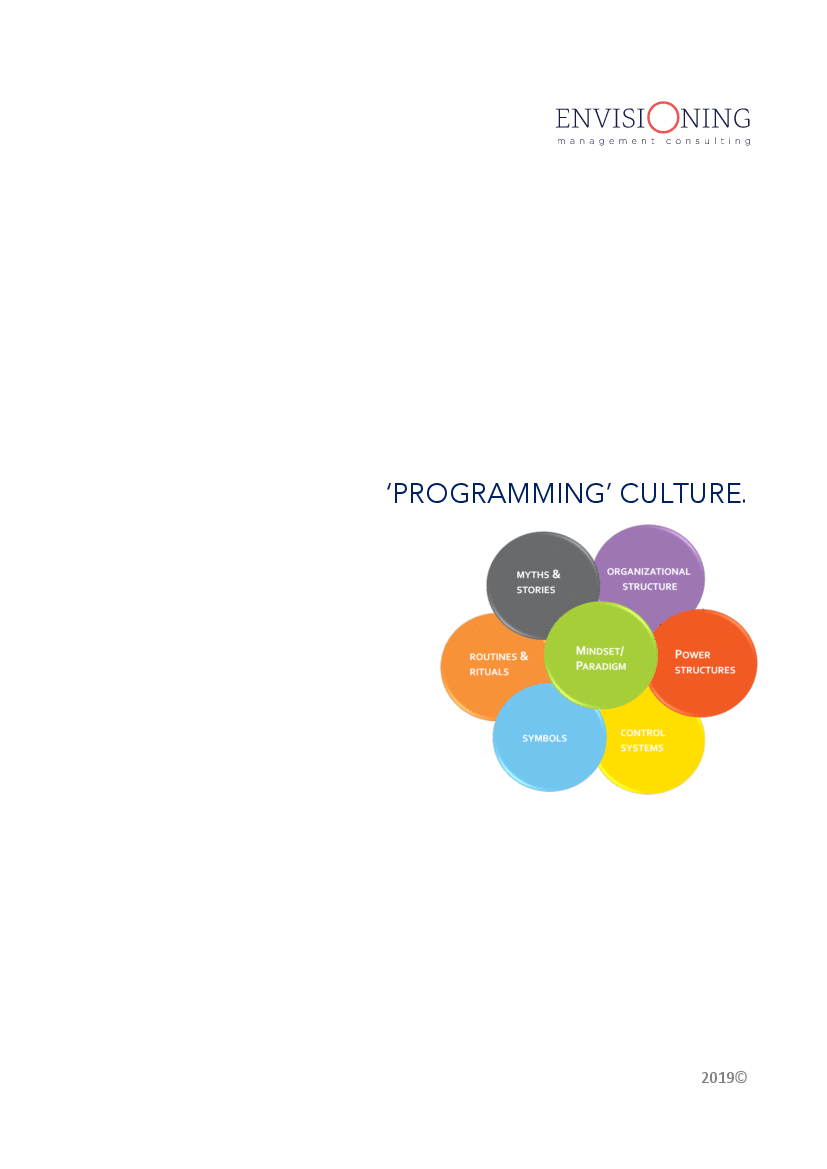
•  The impact of organizational myths and stories on culture
•  Routines and rituals that reinforce desired behaviors
•  Power structures and their influence on cultural change
•  Control systems that support new cultural practices

Topic FAQ

What is a realistic timeline for changing organizational culture?

A structured cultural transformation can be achieved over a defined short-to-medium term period rather than years; the document describes a 9 to 15 month reprogramming timeline with milestones and ongoing reinforcement, ending with a target of 9–15 months.

How can storytelling be used to help cultural change stick?

Storytelling translates abstract values into relatable narratives so employees emotionally connect with the change; the guide recommends leader-led storytelling, examples, and a practical storytelling workshop outline to train leaders, concluding with a storytelling workshop outline.

Which core values should organizations typically prioritize when reprogramming culture?

The guide highlights values that support collaboration and psychological safety, specifically naming openness, trust, collaboration, and commitment as target values to define and embed across the organization, ending with core values such as openness, trust, collaboration, and commitment.

What practical templates should I expect from a culture-change toolkit?

A useful toolkit contains repeatable artifacts for rollout and measurement: a cultural change communication plan template, a core values definition framework, behavioral expectation guidelines, a leadership engagement checklist, and employee feedback templates, with the cultural change communication plan template included.

How should a small internal team plan resources and roles for a 9–15 month program?

The guide indicates the program requires sustained leadership engagement, regular communications, workshops, and feedback loops; assign roles for executive sponsors, change leads, HR survey owners, and workshop facilitators and use the leadership engagement checklist to coordinate activity over 9–15 months.

After a merger, what steps should be prioritized to align culture quickly?

Prioritize defining a clear cultural vision, identify shared core values, translate those into specific behavioral expectations, engage leaders to model changes, and collect employee feedback; Flevy's Programming Culture provides a core values definition framework to support the initial steps.

How can I measure whether new behaviors are adopted across the organization?

Measure adoption with regular employee feedback and engagement surveys, observation of day-to-day behaviors, and management assessment cycles; the document recommends using employee feedback sessions and engagement surveys as primary measurement tools, including an employee feedback session template.

What role must senior leaders play to sustain cultural change over time?

Senior leaders must actively model desired behaviors, communicate consistently about urgency and vision, participate in storytelling, provide feedback, and intervene when old habits return; the guide includes a leadership engagement checklist to support these sustained activities.

Document FAQ
These are questions addressed within this presentation.

What is the timeline for implementing cultural change?
Cultural change can typically be achieved within 9 to 15 months, with ongoing reinforcement required for lasting impact.

How can leaders effectively communicate the need for cultural change?
Leaders should consistently articulate the urgency of change, share the vision, and engage in direct conversations with employees.

What role does storytelling play in cultural transformation?
Storytelling helps make abstract concepts concrete, allowing employees to connect emotionally with the change and understand its significance.

How can we measure the success of cultural change initiatives?
Success can be measured through employee feedback, engagement surveys, and the observable adoption of desired behaviors.

What are the key values to focus on during cultural change?
Values such as openness, trust, collaboration, and commitment are essential for fostering a positive organizational culture.

How should we address resistance to cultural change?
Address resistance by engaging in open dialogue, providing support, and reinforcing the benefits of the new culture.

What are the expected behaviors associated with new values?
Expected behaviors include collaboration across departments, adherence to commitments, and open communication about challenges and successes.

How can management ensure consistent behavior change?
Management should regularly assess behaviors, provide feedback, and intervene promptly when old habits resurface.

Glossary
•  Cultural Transformation - The process of changing an organization's culture to align with new values and behaviors.
•  Core Values - Fundamental beliefs that guide behavior and decision-making within an organization.
•  Behavioral Expectations - Specific actions and attitudes that are encouraged to support the desired culture.
•  Leadership Engagement - The active involvement of leaders in promoting and modeling cultural change.
•  Storytelling - A communication technique that uses narratives to convey messages and foster connection.
•  Employee Feedback - Insights and opinions gathered from employees regarding their experiences and perceptions of the culture.

Source: Best Practices in Corporate Culture, Organizational Behavior PDF: Programming Culture PDF (PDF) Document, Gert and Harry - Envisioning


$29.00

Add to Cart
  

ABOUT THE AUTHOR

Additional documents from author: 13

Gert Anbeek and Harry de Weerd have been long time partners in Management Consulting and Leadership Training. They have published a lot of materials and books that are now being made available for public use via

The main advantage of these materials is that it is all very practical to use and based upon their own experience with management teams and teams of professionals is medium and large ... [read more]

Ask the Author a Question

You must be logged in to contact the author.

Click here to log in Click here register

Did you know?
The average daily rate of a McKinsey consultant is $6,625 (not including expenses). The average price of a Flevy document is $65.


Trusted by over 10,000+ Client Organizations
Since 2012, we have provided business templates to over 10,000 businesses and organizations of all sizes, from startups and small businesses to the Fortune 100, in over 130 countries.
AT&T GE Cisco Intel IBM Coke Dell Toyota HP Nike Samsung Microsoft Astrazeneca JP Morgan KPMG Walgreens Walmart 3M Kaiser Oracle SAP Google E&Y Volvo Bosch Merck Fedex Shell Amgen Eli Lilly Roche AIG Abbott Amazon PwC T-Mobile Broadcom Bayer Pearson Titleist ConEd Pfizer NTT Data Schwab


Read Customer Testimonials

 
"One of the great discoveries that I have made for my business is the Flevy library of training materials.

As a Lean Transformation Expert, I am always making presentations to clients on a variety of topics: Training, Transformation, Total Productive Maintenance, Culture, Coaching, Tools, Leadership Behavior, etc. Flevy "

– Ed Kemmerling, Senior Lean Transformation Expert at PMG
 
"Flevy is now a part of my business routine. I visit Flevy at least 3 times each month.

Flevy has become my preferred learning source, because what it provides is practical, current, and useful in this era where the business world is being rewritten.

In today's environment where there are so "

– Omar Hernán Montes Parra, CEO at Quantum SFE
 
"I have used Flevy services for a number of years and have never, ever been disappointed. As a matter of fact, David and his team continue, time after time, to impress me with their willingness to assist and in the real sense of the word. I have concluded in fact "

– Roberto Pelliccia, Senior Executive in International Hospitality
 
"The wide selection of frameworks is very useful to me as an independent consultant. In fact, it rivals what I had at my disposal at Big 4 Consulting firms in terms of efficacy and organization."

– Julia T., Consulting Firm Owner (Former Manager at Deloitte and Capgemini)
 
"FlevyPro provides business frameworks from many of the global giants in management consulting that allow you to provide best in class solutions for your clients."

– David Harris, Managing Director at Futures Strategy
 
"As a consulting firm, we had been creating subject matter training materials for our people and found the excellent materials on Flevy, which saved us 100's of hours of re-creating what already exists on the Flevy materials we purchased."

– Michael Evans, Managing Director at Newport LLC
 
"Last Sunday morning, I was diligently working on an important presentation for a client and found myself in need of additional content and suitable templates for various types of graphics. Flevy.com proved to be a treasure trove for both content and design at a reasonable price, considering the time I "

– M. E., Chief Commercial Officer, International Logistics Service Provider
 
"If you are looking for great resources to save time with your business presentations, Flevy is truly a value-added resource. Flevy has done all the work for you and we will continue to utilize Flevy as a source to extract up-to-date information and data for our virtual and onsite presentations!"

– Debbi Saffo, President at The NiKhar Group


Customers Also Bought These Documents


Customers Also Like These Documents

Explore Templates on Related Management Topics


Your Recently Viewed Documents
Download our FREE Organization, Change, & Culture, Templates

Download our free compilation of 50+ slides and templates on Organizational Design, Change Management, and Corporate Culture. Methodologies include ADKAR, Burke-Litwin Change Model, McKinsey 7-S, Competing Values Framework, etc.









