 Click main image to view in full screen.
Templates for Hoshin Kanri Strategy Deployment – Excel XLSX
Excel (XLSX)


BENEFITS OF THIS DOWNLOADABLE EXCEL DOCUMENT
- Total Alignment and Focus: Focus on the "vital few" goals. Ensure resources and metrics are perfectly aligned across every organizational level.
- Clear Line of Sight: Establish a "clear line of sight" so employees know their role and how daily work drives breakthrough strategic results.
- Disciplined Accountability: Gain a "disciplined review process" with visual tracking to hold teams accountable and catch performance gaps early.
HOSHIN EXCEL DESCRIPTION
MASTER STRATEGIC EXECUTION: HOSHIN KANRI STRATEGY DEPLOYMENT TOOLKIT
Bridge the gap between visionary strategy and frontline execution. Most organizations fail not because of a poor plan, but because of a failure to deploy it effectively through the ranks. This comprehensive set of Hoshin Kanri Strategy Deployment Templates provides a disciplined, visual framework based on the Plan-Do-Check-Act (PDCA) cycle. By utilizing these tools, you can ensure every team member is aligned to your "True North" through the collaborative "Catchball" process, turning high-level breakthrough goals into a measurable daily reality.
DESCRIPTION OF THE TEMPLATE SET
This professional toolkit is a complete suite of Excel-based templates (provided here as a visual guide) designed to facilitate the full Hoshin Kanri (Policy Deployment) lifecycle. The set is built to support the four phases of Hoshin Planning: Generation, Deployment, Implementation, and Evaluation. It integrates breakthrough strategic initiatives with daily operational control, ensuring a "clear line of sight" across all organizational levels.
Template Listing: The PDCA Flow for Alignment
PHASE 1: PLAN (Generation & Deployment)
1. Hoshin Plan – One-Page Sample
• Summary: A condensed, high-level overview of the situation, objectives, strategies, and financial targets.
• Application: Serves as an Executive Cover Sheet to communicate the strategic "Situation" and top-level direction at a glance.
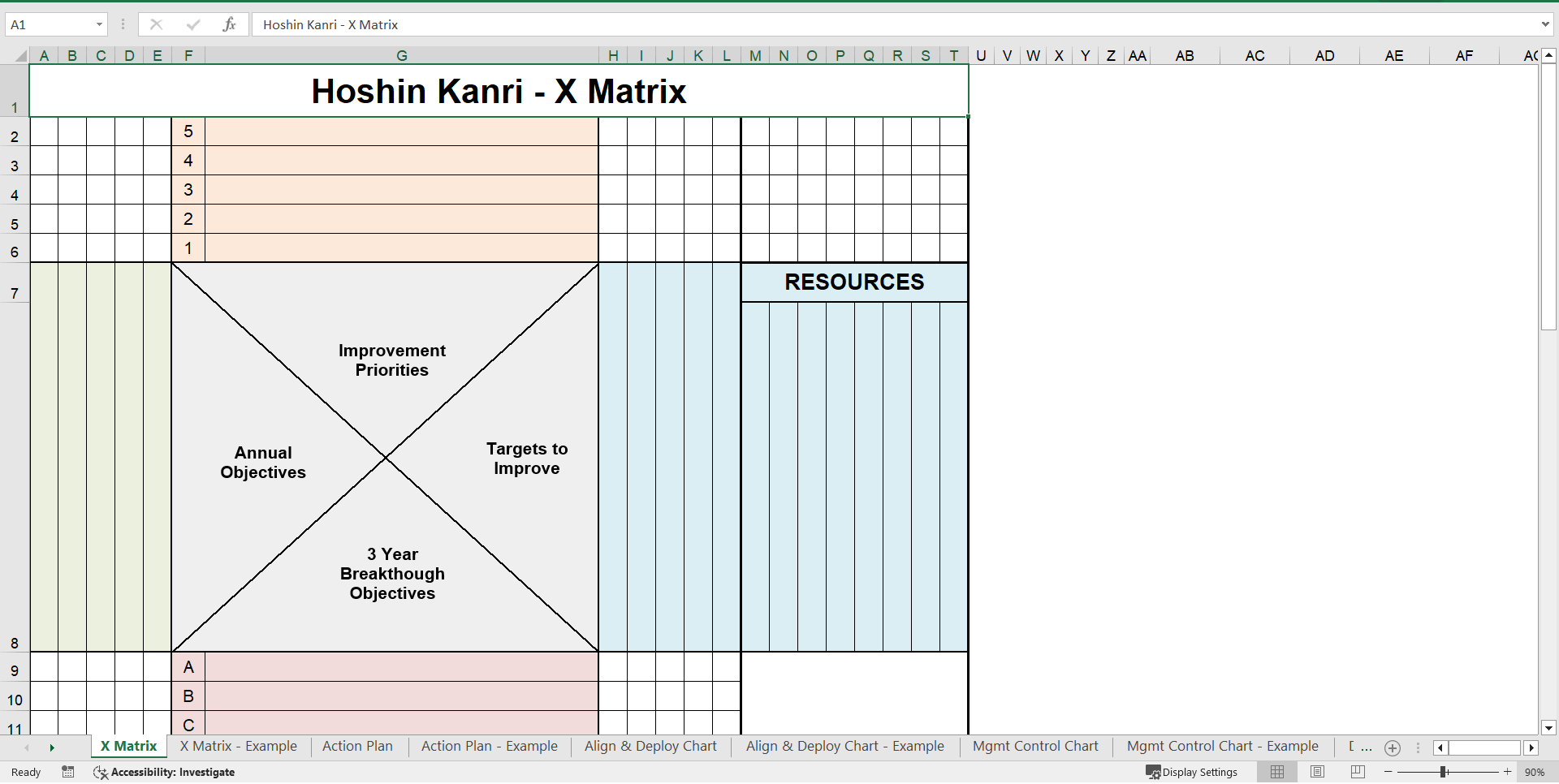
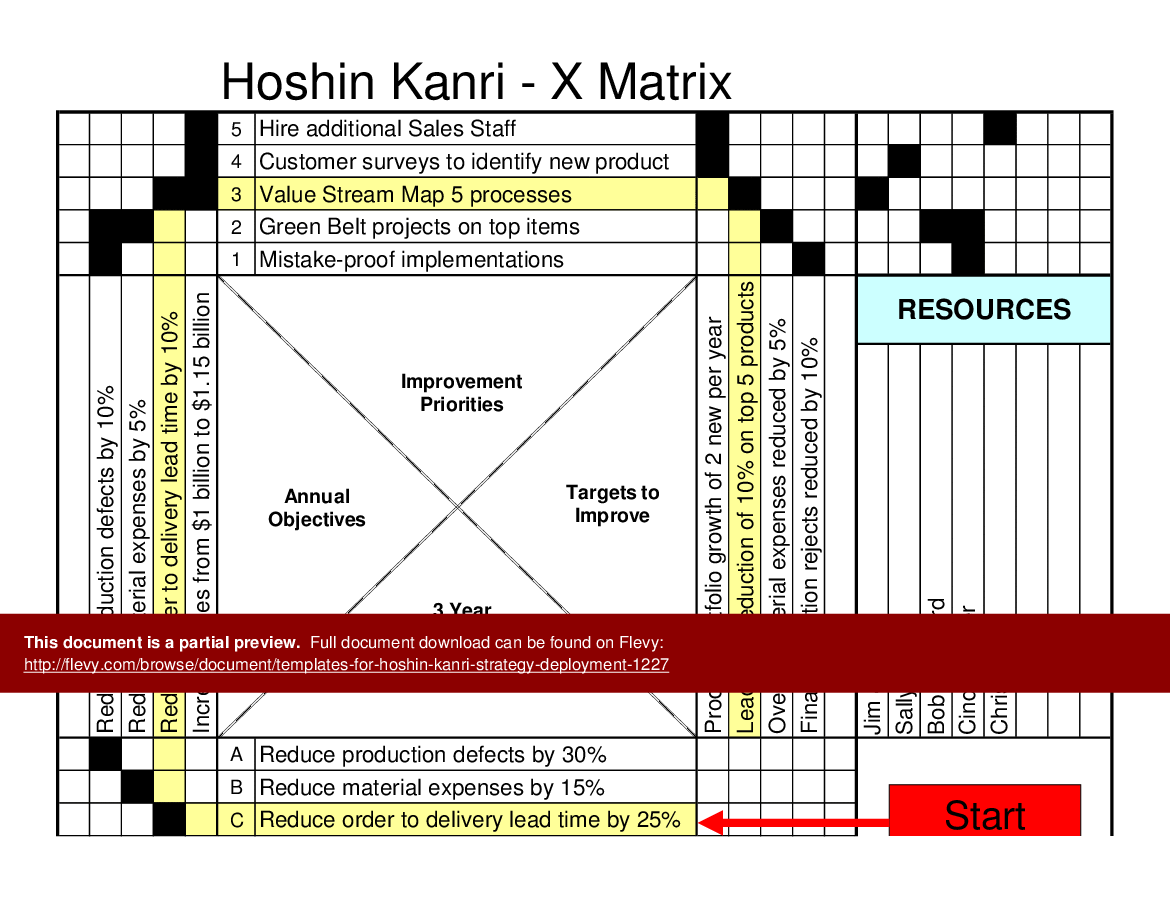
2. Hoshin Kanri X-Matrix
• Summary: A powerhouse visualization that correlates 3-5 year breakthrough objectives with annual objectives, improvement priorities, and targets.
• Application: Use this to anchor your strategy, assigning high-level ownership and ensuring top-to-bottom and side-to-side alignment.
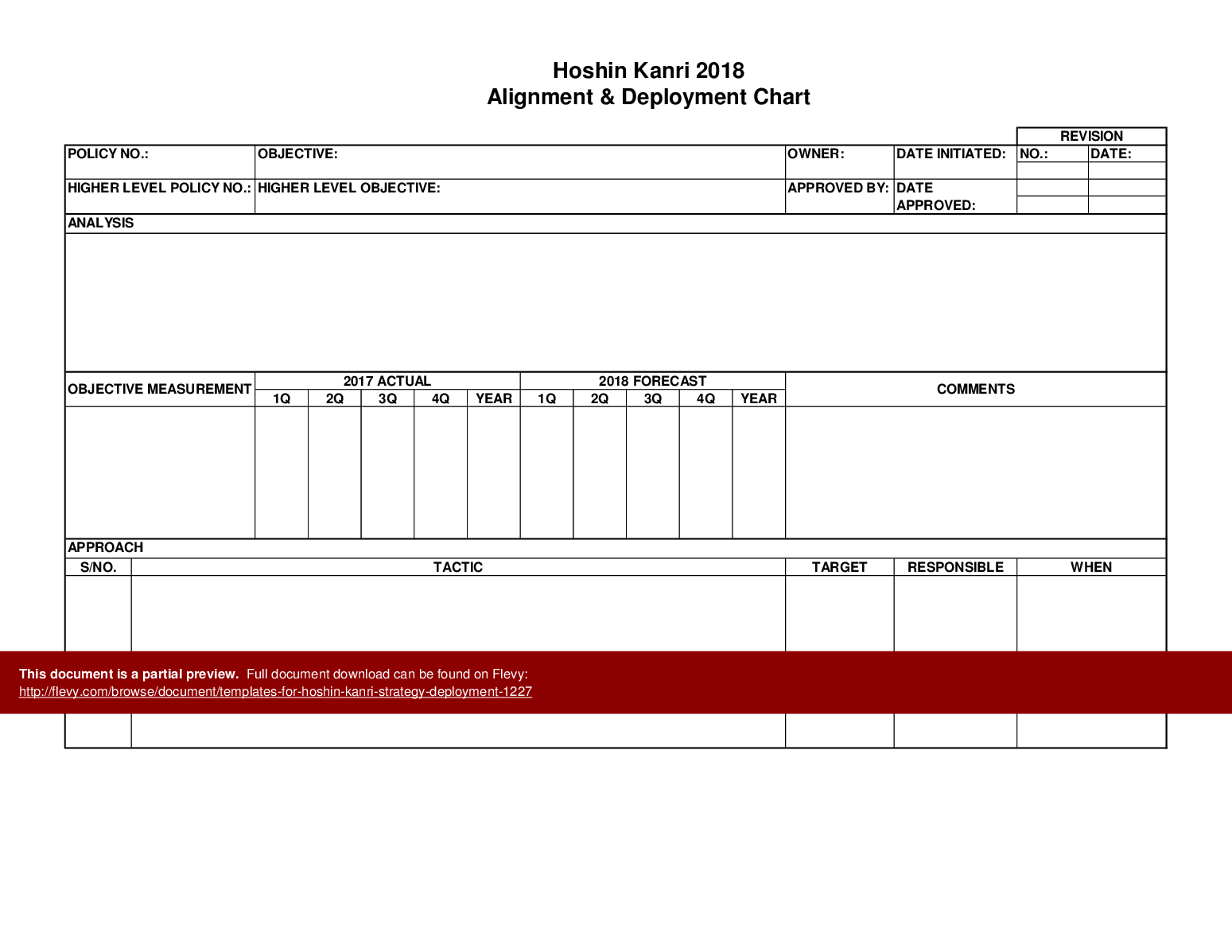
3. Alignment & Deployment Chart
• Summary: Cascades high-level objectives into measurable tactics and includes "Reflections" on prior year performance.
• Application: This is the primary tool for the "Catchball" process, facilitating the 2-way dialogue and negotiation between management levels to agree on goals and means.
PHASE 2: DO (Implementation)
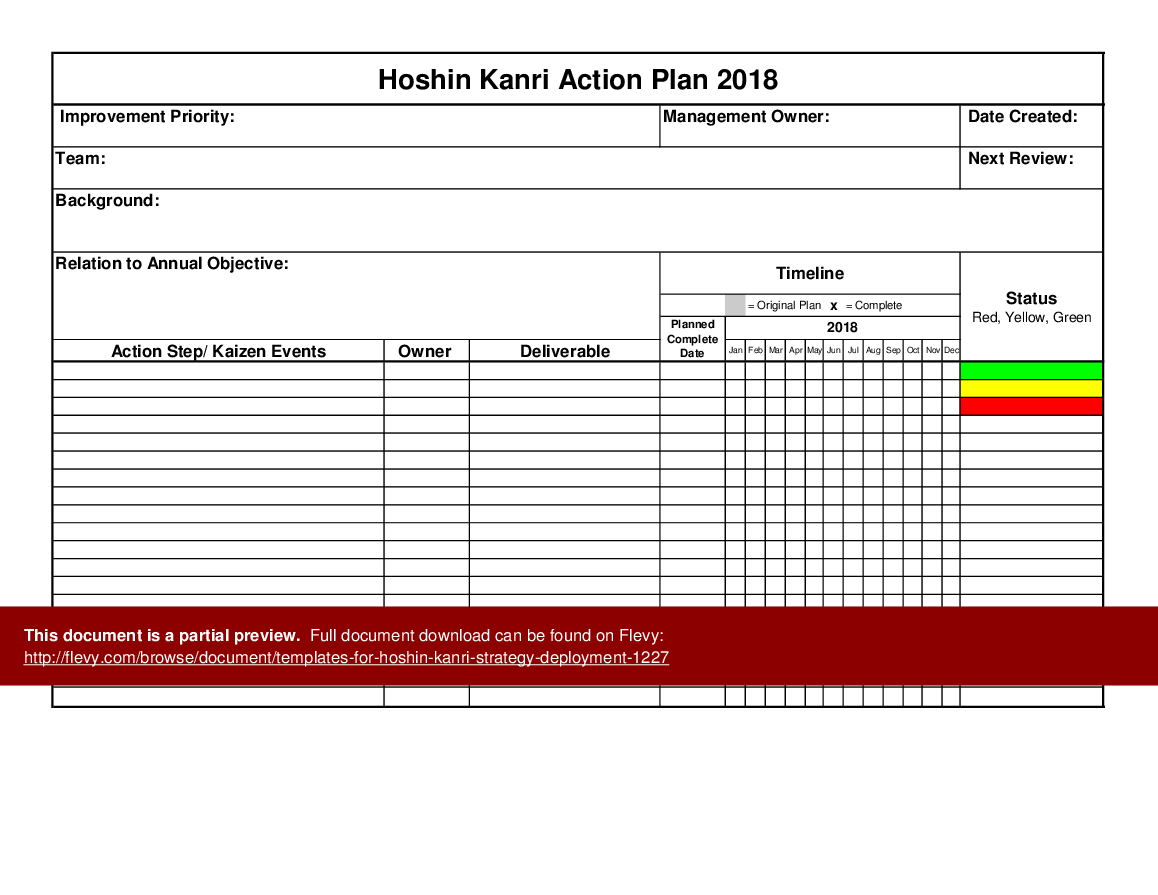
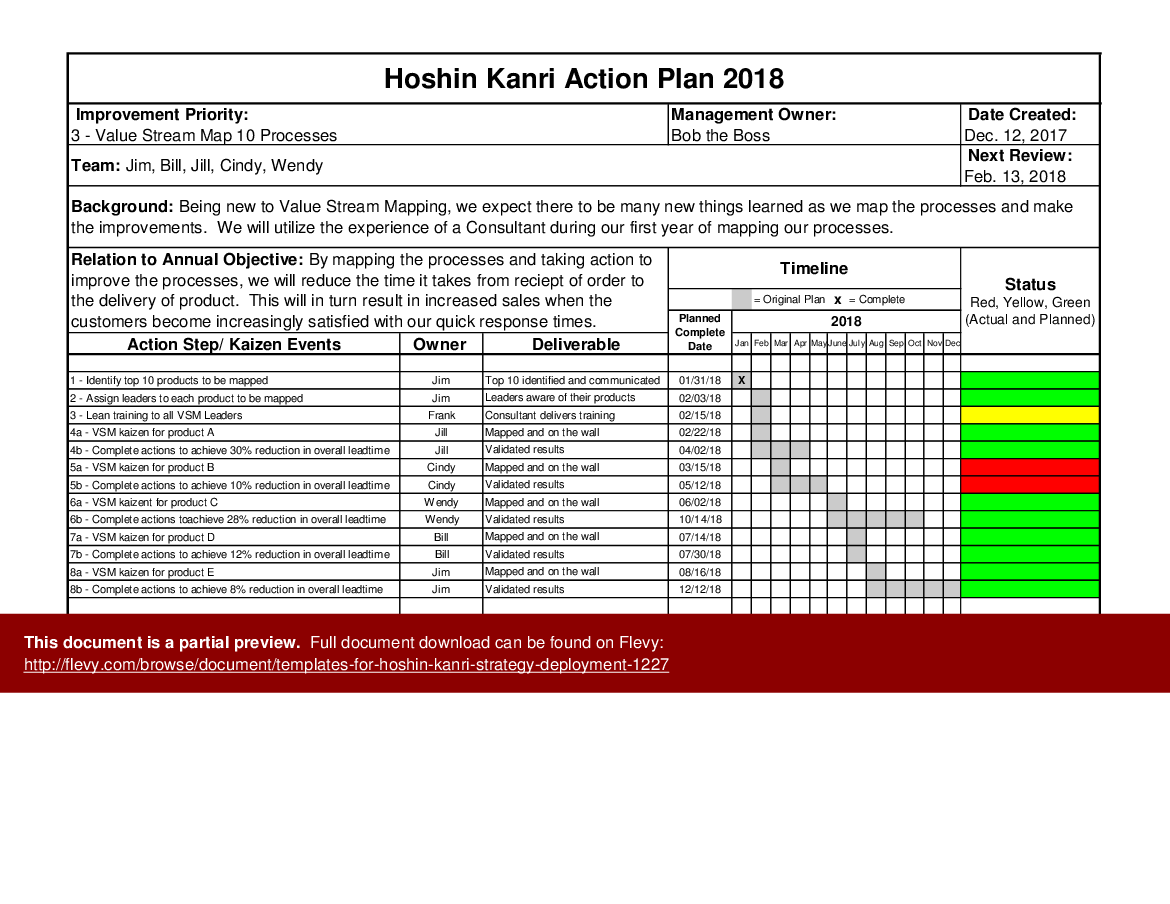
1. Hoshin Kanri Action Plan (Gantt Chart)
• Summary: Converts improvement priorities into a dated, owned set of action steps or Kaizen events.
• Application: Used by Project Teams to track the execution of specific tactics with a visual "Status Key" (Behind/On-Track).
2. Daily Management Matrix
• Summary: Lists the vital metrics reviewed every day, including owners, targets, and review frequencies.
• Application: Essential for Frontline Supervisors to maintain "Control" (doing things right) while the organization pursues "Breakthrough" (doing the right things).
PHASE 3: CHECK (Evaluation)
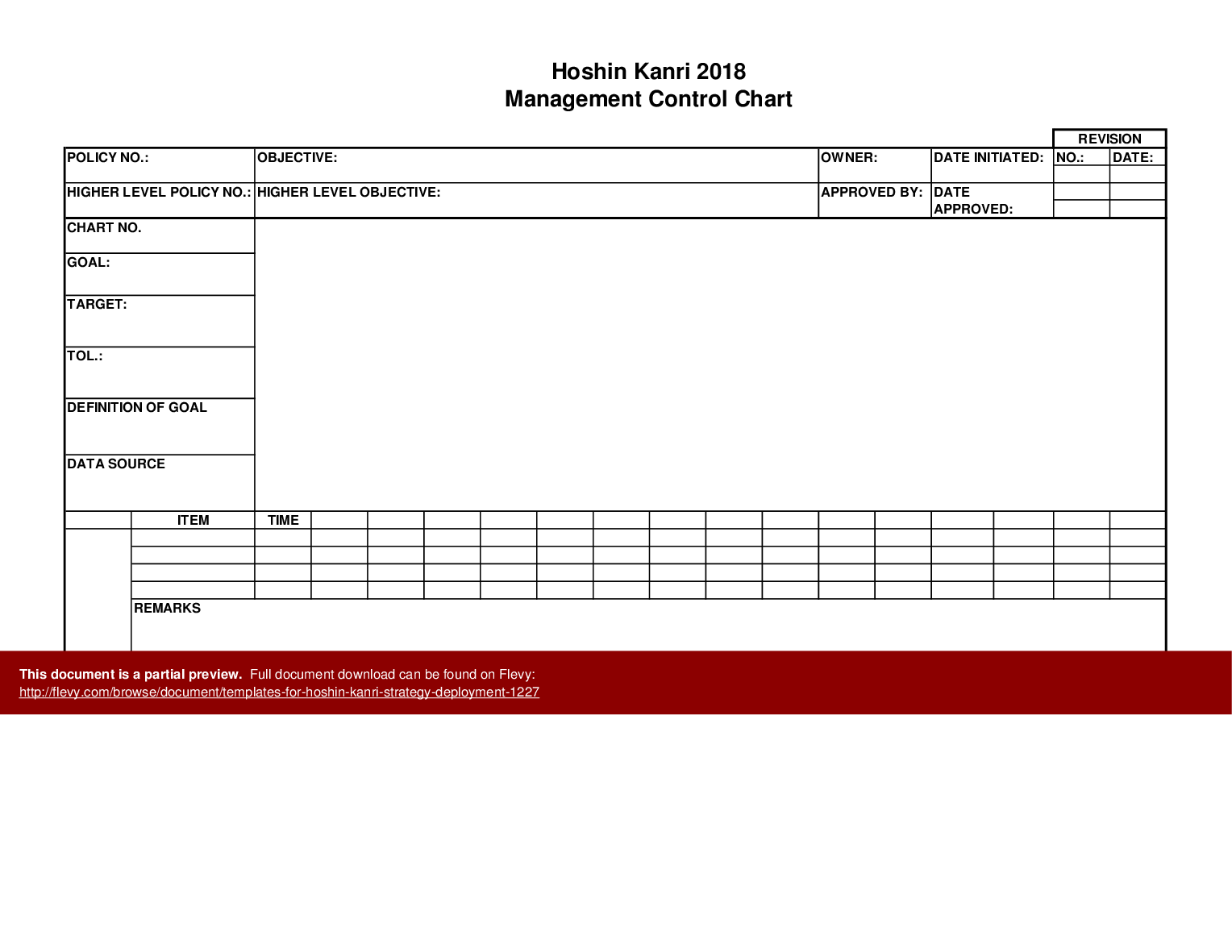
1. Management Control Chart
• Summary: A monthly tracking tool that plots Target vs. Plan vs. Actual performance on a visual trend line.
• Application: Used by Process Owners to catch performance "drift" early, providing a basis for management by fact.
2. Hoshin Review Table
• Summary: A standardized table for periodic review cycles to compare actual results against targets and flag gaps.
• Application: Perfect for Monthly/Quarterly Leadership Reviews to document the "Analysis of Deviations" and required "Corrective Actions".
PHASE 4: ACT (Standardization & Learning)
1. A3 Report Template
• Summary: A single-page storytelling tool that follows the PDCA flow from background and root cause analysis to follow-up.
• Application: The standard for Lean Problem Solving, used to address deviations found during reviews and to standardize new improvements.
2. Full A3 – Annual Strategy Deployment
• Summary: A comprehensive departmental "story" including last year's reflections, unresolved issues, and the upcoming fiscal year action plan.
• Application: Used during the Annual Review and Planning Cycle to capture lessons learned and prepare for the next Hoshin cycle.
GLOSSARY OF TERMS
• Hoshin Kanri: A Japanese term for Policy Deployment; "Hoshin" means methodology for strategic direction, and "Kanri" means management or control.
• Catchball: A 2-way dialogue and negotiation process between organizational levels to align targets and the means to achieve them.
• PDCA Cycle: The Plan-Do-Check-Act cycle, which serves as the engine for continuous improvement and the foundation of the Hoshin process.
• Breakthrough Objective: A significant improvement to a higher level of performance, typically requiring 3-5 years to achieve.
• Control: Adherence to a current standard to maintain performance levels and hold gains from previous breakthroughs.
• X-Matrix: A strategic tool that links vision, objectives, priorities, and resources in a single visual document.
• True North: A visionary direction that serves as the organization's middle-term destination and guides focus on critical topics.
• Tactic: A specific description of the means or approach used to achieve a measurable objective.
FREQUENTLY ASKED QUESTIONS (FAQ)
• What is the benefit of the "Catchball" process? It creates alignment and commitment by involving those who must execute the plan in the actual setting of targets and means.
• How does PDCA fit into Hoshin Kanri? Hoshin Kanri is essentially the application of the PDCA cycle to strategic planning, ensuring that plans are not just made but implemented, checked, and acted upon.
• Can Hoshin Kanri be used for daily operations? While Hoshin focuses on "Breakthrough" (improvement), it must be integrated with "Daily Management" (control) to ensure organizational stability.
• How do I use the X-Matrix correlation key? You score the intersections (9 for Strong, 3 for Medium, 1 for Weak) to see how well your improvement priorities support your annual and breakthrough objectives.
• What should I do if the Management Control Chart shows a deviation? You should perform a root cause analysis (often using an A3) to identify why the "Actual" is drifting from the "Plan" and implement corrective actions.
• Why is "Reflection" included in the templates? Reflection on the prior year is critical for learning; it helps identify root causes of missed targets and ensures those lessons inform the next planning cycle.
• Who is responsible for the A3 reports? A3s are typically authored by the person closest to the problem or the project owner, but they are reviewed by managers to provide systemic support.
• How often should we perform Hoshin reviews? Reviews should happen at multiple cadences: weekly/monthly self-reviews for process owners, and quarterly or annual reviews for senior management.
Got a question about the product? Email us at support@flevy.com or ask the author directly by using the "Ask the Author a Question" form. If you cannot view the preview above this document description, go here to view the large preview instead.
TOPIC FAQ
What is Hoshin Kanri and how does it differ from regular strategic planning?
Hoshin Kanri is a strategy deployment methodology focused on defining long-range breakthrough objectives that typically span 2–5 years while preserving attention to day-to-day business measures needed to run operations. It emphasizes alignment and deployment across levels, ending in mapped objectives and reviews for 2–5 year breakthrough objectives.What common templates or tools support a Hoshin Kanri process?
Common tools include visual alignment and tracking artifacts such as an X Matrix, Hoshin Action Plan, Alignment & Deployment Chart, Management Control Chart, Daily Management Matrix, Hoshin Review Table, and A3 Deployment templates, with the X Matrix central to mapping priorities and measures in the process.How is an X Matrix used to align strategy across an organization?
An X Matrix visually maps strategic priorities, annual objectives, and key performance indicators while highlighting resource allocation and potential bottlenecks. It is used to connect top-level breakthrough goals to annual targets and tactical actions, facilitating alignment from executives down to individual contributors via the X Matrix.At which organizational levels can Hoshin Kanri be deployed?
Hoshin Kanri can be applied at multiple levels: enterprise/organizational, departmental or functional, project team, and individual contributor levels, enabling cascading of objectives and measures from senior leadership down to day-to-day owners and individual contributors.What should I look for when selecting Hoshin Kanri templates for a constrained timeline or small team?
Prioritize templates that support quick planning and alignment, offer both simplified and full A3 deployment options, include tools for timeline and status tracking, and adapt to multiple levels of deployment. The Templates for Hoshin Kanri Strategy Deployment include an Action Plan with timeline and status indicators.How do a Hoshin Action Plan and a Management Control Chart complement each other in deployment?
The Hoshin Action Plan captures improvement priorities, action steps, deliverables, timelines, and status indicators to maintain momentum and accountability, while a Management Control Chart provides oversight to monitor progress and support review cycles; together they support tracking and governance using the Hoshin Action Plan.What is the recommended time horizon for Hoshin objectives and how often should they be reviewed?
Hoshin Kanri focuses on breakthrough objectives that usually extend 2–5 years, while maintaining day-to-day measures; progress and adjustments are managed through regular reviews using tools such as a Hoshin Review Table to ensure ongoing alignment and accountability with the 2–5 year horizon.Are there templates to help cascade strategic objectives down to individual contributors?
Yes; cascading is supported through Daily Management Matrix and A3 Deployment templates that translate higher-level objectives into team-level actions and individual tasks. Flevy’s Templates for Hoshin Kanri Strategy Deployment include Daily Management Matrix and both simplified and full A3 templates for this purpose, including the Daily Management Matrix.Source: Best Practices in Hoshin Excel: Templates for Hoshin Kanri Strategy Deployment Excel (XLSX) Spreadsheet, Operational Excellence Consulting
ABOUT THE AUTHOR

Operational Excellence Consulting, founded in 2009 by Allan Ung, draws from extensive experience at Microsoft, IBM, and Underwriters Laboratories (UL). We specialize in strategy deployment, customer experience design, and operational excellence, applying Design Thinking, Lean, and Systems Thinking to maximize customer value and minimize waste.
Our
... [read more]
Ask the Author a Question
You must be logged in to contact the author.