
This document provides a guide and framework for best practice in post merger integration.
Post merger integration is the process of combining two separate companies in a way that quickly creates the most value and fulfils the expectations outlined in the acquisition vision.
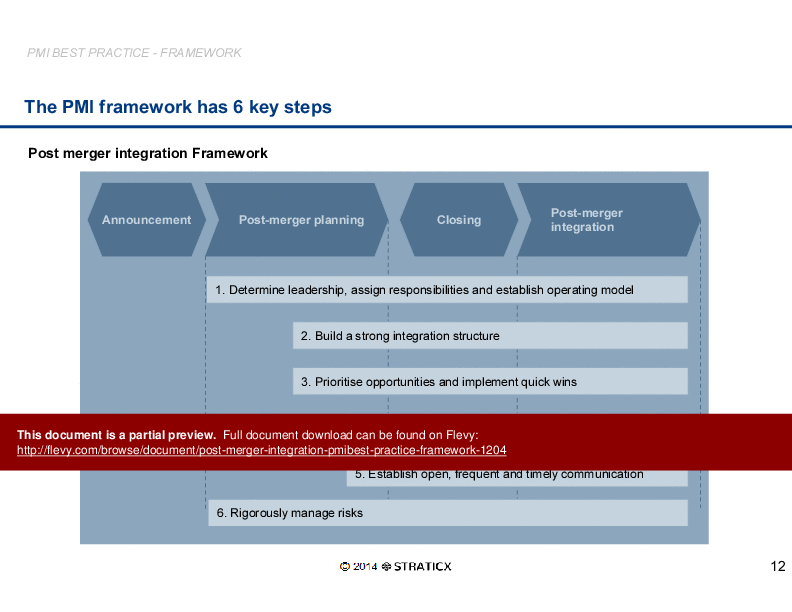
The framework comprises of six key steps:
1. Determine leadership, assign responsibilities and establish operating model
2. Build a strong integration structure
3. Prioritise opportunities and implement quick wins
4. Actively address cultural issues
5. Establish open, frequent and timely communication
6. Rigorously manage risks
This document is equally suitable for consultants and those in a corporate role.
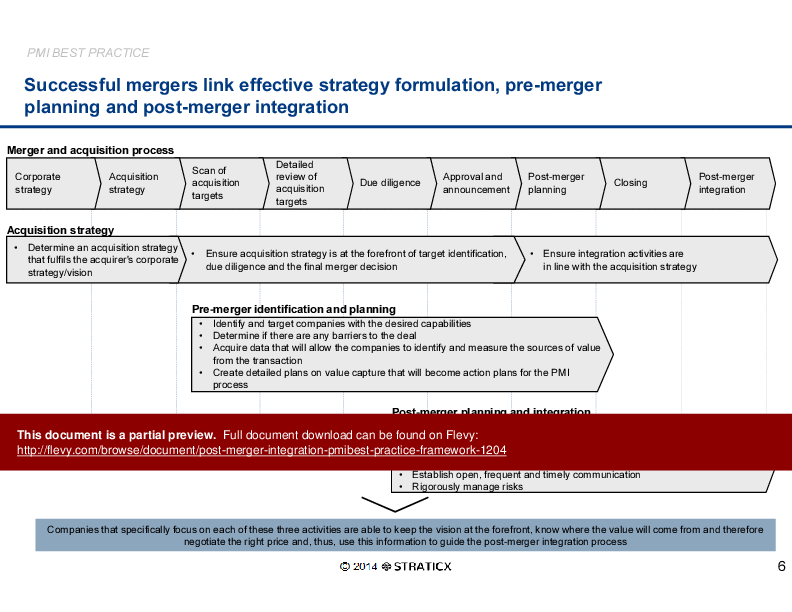
This comprehensive framework also emphasizes the importance of aligning integration activities with the overarching corporate strategy. By ensuring that the acquisition strategy is at the forefront of target identification, due diligence, and final merger decisions, companies can streamline the integration process and maximize value capture. The PPT provides actionable insights into pre-merger identification and planning, helping organizations to identify and target companies with the desired capabilities, assess barriers to the deal, and create detailed plans on value capture.
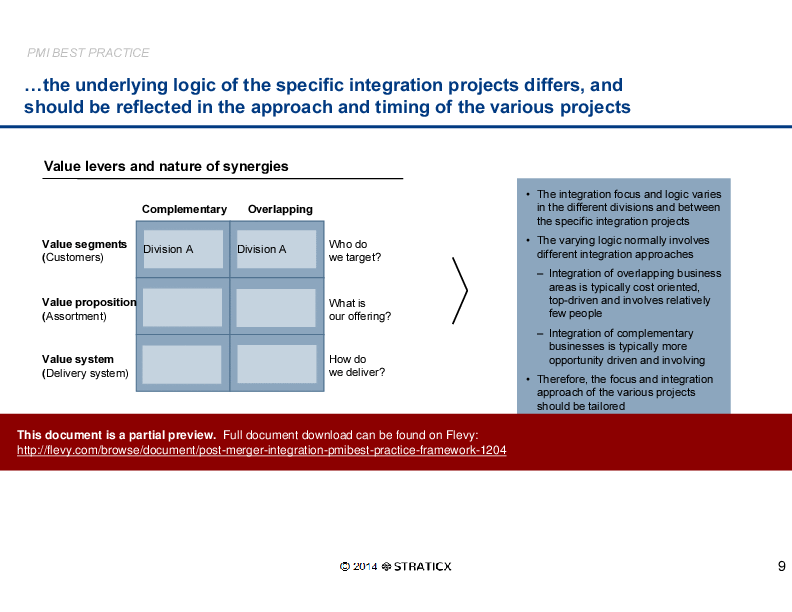
The framework highlights the necessity of tailoring integration approaches based on the specific logic and focus of different divisions. Integration of overlapping business areas typically involves cost-oriented, top-down strategies, while complementary business integrations are more opportunity-driven. This differentiation is crucial for addressing the unique challenges and opportunities presented by each integration project, ensuring that the approach and timing are appropriately aligned with the nature of the synergies involved.
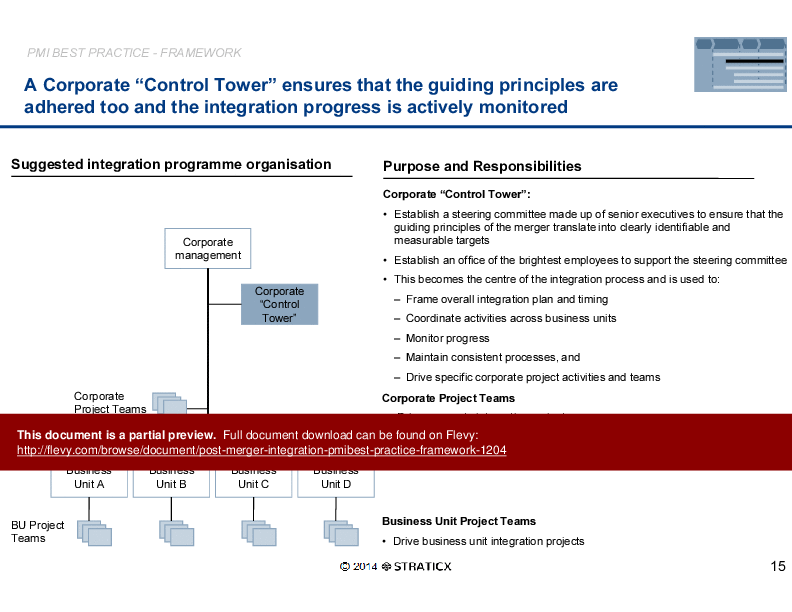
A key component of the framework is the establishment of a Corporate "Control Tower" to oversee the integration process. This central structure, comprising senior executives and top talent, ensures that guiding principles are adhered to and progress is actively monitored. By framing the overall integration plan, coordinating activities across business units, and maintaining consistent processes, the Control Tower drives the successful execution of integration activities, ultimately leading to the realization of projected synergies and value creation.
Got a question about the product? Email us at support@flevy.com or ask the author directly by using the "Ask the Author a Question" form. If you cannot view the preview above this document description, go here to view the large preview instead.
Executive Summary
The Post Merger Integration (PMI) Best Practice Framework is a comprehensive guide designed to navigate the complexities of merging 2 companies effectively. This consulting-grade presentation, akin to McKinsey, Bain, or BCG-quality, outlines critical strategies and best practices to ensure a successful integration process. By leveraging this framework, corporate executives and integration leaders can identify potential pitfalls, align their merger strategies, and implement actionable plans that maximize value creation. The framework emphasizes the importance of clear communication, strategic alignment, and a structured approach to integration, ultimately enabling organizations to achieve their merger objectives.
Who This Is For and When to Use
• Corporate executives overseeing merger and acquisition strategies
• Integration leaders responsible for executing post-merger plans
• Project management teams tasked with coordinating integration efforts
• Change management professionals focused on cultural integration
• Finance leaders monitoring synergy realization and cost management
Best-fit moments to use this deck:
• During pre-merger planning to align on integration strategies
• At the onset of post-merger integration to establish governance and roles
• In workshops aimed at addressing cultural integration challenges
• For ongoing assessments of integration progress and risk management
Learning Objectives
• Define the key components of a successful post-merger integration strategy
• Identify common pitfalls in the PMI process and how to avoid them
• Establish a structured approach to integration planning and execution
• Communicate effectively with stakeholders throughout the integration process
• Manage risks and ensure alignment with the overall merger strategy
• Capture synergies and realize value from the merger effectively
Table of Contents
• Introduction to Post Merger Integration (page 1)
• Common Pitfalls in PMI (page 5)
• Key Steps for Successful Integration (page 12)
• Integration Framework Overview (page 13)
• Establishing a Corporate Control Tower (page 15)
• Maintaining Core Business Focus (page 16)
• Phases of Integration (page 17)
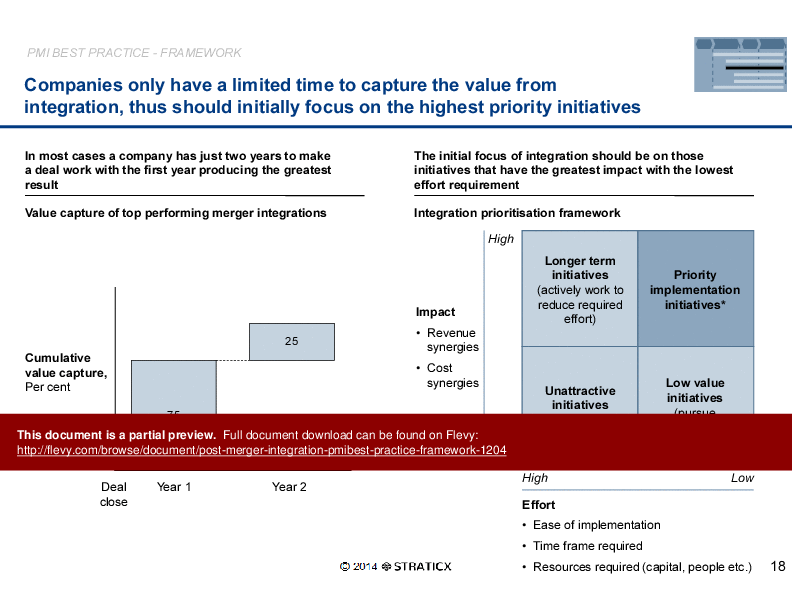
• Prioritizing Integration Initiatives (page 18)
• Managing Cultural Integration (page 22)
• Communication Strategies in PMI (page 25)
• Risk Management in PMI (page 26)
Primary Topics Covered
• Common Pitfalls - Identifies frequent challenges in PMI, including under-communication and lack of momentum, which can jeopardize merger success.
• Integration Framework - A structured approach that outlines the necessary steps for effective post-merger integration, ensuring alignment with corporate strategy.
• Corporate Control Tower - Establishes a governance structure to monitor integration progress and adherence to merger principles.
• Core Business Focus - Strategies to maintain operational continuity during integration, ensuring minimal disruption to existing business activities.
• Phases of Integration - Details the 3 phases of integration: initial, mid, and full integration, each with specific objectives and timelines.
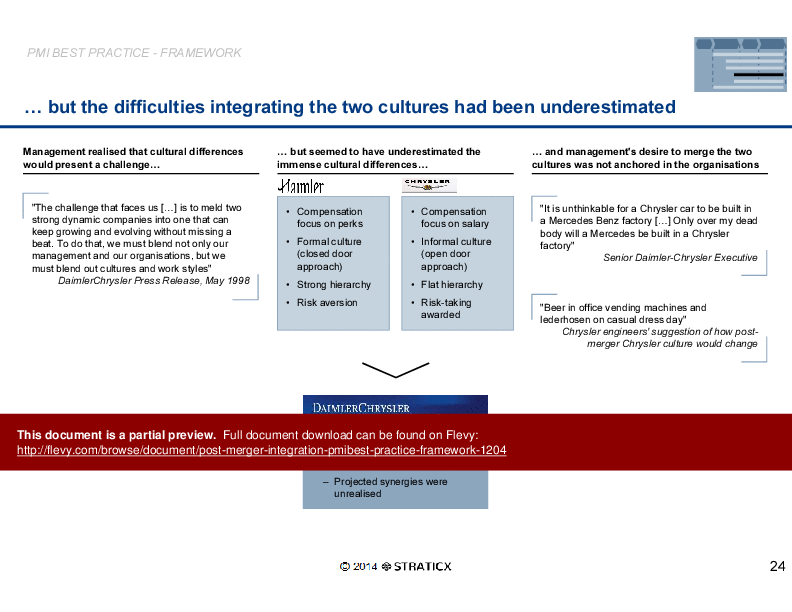
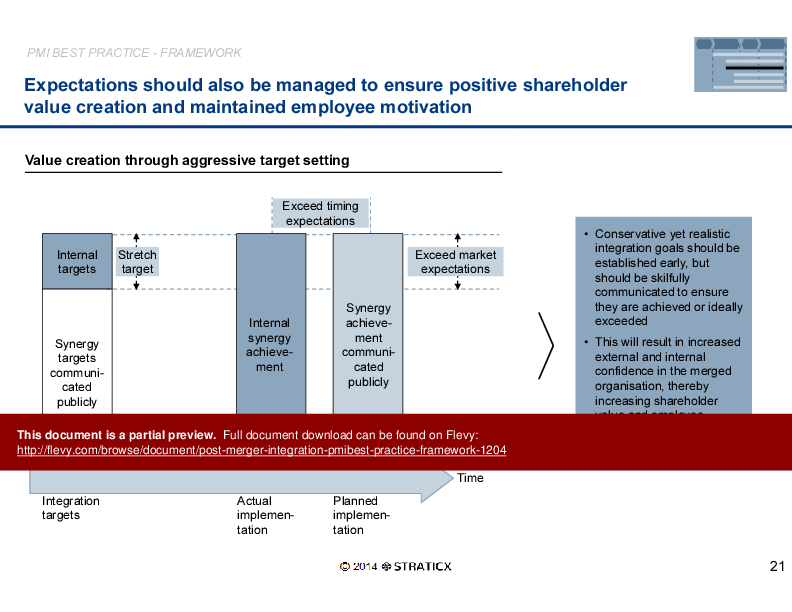
• Cultural Integration - Emphasizes the importance of aligning corporate cultures and managing employee expectations throughout the merger process.
Deliverables, Templates, and Tools
• PMI framework template for structured integration planning
• Communication plan template for stakeholder engagement
• Risk assessment panel structure for identifying and managing integration risks
• Integration initiative prioritization matrix to focus on high-impact actions
• Cultural integration assessment tool to evaluate and align organizational cultures
• Governance structure outline for establishing a Corporate Control Tower
Slide Highlights
• Overview of common pitfalls in PMI with statistical insights
• Framework for establishing a Corporate Control Tower to oversee integration
• Phased approach to integration with timelines and key activities
• Strategies for maintaining core business focus during the integration process
• Cultural integration challenges illustrated through case studies
Potential Workshop Agenda
Integration Strategy Alignment Session (90 minutes)
• Review key components of the PMI framework
• Identify potential pitfalls and mitigation strategies
• Establish roles and responsibilities for integration teams
Cultural Integration Workshop (60 minutes)
• Discuss cultural challenges and alignment strategies
• Develop a communication plan for stakeholders
• Create action items for addressing cultural issues
Risk Management Planning Session (90 minutes)
• Identify and assess potential risks in the integration process
• Develop a risk management plan with mitigation strategies
• Assign responsibilities for ongoing risk monitoring
Customization Guidance
• Tailor the PMI framework to reflect specific organizational structures and cultures
• Adjust communication plans to suit different stakeholder groups
• Incorporate unique merger objectives and synergy targets into the integration strategy
• Modify risk assessment protocols to align with organizational risk management practices
Secondary Topics Covered
• Strategies for capturing synergies and maximizing value
• Techniques for effective stakeholder communication during PMI
• Best practices for aligning corporate cultures post-merger
• Methods for tracking integration progress and success metrics
• Insights into managing employee expectations and morale during transitions
FAQ
What are the most common pitfalls in post-merger integration?
Common pitfalls include under-communication, lack of momentum, and unrealistic synergy expectations, which can significantly hinder merger success.
How can we ensure effective communication during the integration process?
Establish a clear communication plan that addresses key stakeholders, provides timely updates, and encourages open dialogue throughout the integration.
What is a Corporate Control Tower, and why is it important?
A Corporate Control Tower is a governance structure that oversees the integration process, ensuring adherence to merger principles and monitoring progress against established targets.
How should we prioritize integration initiatives?
Focus on initiatives that offer the greatest impact with the least effort, using a prioritization matrix to guide decision-making.
What role does cultural integration play in PMI?
Cultural integration is crucial for aligning organizational values and practices, which can significantly affect employee morale and the overall success of the merger.
How can we manage risks during the integration process?
Implement a risk assessment panel to identify, analyze, and prioritize risks, developing a management plan to address potential challenges proactively.
What are the phases of post-merger integration?
The integration process typically consists of 3 phases: initial integration, mid-integration, and full integration, each with specific objectives and timelines.
How can we measure the success of our integration efforts?
Success can be measured through key performance indicators (KPIs) that track the realization of synergies, employee engagement, and overall business performance post-merger.
Glossary
• Post Merger Integration (PMI) - The process of combining 2 companies to achieve strategic objectives and maximize value.
• Corporate Control Tower - A governance structure that oversees the integration process and ensures adherence to merger principles.
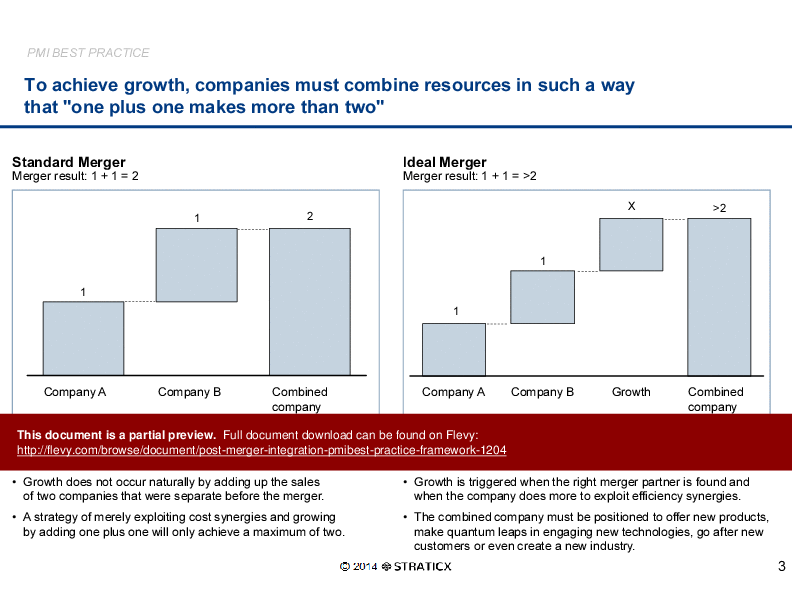
• Synergy - The additional value created from the merger that exceeds the sum of the individual companies.
• Cultural Integration - The process of aligning the values, beliefs, and behaviors of 2 merging organizations.
• Risk Assessment Panel - A group responsible for identifying and managing risks associated with the integration process.
• Integration Initiative - Specific actions or projects aimed at achieving integration objectives.
• Stakeholder - Individuals or groups with an interest in the outcome of the merger, including employees, customers, and investors.
• Communication Plan - A strategy for conveying information to stakeholders during the integration process.
• Value Creation - The process of generating additional worth from the merger through synergies and efficiencies.
• Employee Engagement - The level of commitment and involvement employees have towards the organization during the integration.
• Key Performance Indicator (KPI) - A measurable value that demonstrates how effectively a company is achieving key business objectives.
• Integration Framework - A structured approach outlining the steps and processes for successful post-merger integration.
• Merger Type - The classification of mergers based on strategic objectives, such as scale, stream, concentric, or lateral.
• Quick Wins - Immediate, tangible results achieved during the integration process that build momentum and confidence.
• Operational Continuity - The ability of a business to maintain its operations during the integration process.
• Strategic Alignment - The process of ensuring that the integration efforts are in line with the overall corporate strategy.
• Due Diligence - The investigation and evaluation of a potential merger target to assess its value and risks.
• Cultural Fit - The degree to which the cultures of 2 merging organizations align and complement each other.
• Integration Timeline - A schedule outlining the key milestones and activities involved in the integration process.
• Change Management - The approach to managing the transition and transformation of an organization during the integration.
Source: Best Practices in Post-merger Integration PowerPoint Slides: Post Merger Integration (PMI) Best Practice Framework PowerPoint (PPTX) Presentation Slide Deck, STRATICX
This document is available as part of the following discounted bundle(s):
Save %!
Complete Kit
This bundle contains 13 total documents. See all the documents to the right.
|
Receive our FREE presentation on Operational Excellence
This 50-slide presentation provides a high-level introduction to the 4 Building Blocks of Operational Excellence. Achieving OpEx requires the implementation of a Business Execution System that integrates these 4 building blocks. |