
Market Entry Strategy Toolkit   109-slide PPT PowerPoint presentation slide deck (PPTX)
$99.00

Market Entry Strategy Toolkit (109-slide PPT PowerPoint presentation slide deck (PPTX)) Preview Image
Log in to unlock full preview.
Market Entry Strategy Toolkit (109-slide PPT PowerPoint presentation slide deck (PPTX)) Preview Image
Arrow   Click main image to view in full screen.

Market Entry Strategy Toolkit (PowerPoint PPTX Slide Deck)

PowerPoint (PPTX) 109 Slides

#2 in Market Entry $99.00
This toolkit is created by trained McKinsey, BCG, and Porsche Consulting consultants and is the same used by MBB, Big 4, and Fortune 100 companies when performing Market Entry Initiatives.
Add to Cart


Immediate download
Free lifetime updates

BENEFITS OF THIS POWERPOINT DOCUMENT

  1. The Market Entry Strategy Toolkit offers an invaluable framework for crafting a strategic approach to entering new markets confidently and efficiently.
  2. With over 100 slides, this toolkit empowers businesses to understand industry structures, segment markets effectively, and maximize their chances of success through thorough market sizing and customer value assessment.
  3. By exploring components like Porter's Five Forces, SWOT analysis, and competitor profiling, this toolkit equips organizations with the tools to make data-driven decisions and leverage their core capabilities in the market entry process.

INDUSTRY ANALYSIS PPT DESCRIPTION

Editor Summary Market Entry Strategy Toolkit is a 109-slide PowerPoint toolkit by SB Consulting, created by consultants trained at McKinsey, BCG, and Porsche Consulting, delivering frameworks across 4 pillars: Industry Structure, Customer Target & Value, Market Competitor Audit, and Business Capabilities Assessment. Read more

Curated by McKinsey-trained Executives

The presentation follows the headline-body-bumper slide format used by global consulting firms.

Unlocking Success with the Market Entry Strategy Toolkit: A 100+ Slide Powerhouse

Entering a new market is like embarking on an exhilarating adventure. It's an opportunity to explore uncharted territory, reach new horizons, and expand your business's footprint. However, without a well-thought-out plan, this adventure can quickly turn into a perilous journey. To navigate the complexities of market entry and maximize your chances of success, you need a comprehensive toolkit that serves as your guiding light. That's where the Market Entry Strategy Toolkit comes into play.

Content Overview:
•  Pillars of Market Entry
•  Industry Structures
•  Market Segmentation
•  Market Sizing
•  Industry Documentation Levels
•  Value Chain Analysis
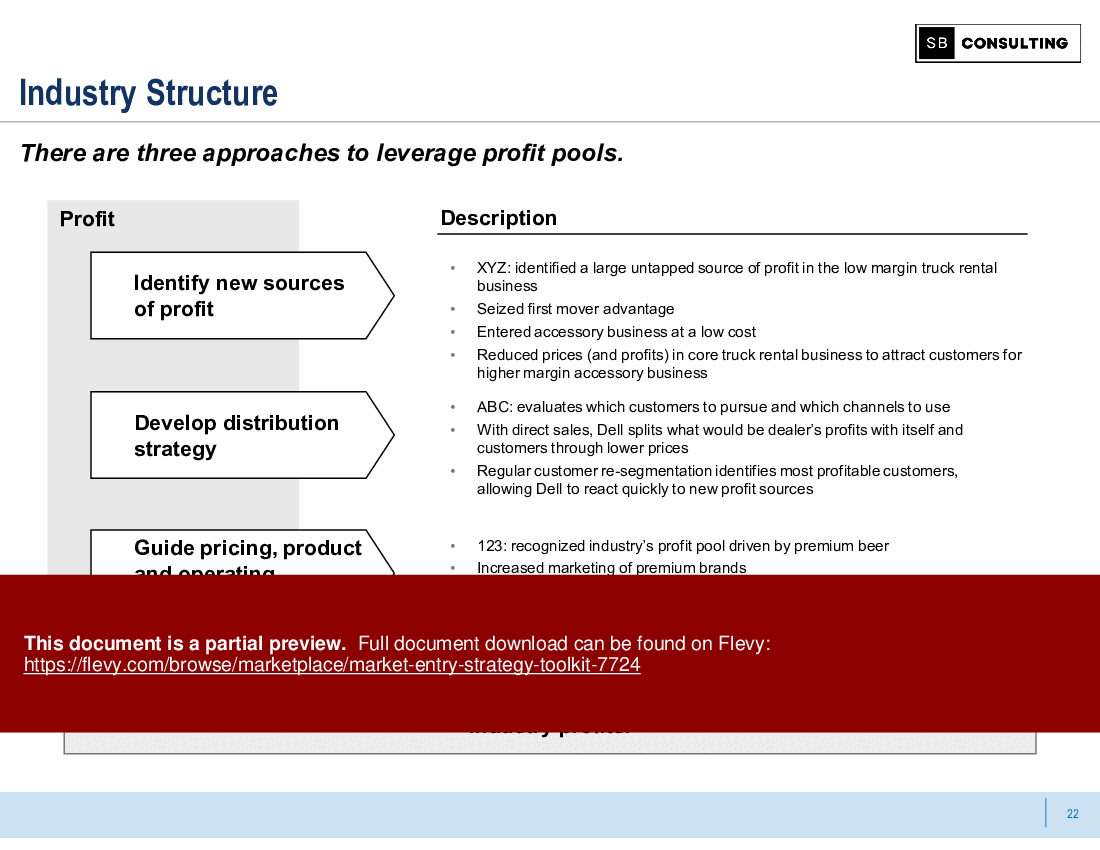
•  Profit Pool Map
•  Product Life Cycle
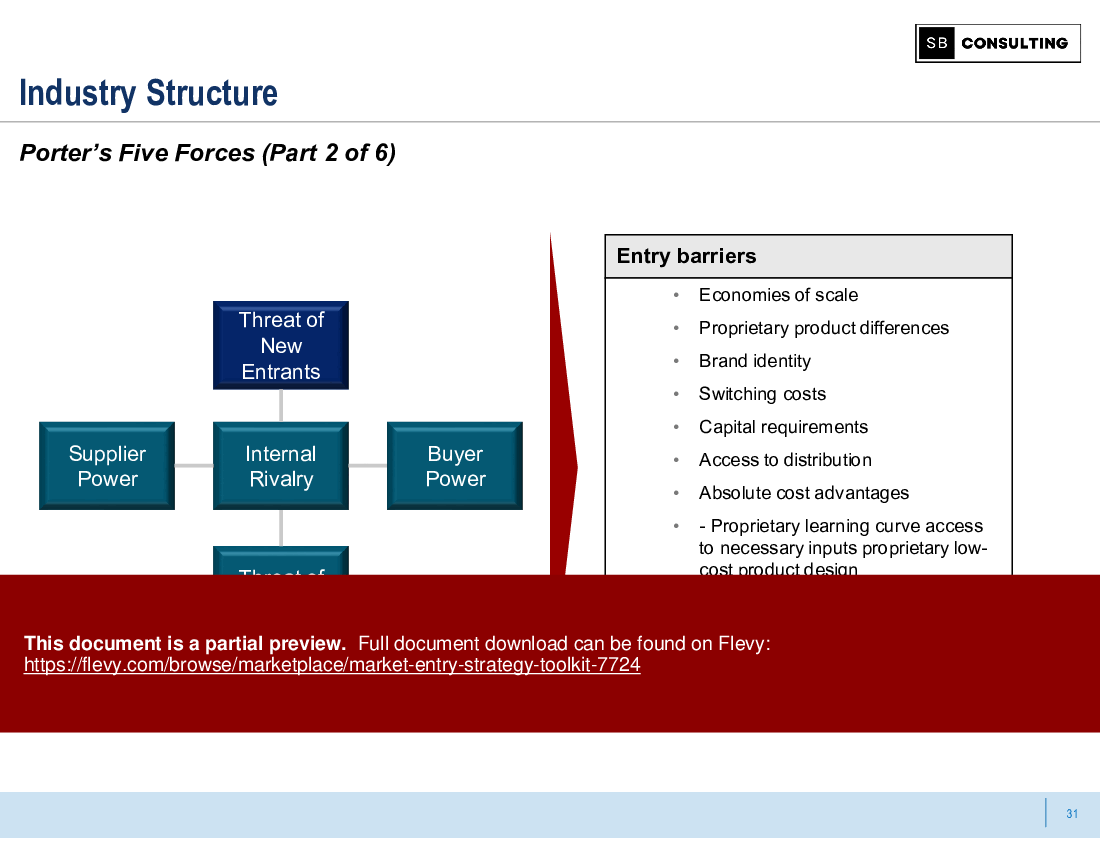
•  Porter's Five Forces
•  Customer Targeting
•  Customer Value
•  Customer Segmentation
•  Customer Value Approach
•  Customer Needs
•  Share of Wallet
•  Customer Loyalty Feedback
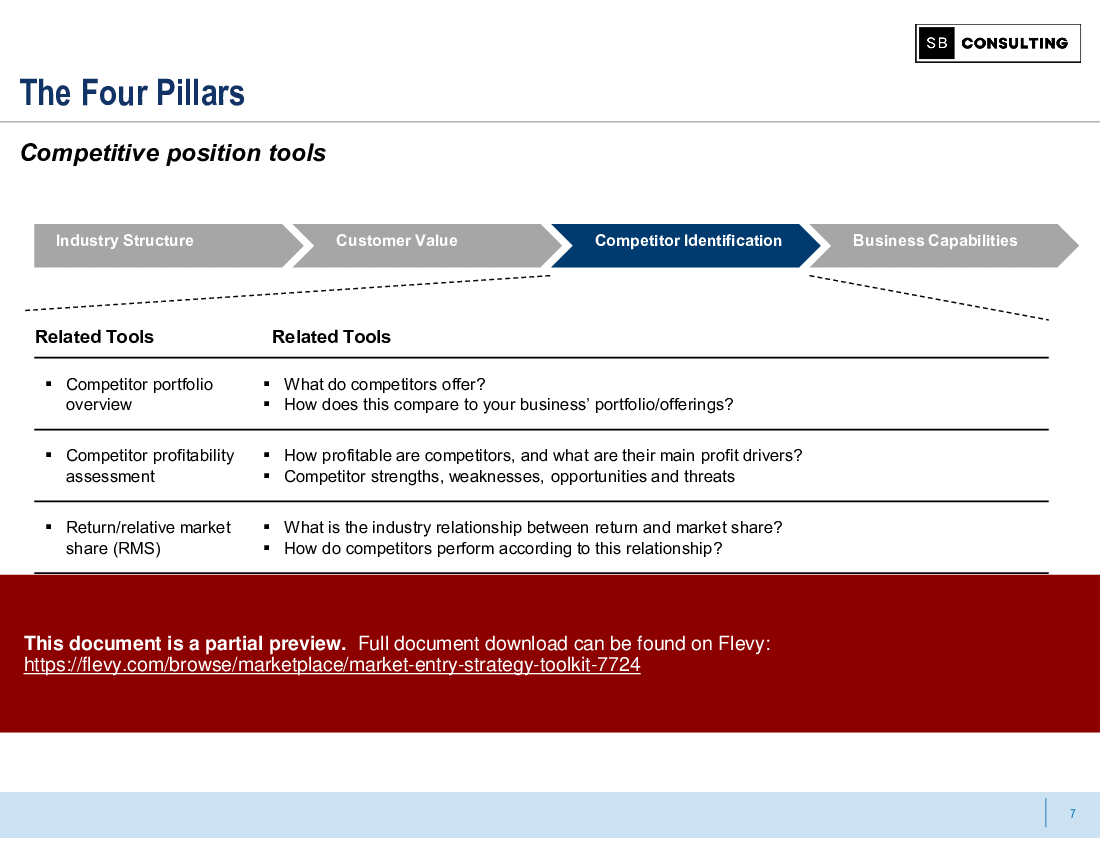
•  Competitor Identification
•  Competitive Analysis
•  Benchmarking Competitor Performance
•  Performance Drivers
•  SWOT Analysis
•  Business Capabilities
•  Core Capabilities
•  Market Entry Process

Learning Objectives
Pillars of Market Entry
The first section of the toolkit sets the foundation for your market entry strategy. It covers essential concepts such as entry modes, market selection, and risk assessment. Here, you'll learn how to make informed decisions to enter a market with confidence.
Learning Objective: Develop a deep understanding of market entry strategies, selection criteria, and risk assessment to make informed choices.

Industry Structures
Before you leap into a market, you must grasp the nuances of its industry structure. The Industry Structures section explores various industry types, from monopolies to oligopolies, and how they can influence your market entry strategy.
Learning Objective: Comprehend the significance of industry structures in market entry and how they impact your approach.

Market Segmentation
To capture your audience effectively, you need to know who they are. Market Segmentation is a crucial step in tailoring your strategy to specific customer segments. This section delves into segmentation techniques and best practices.
Learning Objective: Master the art of market segmentation and discover how it can enhance your market entry strategy.

Market Sizing
Accurate market sizing is a key driver of success. This section reveals the tools and techniques required to estimate market size effectively, allowing you to set realistic goals for market entry.
Learning Objective: Learn how to conduct comprehensive market sizing to make data-driven decisions.

Industry Documentation Levels
Understanding the regulatory environment and documentation requirements is paramount in market entry. This section helps you navigate the legalities and compliance essentials.
Learning Objective: Gain insights into industry documentation levels and how to ensure regulatory compliance.

Value Chain Analysis
A thorough analysis of the value chain can uncover hidden opportunities. Here, you'll discover how to identify value chain partners and optimize your market entry strategy.
Learning Objective: Understand the significance of value chain analysis in market entry and how to leverage it effectively.

Profit Pool Map
Where does the money flow in your chosen industry? The Profit Pool Map section will help you visualize profit distribution, allowing you to identify lucrative segments.
Learning Objective: Discover how to create a Profit Pool Map and maximize your market entry strategy's profitability.

Product Life Cycle
Every product has a lifecycle, and understanding where your offering stands is vital. This section guides you through product lifecycle analysis to determine the right time for market entry.
Learning Objective: Master product lifecycle analysis to make informed decisions on market entry timing.

Porter's Five Forces
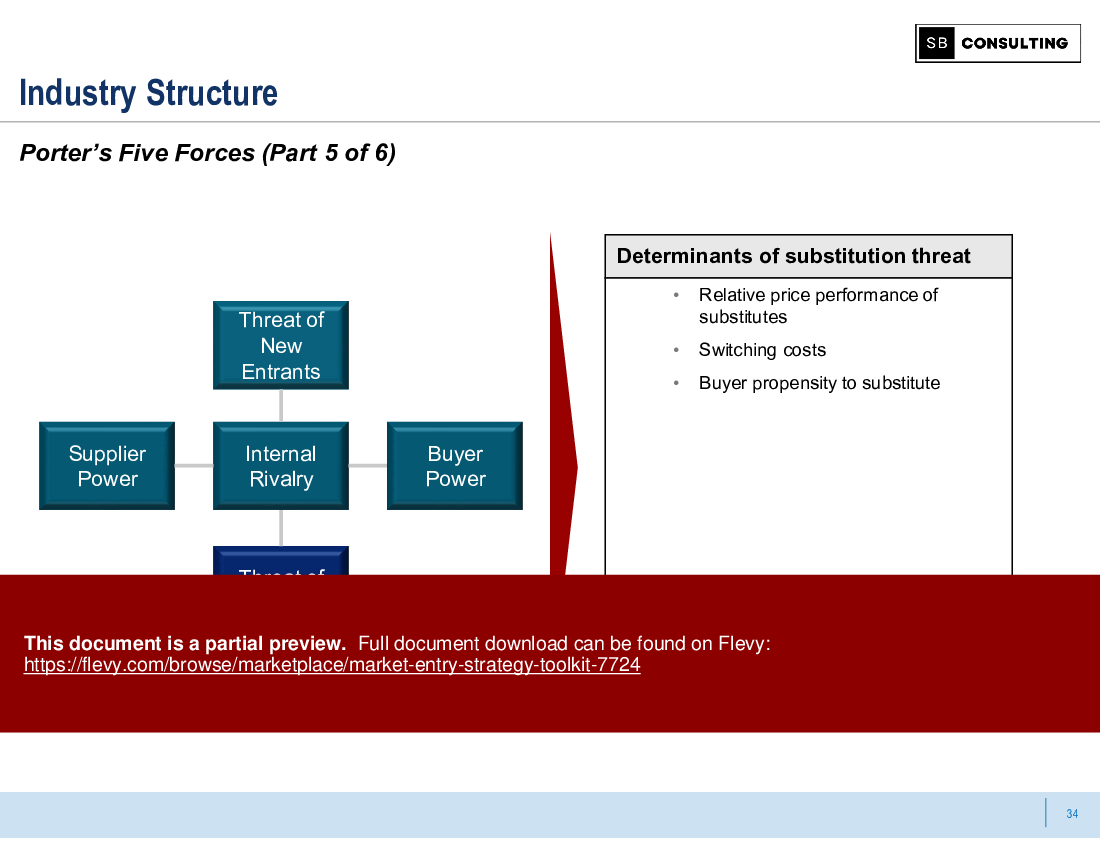
Porter's Five Forces framework is a cornerstone of competitive analysis. In this section, you'll explore how the forces of rivalry, supplier power, buyer power, threat of substitutes, and threat of new entrants can impact your strategy.
Learning Objective: Learn how to apply Porter's Five Forces to assess market competitiveness and fine-tune your strategy.

Customer Targeting
Customers are at the heart of any business. Customer Targeting explores how to identify and prioritize target customer segments based on demographics, psychographics, and behavioral patterns.
Learning Objective: Master the art of customer targeting to enhance your market entry strategy.

Customer Value
Building customer value is key to success. This section teaches you how to create a compelling value proposition that resonates with your target audience.
Learning Objective: Develop a deep understanding of creating and delivering value to customers in your chosen market.

Customer Segmentation
A deeper dive into customer segmentation, this section explores techniques and tools for further refining your target audience.
Learning Objective: Hone your skills in customer segmentation to ensure your market entry strategy is precise and effective.

Customer Value Approach
Take a customer-centric approach to your market entry strategy. Learn how to position your offering to meet customer needs effectively.
Learning Objective: Develop the ability to create a customer-focused approach for your market entry strategy.

Customer Needs
To succeed, you must understand your customer's needs. Dive deep into customer needs analysis to tailor your offering accordingly.
Learning Objective: Master the art of understanding customer needs and how it impacts your market entry strategy.

Share of Wallet
Understanding your customers' spending habits is essential. In this section, you'll learn how to assess the share of wallet and allocate resources accordingly.
Learning Objective: Gain insights into assessing your customer's share of wallet and optimizing your market entry strategy.

Customer Loyalty Feedback
Loyalty is the cornerstone of a sustainable business. Discover how to gather and utilize customer loyalty feedback to improve your market entry strategy.
Learning Objective: Learn the importance of customer loyalty feedback and how it can drive your market entry success.

Competitor Identification
Know your competitors inside and out. This section guides you through effective competitor identification techniques.
Learning Objective: Learn how to identify and profile your competitors for a competitive edge.

Competitive Analysis
A deep dive into competitive analysis techniques and best practices to assess your competition comprehensively.
Learning Objective: Master the art of competitive analysis to refine your market entry strategy.

Benchmarking Competitor Performance
Benchmarking is an essential tool to measure your performance against competitors. This section will show you how to benchmark and stay ahead in the market.
Learning Objective: Develop the skill to benchmark your performance against competitors for continuous improvement.

Performance Drivers
Identify the key performance drivers that will steer your business toward success in a new market.
Learning Objective: Discover the factors driving performance in your market entry strategy.

SWOT Analysis
SWOT analysis helps you assess your strengths, weaknesses, opportunities, and threats. Learn how to use this tool to refine your market entry strategy.
Learning Objective: Master the art of SWOT analysis and how it can enhance your market entry strategy.

Business Capabilities
Understanding your business capabilities is critical. This section explores how to align your business strengths with your market entry strategy.
Learning Objective: Discover how to leverage your business capabilities for a successful market entry.

Core Capabilities
Identify your core capabilities and leverage them as a competitive advantage in the new market.
Learning Objective: Develop the skill to identify and utilize core capabilities effectively.

Market Entry Process
Finally, learn the step-by-step process of entering a new market, from initial research to execution and beyond.
Learning Objective: Gain a comprehensive understanding of the market entry process to plan and execute your strategy successfully.


The Market Entry Strategy Toolkit is your comprehensive guide to entering new markets with confidence. By mastering these learning objectives, you will be better equipped to navigate the complexities of market entry and maximize your chances of success. With over 100 slides packed with valuable insights and tools, this toolkit is your passport to unlocking new opportunities and expanding your business horizons.

Don't leave your market entry to chance. Invest in the Market Entry Strategy Toolkit today and set your course for success in new markets!

Key Words:
Strategy & Transformation, Growth Strategy, Strategic Planning, Strategy Frameworks, Innovation Management, Pricing Strategy, Core Competencies, Strategy Development, Business Transformation, Marketing Plan Development, Product Strategy, Breakout Strategy, Competitive Advantage, Mission, Vision, Values, Strategy Deployment & Execution, Innovation, Vision Statement, Core Competencies Analysis, Corporate Strategy, Product Launch Strategy, BMI, Blue Ocean Strategy, Breakthrough Strategy, Business Model Innovation, Business Strategy Example, Corporate Transformation, Critical Success Factors, Customer Segmentation, Customer Value Proposition, Distinctive Capabilities, Enterprise Performance Management, KPI, Key Performance Indicators, Market Analysis, Market Entry Example, Market Entry Plan, Market Intelligence, Market Research, Market Segmentation, Market Sizing, Marketing, Michael Porter's Value Chain, Organizational Transformation, Performance Management, Performance Measurement, Platform Strategy, Product Go-to-Market Strategy, Reorganization, Restructuring, SWOT, SWOT Analysis, Service 4.0, Service Strategy, Service Transformation, Strategic Analysis, Strategic Plan Example, Strategy Deployment, Strategy Execution, Strategy Frameworks Compilation, Strategy Methodologies, Strategy Report Example, Value Chain, Value Chain Analysis, Value Innovation, Value Proposition, Vision Statement, Corporate Strategy, Business Development

NOTE:Our digital products are sold on an "as is" basis, making returns and refunds unavailable post-download. Please preview and inquire before purchasing. Please contact us before purchasing if you have any questions! This policy aligns with the standard Flevy Terms of Usage.

The toolkit provides a detailed framework for evaluating industry structures, customer value, and competitor identification. It includes practical tools for market sizing, value chain analysis, and profit pool mapping to ensure a data-driven approach.

Got a question about the product? Email us at support@flevy.com or ask the author directly by using the "Ask the Author a Question" form. If you cannot view the preview above this document description, go here to view the large preview instead.

MARCUS OVERVIEW

This synopsis was written by Marcus [?] based on the analysis of the full 109-slide presentation.


Executive Summary
Entering new markets is essential for growth in today's competitive landscape. This Market Entry Strategy Toolkit provides a structured approach based on 4 key pillars: Industry Structure, Customer Target and Value, Market Competitor Audit, and Business Capabilities Assessment. The toolkit empowers leaders to develop informed market entry strategies through interactive learning, including group exercises and real case studies. By leveraging these frameworks, organizations can effectively assess market attractiveness, understand customer needs, analyze competitors, and align business capabilities with market demands.

Who This Is For and When to Use
•  Corporate executives responsible for strategic planning and market expansion
•  Business development teams tasked with identifying new market opportunities
•  Marketing leaders aiming to refine customer targeting and value propositions
•  Consultants advising clients on market entry strategies and competitive positioning

Best-fit moments to use this deck:
•  During strategic planning sessions for new market initiatives
•  When conducting market research and competitor analysis
•  In workshops focused on customer segmentation and value proposition development
•  For training sessions on best practices in market entry strategies

Learning Objectives
•  Define the 4 pillars of market entry strategy and their significance
•  Build a comprehensive market entry plan that aligns with organizational goals
•  Establish a robust customer segmentation framework to identify target markets
•  Analyze competitors to inform strategic positioning and tactical decisions
•  Assess internal business capabilities to ensure alignment with market needs
•  Develop contingency plans to address potential market entry challenges

Table of Contents
•  Introduction to Market Entry Strategy (page 1)
•  Overview of the Four Pillars (page 2)
•  Industry Structure Analysis (page 10)
•  Customer Targeting and Value Assessment (page 42)
•  Competitor Identification and Analysis (page 77)
•  Business Capabilities Evaluation (page 88)
•  Market Entry Strategy Components (page 105)
•  Tactical Launch Plan Development (page 107)

Primary Topics Covered
•  Industry Structure - Analyze market size, growth, regulations, and key players to assess market attractiveness.
•  Customer Target and Value - Define ideal customer profiles and their needs to align offerings with market demand.
•  Market Competitor Audit - Conduct a comprehensive analysis of competitors to inform strategic decisions.
•  Business Capabilities Assessment - Evaluate internal resources and capabilities to ensure alignment with target markets.
•  Market Entry Strategy Development - Create a structured plan that outlines strategic directions and tactical actions for market entry.
•  Contingency Planning - Develop plans to address potential disruptions and ensure agile responses to market changes.

Deliverables, Templates, and Tools
•  Market analysis framework template for assessing industry structure
•  Customer segmentation model to identify and prioritize target markets
•  Competitor analysis toolkit for benchmarking performance and strategies
•  Business capabilities assessment framework to identify strengths and gaps
•  Tactical launch plan template detailing action steps for market entry
•  Contingency planning guide to prepare for potential market challenges

Slide Highlights
•  Overview of the 4 pillars of market entry strategy
•  Detailed analysis of industry structure and key market drivers
•  Customer segmentation framework highlighting profitability and needs
•  Competitor analysis tools including SWOT and performance benchmarks
•  Business capabilities assessment highlighting core competencies and gaps

Potential Workshop Agenda
Market Entry Strategy Overview (60 minutes)
•  Introduction to the 4 pillars of market entry strategy
•  Group discussion on industry structure and market attractiveness
•  Overview of customer targeting and value proposition development

Competitor Analysis Workshop (90 minutes)
•  Breakout sessions for competitor identification and analysis
•  Group presentations on competitive positioning and strategic insights
•  Discussion on leveraging competitor insights for market entry

Business Capabilities Assessment (60 minutes)
•  Review of internal capabilities and resource alignment
•  Group exercise on identifying capability gaps and strategic implications
•  Action planning for addressing identified gaps

Customization Guidance
•  Tailor the customer segmentation model to reflect specific market characteristics and behaviors.
•  Adjust the competitor analysis framework to focus on key competitors relevant to your industry.
•  Modify the tactical launch plan to align with organizational goals and market conditions.
•  Incorporate specific metrics and KPIs relevant to your business objectives in the business capabilities assessment.

Secondary Topics Covered
•  Regulatory and geopolitical trends impacting market entry
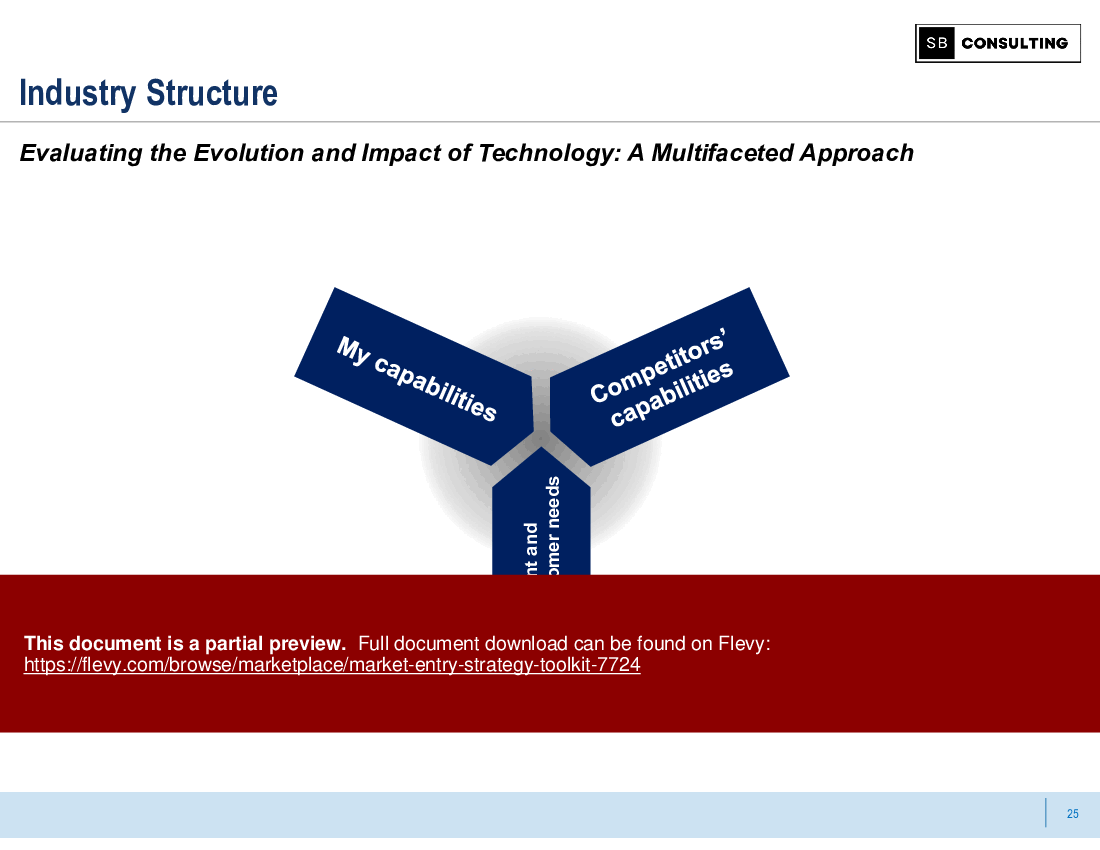
•  Technology evolution and its influence on market dynamics
•  Customer loyalty and retention strategies for new markets
•  Pricing strategies and their role in market entry success
•  Sales and distribution channel strategies for effective market penetration

Topic FAQ

What are the core components of a market entry strategy framework?

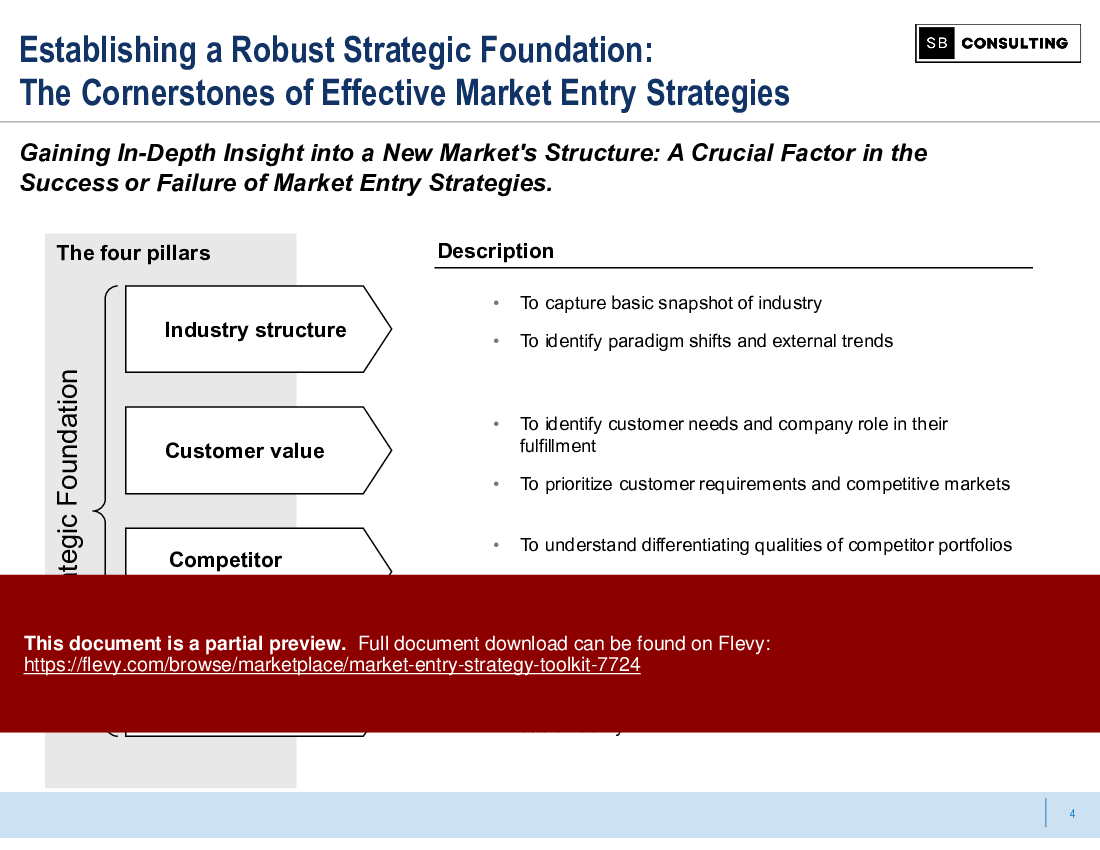
A market entry strategy framework typically covers market attractiveness and structure, customer targeting and value, competitor analysis, and internal capability alignment. The Market Entry Strategy Toolkit organizes these into 4 pillars: Industry Structure, Customer Target & Value, Market Competitor Audit, and Business Capabilities Assessment, i.e., 4 pillars.

How do I size a new market before entry?

Market sizing combines top-down and bottom-up estimates, demand drivers, and profit mapping to estimate addressable demand. The Market Entry Strategy Toolkit includes guidance on market sizing plus tools such as a Profit Pool Map to visualize where revenue and margins concentrate, referenced in its market sizing sections.

When should I use Porter’s Five Forces versus a Profit Pool Map for analysis?

Use Porter’s Five Forces to assess competitive intensity, supplier/buyer power, and entry threats for strategic positioning; use a Profit Pool Map to identify where industry profits concentrate for commercial prioritization. Both approaches are covered in the toolkit as complementary analysis tools, specifically Porter's Five Forces and Profit Pool Map.

What should I look for when buying a market entry strategy template or toolkit?

Seek a toolkit that provides structured diagnostics and ready-to-use templates for market analysis, customer segmentation, competitor benchmarking, capability assessment, tactical launch planning, and contingency planning. The Market Entry Strategy Toolkit explicitly lists templates such as a market analysis framework, customer segmentation model, and tactical launch plan.

How much time and team capacity do I need to run a market entry workshop using a toolkit?

The toolkit supplies a suggested workshop agenda with discrete sessions: a Market Entry Strategy Overview (60 minutes), a Competitor Analysis Workshop (90 minutes), and a Business Capabilities Assessment (60 minutes). Plan facilitation time and participant availability around those 60, 90, and 60 minute sessions.

How can I adapt customer segmentation for a niche market entry?

Tailor segmentation variables to niche-specific behaviors, needs, and profitability metrics, then prioritize segments by fit and commercial potential. The toolkit’s customer segmentation model is designed to be customized to reflect specific market characteristics and behaviors, using the customer segmentation model.

What’s the value of assessing business capabilities before entering a market?

Assessing capabilities identifies internal strengths and gaps relative to target market requirements, informing investment, partner, or capability-build decisions to improve fit and reduce execution risk. The toolkit includes a business capabilities assessment framework to map competencies and gaps, called the business capabilities assessment framework.

How do contingency plans factor into market entry strategy for regulatory or geopolitical risk?

Contingency planning prepares alternative routes, timing, and resource allocations to respond to regulatory or geopolitical disruptions. The toolkit highlights regulatory and geopolitical trends and includes a contingency planning guide to document mitigation options and trigger points, referenced as the contingency planning guide.

Document FAQ
These are questions addressed within this presentation.

What are the 4 pillars of market entry strategy?
The 4 pillars are Industry Structure, Customer Target and Value, Market Competitor Audit, and Business Capabilities Assessment, which together provide a comprehensive framework for market entry.

How can this toolkit help in market entry planning?
The toolkit offers structured frameworks and templates that guide organizations in assessing market opportunities, understanding customer needs, analyzing competitors, and aligning internal capabilities for successful market entry.

What types of deliverables can I expect from this toolkit?
The toolkit includes templates for market analysis, customer segmentation, competitor analysis, business capabilities assessment, tactical launch planning, and contingency planning.

How do I customize the toolkit for my organization?
You can tailor the templates and frameworks to reflect your specific market conditions, customer profiles, and competitive landscape, ensuring alignment with your organizational goals.

What is the significance of customer segmentation in market entry?
Customer segmentation helps identify and prioritize target markets based on profitability and needs, allowing organizations to tailor their offerings and marketing strategies effectively.

How does competitor analysis inform market entry strategies?
Competitor analysis provides insights into competitive positioning, strengths and weaknesses, and market dynamics, enabling organizations to craft strategies that leverage their unique advantages.

What role does business capabilities assessment play in market entry?
Assessing business capabilities ensures that internal resources and competencies align with market demands, identifying gaps that need to be addressed for successful market entry.

Why is contingency planning important in market entry?
Contingency planning prepares organizations for potential disruptions, allowing for agile responses to market changes and ensuring that planned activities can continue smoothly.

Glossary
•  Market Entry Strategy - A structured approach for entering new markets effectively.
•  Industry Structure - The analysis of market size, growth, regulations, and key players.
•  Customer Segmentation - The process of dividing a market into distinct groups based on needs and profitability.
•  Competitor Analysis - The assessment of competitors to inform strategic positioning and actions.
•  Business Capabilities - The internal resources and competencies that align with market demands.
•  Tactical Launch Plan - A detailed action plan for implementing market entry strategies.
•  Contingency Planning - Preparing for potential disruptions to ensure agile responses.
•  SWOT Analysis - A framework for assessing strengths, weaknesses, opportunities, and threats.
•  Value Proposition - The unique benefits and advantages offered to customers.
•  Profit Pools - The distribution of profits across different segments within an industry.
•  Customer Loyalty - The commitment of customers to repurchase from a business.
•  Pricing Strategy - The approach to setting prices for products and services in the market.
•  Sales and Distribution Channels - The methods and pathways through which products reach customers.
•  Regulatory Trends - Changes in laws and regulations that impact market dynamics.
•  Geopolitical Trends - Political factors that influence market conditions and opportunities.

INDUSTRY ANALYSIS PPT SLIDES

Comprehensive Framework for Market Entry Strategy

Understanding the Industry Value Chain Structure

Strategic Framework for Customer Profitability Segmentation

Choke Points and Profit Distribution in the Computer Industry

Defining Core Capabilities and Competencies

Foundational Elements of Market Entry Strategy

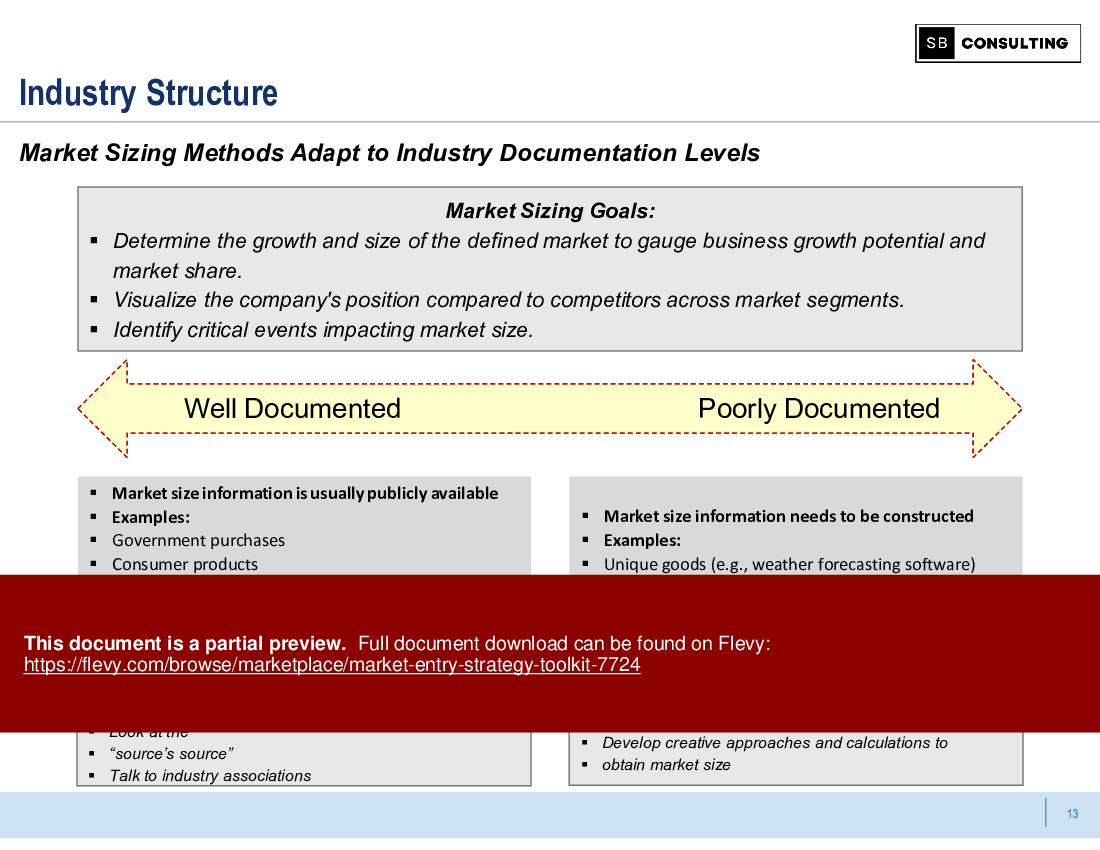
Adapting Market Sizing to Industry Documentation Levels

Structured Approach to Customer Segmentation for Hotels

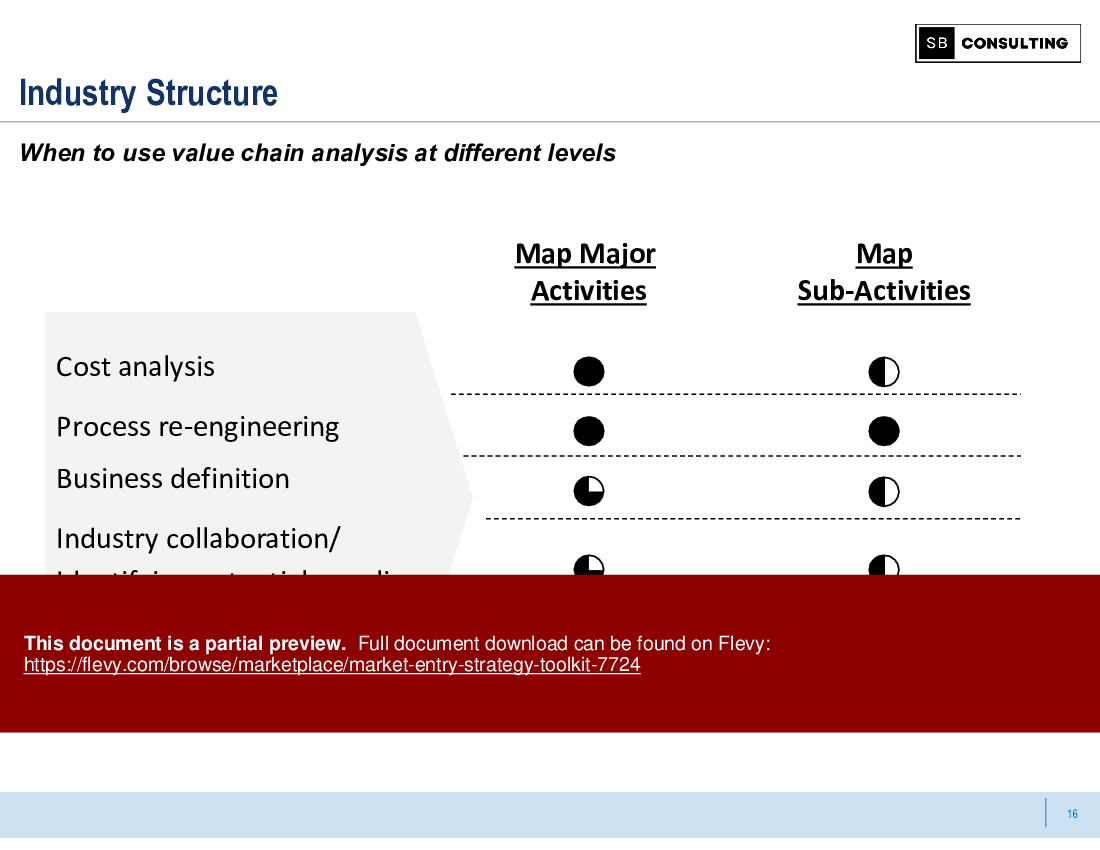
Strategic Segmentation of Industry Value Chain

Customized Value Proposition for Target Segment

Understanding Customer Needs and Analytical Fit

Source: Best Practices in Industry Analysis, Environmental Analysis, Market Entry PowerPoint Slides: Market Entry Strategy Toolkit PowerPoint (PPTX) Presentation Slide Deck, SB Consulting


$99.00
This toolkit is created by trained McKinsey, BCG, and Porsche Consulting consultants and is the same used by MBB, Big 4, and Fortune 100 companies when performing Market Entry Initiatives.
Add to Cart
  

ABOUT THE AUTHOR

Author image
Author: SB Consulting
Additional documents from author: 1167
Terms of usage (for all documents from this author)

SB Consulting is dedicated to empowering businesses to communicate their ideas with impact. This consulting firm specializes in teaching organizations how to create effective corporate and management presentations. With training from top-tier global consulting firms, including McKinsey, BCG, and Porsche Consulting, extensive expertise in presentation design and ... [read more]

Ask the Author a Question

You must be logged in to contact the author.

Click here to log in Click here register

Did you know?
The average daily rate of a McKinsey consultant is $6,625 (not including expenses). The average price of a Flevy document is $65.



Trusted by over 10,000+ Client Organizations
Since 2012, we have provided business templates to over 10,000 businesses and organizations of all sizes, from startups and small businesses to the Fortune 100, in over 130 countries.
AT&T GE Cisco Intel IBM Coke Dell Toyota HP Nike Samsung Microsoft Astrazeneca JP Morgan KPMG Walgreens Walmart 3M Kaiser Oracle SAP Google E&Y Volvo Bosch Merck Fedex Shell Amgen Eli Lilly Roche AIG Abbott Amazon PwC T-Mobile Broadcom Bayer Pearson Titleist ConEd Pfizer NTT Data Schwab


Read Customer Testimonials

 
"I have used Flevy services for a number of years and have never, ever been disappointed. As a matter of fact, David and his team continue, time after time, to impress me with their willingness to assist and in the real sense of the word. I have concluded in fact "

– Roberto Pelliccia, Senior Executive in International Hospitality
 
"One of the great discoveries that I have made for my business is the Flevy library of training materials.

As a Lean Transformation Expert, I am always making presentations to clients on a variety of topics: Training, Transformation, Total Productive Maintenance, Culture, Coaching, Tools, Leadership Behavior, etc. Flevy "

– Ed Kemmerling, Senior Lean Transformation Expert at PMG
 
"I have used FlevyPro for several business applications. It is a great complement to working with expensive consultants. The quality and effectiveness of the tools are of the highest standards."

– Moritz Bernhoerster, Global Sourcing Director at Fortune 500
 
"The wide selection of frameworks is very useful to me as an independent consultant. In fact, it rivals what I had at my disposal at Big 4 Consulting firms in terms of efficacy and organization."

– Julia T., Consulting Firm Owner (Former Manager at Deloitte and Capgemini)
 
"Last Sunday morning, I was diligently working on an important presentation for a client and found myself in need of additional content and suitable templates for various types of graphics. Flevy.com proved to be a treasure trove for both content and design at a reasonable price, considering the time I "

– M. E., Chief Commercial Officer, International Logistics Service Provider
 
"As an Independent Management Consultant, I find Flevy to add great value as a source of best practices, templates and information on new trends. Flevy has matured and the quality and quantity of the library is excellent. Lastly the price charged is reasonable, creating a win-win value for "

– Jim Schoen, Principal at FRC Group
 
"As a young consulting firm, requests for input from clients vary and it's sometimes impossible to provide expert solutions across a broad spectrum of requirements. That was before I discovered Flevy.com.

Through subscription to this invaluable site of a plethora of topics that are key and crucial to consulting, I "

– Nishi Singh, Strategist and MD at NSP Consultants
 
"Flevy.com has proven to be an invaluable resource library to our Independent Management Consultancy, supporting and enabling us to better serve our enterprise clients.

The value derived from our [FlevyPro] subscription in terms of the business it has helped to gain far exceeds the investment made, making a subscription a no-brainer for any growing consultancy – or in-house strategy team."

– Dean Carlton, Chief Transformation Officer, Global Village Transformations Pty Ltd.


Customers Also Bought These Documents


Customers Also Like These Documents

Explore Templates on Related Management Topics


Your Recently Viewed Documents
Download our FREE Strategy & Transformation Framework Templates

Download our free compilation of 50+ Strategy & Transformation slides and templates. Frameworks include McKinsey 7-S, Balanced Scorecard, Disruptive Innovation, BCG Curve, and many more.