
The Lean Champion Black Belt Series are designed and developed specifically for Manager and above roles. These series are at the highest standard among the enterprise series. When a person completes all the 15 modules he / she can be awarded a "Lean Champion" certificate which is equivalent to a Black Belt and can lead groups of team in successfully developing strategies and implementation of various Lean principles.

The 15 modules are:
1. Intro 2 Lean Manufacturing – 108 slides
2. Map a Value Stream – 112 slides
3. Hoshin Kanri Policy Deployment – 50 slides
4. Develop a Lean Culture – 46 slides
5. Develop a Balanced Scorecard – 70 slides
6. Develop a Continuous Improvement System – 72
7. Optimize Product Cost – 67 slides
8. Manage 5S – 48 slides
9. Develop Quick Changeovers – 71 slides
10. Develop JIT – 47 slides
11. Implement a TPM – 58 slides
12. Determine & Establish Information Collection Requirements – 96 slides
13. Determine and Improve Process Capability – 60 slides
14. Apply Six Sigma to Process Control & Improvement – 79 slides
15. Process Optimization using Six Sigma – 94 slides
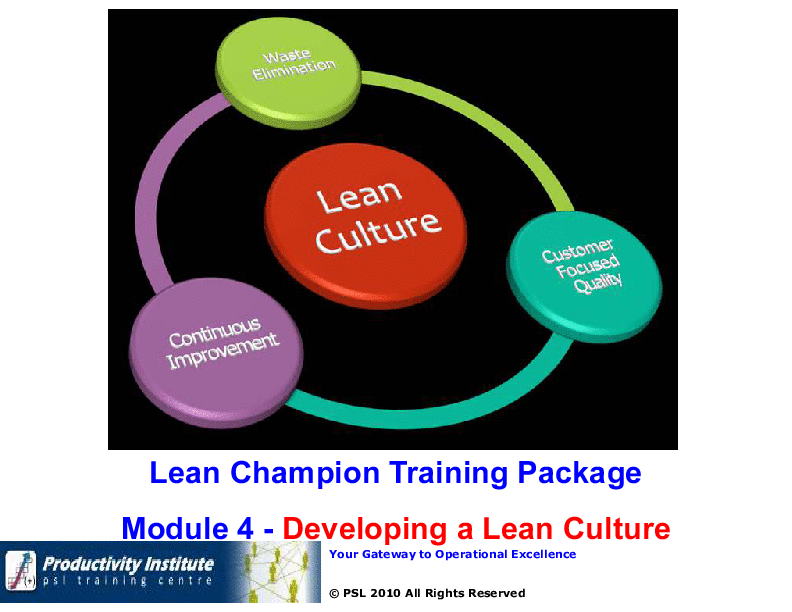
The 4th Module "Developing a Lean Culture" covers the following topics:
• What is culture?
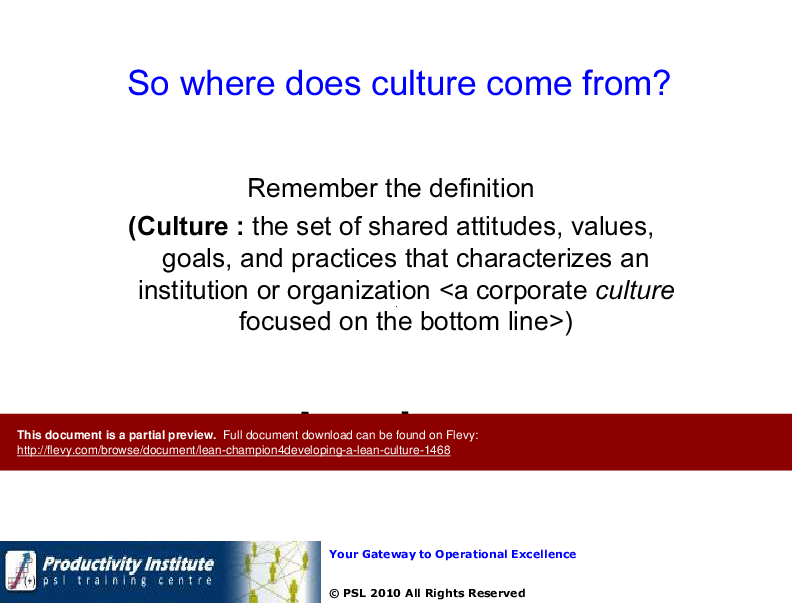
• Definitions of culture
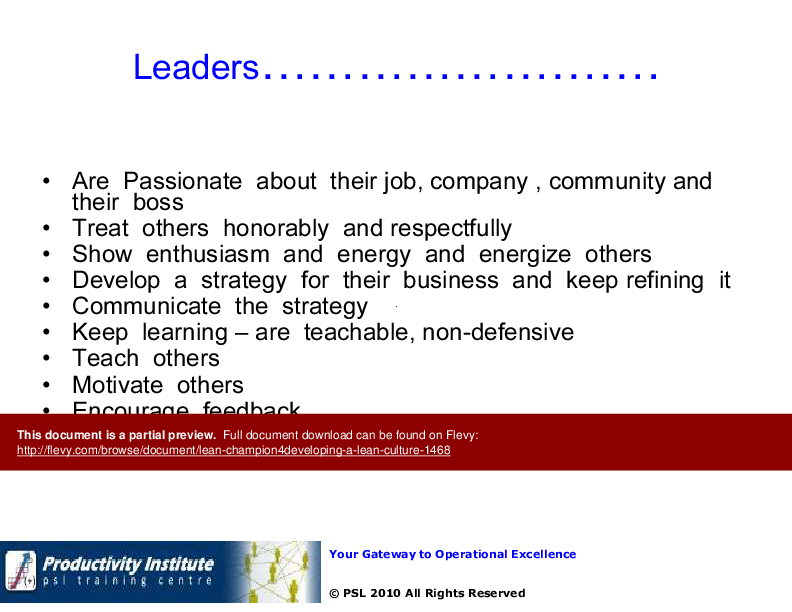
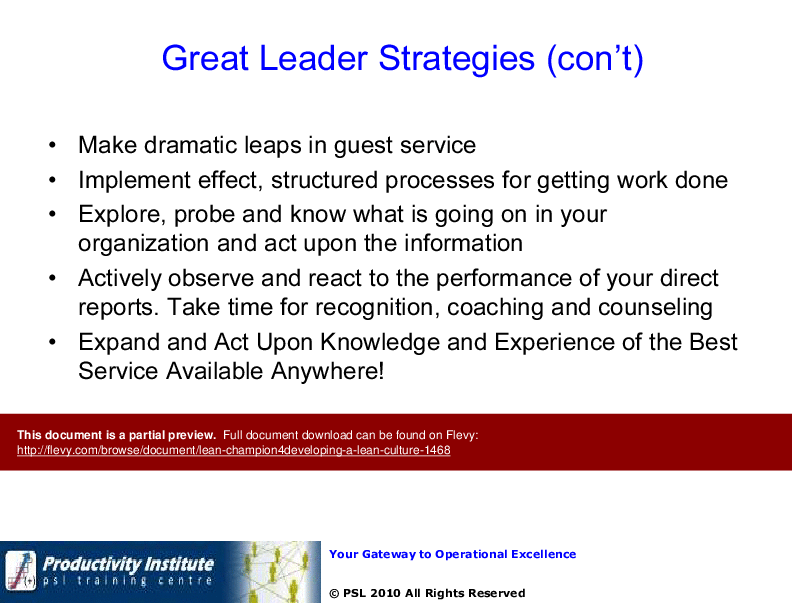
• Leadership & Leaders and Strategies
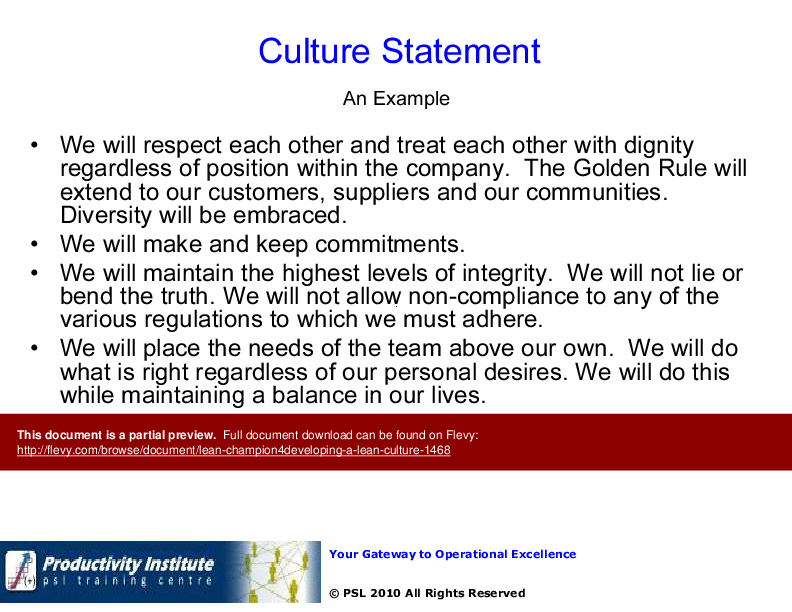
• Culture statement
• Employee Engagement
• Organisational alignment
You can also buy all the 15 modules at a 25% discounted as a bundled product.
Also add other presentations depending on your requirements, such as Kanban Implementation, Heijunka Implementation, Site Review Check List, Lean Assessment, Lean Leader and Lean Culture Surveys and BSC Assessment.
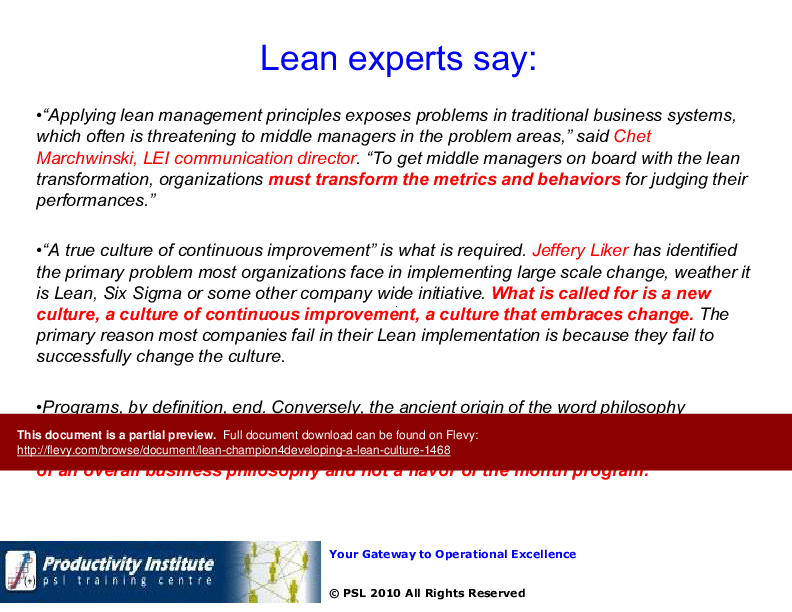
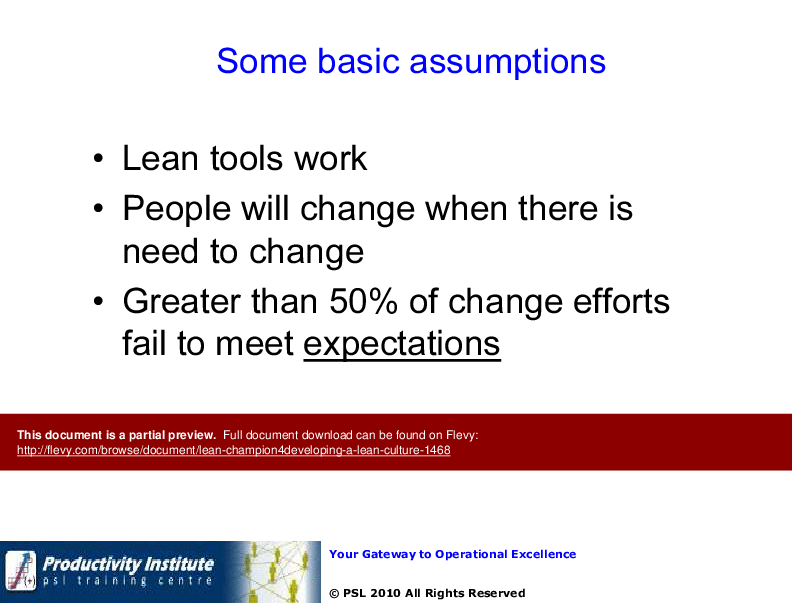
This module delves deeply into the essence of organizational culture, emphasizing the importance of leadership in shaping and sustaining it. It highlights that over 50% of change efforts fail due to lack of engagement and alignment. Leaders are urged to be passionate, respectful, and continuously learning. The module also underscores the critical role of employee engagement in driving financial performance and customer satisfaction. It provides actionable strategies for leaders to implement structured processes, actively observe performance, and foster a culture of continuous improvement. This is not just about tools; it's about transforming mindsets and behaviors.
Got a question about the product? Email us at support@flevy.com or ask the author directly by using the "Ask the Author a Question" form. If you cannot view the preview above this document description, go here to view the large preview instead.
Executive Summary
The "Lean Champion Training Package: Module 4 - Developing a Lean Culture" presentation is designed to equip leaders and organizations with the tools and insights necessary to foster a culture of continuous improvement. Developed by a Lean expert with extensive experience, this module addresses the critical role of organizational culture in successful Lean implementation. It provides actionable strategies for engaging employees, enhancing leadership effectiveness, and aligning organizational values with Lean principles. By integrating these concepts, organizations can significantly reduce failure rates associated with Lean initiatives and drive sustainable operational excellence.
Who This Is For and When to Use
• Corporate executives seeking to implement Lean methodologies within their organizations
• Change management leaders focused on cultural transformation
• HR professionals responsible for employee engagement and development
• Lean practitioners and consultants aiming to deepen their understanding of cultural dynamics
Best-fit moments to use this deck:
• During Lean transformation initiatives to align leadership and employee engagement
• In training sessions focused on developing a culture of continuous improvement
• When assessing organizational readiness for Lean implementation
Learning Objectives
• Define the critical components of a Lean culture and its impact on organizational success
• Build strategies for engaging employees in Lean initiatives
• Establish effective leadership practices that promote a culture of continuous improvement
• Identify and address barriers to cultural change within the organization
• Develop a culture statement that reflects organizational values and commitment to Lean principles
• Create a framework for ongoing employee engagement and alignment with business goals
Table of Contents
• Introduction to Lean Culture (page 3)
• Importance of Organizational Culture (page 5)
• Leadership's Role in Culture Change (page 10)
• Employee Engagement Strategies (page 15)
• Developing a Culture Statement (page 20)
• Aligning Organizational Values with Lean Principles (page 25)
• Conclusion and Next Steps (page 30)
Primary Topics Covered
• Lean Culture Definition - A Lean culture is characterized by shared attitudes, values, and practices that prioritize continuous improvement and employee engagement.
• Impact of Organizational Culture - Culture significantly influences the success of Lean initiatives, often determining whether organizations can effectively implement change.
• Leadership Engagement - Effective leaders foster a culture of trust, accountability, and open communication, essential for driving Lean transformation.
• Employee Engagement - Engaged employees are more likely to contribute to Lean initiatives, enhancing productivity and organizational performance.
• Culture Statement Development - Crafting a culture statement helps articulate the values and behaviors expected within the organization, reinforcing commitment to Lean principles.
• Alignment with Lean Principles - Ensuring that organizational values align with Lean methodologies is crucial for sustaining improvement efforts.
Deliverables, Templates, and Tools
• Culture statement template to define organizational values and commitments
• Employee engagement survey to assess current levels of engagement and areas for improvement
• Leadership development framework focusing on skills necessary for fostering a Lean culture
• Communication plan template for disseminating Lean principles and culture initiatives
• Training materials for workshops on Lean culture and employee engagement strategies
• Assessment tools for measuring organizational alignment with Lean values
Slide Highlights
• Overview of Lean culture and its significance in operational excellence
• Statistics illustrating the high failure rates of Lean implementations due to cultural misalignment
• Key leadership traits necessary for driving cultural change
• Examples of effective culture statements from successful organizations
• Framework for aligning organizational values with Lean principles
Potential Workshop Agenda
Understanding Lean Culture (90 minutes)
• Discuss the definition and importance of Lean culture
• Explore case studies of successful Lean transformations
Leadership and Engagement Strategies (60 minutes)
• Identify key leadership behaviors that promote a Lean culture
• Develop action plans for enhancing employee engagement
Creating a Culture Statement (90 minutes)
• Collaboratively draft a culture statement that reflects organizational values
• Present and refine culture statements in small groups
Customization Guidance
• Tailor the culture statement template to reflect specific organizational values and mission
• Adjust engagement strategies based on employee feedback and organizational needs
• Incorporate industry-specific examples to enhance relevance and applicability
Secondary Topics Covered
• The role of communication in fostering a Lean culture
• Strategies for overcoming resistance to cultural change
• The importance of continuous learning and development in Lean environments
• Best practices for measuring and sustaining employee engagementDocument FAQ
What is the significance of organizational culture in Lean implementation?
Organizational culture plays a critical role in determining the success of Lean initiatives. A culture that embraces continuous improvement and employee engagement is essential for overcoming resistance and achieving sustainable results.
How can leaders effectively drive culture change?
Leaders can drive culture change by modeling desired behaviors, fostering open communication, and actively engaging employees in the change process.
What are the key components of a culture statement?
A culture statement should articulate the organization's values, commitments to employees and customers, and the behaviors expected from all members of the organization.
How does employee engagement impact Lean success?
Engaged employees are more likely to contribute positively to Lean initiatives, leading to improved productivity, innovation, and overall organizational performance.
What strategies can be used to enhance employee engagement?
Strategies include providing meaningful work, opportunities for personal development, and fostering a supportive work environment that encourages feedback and collaboration.
How long does it take to change organizational culture?
Changing organizational culture is a long-term process that can take years and requires consistent effort, communication, and leadership commitment.
What are some common barriers to cultural change?
Barriers include resistance from management, lack of clear communication, and insufficient training or resources to support the change process.
How can organizations measure the effectiveness of their culture change initiatives?
Organizations can use employee surveys, performance metrics, and feedback mechanisms to assess the impact of culture change initiatives on engagement and productivity.
Glossary
• Lean Culture - A set of shared attitudes and values that prioritize continuous improvement and employee engagement.
• Employee Engagement - The level of commitment and involvement an employee has towards their organization and its values.
• Culture Statement - A formal declaration of an organization's values, commitments, and expected behaviors.
• Leadership Engagement - The active involvement of leaders in fostering a culture that supports Lean principles.
• Organizational Alignment - The degree to which an organization's values, goals, and practices are consistent with its Lean initiatives.
• Continuous Improvement - An ongoing effort to improve products, services, or processes through incremental and breakthrough improvements.
• Communication Plan - A strategy for disseminating information about Lean initiatives and cultural change efforts within the organization.
• Training Materials - Resources designed to educate employees about Lean principles and practices.
• Resistance to Change - The reluctance of individuals or groups to adapt to new methods or practices.
• Performance Metrics - Measurements used to assess the effectiveness of Lean initiatives and employee engagement efforts.
• Feedback Mechanisms - Tools or processes for collecting input from employees regarding their experiences and perceptions of organizational culture.
• Cultural Revolution - A significant and transformative change in the values and behaviors of an organization.
Source: Best Practices in Lean Six Sigma Black Belt, Lean Culture PowerPoint Slides: Lean Champion BB 4 - Developing a Lean Culture PowerPoint (PPTX) Presentation Slide Deck, OpEx Academy NZ
This document is available as part of the following discounted bundle(s):
Save %!
Lean Champion Black Belt Training Series - 15 Modules
This bundle contains 15 total documents. See all the documents to the right.
|
Receive our FREE presentation on Operational Excellence
This 50-slide presentation provides a high-level introduction to the 4 Building Blocks of Operational Excellence. Achieving OpEx requires the implementation of a Business Execution System that integrates these 4 building blocks. |