
The Lean Black Belt Champion Series are designed and developed specifically for Manager and above roles. These series are at the highest standard among the enterprise series. When a person completes all the 15 modules he / she can be awarded a "Lean Champion" certificate which is equivalent to a Black Belt and can lead groups of team in successfully developing strategies and implementation of various Lean principles.

The 15 modules are:
1. Intro 2 Lean Manufacturing – 108 slides
2. Map a Value Stream – 112 slides
3. Hoshin Kanri Policy Deployment – 50 slides
4. Develop a Lean Culture – 46 slides
5. Develop a Balanced Scorecard – 70 slides
6. Develop a Continuous Improvement System – 72
7. Optimize Product Cost – 67 slides
8. Manage 5S – 48 slides
9. Develop Quick Changeovers – 71 slides
10. Develop JIT – 47 slides
11. Implement a TPM – 58 slides
12. Determine & Establish Information Collection Requirements – 96 slides
13. Determine and Improve Process Capability – 60 slides
14. Apply Six Sigma to Process Control & Improvement – 79 slides
15. Process Optimization using Six Sigma – 94 slides
The 12th Module "Determine and Establish Information Collection Requirements and Processes" covers the following topics:
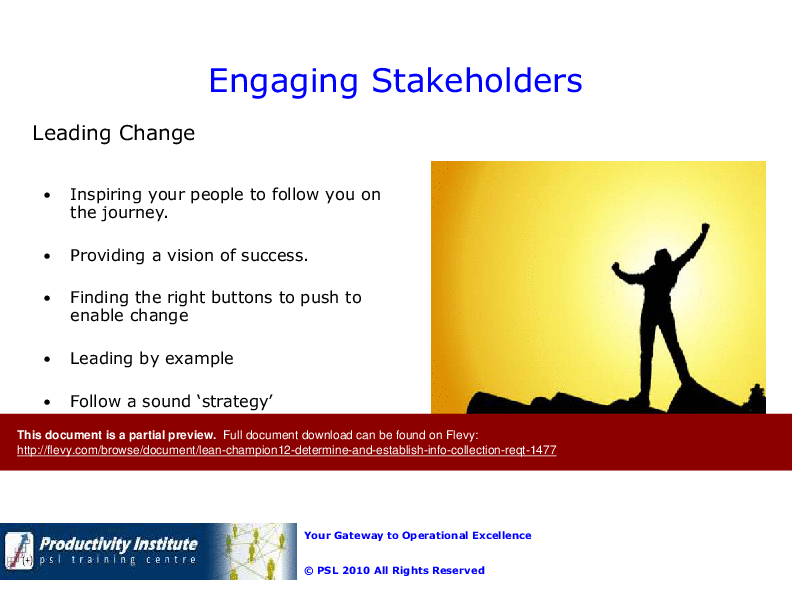
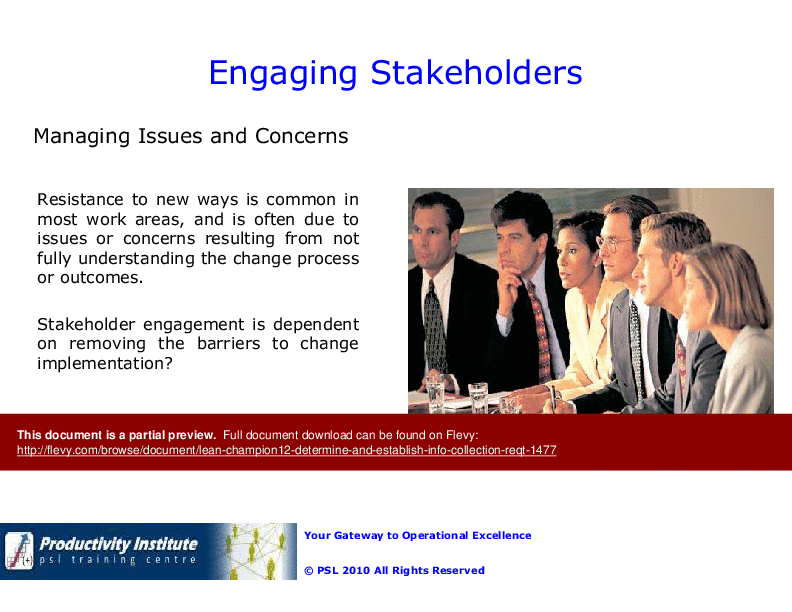
• Engaging Stakeholders
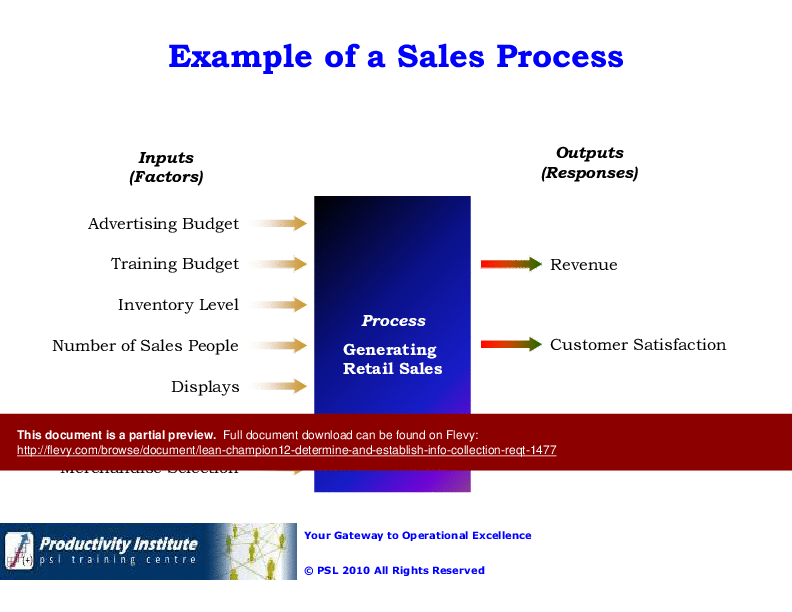
• Identifying variables
• Change management
• Measuring Improvements
• Key Performance Indicators
• Initiate workplace project
• Introduction to Measure Phase
• Data collection plan
• Data displaying tools
• Introduction to Analyse Phase
• Group activity: Brainstorming
• Workplace project
• Introduction to Improve Phase
• Simulation 3: X Pult Improvement Plan
• Improvement action plan
• Selecting solutions
• Workplace project / Homework
• Introduction to Control Phase
• Process Control Plan
• Sustaining the gains
• Project Closeout Checkpoints
• Workplace project
You can also buy all the 15 modules at a 25% discounted as a bundled product.
Also add other presentations depending on your requirements, such as Kanban Implementation, Heijunka Implementation, Site Review Check List, Lean Assessment, Lean Leader and Lean Culture Surveys and BSC Assessment.
Got a question about the product? Email us at support@flevy.com or ask the author directly by using the "Ask the Author a Question" form. If you cannot view the preview above this document description, go here to view the large preview instead.
Executive Summary
The Lean Champion Training Package, Module 12, focuses on determining and establishing information collection requirements and processes essential for Lean Six Sigma initiatives. Developed by a certified LSS Master Black Belt with extensive global training experience, this module equips participants with the tools and methodologies necessary to engage stakeholders, identify variables, and implement effective change management strategies. By utilizing key performance indicators (KPIs) and structured measurement techniques, participants will learn to monitor improvements and drive operational excellence.
Who This Is For and When to Use
• Lean Six Sigma practitioners seeking to enhance their information collection processes
• Project managers and team leaders responsible for implementing change initiatives
• Quality assurance professionals focused on measuring and improving business performance
• Stakeholders involved in change management and process improvement projects
Best-fit moments to use this deck:
• During the initiation phase of a Lean Six Sigma project to establish measurement frameworks
• When engaging stakeholders to create buy-in for change initiatives
• In training sessions aimed at building skills in data collection and analysis
Learning Objectives
• Define the critical information requirements for effective process improvement
• Establish KPIs that align with business goals and objectives
• Engage stakeholders effectively to facilitate change management
• Develop a structured data collection plan to support Lean Six Sigma initiatives
• Analyze performance data to identify trends and areas for improvement
• Implement a change management model to sustain operational gains
Table of Contents
• Introduction to Information Collection Requirements (page 3)
• Engaging Stakeholders (page 5)
• Change Management Model (page 10)
• Measuring Business Performance (page 12)
• Key Performance Indicators (page 15)
• Data Collection Plan (page 20)
• Analyzing and Defining Variables (page 25)
• Improvement Strategies (page 30)
• Control Phase and Sustaining Gains (page 35)
Primary Topics Covered
• Engaging Stakeholders - Techniques for identifying and involving key stakeholders in improvement initiatives to ensure project success.
• Change Management Model - A structured approach to managing change, including defining the change, establishing KPIs, and monitoring outcomes.
• Measuring Business Performance - Methods for quantifying performance improvements and establishing benchmarks for success.
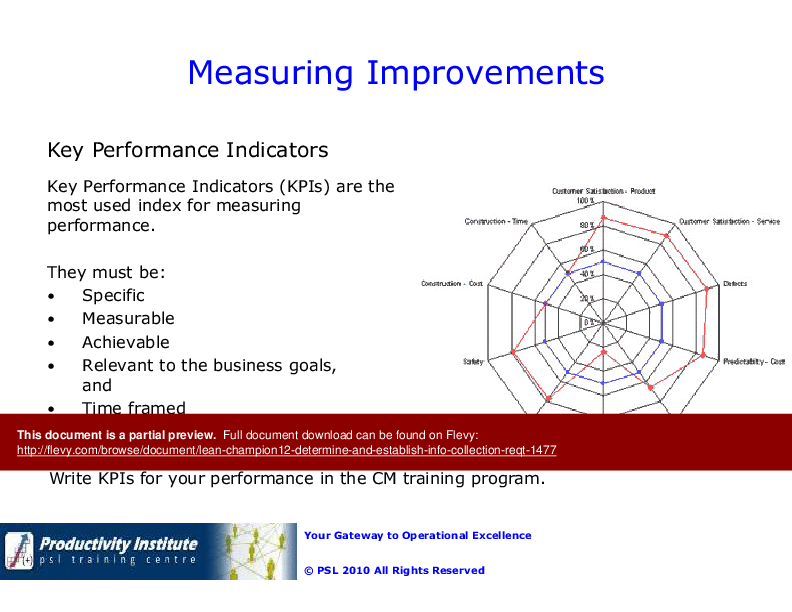
• Key Performance Indicators - Guidelines for developing specific, measurable, achievable, relevant, and time-framed KPIs to track progress.
• Data Collection Plan - Framework for creating a comprehensive data collection strategy to support Lean Six Sigma projects.
• Analyzing Variables - Techniques for assessing factors that influence performance and identifying root causes of issues.
Deliverables, Templates, and Tools
• Project Charter template for defining objectives and scope
• Data Collection Plan template to outline metrics and data sources
• Key Performance Indicator (KPI) development guide
• Cause and Effect Diagram for root cause analysis
• 5 Why Analysis template for identifying underlying issues
• Process Control Plan template for sustaining improvements
Slide Highlights
• Engaging Stakeholders: Visual representation of stakeholder mapping and engagement strategies
• Change Management Model: Flowchart outlining the steps for effective change implementation
• Measuring Improvements: Graphs illustrating the importance of KPIs in tracking performance
• Data Collection Plan: Example of a structured approach to data gathering and analysis
• Improvement Strategies: Case studies showcasing successful Lean Six Sigma implementations
Potential Workshop Agenda
Introduction to Information Collection (60 minutes)
• Overview of information requirements and processes
• Discussion on stakeholder engagement strategies
• Group activity: Identifying key stakeholders
Change Management and Measurement (90 minutes)
• Presentation on the change management model
• Workshop: Developing KPIs for specific projects
• Case study analysis of successful measurement strategies
Data Collection and Analysis (60 minutes)
• Introduction to data collection plans
• Group activity: Creating a data collection plan
• Discussion on analyzing performance data
Customization Guidance
• Tailor the data collection plan to fit specific organizational metrics and goals
• Adjust KPI examples to align with industry-specific performance indicators
• Modify stakeholder engagement strategies to reflect organizational culture and dynamics
Secondary Topics Covered
• Resistance to Change Management
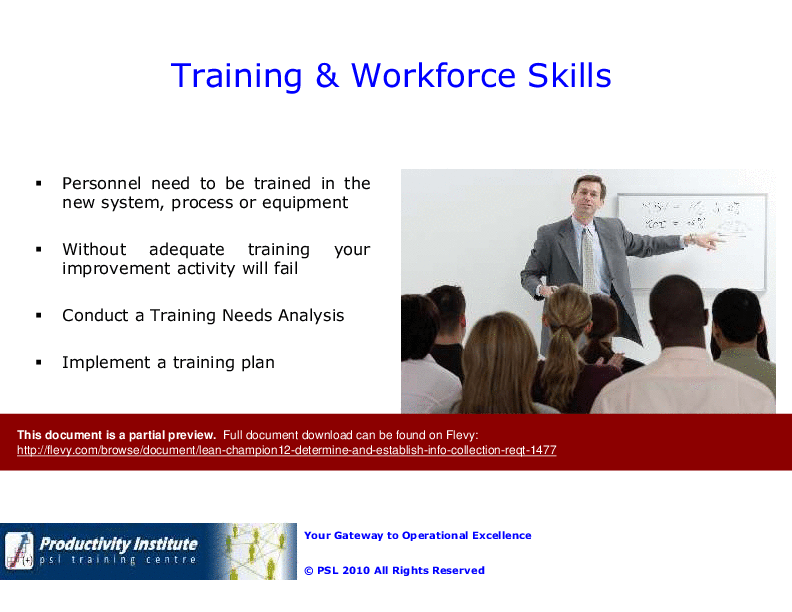
• Training Needs Analysis for personnel involved in process improvements
• Visual Management Techniques for performance tracking
• Statistical Process Control (SPC) fundamentals
FAQ
What is the purpose of establishing KPIs?
KPIs help organizations measure progress toward specific goals, identify trends, and ensure accountability in performance improvement initiatives.
How can I engage stakeholders effectively?
Engaging stakeholders involves identifying their interests, addressing concerns, and communicating the benefits of the change initiative clearly and consistently.
What is a Data Collection Plan?
A Data Collection Plan outlines the metrics to be measured, the data sources, the individuals responsible for data collection, and the methods for gathering and analyzing data.
Why is measuring business performance important?
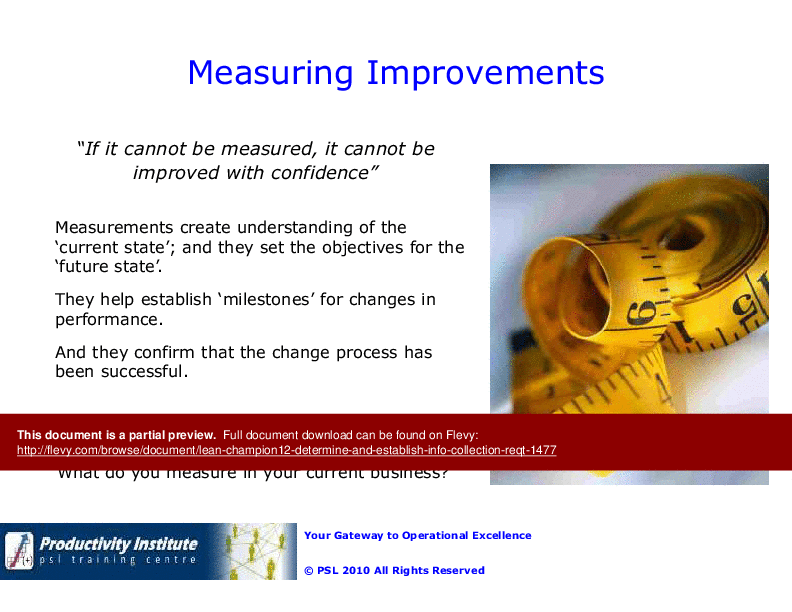
Measuring performance allows organizations to understand their current state, set improvement objectives, and confirm the success of implemented changes.
What tools can I use for root cause analysis?
Common tools for root cause analysis include Cause and Effect Diagrams, 5 Why Analysis, and Pareto Charts to identify and prioritize issues.
How do I sustain improvements after a Lean Six Sigma project?
Sustaining improvements requires implementing a Process Control Plan, regular monitoring of KPIs, and ongoing training for personnel involved in the processes.
What is the role of feedback in performance improvement?
Feedback is essential for driving performance adjustments and ensuring that teams are aware of their progress toward goals.
How can I ensure that my KPIs are effective?
Effective KPIs should be specific, measurable, achievable, relevant, and time-framed, ensuring they align with overall business objectives.
Glossary
• KPI - Key Performance Indicator; a measurable value that demonstrates how effectively an organization is achieving key business objectives.
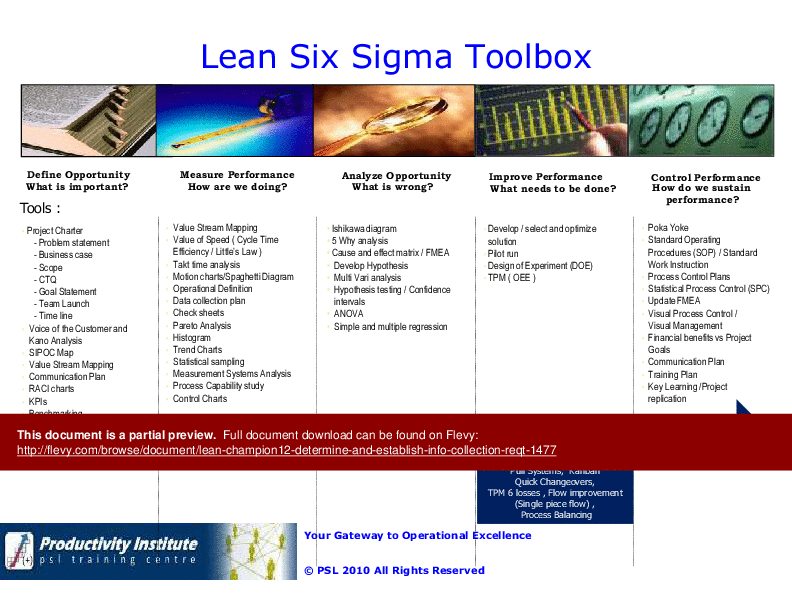
• DMAIC - Define, Measure, Analyze, Improve, Control; a data-driven improvement cycle used for optimizing and stabilizing business processes.
• Stakeholder - An individual or group that has an interest in the outcome of a project or initiative.
• Data Collection Plan - A structured approach to gathering data to support performance measurement and improvement initiatives.
• Root Cause Analysis - A method of problem-solving used to identify the underlying causes of issues or defects.
• Change Management - The process of managing the transition or transformation of an organization's goals, processes, or technologies.
• Process Control Plan - A document that outlines the methods and procedures for maintaining process improvements over time.
• Continuous Improvement - Ongoing efforts to improve products, services, or processes through incremental and breakthrough improvements.
• Lean Six Sigma - A methodology that combines Lean manufacturing principles and Six Sigma techniques to improve performance by eliminating waste and reducing variation.
• Training Needs Analysis - A systematic approach to identifying the training requirements of employees to improve performance.
• Visual Management - Techniques used to make performance metrics and processes visible to all stakeholders for better understanding and engagement.
• Statistical Process Control (SPC) - A method of quality control that uses statistical methods to monitor and control a process.
Source: Best Practices in Requirements Gathering, Lean Six Sigma Black Belt PowerPoint Slides: Lean Champion 12 - Determine and Establish Information Collection Requirements and Processes PowerPoint (PPTX) Presentation Slide Deck, OpEx Academy NZ
This document is available as part of the following discounted bundle(s):
Save %!
Lean Champion Black Belt Training Series - 15 Modules
This bundle contains 15 total documents. See all the documents to the right.
|
Download our FREE Digital Transformation Templates
Download our free compilation of 50+ Digital Transformation slides and templates. DX concepts covered include Digital Leadership, Digital Maturity, Digital Value Chain, Customer Experience, Customer Journey, RPA, etc. |