
The Lean Champion Black Belt Series are designed and developed specifically for Manager and above roles. These series are at the highest standard among the enterprise series. When a person completes all the 15 modules he / she can be awarded a "Lean Champion" certificate which is equivalent to a Black Belt and can lead groups of team in successfully developing strategies and implementation of various Lean principles.

The 15 modules are:
1. Intro 2 Lean Manufacturing – 108 slides
2. Map a Value Stream – 112 slides
3. Hoshin Kanri Policy Deployment – 50 slides
4. Develop a Lean Culture – 46 slides
5. Develop a Balanced Scorecard – 70 slides
6. Develop a Continuous Improvement System – 72
7. Optimize Product Cost – 67 slides
8. Manage 5S – 48 slides
9. Develop Quick Changeovers – 71 slides
10. Develop JIT – 47 slides
11. Implement a TPM – 58 slides
12. Determine & Establish Information Collection Requirements – 96 slides
13. Determine and Improve Process Capability – 60 slides
14. Apply Six Sigma to Process Control & Improvement – 79 slides
15. Process Optimization using Six Sigma – 94 slides
The 7th Module "Optimize Product Costs" covers the following topics:
• Defining Customer Needs
• Analyse cost components
• Analyse waste components
• Identification of activities for improvement
• Methods associated with maximizing customer benefits and minimizing cost
• Workplace project
• Defining Customer Needs
• Analyse cost components
• Analyse waste components
• Identification of activities for improvement
• Methods associated with maximizing customer benefits and minimizing cost
• Workplace project
You can also buy all the 15 modules at a 25% discounted as a bundled product.
Also add other presentations depending on your requirements, such as Kanban Implementation, Heijunka Implementation, Site Review Check List, Lean Assessment, Lean Leader and Lean Culture Surveys and BSC Assessment.
Got a question about the product? Email us at support@flevy.com or ask the author directly by using the "Ask the Author a Question" form. If you cannot view the preview above this document description, go here to view the large preview instead.
Executive Summary
The "Lean Champion Black Belt 7 - Optimize Product Costs" presentation is a comprehensive training module designed to empower organizations in reducing product costs while enhancing customer value. Developed by a Lean Six Sigma Master Black Belt with extensive experience, this module equips participants with the tools and methodologies to analyze cost components, identify waste, and implement effective cost optimization strategies. By focusing on customer needs and operational efficiency, this presentation enables teams to drive significant improvements in product cost management.
Who This Is For and When to Use
• Lean practitioners and champions looking to enhance their cost management skills
• Operations managers seeking to improve product quality and reduce costs
• Financial analysts focused on cost analysis and optimization
• Project teams aiming to implement Lean methodologies in their processes
Best-fit moments to use this deck:
• During Lean training sessions for new team members
• In workshops aimed at cost reduction initiatives
• When developing strategies for product lifecycle management
• For project kick-offs focused on waste reduction and efficiency improvement
Learning Objectives
• Define customer needs and their impact on product costs
• Analyze cost components and identify areas for waste reduction
• Establish methods for maximizing customer benefits while minimizing costs
• Implement workplace projects to drive cost optimization
• Evaluate the effectiveness of cost reduction strategies through metrics
• Develop a comprehensive understanding of Lean principles related to cost management
Table of Contents
• Defining Customer Needs (page 3)
• Analyzing Cost Components (page 5)
• Identifying Waste Components (page 8)
• Methods for Maximizing Customer Benefits (page 12)
• Workplace Project Overview (page 15)
• Production Performance Analysis (page 18)
• Implementing Pull Systems (page 22)
• Measuring Results and Continuous Improvement (page 25)
Primary Topics Covered
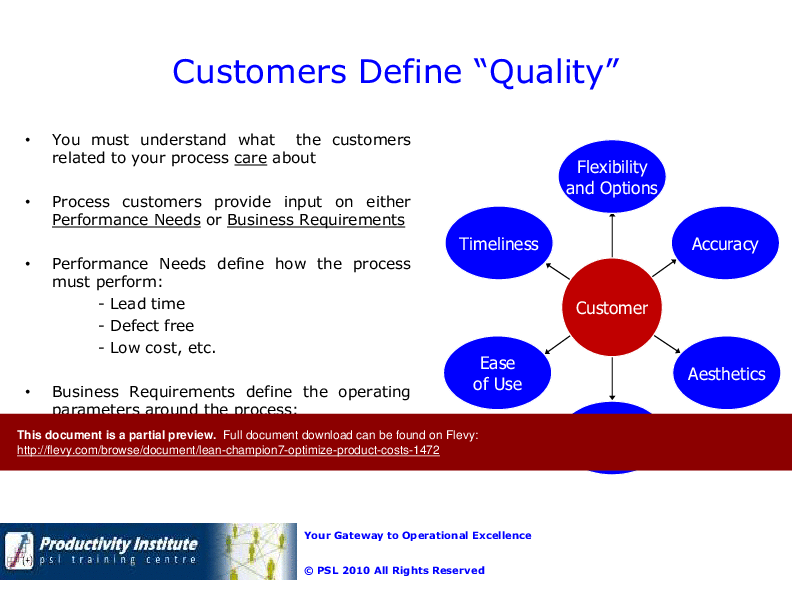
• Customer Needs Definition - Understanding what customers value in terms of quality, cost, and service delivery to align product offerings accordingly.
• Cost Component Analysis - Identifying and categorizing all cost elements associated with product manufacturing, including materials, labor, and overheads.
• Waste Identification - Recognizing non-value-adding activities that inflate costs and hinder efficiency in production processes.
• Cost Optimization Methods - Exploring strategies to reduce costs while maintaining or enhancing customer satisfaction and product quality.
• Pull System Implementation - Transitioning from push to pull systems to align production with actual customer demand, thereby reducing waste and inventory costs.
• Performance Metrics - Establishing key performance indicators (KPIs) to measure the effectiveness of cost reduction initiatives and overall process efficiency.
Deliverables, Templates, and Tools
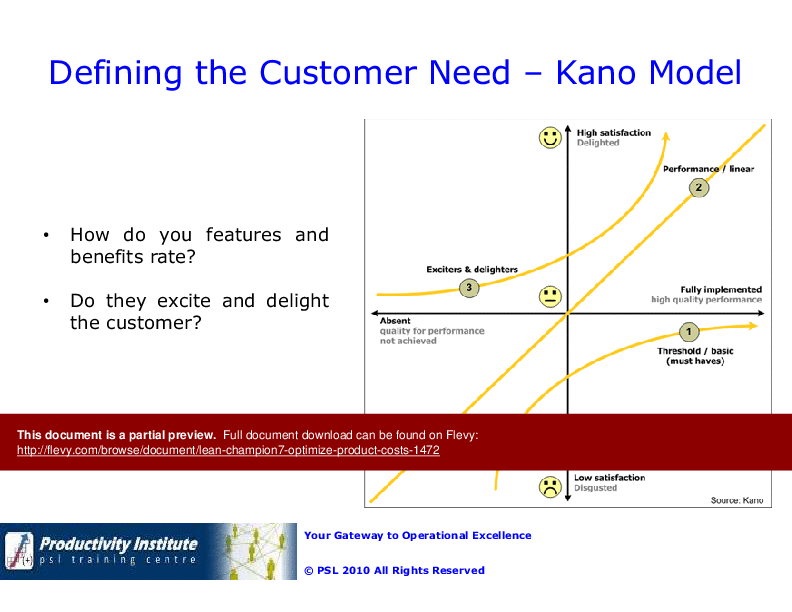
• Kano Analysis Template for assessing customer satisfaction
• Cost Identification Form to categorize and analyze cost components
• Cost Benefit Template for evaluating potential cost reduction initiatives
• Implementation Checklist for ensuring all steps in the optimization process are followed
• Project Evidence Documentation to track progress and outcomes of cost reduction projects
Slide Highlights
• Overview of customer needs and their influence on product costs
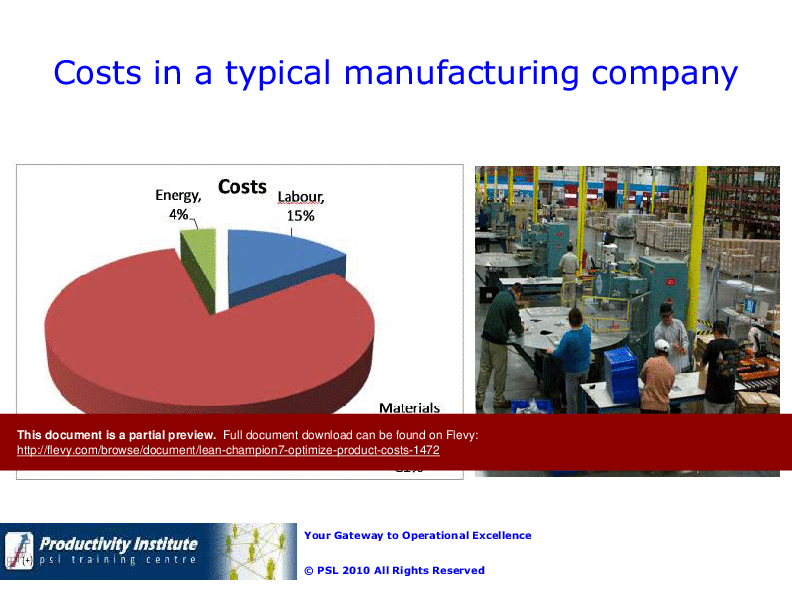
• Visual representation of cost components in a typical manufacturing setup
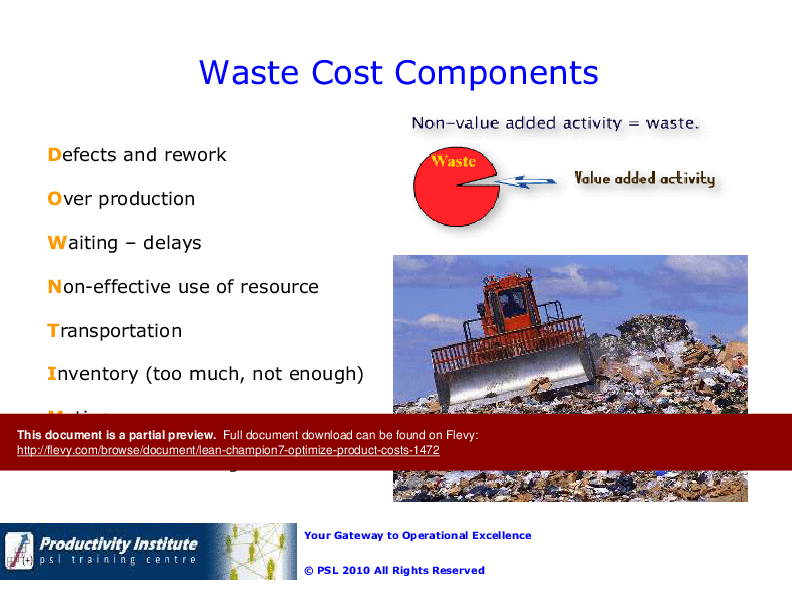
• Identification of waste cost components and their impact on overall efficiency
• Comparison of push vs pull systems in production environments
• Strategies for justifying cost-related changes to stakeholders
Potential Workshop Agenda
Understanding Customer Needs (60 minutes)
• Discuss customer expectations and quality definitions
• Analyze customer feedback to identify areas for improvement
Cost Component Analysis (90 minutes)
• Break down costs associated with product manufacturing
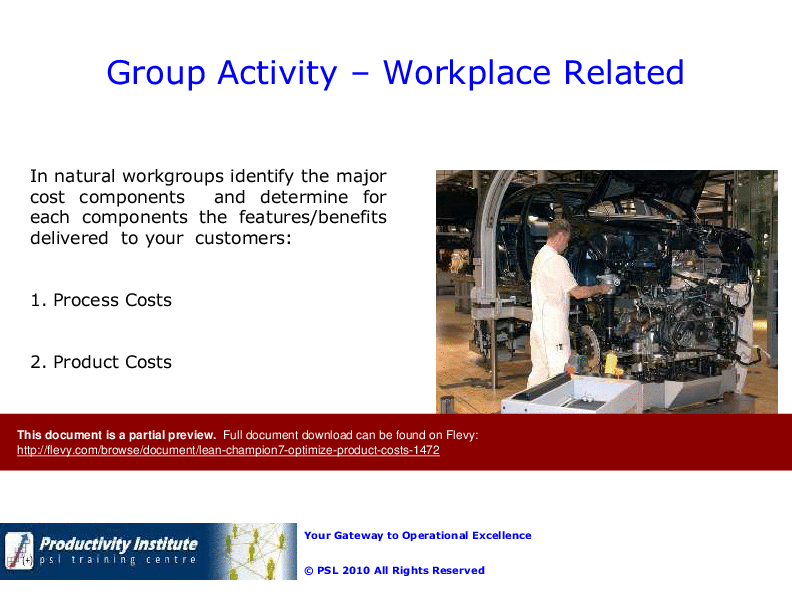
• Group activity to categorize costs into process, product, and overheads
Waste Identification and Reduction (60 minutes)
• Identify waste components in current processes
• Develop strategies for waste reduction and cost optimization
Implementation Planning (90 minutes)
• Create actionable plans for implementing cost reduction initiatives
• Establish metrics for monitoring progress and success
Customization Guidance
• Tailor the cost analysis forms to reflect specific organizational cost structures
• Adjust the project templates to align with company-specific goals and metrics
• Incorporate relevant case studies or examples from the organization to enhance engagement
Secondary Topics Covered
• The role of internal and external customers in defining quality
• The importance of aligning production processes with customer demand
• Strategies for continuous improvement in cost management
• The impact of regulatory compliance on cost optimization efforts
FAQ
What is the primary goal of this training module?
The primary goal is to equip participants with the skills to analyze product costs, identify waste, and implement strategies for cost optimization while enhancing customer value.
Who can benefit from this training?
Lean practitioners, operations managers, financial analysts, and project teams focused on improving efficiency and reducing costs can all benefit from this training.
How does this module address waste reduction?
The module provides frameworks for identifying waste components in production processes and offers methods for reducing these wastes to optimize costs.
What tools are included in this training?
Participants will receive templates for cost analysis, project planning, and performance measurement to facilitate the implementation of cost optimization strategies.
Can this training be customized for specific industries?
Yes, the training materials can be tailored to reflect the unique challenges and requirements of different industries.
What are the expected outcomes after completing this training?
Participants will gain a comprehensive understanding of cost management principles and be able to implement effective strategies to reduce costs while maintaining quality.
How is success measured after implementing cost optimization strategies?
Success can be measured through established KPIs, including reductions in overall costs, improvements in product quality, and increased customer satisfaction.
Is there a follow-up process after the training?
Yes, participants are encouraged to present their project findings and implementations in follow-up sessions to share insights and best practices.
Glossary
• Lean - A methodology focused on minimizing waste and maximizing value in processes.
• Cost Optimization - The process of reducing expenses while maintaining quality and customer satisfaction.
• Waste - Any activity that consumes resources without adding value to the product or service.
• Pull System - A production strategy that aligns manufacturing with customer demand, reducing excess inventory.
• Kano Model - A framework for analyzing customer satisfaction based on product features and benefits.
• Key Performance Indicators (KPIs) - Metrics used to evaluate the success of an organization in achieving its objectives.
• Cycle Time - The total time taken to complete a process from start to finish.
• Lead Time - The time between a customer's order and the delivery of the final product.
• Continuous Improvement - Ongoing efforts to enhance products, services, or processes.
• Cost Components - Various elements that contribute to the total cost of a product, including materials, labor, and overheads.
• Value Stream Mapping - A visual tool used to analyze and improve the flow of materials and information in a process.
• Process Efficiency - The ratio of useful output to total input in a process, indicating how well resources are utilized.
Source: Best Practices in Cost Optimization, Lean Six Sigma Black Belt PowerPoint Slides: Lean Champion Black Belt 7 - Optimize Product Costs PowerPoint (PPTX) Presentation Slide Deck, OpEx Academy NZ
This document is available as part of the following discounted bundle(s):
Save %!
Lean Champion Black Belt Training Series - 15 Modules
This bundle contains 15 total documents. See all the documents to the right.
|
Receive our FREE presentation on Operational Excellence
This 50-slide presentation provides a high-level introduction to the 4 Building Blocks of Operational Excellence. Achieving OpEx requires the implementation of a Business Execution System that integrates these 4 building blocks. |