
A management consulting framework for establishing IT operating model in the organization (ITOM). The framework consist of blueprint documents and tools for the following dimensions; IT processes (including process descriptions), organizational setup of IT (including organizational structure and role descriptions), governance model (including relevant decision bodies) and performance matrix (relevant strategic and operational KPI's)
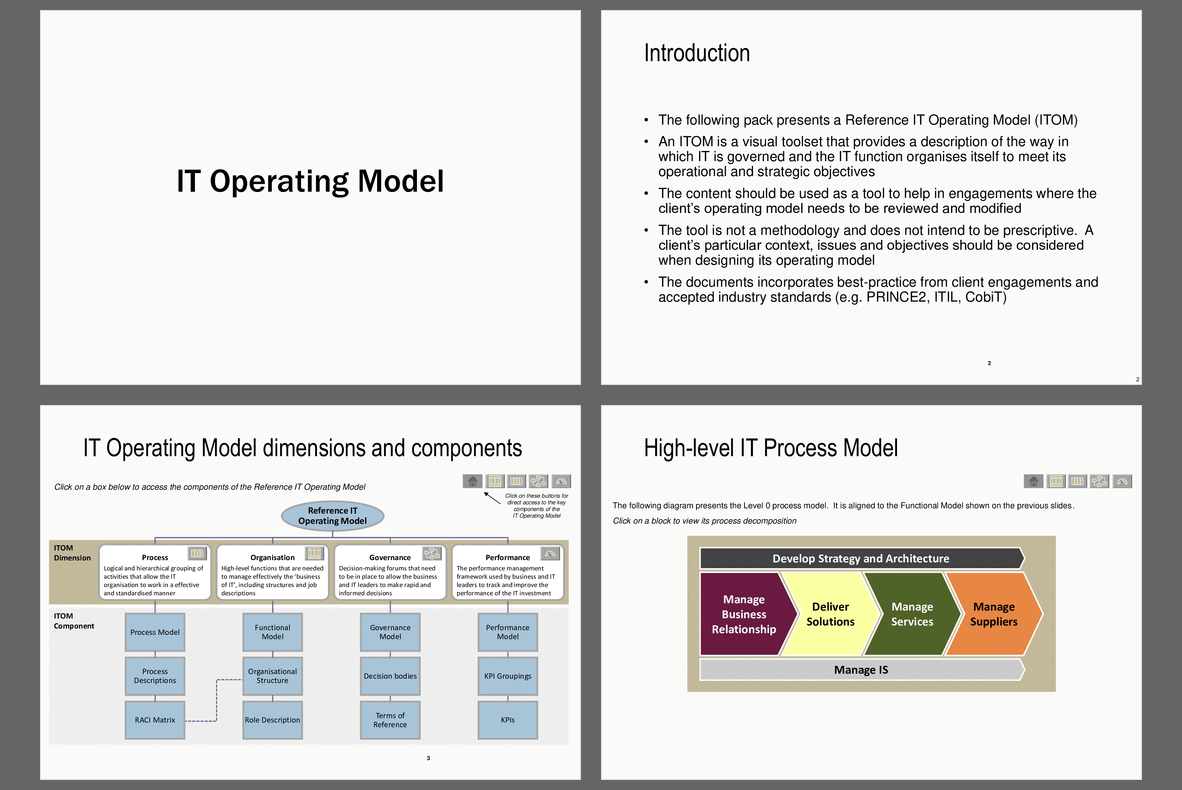
An ITOM is a visual toolset that provides a description of the way in which IT is governed and the IT function organises itself to meet its operational and strategic objectives
The content should be used as a tool to help in engagements where the client's operating model needs to be reviewed and modified
The tool is not a methodology and does not intend to be prescriptive. A client's particular context, issues and objectives should be considered when designing its operating model
The documents incorporates best-practice from client engagements and accepted industry standards (e.g. PRINCE2, ITIL, CobiT)
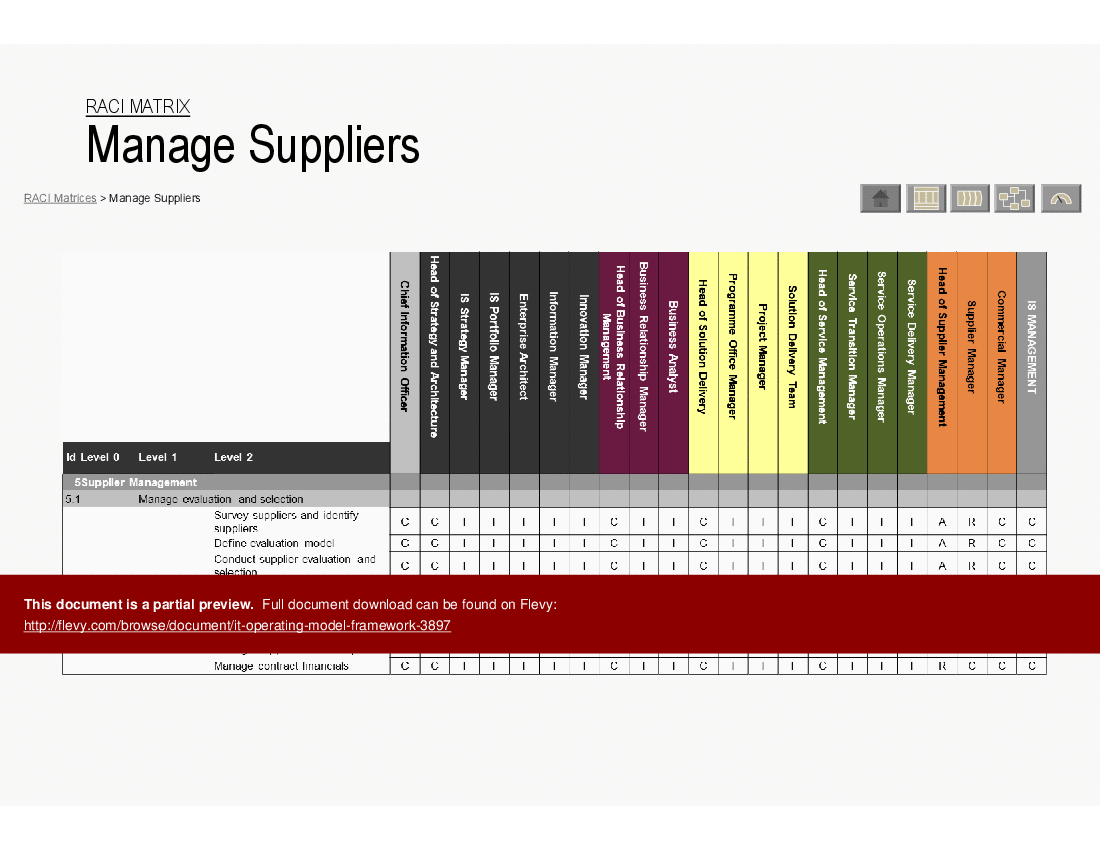
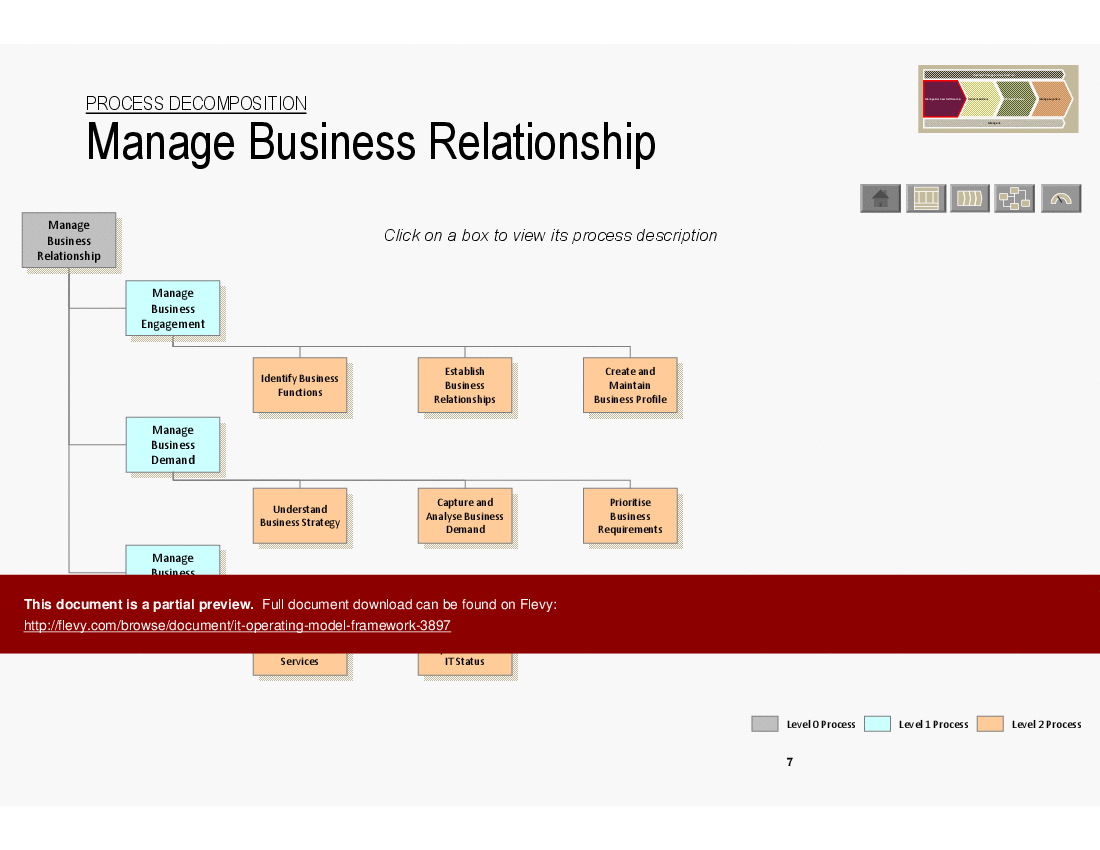
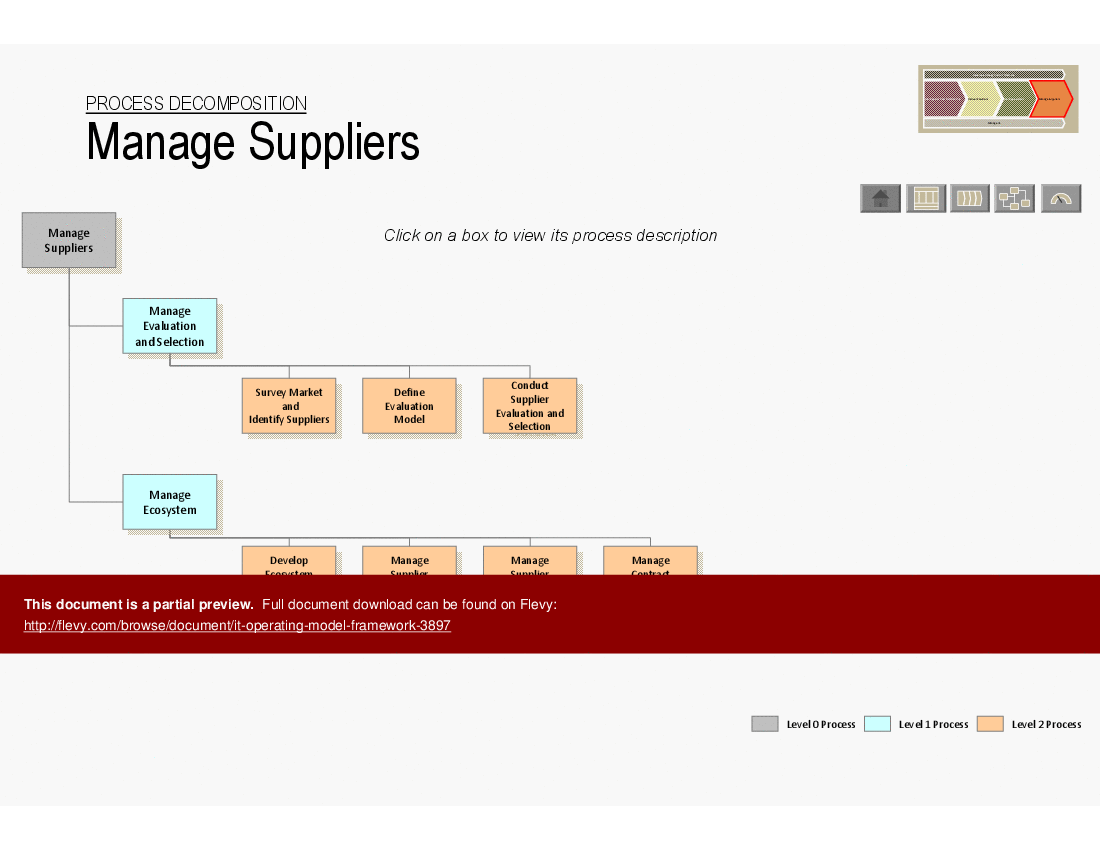
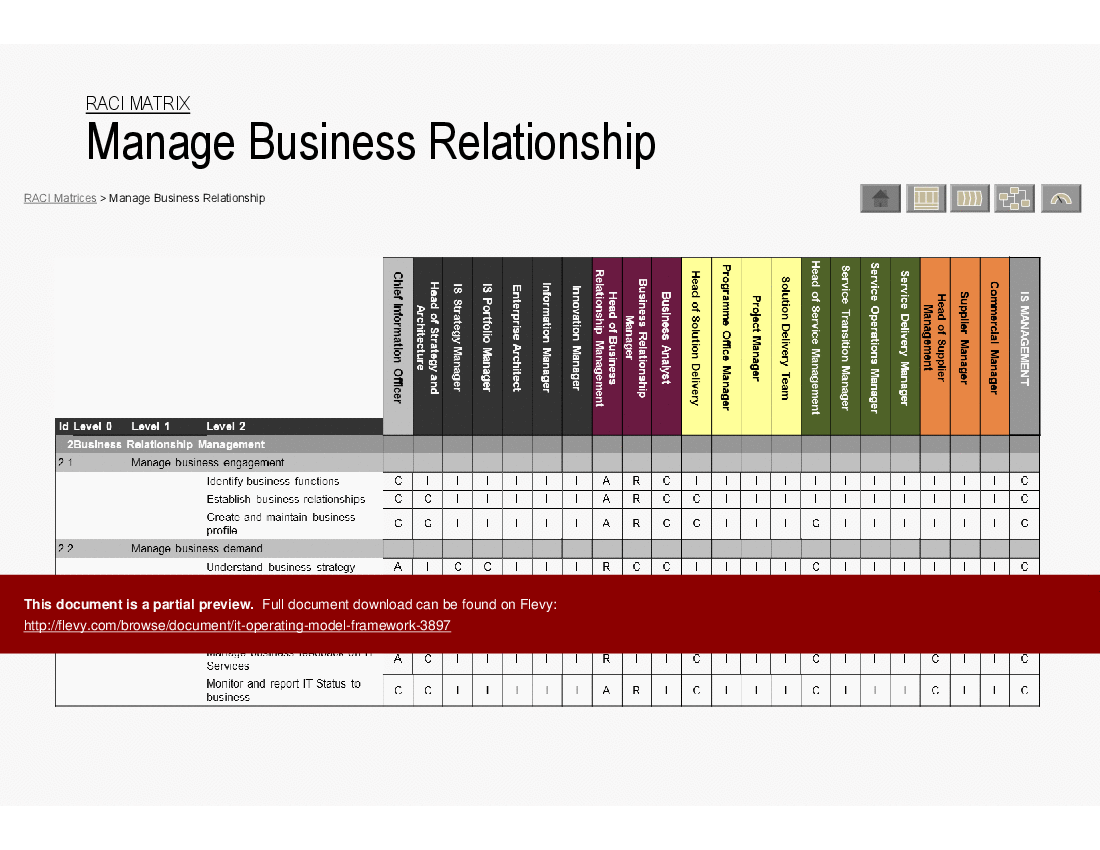
This PPT includes detailed process models for managing business relationships and suppliers, providing a clear visual representation of each process step. It breaks down complex interactions into manageable tasks, ensuring that all stakeholders understand their roles and responsibilities. The RACI matrices further clarify accountability, making it easier to assign and track tasks across different levels of the organization.
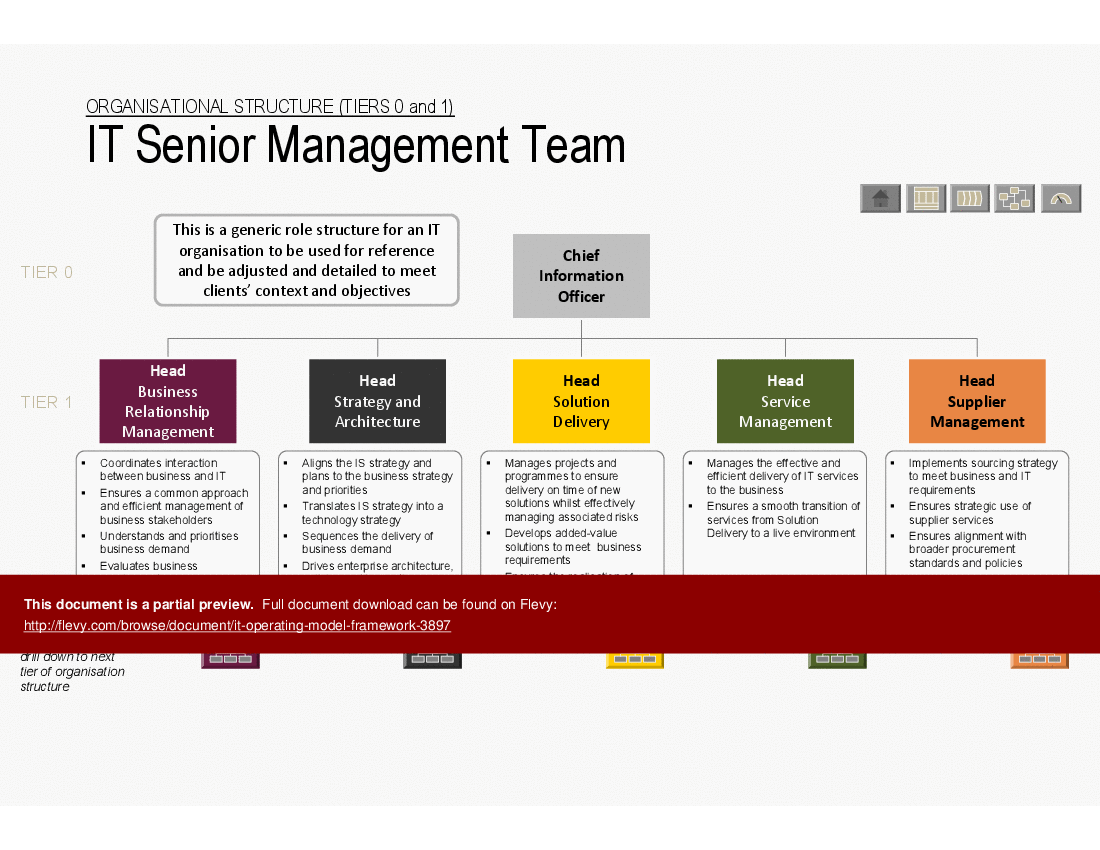
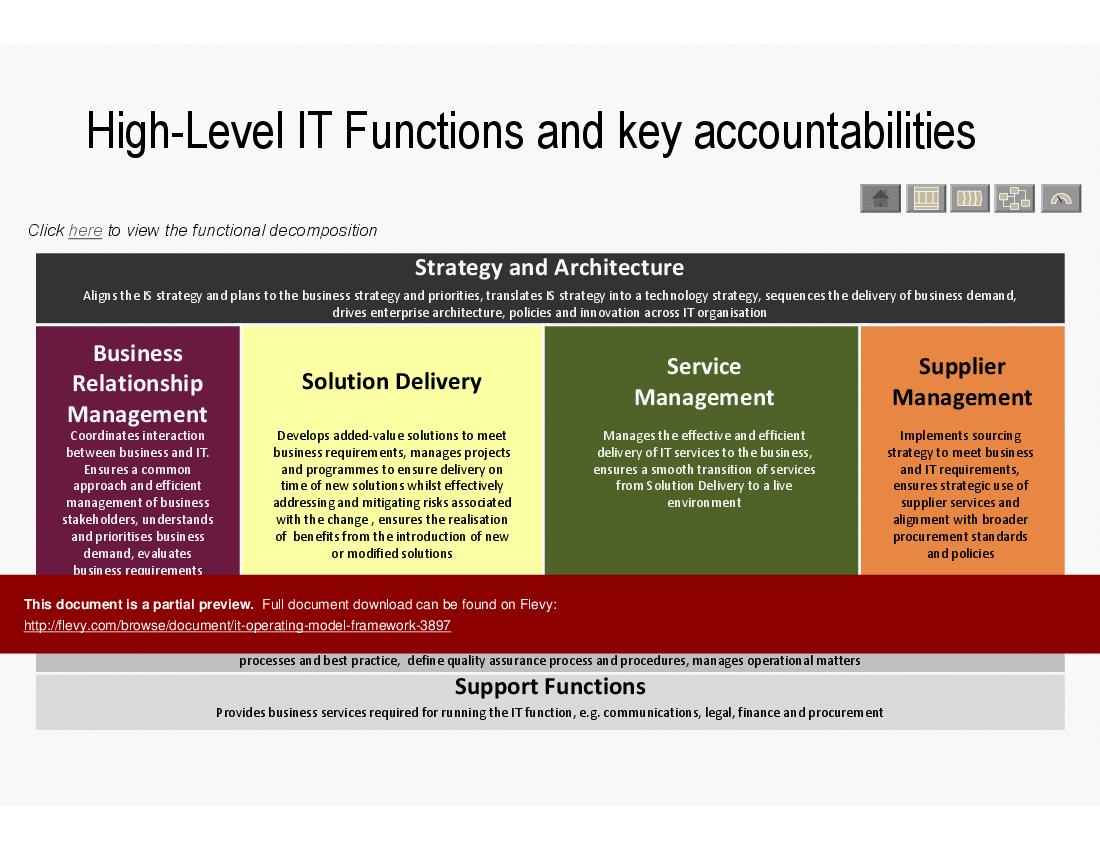
The framework also includes high-level IT functions and key accountabilities, ensuring alignment with business strategy and operational efficiency. The governance section showcases a real-world example of a governance structure, providing practical insights into effective decision-making bodies and processes. This comprehensive approach ensures that your IT operating model is both robust and adaptable to your organization's unique needs.
Got a question about the product? Email us at support@flevy.com or ask the author directly by using the "Ask the Author a Question" form. If you cannot view the preview above this document description, go here to view the large preview instead.
Executive Summary
The IT Operating Model Framework (PPT) serves as a consulting-grade tool designed to optimize IT governance, processes, and performance metrics, ensuring strategic alignment with business objectives. This framework is structured in a manner consistent with McKinsey, Bain, or BCG-quality presentations (consulting-grade; not affiliated). It provides a comprehensive overview of how IT functions can be organized and governed to effectively meet operational needs while aligning with strategic goals. Users will be equipped to assess and modify their IT operating models, leveraging best practices from industry standards such as PRINCE2, ITIL, and CobiT.
Who This Is For and When to Use
• IT executives and senior management responsible for IT strategy and governance
• Business relationship managers coordinating between IT and business units
• Solution delivery teams tasked with project management and service delivery
• Supplier management professionals overseeing vendor relationships and performance
• IT service management teams ensuring operational efficiency and service quality
Best-fit moments to use this deck:
• During IT strategy reviews to align operational models with business objectives
• When assessing current IT governance structures and identifying areas for improvement
• In planning sessions for new IT initiatives or projects requiring stakeholder engagement
• For training sessions aimed at enhancing understanding of IT operating processes
Learning Objectives
• Define the components of an effective IT Operating Model and its relevance to business strategy
• Build a governance framework that supports rapid decision-making and accountability
• Establish a performance management system to track and improve IT investments
• Develop a comprehensive process model that outlines key IT functions and responsibilities
• Create a RACI matrix to clarify roles and responsibilities within IT processes
• Implement best practices in supplier management to enhance vendor performance
Table of Contents
• Introduction to IT Operating Model (page 2)
• IT Operating Model Dimensions and Components (page 3)
• High-Level IT Process Model (page 4)
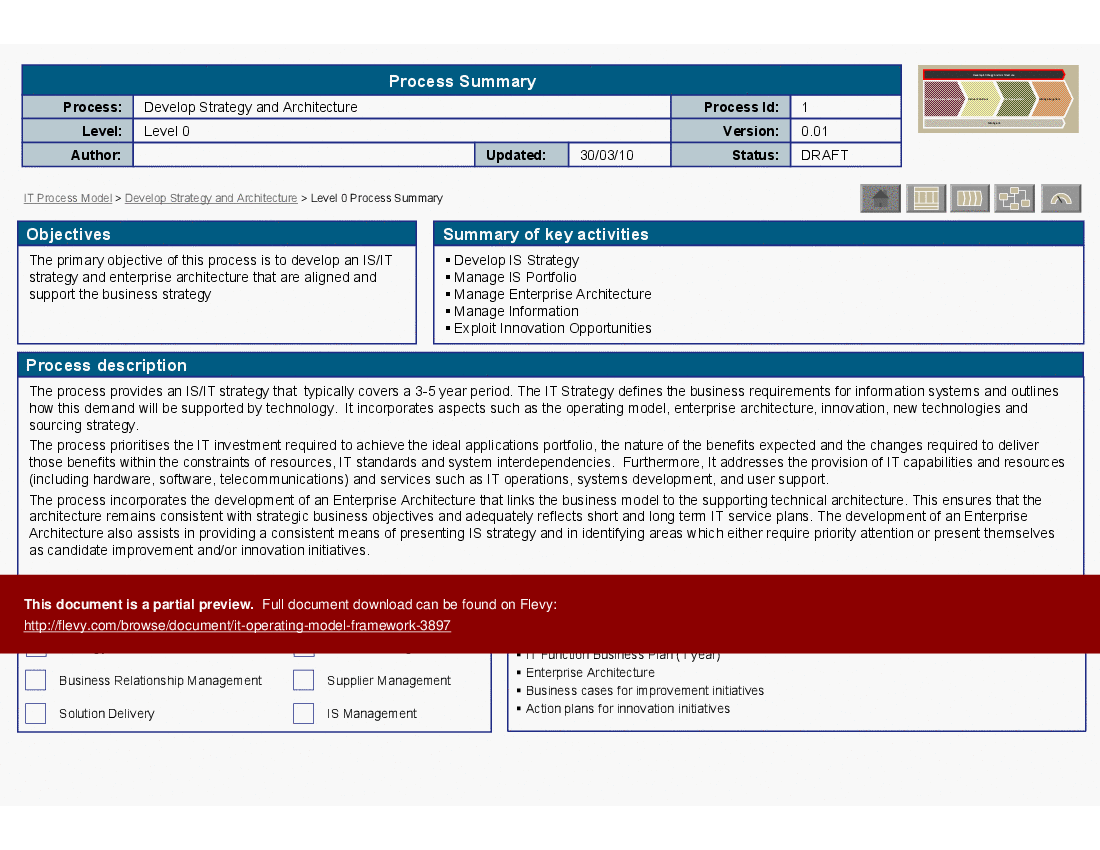
• Process Decomposition: Develop Strategy and Architecture (page 5)
• Process Decomposition: Manage Business Relationship (page 6)
• Process Decomposition: Deliver Solutions (page 7)
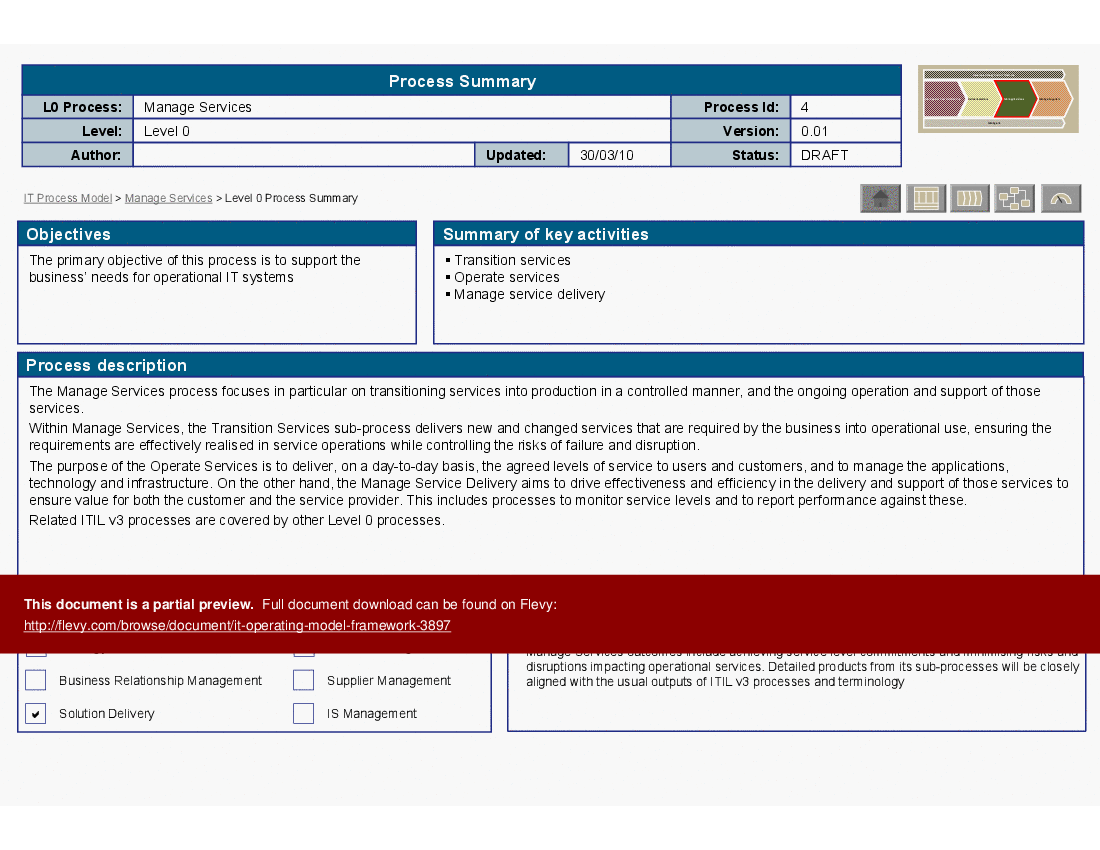
• Process Decomposition: Manage Services (page 8)
• Process Decomposition: Manage Suppliers (page 9)
• Process Decomposition: Manage IS (page 10)
• RACI Matrix Overview (page 11)
• Governance Model (page 12)
• Decision Bodies (page 13)
Primary Topics Covered
• IT Operating Model Overview - A visual toolset that describes how IT is governed and organized to meet operational and strategic objectives.
• Process Model - A structured approach to define and standardize IT activities for effective operation.
• Governance Model - Framework for decision-making bodies that facilitate rapid and informed decisions.
• Performance Model - A management framework to track and enhance IT performance through KPIs.
• Functional Model - High-level functions necessary for managing IT operations, including organizational structures and job descriptions.
• RACI Matrix - A tool to clarify roles and responsibilities across various IT processes.
Deliverables, Templates, and Tools
• Reference IT Operating Model template for visualizing governance and processes
• RACI matrix template for defining roles and responsibilities in IT functions
• Process descriptions for key IT activities, including strategy development and service management
• Performance management framework to track KPIs and improve IT investments
• Governance structure documentation outlining decision-making bodies and their functions
• Supplier management strategy template for evaluating and selecting vendors
Slide Highlights
• Overview of the IT Operating Model dimensions and components, providing a clear framework for IT governance
• High-level IT Process Model diagram illustrating the interconnections between key IT functions
• Detailed process decomposition slides for developing strategy, managing relationships, and delivering solutions
• RACI matrix slides that clarify accountability across various IT processes
• Governance Model slide outlining decision bodies and their roles in IT strategy alignment
Potential Workshop Agenda
Introduction to IT Operating Model (30 minutes)
• Overview of the framework and its components
• Discussion on the importance of aligning IT with business strategy
Process Model Deep Dive (60 minutes)
• Review of the high-level IT process model
• Breakout sessions to discuss specific processes and their implications
Governance and Performance Management (45 minutes)
• Exploration of governance structures and decision-making bodies
• Strategies for implementing a performance management framework
Supplier Management Best Practices (30 minutes)
• Discussion on effective supplier evaluation and management strategies
• Case studies on successful supplier partnerships
Customization Guidance
• Tailor the IT Operating Model to reflect specific organizational structures and business needs
• Adjust the RACI matrix to align with existing roles and responsibilities within the IT team
• Incorporate industry-specific metrics and KPIs to enhance performance tracking
• Modify governance structures to fit the unique decision-making processes of the organization
Secondary Topics Covered
• Best practices in IT service management and operational efficiency
• Strategies for effective business relationship management
• Techniques for developing and communicating IT strategies
• Insights into continuous improvement and quality assurance processes
• Overview of emerging technologies and their impact on IT operations
FAQ
What is an IT Operating Model?
An IT Operating Model is a framework that outlines how IT is governed and organized to achieve operational and strategic objectives, providing clarity on roles, processes, and governance structures.
How can this framework be customized?
The framework can be tailored to fit specific organizational contexts by adjusting roles, processes, and governance structures to align with business needs and objectives.
What are the key components of the IT Operating Model?
The key components include the process model, governance model, performance model, functional model, and RACI matrix, each serving a distinct purpose in IT governance and operations.
How does the RACI matrix work?
The RACI matrix clarifies roles and responsibilities by categorizing individuals as Responsible, Accountable, Consulted, or Informed for each task or process within the IT Operating Model.
What best practices are included in the framework?
The framework incorporates best practices from industry standards such as PRINCE2, ITIL, and CobiT, ensuring alignment with recognized methodologies for IT governance and management.
How does this framework support decision-making?
The governance model outlines decision-making bodies that facilitate rapid and informed decisions, ensuring alignment between IT initiatives and business objectives.
What performance metrics are suggested?
The framework recommends establishing KPIs that track IT performance, service delivery, and alignment with business goals, enabling continuous improvement and accountability.
How can this framework aid in supplier management?
The framework provides templates and strategies for evaluating and managing supplier relationships, ensuring that vendor performance aligns with organizational objectives and standards.
Glossary
• IT Operating Model - Framework describing IT governance and organization to meet strategic objectives.
• RACI Matrix - Tool for defining roles and responsibilities in processes.
• Governance Model - Structure for decision-making bodies in IT.
• Performance Model - Framework for tracking IT performance through KPIs.
• Process Model - Structured approach to define IT activities.
• Supplier Management - Strategies for evaluating and managing vendor relationships.
• Business Relationship Management - Coordination between IT and business units.
• Continuous Improvement - Ongoing efforts to enhance IT processes and services.
• Quality Assurance - Processes ensuring IT delivers value and meets standards.
• Enterprise Architecture - Framework linking business strategy to IT infrastructure.
• Service Management - Management of IT services to meet business needs.
• Innovation Management - Process of identifying and implementing new technologies.
• IS Strategy - Plan aligning IT services with business strategy.
• Stakeholder Engagement - Involvement of key individuals in IT decision-making.
• ITIL - IT Infrastructure Library, a set of practices for IT service management.
• CobiT - Control Objectives for Information and Related Technologies, a framework for governance and management of enterprise IT.
• PRINCE2 - A structured project management method and practitioner certification program.
• KPI - Key Performance Indicator, a measurable value demonstrating how effectively a company is achieving key business objectives.
• IS Portfolio Management - Process of managing an organization's information systems investments.
• Change Management - Approach to transitioning individuals, teams, and organizations to a desired future state.
Source: Best Practices in MIS PowerPoint Slides: IT Operating Model Framework PowerPoint (PPT) Presentation Slide Deck, Eldiablo666
|
Download our FREE Digital Transformation Templates
Download our free compilation of 50+ Digital Transformation slides and templates. DX concepts covered include Digital Leadership, Digital Maturity, Digital Value Chain, Customer Experience, Customer Journey, RPA, etc. |