
 Click main image to view in full screen. Unlock all 10 preview images:
Business Continuity Plan (BCP) Template – Word DOC
Word (DOC) + Zip archive file (ZIP) 20 Pages


BCP WORD DESCRIPTION
A Business Continuity Plan (BCP) is a plan to continue operations if a place of business is affected by different levels of disaster which can be localized short term disasters, to days long building wide problems, to a permanent loss of a building. Such a plan typically explains how the business would recover its operations or move operations to another location after damage by events like natural disasters, terrorist attack, or other unforeseen devastations.
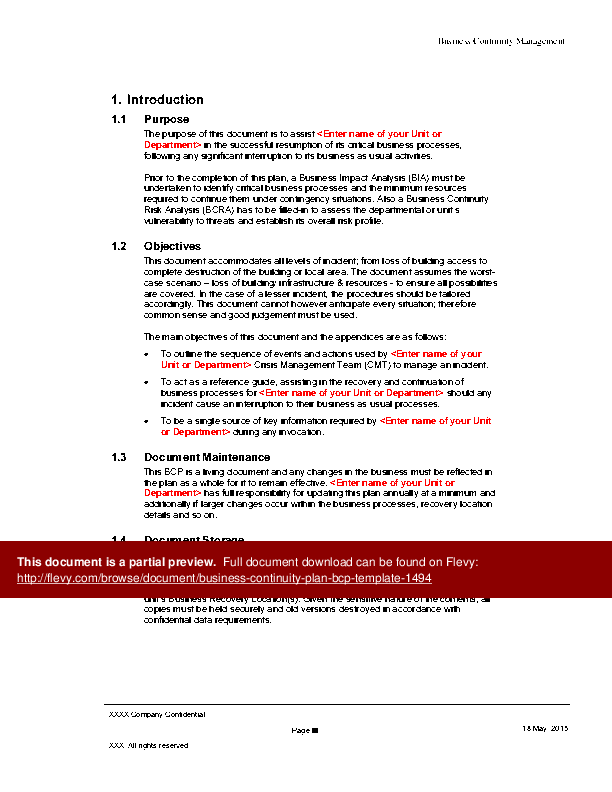
This BCP document is a 20-page MS Word document, which you can customize to your own organizational needs.
This product also includes the following:
• Business Continuity Glossary – 13-page document defining key terms related to BCP and BCM
• BCM Best Practices Checklist – 4-page checklist outlining the core components of every BCM program. Can be used to self-evaluate your program against best practices.
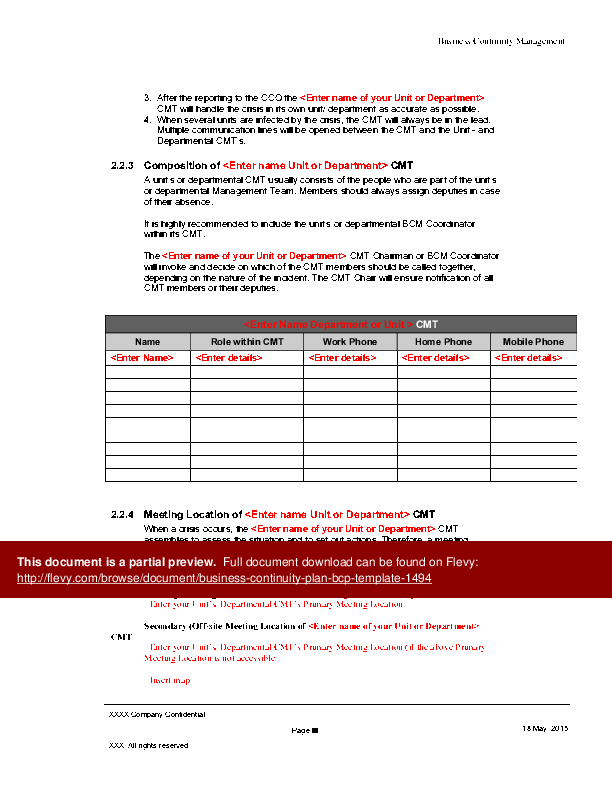
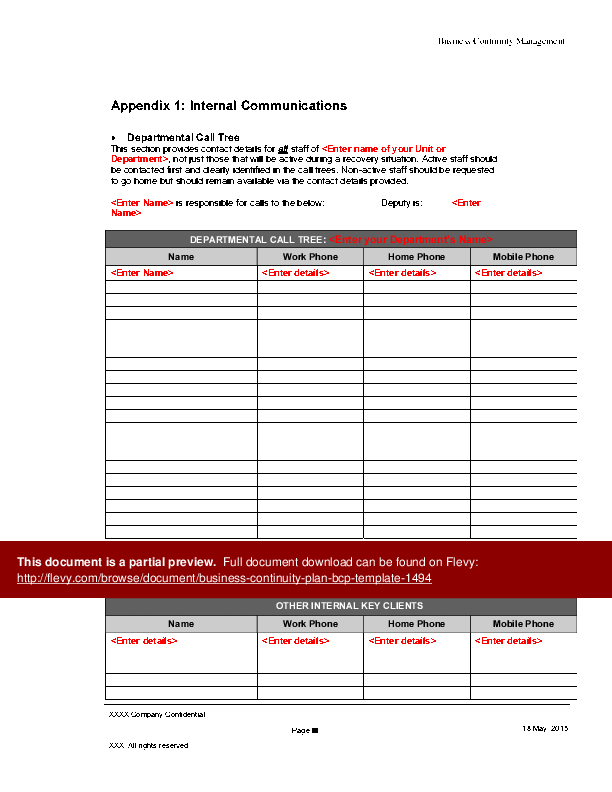
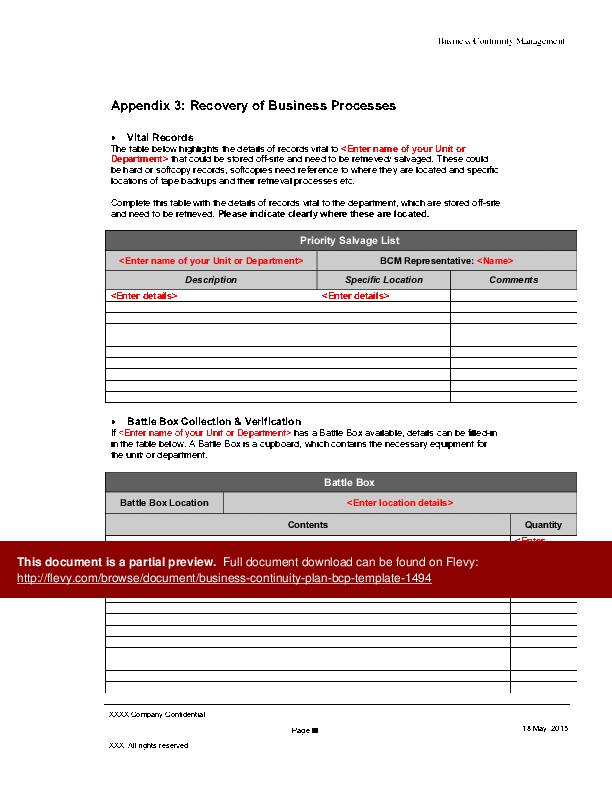
This comprehensive BCP template includes detailed sections for departmental contact information, ensuring all critical personnel are reachable during an emergency. The Word document also provides a structured approach to identifying and prioritizing salvageable assets, which is crucial for minimizing operational downtime and financial loss.
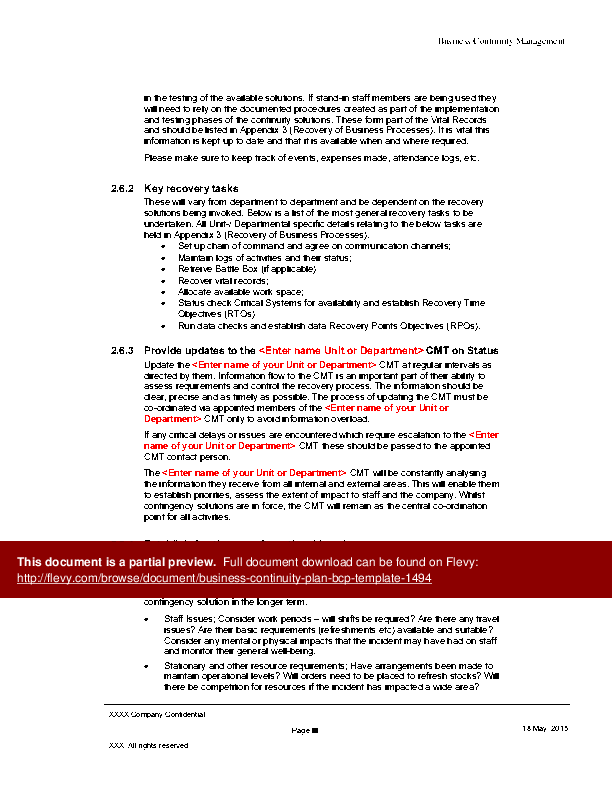
The template's inclusion of a "Battle Box" section allows organizations to pre-plan and document essential resources and their locations, streamlining the recovery process. This feature is particularly beneficial for large enterprises with multiple departments, as it ensures that all necessary tools and information are readily available during a crisis.
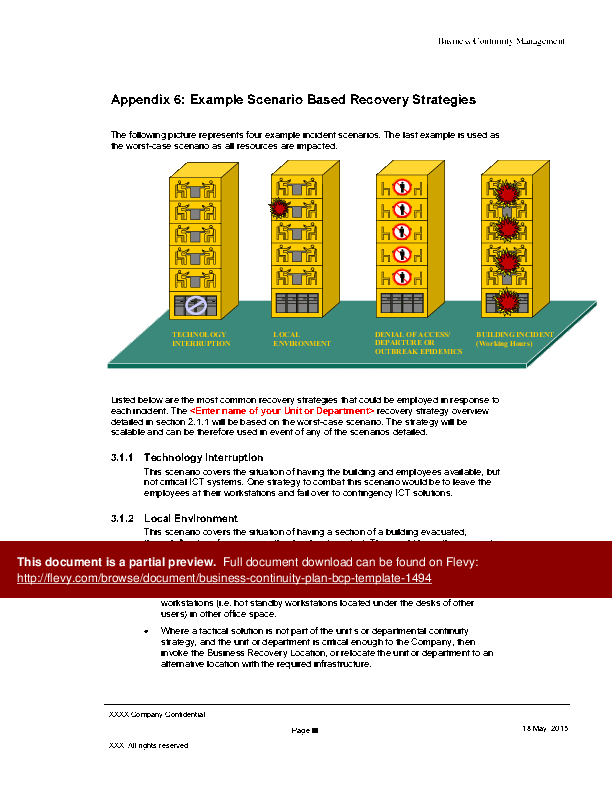
Visual aids, such as diagrams depicting various disaster scenarios and their impact on operations, help in understanding potential risks and planning accordingly. These visual elements make it easier for stakeholders to grasp the importance of each component of the BCP, facilitating better communication and quicker decision-making during emergencies.
Got a question about the product? Email us at support@flevy.com or ask the author directly by using the "Ask the Author a Question" form. If you cannot view the preview above this document description, go here to view the large preview instead.
TOPIC FAQ
What is a Business Continuity Plan and what should it achieve?
A Business Continuity Plan documents how an organization will continue operations when affected by incidents ranging from short-term localized problems to permanent facility loss. It explains recovery actions and relocation options after events like natural disasters or attacks; the product is provided as a 20-page MS Word document.What sections are commonly included in a practical BCP template?
Practical BCP templates typically include departmental contact-information sections, procedures for identifying and prioritizing salvageable assets, a "Battle Box" resource listing, visual disaster-scenario diagrams, and supporting reference materials such as a glossary and a best-practices checklist; here those are a 13-page glossary and a 4-page BCM checklist.How does a "Battle Box" support continuity efforts?
A "Battle Box" documents essential resources, supplies, and their storage locations so teams can access pre-staged tools and information during recovery. Pre-defining what goes into the Battle Box and where it resides streamlines mobilization and resource access; this template includes a dedicated Battle Box section.How can organizations prioritize salvageable assets after an incident?
Prioritization requires a structured approach to identify which assets are critical to restoring operations and to sequence recovery to minimize downtime and financial loss. The template provides a structured salvageable-assets prioritization approach organizations can adapt to their asset inventories and critical functions.What should I look for in a BCP template when buying for a financial services firm?
For financial services, prioritize templates that support regulatory alignment and operational resilience: documented contact rosters, asset-prioritization methods, pre-staged recovery resources, visual recovery diagrams, and explicit compliance alignment to standards such as SOX and FFIEC.Will a customizable BCP template reduce preparation time compared with building one from scratch?
A customizable template provides a ready structure and prewritten sections you can adapt to your organization, typically reducing drafting time versus creating documents from zero; this product is a customizable 20-page Word document with supplemental ZIP materials.We lost a building after a fire—what immediate items should our BCP address?
Immediate priorities are contacting critical personnel, locating pre-staged recovery resources, assessing and prioritizing salvageable assets, and establishing interim work locations or relocation logistics. Those steps map directly to departmental contact information, Battle Box resources, and asset-prioritization guidance in a BCP.How can I use a BCM Best Practices Checklist to assess our continuity program?
A BCM Best Practices Checklist outlines core program components so you can compare current artifacts, gaps, and governance against expected elements. Use it to score or self-evaluate your program maturity and track remediation; the referenced checklist is a 4-page BCM Best Practices Checklist.Source: Best Practices in BCP Word: Business Continuity Plan (BCP) Template Word (DOC) Document, Boris Agranovich