
Introduction:
Renowned business guru Tom Peters once stated, "Almost all quality improvement comes via simplification of design, manufacturing, layout, process, and procedures." This profound insight underscores the paramount importance of process mapping in the quest for operational excellence. Process mapping provides a holistic view of an organization's operations, clarifying its functions, responsibilities, and standards. This comprehensive document delves into the world of process mapping, shedding light on its pivotal role in business success and quality improvement.
1. Process Mapping Fundamentals:
• Navigating Business Operations: Understand how process mapping establishes a comprehensive view of an organization's functions and responsibilities.
• Driving Success: Explore how process mapping enables managers to gain clarity on their company's operations, its current position, and the steps required for success.
• Unified Visualization: Learn about the significance of a unified illustration, the process map, in evaluating and improving business processes.
2. Leveraging ISO 9001 Certification:
• The Pursuit of ISO 9001: Discover how organizations aspiring to attain ISO 9001 certification often seek the expertise of business process improvement consultants.
• Consultants as Catalysts: Explore the role of business process improvement consultants in creating and implementing efficient, effective business processes.
3. Unveiling Operational Inefficiencies:
• Identifying Bottlenecks: Learn how process maps reveal operational delays and processes in need of optimization.
• Quality Control & Performance Improvement: Recognize process mapping as a crucial tool for quality control and performance enhancement.
This 51-slide PowerPoint presentation provides a comprehensive exploration of process mapping tools and techniques, offering valuable insights into optimizing and improving organizational performance. The document is fully customizable and features compelling diagrams, ice-breakers, images, and engaging content, facilitating a deep understanding of process mapping concepts.
This PPT equips leaders with actionable insights to streamline operations through effective process mapping techniques. By applying the frameworks and tools outlined, organizations can pinpoint inefficiencies and enhance overall productivity, driving tangible results in their operational workflows.
Got a question about the product? Email us at support@flevy.com or ask the author directly by using the "Ask the Author a Question" form. If you cannot view the preview above this document description, go here to view the large preview instead.
Executive Summary
The "In-Depth Process Mapping - Optimizing Performance" presentation by RadVector Consulting provides a comprehensive framework for understanding and enhancing business processes. This PowerPoint deck is designed to help organizations visualize their workflows, identify inefficiencies, and implement effective improvements. It covers essential concepts of process mapping, including types of maps, common pitfalls, and methodologies for leveraging these tools in transformation initiatives. Executives and consultants can utilize this resource to drive performance optimization and achieve operational excellence.
Who This Is For and When to Use
• Corporate executives seeking to enhance operational efficiency
• Process improvement teams focused on identifying bottlenecks
• Change management leaders implementing new workflows
• Consultants advising organizations on quality improvement strategies
Best-fit moments to use this deck:
• During process improvement initiatives to visualize current workflows
• When preparing for ISO 9001 certification or similar quality standards
• In workshops aimed at training teams on effective process mapping techniques
• For strategic planning sessions focused on operational excellence
Learning Objectives
• Define business process mapping and its significance in operational efficiency
• Identify various types of process maps and their appropriate applications
• Analyze current processes to pinpoint inefficiencies and areas for improvement
• Develop a structured approach to process mapping using the 8-step methodology
• Leverage process mapping tools to enhance quality control and performance
• Implement continuous improvement practices through effective process mapping
Table of Contents
• Introduction to Process Mapping (page 2)
• The Process Improvement Ecosystem (page 3)
• What is Business Process Mapping? (page 9)
• Types of Business Process Maps (page 13)
• Common Pitfalls in Process Mapping (page 41)
• How to Leverage Business Process Mapping (page 42)
• Approach to Streamline the Process (page 43)
• Tips in Process Mapping (page 46)
Primary Topics Covered
• Business Process Mapping - A visual representation of the steps involved in a process, detailing activities, inputs, and outputs to enhance understanding and efficiency.
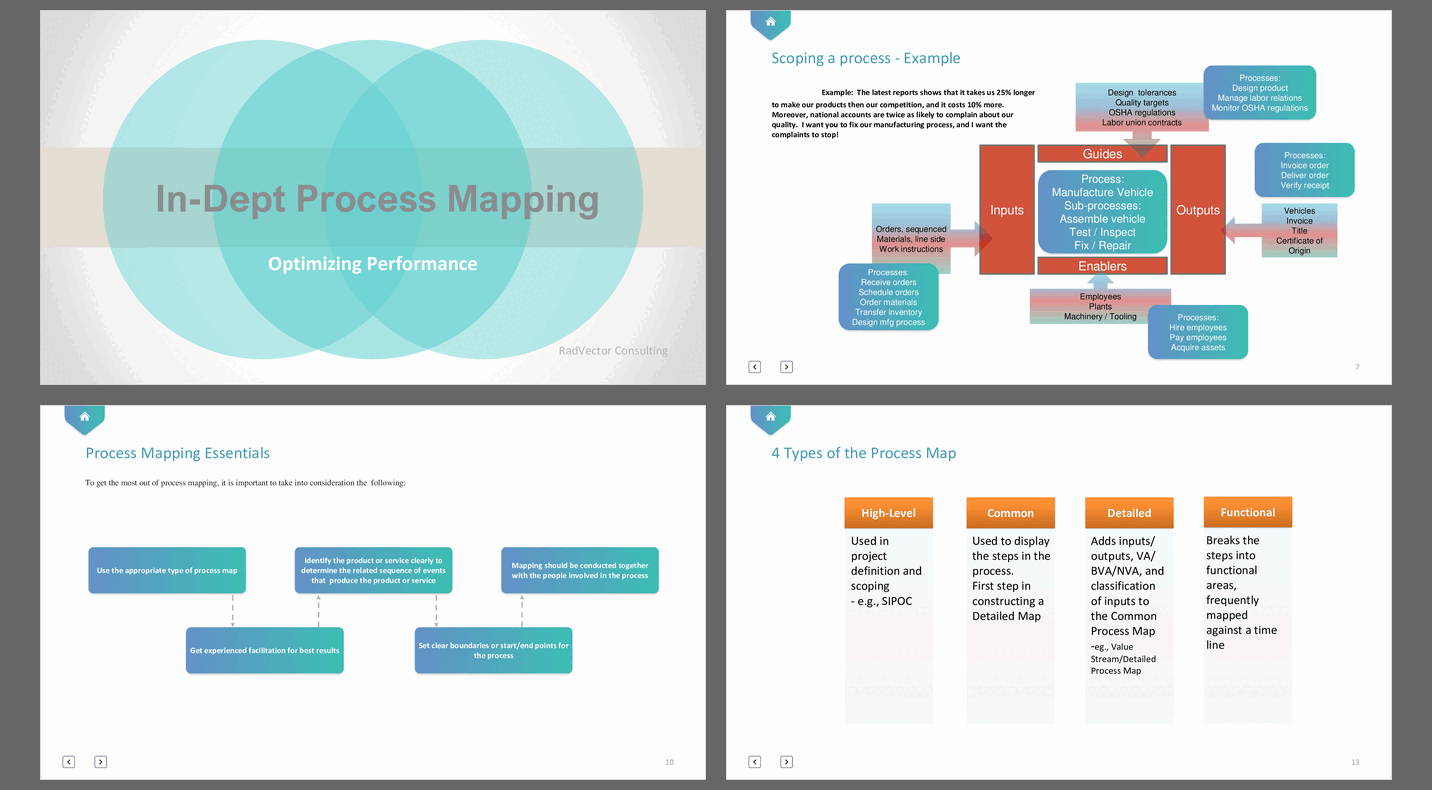
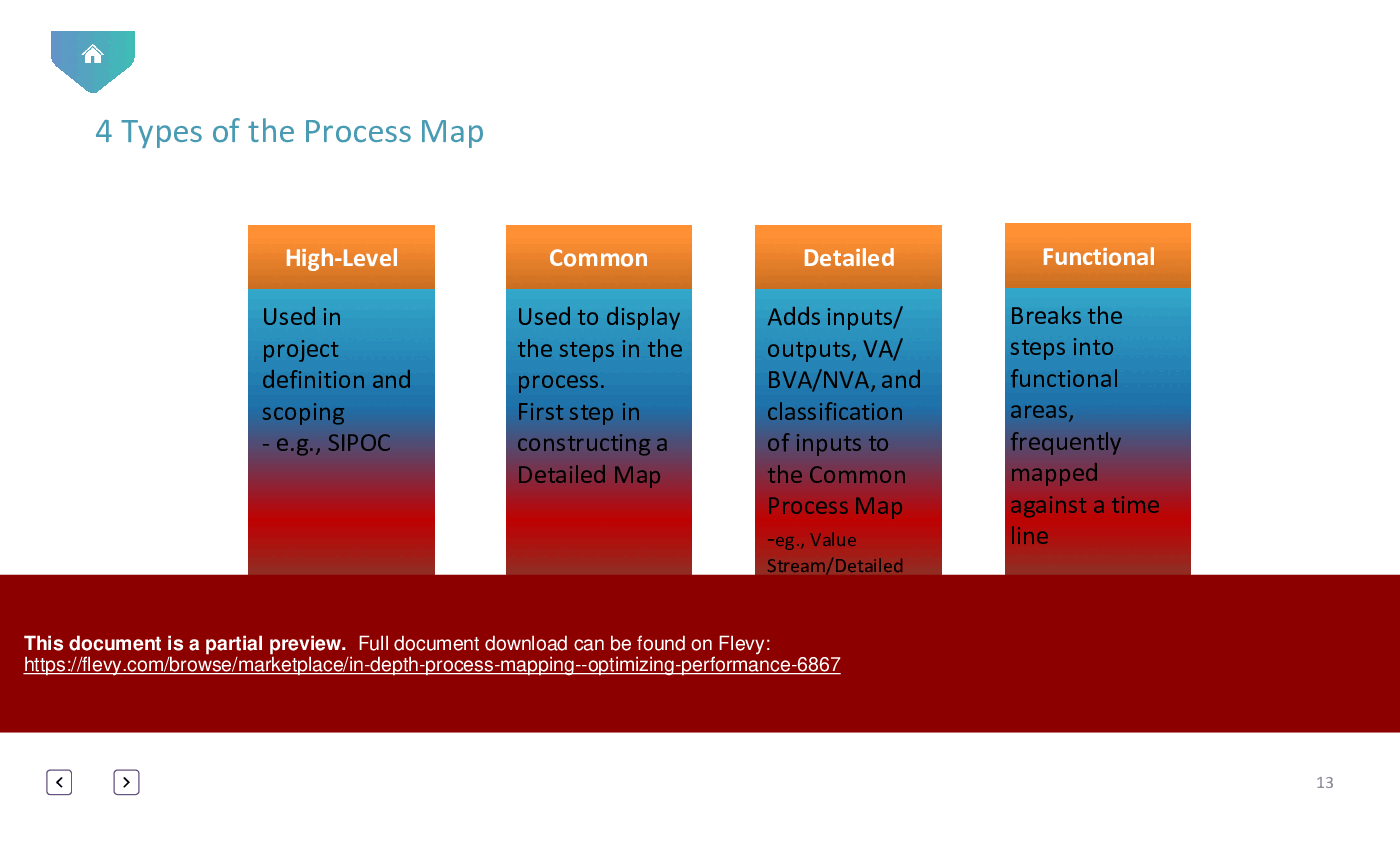
• Types of Process Maps - Various mapping techniques including high-level, common, detailed, and functional maps that serve different purposes in process analysis.
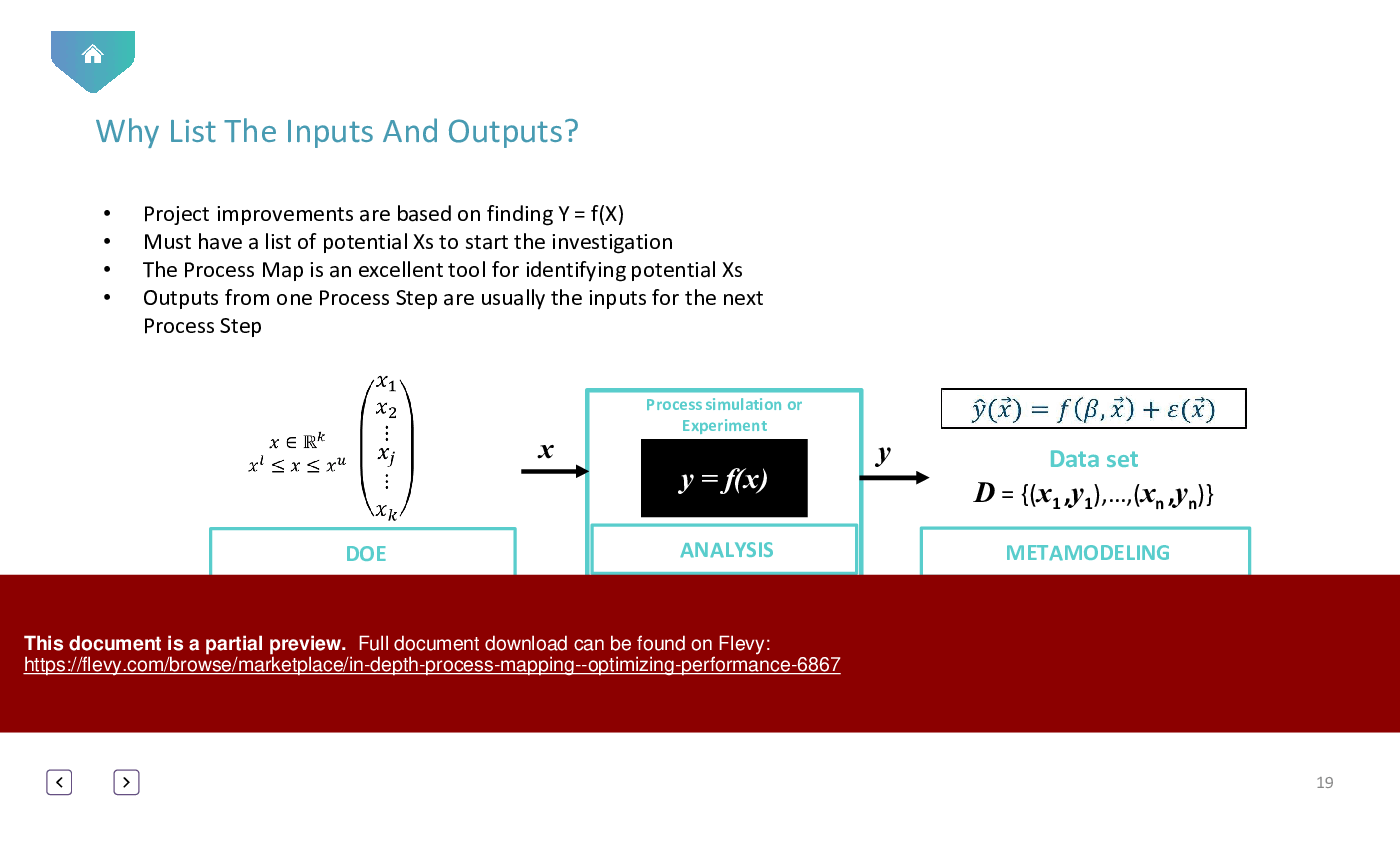
• Process Mapping Methodology - An 8-step approach to effectively map processes, from defining scope to identifying inputs and outputs.
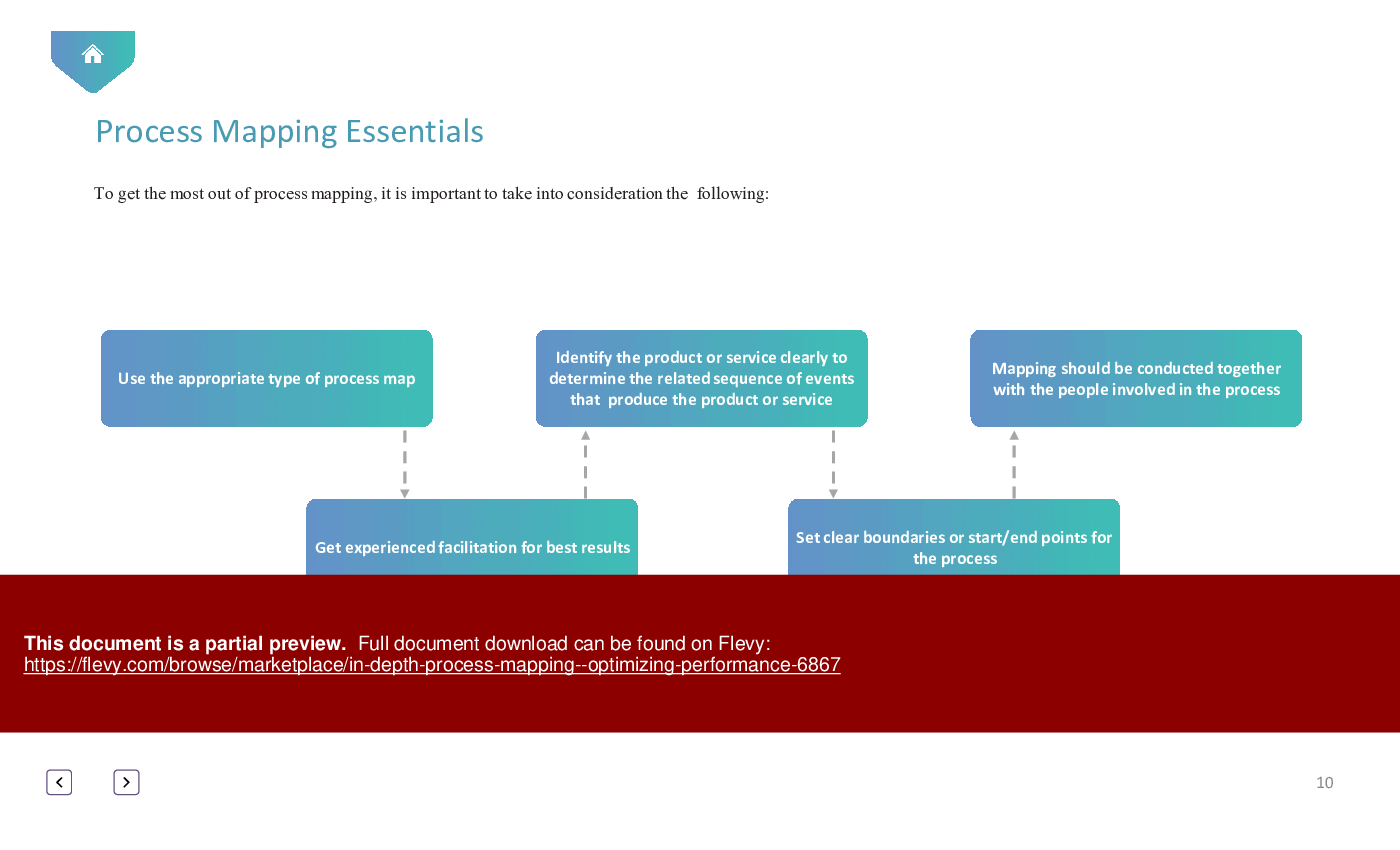
• Common Pitfalls - Frequent mistakes in process mapping, such as unclear boundaries and lack of stakeholder involvement, that can hinder effectiveness.
• Value Stream Mapping - A lean management method that visualizes the flow of materials and information, identifying waste and opportunities for improvement.
• SIPOC Diagram - A high-level overview tool that summarizes suppliers, inputs, processes, outputs, and customers, aiding in project scoping and understanding.
Deliverables, Templates, and Tools
• High-level process maps to outline major tasks and activities
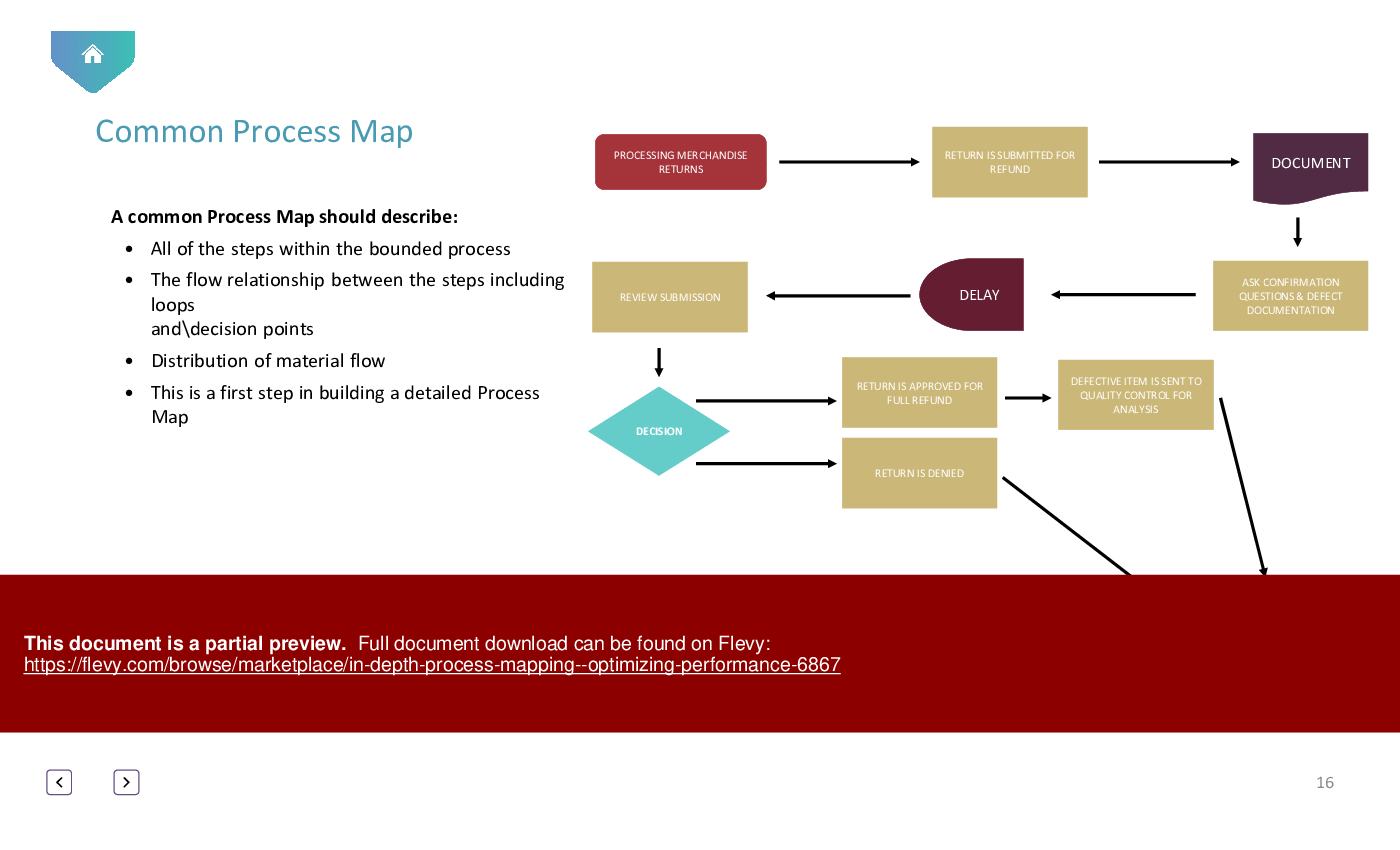
• Common process maps for displaying step-by-step workflows
• Detailed process maps for in-depth analysis of specific tasks
• SIPOC diagrams for summarizing process elements
• Value stream maps for identifying waste and optimizing flow
• Spaghetti diagrams for visualizing material flow and inefficiencies
Slide Highlights
• Overview of the Process Improvement Ecosystem, illustrating various methodologies
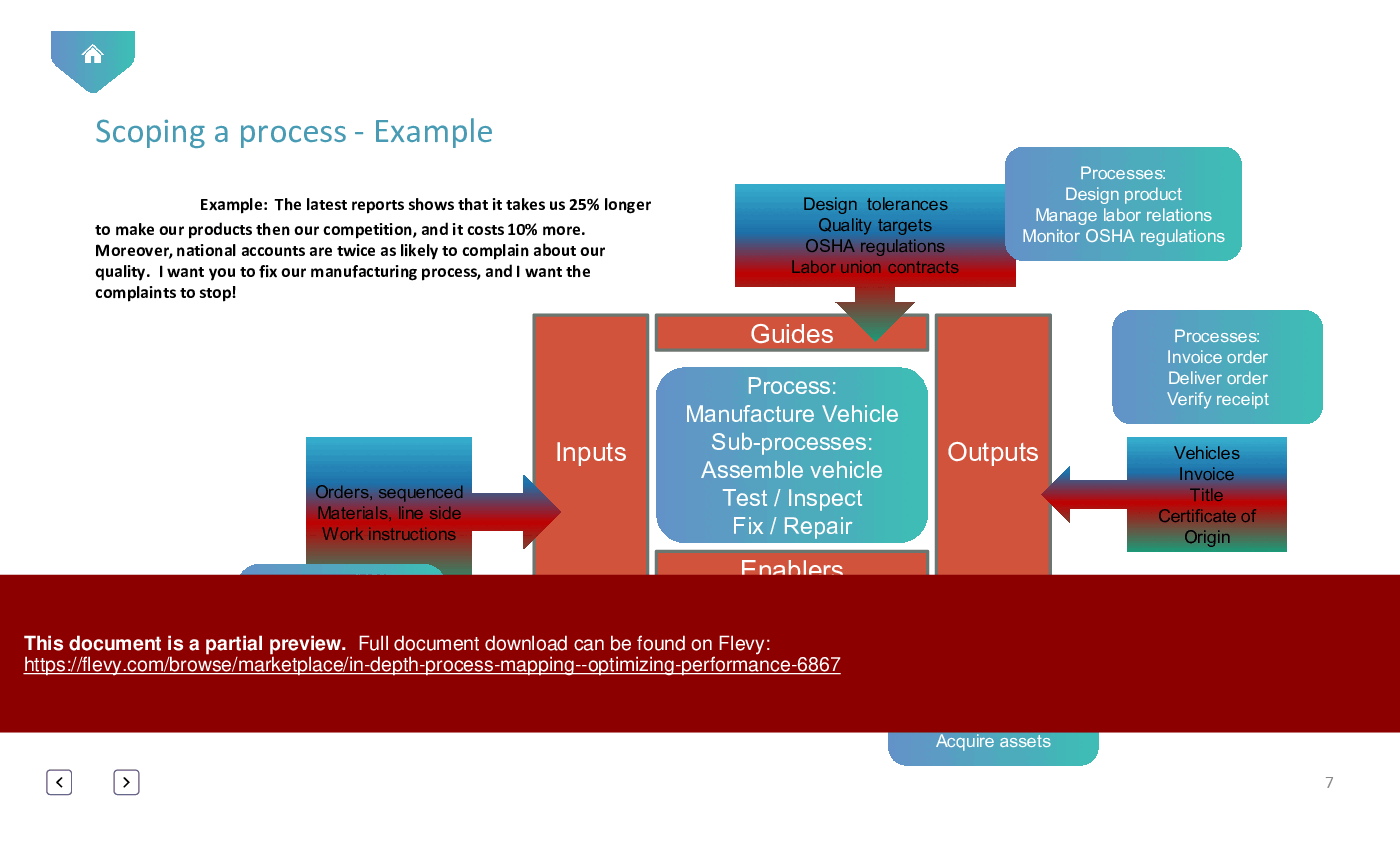
• Example of a SIPOC diagram to clarify process boundaries and relationships
• Detailed process mapping methodology, emphasizing the 8-step approach
• Common pitfalls in process mapping, with actionable insights for improvement
• Visual representation of a spaghetti diagram, showcasing material flow inefficiencies
Potential Workshop Agenda
Introduction to Process Mapping (30 minutes)
• Overview of business process mapping and its importance
• Discussion on types of process maps and their applications
Hands-On Mapping Session (60 minutes)
• Participants create high-level and detailed process maps
• Group analysis of common pitfalls and best practices
Value Stream Mapping Workshop (45 minutes)
• Introduction to value stream mapping concepts
• Practical exercise in identifying waste and optimizing processes
Customization Guidance
• Tailor process maps to reflect specific organizational workflows and terminologies
• Adjust the scope of mapping exercises to align with current business objectives
• Incorporate relevant metrics and KPIs to evaluate process performance
Secondary Topics Covered
• Continuous Process Improvement (CPI) methodologies
• Lean principles and their application in process optimization
• The role of stakeholders in effective process mapping
• Techniques for engaging teams in process improvement initiatives
Topic FAQ
Document FAQ
These are questions addressed within this presentation.
What is business process mapping?
Business process mapping is a visual representation of the steps involved in a process, detailing activities, inputs, and outputs to enhance understanding and efficiency.
Why is process mapping important?
It helps organizations identify inefficiencies, streamline workflows, and improve overall performance by providing a clear view of current processes.
What are common pitfalls in process mapping?
Common pitfalls include unclear process boundaries, lack of stakeholder involvement, and failure to update process maps as living documents.
How can I leverage process mapping for improvement?
Use process maps to identify value-added and non-value-added activities, and document key process parameters for analysis.
What types of process maps are there?
Types include high-level, common, detailed, and functional process maps, each serving different purposes in process analysis.
What is a SIPOC diagram?
A SIPOC diagram is a high-level process map that summarizes suppliers, inputs, processes, outputs, and customers, aiding in project scoping.
How does value stream mapping differ from traditional process mapping?
Value stream mapping focuses on the flow of materials and information to identify waste, while traditional process mapping details the steps involved in a process.
What is the 8-step methodology for process mapping?
The methodology includes defining scope, mapping activities, identifying inputs and outputs, and classifying all data collection points.
Glossary
• Business Process Mapping - A visual representation of the steps involved in a business process.
• SIPOC Diagram - A high-level overview tool summarizing suppliers, inputs, processes, outputs, and customers.
• Value Stream Mapping - A lean management method for analyzing the flow of materials and information.
• Continuous Process Improvement (CPI) - Ongoing efforts to improve products, services, or processes.
• Common Process Map - A map displaying all steps within a bounded process.
• Detailed Process Map - A comprehensive map detailing all steps within a project scope.
• Spaghetti Diagram - A visual representation tracing the flow of materials through a process.
• High-Level Process Map - An overview map describing major tasks and activities.
• Functional Process Map - A map that separates steps into functional areas and internal customer-supplier relationships.
• ECRS Framework - A method for process improvement focusing on Eliminate, Combine, Rearrange, and Simplify.
• Touch Time - The amount of time a product is actively being worked on.
• Cycle Time - The total time from the beginning to the end of a process.
• Non-Value-Added Activities - Steps that do not add value to the customer or the business.
• Value-Added Activities - Steps that transform deliverables in a way that the customer is willing to pay for.
• Business-Value-Added Activities - Necessary steps that support value-added activities, but do not directly impact customer satisfaction.
• Process Walkthrough - A review of the process with stakeholders to ensure accuracy and understanding.
• Lean Principles - Strategies for minimizing waste while maximizing productivity.
• Stakeholders - Individuals or groups involved in or affected by a process.
• Metrics - Standards of measurement used to evaluate the performance of a process.
• KPIs - Key Performance Indicators used to measure the success of an organization or process.
Source: Best Practices in Process Maps PowerPoint Slides: In-depth Process Mapping - Optimizing Performance PowerPoint (PPTX) Presentation Slide Deck, RadVector Consulting
|
Receive our FREE presentation on Operational Excellence
This 50-slide presentation provides a high-level introduction to the 4 Building Blocks of Operational Excellence. Achieving OpEx requires the implementation of a Business Execution System that integrates these 4 building blocks. |