
 Click main image to view in full screen. Unlock all 12 preview images:
How to Write Professional E-mails (+Templates) – Word DOCX
Word (DOCX) 39 Pages


BENEFITS OF THIS DOWNLOADABLE WORD DOCUMENT
- Provides a structured framework for writing clear, persuasive, and professional emails across a wide range of business situations.
- Equips professionals with practical templates, proven communication techniques, and actionable checklists for improving email clarity, tone, and effectiveness.
- Offers a complete system for crafting emails that strengthen relationships, accelerate decisions, and communicate with greater confidence and professionalism.
EMPLOYEE TRAINING WORD DESCRIPTION
Curated by McKinsey-trained Executives
How to Write Professional Emails: The Complete Business Guide to Clearer, More Persuasive, More Professional Communication
🚀 STOP LOSING DEALS, DAMAGING RELATIONSHIPS, WASTING TIME ON UNCLEAR EMAILS, TRIGGERING MISUNDERSTANDINGS, DESTROYING EXECUTIVE CREDIBILITY, ALIENATING CLIENTS, MISSING DEADLINES, CREATING LEGAL EXPOSURE, DAMAGING COMPANY REPUTATION, LOSING LEADERSHIP AUTHORITY, FRUSTRATING COLLEAGUES, TANKING FIRST IMPRESSIONS, BURYING ASKS IN WALLS OF TEXT, WRITING DEFENSIVE EMAILS, SOUNDING UNPROFESSIONAL, APPEARING DISORGANIZED, LOOKING CARELESS, BROADCASTING WEAKNESS & LEAVING COMMUNICATION EXCELLENCE ON THE TABLE WITH UNCLEAR SUBJECT LINES, WEAK OPENINGS, BURIED ASKS, RAMBLING CLOSINGS, CONFUSING TONE, POOR STRUCTURE, MISSING DEADLINES, UNCLEAR CALLS TO ACTION & INVISIBLE PROFESSIONAL COMMUNICATION DISCIPLINE
Most business professionals, executives, sales leaders, customer success teams, HR departments, and communication-focused organizations destroy email effectiveness not because they lack writing talent, business acumen, or communication skills – but because they lack a STRUCTURED, END-TO-END PROFESSIONAL EMAIL SYSTEM POWERED BY RIGOROUS COMMUNICATION ARCHITECTURE, PROVEN PURPOSE-DRIVEN FRAMEWORKS, DEFENSIBLE MESSAGE LOGIC, READER-CENTRIC DISCIPLINE, TONE MASTERY, CLARITY EXCELLENCE, PERSUASION SCIENCE, BEFORE-AND-AFTER MODELING & MEASURABLE COMMUNICATION DELIVERY & SUSTAINABLE PROFESSIONAL CREDIBILITY EXCELLENCE.
They operate with:
• ❌ Unclear subject lines that disappear in inboxes and trigger deletion before the email is even opened
• ❌ Rambling openings that bury the reason the reader should keep reading in paragraph three
• ❌ Buried asks hidden inside long stories, forcing readers to hunt for what you actually want
• ❌ Weak structure that confuses readers and creates follow-up questions you could have prevented
• ❌ Inappropriate tone that sounds defensive, demanding, sarcastic, or tone-deaf in writing
• ❌ Vague deadlines and unclear next steps that create confusion and stall decision-making
• ❌ Wall-of-text formatting that exhausts readers before they reach the critical information
• ❌ Generic closings that don't reinforce the ask or create urgency
• ❌ Unclear calls to action that leave readers uncertain what they're supposed to do
• ❌ Missing context that forces readers to search through previous emails for background
• ❌ Inconsistent sign-offs and signatures that look unprofessional and undermine credibility
• ❌ Confusing email threading that loses critical context and fragments accountability
• ❌ Defensive language that triggers pushback instead of moving decisions forward
• ❌ Emails that get forwarded with negative commentary because tone didn't land right
• ❌ First impressions damaged by poor structure, weak openers, or careless formatting
That's why business professionals underperform across client relationships, internal decision velocity, leadership credibility, and career advancement. Not lacking communication talent. Not lacking resources. MESSAGE ARCHITECTURE RIGOR + READER-CENTRIC DISCIPLINE + CLARITY EXCELLENCE + TONE MASTERY + PERSUASION SCIENCE + STRUCTURE PRECISION & EXECUTIVE-LEVEL COMMUNICATION EXCELLENCE.
🎯 INTRODUCING: HOW TO WRITE PROFESSIONAL EMAILS
The Complete Professional Email System, Purpose-Driven Framework, Fifteen Email Types with Complete Templates, Profitability of Clear Communication, Executive Communication Mastery, Critical Email Situation Reference Library, Real Before-and-After Examples, Advanced Communication Tactics, Difficult-Email Playbooks, Email Governance Architecture, and Continuous Professional Communication Improvement System for Achieving World-Class Email Mastery, Predictable Client Relationships, Sustainable Professional Credibility, Superior Leadership Authority, Accelerated Decision Velocity, Enhanced Career Advancement, Uncompromised Communication Clarity, Superior Email Discipline, and Measurable, Accountable, Predictable Professional Communication Excellence – Across Sales, Customer Success, Executive Leadership, HR, Finance, Operations, Marketing, Business Development, Legal, Consulting, and Every Serious Professional
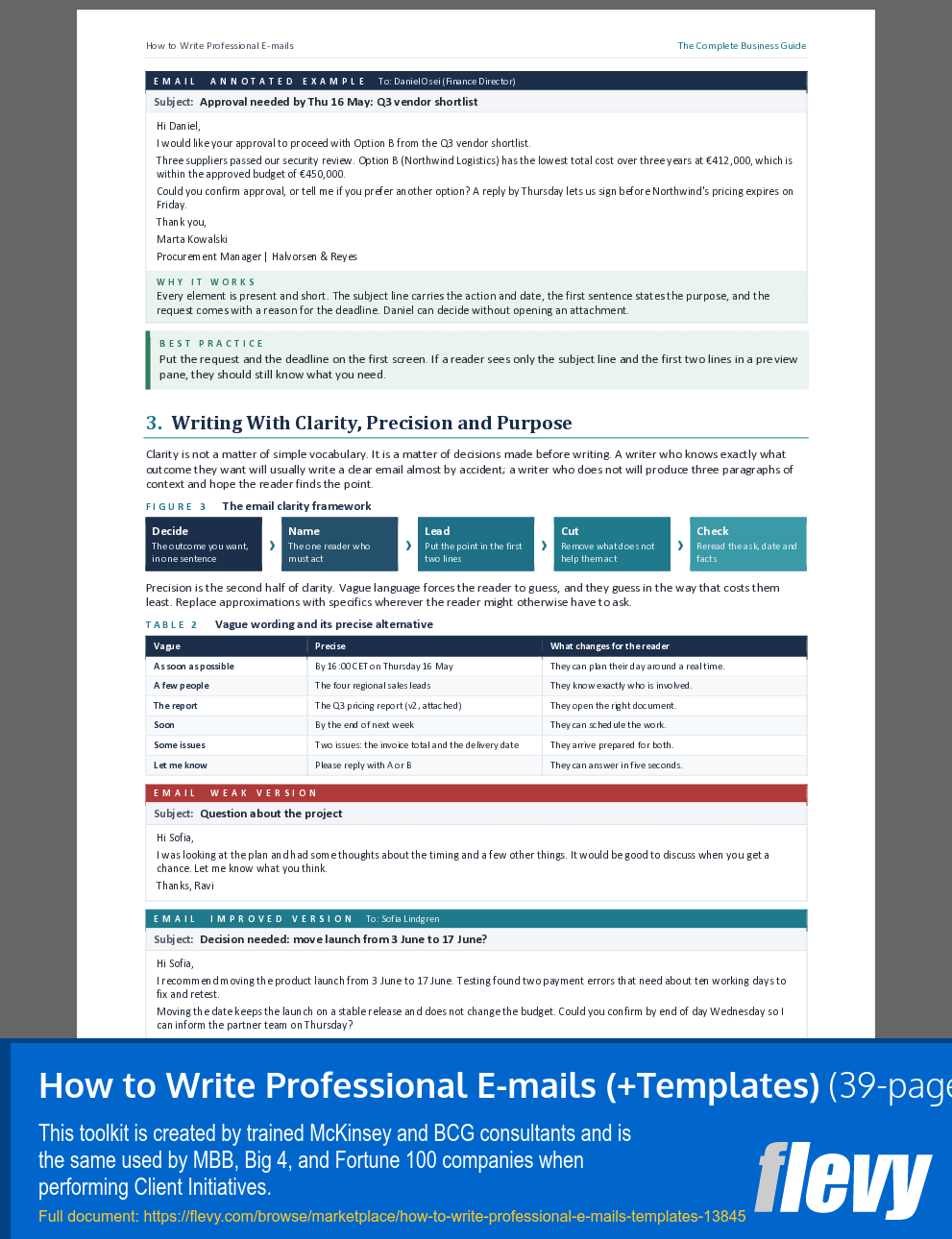
✅ 50+ Complete Professional Email Examples – introduction, follow-up, request, meeting invitation, thank-you, apology, escalation, bad news, each with weak version, improved version, and explanation of why it works
✅ 15 Recurring Email Situations with Complete Templates – introduction, follow-up, request, meeting invitation, meeting follow-up, thank-you, apology, reminder, status update, escalation, difficult/sensitive, customer, sales, internal management, and job/career emails
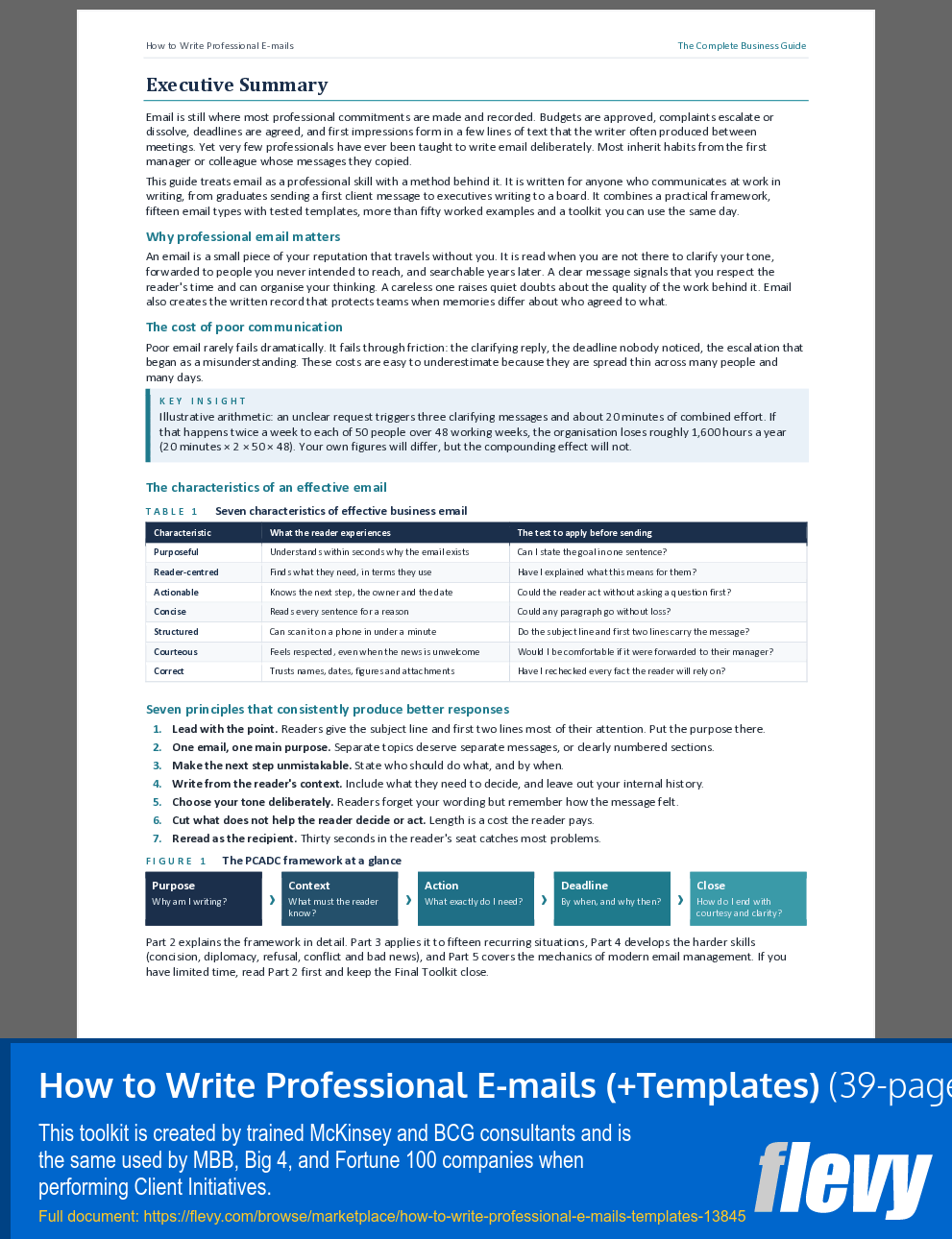
✅ Proven PCADC Framework – Purpose → Context → Action → Deadline → Close structure that consistently produces faster responses and clearer decisions
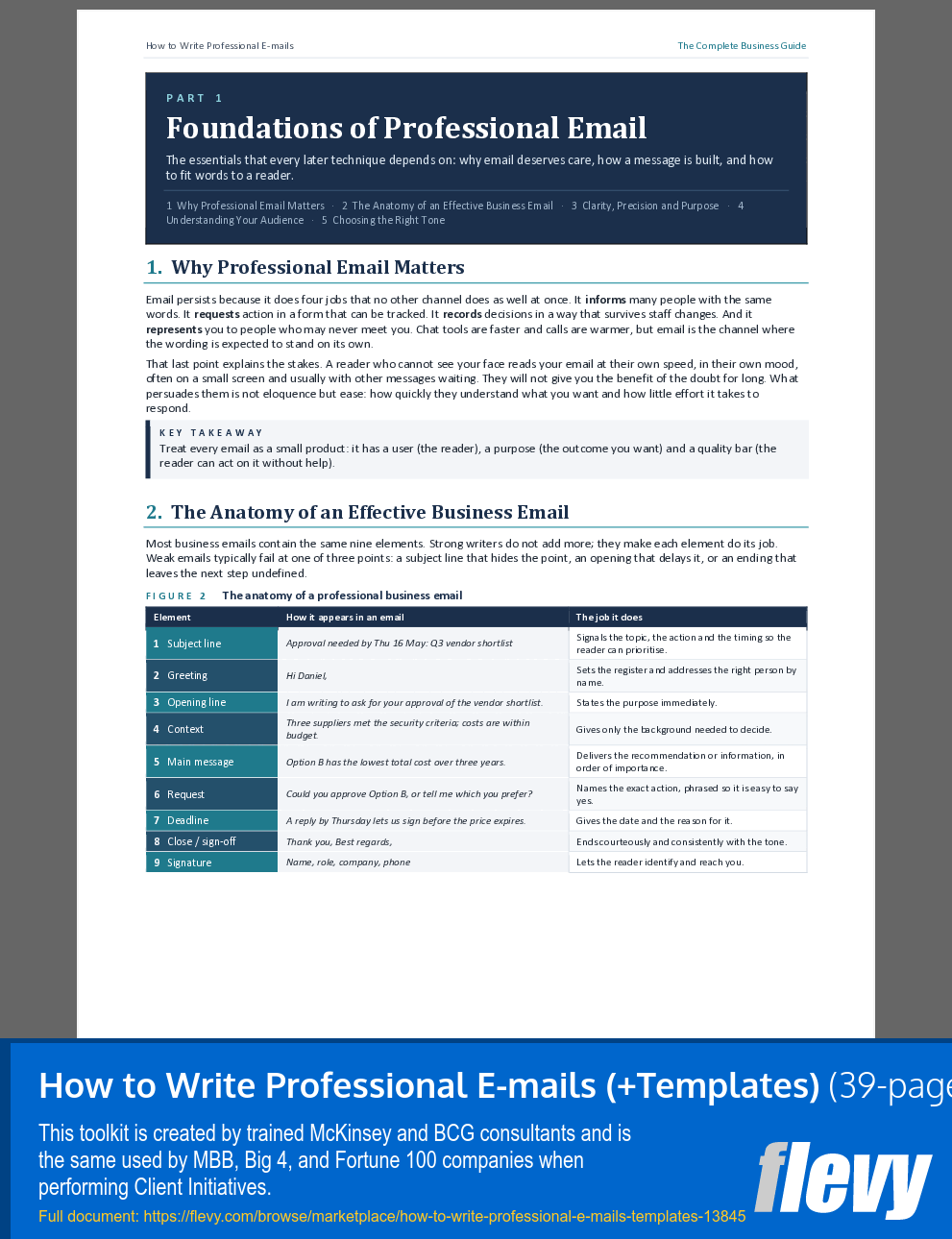
✅ The Anatomy of an Effective Business Email – subject line, opening, structure, request clarity, tone, closing, and sign-off broken down with examples
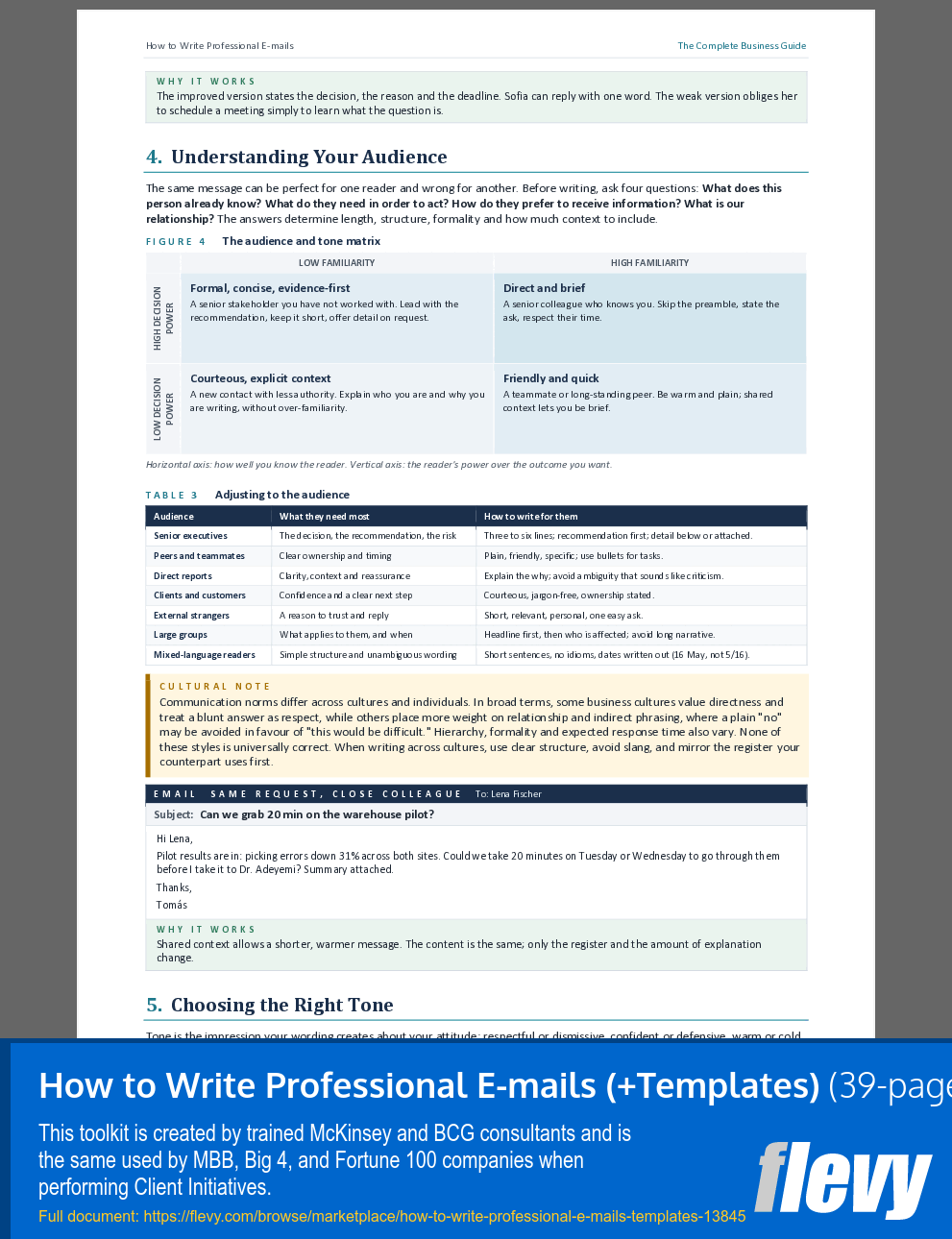
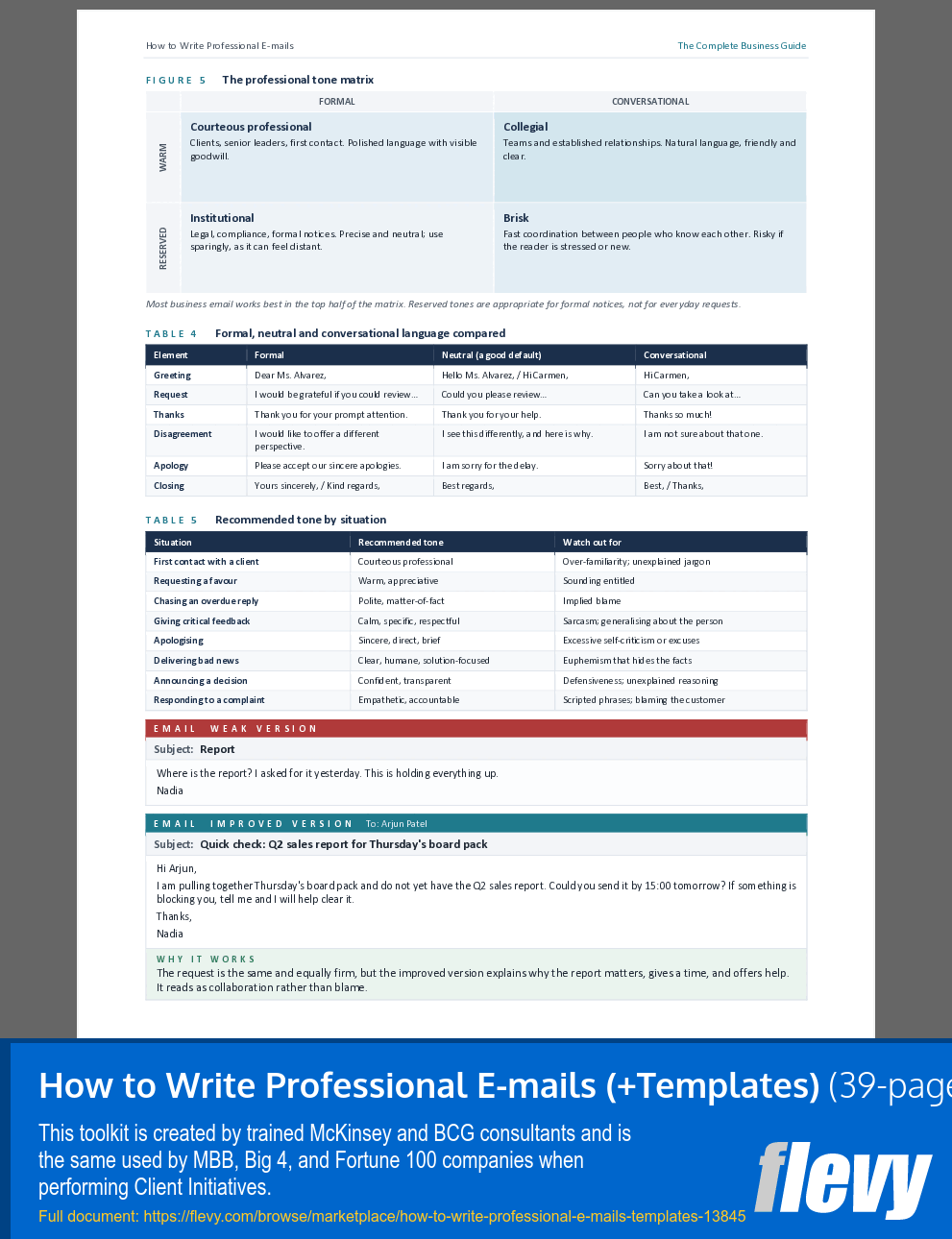
✅ Tone Mastery Across Seven Business Contexts – junior-to-senior, peer-to-peer, leader-to-team, customer-facing, cross-cultural, difficult situations, and executive communication
✅ Advanced Email Tactics – how to refuse diplomatically, escalate without burning bridges, deliver bad news that moves forward, handle conflict by email, and persuade through writing
✅ 50 Subject-Line Formulas – openers that get opened, frameworks that work across context, proven patterns that consistently outperform generic subjects
✅ 30 Professional Email Openers – instant reference for every situation, eliminates writer's block, proven to hook readers in the first sentence
✅ 30 Professional Email Closers – sign-offs that reinforce credibility, closings that create urgency, signatures that look professional and intentional
✅ 25 Diplomatic Phrases – how to disagree professionally, how to say no without alienating, how to push back with grace, how to hold boundaries
✅ 25 Phrases to Avoid – passive-aggressive language that tanks credibility, defensive phrasing that triggers pushback, careless wording that creates legal risk
✅ Executive-Level Checklist – before you hit send on any email to a senior stakeholder, board member, or external executive
✅ Proofreading Workflow – a structured five-step review process to catch tone problems, clarity issues, and careless errors before send
✅ Difficult-Email Playbook – structured decision framework for emails that matter: conflicts, escalations, bad news, refusals, and sensitive situations
✅ One-Page Before You Send Framework – distilled checklist for every email, reviewable in 30 seconds, builds discipline through repetition
✅ Professional Email Checklists – standard email checklist, proofreading checklist, difficult-email checklist, executive-email checklist, one-page framework
✅ 40 Pages of Distilled Communication Excellence – zero marketing fluff, zero generic business clichés, every sentence earns its place
📋 HOW TO WRITE PROFESSIONAL EMAILS – COMPLETE TABLE OF CONTENTS
PART 1 – FOUNDATIONS OF PROFESSIONAL EMAIL
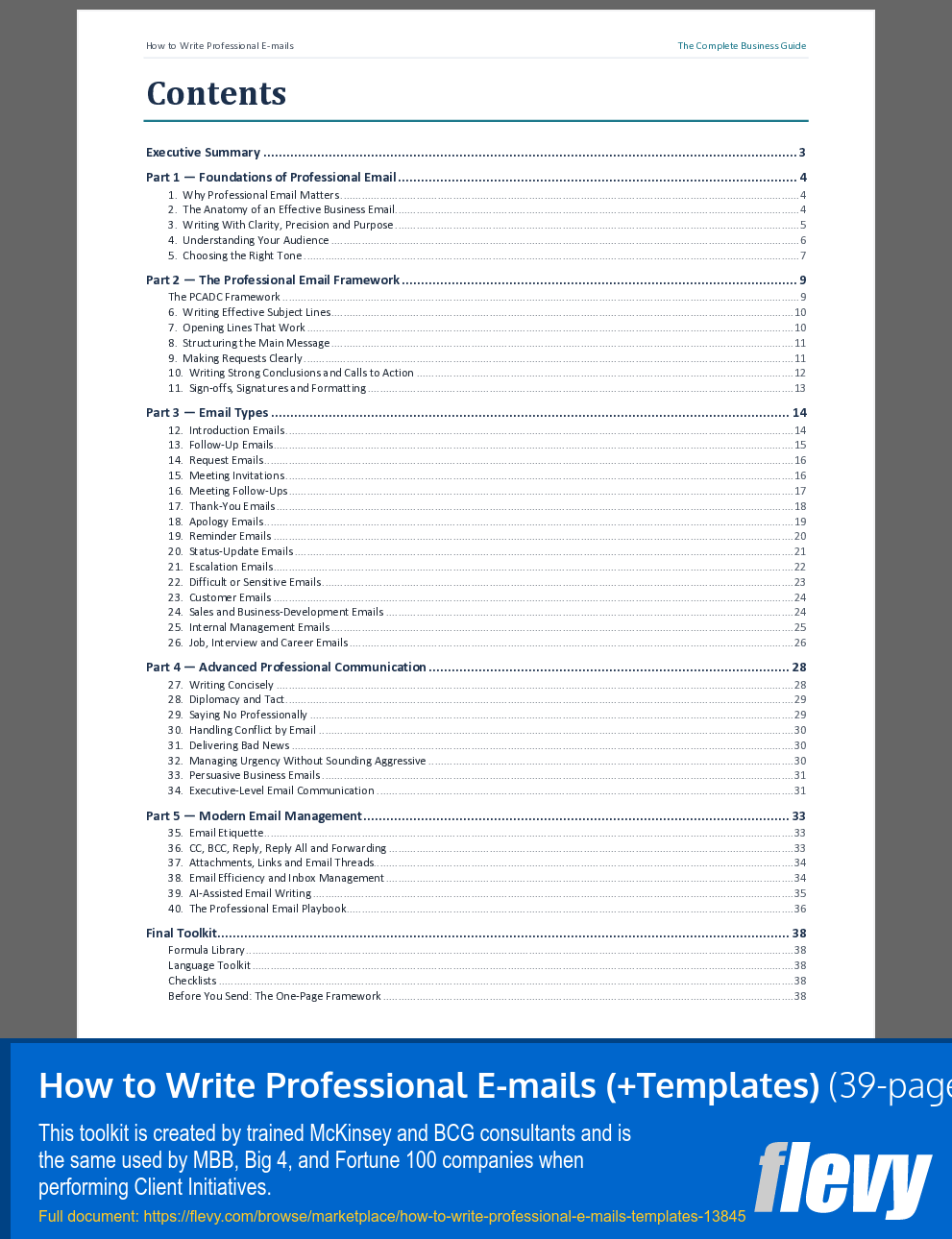
1. Executive Summary – Why professional email matters, the cost of unclear communication, characteristics of effective email, seven principles that drive responses
2. Why Professional Email Matters – Direction, decision velocity, trust, risk reduction, workload efficiency, professional credibility
3. The Anatomy of an Effective Business Email – Subject line strategy, opening power, message structure, request clarity, tone calibration, strong conclusions, sign-off discipline
4. Writing With Clarity, Precision and Purpose – The readability test, the scan test, active voice mastery, specificity over vagueness, decision-clarity discipline
5. Understanding Your Audience – Reader profiles, communication norms by role, cultural adaptation, executive expectations, tone calibration by relationship
PART 2 – THE PROFESSIONAL EMAIL FRAMEWORK
6. The PCADC Framework – Purpose statement, context provision, action request, deadline discipline, close discipline; when to apply and when to adapt
7. Writing Effective Subject Lines – Subject-line psychology, formula-based openers, 50 subject-line patterns, patterns that get responses vs. patterns that disappear
8. Opening Lines That Work – The hook principle, patterns that work, instant credibility, reader engagement, eliminating generic openers
9. Structuring the Main Message – Paragraph discipline, transition mastery, one-idea-per-paragraph, avoiding wall-of-text, strategic white space
10. Making Requests Clearly – The specificity test, visible effort, offering flexibility, deadline clarity, making it easy to grant
11. Writing Strong Conclusions and Calls to Action – Reinforcement strategy, urgency calibration, next-step clarity, types of call to action across situations
PART 3 – EMAIL TYPES: FIFTEEN RECURRING SITUATIONS
12. Introduction Emails – Opening relationships strategically, earning attention through relevance, small asks that land, introducing two people professionally
13. Follow-Up Emails – Prompting response without damaging goodwill, follow-up timing guidance, making it easy to respond, follow-up psychology
14. Request Emails – Asking for information, help, approval, or resources in ways that are easy to grant, visibility into effort, flexibility in format
15. Meeting Invitations – Clarity on purpose and value, scheduling ease, agenda clarity, CEO and executive meeting psychology
16. Meeting Follow-Ups – Capturing decisions, action ownership, documenting next steps, follow-up discipline that prevents rework
17. Thank-You Emails – Timing discipline, specificity in gratitude, reinforcement of relationship, professional thank-you patterns
18. Apology Emails – Taking responsibility without over-apologizing, moving forward constructively, repairing damaged relationships, apology structure that works
19. Reminder Emails – Second-touch psychology, adding value on reminder, reframing the request, reminder timing that doesn't feel pushy
20. Status-Update Emails – Clarity on progress, proactive risk identification, metrics that matter, executive dashboard thinking in email
21. Escalation Emails – Escalating without burning bridges, documenting the decision path, clarity on what's needed, escalation psychology
22. Difficult or Sensitive Emails – Decision framework for tricky messages, tone calibration under pressure, moving forward when stakes are high
23. Customer Emails – Customer relationship discipline, issue resolution mastery, turning problems into loyalty, customer communication patterns
24. Sales and Business-Development Emails – Earning attention in crowded inboxes, value articulation, next-step creation, sales email psychology
25. Internal Management Emails – Team communication discipline, feedback delivery, decision communication, leadership communication patterns
26. Job, Interview and Career Emails – First impressions in career emails, negotiation patterns, gratitude after interviews, career progression discipline
PART 4 – ADVANCED PROFESSIONAL COMMUNICATION
27. Writing Concisely – The 25% rule, eliminating redundancy, active voice discipline, jargon elimination, concision without coldness
28. Diplomacy and Tact – Disagreeing professionally, pushing back with grace, holding boundaries, diplomatic language patterns, managing up with respect
29. Saying No Professionally – Refusal frameworks that preserve relationships, clarity in decline, offering alternatives, grace under pressure
30. Handling Conflict by Email – Decision framework for conflict emails, de-escalation language, preventing misunderstanding, moving toward resolution
31. Delivering Bad News – Bad news framework, moving toward solutions, clarity that prevents second-guessing, bad-news psychology
32. Managing Urgency Without Sounding Aggressive – Urgency language patterns, deadline framing, pressure that motivates vs. pressure that alienates
33. Persuasive Business Emails – Persuasion frameworks, evidence hierarchy, objection anticipation, psychology of professional persuasion
34. Executive-Level Email Communication – Board-level discipline, investor communication, CEO communication patterns, executive stakeholder management
PART 5 – MODERN EMAIL MANAGEMENT
35. Email Etiquette – Cultural communication norms, cross-cultural adaptation, generational differences, communication expectations by context
36. CC, BCC, Reply, Reply All and Forwarding – Audience clarity, when to expand thread, when to start new email, avoiding reply-all disasters, forwarding discipline
37. Attachments, Links and Email Threads – Attachment strategy, linking vs. attaching, thread fragmentation, email as project management
38. Email Efficiency and Inbox Management – Batch processing, template discipline, email triage, decision discipline that reduces email volume
39. AI-Assisted Email Writing – Using AI to draft emails, maintaining voice authenticity, review discipline before sending, AI drafting pitfalls to avoid
40. The Professional Email Playbook – Ten rules for professional email, 30-day practice plan, review before sending AI-assisted drafts
FINAL TOOLKIT
• Formula Library – 50 subject-line formulas, 30 professional openers, 30 professional closers, 25 diplomatic phrases, 25 phrases to avoid
• Language Toolkit – Opening patterns, closing patterns, diplomatic language reference, tone calibration by relationship, cross-cultural communication patterns
• Checklists – Professional email checklist, proofreading checklist, difficult-email checklist, executive-email checklist, one-page Before You Send framework
• Before You Send: The One-Page Framework – A distilled checklist for every email, reviewable in 30 seconds, builds discipline through repetition
💥 WHAT MAKES THIS GUIDE DIFFERENT
✅ 50+ Complete Professional Email Examples – not templates, not theory – real weak versions paired with improved versions paired with explanations of exactly why the improved version works and what shifts
✅ Fifteen Email Situation Chapters – not generic advice, not one-size-fits-all – introduction, follow-up, request, meeting invitation, thank-you, apology, escalation, bad news, customer, sales, management, and career emails each get a complete Purpose → Structure → Best Practices → Common Mistakes → Before/After → Template breakdown
✅ Proven PCADC Framework – not invented here – a structured discipline that consistently produces faster responses, clearer decisions, and fewer follow-up questions
✅ Tone Mastery Throughout – the single biggest email mistake is wrong tone; this guide shows exactly how tone changes across context, reader, urgency, and relationship
✅ Diplomatic Language Architecture – how to disagree professionally, refuse gracefully, push back with respect, hold boundaries, and manage up without alienating
✅ 50 Subject-Line Formulas – openers that get opened, patterns that work across industries, proven subject-line psychology that outperforms generic subjects
✅ 30 Professional Openers + 30 Professional Closers – eliminates writer's block, consistent patterns that work, proven language that creates urgency and professionalism
✅ Before-and-After Modeling Throughout – every situation shows what doesn't work, why it doesn't work, what does work, and why that works – builds pattern recognition
✅ Reader-Centric Discipline – every email assumes the reader is busy, skeptical, and distracted; structures everything around making the reader's job easier
✅ Professional Executive Format – minimalist corporate design, strong typography hierarchy, professional tables, decision-focused content – built to survive executive scrutiny
✅ High Information Density, Maximum Clarity – 42 pages, zero marketing fluff, zero generic business clichés, every sentence earns its place
👥 WHO USES THIS GUIDE
• Sales Professionals & Sales Leaders – Writing emails that open doors, move deals forward, and establish credibility
• Customer Success & Customer Support Teams – Handling difficult situations, turning problems into loyalty, maintaining relationships
• Executive Leaders & C-Suite – Board communication, investor relations, executive stakeholder management, organizational leadership
• HR & People Teams – Candidate communication, offer letters, difficult conversations, company culture communication
• Finance & Operations Leaders – Communicating with external stakeholders, vendor management, internal discipline
• Business Development & Partnership Leaders – Relationship building, negotiation, strategic partnership development
• Project Managers & Program Leaders – Status communication, decision facilitation, stakeholder alignment, risk escalation
• Individual Contributors in Client-Facing Roles – First impressions, relationship management, professional credibility
• Consultants & Professional Services – Client communication, proposal communication, engagement discipline
• Rising Leaders & High-Potential Professionals – Career advancement through communication excellence, leadership presence
• Customer-Facing Teams Across All Industries – Any role where professional email directly impacts business outcomes and career advancement
🎯 THIS GUIDE SOLVES THESE CRITICAL PROBLEMS
❌ Your emails routinely trigger follow-up questions that could have been prevented with clearer structure.
✅ This guide breaks down every email situation into Purpose → Structure → Best Practices → Common Mistakes → Template so you build pattern recognition and stop creating confusion.
❌ You write emails that sound cold, defensive, or tone-deaf and damage relationships without realizing it.
✅ This guide shows exactly how tone changes across context, reader type, urgency, and relationship – gives you 30 professional openers and 30 professional closers you can immediately use.
❌ Your subject lines disappear in crowded inboxes and your emails never get opened in the first place.
✅ This guide includes 50 subject-line formulas and shows the psychology behind subjects that get opened vs. subjects that disappear.
❌ You bury your ask inside three paragraphs of background and readers have to hunt to find what you want.
✅ This guide shows how to surface your ask in the first screen, use the PCADC framework, and make requests that are easy to grant.
❌ You struggle with difficult emails: saying no, escalating without burning bridges, delivering bad news.
✅ This guide includes a complete playbook for conflict emails, bad-news delivery, graceful refusal, and diplomatic escalation with worked examples.
❌ Your first emails to senior stakeholders or new clients set a weak impression because you don't have a framework.
✅ This guide shows the anatomy of introduction emails, executive-level communication patterns, and how to earn attention in competitive situations.
❌ You write long follow-up emails and still don't get responses, so you follow up again with more words.
✅ This guide shows follow-up psychology, timing guidance, and how to make it easy for readers to respond the first time.
❌ You don't have a consistent system for writing emails, so quality varies by mood and time pressure.
✅ This guide provides fifteen email templates, five checklists, and a one-page framework so every email follows the same discipline.
❌ You waste time on email drafting, revision, and second-guessing whether your tone is right.
✅ This guide eliminates writer's block with proven formulas, patterns, and templates – accelerates drafting and builds confidence.
❌ An email you sent was forwarded with negative commentary or triggered unexpected pushback.
✅ This guide shows tone calibration across contexts, defensive language patterns to avoid, and how to read the room through text.
❌ You're managing a team and their customer-facing emails damage company reputation because they lack discipline.
✅ This guide provides templates, checklists, and a framework your team can use to ensure consistency and professionalism.
❌ You advance slower than peers because your communication appears less polished and professional.
✅ This guide shows executive communication patterns, how to sound credible at higher levels, and how professional email directly impacts career advancement.
❌ You've received feedback that your emails are unclear, too long, or hard to follow.
✅ This guide breaks down clarity, concision, and structure discipline – gives you the anatomy of readable emails and a proofreading workflow.
🚀 IMPLEMENTATION STARTS IMMEDIATELY
Day 1: Read Executive Summary and "Why Professional Email Matters" – 15 minutes.
Days 2-3: Review the Anatomy chapter and one email-type chapter that matches your role – focus on structure and before/after examples.
Day 4: Use the PCADC framework on your next email – structure it Purpose → Context → Action → Deadline → Close and notice how much faster you write with clarity.
Days 5-7: Review the 50 subject-line formulas and pick 10 that apply to your work – bookmark them and use them immediately.
Week 2+: Apply the templates – introduction emails, follow-up emails, request emails – and notice the immediate increase in response rates and decision velocity.
Ongoing: Use the one-page Before You Send checklist on emails that matter – executives, clients, sensitive situations – and watch your communication credibility increase.
💎 WHY THIS GUIDE DELIVERS RESULTS
✅ Communication Architecture Rigor – end the era of unclear emails that create follow-up work and damage professional credibility
✅ Reader-Centric Discipline – every email structured around making the reader's job easier, not harder – faster responses, clearer decisions, stronger relationships
✅ Tone Mastery – calibrated tone across context, reader, urgency, and relationship builds professional authority and prevents tone-based misunderstandings
✅ Structure Clarity – PCADC framework and email-type templates provide structure so you stop wasting time on revisions and false starts
✅ Diplomatic Language Excellence – disagree professionally, refuse gracefully, escalate without burning bridges, manage up with respect
✅ Before-and-After Modeling – every situation shows weakness → strength, builds pattern recognition, accelerates capability development
✅ Subject-Line Psychology – 50 formulas that get opened vs. disappear, immediately improves inbox penetration and email effectiveness
✅ Accessibility Across All Roles – sales, customer success, operations, HR, finance, executive – applicable across every professional function
✅ Template + Checklist Discipline – reduces cognitive load, accelerates drafting, builds consistency, improves quality through repetition
✅ Professional Format – minimalist design, clear typography, professional tables, decision-focused content – survives executive scrutiny and gets shared
🎯 HOW TO WRITE PROFESSIONAL EMAILS
Your Complete Professional Email System, Purpose-Driven Framework, Fifteen Email Types, Real Before-and-After Examples, Advanced Communication Tactics, Executive Communication Mastery, Diplomatic Language Architecture, Professional Email Templates, and Sustainable Communication Excellence Framework.
Everything you need to achieve email clarity and disciplined professional communication.
Everything you need to write emails that move decisions faster and strengthen relationships.
Everything you need to eliminate tone confusion, reduce follow-up work, and accelerate response rates.
Everything you need to advance your career through professional communication excellence and leadership authority.
✅ READY. PROFESSIONAL. PROVEN. DOWNLOAD NOW.
HOW TO WRITE PROFESSIONAL EMAILS
Your Executive Blueprint for Email Mastery, Professional Communication Discipline, Reader-Centric Structure, Tone Calibration Excellence, Diplomatic Language Mastery, and Measurable Professional Communication Excellence
Immediate Access. Zero Customization. Immediate Communication Clarity & Professional Email Discipline Mastery.
🎯 PROFESSIONAL COMMUNICATION EXCELLENCE STARTS HERE. 🎯
Keywords: Process Audit SOPs, Internal Audit Standard Operating Procedures, Process Audit Framework, Control Testing Procedures, Risk Assessment Methodologies, Audit Governance, Process Audit Strategy, Audit Evidence Collection, Compliance Audit SOPs, Continuous Auditing, Process Mapping, Audit Documentation Standards, Audit Quality Assurance, Process Risk Management, Operational Risk Audit, Enterprise Audit Management, Audit Committee Reporting, Audit Analytics, Process Mining, AI-Assisted Auditing, Audit Technology SOPs, Global Process Audit, Audit Playbooks, Audit Templates, Audit Training Programs, Audit Remediation Management, Audit Excellence, Process Audit Toolkit, McKinsey Audit Framework, Audit Best Practices, Enterprise Governance, Internal Control Assessment, Audit Procedures Manual, Audit Program Design, Audit Resource Planning, Audit Scheduling, Audit Efficiency, Audit Effectiveness, Audit Performance Metrics, Audit KPIs, Audit ROI, Audit Value Creation, Process Optimization, Operational Excellence, Business Process Audit, Functional Audit, Departmental Audit, Transactional Audit, Service Audit, Administrative Process Audit, Supply Chain Process Audit, Finance Process Audit, IT Process Audit, HR Process Audit, Procurement Process Audit, Sales Process Audit, Customer Service Audit, Production Audit, Quality Audit, Compliance Testing, Regulatory Audit, Policy Compliance, Procedure Audit, Documentation Audit, Audit Trail Review, Exception Management, Control Design, Control Effectiveness, Control Testing, Preventive Controls, Detective Controls, Corrective Actions, Root Cause Analysis, Finding Classification, Audit Report Writing, Executive Summaries, Audit Communication, Stakeholder Engagement, Process Owner Engagement, Management Accountability, Audit Committee Governance, Audit Charter, Audit Independence, Auditor Ethics, Professional Skepticism, Audit Competency, Audit Training, Audit Certification, Audit Standards (IIA, IAASB), Audit Best Practices, Audit Methodology, Audit Framework, Audit Operating Model, Process Audit Excellence, Audit Mastery, Fortune 500 Audit, Enterprise Audit Operations, Corporate Audit Function, Strategic Audit Planning, Transformation Audit, Digital Audit, Innovation Audit, Benchmarking Audit, Maturity Assessment, Audit Scaling, Audit Outsourcing, Co-Sourcing Models, Vendor Management, Audit Technology Stack, Audit Tools, Audit Software, Continuous Monitoring, Predictive Analytics, Anomaly Detection, Data Quality, Process Intelligence, Workflow Analytics, Business Process Management, Process Automation, RPA Audit, AI Governance, Responsible AI Audit, Cybersecurity Audit, Data Governance Audit, Privacy Audit, Information Security, Audit Evidence Standards, Working Papers, Audit Documentation, Audit File Management, Audit Records Retention, Audit Trail Integrity, Audit Report Confidentiality, Multi-Site Audit Coordination, Global Audit Strategy, International Audit Standards, Regional Audit Compliance, Cultural Considerations in Audit, Localization of Audit Procedures, Process Transformation Audit, Business Reengineering Audit, Change Audit, Operational Change, Audit Change Management, Audit Communication Plan, Audit Stakeholder Communication, Audit Performance Review, Audit Function Review, Strategic Review Process, Audit Leadership Development, Audit Team Development, Audit Coaching, Audit Supervision, Audit Career Progression, Audit Knowledge Management, Audit Playbook Development, Audit Template Library, Audit Standards Documentation, Audit Policy Manual, Lessons Learned Capture, Best Practice Sharing, Audit Continuous Improvement, Audit Methodology Enhancement, Audit Process Optimization, Audit Efficiency Improvement, Audit Effectiveness Enhancement, Audit Quality Improvement, Audit Risk Management, Audit Risk Register, Audit Issue Management, Audit Action Tracking, Audit Metrics Dashboard, Audit Performance Dashboard, Audit Scorecard, Audit Balanced Scorecard, KPI Framework for Audit, Audit Success Factors, Critical Success Factors in Audit, Audit Strategic Objectives, Audit Vision Statement, Audit Mission Statement, Audit Values and Ethics, Audit Culture, Audit Maturity Model, Audit Capability Model, Audit Competency Framework, Professional Development in Audit, Audit Certification Programs, Internal Audit Standards, Audit Best Practices Guide, Audit Reference Manual, Audit Operating Manual, Audit Procedures Manual, Audit Program Manual, McKinsey Audit Excellence, Deloitte Audit Framework, EY Audit Approach, KPMG Audit Methodology, Big 4 Audit Standards, Audit Industry Benchmarks, Audit Industry Standards, Audit Thought Leadership, Audit Innovation, Audit Transformation Program, Audit Digital Transformation, Audit Process Transformation, Audit Service Transformation, Audit Operating Model Transformation, Audit Function Evolution, Audit Future-Proofing, Emerging Trends in Audit, Audit 2025 Roadmap, Audit Strategic Priorities, Audit Strategic Planning, Audit Strategic Execution, Audit Implementation Plan, Audit Deployment Strategy, Audit Rollout Plan, Audit Quick-Start Guide, Audit Implementation Guide, Audit User Guide, Audit Handbook, Audit Manual, Audit Documentation Standard, Audit Work Standards, Audit Quality Standards, Audit Performance Standards, Audit Excellence Standards, Enterprise Audit Excellence, Audit Mastery Program, Audit Excellence Initiative, Audit Excellence Framework, Audit Excellence Culture, Audit Excellence Mindset, Strategic Audit Excellence, Operational Audit Excellence, Financial Audit Excellence, Compliance Audit Excellence, Quality Audit Excellence, Process Audit Excellence, Audit Excellence ROI, Audit Excellence Value Creation, Audit Excellence Competitive Advantage, Audit Excellence Strategic Advantage, Audit Excellence Performance Advantage, Audit Excellence Organizational Advantage, Inventory Management, Demand Planning, Inventory Optimization, Inventory Control, Supply Chain Management, Warehouse Operations, Replenishment Strategy, Inventory Analytics, WIP Reduction, Inventory Accuracy, Distribution Network, Inventory Forecasting, Supply Chain Excellence, Working Capital, Inventory KPIs, Procurement Strategy, Inventory Governance, Inventory SOPs, Continuous Improvement, Supply Chain Transformation, GenAI deployment SOPs, generative AI operating model, enterprise AI governance framework, AI Center of Excellence, responsible AI, AI risk management, AI use case prioritization, GenAI implementation roadmap, AI vendor selection, prompt engineering standards, AI compliance, AI adoption strategy, generative AI across value chain, AI strategy, enterprise transformation, AI implementation, AI scaling framework
Strategy & Transformation, Growth Strategy, Strategic Planning, Strategy Frameworks, Innovation Management, Pricing Strategy, Core Competencies, Strategy Development, Business Transformation, Marketing Plan Development, Product Strategy, Breakout Strategy, Competitive Advantage, Mission, Vision, Values, Strategy Deployment & Execution, Innovation, Vision Statement, Core Competencies Analysis, Corporate Strategy, Product Launch Strategy, BMI, Blue Ocean Strategy, Breakthrough Strategy, Business Model Innovation, Business Strategy Example, Corporate Transformation, Critical Success Factors, Customer Segmentation, Customer Value Proposition, Distinctive Capabilities, Enterprise Performance Management, KPI, Key Performance Indicators, Market Analysis, Market Entry Example, Market Entry Plan, Market Intelligence, Market Research, Market Segmentation, Market Sizing, Marketing, Michael Porter's Value Chain, Organizational Transformation, Performance Management, Performance Measurement, Platform Strategy, Product Go-to-Market Strategy, Reorganization, Restructuring, SWOT, SWOT Analysis, Service 4.0, Service Strategy, Service Transformation, Strategic Analysis, Strategic Plan Example, Strategy Deployment, Strategy Execution, Strategy Frameworks Compilation, Strategy Methodologies, Strategy Report Example, Value Chain, Value Chain Analysis, Value Innovation, Value Proposition, Vision Statement, Corporate Strategy, Business Development, Business plan pdf, business plan, PDF, Business Plan DOC, Business Plan Template, PPT, Market strategy playbook, strategic market planning, competitive analysis tools, market segmentation frameworks, growth strategy templates, product positioning strategy, market execution toolkit, strategic alignment playbook, KPI and OKR frameworks, business growth strategy guide, cross-functional strategy templates, market risk management, market strategy PowerPoint doc, guide, ebook, e-book ,McKinsey Change Playbook, Organizational change management toolkit, Change management frameworks 2025, Influence model for change, Change leadership strategies, Behavioral change in organizations, Change management PowerPoint templates, Transformational leadership in change, supply chain KPIs, supply chain KPI toolkit, supply chain PowerPoint template, logistics KPIs, procurement KPIs, inventory management KPIs, supply chain performance metrics, manufacturing KPIs, supply chain dashboard, supply chain strategy KPIs, reverse logistics KPIs, sustainability KPIs in supply chain, financial supply chain KPIs, warehouse KPIs, digital supply chain KPIs, 1200 KPIs, supply chain scorecard, KPI examples, supply chain templates, Corporate Finance SOPs, Finance SOP Excel Template, CFO Toolkit, Finance Department Procedures, Financial Planning SOPs, Treasury SOPs, Accounts Payable SOPs, Accounts Receivable SOPs, General Ledger SOPs, Accounting Policies Template, Internal Controls SOPs, Finance Process Standardization, Finance Operating Procedures, Finance Department Excel Template, FP&A Process Documentation, Corporate Finance Template, Finance SOP Toolkit, CFO Process Templates, Accounting SOP Package, Tax Compliance SOPs, Financial Risk Management Procedures.
NOTE: Our digital products are sold on an "as is" basis, making returns and refunds unavailable post-download. Please preview and inquire before purchasing. Please contact us before purchasing if you have any questions! This policy aligns with the standard Flevy Terms of Usage.
Got a question about the product? Email us at support@flevy.com or ask the author directly by using the "Ask the Author a Question" form. If you cannot view the preview above this document description, go here to view the large preview instead.
Source: Best Practices in Employee Training, Communications Strategy Word: How to Write Professional E-mails (+Templates) Word (DOCX) Document, SB Consulting
ABOUT THE AUTHOR
SB Consulting is dedicated to empowering businesses to communicate their ideas with impact. This consulting firm specializes in teaching organizations how to create effective corporate and management presentations. With training from top-tier global consulting firms, including McKinsey, BCG, and Porsche Consulting, extensive expertise in presentation design and ... [read more]
Ask the Author a Question
You must be logged in to contact the author.




























