
Digital marketing in healthcare PPT: Get a ready-to-use Healthcare Go-to-Market Strategy presentation. Includes hospital marketing plans, competitor analysis, and analytics slides. Download now. Healthcare Go-to-Market Strategy is a 65-slide PPT PowerPoint presentation slide deck (PPT) available for immediate download upon purchase.
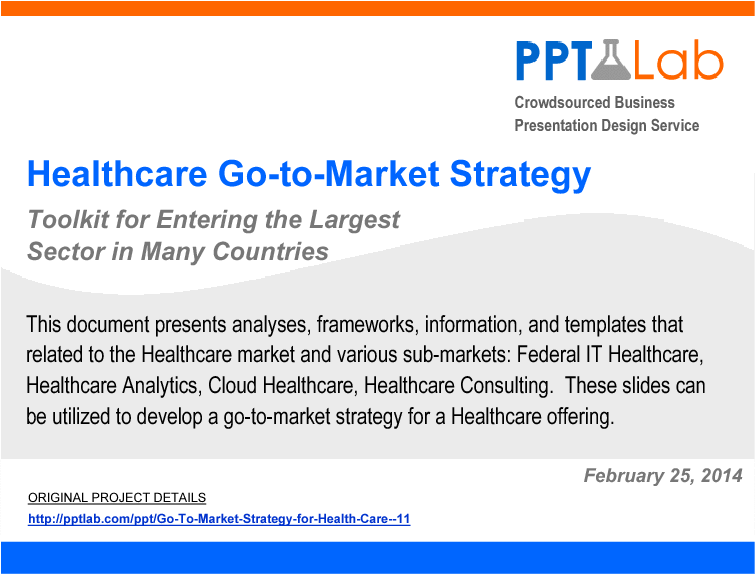
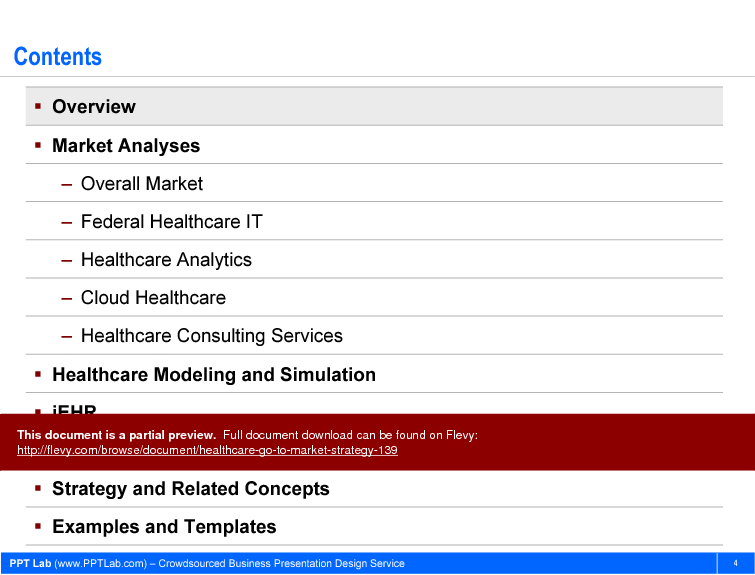
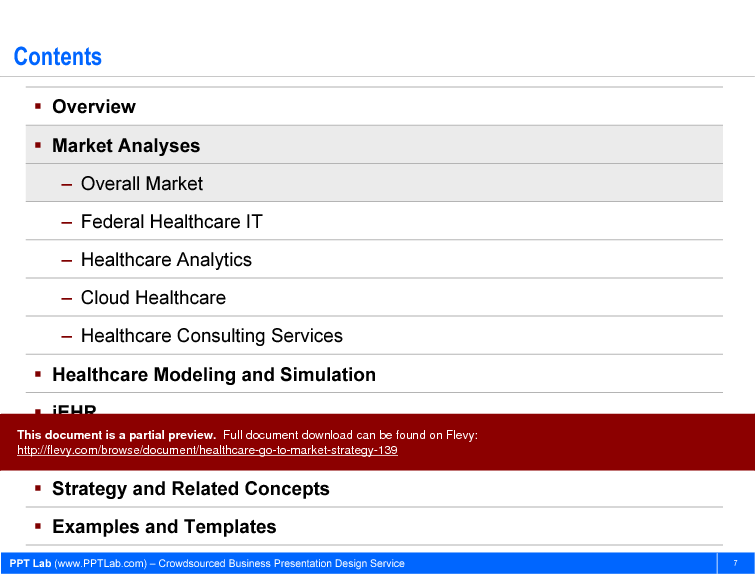
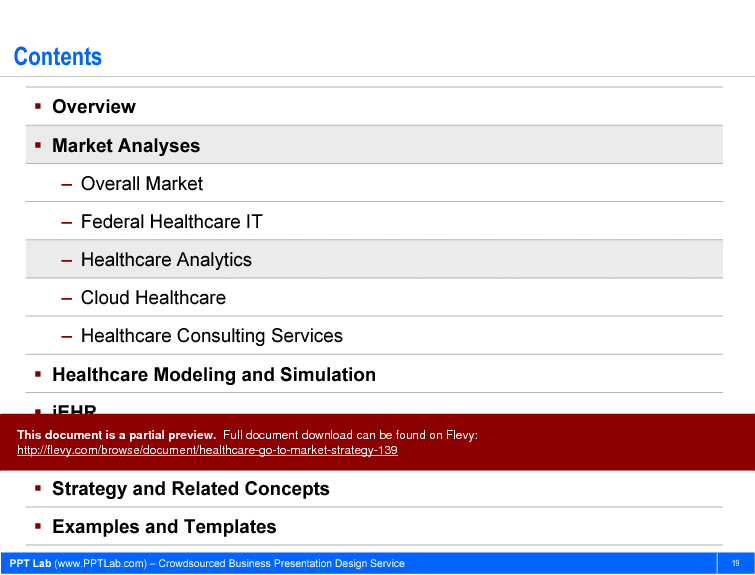
This document presents analyses, frameworks, information, and templates that related to the Healthcare market and various sub-markets: Federal IT Healthcare, Healthcare Analytics, Cloud Healthcare, Healthcare Consulting. These slides can be utilized to develop a go-to-market strategy for a Healthcare offering.
Additional topics include Healthcare modeling and simulation, iEHR, and business-disrupting disasters.
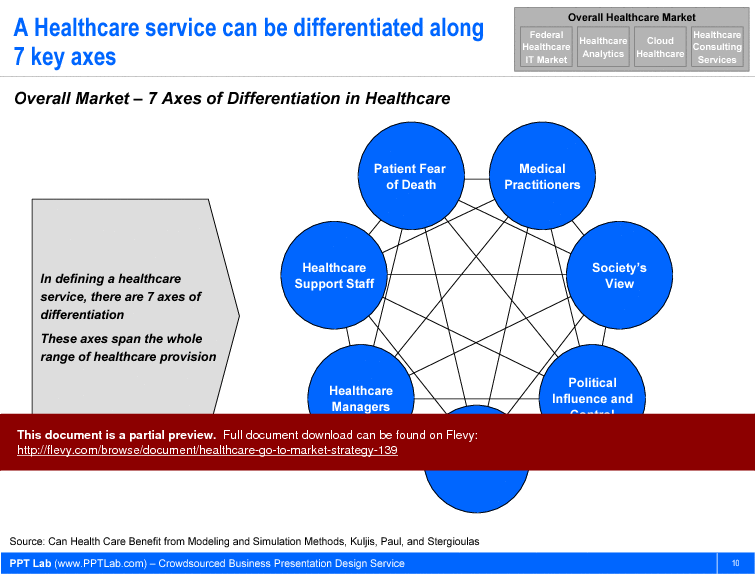
This comprehensive PPT covers the essential axes of differentiation in the healthcare sector, providing a robust framework for identifying unique value propositions. It delves into the seven key axes that span the entire healthcare provision spectrum, ensuring your service stands out in a competitive market. The document also includes detailed insights into the Healthcare Hype Cycle, guiding you through the five critical phases from technology trigger to the plateau of productivity, helping you navigate the complexities of technology adoption in healthcare.
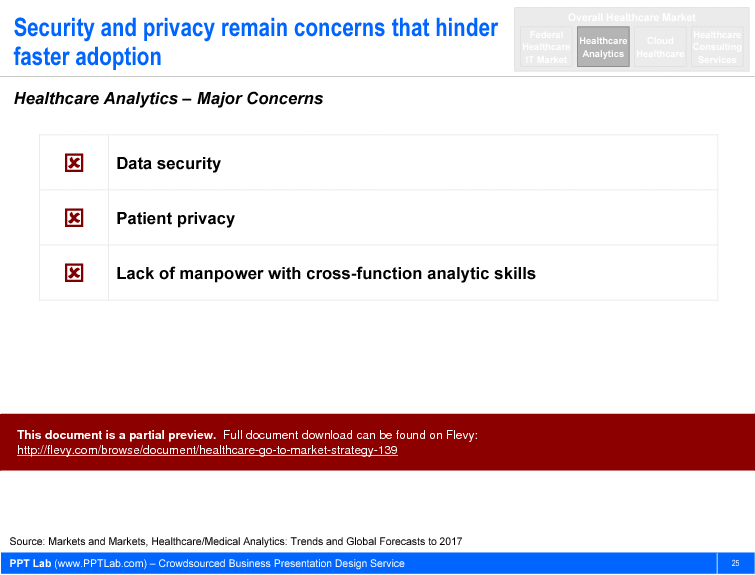
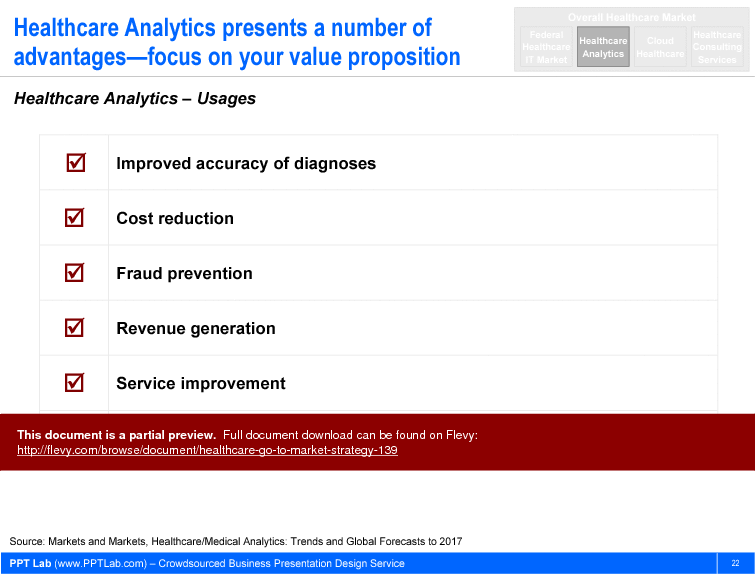
The Federal Healthcare IT market is another focal point, with projections showing significant growth driven by factors like rising healthcare costs and an aging population. This section offers a granular analysis of market size, growth rates, and key focus areas for federal spending, providing a strategic roadmap for tapping into this lucrative market. The document also highlights the importance of healthcare analytics, emphasizing its role in improving diagnostic accuracy, cost reduction, fraud prevention, and overall service improvement.
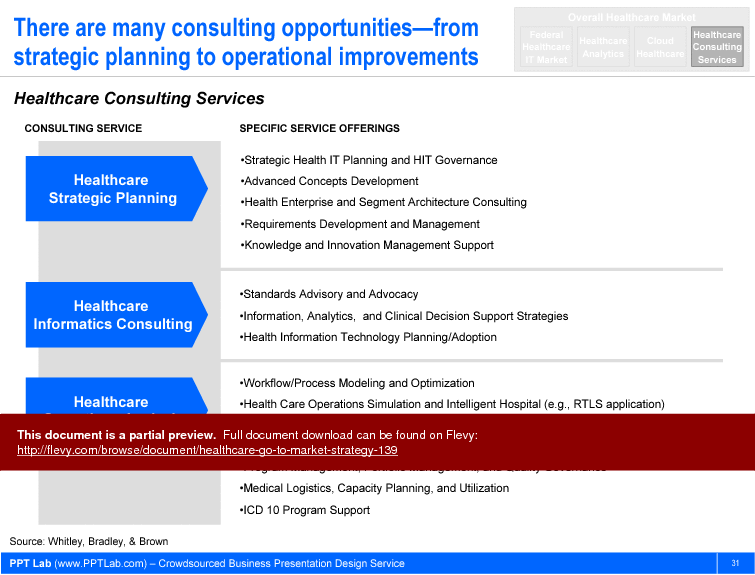
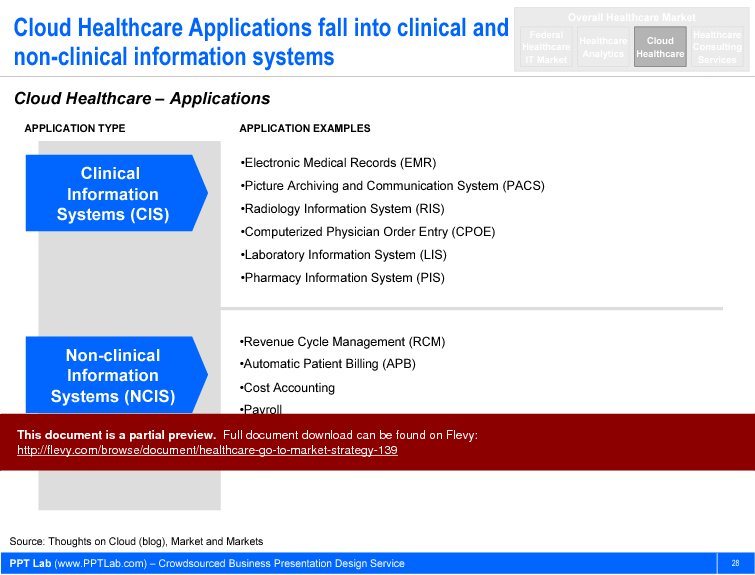
Cloud healthcare applications are categorized into clinical and non-clinical information systems, offering a clear view of the diverse opportunities in this space. The document also explores various consulting services, from strategic planning to operational improvements, providing a comprehensive guide for leveraging consulting opportunities in healthcare. The section on healthcare modeling and simulation compares techniques across industries, showcasing the potential for cross-industry innovation. This PPT is a must-have for executives looking to develop a robust go-to-market strategy in the healthcare sector.
Got a question about the product? Email us at support@flevy.com or ask the author directly by using the "Ask the Author a Question" form. If you cannot view the preview above this document description, go here to view the large preview instead.
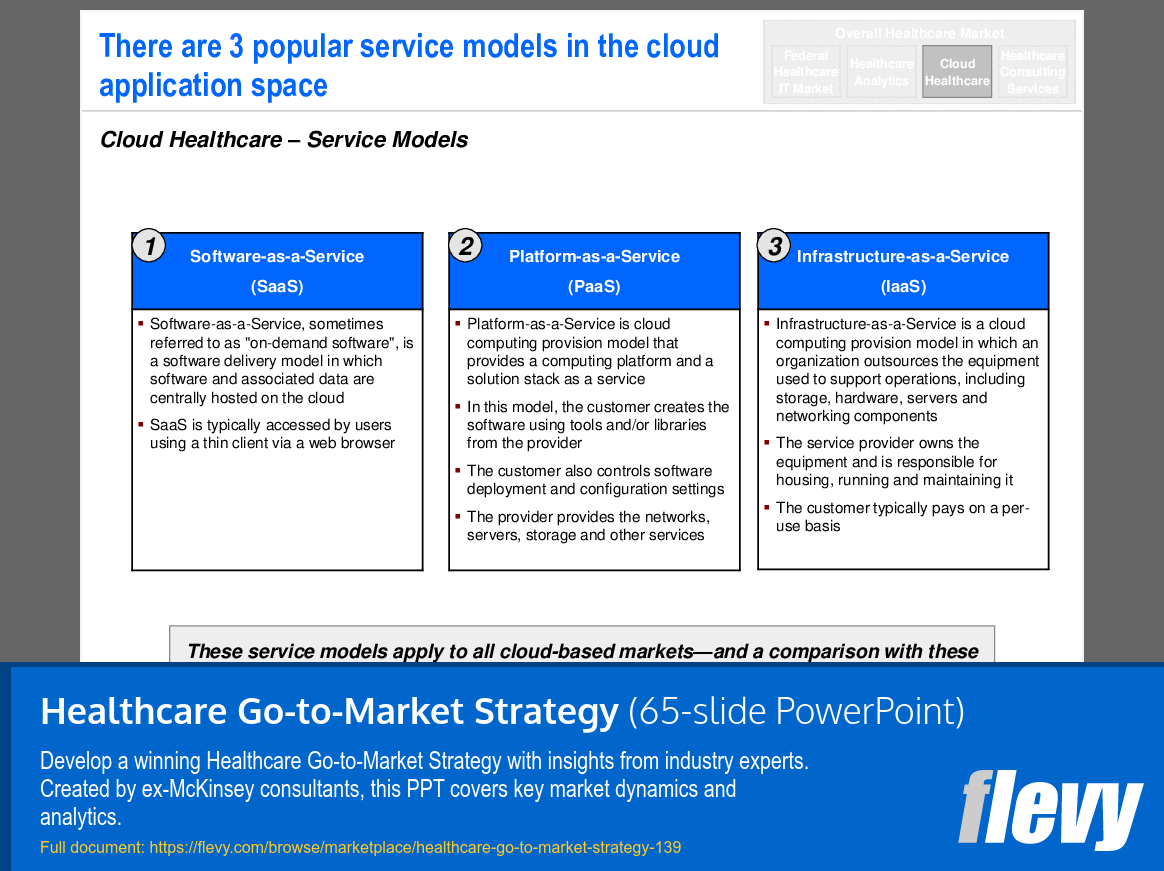
This PPT slide outlines 3 primary service models in cloud healthcare: Software-as-a-Service (SaaS), Platform-as-a-Service (PaaS), and Infrastructure-as-a-Service (IaaS). SaaS delivers applications and data hosted centrally in the cloud, accessed via a thin client, enhancing ease of use and accessibility for healthcare organizations. PaaS provides a computing platform for customers to develop and deploy applications, allowing control over software deployment while the provider manages infrastructure. IaaS involves outsourcing physical computing resources, with the provider maintaining hardware and customers paying based on usage, enabling dynamic scaling of infrastructure needs. Each model offers distinct functionalities and responsibilities, aligning with strategic objectives in cloud healthcare.
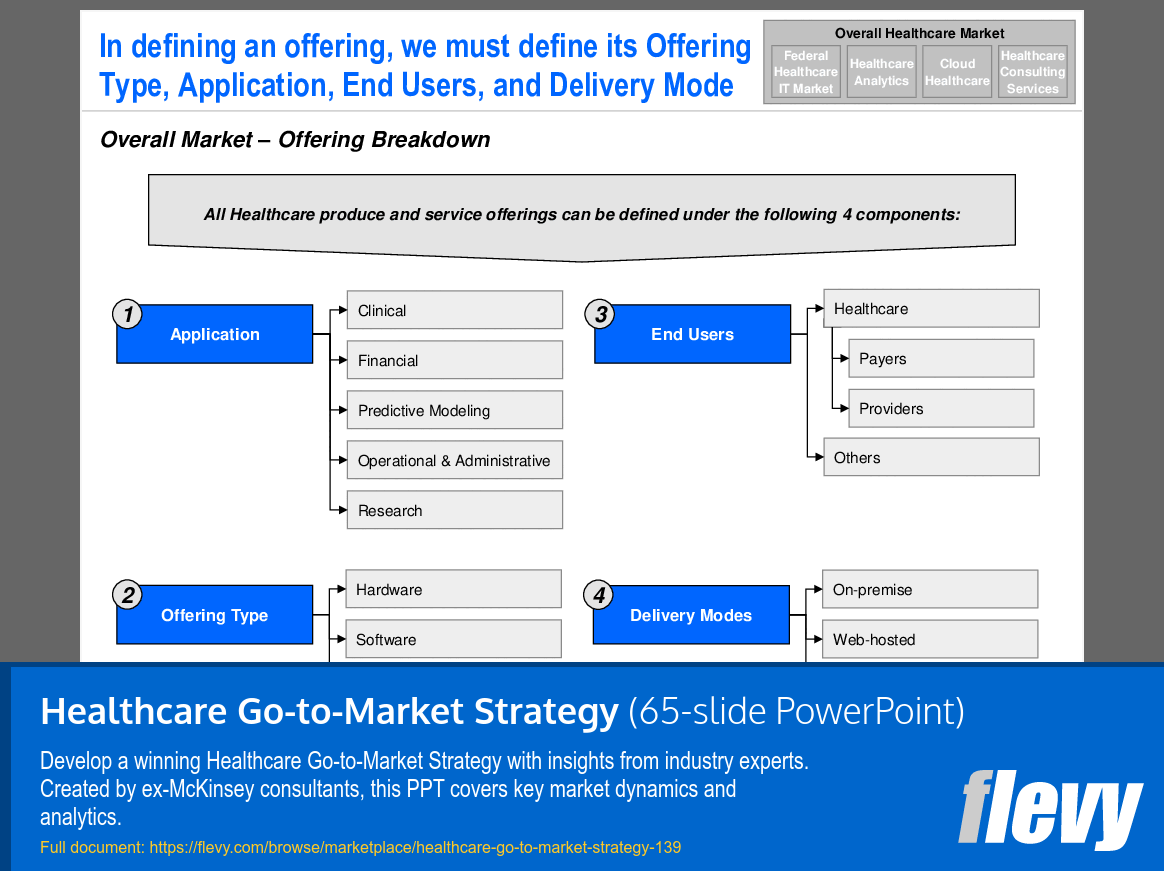
This PPT slide presents a structured framework for defining healthcare offerings, segmented into 4 components: Application, Offering Type, End Users, and Delivery Modes. The Application component includes domains such as Clinical, Financial, Predictive Modeling, Operational & Administrative, and Research, highlighting opportunities for specialized healthcare services. The Offering Type distinguishes between Hardware and Software, guiding organizations in identifying tangible products versus digital solutions. The End Users component categorizes stakeholders into Healthcare, Payers, Providers, and Others, crucial for tailoring marketing strategies. Lastly, Delivery Modes specifies On-premise and Web-hosted options, essential for determining deployment strategies and user accessibility. This framework aids organizations in refining their go-to-market strategies in healthcare.
This PPT slide outlines the 5 phases of the Healthcare Hype Cycle:
1. Technology Trigger: A breakthrough generates media attention and industry interest, setting the stage for adoption.
2. Peak of Inflated Expectations: Enthusiasm leads to unrealistic projections, with technology leaders experiencing both successes and failures.
3. Trough of Disillusionment: Technology fails to meet inflated expectations, causing a decline in interest and media coverage.
4. Slope of Enlightenment: Focused experimentation yields a clearer understanding of technology's applicability, leading to emerging commercial methodologies.
5. Plateau of Productivity: Real-world benefits are demonstrated, stabilizing tools and methodologies and increasing organizational confidence in technology.
This progression illustrates the journey from initial excitement to practical application in healthcare technology adoption.
This PPT slide provides an overview of the healthcare market, highlighting key segments: "Federal Healthcare IT Market," "Healthcare Analytics," "Cloud Healthcare," and "Healthcare Consulting Services." The "Federal Healthcare IT Market" focuses on government healthcare technology initiatives like electronic health records and telehealth. "Healthcare Analytics" emphasizes the role of data-driven decision-making in enhancing patient outcomes and operational efficiency. "Cloud Healthcare" reflects the trend towards cloud-based solutions, indicating the need for scalable IT infrastructure. "Healthcare Consulting Services" addresses advisory services that assist organizations in navigating the healthcare landscape. This segmentation clarifies the document's scope and helps stakeholders identify specific insights relevant to their interests.
The Healthcare Hype Cycle framework illustrates the maturity and adoption of technologies in healthcare. The vertical axis represents "Expectation," while the horizontal axis tracks time from the "Technology Trigger" to the "Plateau of Productivity." Key technologies are plotted along this curve: "Digital Pathology Scanners" and "Nanomedicine" are in the "Technology Trigger" phase, indicating high initial interest. "Master Data Management" and "Workflow for Care Coordination" are near the "Peak of Inflated Expectations," where hype often exceeds practical application. The "Trough of Disillusionment" follows, with "Desktop Virtualization" and "Medical Device Connectivity" facing challenges and decreased interest. Finally, the "Slope of Enlightenment" and "Plateau of Productivity" showcase mature technologies delivering value, such as "Strong Authentication for Remote Access" and "Table PCs for Healthcare." This diagram helps stakeholders identify investment opportunities and risks in emerging technologies.
The Healthcare Analytics market has experienced significant growth, increasing from $3.7 billion in 2012 to an anticipated $10.8 billion by 2017, with a compound annual growth rate (CAGR) of 23.7%. Healthcare Analytics is defined as the systematic application of data and analytical disciplines to enhance decision-making in healthcare management. Key growth drivers include the digitization of commerce and the emergence of big data, indicating that the integration of digital technologies and data analytics will elevate demand for advanced analytics solutions. This market presents lucrative opportunities for stakeholders, highlighting its potential as a key area for future investment and innovation.
This PPT slide outlines market opportunities in the healthcare sector, categorized into 4 areas: Healthcare Applications, Patient Care Applications, Administrative Systems, and Reporting and Communication.
Healthcare Applications include Application Maintenance and Custom Development, highlighting the need for ongoing support and tailored solutions. Patient Care Applications focus on Electronic Medical Records (EMR) and Radiology Information Systems, emphasizing improved patient data management. Administrative Systems feature Enterprise Learning Systems and Patient Wellness Portals, indicating a demand for staff training and patient engagement tools. Financial and Billing Systems, along with Revenue Cycle Control, underscore the importance of financial health in healthcare organizations.
Reporting and Communication covers data management standards like X12 and HL7, reflecting the necessity for robust data exchange and analytics capabilities. These categories present clear avenues for investment and development in the evolving healthcare market.
Federal healthcare expenditures rose from $766 billion in 2011 to $1.4 trillion in 2012, driven by 3 primary factors: social trends, economic trends, and policy impacts. The aging U.S. population, particularly the 65+ age group projected to increase by 123% by 2050, creates a growing demand for healthcare services. Economic pressures, including rising healthcare costs and high unemployment, compel both individuals and the government to allocate more resources to healthcare. Legislation such as the HITECH Act and the Affordable Care Act promotes health IT adoption to improve outcomes and reduce costs. As the largest payer of healthcare services in the U.S., the federal government plays a critical role in these dynamics.
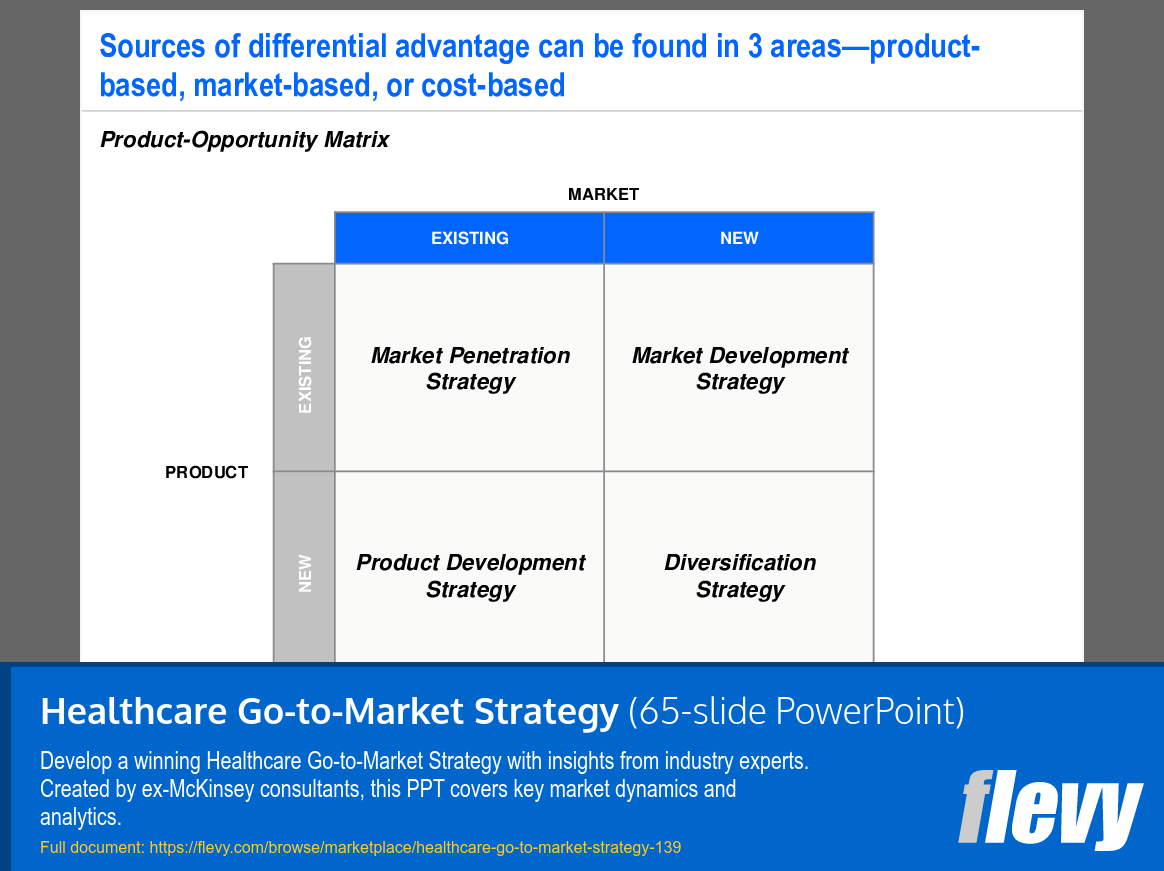
The Product-Opportunity Matrix categorizes strategies based on product and market dimensions, identifying 3 sources of advantage: product-based, market-based, and cost-based. The matrix features 4 quadrants:
1. Market Penetration Strategy focuses on increasing market share with existing products in existing markets through enhanced marketing and competitive pricing.
2. Market Development Strategy targets new markets with existing products, leveraging established offerings for revenue growth.
3. Product Development Strategy aims at introducing new products in existing markets to innovate and meet changing customer needs.
4. Diversification Strategy involves new products in new markets, presenting higher risks, but potential significant rewards.
This matrix serves as a strategic tool for evaluating growth options and aligning resources.
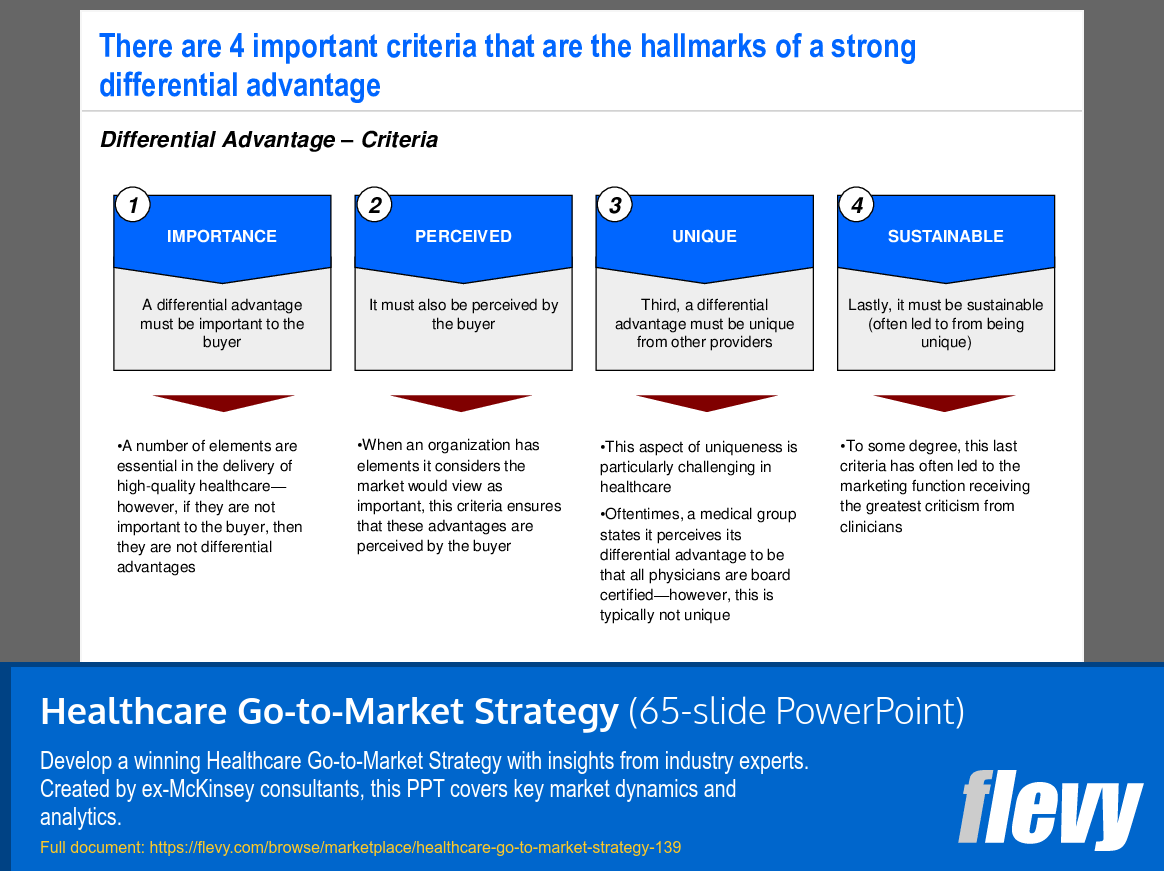
This PPT slide outlines 4 essential criteria for a strong differential advantage in healthcare: Importance, Perceived, Unique, and Sustainable. The Importance criterion emphasizes that advantages must align with buyer needs; otherwise, they lack validity. The Perceived criterion highlights that advantages must be recognized by buyers, necessitating effective communication and marketing strategies. Unique refers to the necessity for advantages to stand out from competitors, which can be challenging in healthcare where many claims are standard expectations. Lastly, the Sustainable criterion indicates that advantages must be maintainable over time, reflecting the tension between marketing narratives and actual service delivery, requiring ongoing commitment to operational realities.
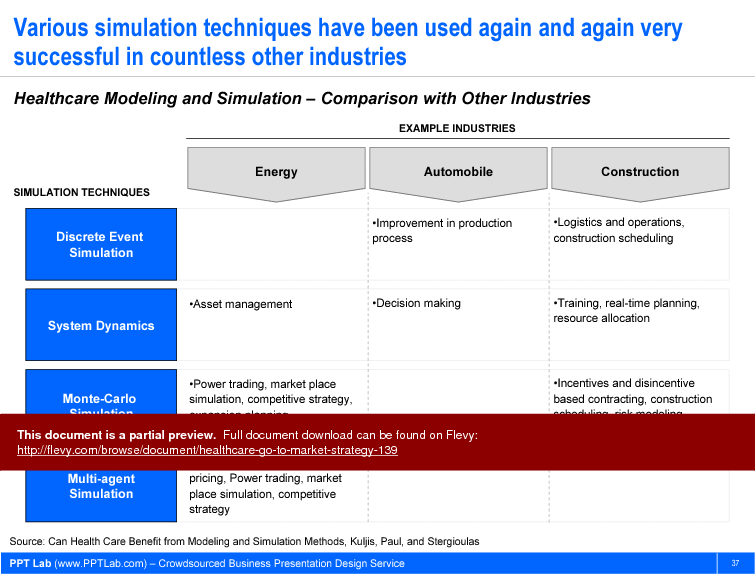
This PPT slide analyzes 4 primary simulation techniques: Discrete Event Simulation, System Dynamics, Monte-Carlo Simulation, and Multi-agent Simulation, across 3 sectors: Energy, Automobile, and Construction. Discrete Event Simulation enhances production processes in the automobile industry and supports emergency planning and pricing strategies in energy. System Dynamics is linked to asset management in energy and decision-making in automobiles. Monte-Carlo Simulation is utilized for power trading in energy, market simulations in automobiles, and risk modeling in construction. Multi-agent Simulation applies to supply chain simulation in construction and emergency planning in energy. These methodologies suggest potential applicability in healthcare, enabling stakeholders to leverage insights from diverse industries to improve modeling and simulation efforts.
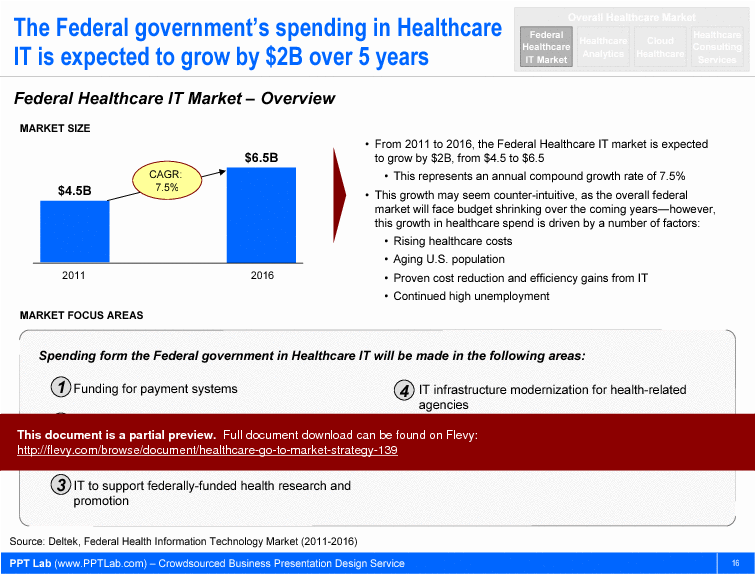
The Federal Healthcare IT market is projected to grow from $4.5 billion in 2011 to $6.5 billion by 2016, reflecting a compound annual growth rate of 7.5%. Key drivers include rising healthcare costs, an aging U.S. population, and efficiency gains from IT investments. The federal investment will focus on 5 areas: payment systems, technology for healthcare delivery, IT support for federally-funded health research, modernization of IT infrastructure for health agencies, and advancements in population health. Understanding these dynamics is essential for stakeholders to align organizational goals with federal healthcare priorities and identify emerging opportunities.
Source: Best Practices in Healthcare PowerPoint Slides: Healthcare Go-to-Market Strategy PowerPoint (PPT) Presentation Slide Deck, PPT Lab
PPT Lab is a presentation design firm specializing in business frameworks and PowerPoint templates. Our team is comprised of ex-consultants from McKinsey, E&Y, Bearing Point, and boutique consulting firms. We have worked with hundreds of clients globally, ranging from mid-size manufacturing companies to global Fortune 500 conglomerates.
All of our documents are of the
... [read more] same quality produced by top-tier consulting firms and utilize the Consulting Presentation Framework.
The average daily rate of a McKinsey consultant is $6,625 (not including expenses). The average price of a Flevy document is $65.
Trusted by over 10,000+ Client Organizations
Since 2012, we have provided business templates to over 10,000 businesses and organizations of all sizes, from startups and small businesses to the Fortune 100, in over 130 countries.
"My FlevyPro subscription provides me with the most popular frameworks and decks in demand in today’s market. They not only augment my existing consulting and coaching offerings and delivery, but also keep me abreast of the latest trends, inspire new products and service offerings for my practice, and educate me
in a fraction of the time and money of other solutions. I strongly recommend FlevyPro to any consultant serious about success.
"
– Bill Branson, Founder at Strategic Business Architects
"As a young consulting firm, requests for input from clients vary and it's sometimes impossible to provide expert solutions across a broad spectrum of requirements. That was before I discovered Flevy.com.
Through subscription to this invaluable site of a plethora of topics that are key and crucial to consulting, I
have been able to exceed expectations and deliver quality advice and solutions to my clients. The quality and expertise of the authors are exemplary and gives me great confidence to use as part of my service offerings.
I highly recommend this company for any consultant wanting to apply international best practice standards in their service offerings.
"
– Nishi Singh, Strategist and MD at NSP Consultants
"I have used Flevy services for a number of years and have never, ever been disappointed. As a matter of fact, David and his team continue, time after time, to impress me with their willingness to assist and in the real sense of the word. I have concluded in fact
that it is not at all just a repository of documents/resources but, in the way that David and his team manage the firm, it is like dealing with consultants always ready to assist, advise and direct you to what you really need, and they always get it right.
I am an international hospitality accomplished senior executive who has worked and lived during the past 35 years in 23 countries in 5 continents and I can humbly say that I know what customer service is, trust me.
Aside from the great and professional service that Flevy's team provide, their wide variety of material is of utmost great quality, professionally put together and most current.
Well done Flevy, keep up the great work and I look forward to continue working with you in the future and to recommend you to a variety of colleagues around the world.
"
– Roberto Pelliccia, Senior Executive in International Hospitality
"I like your product. I'm frequently designing PowerPoint presentations for my company and your product has given me so many great ideas on the use of charts, layouts, tools, and frameworks. I really think the templates are a valuable asset to the job."
– Roberto Fuentes Martinez, Senior Executive Director at Technology Transformation Advisory
"As a consultant requiring up to date and professional material that will be of value and use to my clients, I find Flevy a very reliable resource.
The variety and quality of material available through Flevy offers a very useful and commanding source for information. Using Flevy saves me time, enhances my expertise and ends up being a good decision."
– Dennis Gershowitz, Principal at DG Associates
"The wide selection of frameworks is very useful to me as an independent consultant. In fact, it rivals what I had at my disposal at Big 4 Consulting firms in terms of efficacy and organization."
– Julia T., Consulting Firm Owner (Former Manager at Deloitte and Capgemini)
"Flevy is our 'go to' resource for management material, at an affordable cost. The Flevy library is comprehensive and the content deep, and typically provides a great foundation for us to further develop and tailor our own service offer."
– Chris McCann, Founder at Resilient.World
"As a niche strategic consulting firm, Flevy and FlevyPro frameworks and documents are an on-going reference to help us structure our findings and recommendations to our clients as well as improve their clarity, strength, and visual power. For us, it is an invaluable resource to increase our impact and value."
– David Coloma, Consulting Area Manager at Cynertia Consulting
Download our free compilation of 50+ Strategy & Transformation slides and templates. Frameworks include McKinsey 7-S, Balanced Scorecard, Disruptive Innovation, BCG Curve, and many more.