
 Click main image to view in full screen. Unlock all 20 preview images:
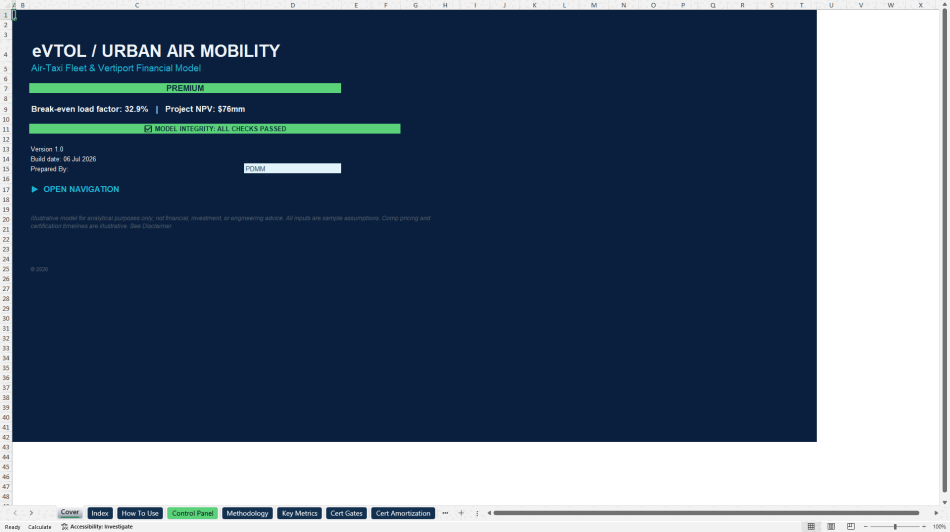
eVTOL and Urban Air Mobility Financial Model – Excel XLSX
Excel (XLSX) + supplemental PDF


BENEFITS OF THIS DOWNLOADABLE EXCEL DOCUMENT
- Provides a structured framework for modeling eVTOL fleet deployment, certification gates, vertiport CapEx, passenger-mile revenue and load factor break-even.
- Helps users evaluate battery degradation, battery replacement cost cycles and FAA / EASA certification cost amortization.
- Supports better investor, feasibility and strategy decisions through OEM vs. operator scenarios, dashboards, KPIs, sensitivities and valuation outputs.
AIRLINE INDUSTRY EXCEL DESCRIPTION
🚀 eVTOL and Urban Air Mobility Financial Model is a professional financial planning workbook built for eVTOL companies, urban air mobility startups, air taxi operators, aviation infrastructure developers, vertiport investors, mobility platforms, OEMs, strategic finance teams and transport analysts.
Urban air mobility requires a different model from traditional transport, airlines, ride-sharing, helicopters or automotive businesses.
An eVTOL business must evaluate:
Fleet deployment timing
Certification milestone gates
Vertiport infrastructure investment
Revenue per passenger mile
Helicopter and ride-share pricing comparisons
Battery degradation and replacement cycles
FAA / EASA type certification cost amortization
OEM vs. operator business model scenarios
Load factor and utilization break-even
This workbook brings those drivers into one structured financial model.
What the Model Covers
The model includes:
✅ Fleet deployment schedule
✅ Certification milestone gates
✅ Aircraft rollout assumptions
✅ Vertiport build-out CapEx
✅ Vertiport revenue-sharing waterfall
✅ Passenger-mile revenue forecast
✅ Helicopter comparison
✅ Ride-share comparison
✅ Battery degradation model
✅ kWh per flight logic
✅ Battery replacement cost cycle
✅ FAA / EASA type certification cost amortization
✅ OEM business model scenario
✅ Operator business model scenario
✅ OEM vs. operator toggle
✅ Load factor sensitivity
✅ 60% vs. 80% utilization break-even
✅ Fleet P&L
✅ Cash flow forecast
✅ Valuation outputs
✅ Dashboards, KPIs and audit checks
The model is designed to help users evaluate whether an eVTOL / urban air mobility business can scale profitably under different fleet, infrastructure, certification, battery and utilization scenarios.
Fleet Deployment and Certification Gates
✈️ The model includes a certification-gated fleet deployment schedule.
Users can analyze:
Aircraft delivery timing
Certification milestone gates
Active fleet rollout
Delayed deployment scenarios
Revenue ramp-up
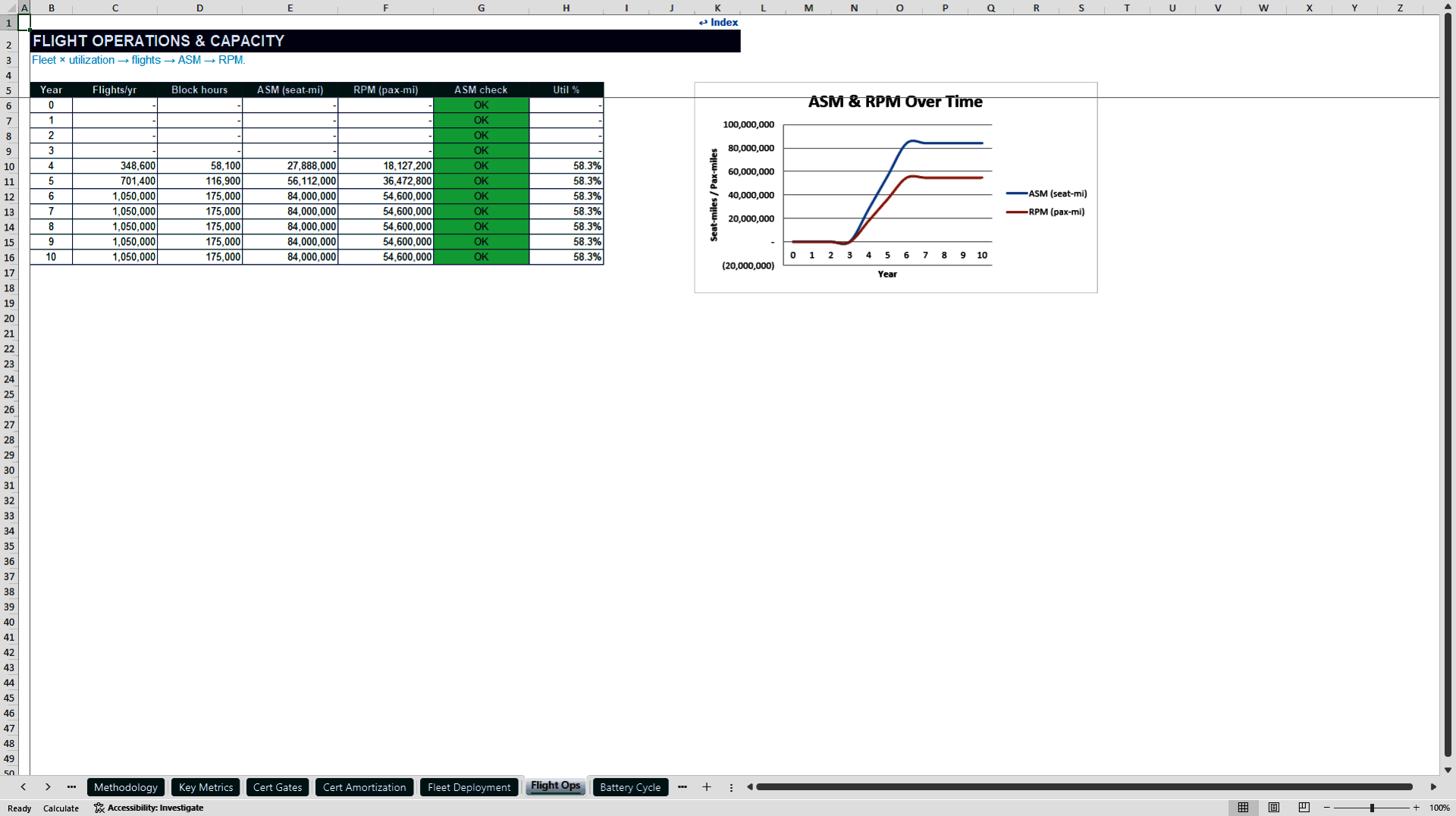
Fleet utilization
Capacity growth
This is important because eVTOL companies cannot deploy aircraft at full scale until relevant certification and operating milestones are achieved.
Vertiport CapEx and Revenue-Sharing Waterfall
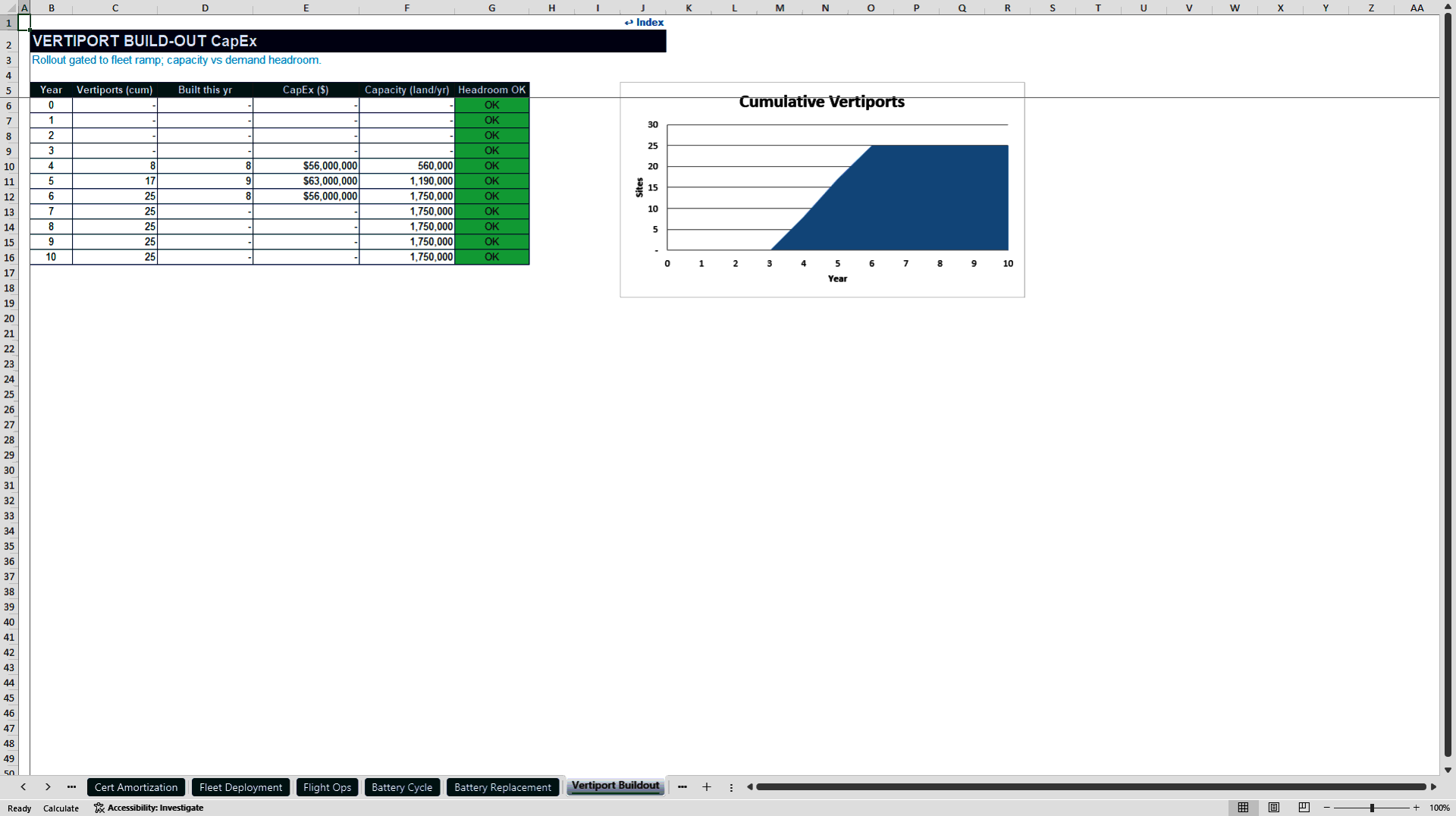
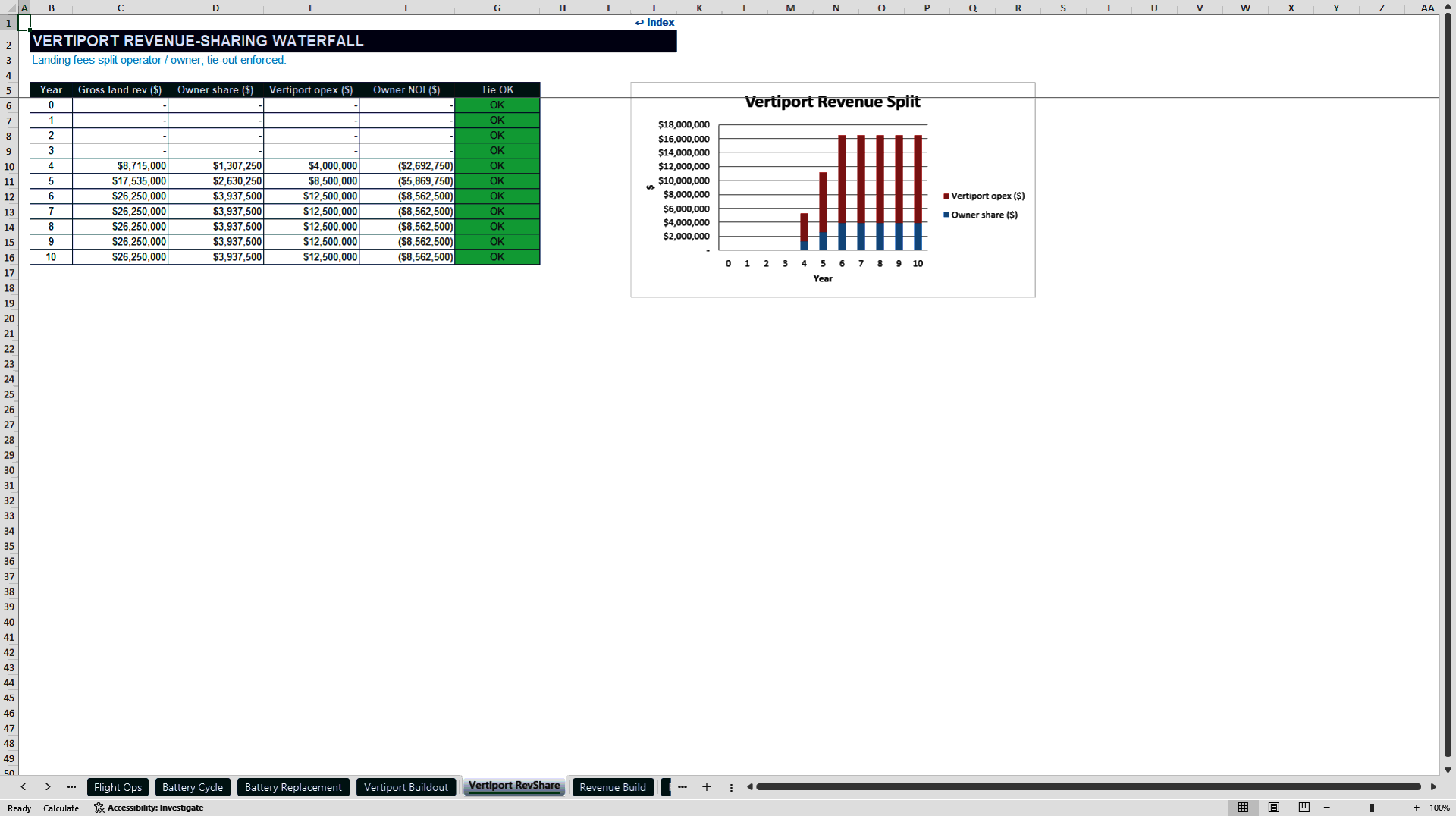
🏙️ The workbook includes vertiport infrastructure economics.
It models:
Vertiport build-out CapEx
Site development cost
Launch city infrastructure requirements
Revenue-sharing between operator and infrastructure partner
Vertiport-level economics
Impact on project return and payback
This helps users analyze the physical infrastructure layer behind urban air mobility.
Revenue per Passenger Mile
💺 The model includes passenger-mile revenue analysis and comparison logic.
Users can compare eVTOL pricing against:
Helicopter transport
Ride-share alternatives
Premium ground mobility
Route-level pricing
Passenger volume
Load factor
Average trip distance
This helps evaluate whether the proposed pricing is competitive and financially viable.
Battery Degradation and Replacement Cycle
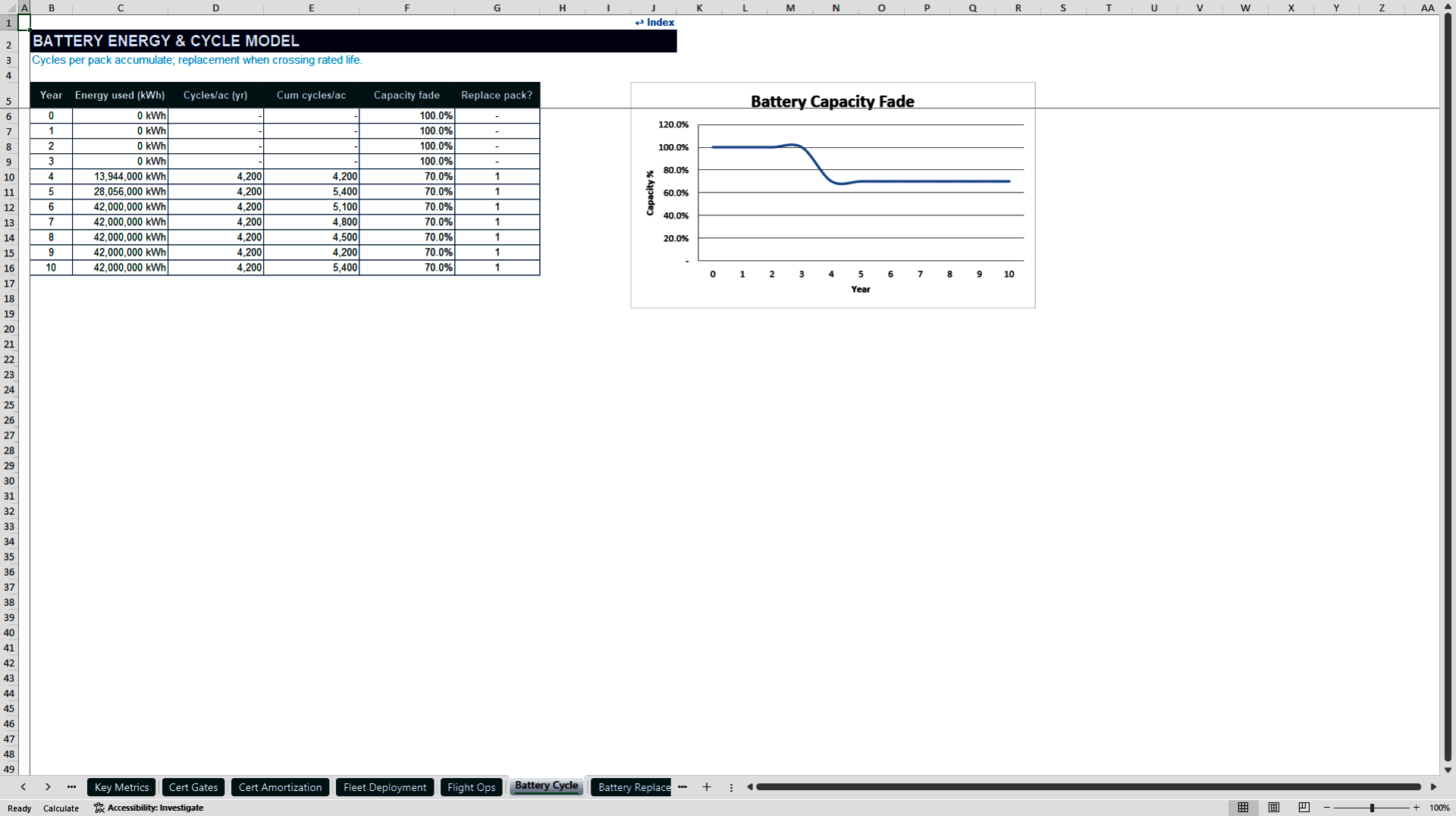
🔋 Battery cost is a major driver of eVTOL operations.
The model includes:
✅ kWh per flight
✅ Battery degradation
✅ Cycle life
✅ Replacement timing
✅ Replacement cost
✅ Cost per flight impact
✅ Long-term maintenance burden
This helps users understand how battery replacement affects unit economics and cash flow.
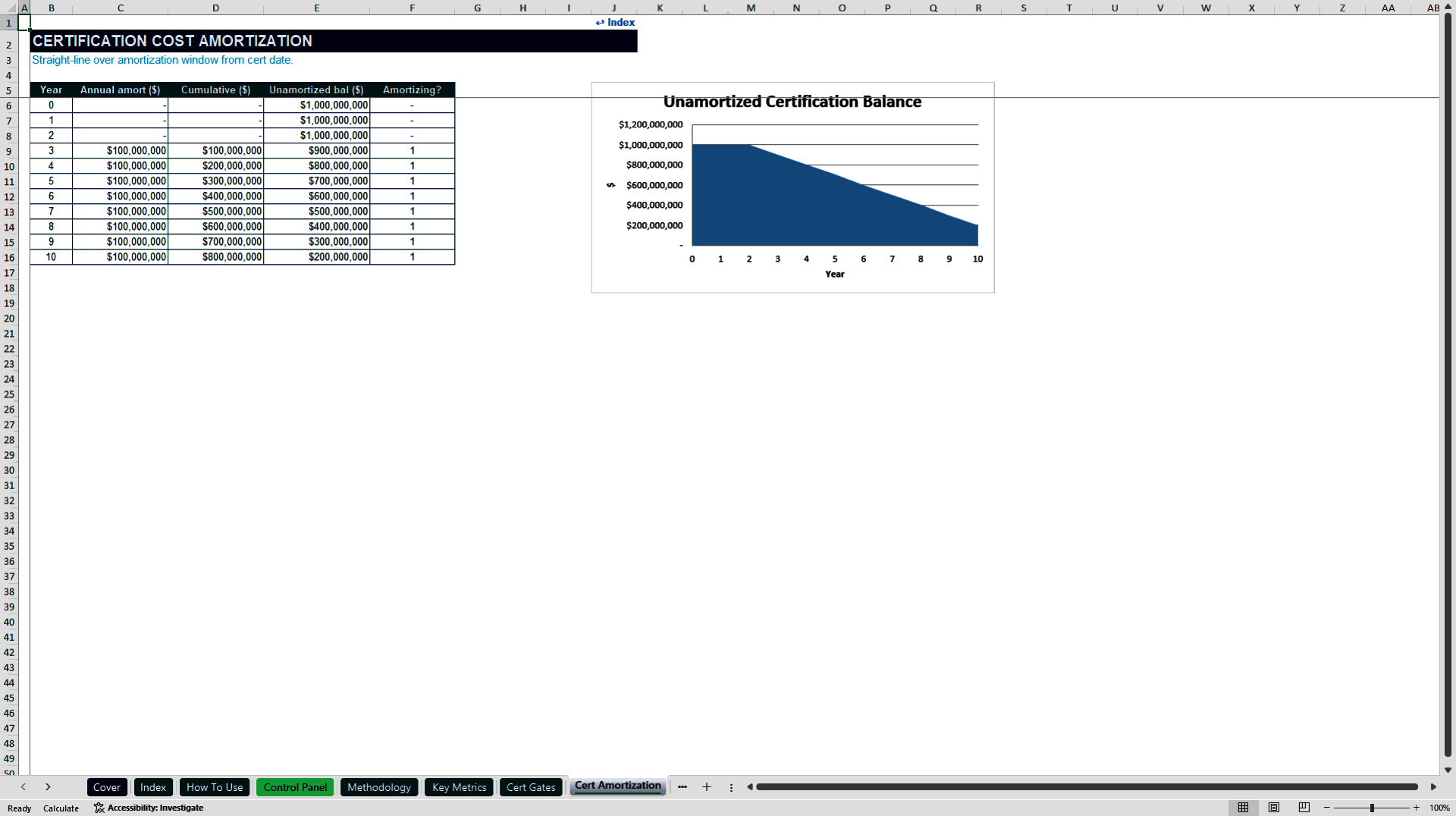
FAA / EASA Certification Cost Amortization
🏛️ The model includes a certification cost amortization schedule.
It helps users allocate:
FAA type certification cost
EASA type certification cost
Development and certification-related cost
Amortization period
Cost impact over time
Profitability impact
This is useful because certification cost can be significant and should be reflected in long-term financial planning.
OEM vs. Operator Business Model Toggle
🔁 The workbook includes a toggle-style framework to compare different business models.
Included models:
OEM model
Operator model
Hybrid OEM/operator scenario
This allows users to compare capital intensity, margin profile, fleet exposure and revenue structure across commercialization strategies.
Load Factor Sensitivity
📊 The model includes load factor sensitivity for 60% vs. 80% utilization.
This helps users analyze:
Break-even utilization
Passenger volume requirement
Revenue impact
Cost absorption
Margin sensitivity
Fleet-level profitability
This is important because the business can look very different depending on aircraft utilization and seat occupancy.
Outputs Included
📊 The workbook includes:
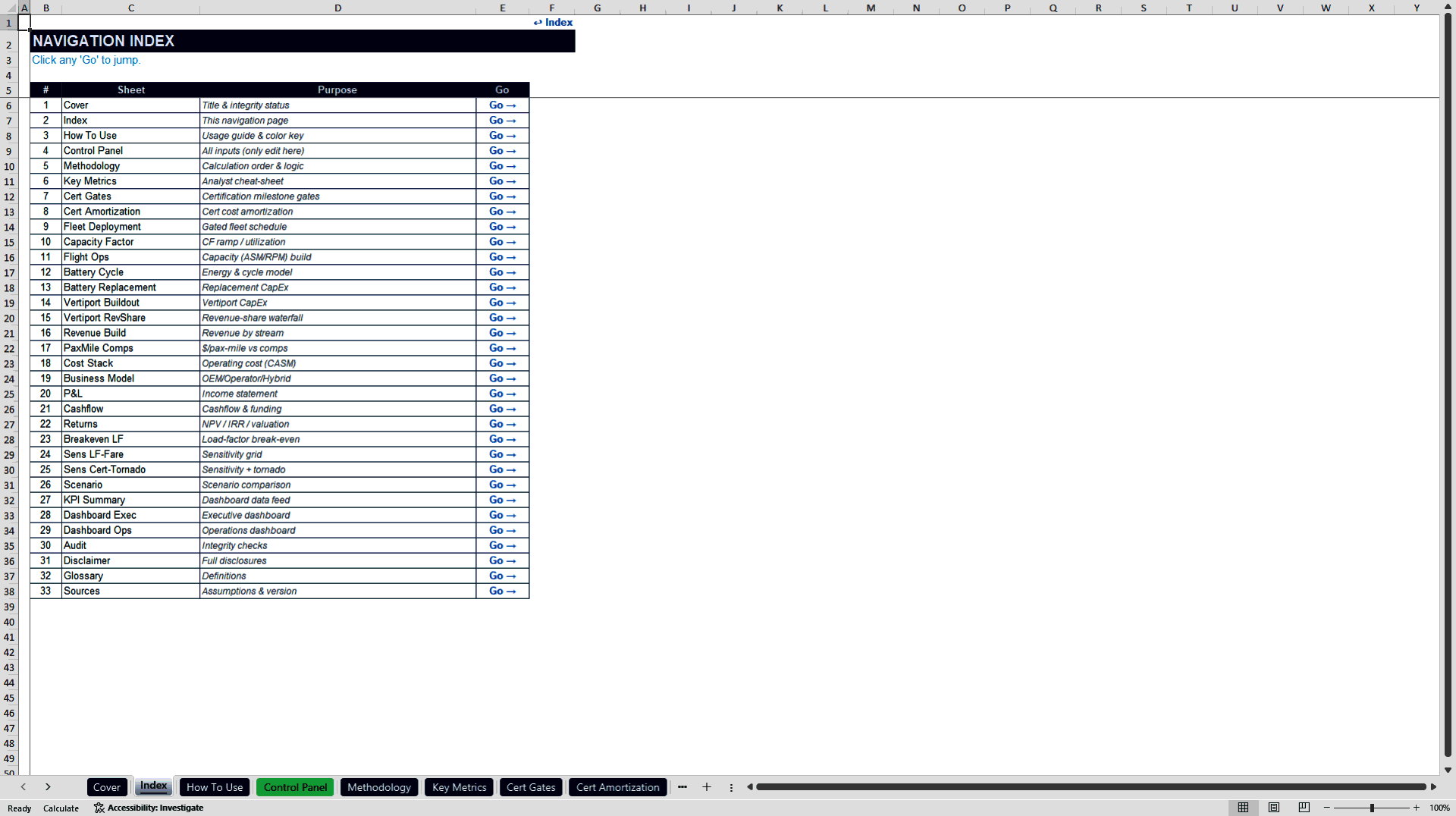
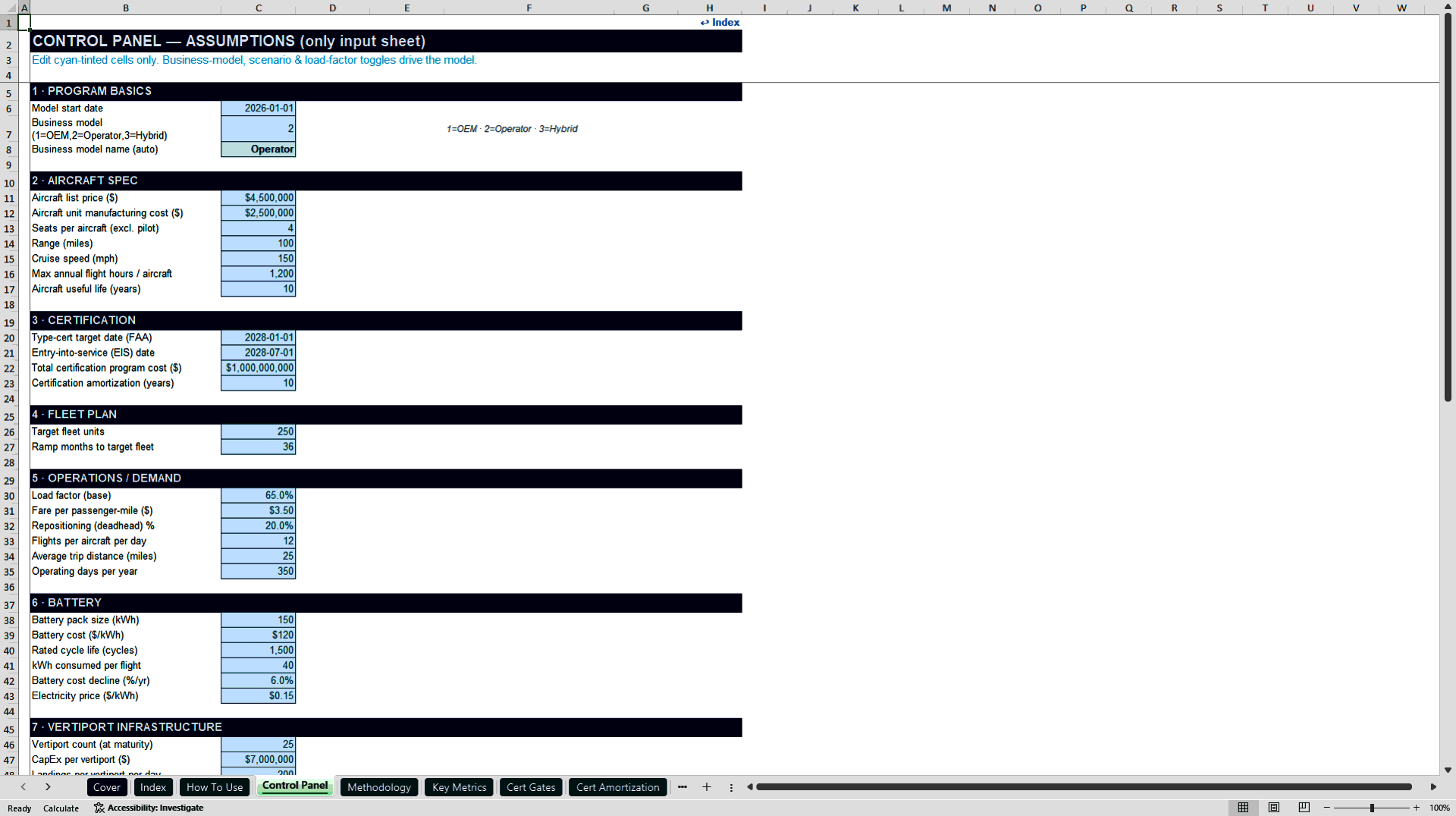
✅ Control Panel
✅ Fleet Deployment
✅ Certification Milestone Gates
✅ Vertiport CapEx
✅ Vertiport Revenue Waterfall
✅ Passenger Mile Revenue
✅ Helicopter / Ride-Share Comps
✅ Battery Degradation
✅ Battery Replacement Cycle
✅ FAA / EASA Certification Cost
✅ Certification Amortization
✅ OEM Scenario
✅ Operator Scenario
✅ Business Model Toggle
✅ Load Factor Sensitivity
✅ Fleet P&L
✅ Cash Flow Forecast
✅ Valuation
✅ Scenario Summary
✅ Sensitivity Analysis
✅ KPI Summary
✅ Executive Dashboard
✅ Audit Checks
✅ Disclaimer
✅ Glossary
Who This Document Is For
This model is suitable for:
eVTOL startups
Urban air mobility companies
Air taxi operators
Aviation infrastructure developers
Vertiport investors
OEM strategy teams
Fleet operators
Venture capital investors
Transport analysts
Infrastructure investors
Corporate strategy teams
Smart city mobility planners
Aviation consultants
Strategic finance teams
Got a question about the product? Email us at support@flevy.com or ask the author directly by using the "Ask the Author a Question" form. If you cannot view the preview above this document description, go here to view the large preview instead.
Source: Best Practices in Airline Industry, Integrated Financial Model Excel: eVTOL and Urban Air Mobility Financial Model Excel (XLSX) Spreadsheet, PDMM Financial Models
ABOUT THE AUTHOR

PDMM Financial Models develops professional, decision-ready Excel models for business owners, entrepreneurs, investors, consultants, analysts, and finance teams. Our objective is to transform complex business assumptions into clear, structured analysis that supports better planning and investment decisions.
Our models cover business planning, forecasting, budgeting, feasibility analysis,
... [read more]
Ask the Author a Question
You must be logged in to contact the author.




























