
 Click main image to view in full screen. Unlock all 17 preview images:
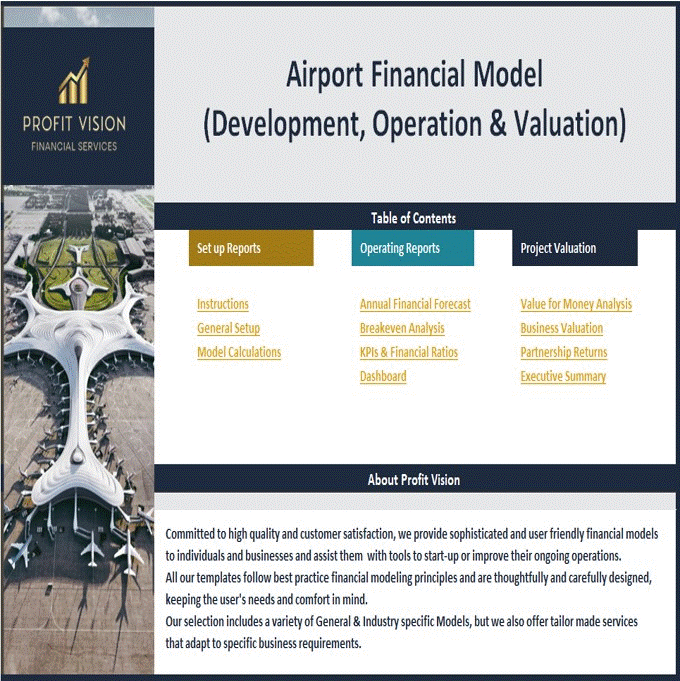
Airport Financial Model (Development, Operation & Valuation) – Excel XLSX
Excel (XLSX)


BENEFITS OF THIS DOWNLOADABLE EXCEL DOCUMENT
- Presents a development and operating scenario of an Airport
AIRLINE INDUSTRY EXCEL DESCRIPTION
Financial Model for an Airport Development project, designed to support large-scale planning, investment analysis, and long-term viability. The model covers key revenue streams such as passenger fees, airline leases, retail concessions, parking, etc. while detailing capital expenditures, operating costs, financing structures, and regulatory requirements. It also includes scenario analysis tools to evaluate traffic forecasts, funding strategies, and phased development plans. This model provides the financial clarity and flexibility needed to guide complex airport projects from concept to execution.
Model Structure:
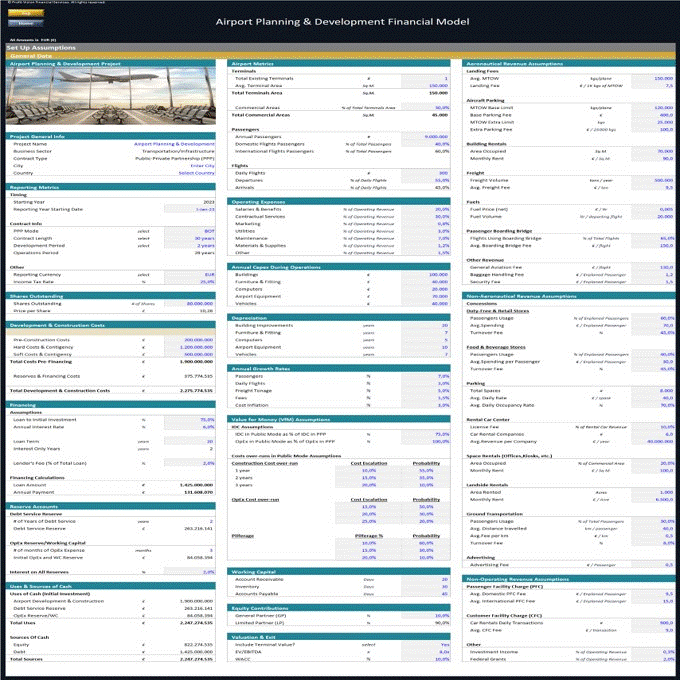
Setup Assumptions:
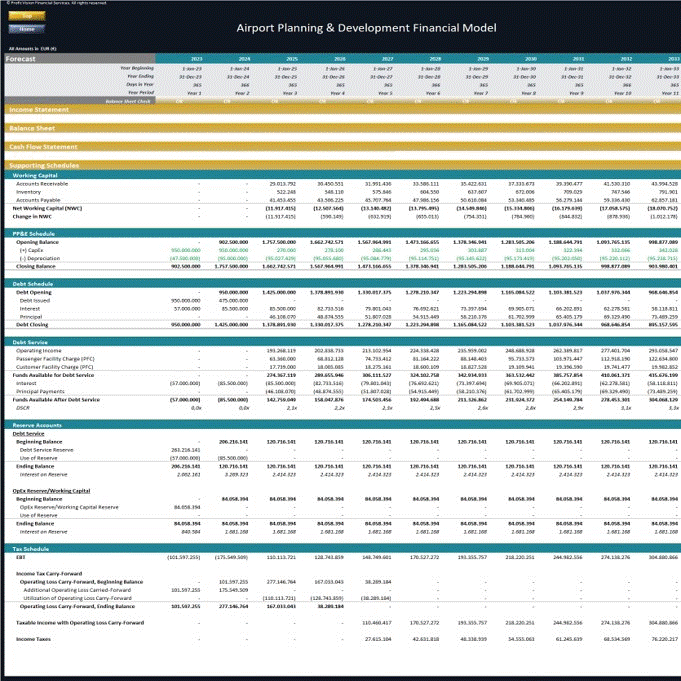
• Project Development Budget (Land Costs, Construction Costs, etc.) and Debt Schedule
• Project Financing Assumptions (Equity, Debt, Government Grant)
• Project Timing (Development, Operations and Exit Phases)
• Airport Metrics: Total Terminals, Commercial Area, Annual Passengers & Annual Flights Assumptions
• Aeronautical Revenue Assumptions: Landing Fees, Aircraft Parking, Building Rentals, Freight, Fuels, Passenger Boarding Bridge, General Aviation Fee, etc.
• Non-Aeronautical Revenue Assumptions: Concessions (Duty-Free, Retail, F&B stores), Parking, Rental Car Center, Space Rentals, Ground Transportation, Advertising, etc.
• Non-Operating Revenue Assumptions: Passenger Facility Charge (PFC), Customer Facility Charge (CFC), Investment Income
• Annual Operating Expenses and Capital Expenditures Assumptions
• Private Partnership Equity Contribution Assumptions (GP & LP)
• Business Valuation Assumptions: EV/EBITDA Multiple, WACC
• Debt Schedule including loan terms (Moratorium period, Interest-only period, Interst Rate, Loan Term)
• Forecast Scenarios
Output Reports:
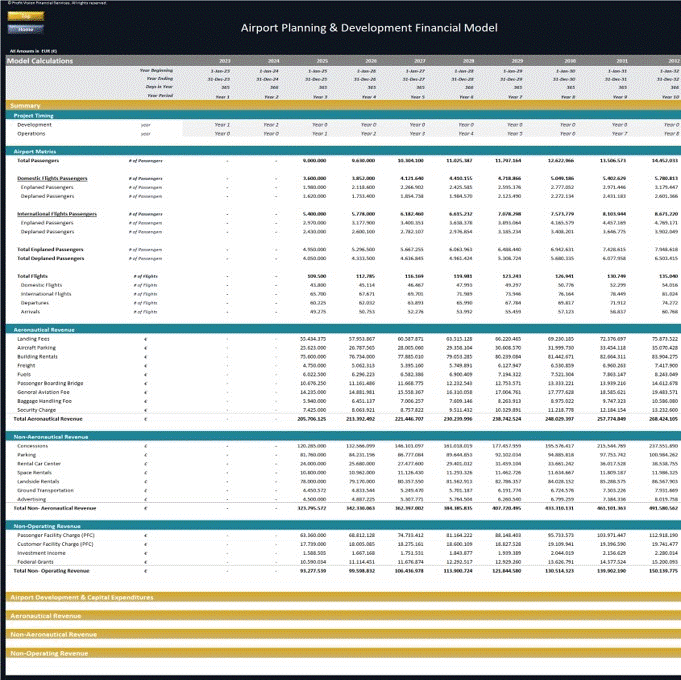
• Monthly, Quarterly, and Annual Operating Cash Flow Report
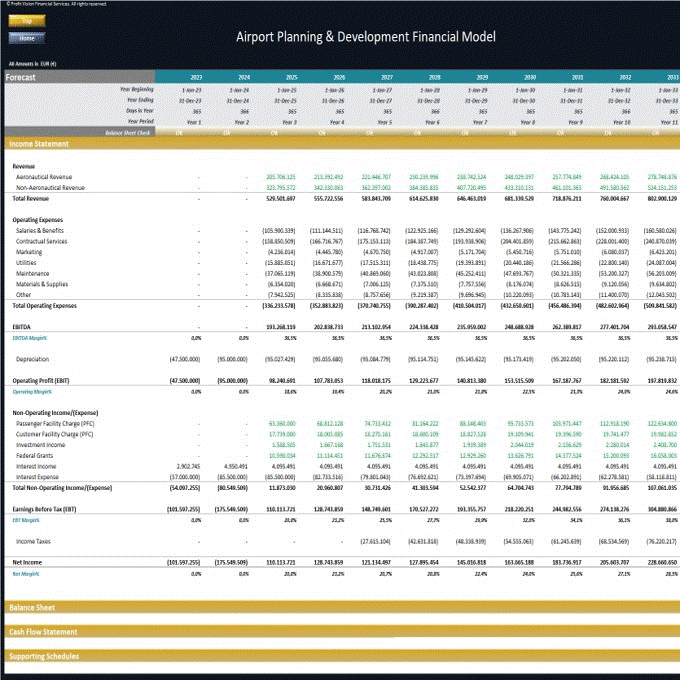
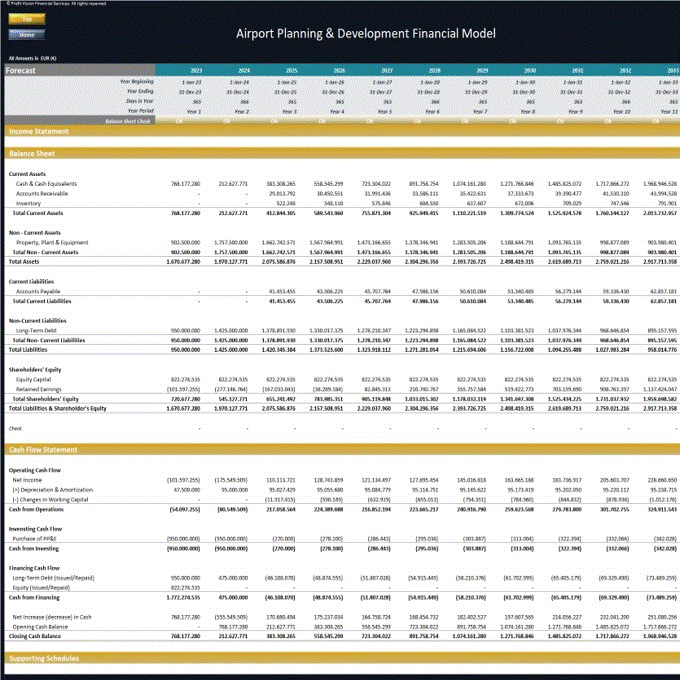
• Annual Financial Statements (3 Statement model – 10 Year Forecast)
• Break-Even Analysis
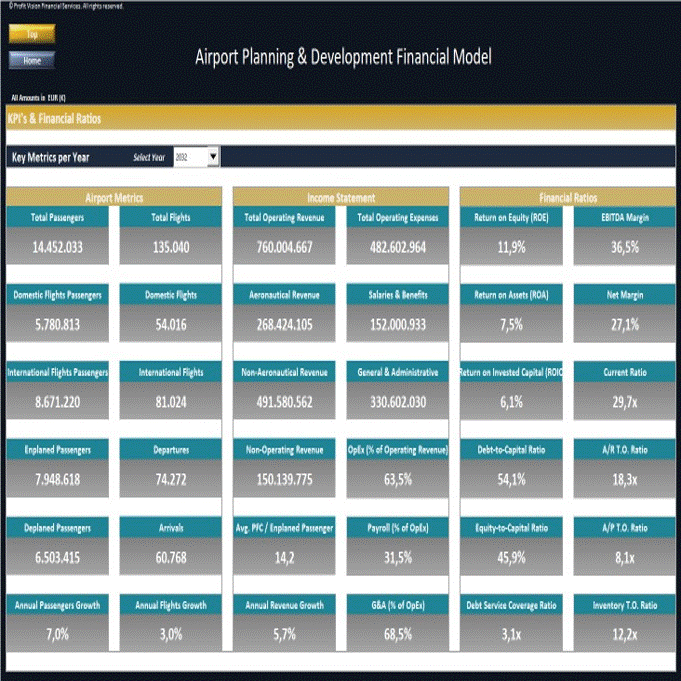
• Dynamic KPIs and Financial Ratios Dashboard, including Airport Metrics, Key Financials, and Various Financial Ratios per Year
• Performance Dashboard
• Business Valuation, including DCF Model, Return Metrics (NPV, EV, IRR, MOIC, ROI, etc.), and Sensitivity Analysis
• Investors Distribution Waterfall Model
• Project's Executive Summary with an option to choose the Exit Scenario (with or without Terminal Value)
Help & Support
Committed to high quality and customer satisfaction, all our templates follow best-practice financial modeling principles and are thoughtfully and carefully designed, keeping the user's needs and comfort in mind.
Whether you have no experience or are well-versed in finance, accounting, and the use of Microsoft Excel, our professional financial models are the right tools to boost your business operations!
If you experience any difficulty while using this template and cannot find the appropriate guidance in the provided instructions, please feel free to contact us for assistance.
If you need a template customized for your business requirements, please e-mail us and explain your specific needs briefly.
Got a question about the product? Email us at support@flevy.com or ask the author directly by using the "Ask the Author a Question" form. If you cannot view the preview above this document description, go here to view the large preview instead.
TOPIC FAQ
What revenue streams should an airport financial model include?
An airport model should separate aeronautical, non-aeronautical, and non-operating revenues. Examples include landing fees, aircraft parking, building rentals, concessions (duty‑free, retail, F&B), parking, rental car center, ground transportation, advertising, Passenger Facility Charge (PFC), and Customer Facility Charge (CFC).What financing assumptions are typically required for airport project models?
Typical financing inputs include equity, debt, government grants, private partnership contributions (GP & LP), and a detailed debt schedule with moratorium periods, interest‑only periods, interest rate, and loan term as part of the capital structure.How long should the forecast horizon be for an airport valuation model?
Airport models commonly include multi‑year forecasts to capture ramp-up and stabilization; the referenced model provides a 3‑statement financial forecast spanning a 10‑year horizon with an option for terminal value.What investor-facing outputs should an airport model produce?
Investors expect operating cash flows (monthly/quarterly/annual), full financial statements, break‑even analysis, KPIs and financial ratios, DCF valuation with return metrics (NPV, IRR, MOIC), sensitivity analysis, and an executive summary describing exit scenarios.What features help meet a tight deadline when purchasing an airport financial model?
For fast delivery, look for prebuilt assumption tabs (project timing, development budget), a ready debt schedule, scenario analysis tools for traffic and funding, and output reports including monthly/quarterly cash flows and a 3‑statement 10‑year forecast; Flevy's Airport Financial Model (Development, Operation & Valuation) includes these elements.How can I model different passenger traffic scenarios and their financial impact?
Use scenario analysis tools that vary annual passengers and flights, then propagate those inputs through aeronautical and non‑aeronautical revenue assumptions to assess effects on cash flow, KPIs, and valuation via sensitivity and scenario modules.Which valuation approaches are appropriate for airport exit analysis for investors?
Common approaches combine DCF valuation and return metrics (NPV, IRR, MOIC, ROI) alongside multiple‑based valuation (EV/EBITDA); models should allow exit scenario selection with or without terminal value, as in Flevy's Airport Financial Model (Development, Operation & Valuation).What modeling features support private partnership and investor distributions?
Models should include private partnership equity contribution assumptions (GP & LP) and an investors’ distribution waterfall module to allocate returns and simulate equity distributions among stakeholders.Source: Best Practices in Airline Industry, Integrated Financial Model Excel: Airport Financial Model (Development, Operation & Valuation) Excel (XLSX) Spreadsheet, Profit Vision
ABOUT THE AUTHOR

Profit Vision provides Consulting & Outsourced Financial Services as well as Financial Planning & Performance analysis to small and mid-size businesses by implementing efficient and effective tools to assist them with start-up business plans or improve their ongoing operations.
Our range of services include Financial & Operational Analysis, Business Planning, Budgeting & Forecasting, Cash Flow
... [read more]
Ask the Author a Question
You must be logged in to contact the author.