
CHANNEL DISTRIBUTION STRATEGY EXAMPLE PPT DESCRIPTION
Explore a comprehensive retail channel strategy for a global electronics firm, crafted by industry experts. Analyze trends, competitor tactics, and growth opportunities. Electronics Firm Retail Channel Strategy is a 103-slide PPT PowerPoint presentation slide deck (PPT) available for immediate download upon purchase.
This presentation is a report for a global electronics firm which was executing a digital growth strategy in the US. Although it had great products and a rejuvenated brand, the firm lacked a good understanding of the retail channel and thus lacked a channel strategy and relevant capabilities to support its growth.
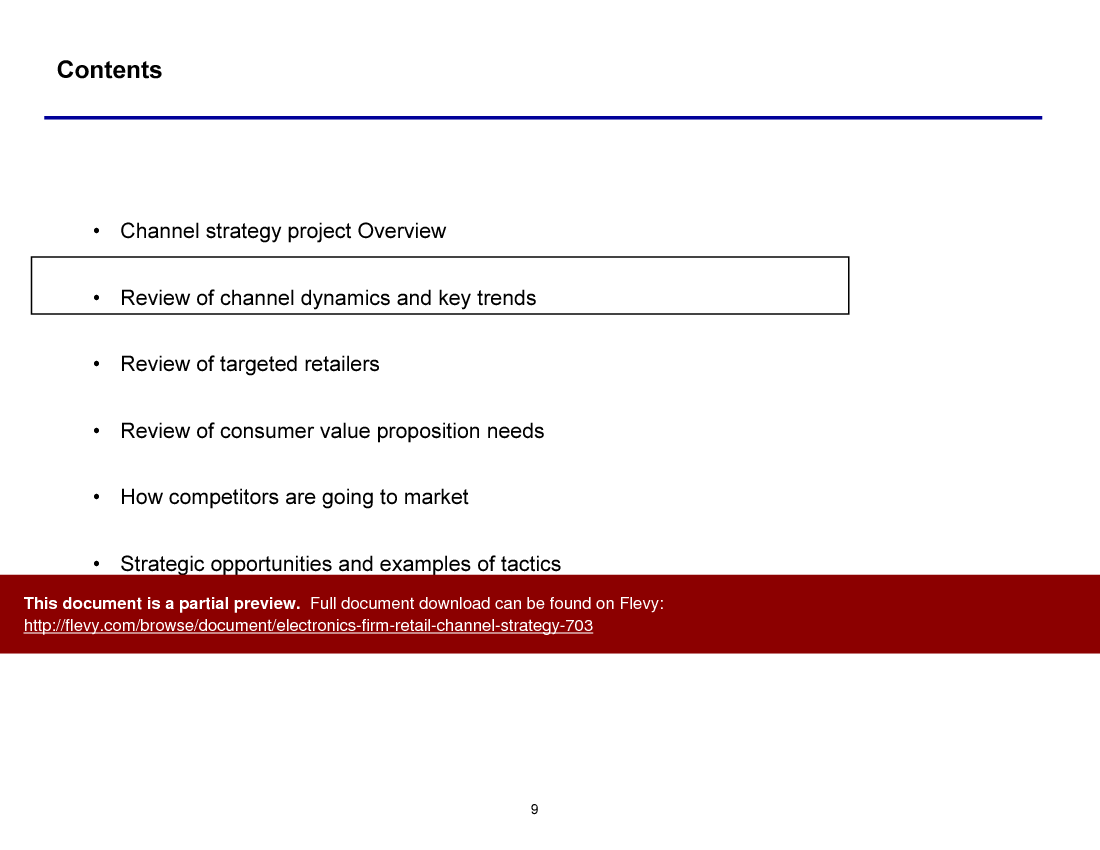
The contents include:
• Channel strategy project overview
• Review of channel dynamics and key trends
• Review of targeted retailers
• Review of consumer value proposition needs
• How competitors are going to market
• Strategic opportunities and examples of tactics
• Audit of existing channel plans and next steps
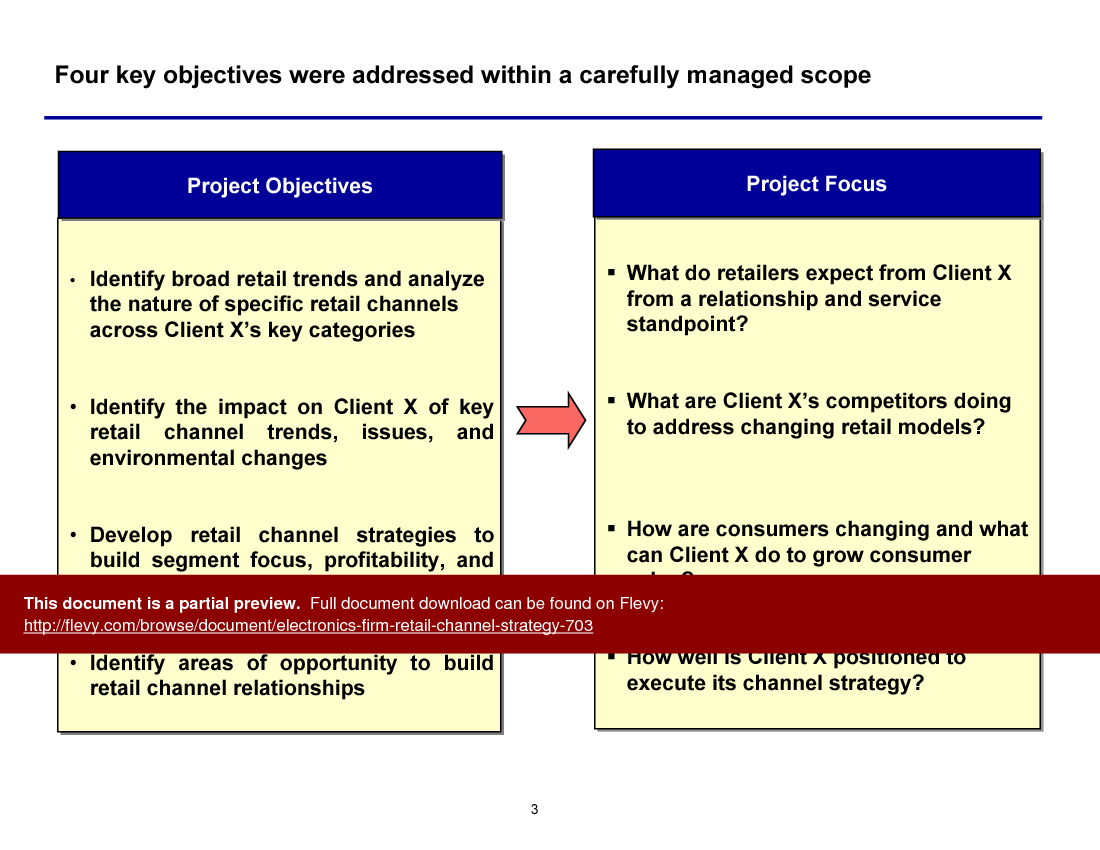
This document provides a comprehensive analysis of the retail channel environment, focusing on key trends and market dynamics. It identifies significant retail trends and their impact on the client's business, offering strategic opportunities and tactical examples to enhance channel strategies. The presentation also includes an audit of existing channel plans and outlines next steps for implementation.
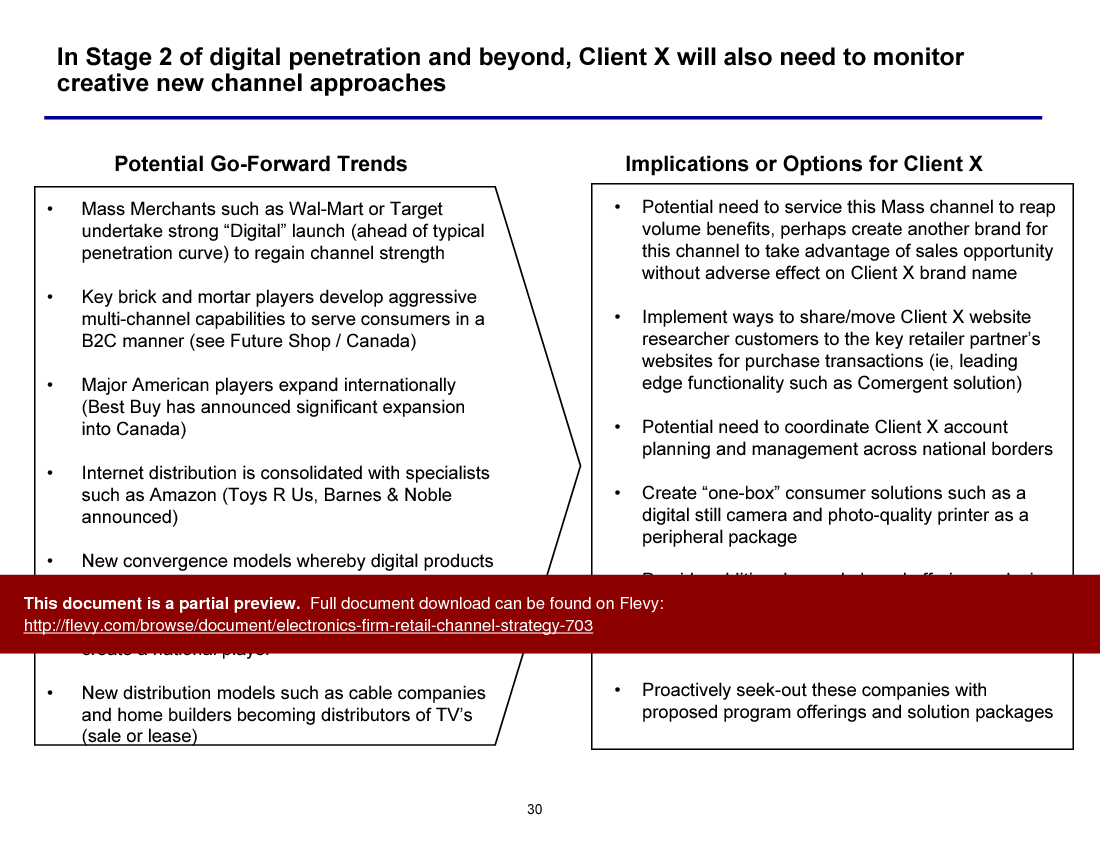
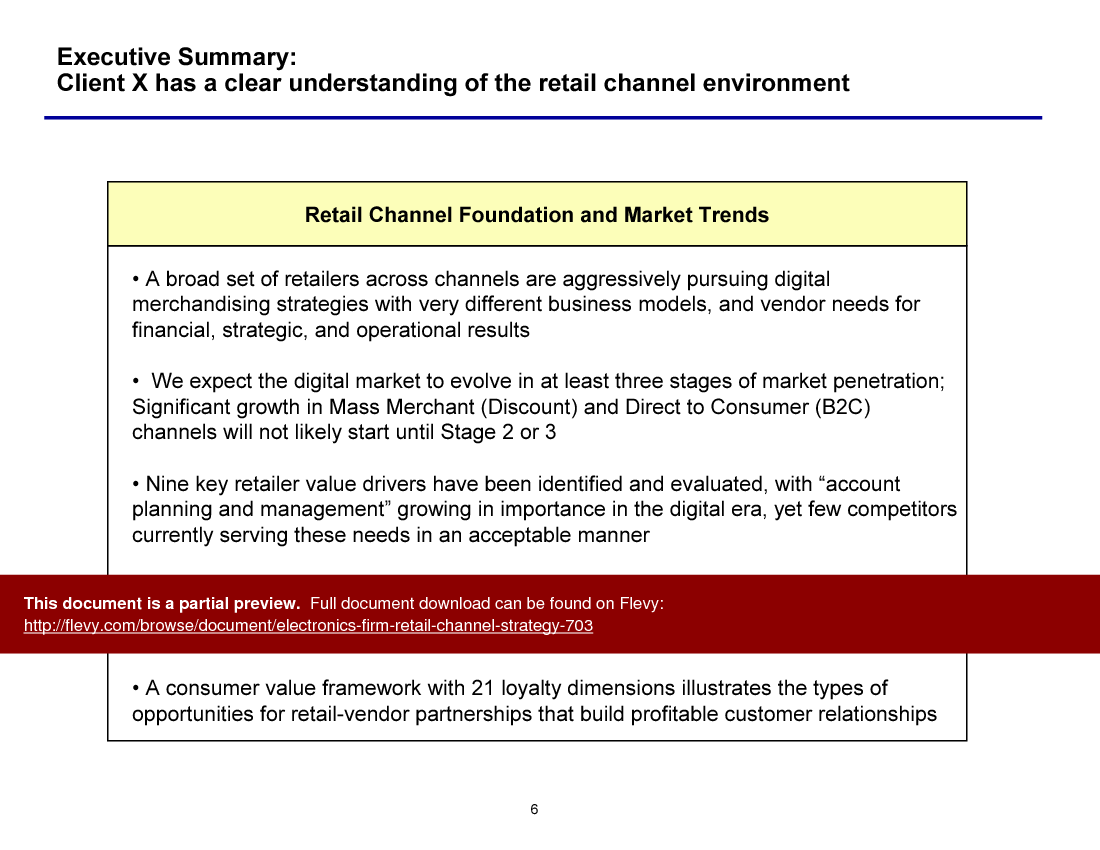
The analysis delves into the evolving digital market, predicting stages of market penetration and identifying key retailer value drivers. It evaluates the potential for growth in various retail channels, such as mass merchants and direct-to-consumer models. The document also highlights the importance of account planning and management in the digital era, emphasizing the need for effective collaboration with retail partners.
Additionally, the presentation provides a detailed review of targeted retailers, assessing their current digital relationships and identifying areas for improvement. It offers insights into consumer value proposition needs and how competitors are approaching the market. The document concludes with strategic recommendations and next steps to optimize the client's retail channel strategy and drive growth.
Got a question about the product? Email us at support@flevy.com or ask the author directly by using the "Ask the Author a Question" form. If you cannot view the preview above this document description, go here to view the large preview instead.
MARCUS OVERVIEW
This synopsis was written by Marcus [?] based on the analysis of the full 103-slide presentation.
Executive Summary
This presentation outlines a retail channel strategy for a global electronics firm, designed to enhance market positioning and drive sales growth. The strategy is crafted with McKinsey, Bain, or BCG-quality rigor (consulting-grade; not affiliated). It focuses on understanding channel dynamics, consumer needs, and competitor tactics. Buyers will gain insights into how to build effective retail partnerships, optimize product offerings, and leverage digital strategies to enhance brand loyalty and market share.
Who This Is For and When to Use
• Executives in retail strategy and channel management
• Marketing and sales leaders focusing on consumer electronics
• Business development teams seeking to enhance retail partnerships
• Consultants advising on channel strategy and market positioning
Best-fit moments to use this deck:
• During strategic planning sessions for retail channel initiatives
• When assessing competitive positioning in the consumer electronics market
• For workshops aimed at aligning cross-functional teams on retail strategies
Learning Objectives
• Define the current retail channel landscape and its dynamics
• Analyze consumer value proposition drivers in electronics
• Identify key retailer expectations and how to meet them
• Develop actionable strategies for enhancing retail partnerships
• Establish metrics for evaluating channel performance
• Create a roadmap for implementing a multi-channel strategy
Table of Contents
• Channel Strategy Project Overview (page 1)
• Review of Channel Dynamics and Key Trends (page 12)
• Review of Targeted Retailers (page 33)
• Review of Consumer Value Proposition Needs (page 52)
• How Competitors Are Going to Market (page 59)
• Strategic Opportunities and Examples of Tactics (page 76)
• Audit of Existing Channel Plans and Next Steps (page 97)
Primary Topics Covered
• Channel Dynamics - An overview of the evolving retail landscape, focusing on digital strategies and consumer behavior.
• Retailer Expectations - Insights into what retailers require from manufacturers, including service and product offerings.
• Consumer Value Proposition - Analysis of key drivers that influence consumer purchasing decisions in electronics.
• Competitive Landscape - Examination of competitor strategies and market positioning within the consumer electronics sector.
• Strategic Opportunities - Identification of actionable tactics to enhance retail partnerships and drive sales growth.
• Implementation Roadmap - Steps for executing the proposed channel strategies effectively.
Deliverables, Templates, and Tools
• Retail channel strategy framework template for assessing market opportunities
• Consumer value proposition analysis tool to evaluate key drivers
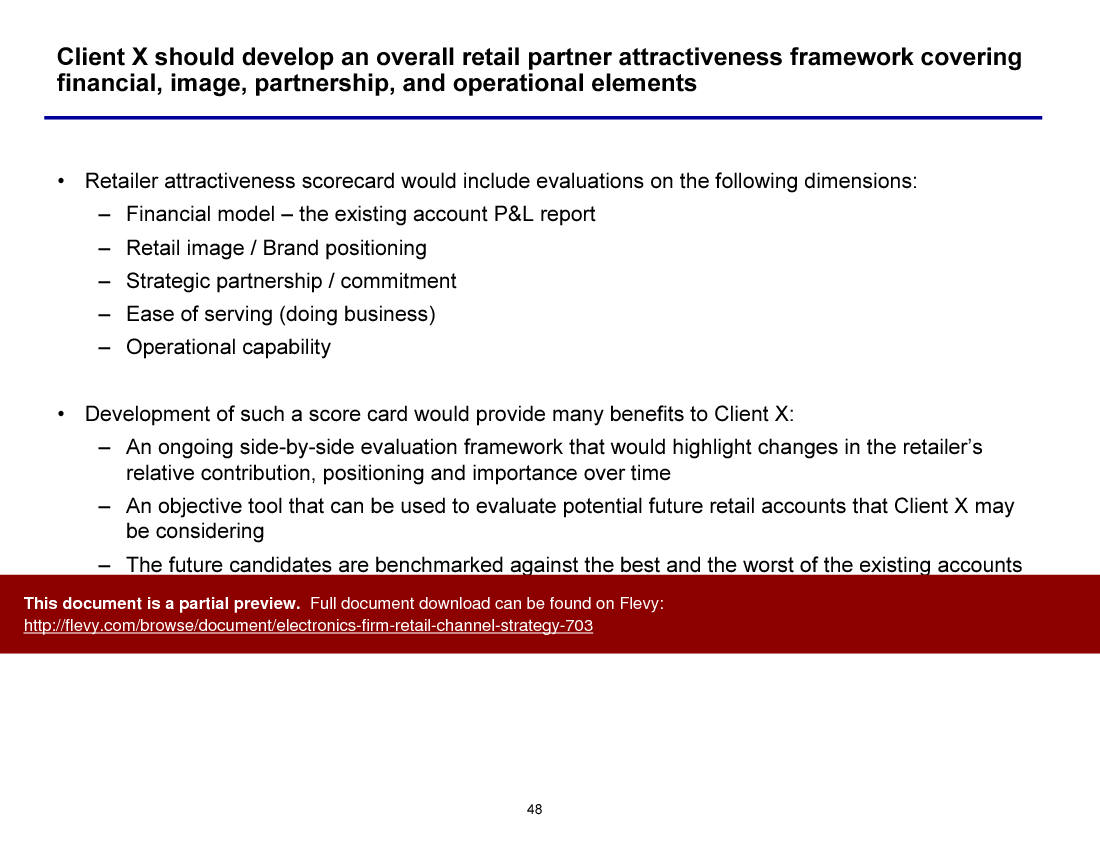
• Retailer partnership scorecard for measuring performance and alignment
• Strategic planning workshop agenda for cross-functional teams
• Competitive analysis template for benchmarking against key players
• Implementation roadmap for channel strategy execution
Slide Highlights
• Overview of the fragmented retail landscape and key players in consumer electronics
• Key trends driving changes in retailer-vendor relationships
• Insights from retailer interviews highlighting expectations and service needs
• Consumer feedback on digital purchasing habits and brand perceptions
• Strategic recommendations for enhancing retail partnerships and brand loyalty
Potential Workshop Agenda
Retail Channel Strategy Overview (60 minutes)
• Present findings on channel dynamics and consumer needs
• Discuss retailer expectations and value drivers
Strategic Planning Session (90 minutes)
• Identify key retailers for partnership focus
• Develop actionable strategies for enhancing brand loyalty
Implementation Roadmap Discussion (60 minutes)
• Review proposed tactics for executing channel strategies
• Establish metrics for evaluating success and ongoing performance
Customization Guidance
• Tailor the retail channel strategy framework to specific market conditions and competitive landscapes
• Adjust consumer value proposition elements based on regional preferences and retailer feedback
• Incorporate unique product offerings and branding strategies to differentiate from competitors
Secondary Topics Covered
• Digital merchandising strategies and their impact on retail sales
• The importance of supply chain effectiveness in retail partnerships
• Opportunities for cross-divisional collaboration to enhance channel performance
• Consumer insights on post-purchase support and service expectations
FAQ What are the key components of a successful retail channel strategy?
A successful retail channel strategy includes understanding retailer expectations, aligning product offerings with consumer needs, and establishing strong communication and collaboration with retail partners.
How can Client X improve its brand image among retailers?
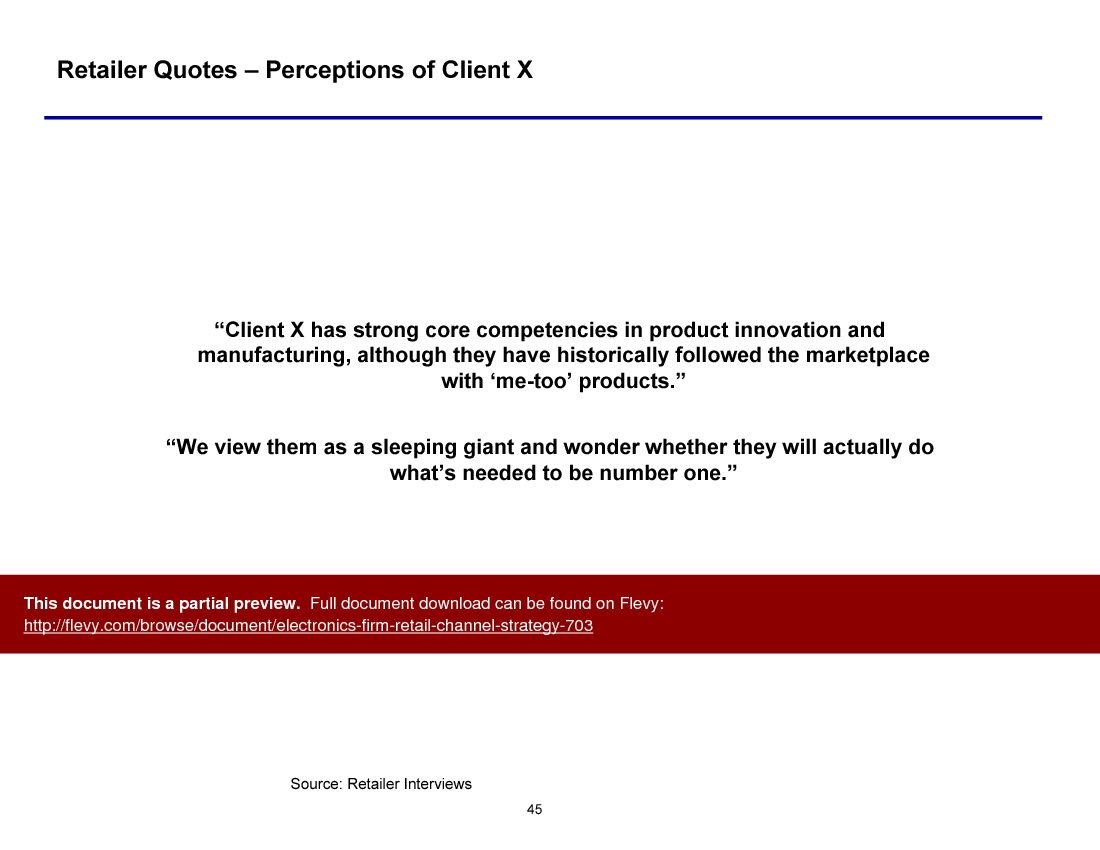
Client X can enhance its brand image by consistently delivering on product quality, engaging in collaborative planning with retailers, and providing comprehensive training and support for retail staff.
What role does consumer feedback play in shaping retail strategies?
Consumer feedback is crucial for identifying value proposition drivers, understanding purchasing behavior, and refining product offerings to meet market demands.
How should Client X approach competitive analysis?
Client X should conduct a thorough competitive analysis to identify strengths and weaknesses of key players, assess market positioning, and leverage insights to differentiate its offerings.
What metrics should be used to evaluate channel performance?
Key metrics include sales growth, market share, retailer satisfaction scores, and consumer loyalty indicators.
How can Client X leverage digital strategies in its channel approach?
Client X can utilize digital marketing, enhance online presence, and create seamless online-to-offline experiences to engage consumers and drive sales.
What are the risks associated with expanding retail partnerships?
Risks include potential brand dilution, channel conflict, and the challenge of maintaining consistent service levels across diverse retail partners.
How can Client X ensure effective communication with retailers?
Establishing regular communication channels, providing timely updates on product launches, and engaging in collaborative planning sessions can enhance relationships with retailers.
Glossary
• Channel Strategy - A plan for how a company will sell its products through various retail outlets.
• Value Proposition - The unique value a product offers to consumers, influencing their purchasing decisions.
• Retail Partner - A business entity that sells products on behalf of a manufacturer.
• Consumer Electronics - Electronic devices intended for everyday use by consumers.
• Supply Chain - The network between a company and its suppliers to produce and distribute a specific product.
• Market Share - The portion of a market controlled by a particular company or product.
• Brand Loyalty - The tendency of consumers to continue buying the same brand over competitors.
• Retail Dynamics - The changing factors that influence how retailers operate and interact with manufacturers.
• Collaborative Planning - A process where manufacturers and retailers work together to forecast demand and plan inventory.
• Digital Penetration - The extent to which digital products and services are adopted in a market.
• SKU (Stock Keeping Unit) - A unique identifier for each distinct product and service that can be purchased.
• Trade Promotion - Marketing campaigns directed at wholesalers or retailers rather than at final consumers.
• Consumer Insights - Information about consumer preferences and behaviors derived from research and analysis.
• Cross-Divisional Synergy - Collaborative efforts between different divisions of a company to enhance overall performance.
• Touchpoints - Points of interaction between a consumer and a brand throughout the purchasing process.
• Account Management - The process of managing a company's relationships with its customers.
• Retailer Scorecard - A tool used to evaluate the performance and contribution of retail partners.
• Market Trends - Patterns and tendencies observed in a market over time that can influence business strategies.
• Promotional Planning - The process of strategizing marketing efforts to promote products effectively.
• Consumer Loyalty Programs - Initiatives designed to encourage repeat purchases by rewarding customers.
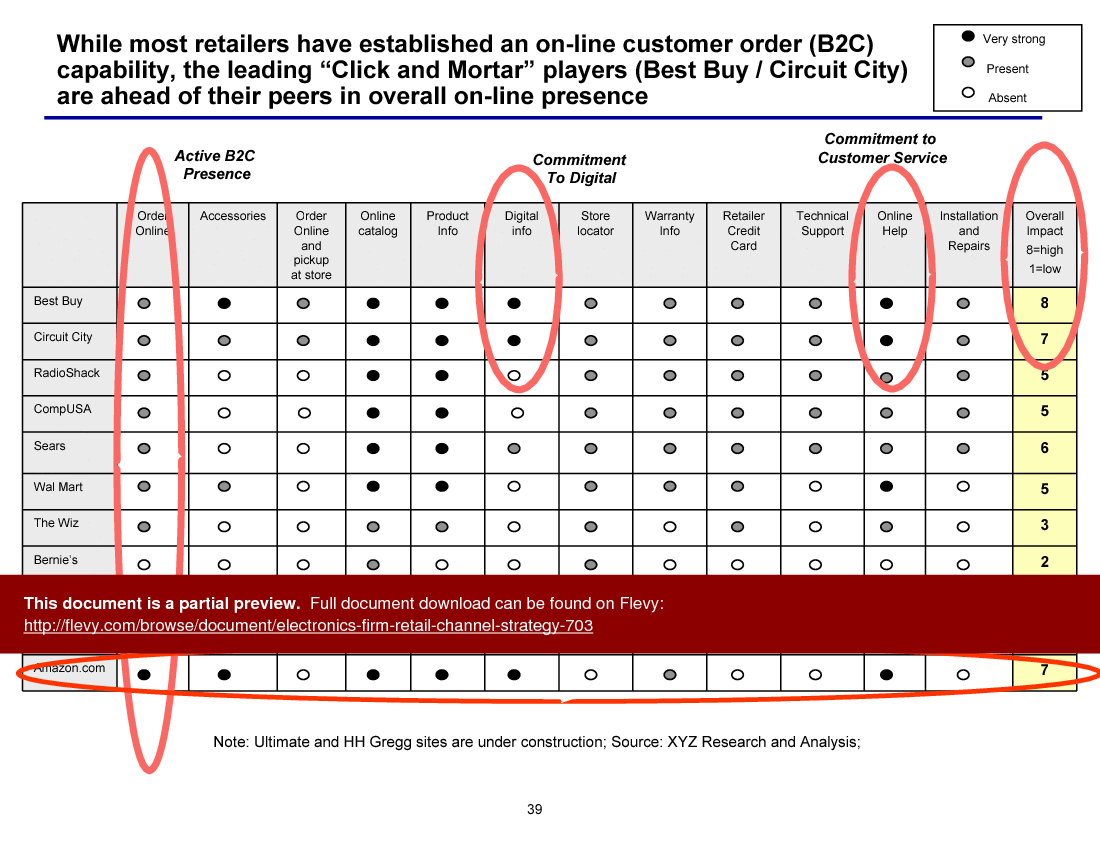
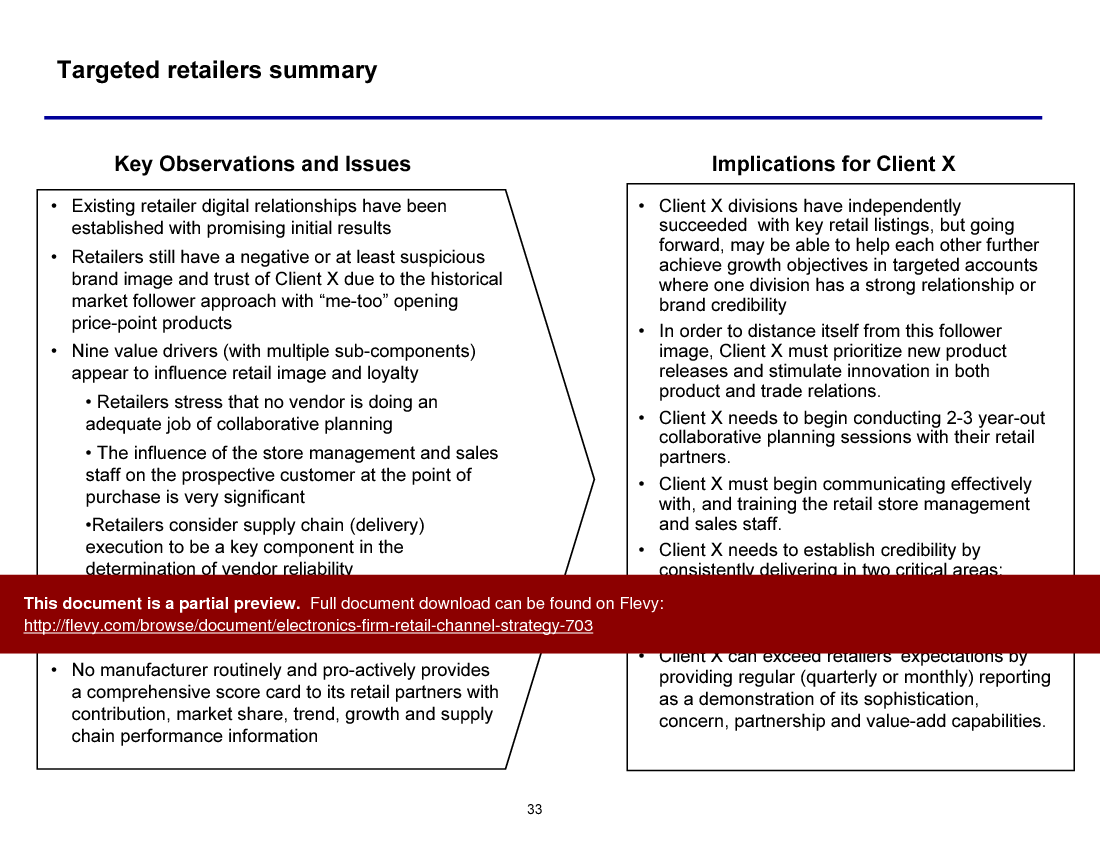
No single manufacturer excels across all retail or consumer value propositions in the electronics sector. Competitor 1 has a strong brand image and innovative products, but struggles with retailer communication and supply chain execution. Competitor 3 offers collaborative planning and a broad product range, but faces retail distribution challenges. Competitor 4 leverages brand strength and innovation, but is losing distribution focus with major retailers. Competitor 2 emphasizes an upscale brand image, but is limited by a narrow SKU range. Competitor 7 is recognized for quality perception, but struggles with website functionality and direct sales conflicts. Competitor 6 excels in retail displays, but faces competition from larger brands. Competitor 9 has a large product assortment, but suffers from poor price/value relationships. Competitor 8 is innovating, but relies heavily on specific telecom products, limiting growth potential. This analysis reveals strengths and weaknesses that impact market performance and consumer perception.
This PPT slide presents a comparative analysis of retailers in the consumer electronics sector, focusing on key financial metrics. Total sales in millions for retailers include Tweeter, Radio Shack, Sears, Circuit City, Best Buy, CompUSA, Walmart, and Amazon, with an average profit margin of around 5%. Key metrics include sales per square foot, sales per store, gross margins, operating expenses, and operating profit percentages. Best Buy has the highest sales per store at $32,500, while Radio Shack has the lowest at $940. Gross margins range from 50% for Radio Shack to 15% for CompUSA. Best Buy's operating expense ratio is 15%, contributing to its higher profitability. Radio Shack leads in operating profit at 12.3%, while CompUSA reports a loss. Profit types include service, credit, and marketing profits, with Circuit City and Best Buy showing high service profits and low credit profits across the board.
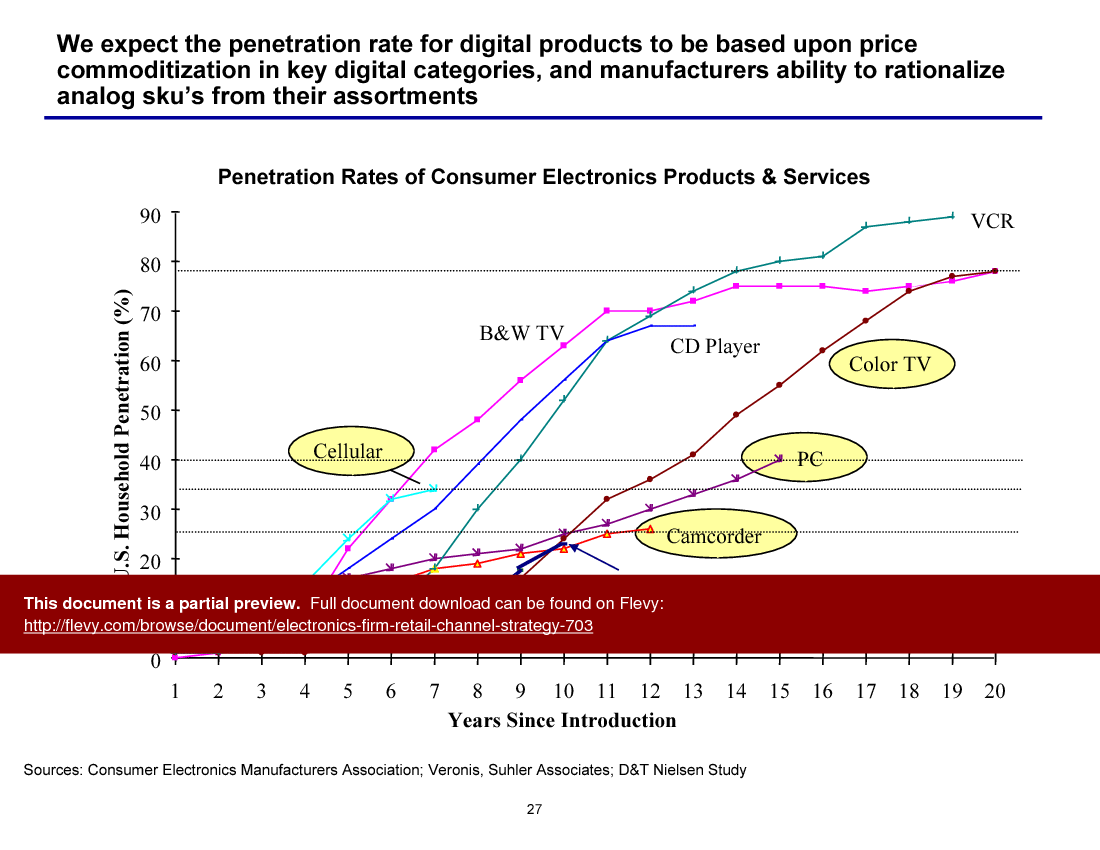
This PPT slide analyzes the penetration rates of consumer electronics products over time, with the vertical axis showing U.S. household adoption percentages and the horizontal axis indicating years since product introduction. Distinct trends emerge, highlighting traditional products like black-and-white TVs versus newer digital offerings such as cellular phones and PCs. The graph illustrates varying market penetration rates, with color TVs and cellular phones achieving significant adoption, while VCRs and CD players show modest growth. The expectation of price commoditization in key digital categories suggests that decreasing prices will likely boost consumer purchases. Manufacturers are rationalizing their analog SKUs, indicating a strategic shift towards more profitable digital offerings. Understanding these penetration trends is essential for informing product strategy and pricing decisions in the electronics sector.
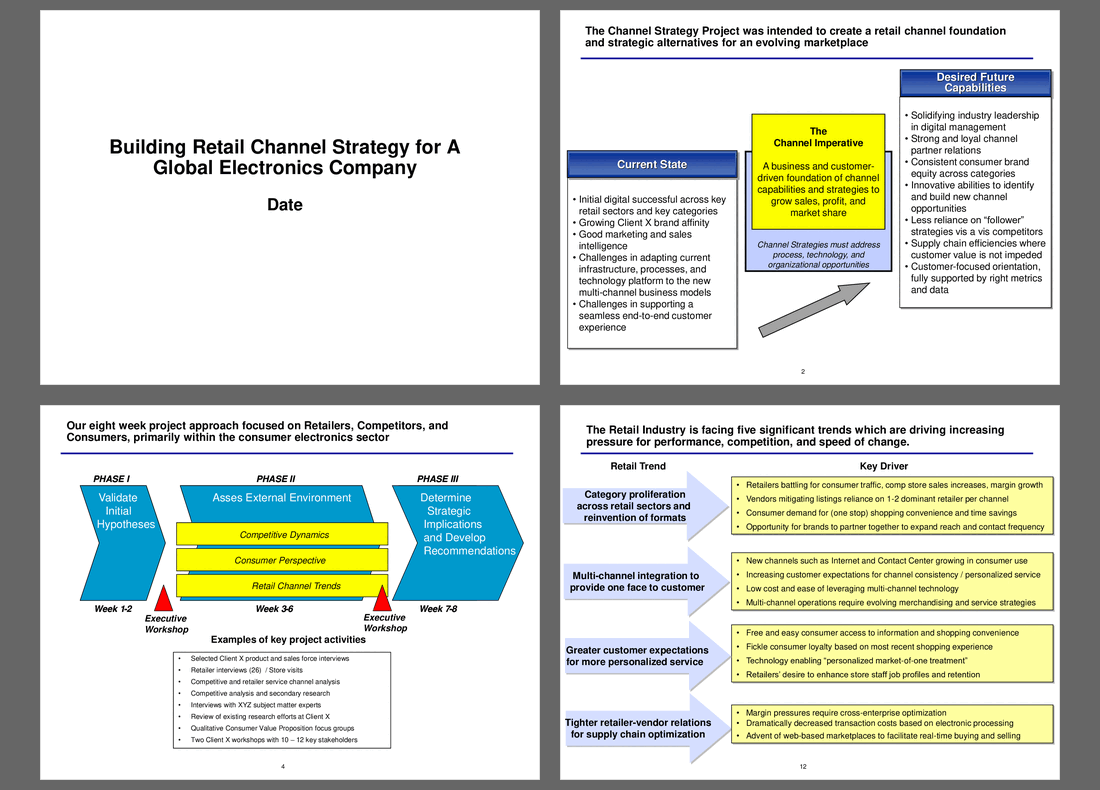
This PPT slide outlines an eight-week project plan for developing a retail channel strategy in the consumer electronics sector, divided into 3 phases. Phase I (weeks 1-2) focuses on validating hypotheses through an executive workshop and stakeholder alignment, utilizing hands-on activities like interviews. Phase II (weeks 3-6) assesses the external environment, analyzing competitive dynamics, consumer perspectives, and retail channel trends, with another executive workshop for synthesizing findings. Phase III (weeks 7-8) translates insights into actionable recommendations, reinforcing collaboration and stakeholder engagement in decision-making. This structured approach emphasizes validation, thorough analysis, and strategic development.
This PPT slide outlines a strategic approach for an electronics firm focused on retail partnerships, transitioning from vendor to partner relationships. Key issues include maintaining high service levels to prevent retailer delisting and challenges in servicing all retailers during Client X's digital launch. The strategy emphasizes an initial focus on 4-6 key retail partners, including department stores and electronic specialty channels, to drive brand growth. As Client X gains experience and market penetration, additional retail partners will be pursued, though timing remains uncertain. Tactics include coordinated efforts across divisions, a growth strategy into new channels as digital capabilities mature, and a cautious approach to mass merchant channels until internal capabilities are developed. Current capability is assessed as medium, with management focus rated high, indicating a strong commitment to executing this strategy effectively.
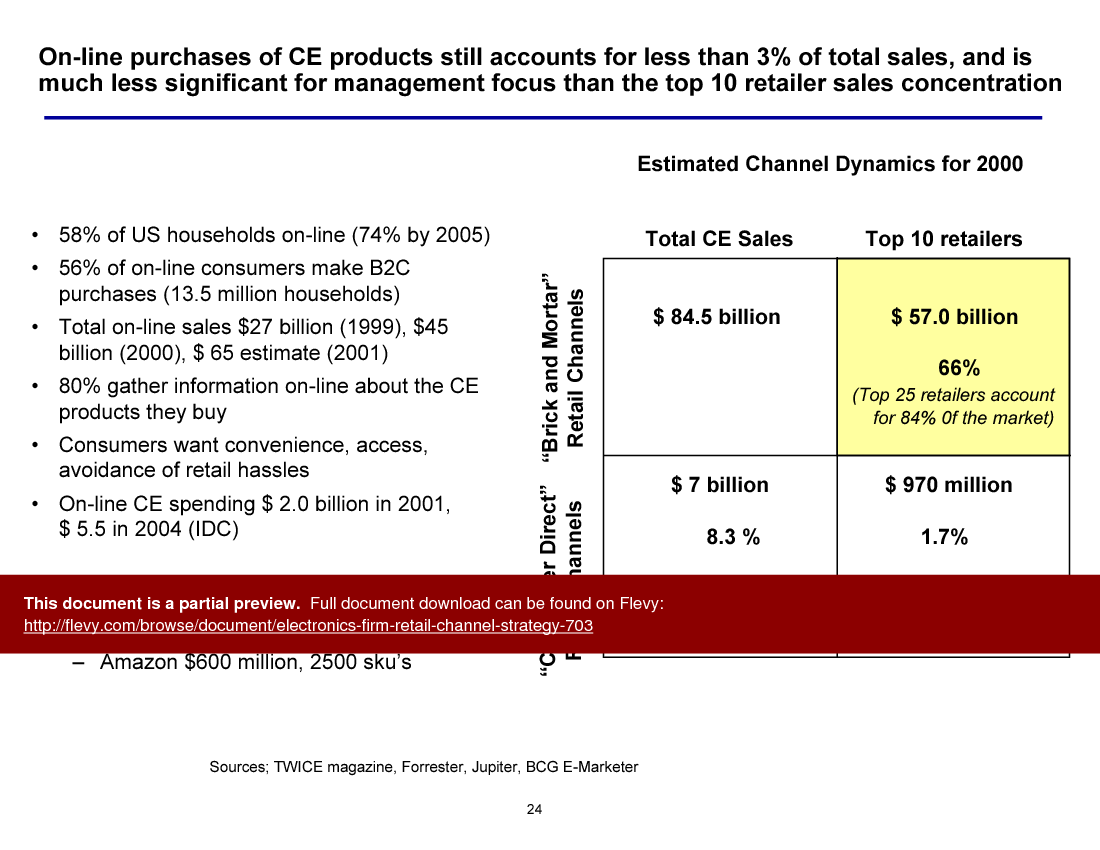
The analysis of online purchasing dynamics for consumer electronics (CE) reveals that total CE sales reached $84.5 billion in 2000, with the top 10 retailers capturing $57 billion, or 66% of the market. Online purchases accounted for only $7 billion, or 8.3% of total sales, with less than 3% from the internet segment. Despite growth in online shopping, it remains a minor player in CE retail strategies. Notably, 80% of online shoppers research products online before purchasing. Projected online spending is estimated at $2 billion in 2001, increasing to $5.5 billion by 2004. Key online retailers, Buy and Amazon, illustrate the competitive nature of the online market, while traditional retail channels continue to dominate.
This PPT slide provides an overview of 44 consumer touchpoints across 7 steps in the purchase cycle, facilitating the evaluation and management of customer interactions. The phases include: Search Process, Desire to Purchase, Purchase Decision, Purchase Process, Product Usage and Experience, and Post Purchase Support.
The "Search Process" highlights methods like retailer website searches and word-of-mouth recommendations, emphasizing the role of digital presence and peer influence. The "Desire to Purchase" focuses on advertising strategies and promotions that drive consumer interest.
The "Evaluation at Retail" section underscores the importance of in-store experiences, including product displays and salesperson assistance. The "Post Purchase Support" phase addresses customer service elements such as warranty registrations and product installations, indicating their significance for customer satisfaction and loyalty.
The involvement of third-party players in the customer journey illustrates the complexity of consumer interactions, necessitating a holistic approach to effectively manage the consumer experience and identify gaps in retail strategy.
This PPT slide analyzes Client X's retail partners using a volume-margin mapping approach. The chart plots retailers on a graph with "Potential Digital Product Volume" on the vertical axis and "Net Unit Profit" on the horizontal axis, revealing the relationship between sales volume and profitability in the electronics retail sector. Mass merchandisers like Wal-Mart and Target show high product volume, but lower net unit profit, indicating a pricing strategy that may not yield high margins. In contrast, retailers like Ultimate and Best Buy have lower sales volumes, but higher profits per unit, suggesting greater profitability potential. The analysis categorizes retailers into mass merchandisers, department stores, electronic superstores, and specialists, aiding Client X in prioritizing partnerships that align with profitability goals. Ongoing assessment of retail partnerships is necessary as customer demographics and product types evolve with the digital product lifecycle.
The framework for Client X and its retail partners focuses on developing consumer value propositions based on 21 value elements, categorized into 3 sections: Client X Managed, Co-Managed with Retail Partners, and Retail Managed.
In the Client X Managed quadrant, key expectations include product functionality, brand credibility, and warranty management, essential for market trust. The Digital Needs section highlights innovative technology and a clear digital value proposition to attract tech-savvy consumers. Added-value drivers emphasize personalized recognition and connectivity solutions for tailored customer experiences.
The Co-Managed section outlines expectations like relevant pre-purchase information and after-sales service, indicating shared responsibilities in value delivery. Service drivers include product availability and retail employee knowledge, crucial for a seamless customer experience. Added-value drivers focus on complementary product solutions and an engaging shopping environment.
The Retail Managed section reinforces basic expectations such as product assortment and service drivers, underscoring the need for a comprehensive retail strategy. This framework aligns offerings with consumer expectations to strengthen market positioning and drive customer loyalty.
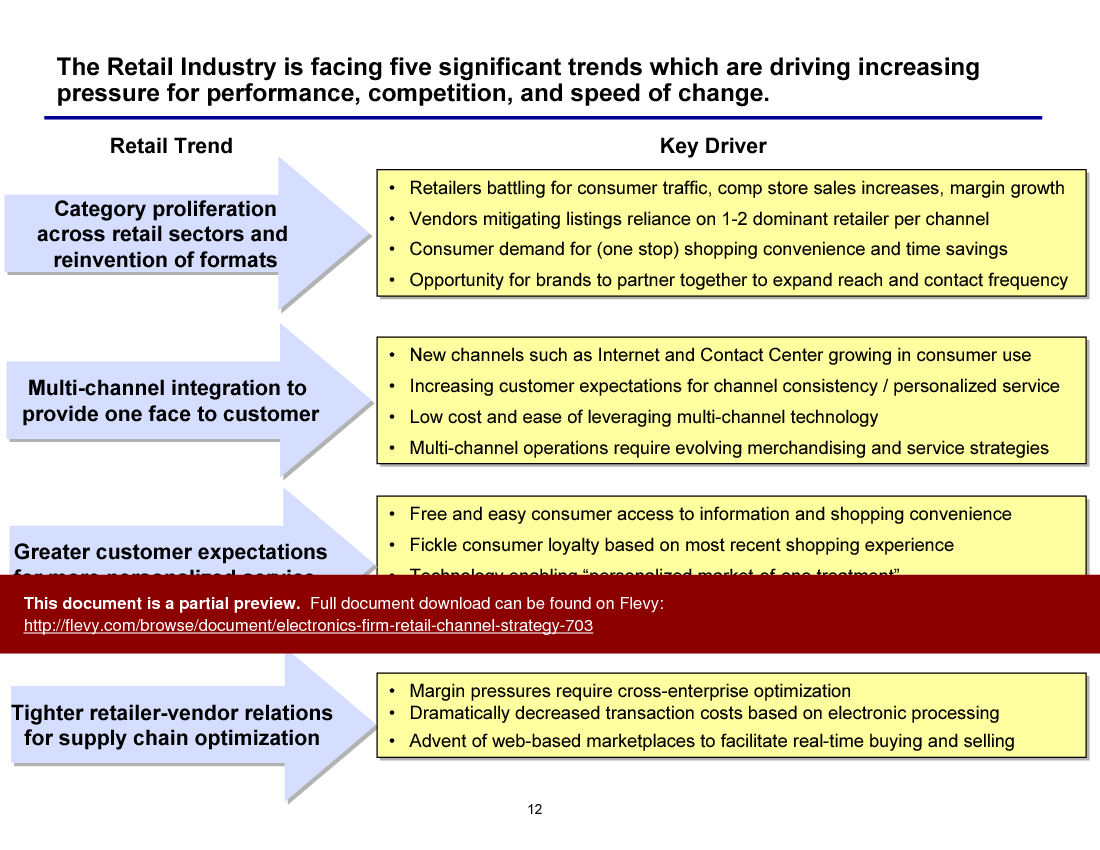
This PPT slide outlines 5 key trends impacting the retail industry, emphasizing the need for enhanced performance and adaptability. The first trend is category proliferation, reflecting a competitive environment where retailers seek growth in comparable store sales and one-stop shopping experiences, fostering brand collaborations. The multi-channel integration trend highlights the necessity for a unified customer interface, driven by new online platforms and contact centers, as customers expect consistent service across channels. Greater customer expectations for personalized service demand tailored shopping experiences, with technology enabling improved customer engagement. Tighter retailer-vendor relations necessitate optimization and efficiency due to margin pressures, while electronic processing reduces transaction costs, presenting cost-saving opportunities.
This PPT slide analyzes the consumer electronics (CE) retail market in 2000, showcasing the dominance of national chains across various retail channels. A scatter plot illustrates market share on the x-axis and growth rates on the y-axis, with each circle representing a retailer and its size correlating to sales volume. Key players include Best Buy and Circuit City, with Best Buy indicating significant sales and growth. Total CE sales reached $8.6 billion, reflecting a growth rate of 13.4% from the previous year. The color-coded legend categorizes retailers into segments like Consumer Direct, Electronics/Appliance Stores, and Mass Merchants, highlighting competitive dynamics. The analysis suggests challenges for new entrants and underscores the importance of strategic positioning in the consumer electronics sector.
This PPT slide outlines a strategic initiative to enhance the retail channel framework for an electronics firm. The "Current State" section highlights successes in digital engagement and strong marketing intelligence, while noting challenges in adapting infrastructure for multi-channel business models and delivering a seamless customer experience. Central to the slide is "The Channel Imperative," emphasizing a customer-centric foundation of channel capabilities essential for driving sales, profit, and market share. Channel strategies must address process, technology, and organizational opportunities for a holistic approach. The "Desired Future Capabilities" section includes objectives like solidifying digital management leadership, fostering loyal channel partner relationships, and innovating new channel opportunities while enhancing supply chain efficiencies and customer value through appropriate metrics and data.
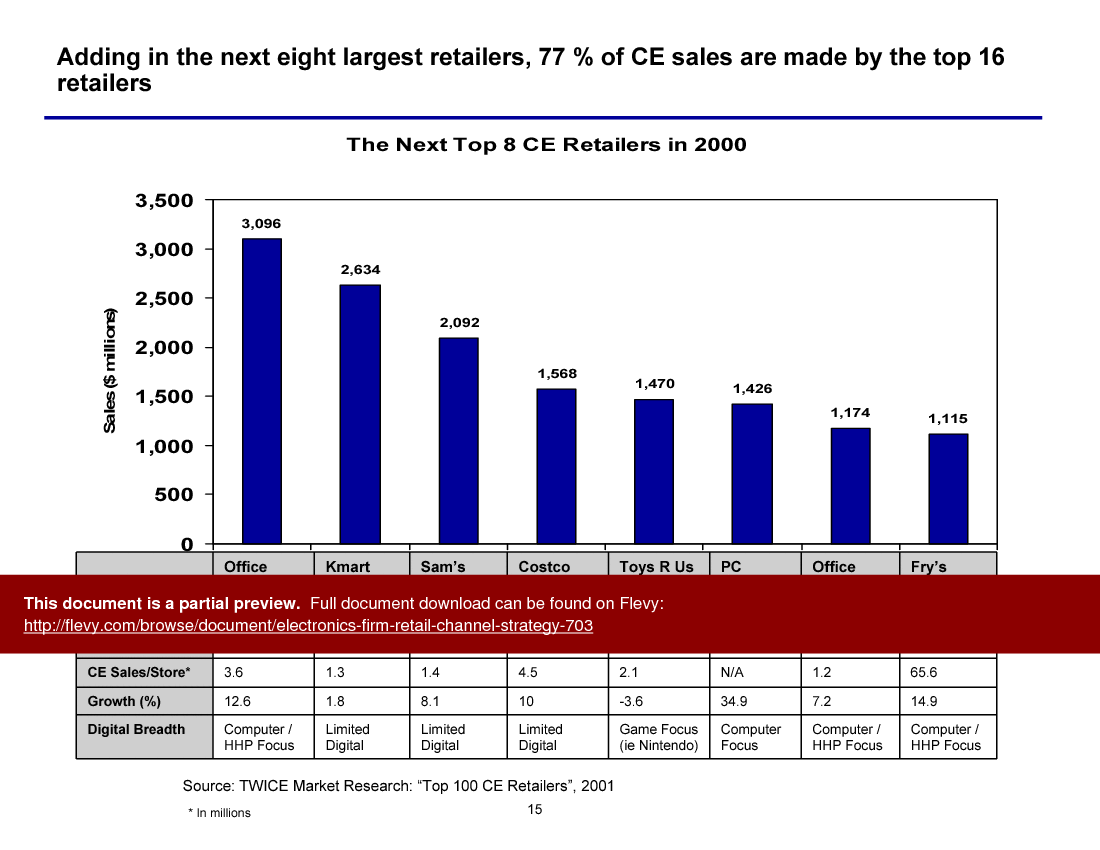
This PPT slide analyzes the top eight consumer electronics (CE) retailers in 2000, focusing on sales volume in millions of dollars. Office Depot leads with $3,096 million, followed by Kmart at $2,634 million and Sam's Club at $2,092 million. A bar chart illustrates the sales disparity among these retailers. A table details the number of stores and average store size, with Office Depot operating 851 stores averaging 7,000 square feet. Costco stands out with a sales per store figure of 4.5, despite fewer locations. Growth rates show Office Depot at 12.6%, while Toys R Us has a negative growth rate of -3.6%. Notably, 77% of CE sales are attributed to the top 16 retailers, highlighting market concentration and informing strategic decisions regarding partnerships and competitive positioning.
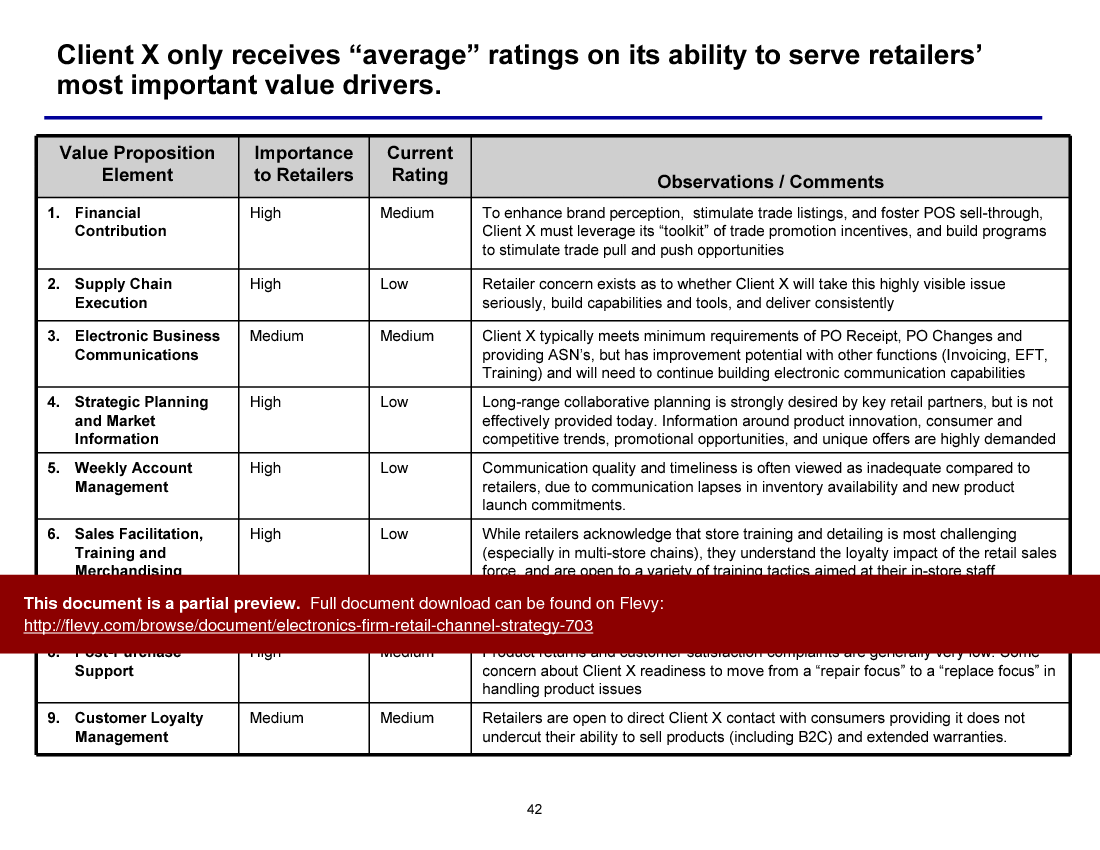
This PPT slide outlines key value proposition dimensions to enhance retailer relationships for Client X: Financial Contribution, Supply Chain Execution, and Collaborative Planning and Market Information.
Financial Contribution includes metrics like GM$ Production, GMROI, and Inventory Turns, emphasizing profitability and inventory efficiency, alongside collaborative elements such as Guaranteed Sale and Coop Support.
Supply Chain Execution focuses on operational efficiency with metrics like On-Time Order %, Lead Time Reduction, and Optimized Fill Rate, crucial for order fulfillment and inventory management.
Collaborative Planning and Market Information highlight strategic partnerships and data-driven decision-making, featuring elements like Market Share Info and Annual Planning, supported by Consumer Information and Strategic Partnering, ensuring alignment with retail partners.
These dimensions serve as a roadmap for Client X to build mutually beneficial retailer relationships.
Source: Best Practices in Channel Distribution Strategy Example, Retail Strategy, Channel Strategy PowerPoint Slides: Electronics Firm Retail Channel Strategy PowerPoint (PPT) Presentation Slide Deck, Documents & Files
The average daily rate of a McKinsey consultant is $6,625 (not including expenses). The average price of a Flevy document is $65.
Trusted by over 10,000+ Client Organizations
Since 2012, we have provided business templates to over 10,000 businesses and organizations of all sizes, from startups and small businesses to the Fortune 100, in over 130 countries.

"I like your product. I'm frequently designing PowerPoint presentations for my company and your product has given me so many great ideas on the use of charts, layouts, tools, and frameworks. I really think the templates are a valuable asset to the job."
– Roberto Fuentes Martinez, Senior Executive Director at Technology Transformation Advisory
"Last Sunday morning, I was diligently working on an important presentation for a client and found myself in need of additional content and suitable templates for various types of graphics. Flevy.com proved to be a treasure trove for both content and design at a reasonable price, considering the time I
saved. I encountered a download issue during the ordering process. However, a quick email to Flevy's support team, even on a Sunday (!!!), resulted in assistance within less than an hour, allowing me to download the content I needed. Fantastic job, Flevy! I give 5 stars for both content/price and customer service. Thank you!
"
– M. E., Chief Commercial Officer, International Logistics Service Provider
"FlevyPro has been a brilliant resource for me, as an independent growth consultant, to access a vast knowledge bank of presentations to support my work with clients. In terms of RoI, the value I received from the very first presentation I downloaded paid for my subscription many times over! The
quality of the decks available allows me to punch way above my weight – it's like having the resources of a Big 4 consultancy at your fingertips at a microscopic fraction of the overhead.
"
– Roderick Cameron, Founding Partner at SGFE Ltd
"As a consultant requiring up to date and professional material that will be of value and use to my clients, I find Flevy a very reliable resource.
The variety and quality of material available through Flevy offers a very useful and commanding source for information. Using Flevy saves me time, enhances my expertise and ends up being a good decision."
– Dennis Gershowitz, Principal at DG Associates
"I have used Flevy services for a number of years and have never, ever been disappointed. As a matter of fact, David and his team continue, time after time, to impress me with their willingness to assist and in the real sense of the word. I have concluded in fact
that it is not at all just a repository of documents/resources but, in the way that David and his team manage the firm, it is like dealing with consultants always ready to assist, advise and direct you to what you really need, and they always get it right.
I am an international hospitality accomplished senior executive who has worked and lived during the past 35 years in 23 countries in 5 continents and I can humbly say that I know what customer service is, trust me.
Aside from the great and professional service that Flevy's team provide, their wide variety of material is of utmost great quality, professionally put together and most current.
Well done Flevy, keep up the great work and I look forward to continue working with you in the future and to recommend you to a variety of colleagues around the world.
"
– Roberto Pelliccia, Senior Executive in International Hospitality
"Flevy.com has proven to be an invaluable resource library to our Independent Management Consultancy, supporting and enabling us to better serve our enterprise clients.
The value derived from our [FlevyPro] subscription in terms of the business it has helped to gain far exceeds the investment made, making a subscription a no-brainer for any growing consultancy – or in-house strategy team."
– Dean Carlton, Chief Transformation Officer, Global Village Transformations Pty Ltd.
"As a small business owner, the resource material available from FlevyPro has proven to be invaluable. The ability to search for material on demand based our project events and client requirements was great for me and proved very beneficial to my clients. Importantly, being able to easily edit and tailor
the material for specific purposes helped us to make presentations, knowledge sharing, and toolkit development, which formed part of the overall program collateral. While FlevyPro contains resource material that any consultancy, project or delivery firm must have, it is an essential part of a small firm or independent consultant's toolbox.
"
– Michael Duff, Managing Director at Change Strategy (UK)
"Flevy is our 'go to' resource for management material, at an affordable cost. The Flevy library is comprehensive and the content deep, and typically provides a great foundation for us to further develop and tailor our own service offer."
Download our free compilation of 50+ Strategy & Transformation slides and templates. Frameworks include McKinsey 7-S, Balanced Scorecard, Disruptive Innovation, BCG Curve, and many more.