
 Click main image to view in full screen. Unlock all 11 preview images:
Digital Risk Management Best Practice Guide – PowerPoint PPTX Template
PowerPoint (PPTX) + Word (DOCX) 70 Slides


BENEFITS OF THIS DOWNLOADABLE POWERPOINT DOCUMENT
- The guide empowers your leadership team with board-ready governance structures that drive quarterly digital risk reviews and clear accountability
- The guide delivers ready-to-deploy checklists, maturity models, and implementation roadmaps that slash time-to-value by months while ensuring compliance with ISO, NIST, and regulatory compliance requirements.
- The guide equips you with AI-specific knowhow and continuous monitoring strategies that reduce breach costs by up to 40% and turn digital risk into a true business enabler
RISK MANAGEMENT PPT TEMPLATE DESCRIPTION
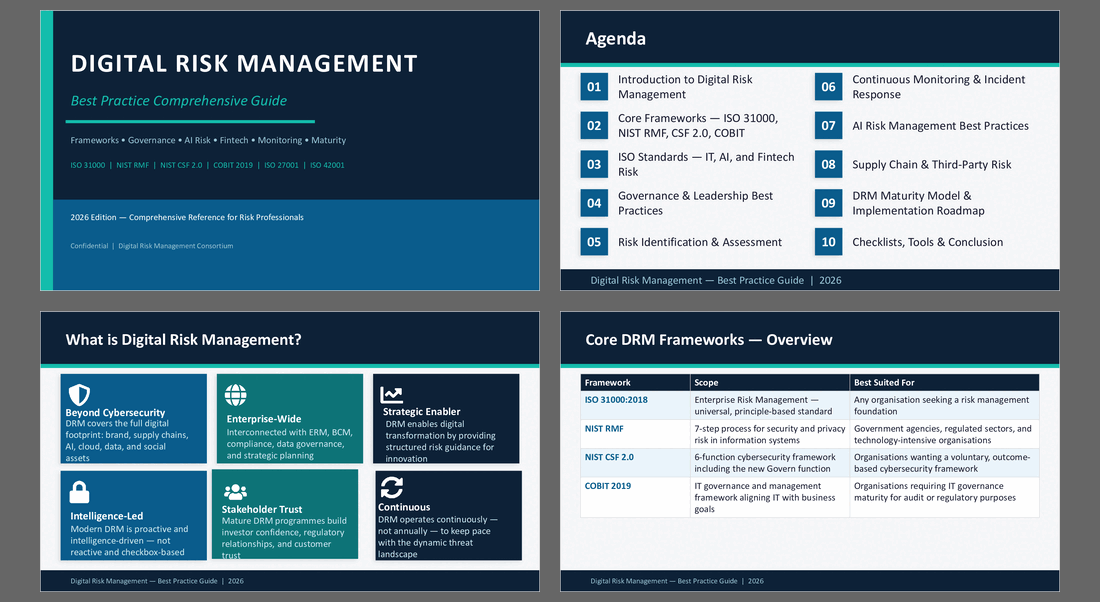
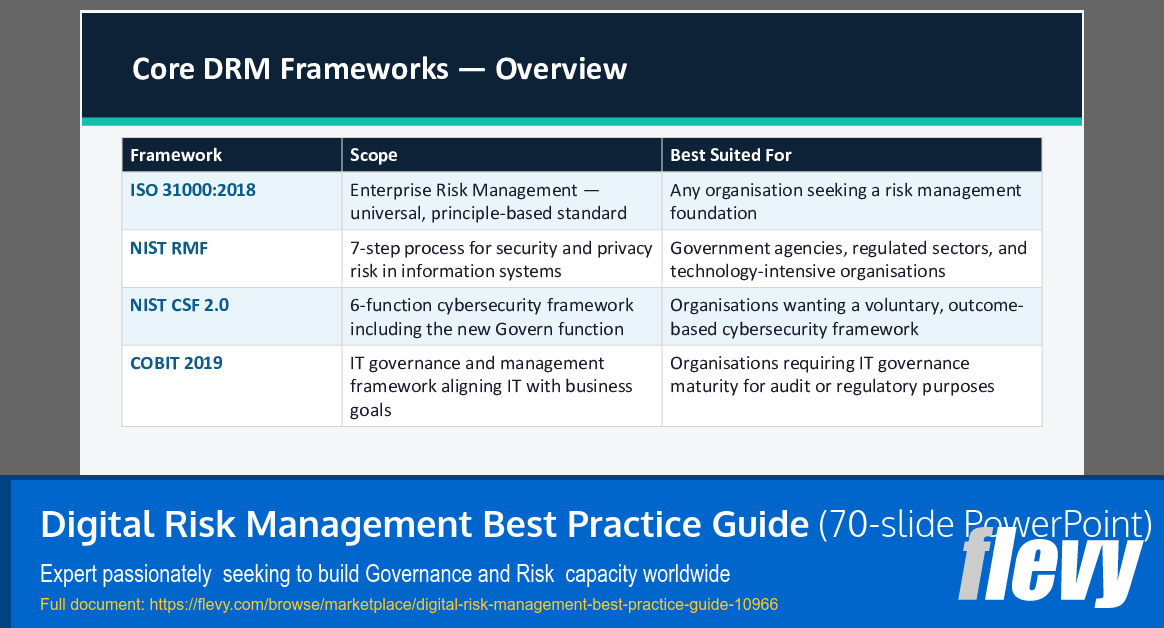
In an era where digital threats evolve faster than ever—1,636 cyberattacks per week and cybercrime costs soaring past $10.5 trillion annually—organisations cannot afford outdated risk strategies. The Digital Risk Management Best Practice Comprehensive Guide (2026 Edition) is your blueprint for turning vulnerability into unbreakable resilience. This practitioner-focused masterpiece seamlessly integrates the world's leading frameworks—ISO 31000, NIST RMF, NIST CSF 2.0, COBIT 2019—with cutting-edge standards for AI (ISO/IEC 42001), fintech, supply-chain security, and beyond.
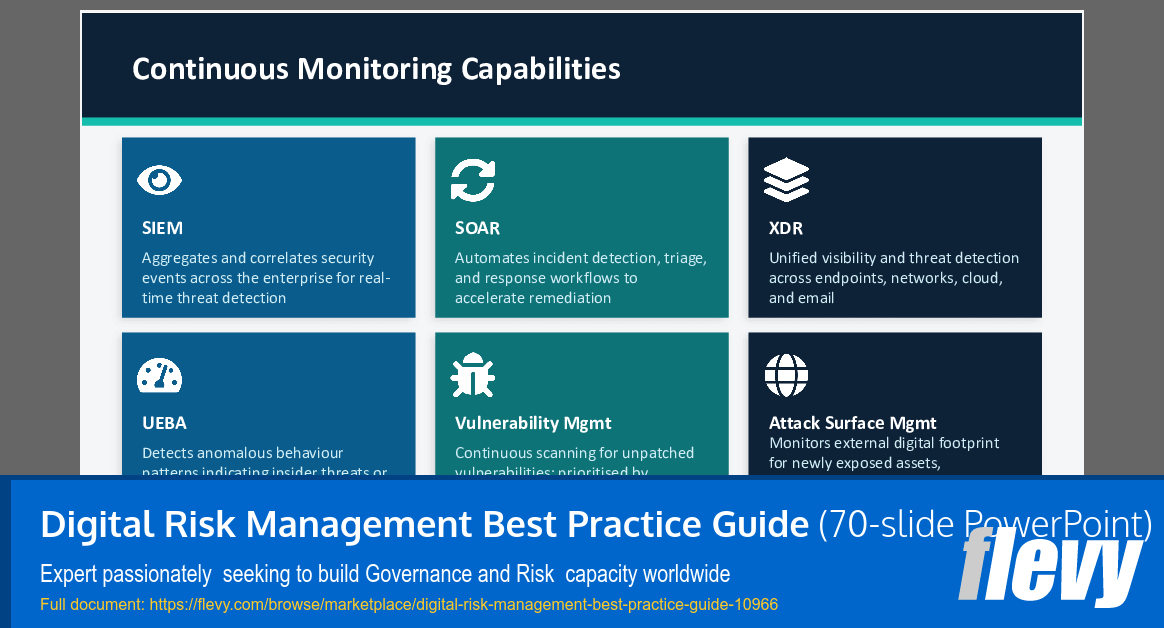
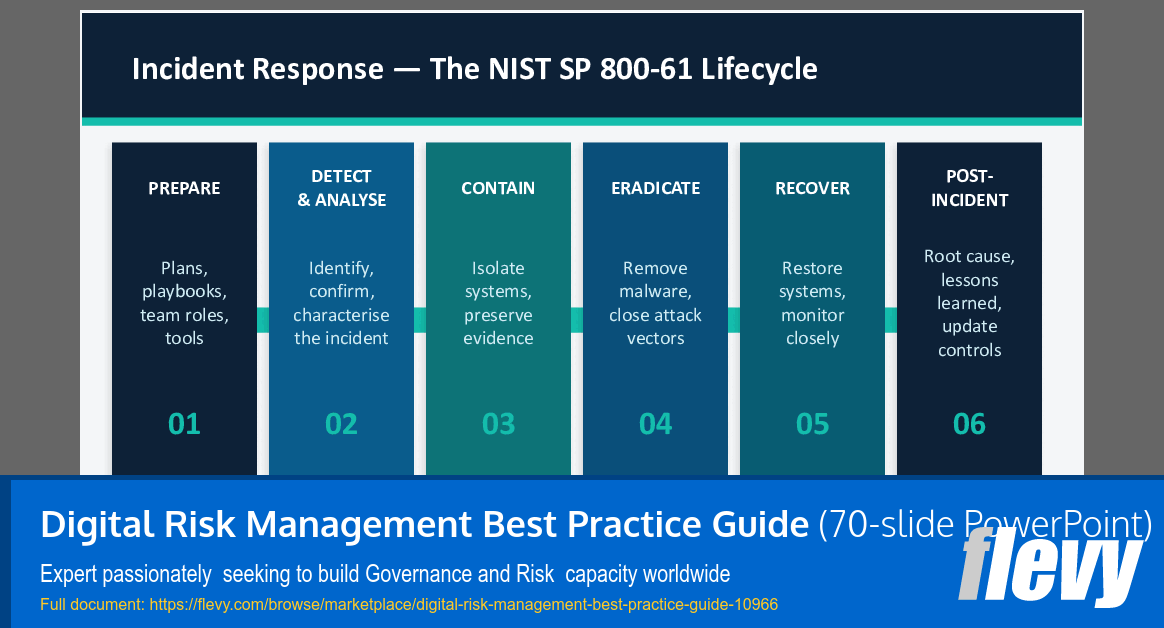
From board-level governance and risk appetite statements to continuous monitoring, AI risk taxonomy, incident response playbooks, and a proven maturity model, every chapter delivers actionable checklists, maturity assessments, threat-modelling templates, and real-world roadmaps. Whether you are launching a new DRM programme or elevating an existing one, this guide transforms abstract theory into measurable strategic advantage. It equips leaders to protect digital assets, accelerate digital transformation, satisfy regulators like the EU AI Act, and earn investor confidence—all while embedding a culture where risk becomes a competitive edge rather than a constant threat.
Written for CEOs, CISOs, risk officers, and forward-thinking teams, this 2026 edition is the definitive resource that future-proofs your organisation in a connected, AI-driven world. Stop reacting to crises. Start leading with confidence.
Got a question about the product? Email us at support@flevy.com or ask the author directly by using the "Ask the Author a Question" form. If you cannot view the preview above this document description, go here to view the large preview instead.
Source: Best Practices in Risk Management PowerPoint Slides: Digital Risk Management Best Practice Guide PowerPoint (PPTX) Presentation Slide Deck, Patrick Gitau




























