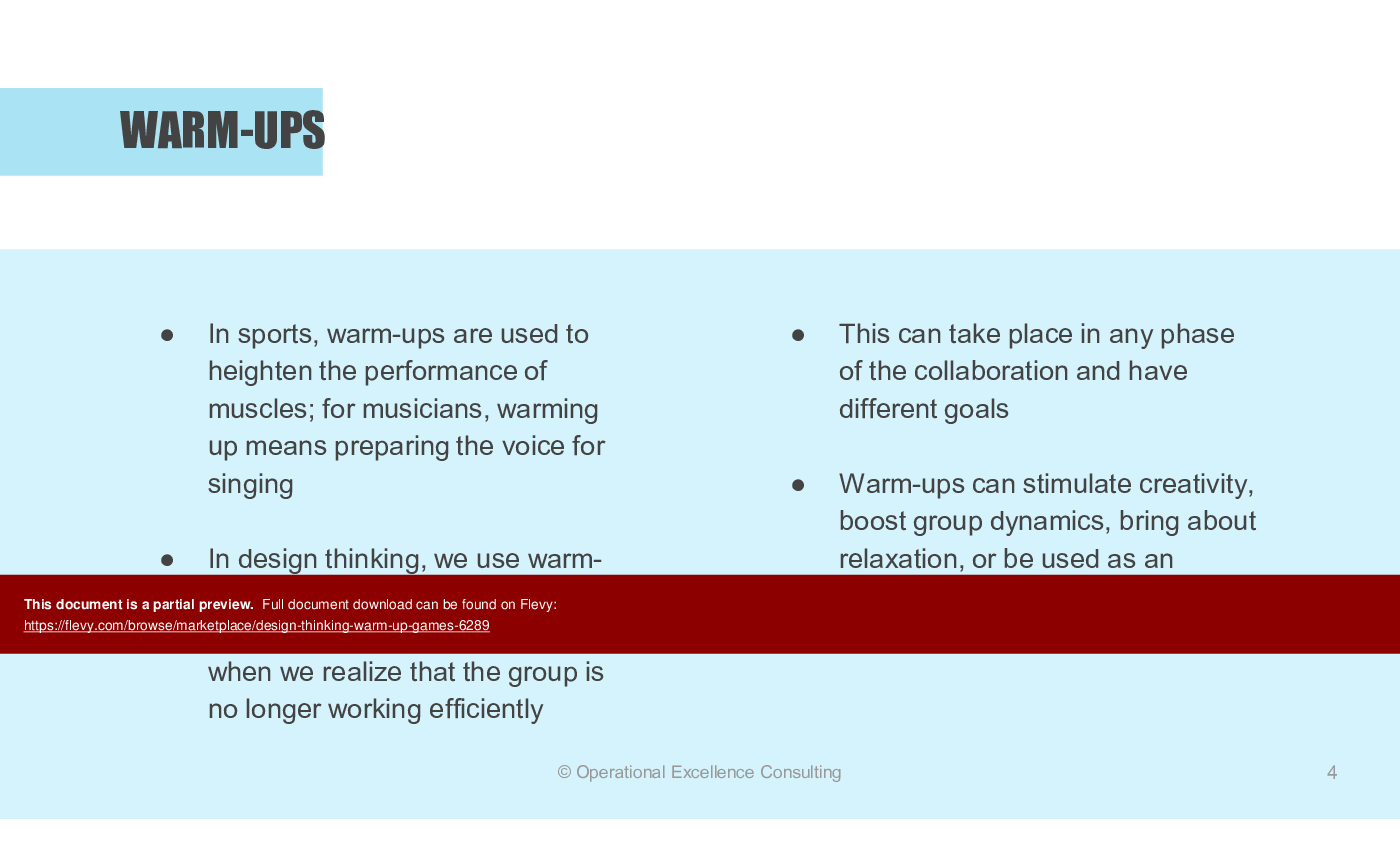

Warm-ups can stimulate creativity, boost group dynamics, bring about relaxation, or be used as an icebreaker to get to know one another.
Warm-ups promote collaboration and strengthen a curious attitude. Warm-up games thus support the design thinking process, serves as an energizer, and improve problem-solving.

In design thinking, we conduct warm-up games not only at the beginning of the workshop, but also after a break or when we realize that the group is no longer working efficiently. This can take place in any phase of the collaboration and have different goals.
||||||||||||||||||||||||||||||||||||||||||||||||||||||||||||||||||||||||||||||||||||||||||||||||||||||||||||||||||||||||||||||||||||||||||||||||||||||
This training package includes:
1. Warm-up Games (PowerPoint format)
2. Numbers Game (PowerPoint format) – for printing numbers 0 through 9
||||||||||||||||||||||||||||||||||||||||||||||||||||||||||||||||||||||||||||||||||||||||||||||||||||||||||||||||||||||||||||||||||||||||||||||||||||||
Benefits of doing warm-up:
• Create a positive group atmosphere
• Give workshop participants the chance to get to know one another
• Remove social barriers
• Reduce pressure to succeed
• Activate and release positive energy
• Distract the group a little bit so concentration is improved afterwards
• Prepare the team for a certain mindset or way of working
• Have fun and share a laugh
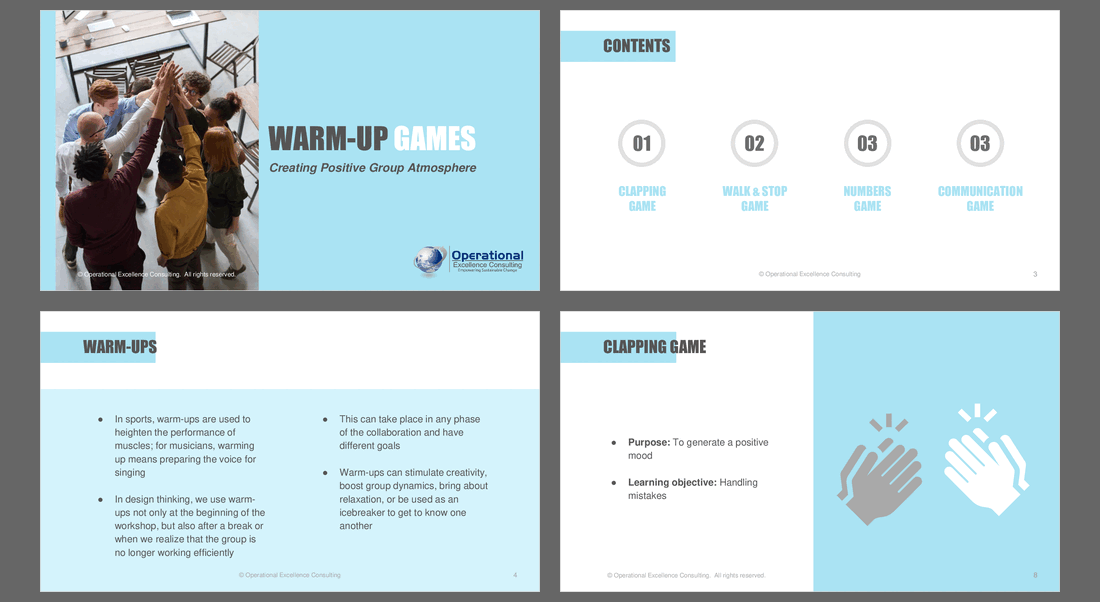
This PPT presentation includes four warm-up games that are easy to organize to energize your Design Thinking workshop:
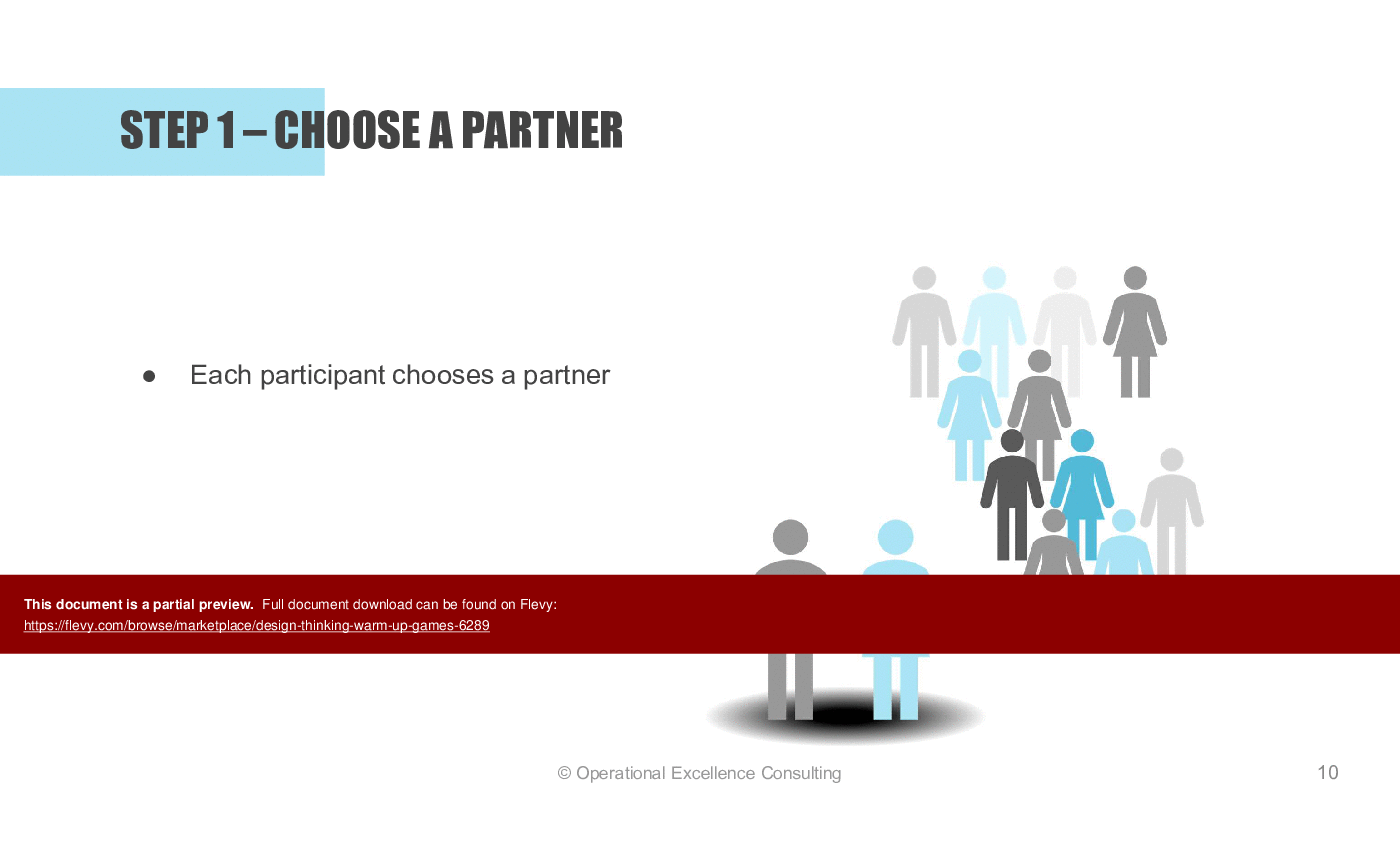
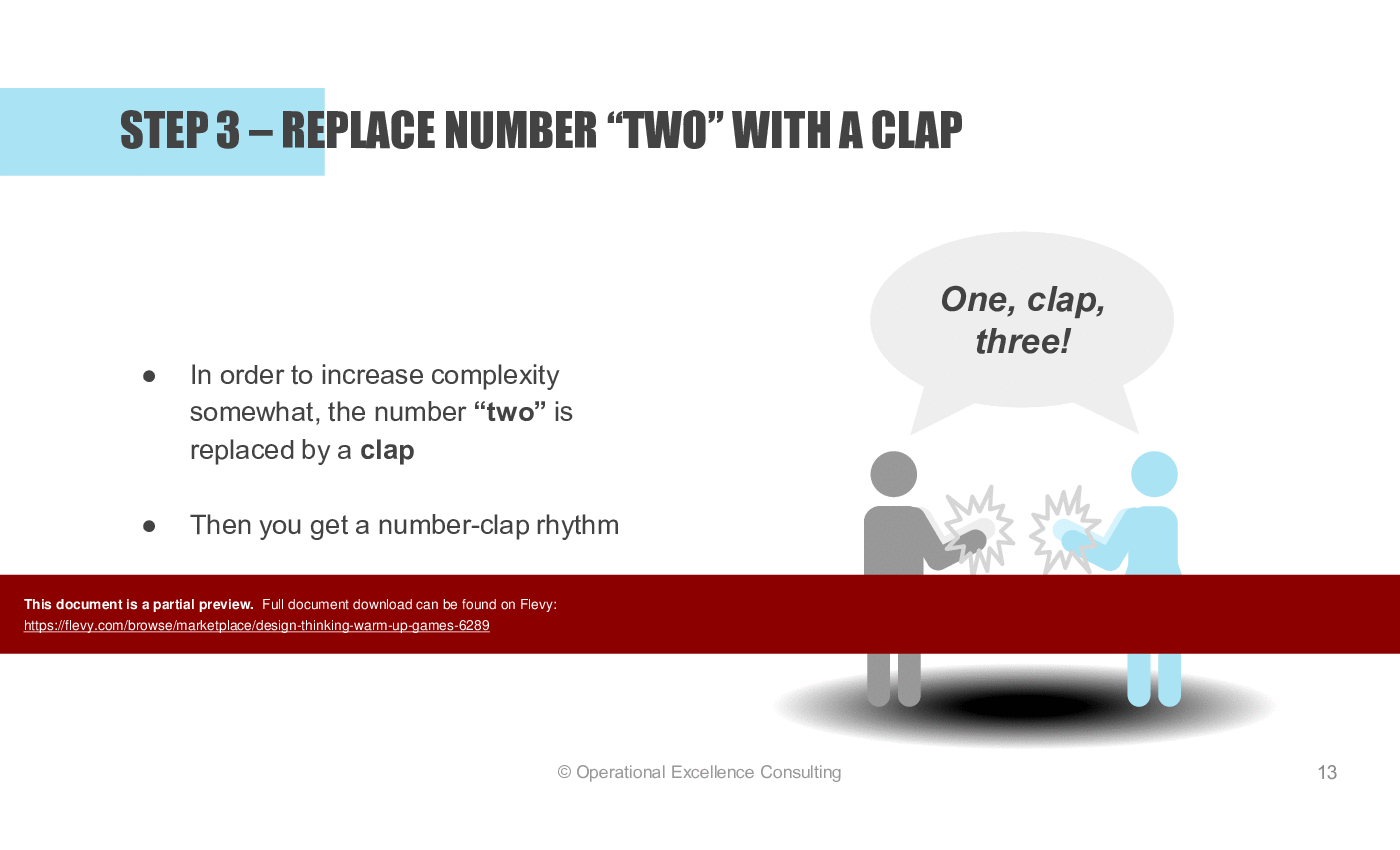
1. Clapping Game: A lively and interactive warm-up that engages participants by synchronizing their claps, fostering teamwork, and setting a positive tone for your Design Thinking workshop.
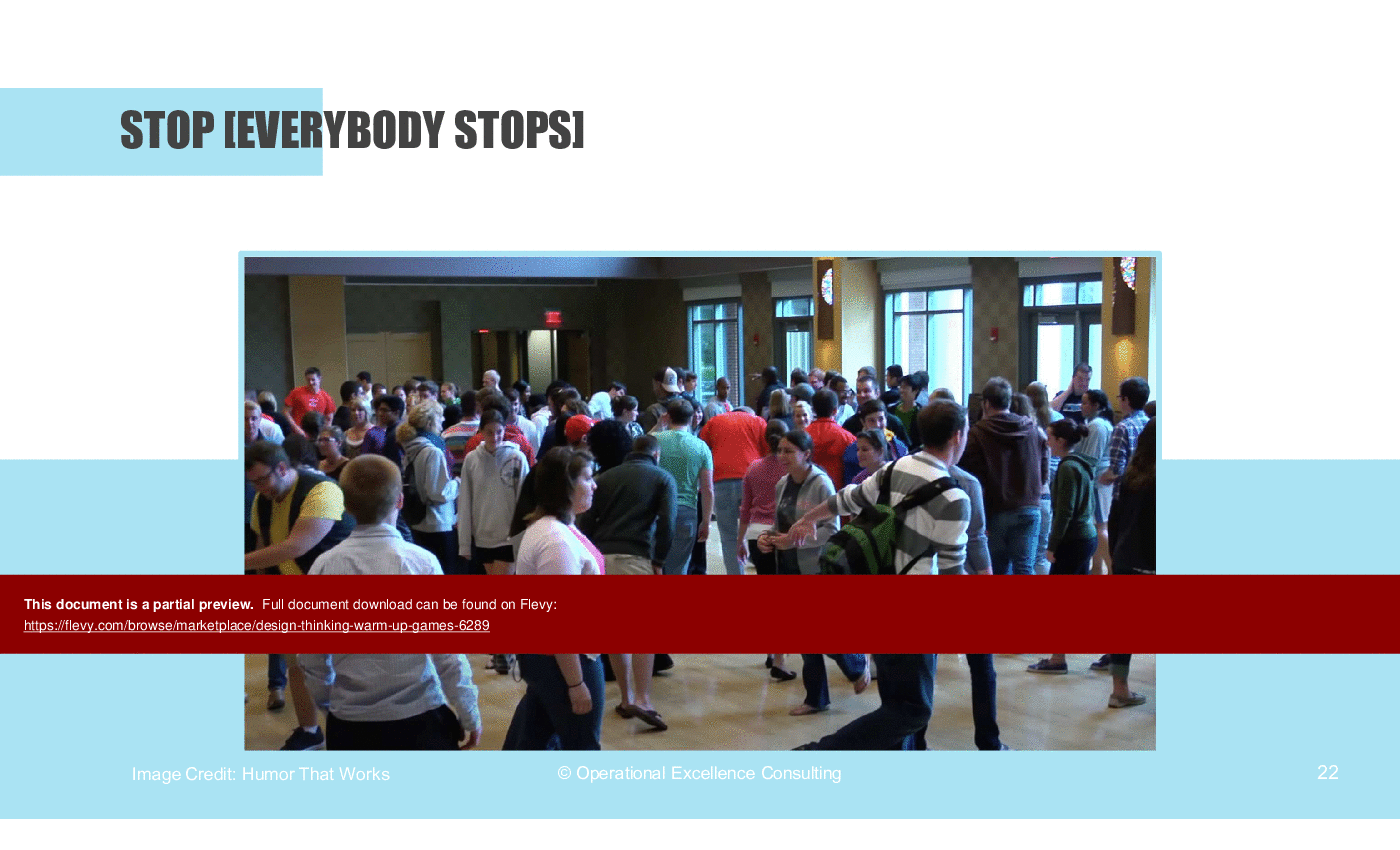
2. Walk & Stop Game: An engaging warm-up activity that challenges participants to coordinate their movements, promoting team cohesion and a fun atmosphere to kickstart your Design Thinking workshop.
3. Numbers Game: A dynamic warm-up that encourages participants to work together by arranging themselves in numerical order, enhancing communication skills, and creating a collaborative atmosphere for your Design Thinking workshop.
4. Communication Game: An interactive warm-up game designed to improve communication and problem-solving skills among participants, setting the stage for effective collaboration in your Design Thinking workshop.
Appendix – Suggestions for Facilitators
This PPT provides step-by-step instructions for each game, ensuring facilitators can easily guide participants. Visual aids and clear facilitation notes enhance the learning experience and effectiveness of the warm-ups.
Got a question about the product? Email us at support@flevy.com or ask the author directly by using the "Ask the Author a Question" form. If you cannot view the preview above this document description, go here to view the large preview instead.
Executive Summary
The "Design Thinking: Warm-Up Games" presentation is crafted to enhance group dynamics and stimulate creativity during Design Thinking workshops. Developed by Operational Excellence Consulting, this engaging PPTX features a collection of interactive warm-up games designed to energize participants and foster collaboration. With activities like the Clapping Game, Walk & Stop Game, Numbers Game, and Communication Game, this presentation serves as an essential tool for facilitators aiming to create a positive atmosphere and improve team interactions.
Who This Is For and When to Use
• Workshop facilitators leading Design Thinking sessions
• Team leaders aiming to enhance group dynamics
• HR professionals focusing on team-building activities
• Consultants working with organizations on innovation strategies
Best-fit moments to use this deck:
• At the beginning of a workshop to set a collaborative tone
• After breaks to re-engage participants
• When group dynamics appear stagnant or unproductive
• To introduce a fun element during intense brainstorming sessions
Learning Objectives
• Define the purpose of warm-up games in a Design Thinking context
• Build a positive group atmosphere that encourages participation
• Establish techniques to handle mistakes and foster acceptance
• Create engaging activities that stimulate creativity and collaboration
• Identify methods to reduce social barriers among participants
• Activate positive energy and enhance focus for subsequent tasks
Table of Contents
• Clapping Game (page 7)
• Walk & Stop Game (page 16)
• Numbers Game (page 34)
• Communication Game (page 45)
• Suggestions for Facilitators (page 56)
Primary Topics Covered
• Clapping Game - Aimed at generating a positive mood, this game helps participants learn to handle mistakes while engaging in a fun activity.
• Walk & Stop Game - Designed to break social barriers and energize the group, this game enhances concentration through switched commands.
• Numbers Game - An icebreaker that encourages teamwork and helps participants get to know one another while preventing afternoon doldrums.
• Communication Game - Focuses on understanding how information is relayed among team members, enhancing non-verbal communication skills.
• Warm-Up Importance - Highlights the significance of warm-ups in promoting collaboration and improving problem-solving within Design Thinking.
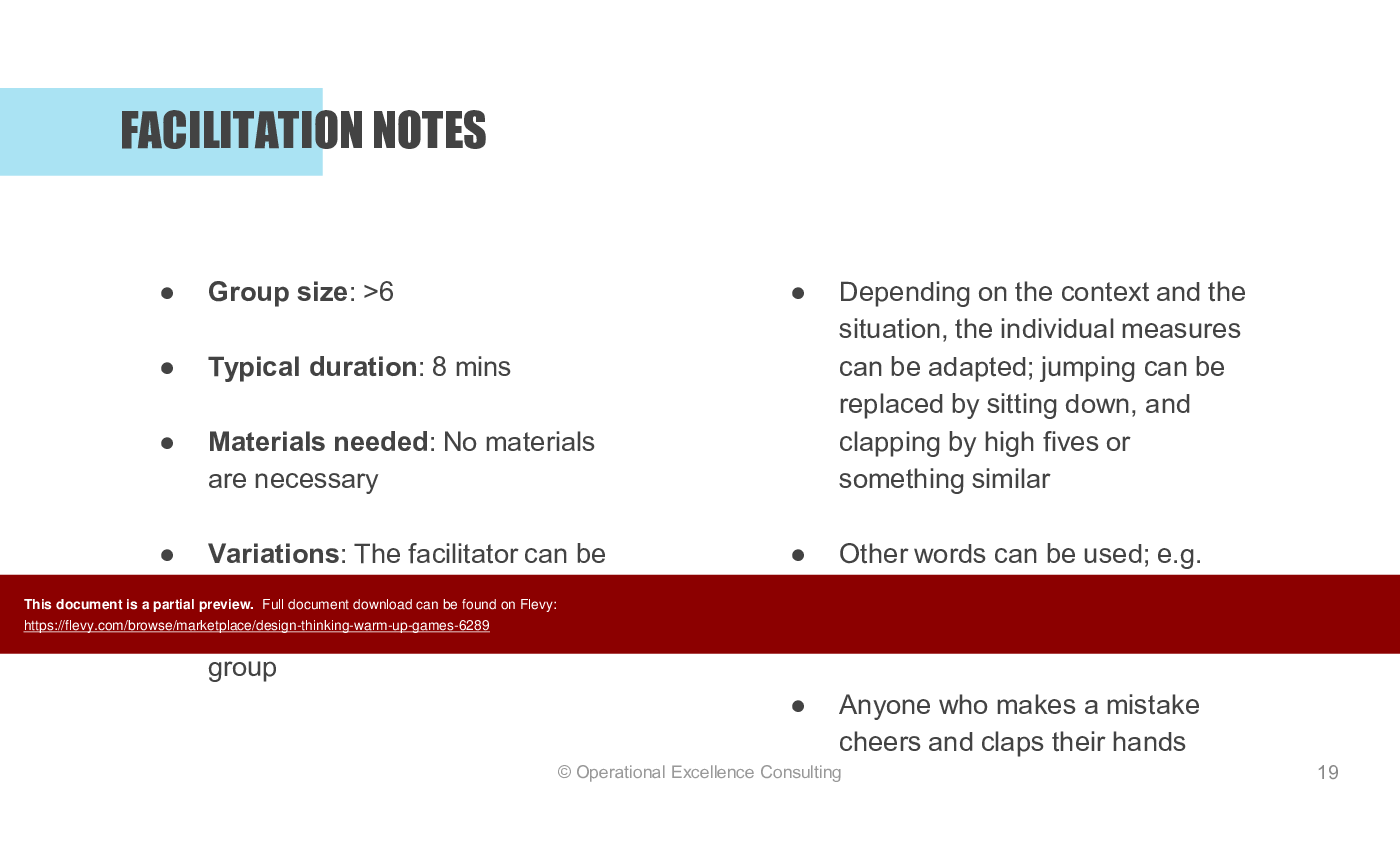
• Facilitation Notes - Provides guidance on group size, duration, materials needed, and variations for each game to ensure effective facilitation.
Deliverables, Templates, and Tools
• Clapping Game facilitation guide
• Walk & Stop Game instructions
• Numbers Game setup and scoring template
• Communication Game action sequence
• Suggestions for effective warm-up facilitation
• Customizable warm-up activity templates
Slide Highlights
• Overview of the importance of warm-ups in Design Thinking
• Step-by-step instructions for each warm-up game
• Visual aids demonstrating group interactions during games
• Tips for facilitators on adapting games to fit group dynamics
• Engaging visuals that capture the essence of each game
Potential Workshop Agenda
Warm-Up Session (30 minutes)
• Introduce the purpose of warm-ups and their role in Design Thinking
• Facilitate the Clapping Game to set a positive tone
• Transition into the Walk & Stop Game to energize participants
Team-Building Activities (30 minutes)
• Conduct the Numbers Game to encourage collaboration
• Follow with the Communication Game to enhance team dynamics
Customization Guidance
• Adjust the duration of each game based on group size and energy levels
• Modify game instructions to align with specific workshop goals
• Incorporate organizational terminology into warm-up activities for relevance
• Use participant feedback to tailor future warm-up sessions
Secondary Topics Covered
• The role of warm-ups in fostering a curious mindset
• Techniques for selecting appropriate warm-ups based on group culture
• Strategies for integrating warm-ups into various phases of collaboration
• The impact of physical movement on group engagement
FAQ
What is the purpose of warm-up games in Design Thinking?
Warm-up games are designed to stimulate creativity, improve group dynamics, and create a positive atmosphere, enhancing overall workshop effectiveness.
How long do the warm-up games typically last?
Most warm-up games last between 5 to 8 minutes, making them easy to integrate into any workshop agenda.
What materials are needed for the warm-up games?
Most games require no materials,, but some may benefit from printed numbers or visual aids for clarity.
Can these games be customized for different group sizes?
Yes, the games can be easily adapted to accommodate various group sizes and dynamics.
How do I handle mistakes during the games?
Encourage a positive attitude towards mistakes by fostering an environment where participants cheer for each other, reinforcing learning and acceptance.
Are these games suitable for remote workshops?
While primarily designed for in-person settings, many games can be adapted for virtual environments with minor adjustments.
What if participants are hesitant to engage?
Start with simpler games to build confidence and gradually introduce more complex activities as participants become comfortable.
How can I measure the effectiveness of the warm-up games?
Gather participant feedback through quick surveys or discussions after the workshop to assess engagement and impact on collaboration.
Glossary
• Warm-Up - Activities designed to prepare participants for collaboration and creativity.
• Design Thinking - A problem-solving approach that emphasizes user-centered design and innovation.
• Facilitation - The process of guiding a group through discussions and activities to achieve specific goals.
• Icebreaker - An activity aimed at helping participants get to know one another and reduce social barriers.
• Group Dynamics - The interactions and behaviors that occur within a group setting.
• Non-Verbal Communication - The transmission of messages or information without the use of words.
• Teamwork - Collaborative efforts by a group to achieve a common goal.
• Engagement - The level of participation and involvement of individuals in activities.
• Creativity - The ability to generate new ideas or concepts.
• Collaboration - Working together to achieve shared objectives.
• Concentration - The ability to focus attention on a specific task or activity.
• Positive Mood - A state of mind characterized by feelings of happiness and optimism.
Source: Best Practices in Service Design PowerPoint Slides: Design Thinking: Warm-Up Games PowerPoint (PPTX) Presentation Slide Deck, Operational Excellence Consulting
This document is available as part of the following discounted bundle(s):
Save %!
Team Dynamics Game Pack: Learn, Collaborate, Win
This bundle contains 3 total documents. See all the documents to the right.
|
Download our FREE Strategy & Transformation Framework Templates
Download our free compilation of 50+ Strategy & Transformation slides and templates. Frameworks include McKinsey 7-S, Balanced Scorecard, Disruptive Innovation, BCG Curve, and many more. |