
Design Sprint   23-slide PPT PowerPoint presentation slide deck (PPT)
$29.00

Design Sprint (23-slide PPT PowerPoint presentation slide deck (PPT)) Preview Image
Log in to unlock full preview.
Design Sprint (23-slide PPT PowerPoint presentation slide deck (PPT)) Preview Image
Arrow   Click main image to view in full screen.

Design Sprint (PowerPoint PPT Slide Deck)

PowerPoint (PPT) 23 Slides FlevyPro Document

$29.00
FlevyPro price: FREE (included in subscription)
This framework is developed by a team of former McKinsey and Big 4 consultants. The presentation follows the headline-body-bumper slide format used by global consulting firms.
Add to Cart


Immediate download
Free lifetime updates

SERVICE DESIGN PPT DESCRIPTION

Editor Summary Design Sprint is a 23-slide PowerPoint deck by LearnPPT Consulting based on Google’s Design Sprint methodology, providing a 5-phase workshop framework: Understand, Diverge, Converge, Build, and Test. Read more

Design Sprint is a Google methodology for creating and designing new products. Google developed this methodology after analyzing a number of business strategy, design thinking, user research, and psychology techniques. The methods considered most meaningful have been arranged into the framework that supports both creative thinking as well as convergent thinking (linear thinking). This flexible design framework increases the chances of making something people want.

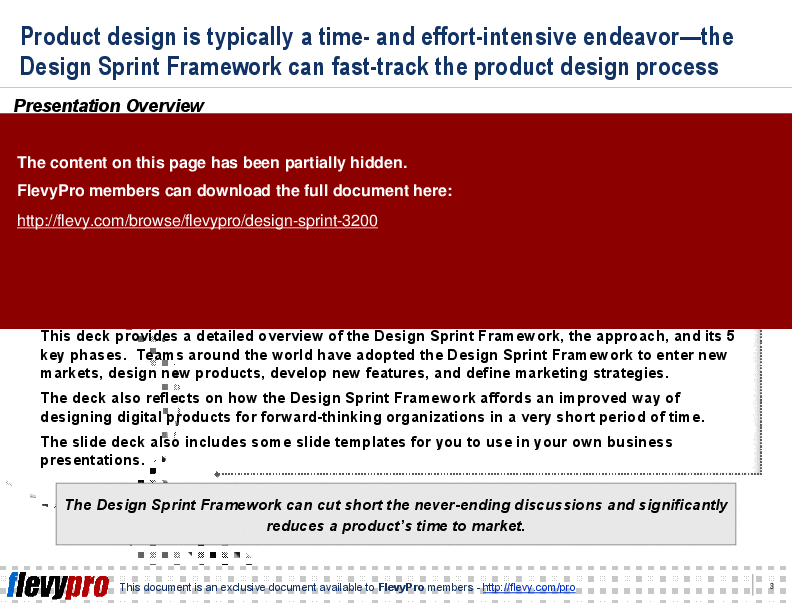
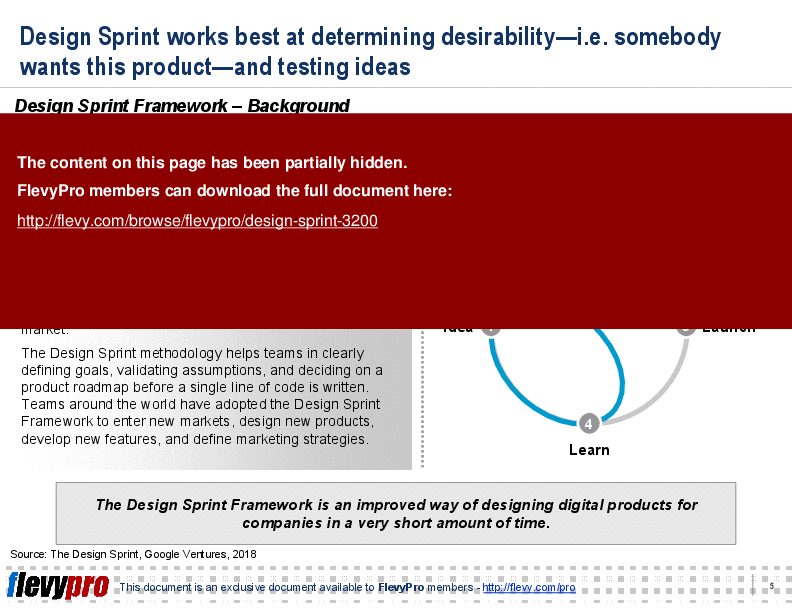
The framework uses design thinking to reduce the risk when bringing a new product, service or a feature to the market. The Design Sprint methodology helps teams in clearly defining goals, validating assumptions, and deciding on a product roadmap before a single line of code is written. It can cut short the never-ending discussions and significantly reduces a product's time to market.

This deck provides a detailed overview of the Design Sprint Framework, the approach, and its 5 key phases. Teams around the world have adopted the Design Sprint Framework to enter new markets, design new products, develop new features, and define marketing strategies.

The deck also reflects on how the Design Sprint Framework affords an improved way of designing digital products for forward-thinking organizations in a very short period of time.

The slide deck also includes some slide templates for you to use in your own business presentations.

The Design Sprint Framework is meticulously organized into five sequential phases: Understand, Diverge, Converge, Build, and Test. Each phase is designed to streamline the product development process, ensuring that teams can quickly iterate and validate ideas. This structured approach not only accelerates time-to-market, but also enhances team collaboration and decision-making. The deck includes actionable steps and key actions for each phase, providing a comprehensive guide to executing a successful Design Sprint. Ideal for C-level executives looking to foster innovation and efficiency within their organizations.

Got a question about this document? Email us at flevypro@flevy.com.

MARCUS OVERVIEW

This synopsis was written by Marcus [?] based on the analysis of the full 23-slide presentation.


Executive Summary
The Design Sprint (PPT) is a structured workshop presentation designed to facilitate rapid product development and testing. Based on Google’s methodology, this slide deck provides a comprehensive framework for teams to clarify business problems, brainstorm solutions, create prototypes, and test ideas with real users—all within a condensed timeframe. By utilizing this presentation, teams can streamline their product design process, reduce time to market, and enhance collaboration across departments.

Who This Is For and When to Use
•  Product managers leading new product development initiatives
•  UX/UI designers seeking to validate design concepts quickly
•  Marketing teams aiming to refine product strategies
•  Cross-functional teams involved in product launches or feature enhancements

Best-fit moments to use this deck:
•  When initiating a new product or service launch
•  During the redesign of existing products or features
•  To address specific business challenges requiring innovative solutions
•  For team-building exercises focused on collaboration and creativity

Learning Objectives
•  Define the Design Sprint methodology and its application in product development
•  Build a clear understanding of user needs through structured discussions
•  Generate diverse solutions through individual and team brainstorming
•  Create a realistic prototype to test with potential users
•  Validate product concepts through user feedback and testing
•  Develop actionable next steps based on testing outcomes

Table of Contents
•  Overview (page 3)
•  Design Sprint Framework Overview (page 5)
•  Design Sprint Framework Approach (page 9)
•  Templates (page 17)

Primary Topics Covered
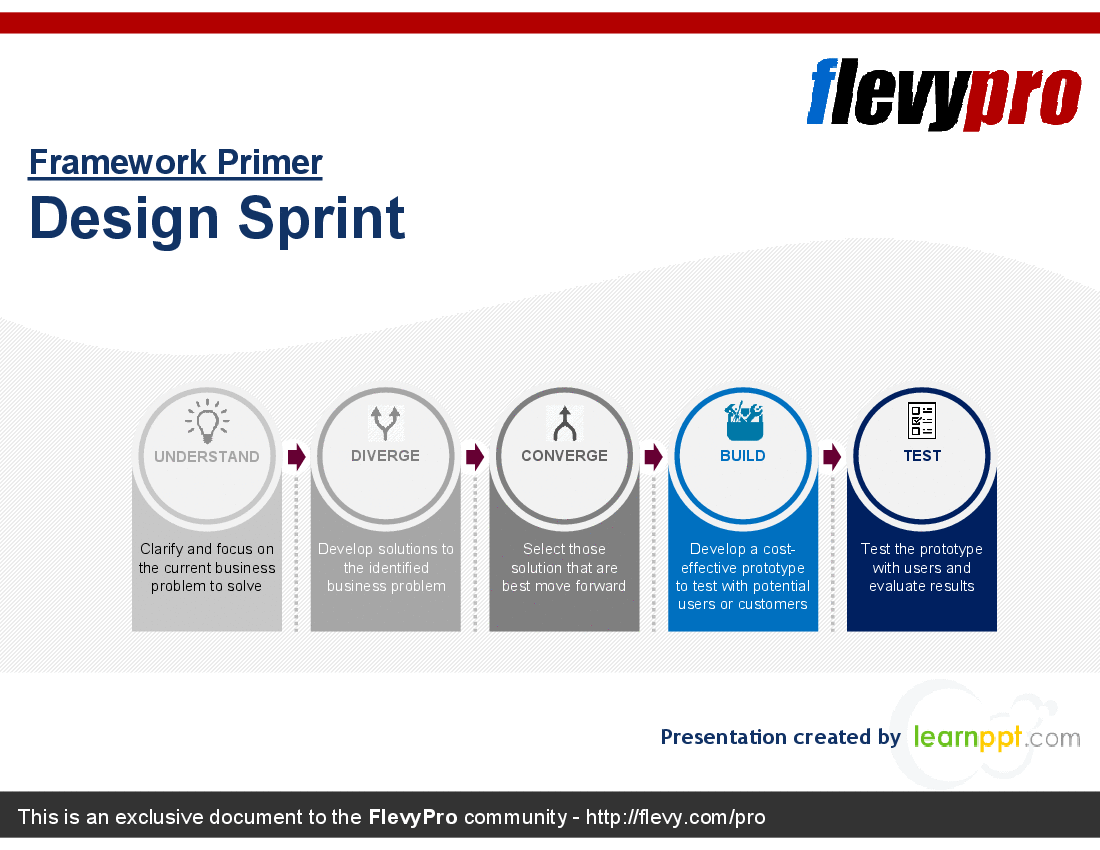
•  Understand - Teams clarify and focus on the current business problem to solve, establishing a shared understanding of user needs.
•  Diverge - Participants develop a range of solutions to the identified business problem, encouraging creative thinking.
•  Converge - The team selects the most viable solution to move forward, refining ideas through discussion and voting.
•  Build - A cost-effective prototype is developed based on the selected solution, ready for user testing.
•  Test - The prototype is tested with users, gathering feedback to inform future iterations and decisions.

Deliverables, Templates, and Tools
•  User journey maps to visualize user interactions
•  Storyboards outlining the prototype flow
•  Prototypes for user testing
•  Reports summarizing user feedback and testing results
•  Action plans detailing next steps based on findings

Slide Highlights
•  Overview of the Design Sprint Framework and its 5 phases
•  Visual representation of the Design Sprint process from understanding to testing
•  Key actions for each phase to guide participants through the workshop
•  Templates for user journey mapping and storyboarding

Potential Workshop Agenda
Understanding Phase (Day 1)
•  Conduct Lightning Talks to explore the business problem
•  Utilize "How Might We" (HMW) method for brainstorming
•  Perform Affinity Mapping to cluster ideas

Diverge Phase (Day 2)
•  Review existing ideas for inspiration
•  Generate and sketch multiple solutions
•  Share and discuss ideas to identify top concepts

Converge Phase (Day 3)
•  Evaluate solutions through criteria and assumptions review
•  Create a storyboard for the selected idea
•  Schedule user interviews for testing

Build Phase (Day 4)
•  Develop a prototype based on the storyboard
•  Prepare for user testing by finalizing the interview guide

Test Phase (Day 5)
•  Conduct user testing sessions
•  Gather and summarize feedback for actionable insights

Customization Guidance
•  Adjust the workshop timeline to fit your team’s availability
•  Tailor the business problem and user personas to reflect your specific context
•  Modify templates to align with your branding and presentation style
•  Incorporate specific metrics for success relevant to your organization

Secondary Topics Covered
•  Importance of interdisciplinary collaboration in product development
•  Techniques for effective user testing and feedback collection
•  Strategies for rapid prototyping and iteration

Topic FAQ

What are the typical phases of a Design Sprint and what does each phase focus on?

A Design Sprint is organized into 5 sequential phases: Understand (clarify the business problem and user needs), Diverge (generate multiple solution ideas), Converge (select and refine the best idea), Build (create a prototype), and Test (validate with users). These are the 5 core phases.

How long does a Design Sprint usually take and can the timeline be adjusted?

A Design Sprint is typically conducted over 5 consecutive days, with each day focused on a different phase from Understand through Test. The workshop timeline can be adjusted to fit team availability and scheduling constraints while preserving the five-phase structure.

Who should participate in a Design Sprint and what team size is ideal?

An ideal Design Sprint team consists of 4–7 members, including a facilitator, designer, decision-maker, product manager, and representatives from core business departments. This composition supports cross-functional perspectives and rapid decision-making with a recommended team size of 4–7 members.

What deliverables should I expect from a completed Design Sprint?

Typical deliverables include user journey maps, storyboards outlining the prototype flow, a working prototype for testing, user-testing reports summarizing feedback, and an action plan detailing next steps based on findings. Expect these core deliverables such as user journey maps and storyboards.

What should I look for when choosing a Design Sprint slide deck or toolkit?

Look for coverage of the full five-phase framework, clear phase-specific actions, ready-to-use templates (user journey maps, storyboards), a sample workshop agenda, and guidance on tailoring the sprint to your context. Prioritize resources that include templates like user journey maps and storyboards.

How do prototypes and user testing fit into the Design Sprint flow?

Prototyping happens in the Build phase, where teams produce a cost-effective artifact representing the selected solution; user testing occurs in the Test phase to gather feedback that informs iteration and decisions. Prototyping and user testing are core to the Build and Test phases.

Can a Design Sprint be applied to existing products or features, not just new launches?

Yes; the Design Sprint framework can be used to redesign existing products or features by identifying improvement areas, generating concepts, prototyping changes, and validating with users. It is suitable for both redesigns and new product launches.

Are slide templates and agendas typically included in Design Sprint resources, and how customizable are they?

Many Design Sprint decks include slide templates (user journey maps, storyboards), sample agendas for each day, and customization guidance to adapt timeline, personas, and metrics to your context. For example, Flevy's Design Sprint (PPT) includes templates and customization guidance across 23 slides.

Document FAQ
These are questions addressed within this presentation.

What is a Design Sprint?
A Design Sprint is a time-constrained process that uses design thinking to reduce the risk when bringing a new product, service, or feature to market.

How long does a Design Sprint take?
Typically, a Design Sprint is conducted over 5 consecutive days, focusing on different phases each day.

Who should participate in a Design Sprint?
An ideal team consists of 4-7 members, including a facilitator, designer, decision-maker, product manager, and representatives from core business departments.

What are the key deliverables of a Design Sprint?
Key deliverables include findings from the sprint, prototypes, user testing reports, and a plan for next steps.

How does the Design Sprint framework enhance collaboration?
The framework encourages cross-functional teamwork, allowing diverse perspectives to contribute to problem-solving and innovation.

What tools are used during a Design Sprint?
Common tools include user journey maps, storyboards, and prototyping software to visualize ideas and test concepts.

Can the Design Sprint be applied to existing products?
Yes, the Design Sprint can be used to enhance existing products by identifying areas for improvement and validating new features.

What is the role of user testing in the Design Sprint?
User testing is critical for validating prototypes and gathering feedback, which informs future iterations and product decisions.

Glossary
•  Design Sprint - A structured process for rapid product development and testing.
•  Prototype - A preliminary model of a product used for testing and validation.
•  User Journey Map - A visual representation of a user's interactions with a product.
•  Storyboard - A sequence of illustrations or images that outline the flow of a prototype.
•  Affinity Mapping - A technique for organizing ideas into themes or categories.
•  Lightning Talks - Short presentations by team members to share insights on the business problem.
•  How Might We (HMW) - A brainstorming technique to reframe challenges as opportunities.
•  Empathy Building Exercises - Activities designed to help teams understand user perspectives.
•  User Testing - The process of evaluating a product by testing it with real users.
•  Feedback Loop - The process of gathering user feedback to inform product development.
•  Cross-Functional Team - A group composed of members from different departments working together.
•  Success Metrics - Criteria used to measure the effectiveness of a product or solution.

SERVICE DESIGN PPT SLIDES

Five Phases of the Design Sprint Framework

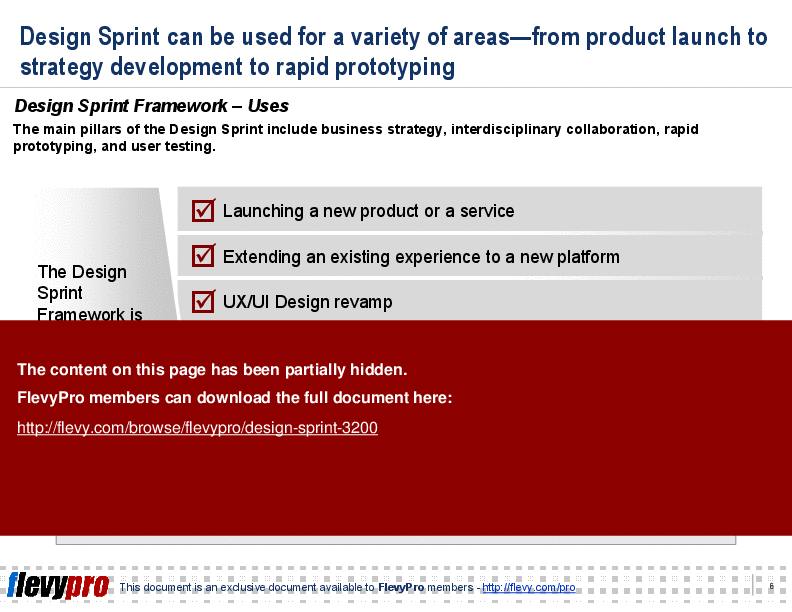
Applications of the Design Sprint Framework

Accelerating Innovation: The Design Sprint Framework

Source: Best Practices in Product Strategy, Service Design, Product Design PowerPoint Slides: Design Sprint PowerPoint (PPT) Presentation Slide Deck, LearnPPT Consulting


$29.00
FlevyPro price: FREE (included in subscription)
This framework is developed by a team of former McKinsey and Big 4 consultants. The presentation follows the headline-body-bumper slide format used by global consulting firms.
Add to Cart
  

Did you need more documents?

Consider a FlevyPro subscription from $39/month. View plans here.

For $10.00 more, you can download this document plus 2 more FlevyPro documents. That's just $13 each.

ABOUT FLEVYPRO

This document is part of the FlevyPro Library, a curated knowledge base of documents for our FlevyPro subscribers.

FlevyPro is a subscription service for on-demand business frameworks and analysis tools. FlevyPro subscribers receive access to an exclusive library of curated business documents—business framework primers, presentation templates, Lean Six Sigma tools, and more—among other exclusive benefits.

Click here to learn more about FlevyPro and its benefits.

Did you know?
The average daily rate of a McKinsey consultant is $6,625 (not including expenses). The average price of a Flevy document is $65.


Trusted by over 10,000+ Client Organizations
Since 2012, we have provided business templates to over 10,000 businesses and organizations of all sizes, from startups and small businesses to the Fortune 100, in over 130 countries.
AT&T GE Cisco Intel IBM Coke Dell Toyota HP Nike Samsung Microsoft Astrazeneca JP Morgan KPMG Walgreens Walmart 3M Kaiser Oracle SAP Google E&Y Volvo Bosch Merck Fedex Shell Amgen Eli Lilly Roche AIG Abbott Amazon PwC T-Mobile Broadcom Bayer Pearson Titleist ConEd Pfizer NTT Data Schwab


Read Customer Testimonials

 
"As a young consulting firm, requests for input from clients vary and it's sometimes impossible to provide expert solutions across a broad spectrum of requirements. That was before I discovered Flevy.com.

Through subscription to this invaluable site of a plethora of topics that are key and crucial to consulting, I "

– Nishi Singh, Strategist and MD at NSP Consultants
 
"As a consulting firm, we had been creating subject matter training materials for our people and found the excellent materials on Flevy, which saved us 100's of hours of re-creating what already exists on the Flevy materials we purchased."

– Michael Evans, Managing Director at Newport LLC
 
"I have found Flevy to be an amazing resource and library of useful presentations for lean sigma, change management and so many other topics. This has reduced the time I need to spend on preparing for my performance consultation. The library is easily accessible and updates are regularly provided. A wealth of great information."

– Cynthia Howard RN, PhD, Executive Coach at Ei Leadership
 
"Flevy.com has proven to be an invaluable resource library to our Independent Management Consultancy, supporting and enabling us to better serve our enterprise clients.

The value derived from our [FlevyPro] subscription in terms of the business it has helped to gain far exceeds the investment made, making a subscription a no-brainer for any growing consultancy – or in-house strategy team."

– Dean Carlton, Chief Transformation Officer, Global Village Transformations Pty Ltd.
 
"I am extremely grateful for the proactiveness and eagerness to help and I would gladly recommend the Flevy team if you are looking for data and toolkits to help you work through business solutions."

– Trevor Booth, Partner, Fast Forward Consulting
 
"FlevyPro has been a brilliant resource for me, as an independent growth consultant, to access a vast knowledge bank of presentations to support my work with clients. In terms of RoI, the value I received from the very first presentation I downloaded paid for my subscription many times over! The "

– Roderick Cameron, Founding Partner at SGFE Ltd
 
"Last Sunday morning, I was diligently working on an important presentation for a client and found myself in need of additional content and suitable templates for various types of graphics. Flevy.com proved to be a treasure trove for both content and design at a reasonable price, considering the time I "

– M. E., Chief Commercial Officer, International Logistics Service Provider
 
"[Flevy] produces some great work that has been/continues to be of immense help not only to myself, but as I seek to provide professional services to my clients, it gives me a large "tool box" of resources that are critical to provide them with the quality of service and outcomes they are expecting."

– Royston Knowles, Executive with 50+ Years of Board Level Experience


Customers Also Bought These Documents


Customers Also Like These Documents

Explore Templates on Related Management Topics


Your Recently Viewed Documents
Download our FREE Strategy & Transformation Framework Templates

Download our free compilation of 50+ Strategy & Transformation slides and templates. Frameworks include McKinsey 7-S, Balanced Scorecard, Disruptive Innovation, BCG Curve, and many more.









