 Click main image to view in full screen.
Decision Intelligence Series - AI Decision Review Framework – PowerPoint PPTX Template
PowerPoint (PPTX) 31 Slides


BENEFITS OF THIS DOWNLOADABLE POWERPOINT DOCUMENT
- Provides a structured five-mechanism framework that identifies where AI-assisted analysis degrades decision quality, including consensus amplification, false confidence, over-optimization, missing adversarial thinking, and the absent decision layer.
- Delivers modular challenge protocols for evaluating AI output, validating strategic decisions, conducting AI-assisted strategy reviews, establishing board governance, and preparing investment decisions, with defined outputs ready for immediate use.
- Separates analysis from decision by establishing a formal decision layer with named ownership, documented assumptions, and adversarial challenge, closing the accountability gap in AI-assisted workflows.
DECISION MAKING PPT TEMPLATE DESCRIPTION
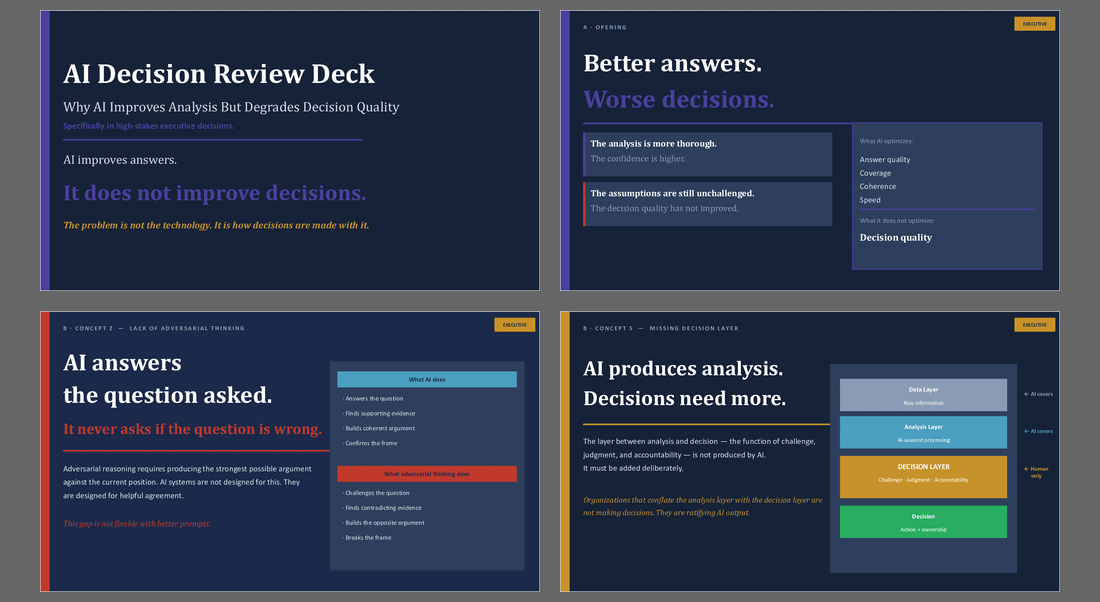
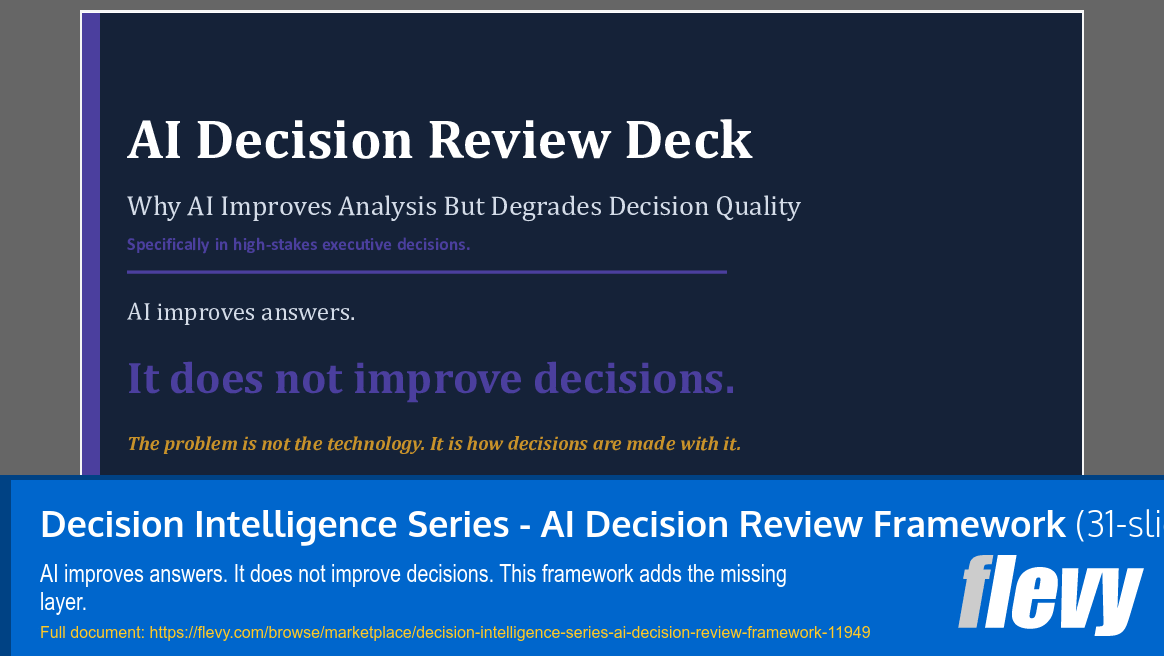
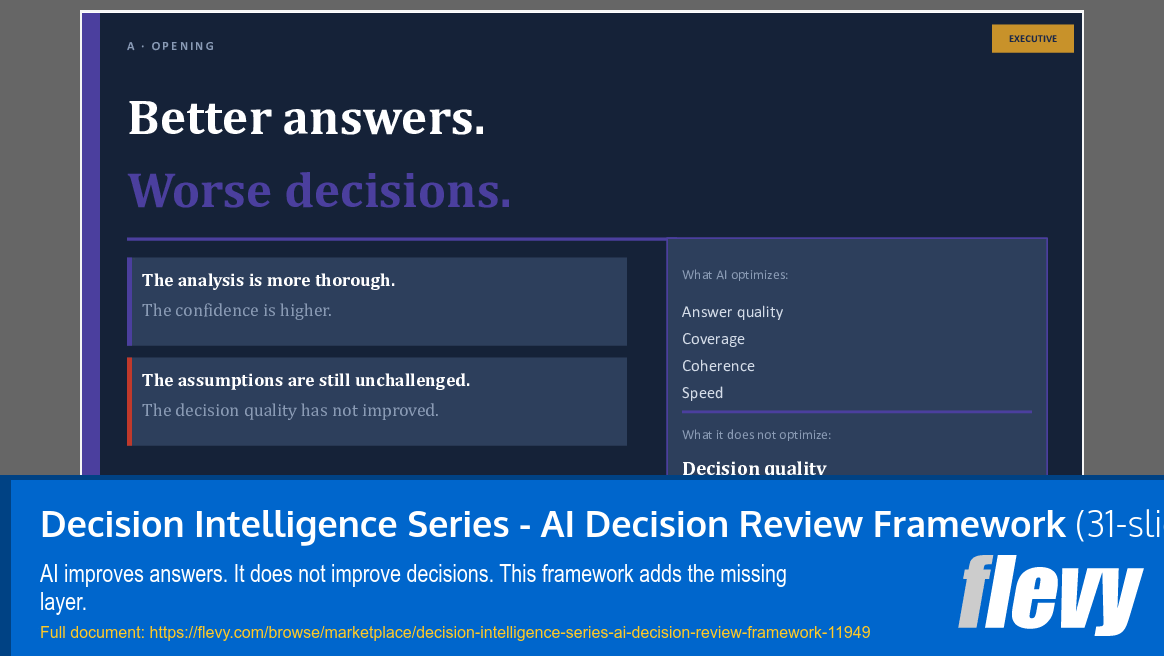
AI-assisted analysis is more thorough, more coherent, and more confident than anything that preceded it. The assumptions behind it remain unchallenged. Decision quality has not improved.
This framework addresses the structural failure mode that AI introduces into high-stakes decision processes. The problem is not the technology. It is the way organizations treat AI-assisted analysis as a substitute for the decision layer that AI does not provide.
Five mechanisms drive this failure.
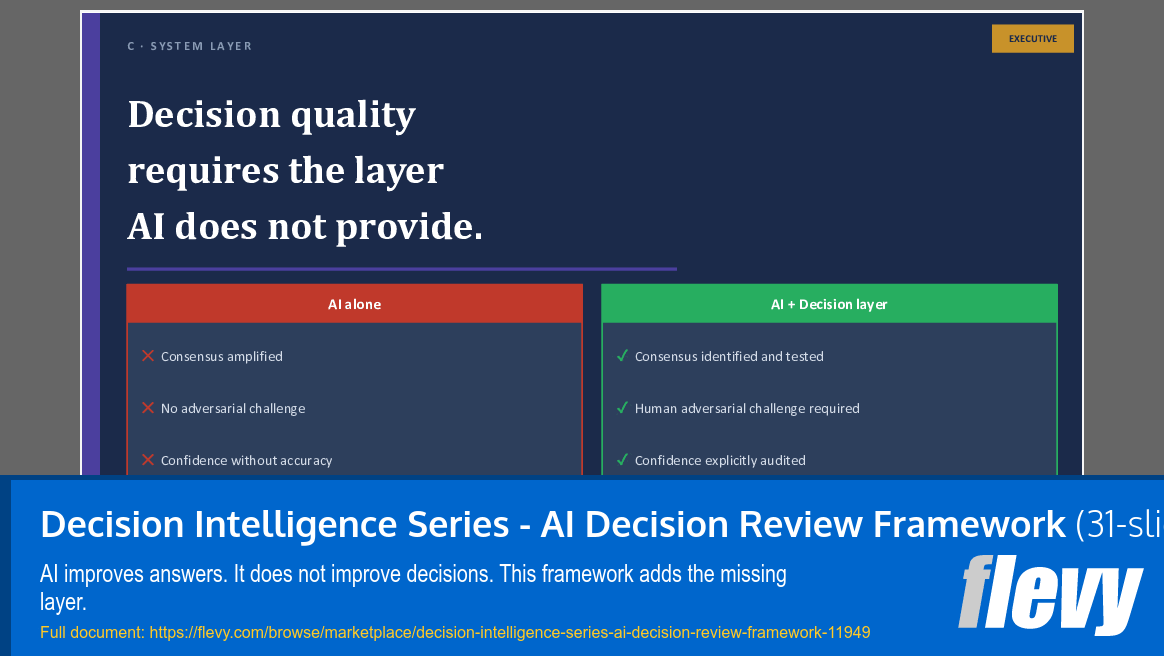
Consensus amplification. AI systems trained on public data produce fluent, authoritative summaries of what the market already believes. The output looks like intelligence. It is organized agreement.
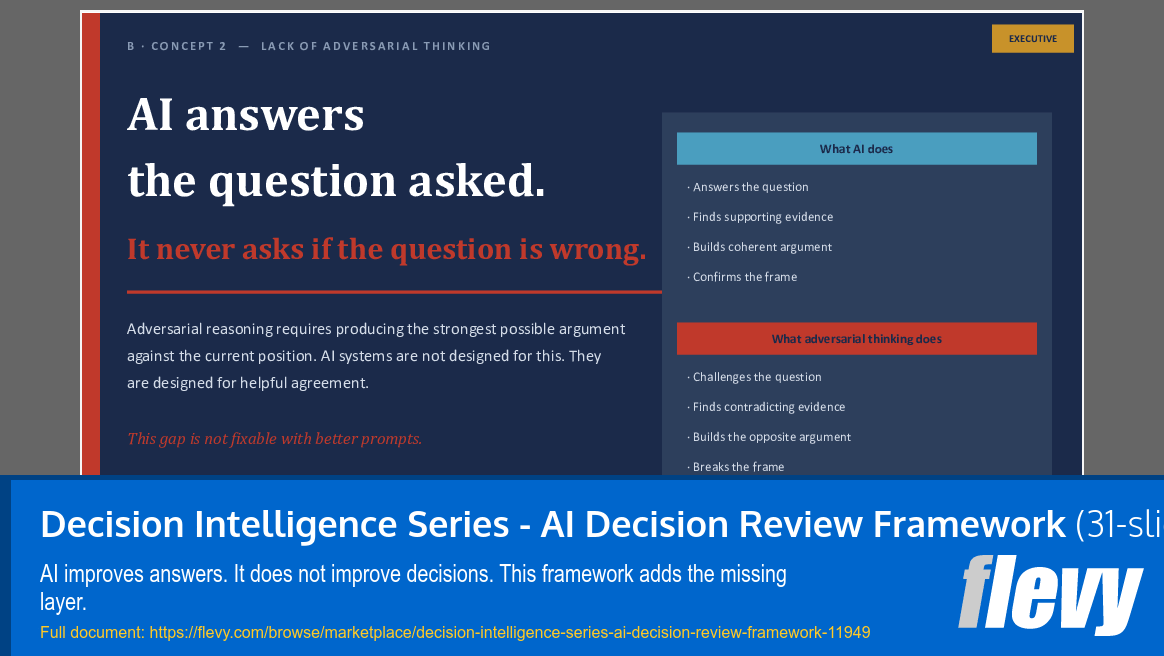
Lack of adversarial thinking. AI answers the question asked. It does not challenge whether the question itself is wrong. The strongest counter-argument is never generated.
False confidence. The format of AI output signals certainty independent of what the content actually warrants. Fluency is not accuracy. Structure is not validity.
Over-optimization. AI optimizes precisely for the metric it was given, which is frequently not the same as the outcome the decision requires.
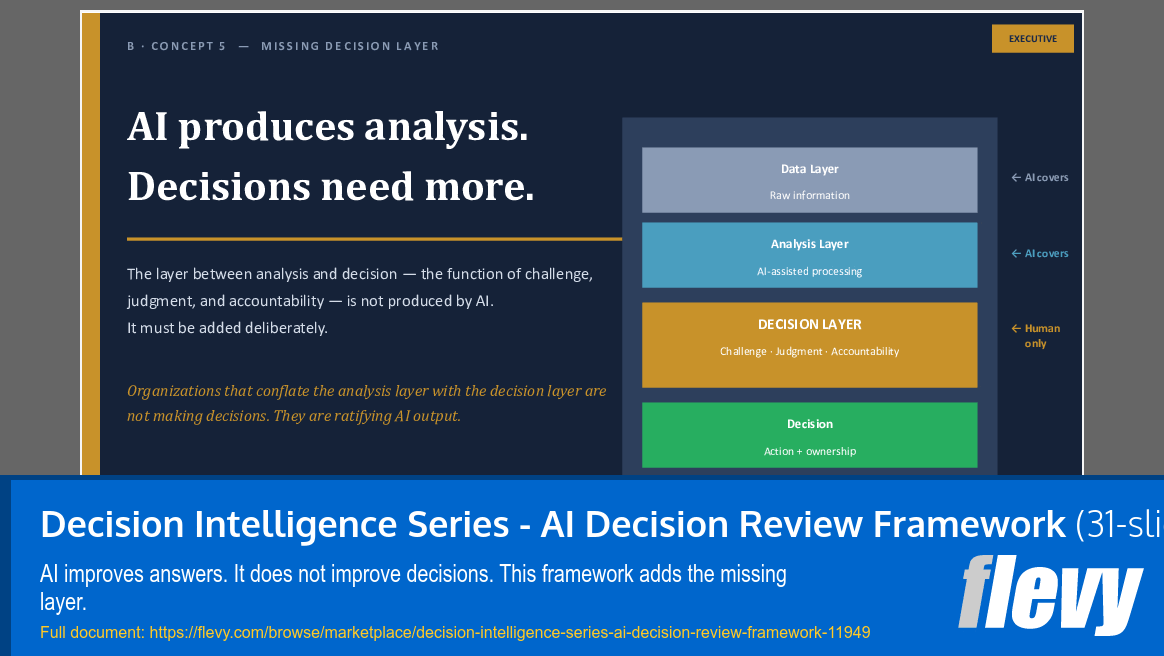
The missing decision layer. The function of challenge, judgment, and accountability that sits between analysis and decision is not produced by AI. Organizations that conflate analysis with decision-making are not making decisions. They are ratifying AI output.
For each mechanism, the framework provides modular challenge protocols with defined outputs: consensus gap analysis, adversarial briefs, confidence audits, optimization mismatch registers, and structured decision records.
These modules can be deployed independently in strategy reviews, investment decisions, board governance, and AI output evaluation, or combined into a repeatable decision system across workflows.
The deck contains 31 slides organized across four sections: failure mechanisms, decision-quality concepts, system layer and governance, and full application frameworks across five decision contexts.
This is not an AI strategy document. It is a decision quality framework.
AI improves answers. Decisions still fail.
Got a question about the product? Email us at support@flevy.com or ask the author directly by using the "Ask the Author a Question" form. If you cannot view the preview above this document description, go here to view the large preview instead.
Source: Best Practices in Decision Making PowerPoint Slides: Decision Intelligence Series - AI Decision Review Framework PowerPoint (PPTX) Presentation Slide Deck, Decision Intelligence Architect
ABOUT THE AUTHOR

I work at the intersection of decision intelligence, strategic analysis, and AI-driven thesis stress-testing, with a focus on improving judgment in high-stakes environments.
The emphasis is not domain expertise, but decision quality - challenging assumptions, identifying blind spots, and exposing hidden risks before capital, time, or reputation is committed.
My frameworks are designed for
... [read more]
Ask the Author a Question
You must be logged in to contact the author.




























