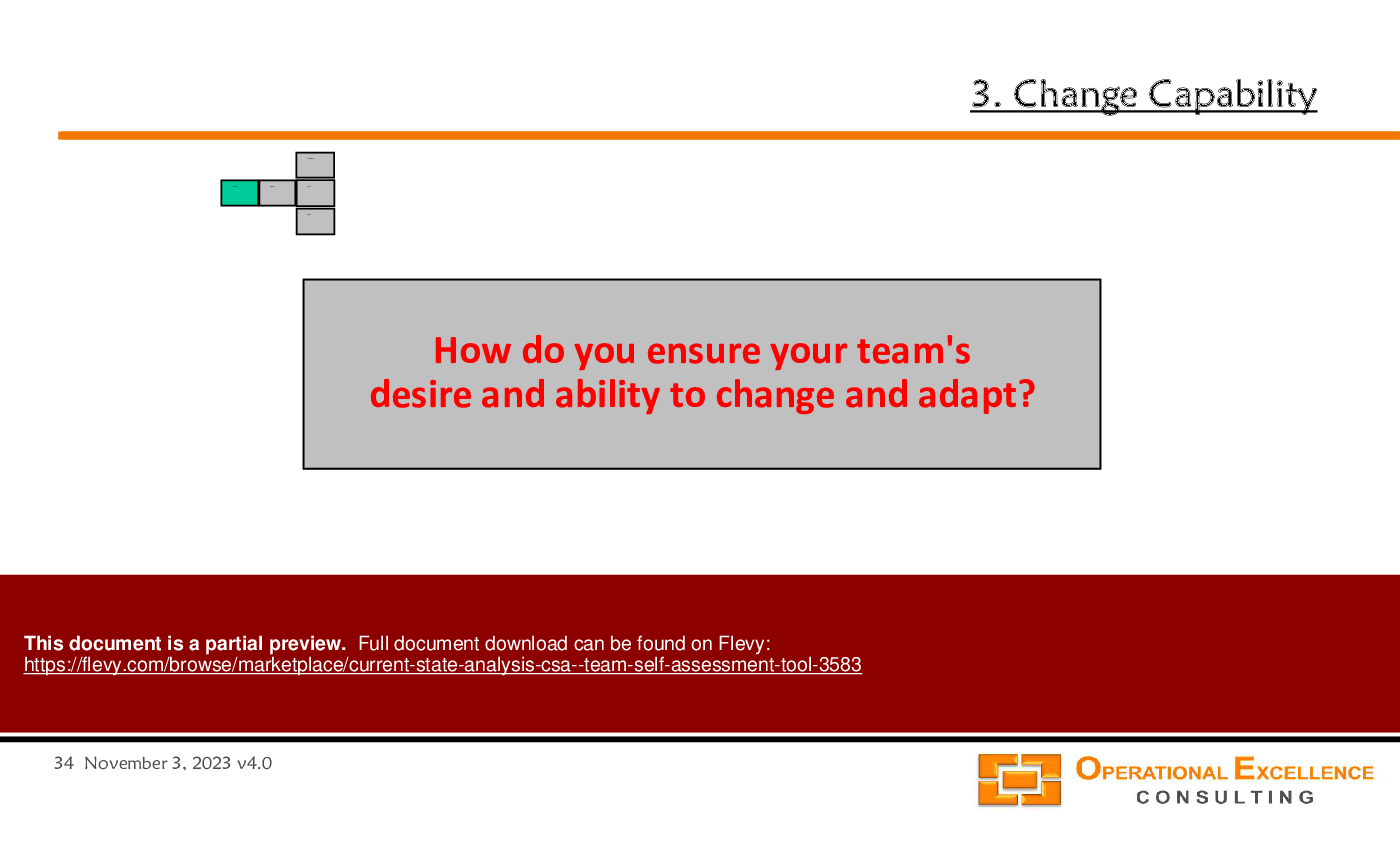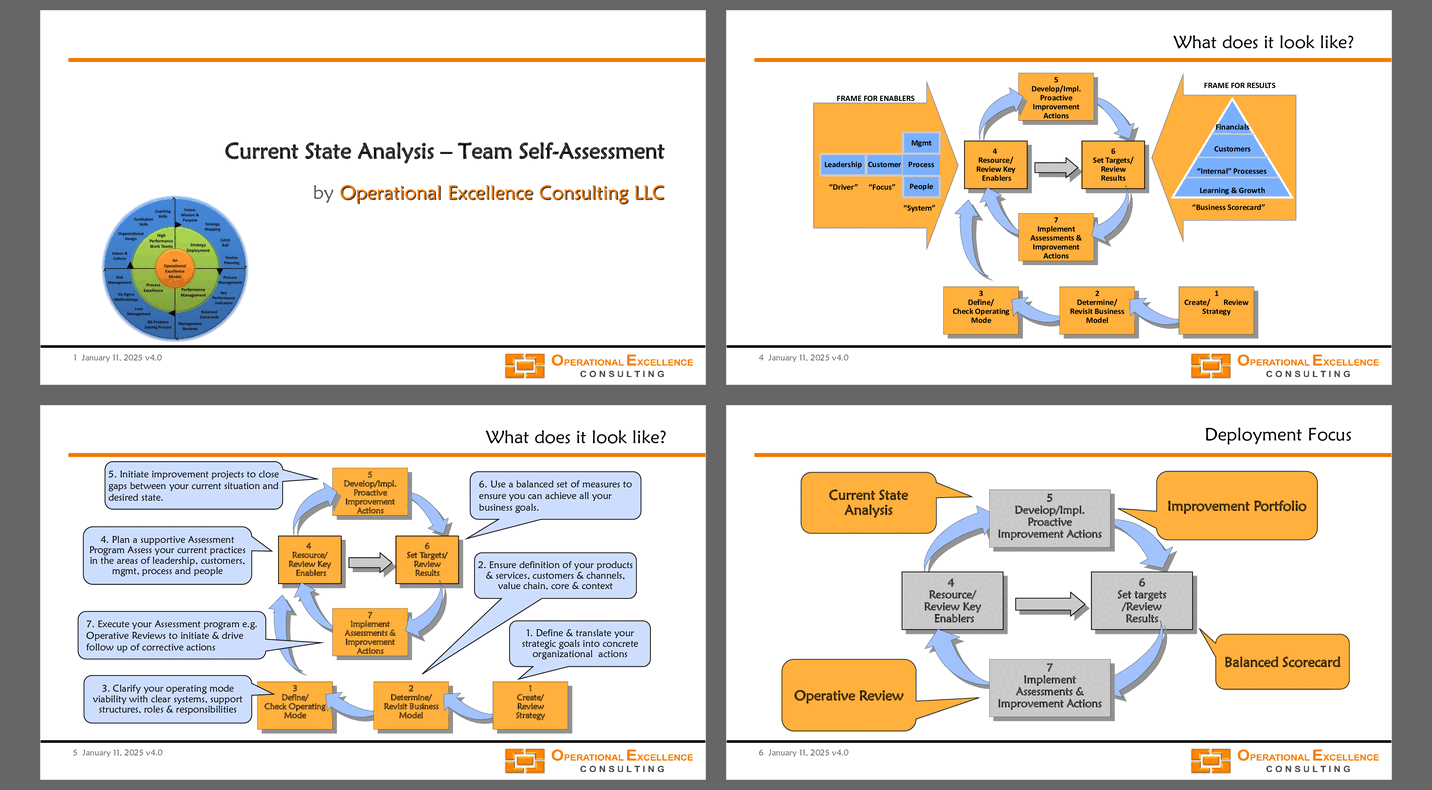

Teamwork has a dramatic effect on organizational performance. An effective team can help an organization achieve incredible results.
Our team self-assessment is based on the Malcolm Baldrige Excellence Model and the European Foundation for Quality Management (EFQM) Excellence Model.
You can use this team self-assessment on your own or with your team to assess the strengths and weaknesses of your team. Try to provide evidence to support your assessment of the strengths of the team. We recommend performing the team self-assessment on an annual basis to assess the strengths and weaknesses of your team, as well as the improvements made over the past year.
The Current State Analysis (CSA) – Team Self-Assessment Module includes:
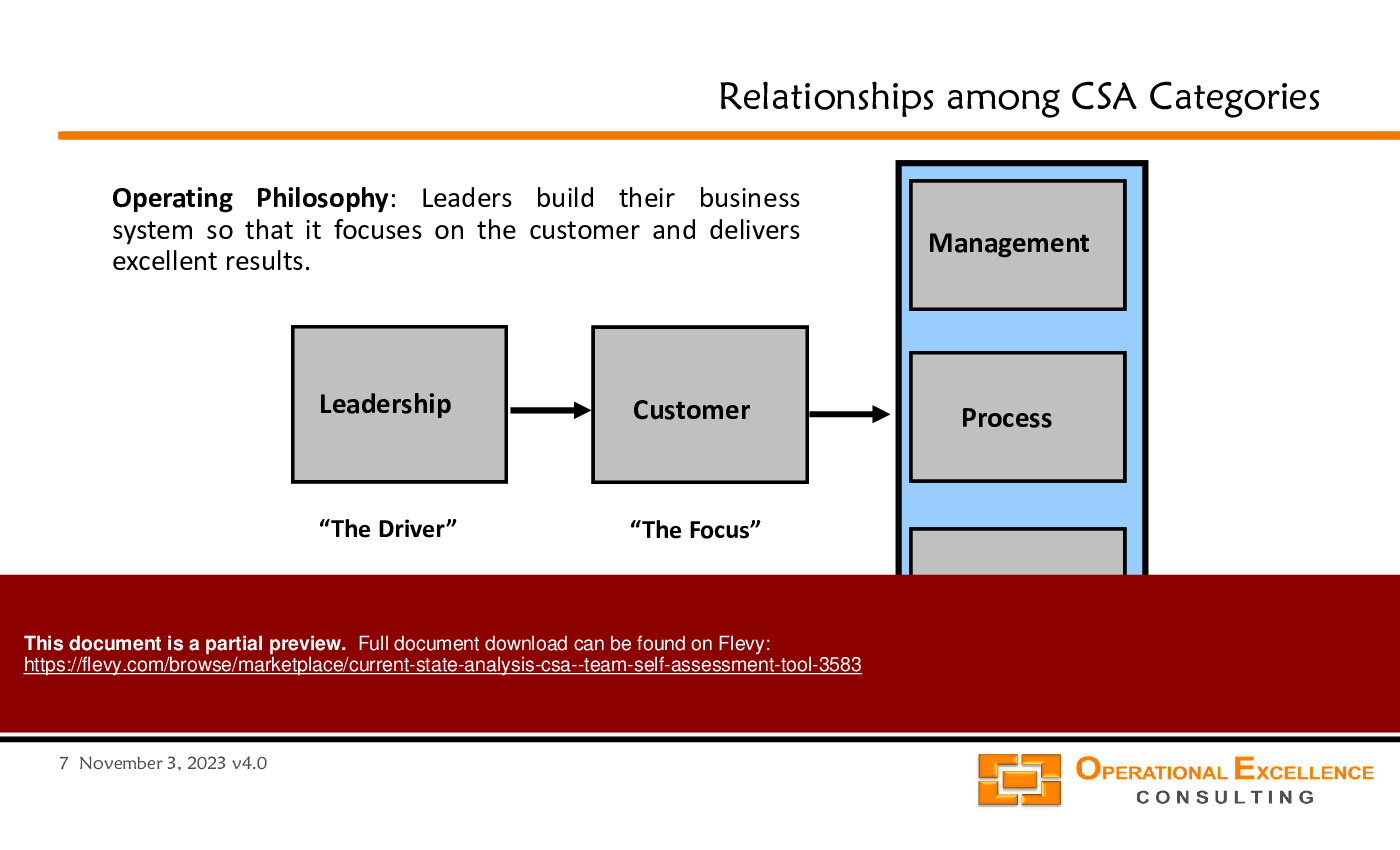
1. MS PowerPoint Presentation including 110 slides covering the Current State Analysis – Team Self-Assessment methodology and questionnaire. The self-assessment includes 25 detailed questions from 5 focus areas: Leadership, Customer, Management, Process, and People. Several slides include notes to explain the approach and facilitation in detail.

2. MS Excel Current State Analysis – Team Self-Assessment Summary Report Template
"After you have downloaded the training material, you can change any part of the training material and remove all logos and references to Operational Excellence Consulting. You can share the material with your colleagues and clients, and re-use it as you need. The only restriction is that you cannot publicly re-distribute, sell, rent or license the material as though it is your own. Thank you."
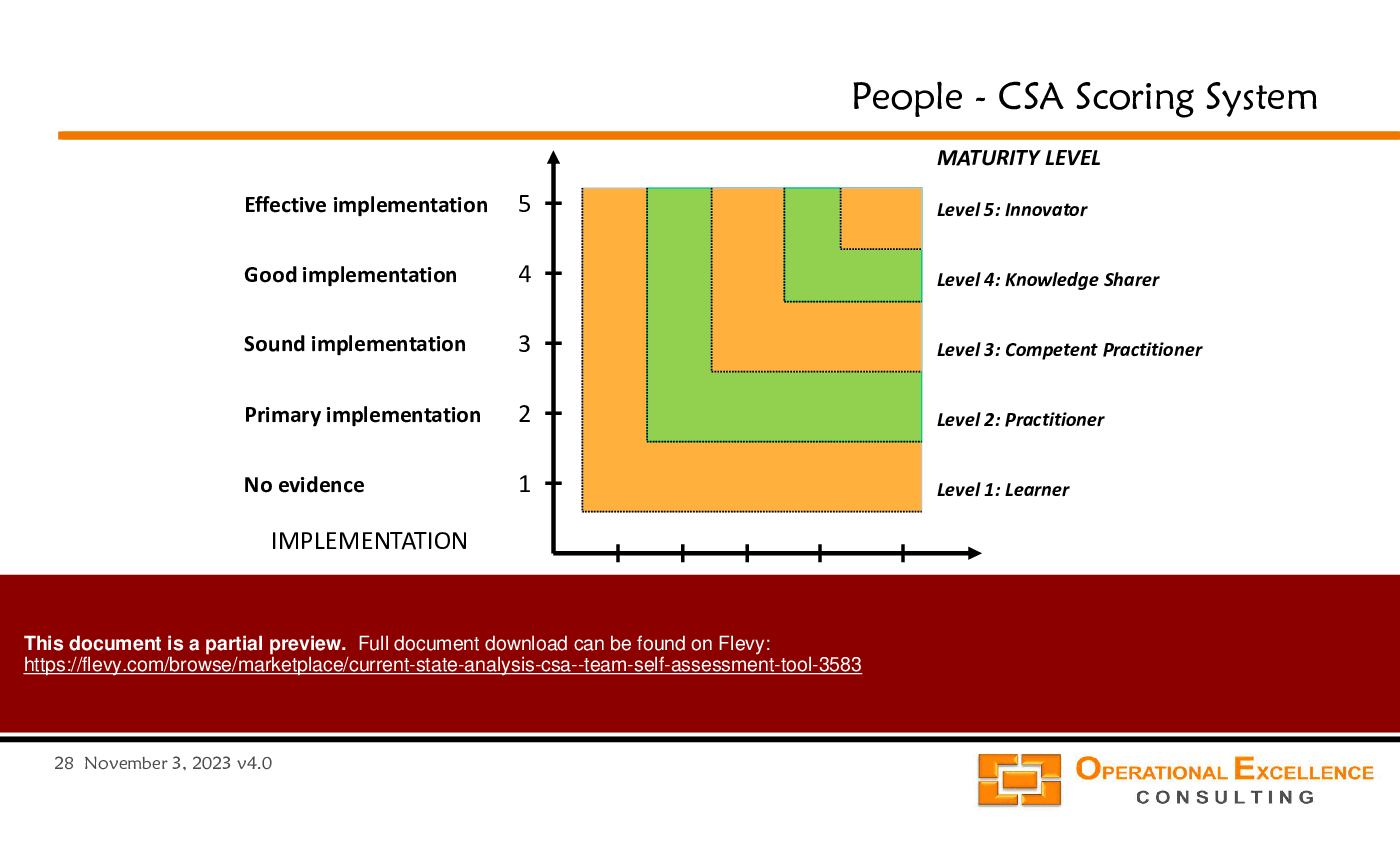
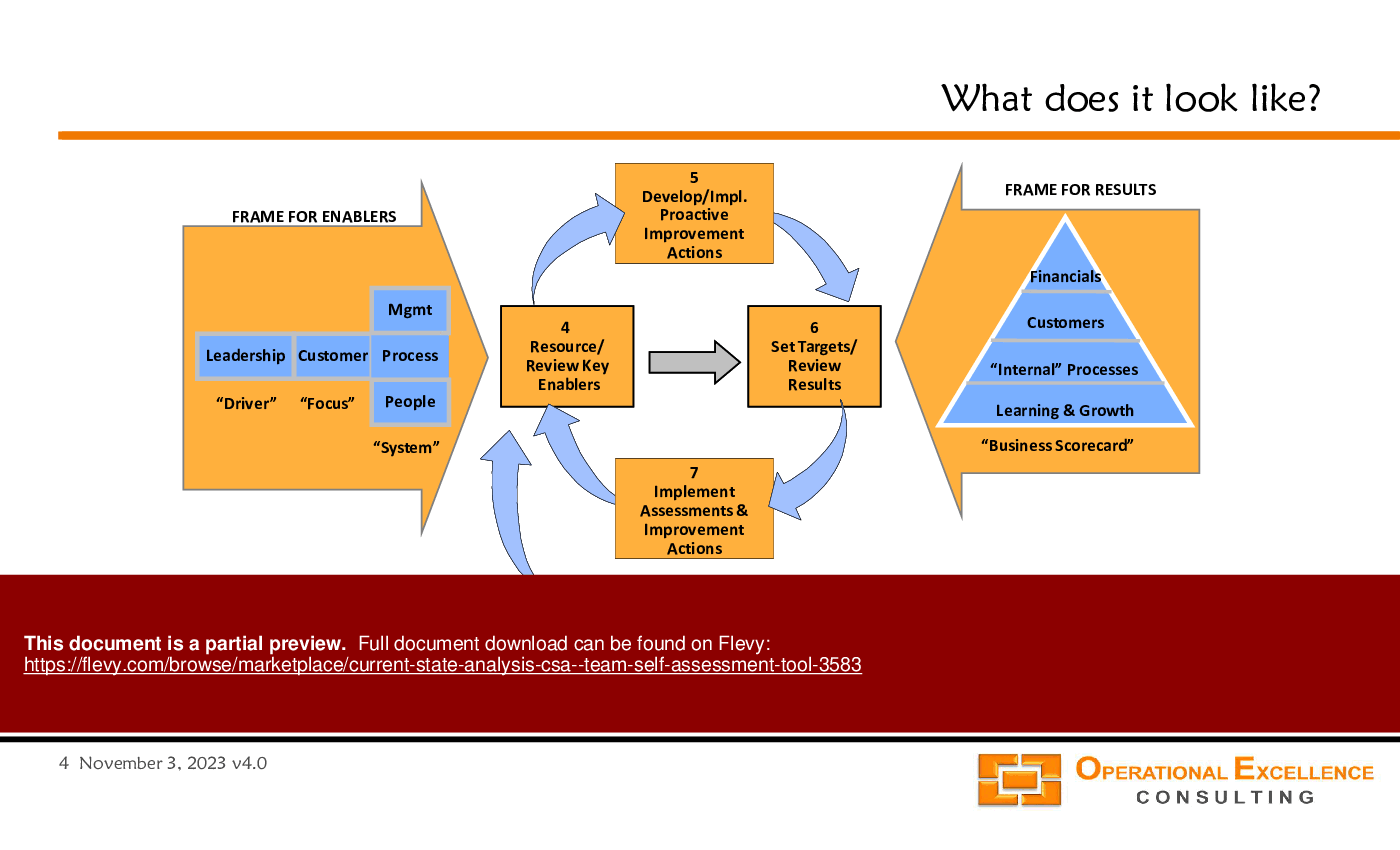
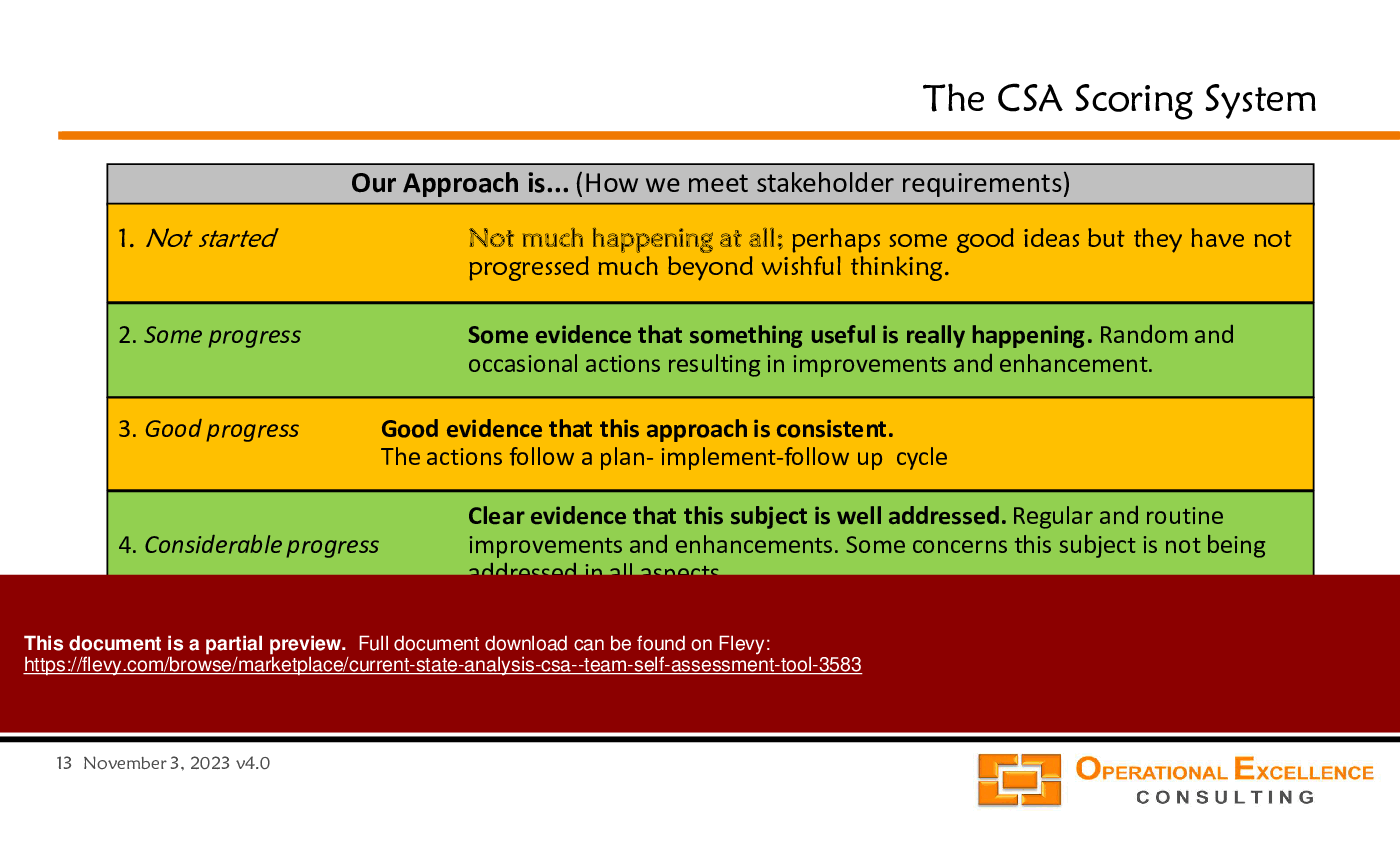
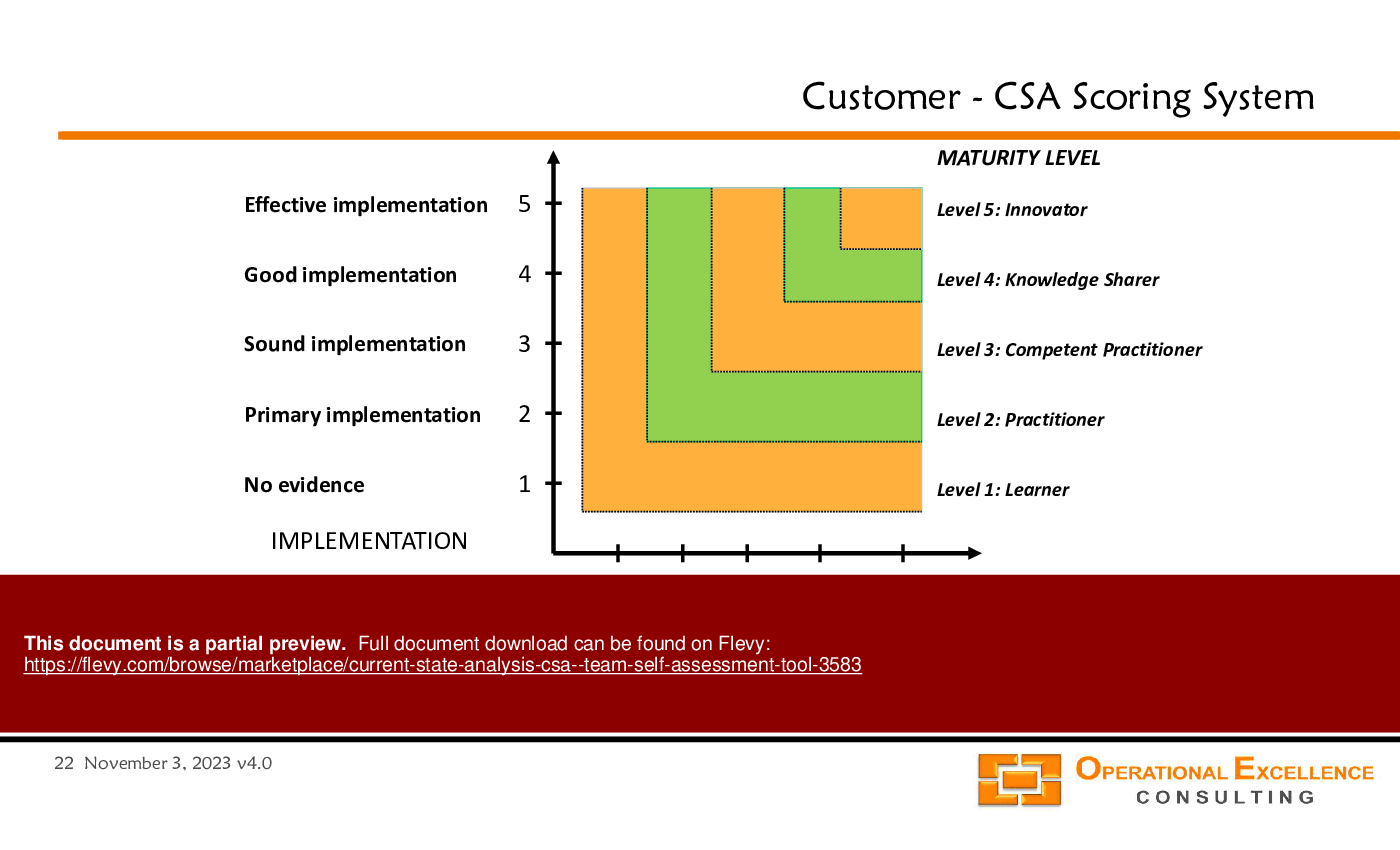
The CSA tool provides a structured approach to evaluate and enhance team performance across five critical focus areas. It emphasizes leadership, customer focus, management, process optimization, and people development. The methodology is designed to foster proactive improvement actions, set clear targets, and review results systematically. By implementing assessments and prioritizing improvement actions, teams can achieve measurable progress. The tool also includes a detailed scoring system to gauge implementation effectiveness and maturity levels, ensuring that all aspects of team performance are comprehensively addressed.
Got a question about the product? Email us at support@flevy.com or ask the author directly by using the "Ask the Author a Question" form. If you cannot view the preview above this document description, go here to view the large preview instead.
Executive Summary
The Current State Analysis (CSA) Team Self-Assessment Tool is designed to facilitate a structured evaluation of team performance across critical operational areas. Developed by Operational Excellence Consulting LLC, this presentation provides a comprehensive framework for conducting annual self-assessments using a questionnaire and scoring system. The CSA tool enables teams to identify strengths and areas for improvement, prioritize actions, and create actionable plans to enhance operational excellence. By leveraging this tool, organizations can systematically assess leadership, customer focus, process management, and people engagement, driving continuous improvement and strategic alignment.
Who This Is For and When to Use
• Team leaders and managers seeking to evaluate team performance and operational effectiveness.
• Organizational development professionals focused on enhancing team capabilities and alignment with strategic goals.
• Executives looking to foster a culture of continuous improvement and accountability within teams.
• Consultants and facilitators guiding organizations through self-assessment processes.
Best-fit moments to use this deck:
• Annual performance reviews to assess team effectiveness and operational alignment.
• Strategic planning sessions to identify improvement areas and set actionable goals.
• Workshops aimed at fostering collaboration and enhancing team dynamics.
Learning Objectives
• Define the key components of the Current State Analysis framework and its application.
• Build a comprehensive self-assessment plan that aligns with organizational goals.
• Establish a systematic approach for prioritizing improvement areas based on team feedback.
• Create actionable plans that address identified gaps in performance and operational processes.
• Implement a scoring system to evaluate team maturity and effectiveness in various operational areas.
• Foster a culture of continuous improvement through regular assessments and feedback loops.
Table of Contents
• Introduction to CSA (page 2)
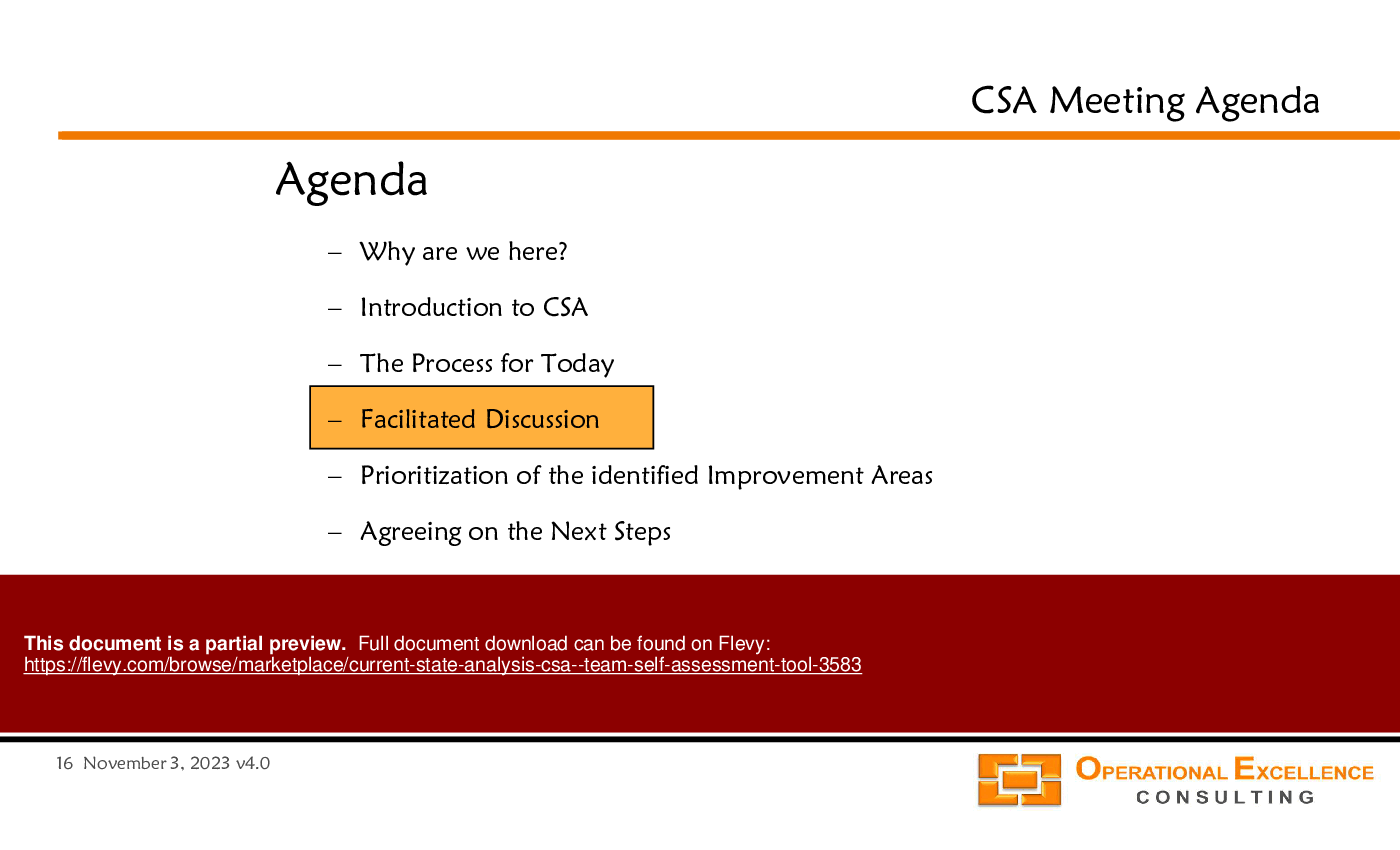
• The Workshop Flow (page 10)
• Importance Evaluation (page 11)
• The CSA Scoring System (page 12)
• Prioritization Matrix (page 15)
• CSA Categories & Items (page 18)
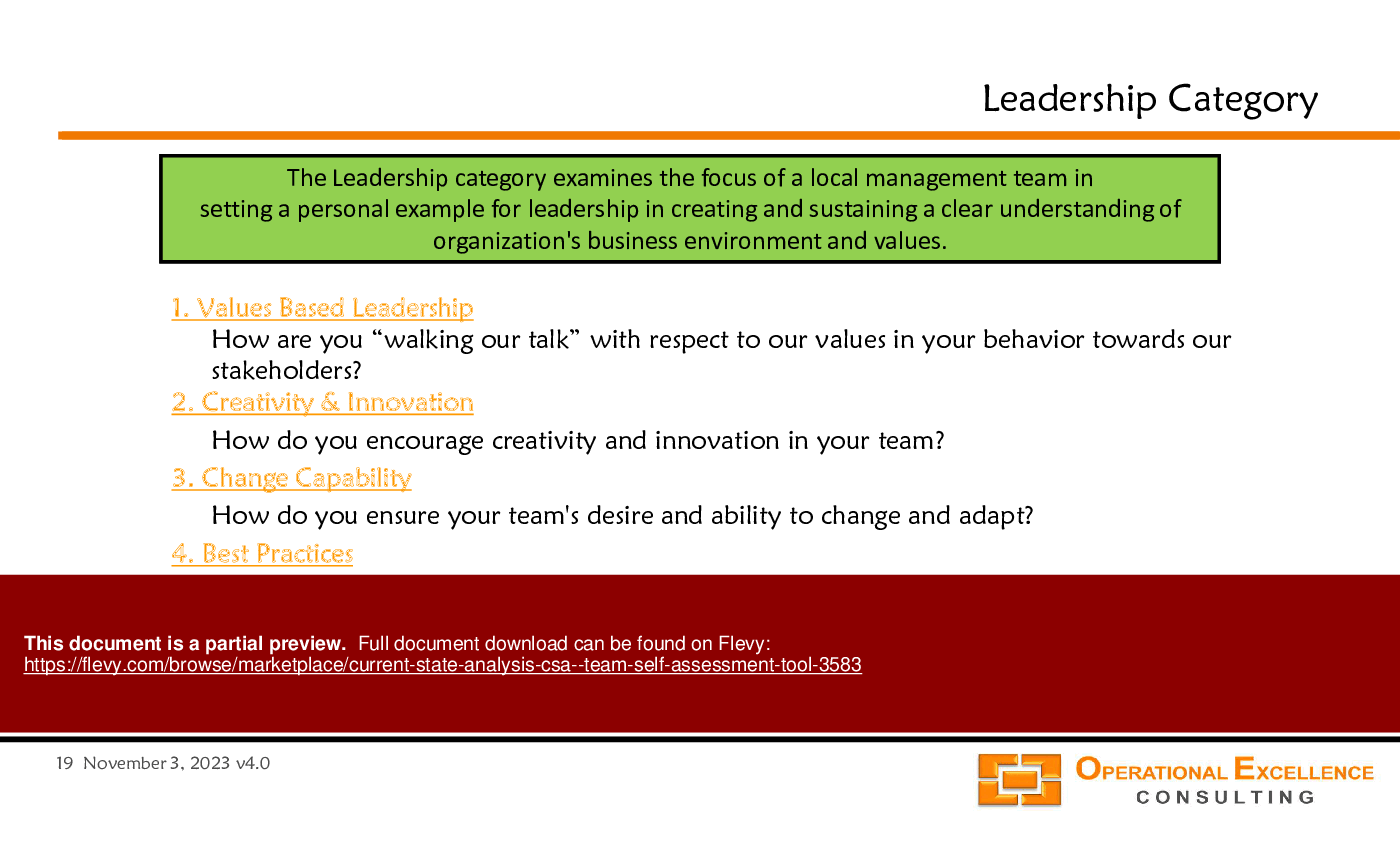
• Leadership Category (page 19)
• Customer Category (page 21)
• Management Category (page 23)
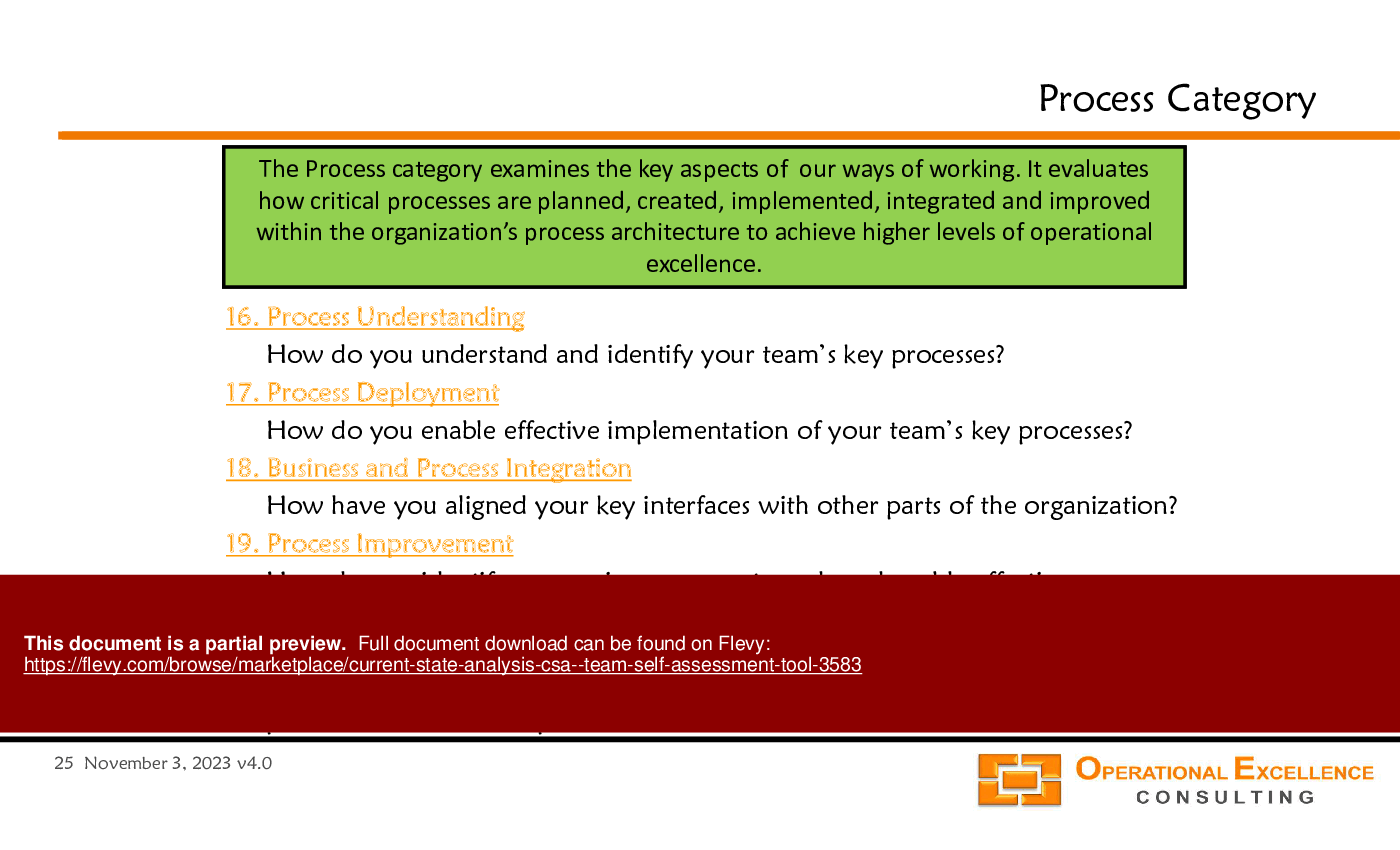
• Process Category (page 25)
• People Category (page 27)
• CSA Team Self-Assessment Questionnaire (page 29)
Primary Topics Covered
• Current State Analysis Framework - A structured approach to evaluate team performance across leadership, customer focus, process management, and people engagement.
• Self-Assessment Questionnaire - A detailed set of questions designed to facilitate team discussions and gather insights on operational effectiveness.
• Scoring System - A method for assessing team maturity and implementation effectiveness across various operational categories.
• Prioritization Matrix - A tool for identifying and prioritizing improvement areas based on their impact on business measures.
• Facilitated Discussion Process - A structured approach for engaging teams in meaningful discussions about their performance and improvement opportunities.
• Action Planning - Guidelines for developing actionable plans based on assessment findings and prioritization outcomes.
Deliverables, Templates, and Tools
• Self-assessment questionnaire template for team evaluations.
• Scoring system framework for assessing maturity levels.
• Prioritization matrix template for identifying key improvement areas.
• Action planning template to outline steps for addressing identified gaps.
• Workshop facilitation guide to structure discussions and gather insights.
• Reporting template for documenting assessment findings and action plans.
Slide Highlights
• Overview of the CSA framework and its components.
• Detailed scoring system illustrating maturity levels and implementation effectiveness.
• Prioritization matrix visualizing the impact of improvement areas on business measures.
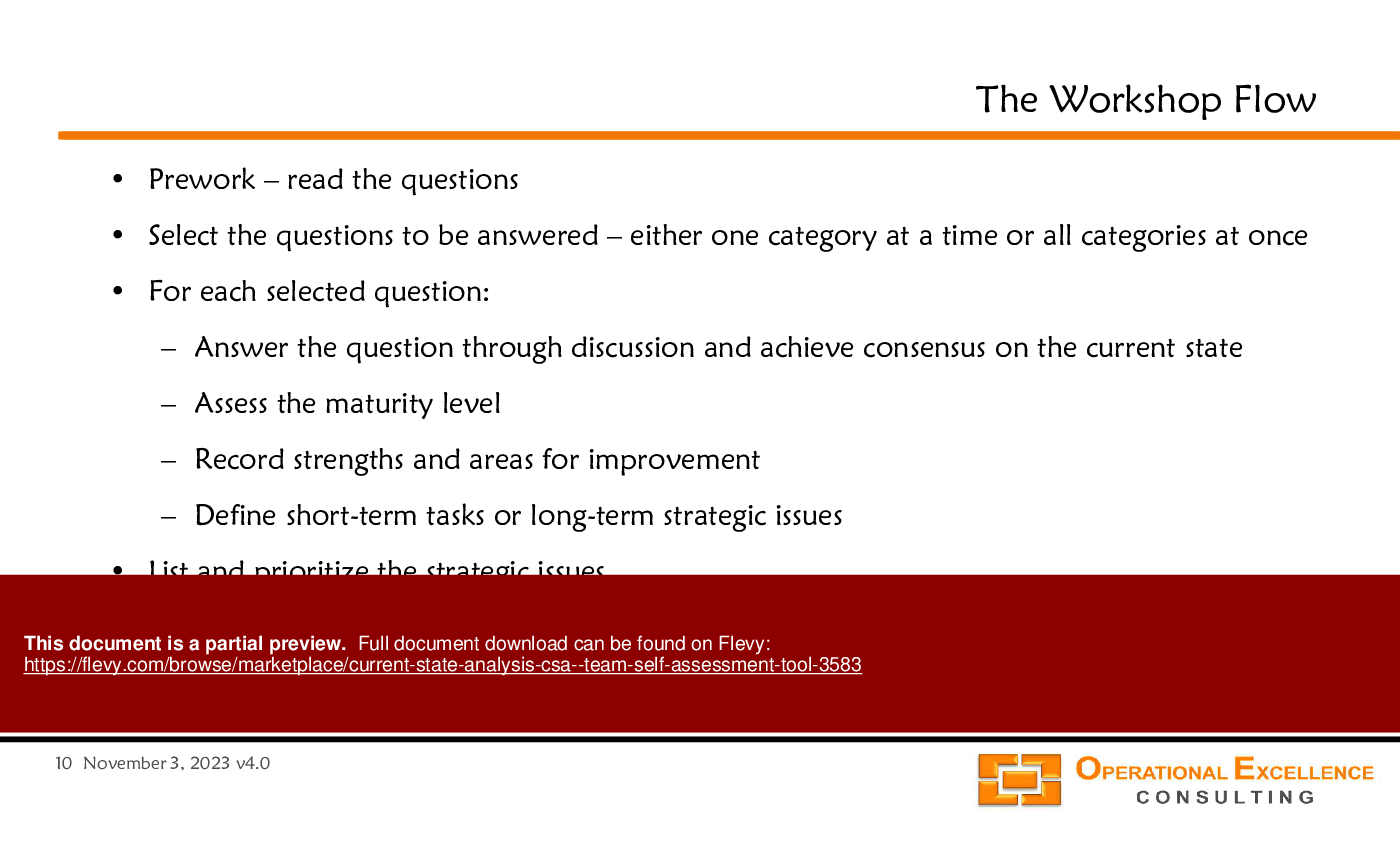
• Workshop flow diagram outlining the process for conducting self-assessments.
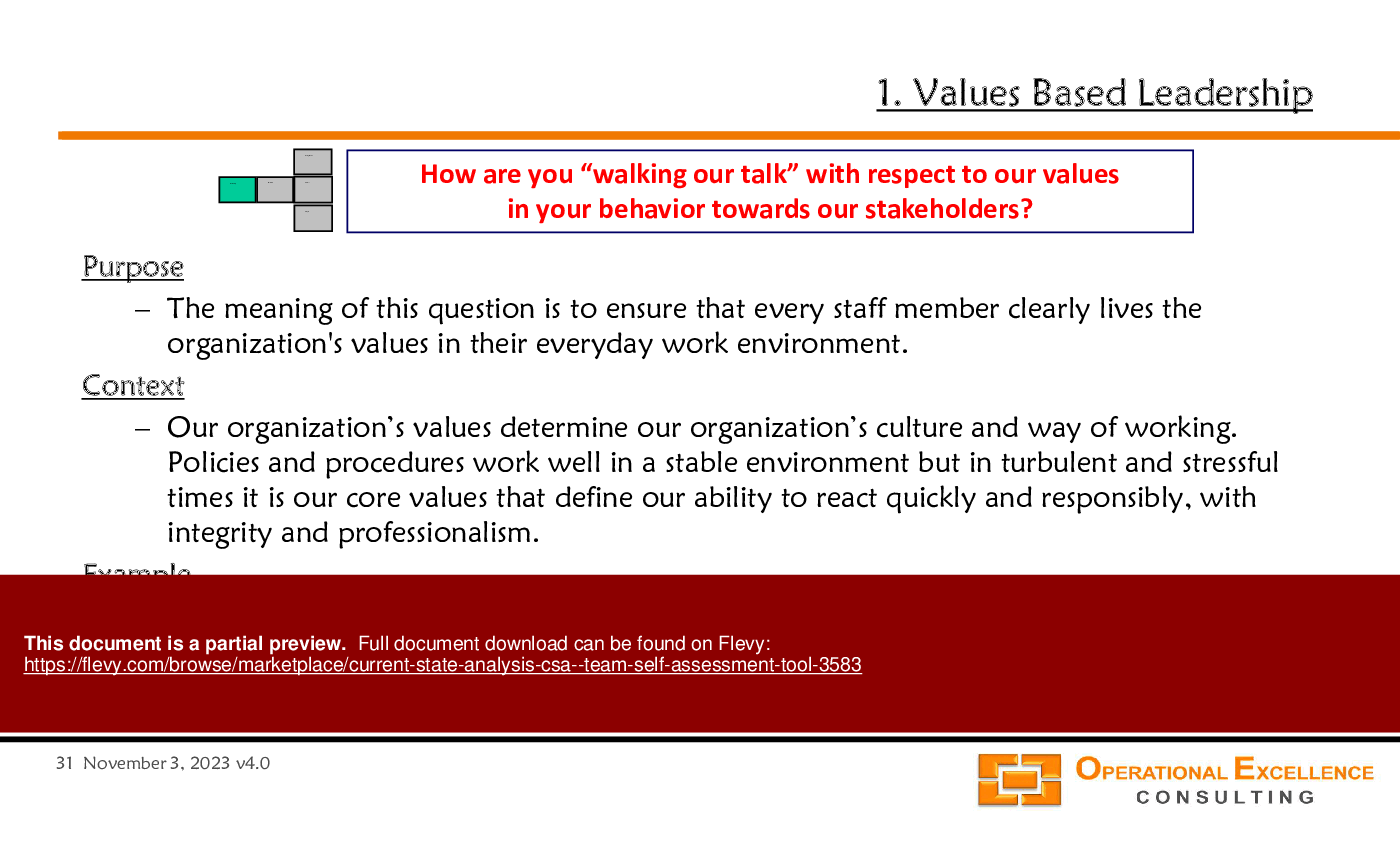
• Key questions from the self-assessment questionnaire categorized by leadership, customer, management, process, and people.
Potential Workshop Agenda
Introduction to CSA (30 minutes)
• Discuss the purpose and importance of the Current State Analysis.
• Review the CSA framework and its components.
Facilitated Discussion (60 minutes)
• Engage team members in discussing key questions from the self-assessment questionnaire.
• Record strengths and areas for improvement identified during discussions.
Prioritization of Improvement Areas (45 minutes)
• Use the prioritization matrix to evaluate and rank identified improvement areas.
• Agree on next steps for action planning based on prioritization outcomes.
Summary and Action Planning (30 minutes)
• Document findings and outline actionable steps for addressing improvement areas.
• Assign responsibilities and set timelines for follow-up actions.
Customization Guidance
• Tailor the self-assessment questionnaire to reflect specific organizational values and strategic goals.
• Adjust the scoring system to align with industry benchmarks or internal performance standards.
• Modify the prioritization matrix to incorporate unique business measures relevant to the organization.
• Adapt the workshop agenda to fit the specific needs and dynamics of the team being assessed.
Secondary Topics Covered
• Continuous improvement methodologies and their application in team assessments.
• Best practices for facilitating team discussions and gathering feedback.
• Strategies for fostering a culture of accountability and ownership in improvement initiatives.
• Techniques for measuring and tracking progress on action plans over time.
FAQ
What is the purpose of the CSA tool?
The CSA tool is designed to facilitate structured self-assessments of team performance, enabling organizations to identify strengths and areas for improvement.
How often should the CSA be conducted?
The CSA is typically conducted annually,, but it can be adapted for more frequent assessments based on organizational needs.
Who should participate in the CSA workshop?
All team members should participate to ensure diverse perspectives and comprehensive insights into team performance.
What outcomes can be expected from using the CSA tool?
Organizations can expect to gain a clearer understanding of team dynamics, identify actionable improvement areas, and foster a culture of continuous improvement.
How can the CSA findings be used?
Findings from the CSA can inform strategic planning, guide resource allocation, and support the development of targeted action plans for improvement.
Is the CSA tool customizable?
Yes, the CSA tool can be tailored to reflect specific organizational values, goals, and industry benchmarks.
What is the scoring system used in the CSA?
The scoring system evaluates team maturity and effectiveness across various operational categories, providing a clear framework for assessment.
How can organizations track progress on action plans?
Organizations can implement regular follow-up meetings and reporting mechanisms to monitor progress on action plans and ensure accountability.
Glossary
• Current State Analysis (CSA) - A structured evaluation of team performance across critical operational areas.
• Self-Assessment Questionnaire - A set of questions designed to facilitate team discussions about performance.
• Scoring System - A framework for assessing maturity levels and implementation effectiveness.
• Prioritization Matrix - A tool for identifying and prioritizing improvement areas based on impact.
• Facilitated Discussion - A structured approach for engaging teams in meaningful discussions about performance.
• Action Planning - The process of developing actionable steps to address identified gaps.
• Operational Excellence - A philosophy focused on continuous improvement and efficiency in operations.
• Team Dynamics - The interactions and relationships among team members that influence performance.
• Continuous Improvement - An ongoing effort to enhance products, services, or processes.
• Stakeholder Engagement - The involvement of individuals or groups with an interest in the organization's performance.
• Leadership - The ability to guide and influence individuals or teams toward achieving goals.
• Customer Focus - The commitment to understanding and meeting customer needs and expectations.
• Process Management - The practice of overseeing and optimizing organizational processes for efficiency and effectiveness.
• People Engagement - The level of involvement and commitment of team members to their work and the organization.
• Strategic Alignment - The process of ensuring that organizational activities are aligned with strategic goals.
• Performance Metrics - Quantifiable measures used to assess the effectiveness of an organization or team.
• Feedback Loop - A process for gathering insights and making adjustments based on performance evaluations.
• Best Practices - Proven methods or techniques that lead to superior performance.
• Actionable Insights - Findings from assessments that can be translated into concrete actions for improvement.
• Team Empowerment - The process of giving team members the authority and resources to make decisions and take action.
Source: Best Practices in Current State Assessment, MBNQA PowerPoint Slides: Current State Analysis (CSA) - Team Self-Assessment Tool PowerPoint (PPTX) Presentation Slide Deck, Operational Excellence Consulting LLC
|
Download our FREE Strategy & Transformation Framework Templates
Download our free compilation of 50+ Strategy & Transformation slides and templates. Frameworks include McKinsey 7-S, Balanced Scorecard, Disruptive Innovation, BCG Curve, and many more. |