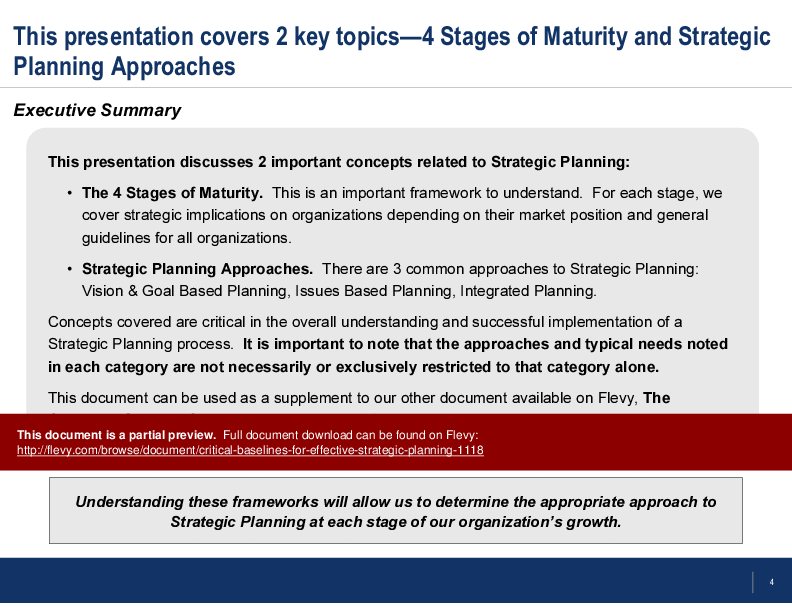

This PowerPoint presentation discusses 2 important concepts related to Strategic Planning:
1. The 4 Stages of Maturity. This is an important framework to understand. For each stage, we cover strategic implications on organizations depending on their market position and general guidelines for all organizations.
2. Strategic Planning Approaches. There are 3 common approaches to Strategic Planning: Vision & Goal Based Planning, Issues Based Planning, Integrated Planning.
Concepts covered are critical in the overall understanding and successful implementation of a Strategic Planning process. It is important to note that the approaches and typical needs noted in each category are not necessarily or exclusively restricted to that category alone.
Additional concepts covered include Maturity-Competitive Position Matrix, Business Growth Curve, Market Positions, Competitive Profiling.
This document can be used as a supplement to our other document available on Flevy, The Complete Guide to Strategic Planning.
AUTHOR BACKGROUND
Anthony Gable, MBA, is a Strategic Planning Specialist. He has been advising individual owners, executives, and profit-center (SBU) heads and their teams on the strategic planning process since 1983. Prior to that, he gained management experience from years of wide-reaching exposure in the corporate sector as a manager and executive.
Mr. Gable simplifies strategic planning through a unified process which analyzes the competitive environment, relative maturity of the industry, markets, products involved, and company objectives. Strategic options are then distilled out, clarified, and made tangible.

Mr. Gable has held executive positions with major organizations, including roles as a Corporate and Divisional Vice President, Director of Sales and Marketing, National Sales Manager, and profit-center (SBU) positions as a Product and Business Manager. Additionally, he has extensive successful executive involvement in both corporate turnarounds and trustee appointed work-out scenarios, with management and operational exposure throughout the US, Canada, and Europe in a wide variety of markets and end-use product applications. His consultative repertoire has included management Strategic Planning leadership development, coaching and team building with associated presentation and facilitation to small and mid-size companies as well as to executives and department heads in large, internationally recognized organizations.
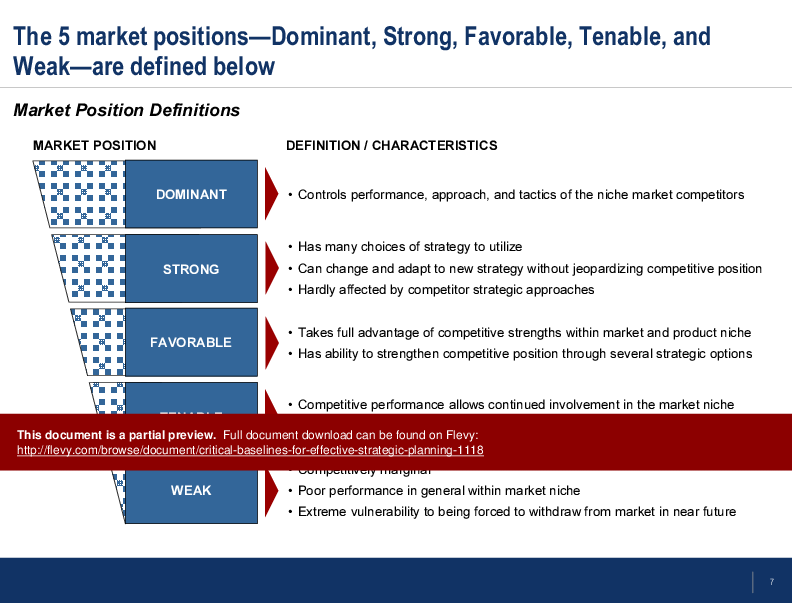
The PPT also provides detailed guidelines for organizations at different stages of maturity, ensuring tailored strategic planning. It includes definitions and characteristics of five market positions, offering a comprehensive understanding of competitive dynamics.
Got a question about the product? Email us at support@flevy.com or ask the author directly by using the "Ask the Author a Question" form. If you cannot view the preview above this document description, go here to view the large preview instead.
Executive Summary
This presentation, titled "Critical Baselines for Modern, Effective Strategic Plan Formation," is crafted with the rigor expected from a McKinsey, Bain, or BCG-quality analysis (consulting-grade; not affiliated). It delves into 2 pivotal concepts in Strategic Planning: the 4 Stages of Maturity and Strategic Planning Approaches. By understanding these frameworks, executives can effectively navigate the strategic planning process tailored to their organization’s growth stage. This document equips leaders to identify appropriate strategies, ensuring successful implementation and alignment with market dynamics.
Who This Is For and When to Use
• Corporate Executives seeking to refine their strategic planning processes
• Strategic Planning Teams responsible for aligning organizational goals with market conditions
• Business Consultants advising clients on strategic frameworks and methodologies
• Project Managers overseeing strategic initiatives and planning cycles
Best-fit moments to use this deck:
• During strategic planning sessions to align on maturity stages and planning approaches
• When assessing organizational growth and determining strategic priorities
• In workshops aimed at developing actionable strategic plans tailored to specific maturity stages
Learning Objectives
• Define the 4 Stages of Maturity and their implications for strategic planning
• Identify appropriate Strategic Planning Approaches based on organizational needs
• Analyze competitive positioning within market profiles to inform strategic decisions
• Develop actionable strategies tailored to each maturity stage
• Establish guidelines for effective strategic planning implementation
• Monitor and evaluate strategic plans to ensure alignment with organizational goals
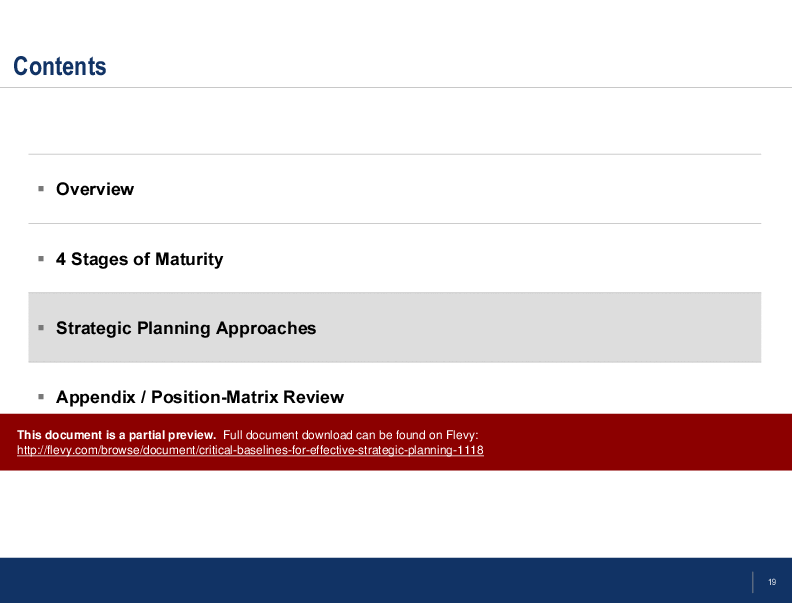
Table of Contents
• Overview (page 3)
• 4 Stages of Maturity (page 8)
• Strategic Planning Approaches (page 19)
• Appendix / Position-Matrix Review (page 24)
Primary Topics Covered
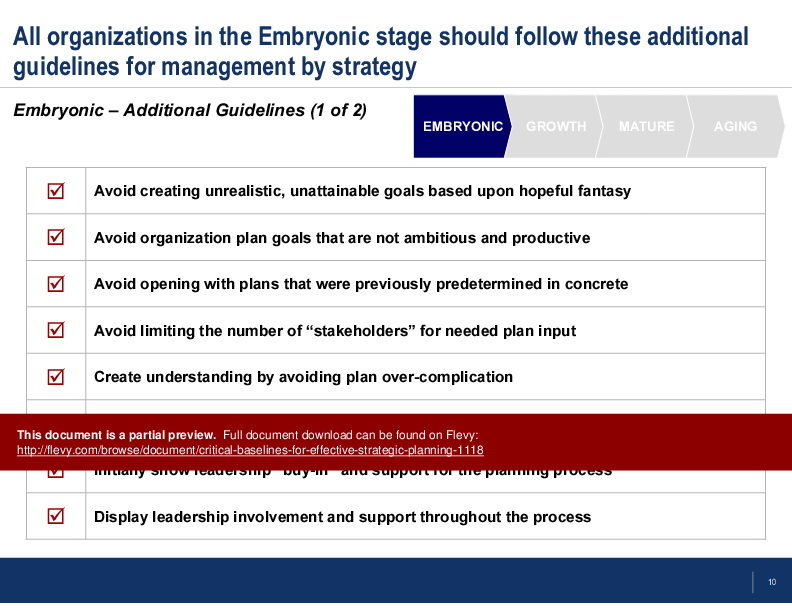
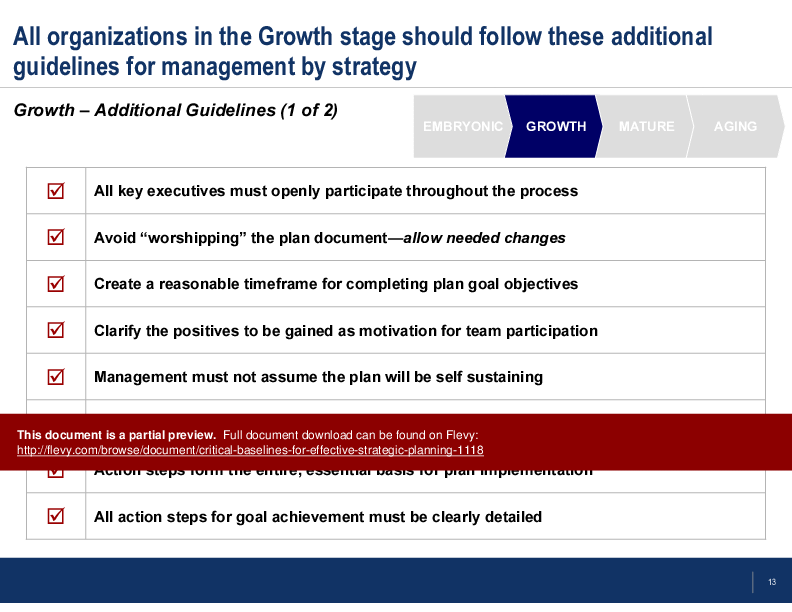
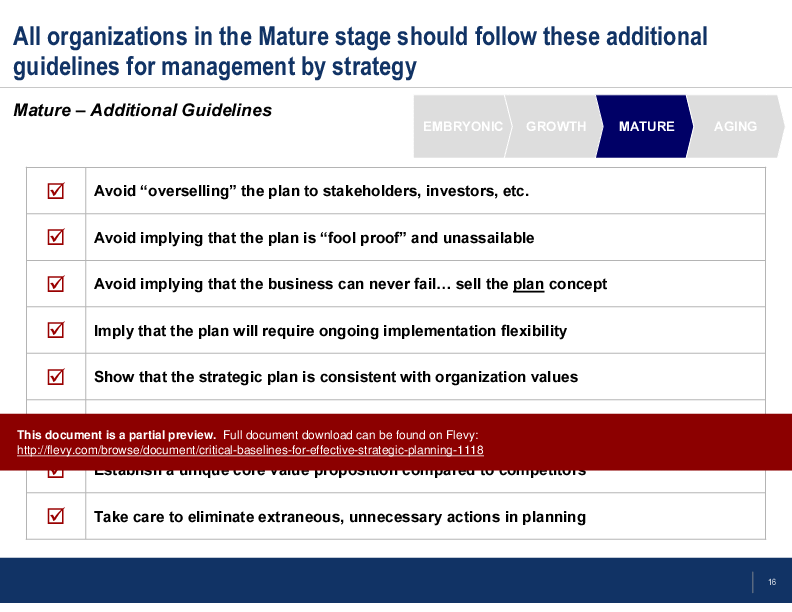
• 4 Stages of Maturity - This framework outlines the sequential growth phases of organizations: Embryonic, Growth, Mature, and Aging, each requiring distinct strategic approaches.
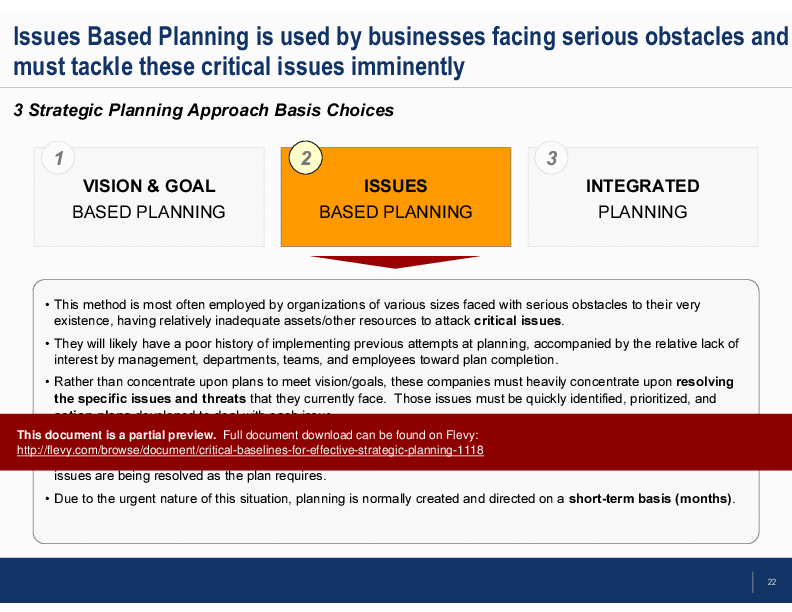
• Strategic Planning Approaches - Three primary methodologies are discussed: Vision & Goal Based Planning, Issues Based Planning, and Integrated Planning, each suited to different organizational contexts.
• Market Positioning - Understanding competitive positions (Dominant, Strong, Favorable, Tenable, Weak) is crucial for tailoring strategic responses at each maturity stage.
• Competitive Analysis - Guidelines for assessing competitive profiles and their implications for strategic planning are provided.
• Implementation Guidelines - Specific recommendations for managing strategy at each maturity stage ensure effective execution and adaptability.
Deliverables, Templates, and Tools
• Framework for assessing the 4 Stages of Maturity to guide strategic planning
• Templates for Strategic Planning Approaches tailored to organizational needs
• Competitive Position Matrix to evaluate market positioning and strategic options
• Guidelines for developing actionable strategic plans based on maturity stage
• Monitoring and evaluation tools to track strategic plan effectiveness
Slide Highlights
• Overview of the 4 Stages of Maturity and their strategic implications
• Detailed breakdown of Strategic Planning Approaches with practical applications
• Competitive Position Matrix illustrating the relationship between market positions and maturity
• Guidelines for effective management by strategy at each maturity stage
• Visual representation of the business growth curve, highlighting critical transition points
Potential Workshop Agenda
Introduction to Strategic Planning (30 minutes)
• Overview of the presentation objectives and key concepts
• Discussion on the importance of maturity stages in strategic planning
Understanding the 4 Stages of Maturity (60 minutes)
• Deep dive into each maturity stage and its strategic implications
• Group activity: Assessing organizational maturity
Exploring Strategic Planning Approaches (60 minutes)
• Overview of the 3 primary approaches
• Case studies: Successful applications of each approach
Competitive Positioning and Strategy Development (60 minutes)
• Analyzing market positions and their impact on strategic choices
• Group exercise: Developing a strategic plan based on competitive analysis
Customization Guidance
• Tailor the 4 Stages of Maturity framework to reflect specific industry characteristics
• Adjust the Strategic Planning Approaches based on organizational size and market dynamics
• Incorporate relevant competitive metrics and benchmarks into the Competitive Position Matrix
• Modify implementation guidelines to align with internal governance structures and stakeholder involvement
Secondary Topics Covered
• The relationship between market maturity and competitive strategy
• Best practices for stakeholder engagement in the strategic planning process
• The impact of external market conditions on strategic decision-making
• Techniques for fostering organizational buy-in during strategy implementation
FAQ
What are the 4 Stages of Maturity?
The 4 Stages of Maturity are Embryonic, Growth, Mature, and Aging, each representing a different phase in an organization’s development and requiring tailored strategic approaches.
How do I determine my organization’s maturity stage?
Assess your organization’s market position, growth trajectory, and operational capabilities to identify which maturity stage aligns with your current state.
What are the 3 primary Strategic Planning Approaches?
The 3 approaches are Vision & Goal Based Planning, Issues Based Planning, and Integrated Planning, each suited to different organizational contexts and challenges.
How can competitive positioning inform my strategic plan?
Understanding your competitive position helps tailor strategies that leverage strengths and address weaknesses relative to market competitors.
What guidelines should I follow for effective strategy implementation?
Establish clear objectives, engage stakeholders, monitor progress, and remain flexible to adapt strategies as necessary.
How often should I evaluate my strategic plan?
Regular evaluations should be scheduled (monthly, quarterly, or annually) to ensure alignment with organizational goals and market conditions.
Can this presentation be customized for my organization?
Yes, the frameworks and guidelines can be tailored to fit your organization’s specific needs, industry characteristics, and governance structures.
What resources are available for further learning?
Additional resources include "The Complete Guide to Strategic Planning," available on Flevy, which complements this presentation.
Glossary
• 4 Stages of Maturity - Framework outlining the growth phases of organizations: Embryonic, Growth, Mature, Aging.
• Strategic Planning - The process of defining an organization's direction and making decisions on allocating resources to pursue that direction.
• Vision & Goal Based Planning - A rudimentary planning approach focused on establishing a mission statement and goals.
• Issues Based Planning - A method addressing immediate obstacles and critical issues facing an organization.
• Integrated Planning - A comprehensive approach combining various planning methodologies for successful execution.
• Competitive Position - The relative strength of an organization in its market compared to its competitors.
• Market Position Matrix - A tool for evaluating strategic options based on competitive positioning and maturity stage.
• Implementation Guidelines - Recommendations for executing strategic plans effectively.
• Stakeholder Engagement - Involving relevant parties in the planning process to ensure buy-in and support.
• Monitoring and Evaluation - The process of tracking progress and assessing the effectiveness of strategic plans.
• Organizational Buy-in - Gaining support and commitment from stakeholders for strategic initiatives.
• Market Dynamics - The forces that impact the supply and demand of goods and services in a market.
• Strategic Objectives - Specific, measurable goals that guide an organization’s strategic planning efforts.
• Action Plans - Detailed steps required to achieve strategic objectives.
• Competitive Analysis - The assessment of competitors to inform strategic planning.
• Growth Trajectory - The path an organization follows in terms of growth and development over time.
• Operational Capabilities - The skills and resources an organization possesses to execute its strategy.
• Strategic Options - The various pathways an organization can take to achieve its strategic objectives.
• Organizational Values - The core principles that guide an organization’s actions and decisions.
• Market Niche - A specific segment of the market targeted by a particular organization.
• Resource Allocation - The process of distributing available resources to various projects or departments.
• Change Management - The approach to transitioning individuals, teams, and organizations to a desired future state.
Source: Best Practices in Strategic Planning PowerPoint Slides: Critical Baselines for Effective Strategic Planning PowerPoint (PPT) Presentation Slide Deck, Echelon Associates
|
Download our FREE Strategy & Transformation Framework Templates
Download our free compilation of 50+ Strategy & Transformation slides and templates. Frameworks include McKinsey 7-S, Balanced Scorecard, Disruptive Innovation, BCG Curve, and many more. |