
 Click main image to view in full screen. Unlock all 12 preview images:
Board-Level Cybersecurity Governance & Reporting Framework – PowerPoint PPTX Template
PowerPoint (PPTX) 60 Slides


CYBER SECURITY PPT TEMPLATE DESCRIPTION
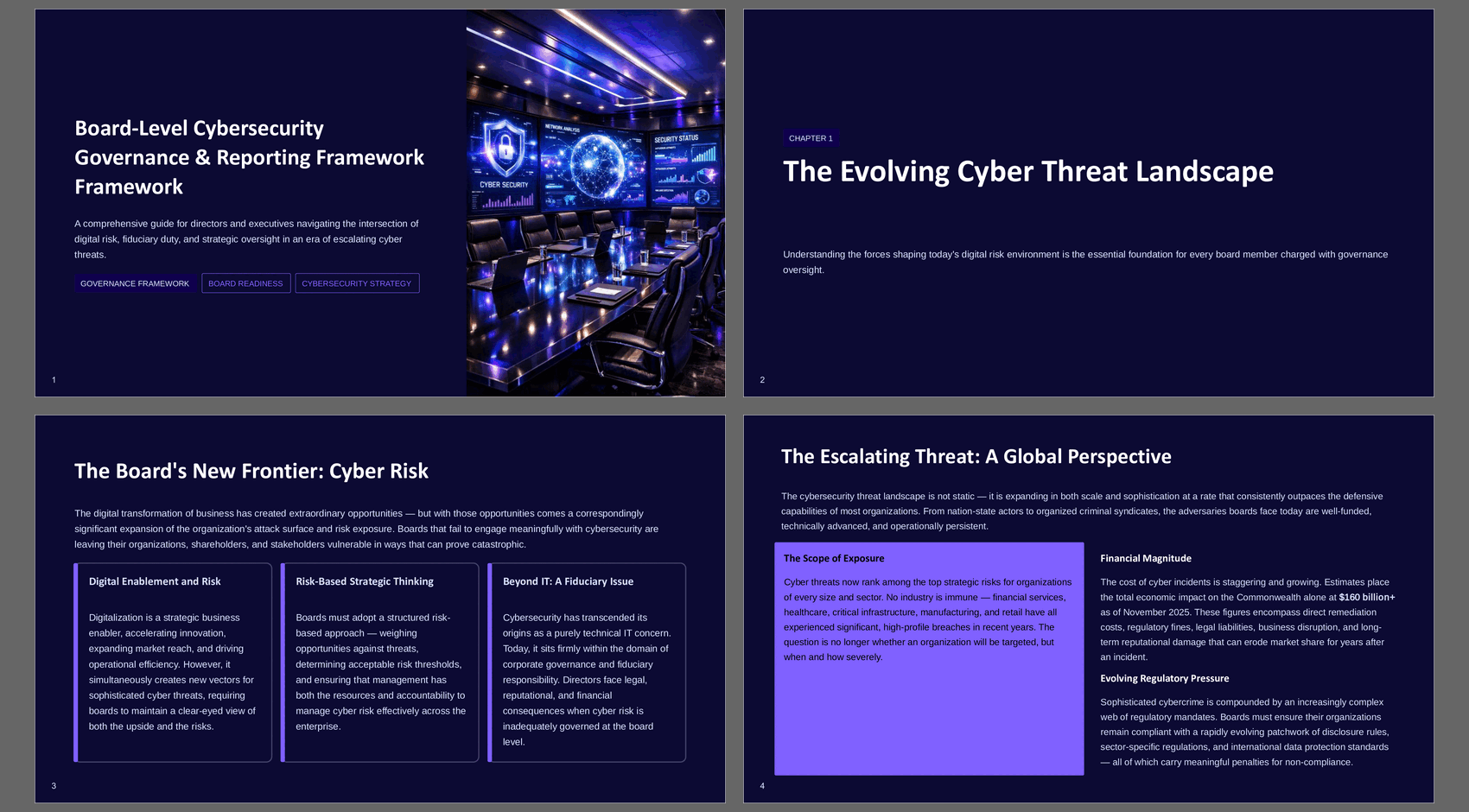
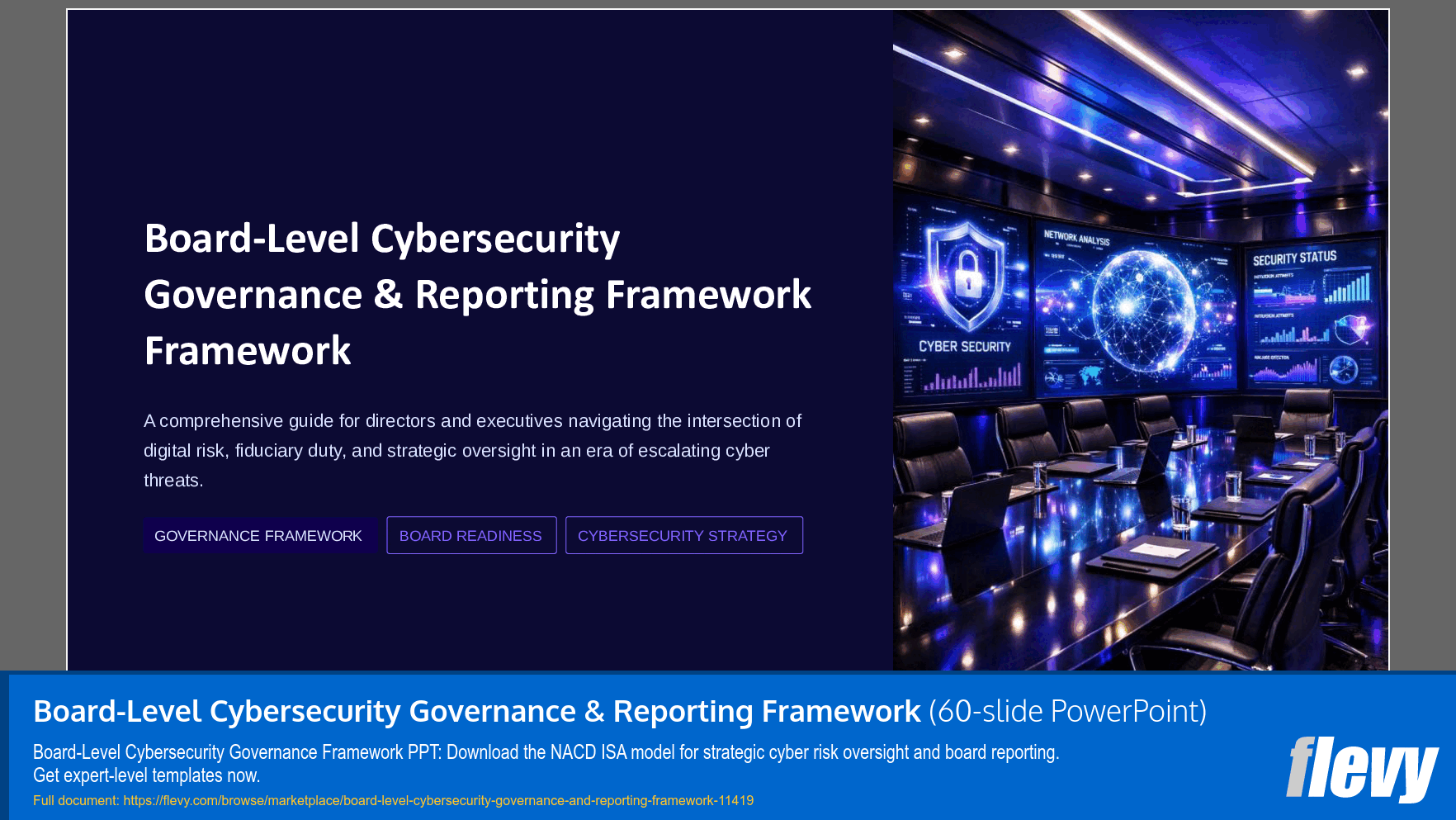
Board-Level Cybersecurity Governance & Reporting Framework
Chapter 1: The Evolving Cyber Threat Landscape
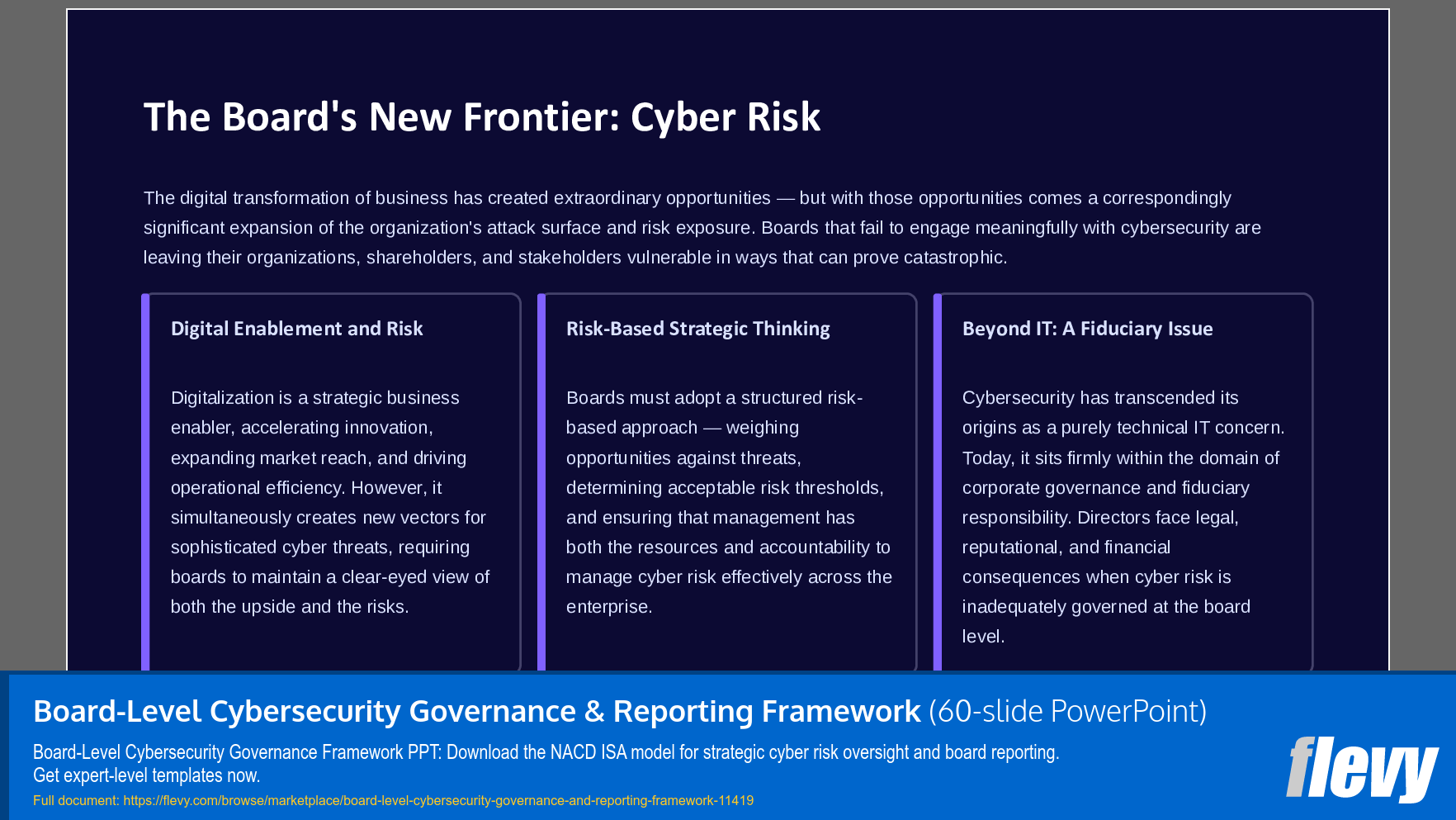
The Board's New Frontier: Cyber Risk
• Digitalization is a strategic business enabler, but also a source of significant risk.
• Boards must weigh opportunities against risks, adopting a risk-based approach.
• Cybersecurity is no longer just an IT issue; it's a critical business and fiduciary concern.
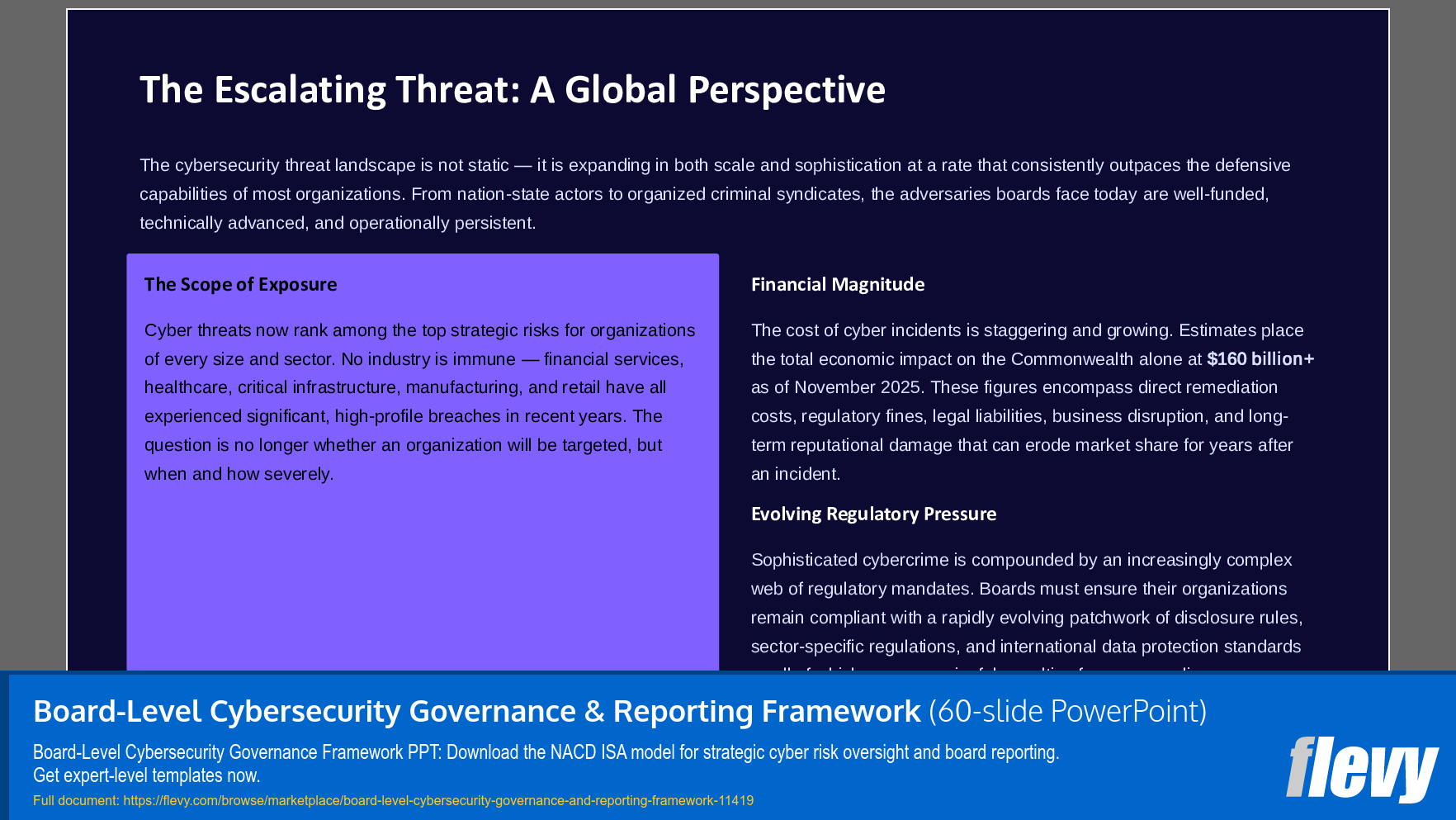
The Escalating Threat: A Global Perspective
• Cyber threats are a top risk for organizations of all sizes.
• Sophisticated cybercrime and evolving regulations demand constant vigilance.
• The cost of cyber incidents is staggering estimated at $160 billion+ for the Commonwealth alone (as of Nov 2025).
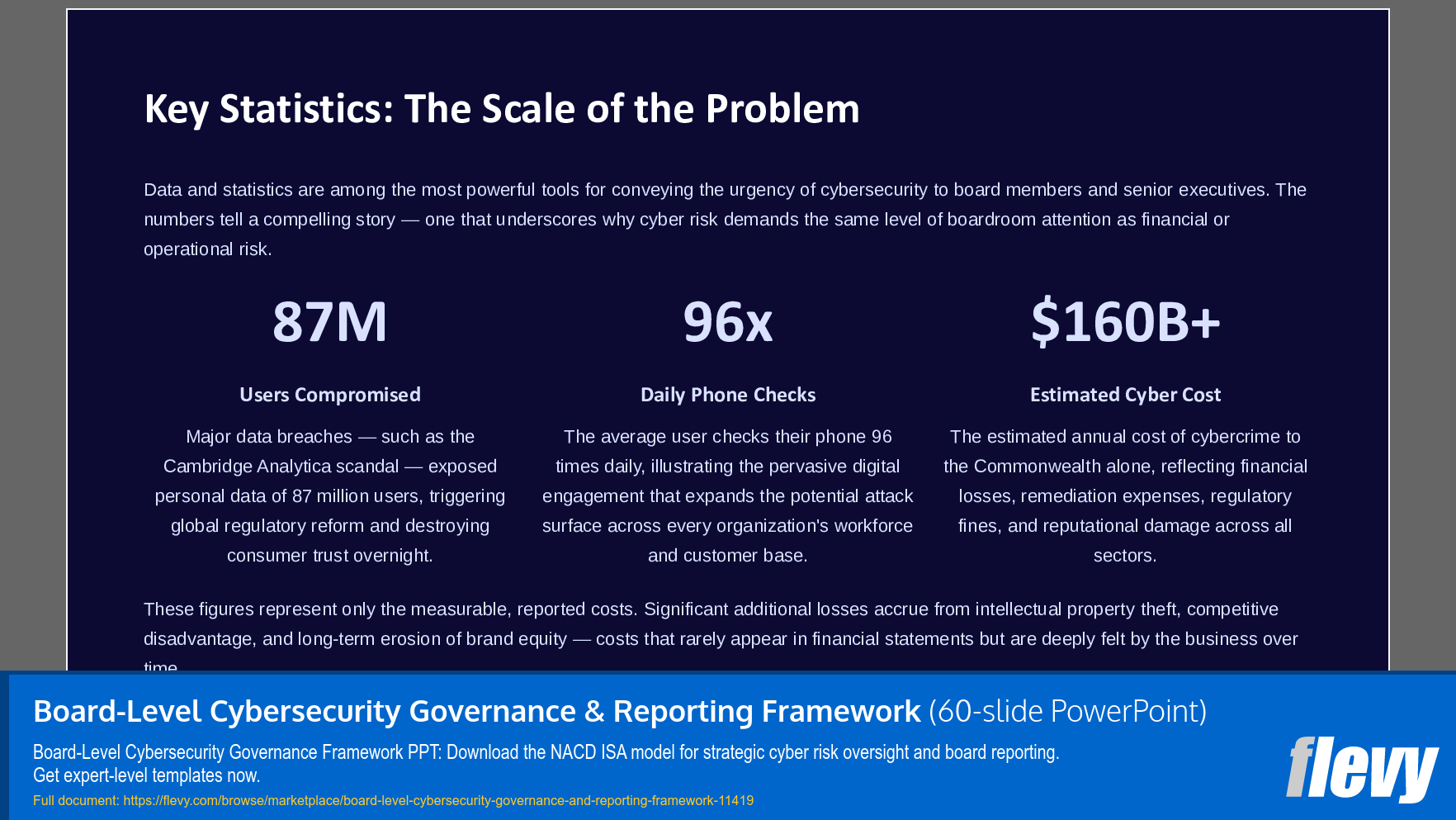
Key Statistics: The Scale of the Problem
• 87 million users affected by major data breaches (e.g., Cambridge Analytica).
• Average user checks phone 96 times daily, highlighting pervasive digital engagement.
• Cyberattacks cost businesses billions annually, impacting revenue and reputation.
Chapter 2: Foundations of Board-Level Cyber Governance
Defining Cyber Governance: Accountability at the Top
• Cybersecurity audit governance: the framework ensuring security controls, risk exposures, and compliance are assessed and reported at the highest levels.
• Board-level reporting: translating technical findings into strategic intelligence for directors and executives.
The NACD & ISA Framework: A Widely Referenced Model
• Developed by the National Association of Corporate Directors (NACD) and Internet Security Alliance (ISA).
• Separates board-level strategic oversight from management-level operational responsibility.
• Provides a comprehensive theory and practice for cybersecurity, covering enterprise risk management and public policy.
World Economic Forum Principles: Six Pillars of Effective Governance
• Cybersecurity is a strategic business enabler.
• Understand the economic drivers and impact of cyber risk.
• Align cyber-risk management with business needs.
• Ensure organizational design supports cybersecurity.
• Incorporate cybersecurity expertise into board governance.
• Encourage systemic resilience and collaboration.
The Role of the Audit Committee
• Formal delegation of cybersecurity risk review to an audit or risk committee.
• Defined reporting cadence and clear lines of accountability.
• Oversight of internal and external audit findings related to cybersecurity.
Chapter 3: Regulatory Mandates and Compliance
SEC's Cybersecurity Disclosure Rules (Adopted 2023)
• Public companies must disclose material cybersecurity incidents as processing allows.
• Annual Form 10-K filings require descriptions of the board's oversight of cybersecurity risk.
• Management's role in assessing and managing cyber risk must be detailed.
NIST Cybersecurity Framework (CSF) 2.0
• Provides guidance for organizations to manage cybersecurity risks.
• Offers a taxonomy of high-level cybersecurity outcomes.
• Can be used by any organization to understand, assess, prioritize, and communicate cybersecurity efforts.
• Links to online resources for achieving outcomes, not prescribing methods.
Sector-Specific Regulators: A Patchwork of Expectations
• Beyond SEC and NIST, various industry regulators impose specific cybersecurity requirements.
• Boards must be aware of and ensure compliance with all applicable mandates.
• Examples: HIPAA for healthcare, GDPR for data privacy.
Chapter 4: Building Board Cybersecurity Competency
The Imperative for Board Cyber Literacy
• Each board member should understand general digital age risks and specific cyber risks affecting their company.
• Achieved through focused training, individual study, or expert exchange.
Ensuring Board Expertise: In-House or "Bought-In"
• Boards can ensure cyber expertise through deeply knowledgeable members.
• Alternatively, knowledge can be acquired from internal or external specialists.
• The goal is to have sufficient expertise to ask the right questions and make informed decisions.
Understanding Management's Role
• Boards should meet regularly with executives responsible for cybersecurity.
• Define clear "pull and push" factors for communication and reporting.
• Foster a culture where management feels empowered to raise concerns.
Chapter 5: Strategic Reporting Frameworks
Translating Technical to Strategic: The Core Challenge
• Auditors and technical teams must present findings in a way that is understandable and actionable for the board.
• Focus on business impact, risk tolerance, and strategic alignment.
Key Components of Board-Level Reporting
• Cybersecurity Risk Exposure: Current threat landscape and potential impact on business objectives.
• Maturity Level: Assessment against recognized frameworks (e.g., NIST CSF Tiers).
• Incident Response Readiness: Preparedness for and effectiveness of incident response plans.
• Compliance Status: Adherence to regulatory requirements and internal policies.
Materiality Determination: When is an Event Reportable?
• The process by which management and legal counsel assess if a security event or control deficiency meets the threshold for regulatory disclosure.
• Critical for compliance and avoiding penalties.
Reporting Cadence and Format
• Regular reporting (e.g., quarterly) is essential, with ad-hoc updates for critical events.
• Reports should be concise, data-driven, and focused on strategic implications.
• Use of visual aids, executive summaries, and clear action items.
Chapter 6: Integrating Cybersecurity into Enterprise Risk Management (ERM)
Cybersecurity as a Component of ERM
• Cyber risk should not be siloed; it must be integrated into the overall enterprise risk management framework.
• Align cyber-risk management with overall business strategy and risk tolerance.
Understanding Economic Drivers and Impact
• Quantify the potential financial impact of cyber incidents (e.g., lost revenue, recovery costs, fines).
• Consider the impact on brand reputation, customer trust, and market share.
Aligning Cyber-Risk Management with Business Needs
• Ensure cybersecurity investments and strategies directly support business objectives.
• Prioritize risks based on their potential impact on critical business functions.
Chapter 7: Practical Implementation and Best Practices
The NIST CSF 2.0: A Practical Tool
• Identify: Understand your assets, systems, and potential threats.
• Protect: Implement safeguards to prevent cyber incidents.
• Detect: Develop capabilities to identify cyber events.
• Respond: Take action when a cyber event occurs.
• Recover: Maintain resilience and restore capabilities after an incident.
[image] A flowchart illustrating the five core functions of the NIST Cybersecurity Framework.
Encouraging Systemic Resilience and Collaboration
• Foster a culture of security awareness and responsibility across the entire organization.
• Collaborate with third-party vendors and partners to ensure supply chain security.
• Engage with industry peers and information-sharing groups.
Segregation of Duties: Strategy vs. Execution
• Ensure clear separation between the strategic oversight (board) and execution (management/IT) of cybersecurity.
• The CIO's executive function should be distinct from the CISO's legislative/oversight tasks.
Chapter 8: Case Studies and Real-World Examples
Case Study 1: The Cost of Neglect (Hypothetical)
• A company with weak cyber governance experiences a major breach.
• Impact: Significant financial losses, regulatory fines, loss of customer trust, stock price plummet.
• Board's failure to prioritize cyber risk oversight highlighted.
[image] A newspaper headline reading: "Major Data Breach Cripples Tech Giant: Stock Plummets 30%".
Case Study 2: Proactive Governance in Action (Hypothetical)
• A company with strong cyber governance and reporting framework.
• Successfully detects and mitigates a sophisticated attack with minimal disruption.
• Board's informed decisions and management's preparedness credited.
Lessons Learned from Major Incidents
• Analysis of recent high-profile cyberattacks and their governance implications.
• Focus on what boards could have done differently or what best practices were followed.
Chapter 9: The Future of Cyber Governance
Emerging Threats and Technologies
• AI-driven attacks and defenses.
• Quantum computing's impact on encryption.
• Increased focus on supply chain security and third-party risk.
[image] Abstract futuristic graphic representing advanced AI and quantum computing.
Evolving Regulatory Landscape
• Continued development of disclosure requirements and compliance standards.
• Increased focus on international cooperation and information sharing.
The Board's Continuous Learning Journey
• Cybersecurity is not a one-time fix; it requires ongoing education and adaptation.
• Boards must stay ahead of the curve to effectively govern cyber risk.
Chapter 10: Actionable Steps for Your Board
Immediate Actions for Board Members
• Assess current cyber literacy: Identify knowledge gaps.
• Review existing governance: Ensure alignment with best practices and regulations.
• Engage with management: Understand current cyber posture and risks.
Developing a Robust Reporting Framework
• Define key metrics: What needs to be reported and how often?
• Establish clear communication channels: Ensure timely and accurate information flow.
• Integrate with ERM: Make cyber risk a standing agenda item.
Seeking External Expertise
• Consider engaging cybersecurity consultants or advisors for independent assessments.
• Leverage industry best practices and frameworks.
The Board's Role as a Strategic Enabler
• Move beyond compliance to viewing cybersecurity as a competitive advantage.
• Foster a culture that prioritizes security and resilience.
Chapter 11: Conclusion – The Board's Fiduciary Duty in the Digital Age
Cybersecurity: A Core Fiduciary Responsibility
• Directors have a duty of care and loyalty to protect the company's assets and stakeholders.
• Effective cyber governance is essential to fulfilling these duties in the digital era.
[image] A strong, secure vault door with a digital lock, symbolizing robust cybersecurity.
The Payoff: Enhanced Resilience and Trust
• Strong cyber governance leads to better risk management, increased resilience, and greater stakeholder trust.
• Positions the company for sustainable growth in an increasingly digital world.
A Call to Action: Lead with Cyber Confidence
• Embrace the challenge of cybersecurity governance.
• Equip yourselves with knowledge, establish robust frameworks, and drive strategic oversight.
Thank You & Q&A
Got a question about the product? Email us at support@flevy.com or ask the author directly by using the "Ask the Author a Question" form. If you cannot view the preview above this document description, go here to view the large preview instead.
Source: Best Practices in Cyber Security PowerPoint Slides: Board-Level Cybersecurity Governance & Reporting Framework PowerPoint (PPTX) Presentation Slide Deck, Mohamed Alshamey
ABOUT THE AUTHOR

Senior Consultant in Cybersecurity GRC, Data Governance, Cybersecurity, Privacy, and Data Management, with over 20 years of experience in information technology, consulting, training, and technical capacity building. holds a PhD. In AI & Data Privacy, he has a master's degree in cybersecurity and is currently pursuing research focused on data privacy. possesses extensive expertise in ... [read more]
Ask the Author a Question
You must be logged in to contact the author.




























