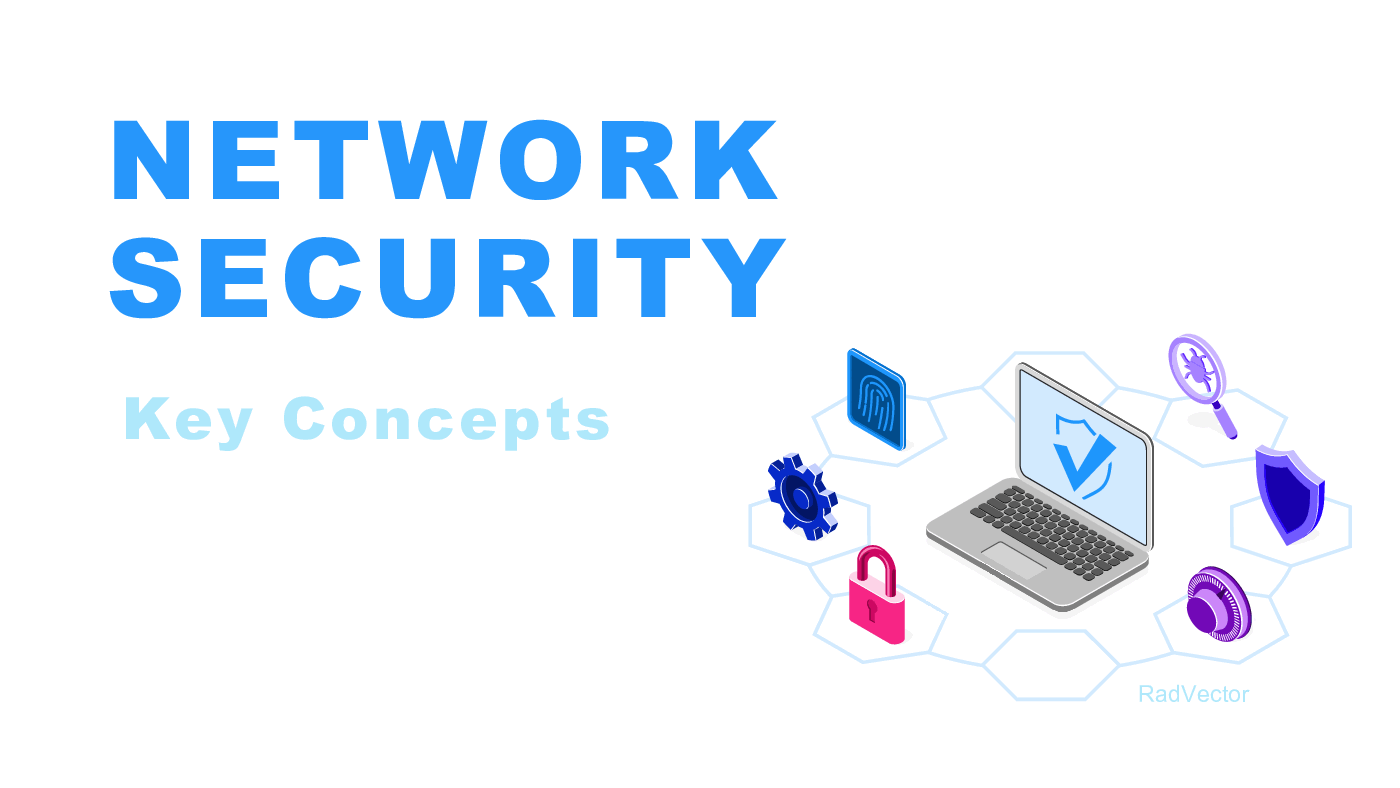

Network Security - Key Concepts   87-slide PPT PowerPoint presentation slide deck (PPTX)
$55.00

Network Security - Key Concepts (87-slide PPT PowerPoint presentation slide deck (PPTX)) Preview Image
Log in to unlock full preview.
Network Security - Key Concepts (87-slide PPT PowerPoint presentation slide deck (PPTX)) Preview Image
Arrow   Click main image to view in full screen.

Network Security - Key Concepts (PowerPoint PPTX Slide Deck)

PowerPoint (PPTX) 87 Slides

$55.00
Developed by a team of security experts with global consulting experience at McKinsey, Deloitte, and Capgemini.
Add to Cart


Immediate download
Fully editable PowerPoint
Free lifetime updates

CYBER SECURITY PPT DESCRIPTION

Editor Summary Network Security - Key Concepts is an 87-slide PowerPoint deck that surveys essential network security principles, vulnerabilities, attack types, and mitigation strategies. Read more

In this comprehensive presentation, we explore the dynamic landscape of Network Security, addressing critical topics such as the current state of cybersecurity, threat actors, malware, common network attacks, IP vulnerabilities, TCP and UDP vulnerabilities, IP services, network security best practices, and cryptography. We delve into the evolving tactics of threat actors, the diverse range of malware types, and the intricate vulnerabilities inherent in network protocols and services. Additionally, we outline essential network security best practices and highlight the vital role of cryptography in safeguarding data integrity and confidentiality. This presentation equips audiences with essential knowledge to navigate and mitigate modern cyber threats.

Current State of Cybersecurity:
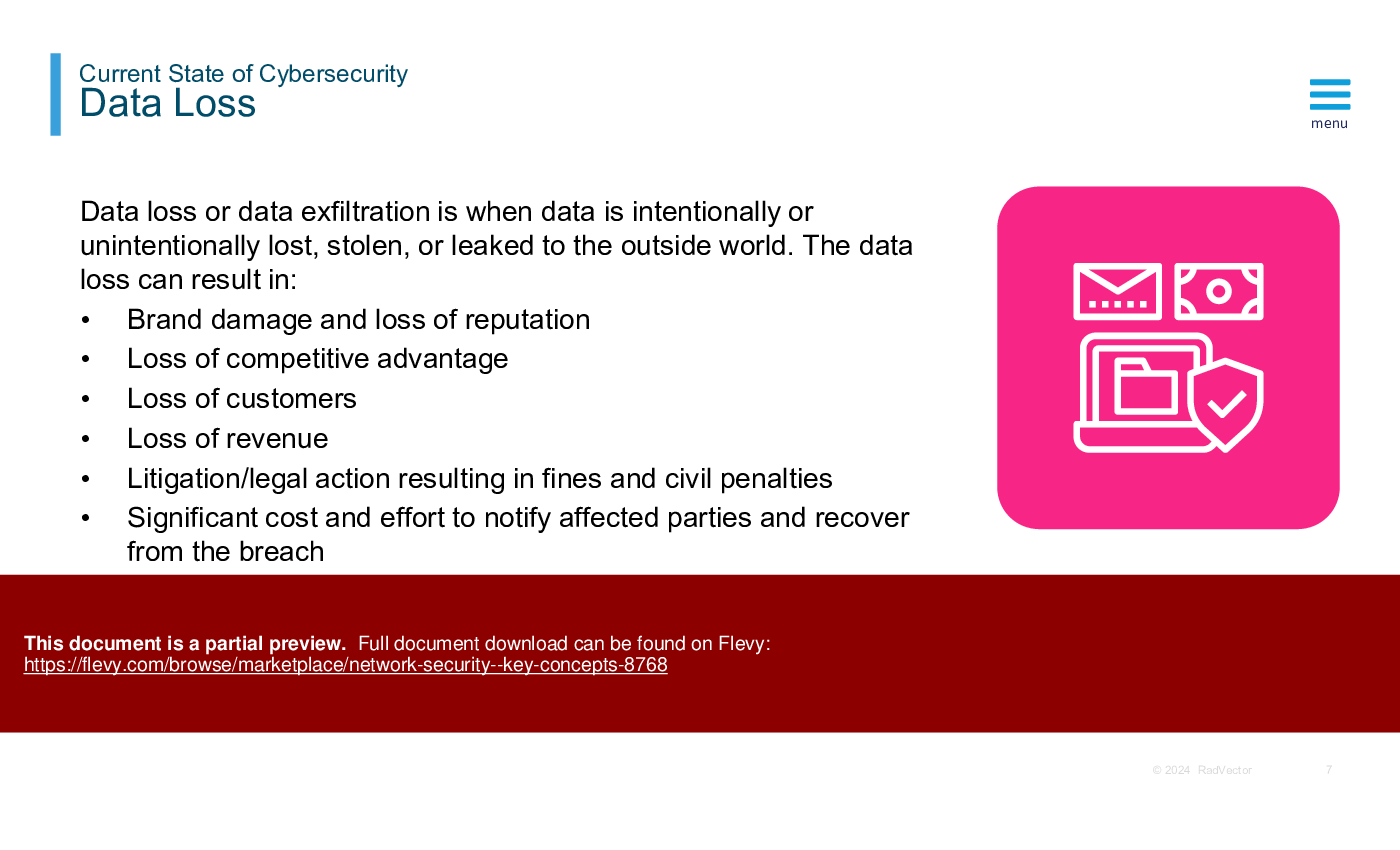
The current state of cybersecurity is marked by a continuous battle between defenders and attackers. As organizations increasingly rely on digital technologies, the attack surface has expanded, leading to a rise in cyber threats and data breaches. Vectors of data loss include various attack methods such as phishing, ransomware, insider threats, and supply chain attacks. Cybercriminals target sensitive data for financial gain, espionage, or disruption, exploiting vulnerabilities in networks, systems, and applications.

Threat Actors:
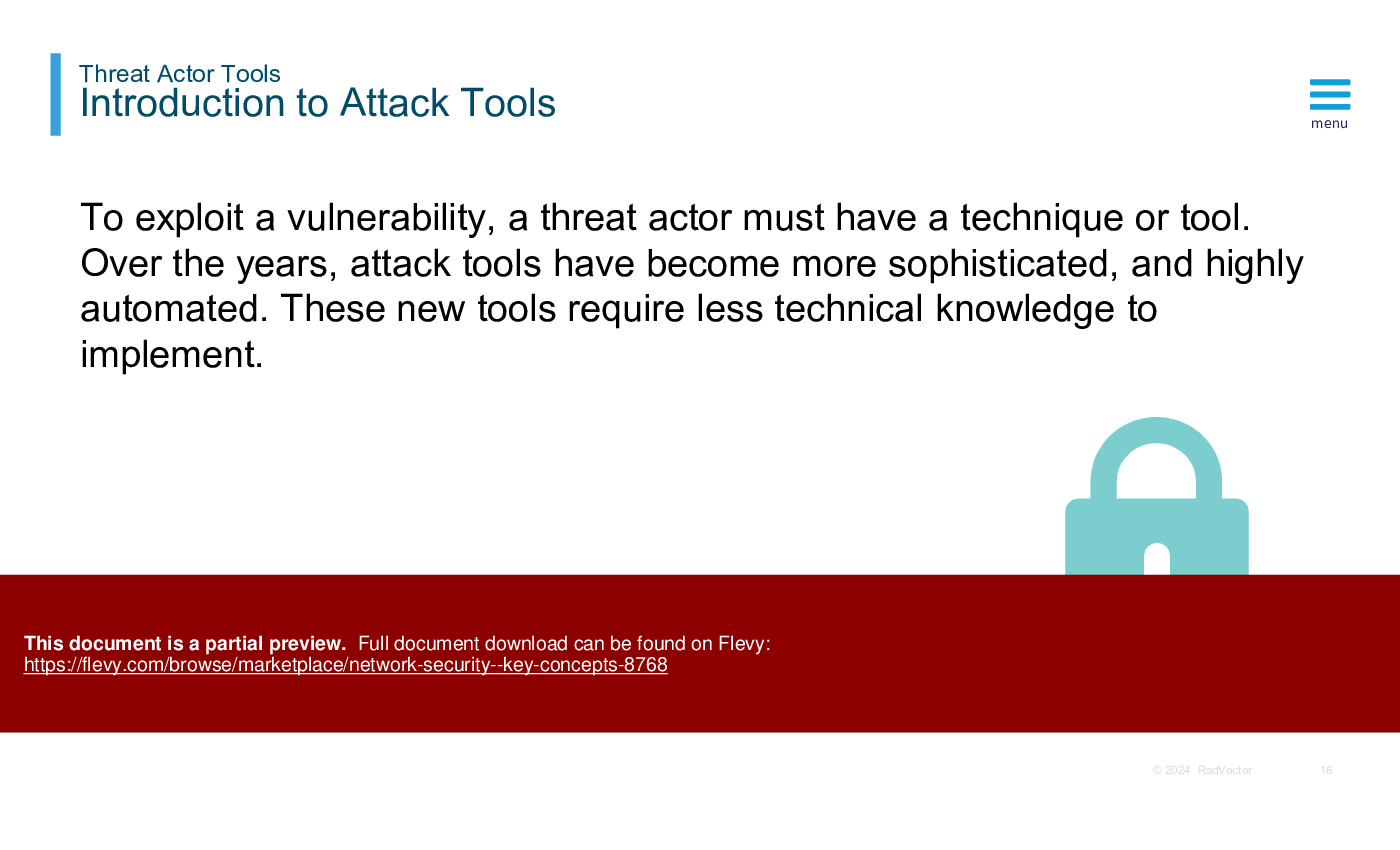
Threat actors employ a variety of tools and techniques to exploit networks and compromise data. These tools include malware, ransomware, exploit kits, phishing emails, social engineering tactics, and advanced persistent threats (APTs). Threat actors often use a combination of these tools to gain unauthorized access to networks, steal sensitive information, disrupt operations, or extort ransom payments.

Malware:
Malware encompasses a wide range of malicious software designed to infiltrate and damage computers and networks. Common types of malware include viruses, worms, Trojans, spyware, adware, and ransomware. Each type of malware has its own characteristics and methods of propagation, but they all pose significant risks to cybersecurity and data integrity.

Common Network Attacks:
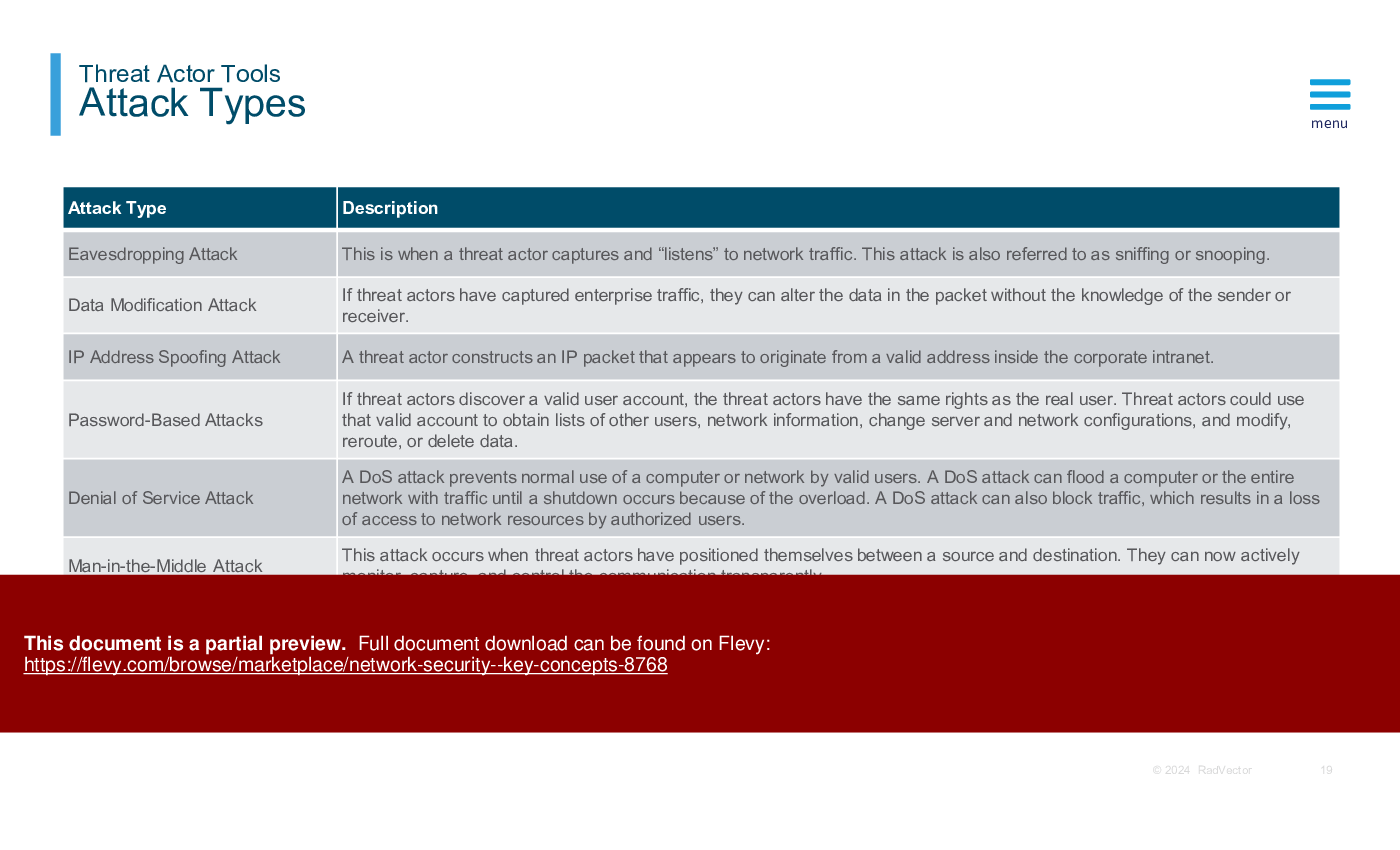
Common network attacks target vulnerabilities in network protocols, services, and devices to gain unauthorized access or disrupt operations. These attacks include Denial of Service (DoS) attacks, Distributed Denial of Service (DDoS) attacks, man-in-the-middle (MitM) attacks, packet sniffing, and DNS spoofing. These attacks can lead to network downtime, data theft, or unauthorized access to sensitive information.

IP Vulnerabilities and Threats:
Threat actors exploit vulnerabilities in the Internet Protocol (IP) to compromise networks and systems. These vulnerabilities may include insecure configurations, weak authentication mechanisms, or outdated software. Threat actors can exploit IP vulnerabilities to launch various attacks, such as IP spoofing, IP fragmentation attacks, or IP address hijacking, to gain unauthorized access or disrupt network operations.

TCP and UDP Vulnerabilities:
Transmission Control Protocol (TCP) and User Datagram Protocol (UDP) are common network protocols used for communication between devices on the Internet. Threat actors exploit vulnerabilities in TCP and UDP to launch attacks such as TCP SYN flooding, TCP reset attacks, UDP flooding, or UDP amplification attacks. These attacks can overload network resources, degrade network performance, or disrupt service availability.

IP Services:
IP services, such as Domain Name System (DNS), Dynamic Host Configuration Protocol (DHCP), and Simple Network Management Protocol (SNMP), are essential for network communication and management. However, threat actors can exploit vulnerabilities in these services to gain unauthorized access, intercept traffic, or launch attacks. For example, DNS cache poisoning, DHCP spoofing, or SNMP enumeration can be used to compromise network security and integrity.

Network Security Best Practices:
Implementing network security best practices is essential for protecting against cyber threats and data breaches. These practices include regular security assessments and audits, patch management, access control, encryption, network segmentation, intrusion detection and prevention systems (IDPS), security awareness training, and incident response planning. By following these best practices, organizations can mitigate risks and strengthen their overall cybersecurity posture.

Cryptography:
Cryptography is a crucial component of cybersecurity that involves securing data through encryption, decryption, and authentication processes. Common cryptographic processes include symmetric encryption, asymmetric encryption, hashing, digital signatures, and key exchange protocols. These processes are used to protect data confidentiality, integrity, and authenticity in transit and at rest. By employing cryptographic techniques, organizations can ensure the confidentiality of sensitive information and prevent unauthorized access or tampering.

Got a question about the product? Email us at support@flevy.com or ask the author directly by using the "Ask the Author a Question" form. If you cannot view the preview above this document description, go here to view the large preview instead.

MARCUS OVERVIEW

This synopsis was written by Marcus [?] based on the analysis of the full 87-slide presentation.


Executive Summary
This presentation titled "Network Security - Key Concepts" provides a comprehensive overview of essential network security principles, vulnerabilities, and mitigation strategies. Developed by experts with extensive consulting backgrounds, it aims to equip corporate executives and IT professionals with the knowledge to safeguard their networks against evolving cyber threats. The deck covers critical topics such as current cybersecurity challenges, threat actors, malware types, common network attacks, and best practices for securing networks. By leveraging this presentation, users will enhance their understanding of cybersecurity and implement effective measures to protect their organizations.

Who This Is For and When to Use
•  IT Security Managers responsible for developing and implementing security policies
•  Network Administrators tasked with maintaining secure network infrastructures
•  Compliance Officers ensuring adherence to cybersecurity regulations
•  Corporate Executives seeking to understand cybersecurity risks and mitigation strategies

Best-fit moments to use this deck:
•  During cybersecurity training sessions for IT staff
•  In strategic planning meetings focused on risk management
•  When assessing current network security measures and identifying gaps

Learning Objectives
•  Define the current state of cybersecurity and identify vectors of data loss
•  Describe tools used by threat actors to exploit networks
•  Explain various types of malware and their impacts
•  Identify common network attacks and their mitigation strategies
•  Discuss vulnerabilities associated with IP, TCP, and UDP protocols
•  Outline best practices for network security and cryptographic processes

Table of Contents
•  Current State of Cybersecurity (page 4)
•  Threat Actors (page 9)
•  Malware (page 20)
•  Common Network Attacks (page 26)
•  IP Vulnerabilities and Threats (page 35)
•  TCP and UDP Vulnerabilities (page 41)
•  IP Services (page 50)
•  Network Security Best Practices (page 61)
•  Cryptography (page 68)

Primary Topics Covered
•  Current State of Cybersecurity - Overview of the evolving landscape of cybersecurity threats and vulnerabilities affecting organizations today.
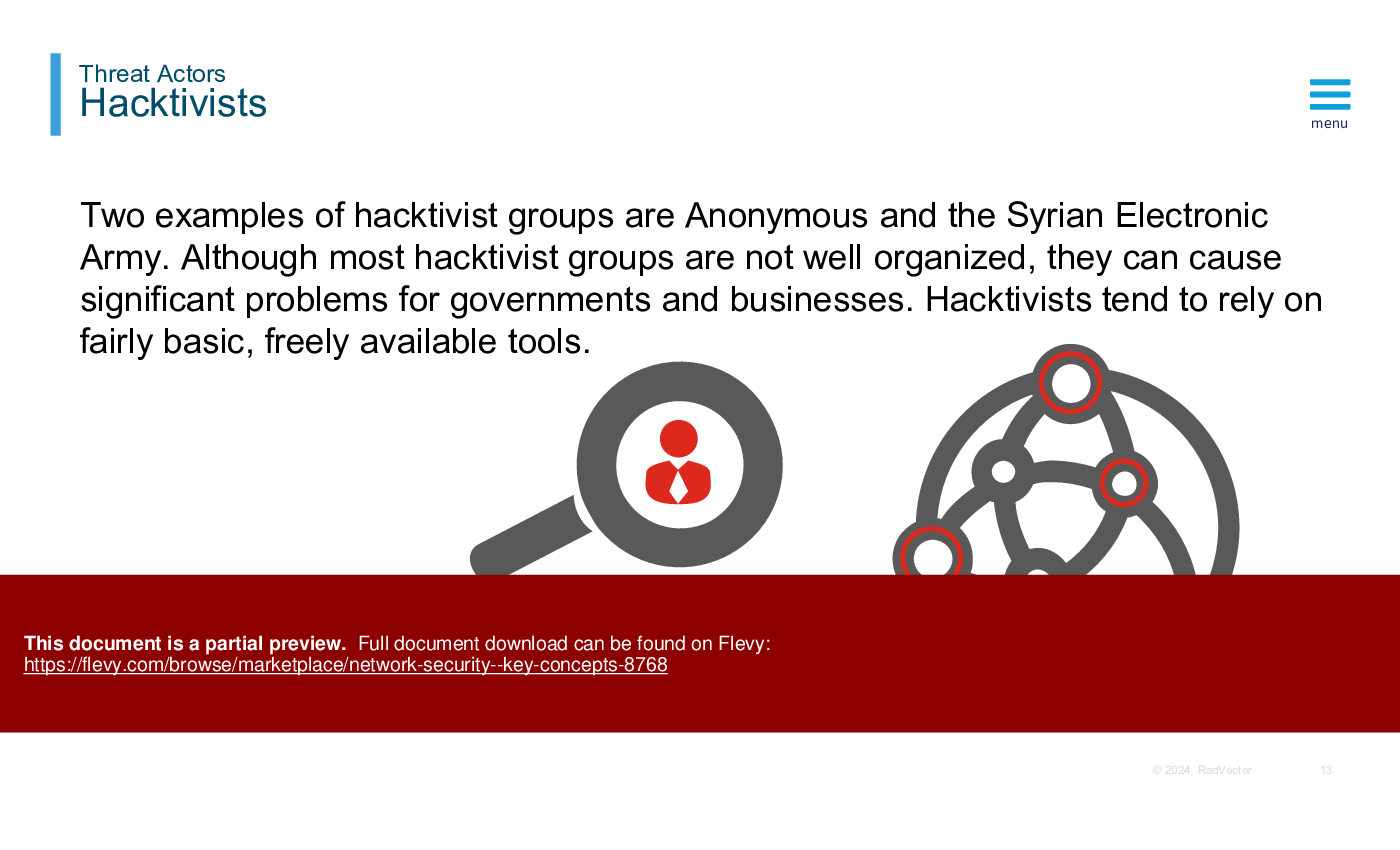
•  Threat Actors - Examination of various types of hackers, including white hat, gray hat, and black hat hackers, and their motivations.
•  Malware - Description of different malware types, including viruses, Trojans, ransomware, and their operational impacts on networks.
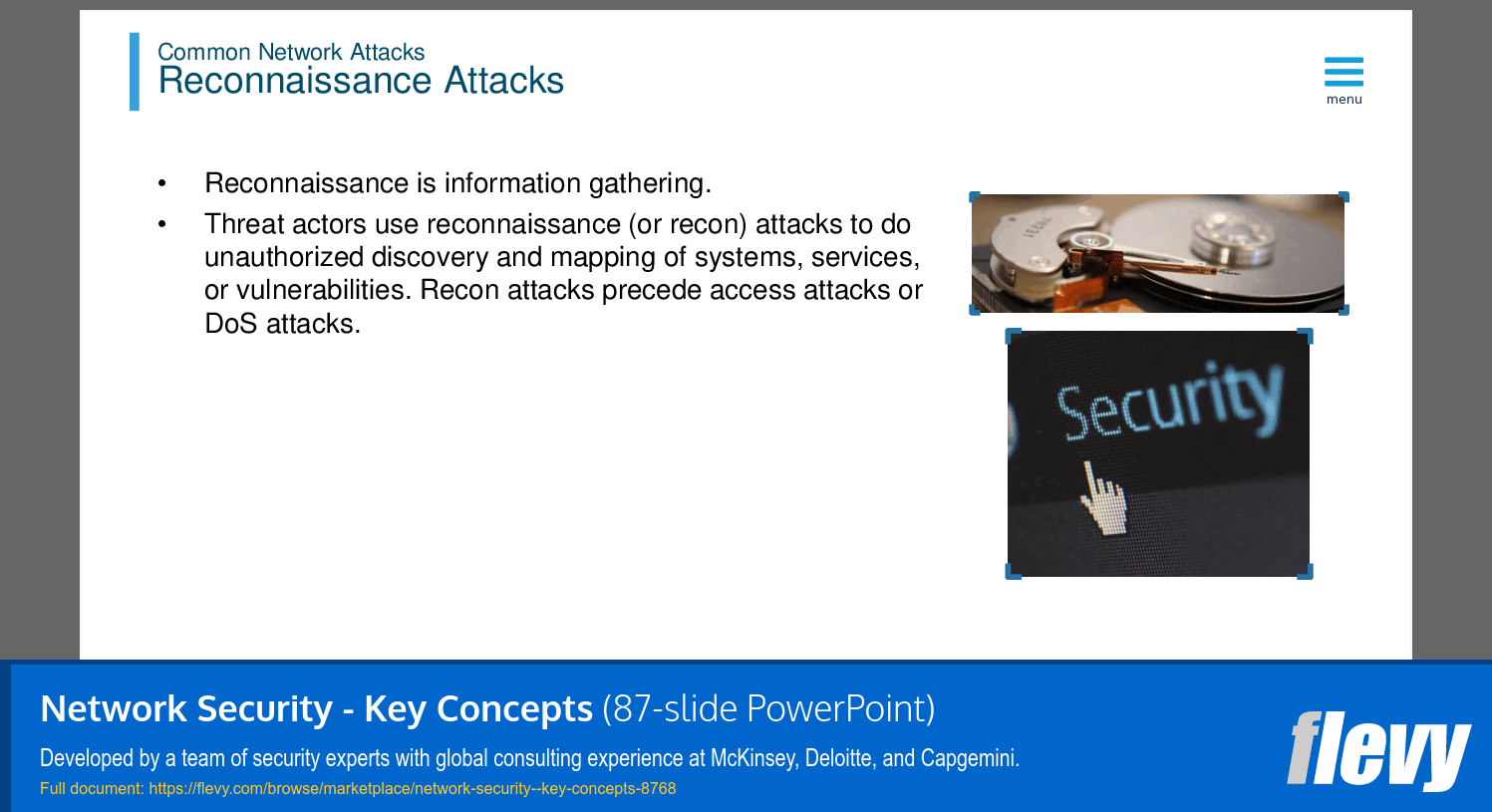
•  Common Network Attacks - Identification of prevalent attack types, such as reconnaissance, access, and denial-of-service attacks.
•  IP Vulnerabilities and Threats - Analysis of vulnerabilities associated with IP protocols and common attack techniques.
•  Network Security Best Practices - Recommendations for implementing a defense-in-depth approach to network security and ensuring data integrity.

Deliverables, Templates, and Tools
•  Risk assessment templates for identifying vulnerabilities and threats
•  Best practice guidelines for implementing network security measures
•  Checklists for evaluating current cybersecurity protocols
•  Incident response frameworks for addressing security breaches
•  Training materials for educating staff on cybersecurity awareness

Slide Highlights
•  Visual representation of the CIA triad (Confidentiality, Integrity, Availability) and its importance in network security
•  Graphical overview of common malware types and their characteristics
•  Flowchart illustrating the process of a denial-of-service attack
•  Infographic summarizing best practices for securing network devices

Potential Workshop Agenda
Introduction to Network Security (30 minutes)
•  Overview of current cybersecurity landscape
•  Discussion of recent data breaches and their implications

Threat Actor Analysis (45 minutes)
•  Identification of various threat actors and their methods
•  Case studies of notable cyber attacks

Malware and Network Attacks (60 minutes)
•  Examination of different malware types and common attack vectors
•  Group activity: Identifying potential vulnerabilities in current systems

Best Practices and Mitigation Strategies (45 minutes)
•  Review of best practices for network security
•  Development of an action plan for implementing security measures

Customization Guidance
•  Tailor the content to reflect specific organizational policies and procedures
•  Update examples and case studies to align with recent cybersecurity incidents relevant to the organization
•  Adjust technical terminology to match the audience's familiarity with cybersecurity concepts

Secondary Topics Covered
•  Social engineering techniques and their impact on network security
•  The role of compliance in cybersecurity
•  Emerging trends in cyber threats and defenses

Topic FAQ

What are the most common types of network attacks I should plan defenses for?

Common network attacks include reconnaissance attacks, access attacks, and denial-of-service attacks, each aiming to gather information, gain unauthorized access, or disrupt availability. Mitigations discussed include defense-in-depth measures, access control lists (ACLs), traffic monitoring, and intrusion detection systems (IDS), with reconnaissance, access, and denial-of-service attacks specifically identified.

How do TCP and UDP vulnerabilities typically affect network availability and performance?

Vulnerabilities in TCP and UDP can be exploited to overwhelm services or disrupt connections; examples include TCP SYN flood attacks, TCP reset attacks, UDP flooding, and UDP amplification. These attacks can degrade performance, exhaust resources, and impair availability, with TCP SYN flood and UDP flooding explicitly described.

What elements should an incident response framework for network breaches include?

An incident response framework should include detection and monitoring, containment steps, forensic analysis, communication procedures, and recovery actions. The presentation also pairs frameworks with checklists and training materials to operationalize response activities, and it explicitly lists incident response frameworks and checklists as deliverables.

How does cryptography support network security in practical terms?

Cryptography protects confidentiality, integrity, and authenticity through encryption, hashing, digital signatures, and key exchange. The deck covers symmetric and asymmetric encryption schemes, hashing, digital signatures, and key exchange methods such as Diffie-Hellman, noting their roles in securing data in transit and at rest with symmetric and asymmetric encryption and Diffie-Hellman key exchange.

What should I look for when choosing a network security presentation or toolkit for my team?

Look for coverage of the current threat landscape, threat actor types, malware and attack vectors, protocol-level vulnerabilities (IP, TCP, UDP), practical mitigations, and ready-to-use deliverables such as risk assessment templates and incident response frameworks; Flevy's Network Security - Key Concepts specifically lists those templates and frameworks.

How much time should I allocate for a workshop that teaches these network security topics?

The product suggests a potential workshop agenda totaling roughly 3 hours: Introduction to Network Security (30 minutes), Threat Actor Analysis (45 minutes), Malware and Network Attacks (60 minutes), and Best Practices and Mitigation Strategies (45 minutes, with those exact timings provided).

I need to brief executives on cybersecurity risk—what core topics should the briefing cover?

An executive briefing should summarize the current cybersecurity landscape, key threat actors and motivations, high-impact malware and attack scenarios, risks to confidentiality/integrity/availability (CIA triad), and prioritized mitigation steps; the deck includes a CIA triad visual and threat actor analysis useful for executive briefings.

After a DDoS incident, what immediate network-level steps reduce further impact?

Immediate measures include implementing ACLs to block malicious traffic, activating traffic monitoring and IDS to detect ongoing activity, engaging network segmentation to isolate affected resources, and applying mitigation procedures from an incident response framework; ACLs, IDS, and network segmentation are specifically recommended.

Document FAQ
These are questions addressed within this presentation.

What is the main objective of this presentation?
The main objective is to explain how vulnerabilities, threats, and exploits can be mitigated to enhance network security.

Who are the primary threat actors discussed?
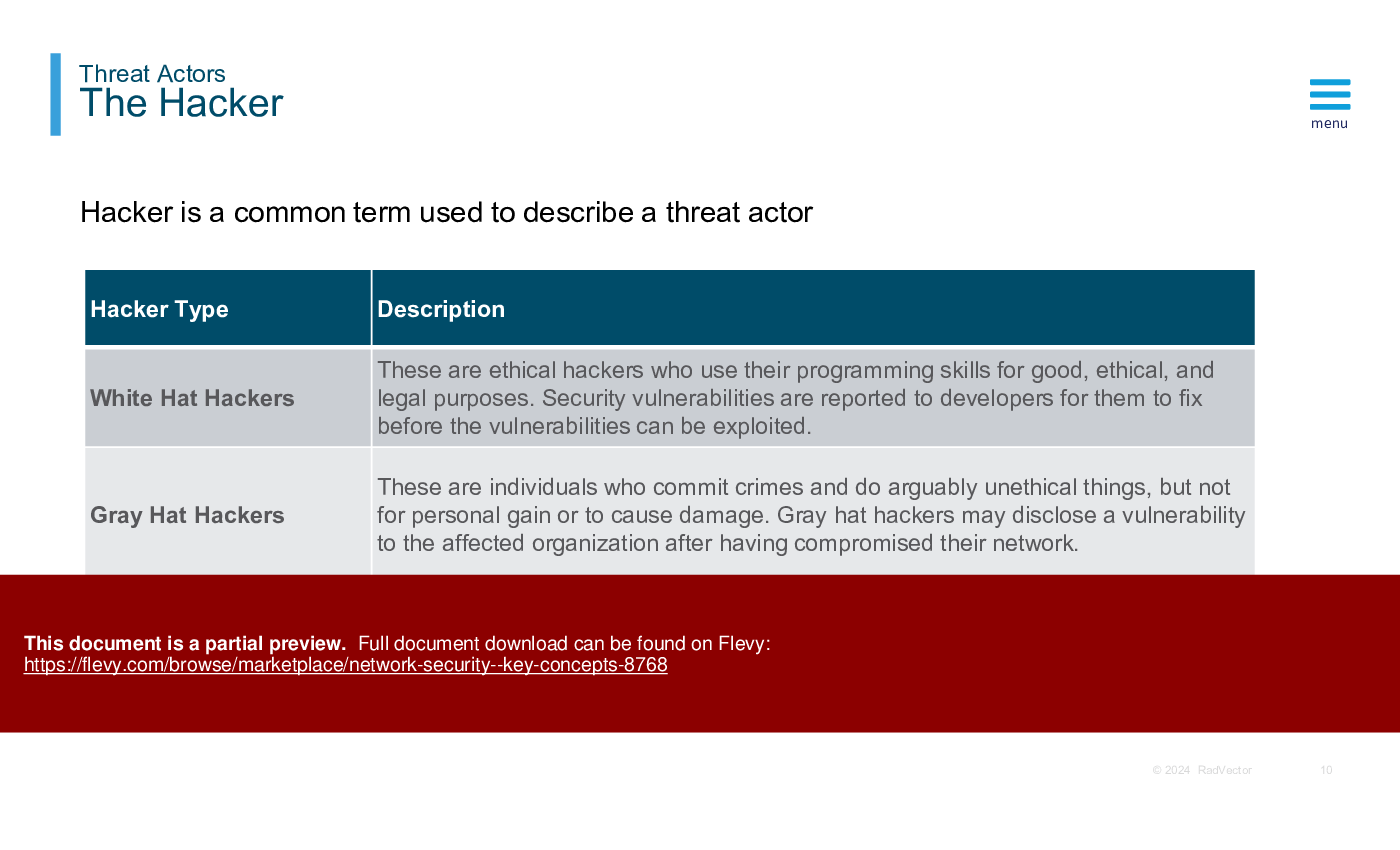
The presentation covers white hat, gray hat, and black hat hackers, along with their motivations and methods.

What types of malware are included in the discussion?
Common types of malware discussed include viruses, Trojans, ransomware, adware, and spyware.

What are the key components of network security best practices?
Key components include implementing a defense-in-depth strategy, ensuring data integrity, and maintaining system availability.

How does the presentation address the current state of cybersecurity?
It provides an overview of the evolving landscape, including recent data breaches and the tools used by cybercriminals.

What are some common network attacks covered?
Common attacks include reconnaissance attacks, access attacks, and denial-of-service attacks.

How can organizations mitigate the risks associated with IP vulnerabilities?
By implementing access control lists (ACLs), monitoring network traffic, and employing intrusion detection systems (IDS).

What is the CIA triad?
The CIA triad refers to the principles of Confidentiality, Integrity, and Availability, which are foundational to network security.

Glossary
•  Asset - Anything of value to the organization, including data and equipment.
•  Vulnerability - A weakness in a system that can be exploited by a threat.
•  Threat - A potential danger to an organization's assets or data.
•  Exploit - A mechanism that takes advantage of a vulnerability.
•  Mitigation - Countermeasures to reduce the likelihood of a threat.
•  Risk - The likelihood of a threat exploiting a vulnerability.
•  Attack Vector - A path by which a threat actor can gain access to a network.
•  Denial of Service (DoS) - An attack that disrupts normal service availability.
•  Intrusion Detection System (IDS) - A system that monitors network traffic for suspicious activity.
•  Cryptography - The practice of securing information through encoding.
•  Malware - Malicious software designed to harm or exploit devices.
•  Phishing - A technique used to trick individuals into providing sensitive information.
•  Ransomware - Malware that encrypts files and demands payment for decryption.
•  Firewall - A system that enforces access control policies between networks.
•  Encryption - The process of converting information into a secure format.
•  Symmetric Encryption - A type of encryption where the same key is used for both encryption and decryption.
•  Asymmetric Encryption - A type of encryption that uses a pair of keys (public and private).
•  Diffie-Hellman - A method for securely exchanging cryptographic keys over a public channel.
•  TCP SYN Flood - An attack that overwhelms a server with SYN requests.
•  UDP Flooding - An attack that sends a flood of UDP packets to a target.
•  ARP Cache Poisoning - An attack that manipulates the ARP cache to redirect traffic.
•  DNS Tunneling - A technique that encodes non-DNS traffic within DNS queries.

Source: Best Practices in Cyber Security PowerPoint Slides: Network Security - Key Concepts PowerPoint (PPTX) Presentation Slide Deck, RadVector Consulting


$55.00
Developed by a team of security experts with global consulting experience at McKinsey, Deloitte, and Capgemini.
Add to Cart
  

ABOUT THE AUTHOR

Additional documents from author: 182

We are a group of aviation experts & specialists (PhDs, Engineers, Pilots, Navigators, ...), leaders in helping organizations to transform their business performance using Methodologies and Principles of Lean, Agile, Six Sigma, and Innovation.

Ask the Author a Question

You must be logged in to contact the author.

Click here to log in Click here register

Did you know?
The average daily rate of a McKinsey consultant is $6,625 (not including expenses). The average price of a Flevy document is $65.


Trusted by over 10,000+ Client Organizations
Since 2012, we have provided business templates to over 10,000 businesses and organizations of all sizes, from startups and small businesses to the Fortune 100, in over 130 countries.
AT&T GE Cisco Intel IBM Coke Dell Toyota HP Nike Samsung Microsoft Astrazeneca JP Morgan KPMG Walgreens Walmart 3M Kaiser Oracle SAP Google E&Y Volvo Bosch Merck Fedex Shell Amgen Eli Lilly Roche AIG Abbott Amazon PwC T-Mobile Broadcom Bayer Pearson Titleist ConEd Pfizer NTT Data Schwab


Read Customer Testimonials

 
"As a small business owner, the resource material available from FlevyPro has proven to be invaluable. The ability to search for material on demand based our project events and client requirements was great for me and proved very beneficial to my clients. Importantly, being able to easily edit and tailor "

– Michael Duff, Managing Director at Change Strategy (UK)
 
"I have used Flevy services for a number of years and have never, ever been disappointed. As a matter of fact, David and his team continue, time after time, to impress me with their willingness to assist and in the real sense of the word. I have concluded in fact "

– Roberto Pelliccia, Senior Executive in International Hospitality
 
"Flevy is now a part of my business routine. I visit Flevy at least 3 times each month.

Flevy has become my preferred learning source, because what it provides is practical, current, and useful in this era where the business world is being rewritten.

In today's environment where there are so "

– Omar Hernán Montes Parra, CEO at Quantum SFE
 
"If you are looking for great resources to save time with your business presentations, Flevy is truly a value-added resource. Flevy has done all the work for you and we will continue to utilize Flevy as a source to extract up-to-date information and data for our virtual and onsite presentations!"

– Debbi Saffo, President at The NiKhar Group
 
"As an Independent Management Consultant, I find Flevy to add great value as a source of best practices, templates and information on new trends. Flevy has matured and the quality and quantity of the library is excellent. Lastly the price charged is reasonable, creating a win-win value for "

– Jim Schoen, Principal at FRC Group
 
"FlevyPro provides business frameworks from many of the global giants in management consulting that allow you to provide best in class solutions for your clients."

– David Harris, Managing Director at Futures Strategy
 
"I like your product. I'm frequently designing PowerPoint presentations for my company and your product has given me so many great ideas on the use of charts, layouts, tools, and frameworks. I really think the templates are a valuable asset to the job."

– Roberto Fuentes Martinez, Senior Executive Director at Technology Transformation Advisory
 
"I am extremely grateful for the proactiveness and eagerness to help and I would gladly recommend the Flevy team if you are looking for data and toolkits to help you work through business solutions."

– Trevor Booth, Partner, Fast Forward Consulting


Customers Also Bought These Documents


Customers Also Like These Documents

Explore Templates on Related Management Topics


Your Recently Viewed Documents
Download our FREE Digital Transformation Templates

Download our free compilation of 50+ Digital Transformation slides and templates. DX concepts covered include Digital Leadership, Digital Maturity, Digital Value Chain, Customer Experience, Customer Journey, RPA, etc.










