
Editor Summary
72-slide PowerPoint training program "Best Practices in Negotiations Strategy" by Affinity Consulting Partners provides a one-day negotiation training for Strategic Sourcing, sold as a digital download on Flevy.
Read moreIncludes 6 deliverables/templates: negotiation strategy worksheet, proposal evaluation matrix, negotiation tactics worksheet, supplier presentation package template, negotiation checklist, and follow-up feedback template. Target users include procurement professionals, supply chain managers, strategic sourcing teams, and consultants preparing for pre-negotiation planning, supplier negotiations, or training sessions.
Use this deck when an organization needs to standardize or improve supplier negotiation capability—during pre-negotiation planning, supplier tender preparation, or as a one-day training intervention.
Procurement professionals aligning negotiation objectives and establishing BATNA using the negotiation strategy worksheet.
Supply chain managers evaluating supplier bids and informing tactics with the proposal evaluation matrix.
Strategic sourcing teams assigning team roles, logistics, and key messages using the negotiation checklist and supplier presentation package.
External consultants running role-play workshops and debriefs using the session agendas and case studies.
The structured planning, preparation, execution, and follow-up sequence reflects the phased, hypothesis-driven consulting approach associated with McKinsey, Bain, and BCG.
Negotiation is a fundamental skill in today's business landscape, particularly in the field of strategic sourcing. It plays a critical role in securing favourable contracts, managing supplier relationships, and ultimately achieving cost savings and value for organizations.
This document explores the basics of the negotiation process, its position in the strategic sourcing process, and the key stages of developing and executing successful negotiation strategies. The focus of the materials is a focus on how to effectively develop, prepare for, and conduct negotiations to achieve optimal outcomes.
The deck has four key objectives;
1. Understand the Basics of the Negotiation Process: The materials provide a comprehensive overview of the negotiation process, including its fundamental principles, types of negotiations, and common challenges.
2. Gain an understanding of Its Position in the Strategic Sourcing Process: Negotiation is a critical component of the strategic sourcing process, which involves identifying, evaluating, and selecting suppliers to meet organizational needs. The deck discusses the strategic sourcing process in detail and highlights the key role that negotiation plays in each stage, from conducting market research and supplier selection to contract negotiation and supplier performance management.
3. Gain an understanding of the key stages of Developing and Executing Successful Negotiation Strategies: The deck delves into the key stages of developing and executing successful negotiation strategies, including planning, preparation, execution, and follow-up. You will learn how to set clear objectives, gather information, assess risks, and develop effective negotiation tactics and techniques, how to handle common challenges, such as power dynamics, ethical considerations, and difficult negotiations.
4. The deck is structured to provide training sessions for each particular area. To hone your negotiation skills, we will provide you with practical exercises and case studies to practice effective negotiation techniques. You will learn how to effectively communicate, build relationships, and create value during negotiations. We will also cover how to handle different negotiation scenarios, such as cross-cultural negotiations and multi-party negotiations, and provide tips on managing emotions and resolving conflicts during negotiations.
Through a combination of theory, real-world examples, and practical exercises, this deck provides a comprehensive guide to mastering the art of negotiation in the context of strategic sourcing.
Whether you are a procurement professional, a supply chain manager, or anyone involved in the strategic sourcing process, this set of materials will equip you with the tools and strategies to excel in your negotiations and achieve optimal outcomes.
Got a question about the product? Email us at support@flevy.com or ask the author directly by using the "Ask the Author a Question" form. If you cannot view the preview above this document description, go here to view the large preview instead.
MARCUS OVERVIEW
This synopsis was written by Marcus [?] based on the analysis of the full 72-slide presentation.
Executive Summary
This one-day training program on negotiation strategies is designed to equip participants with essential skills for effective negotiations within the Strategic Sourcing process. Crafted with a consulting-grade approach akin to McKinsey, Bain, or BCG-quality, this training focuses on understanding negotiation fundamentals, developing strategies, and preparing for successful negotiations. Participants will learn to navigate the complexities of supplier relationships, enhance their negotiation techniques, and apply practical frameworks to achieve optimal outcomes.
Who This Is For and When to Use
• Procurement professionals seeking to enhance their negotiation skills
• Supply chain managers involved in supplier selection and management
• Strategic sourcing teams aiming to streamline negotiation processes
• Consultants guiding organizations in supplier negotiations
Best-fit moments to use this deck:
• During pre-negotiation planning sessions to align team objectives
• When preparing for supplier negotiations to ensure a structured approach
• For ongoing training to reinforce negotiation best practices and techniques
Learning Objectives
• Define the key stages of the negotiation process within Strategic Sourcing
• Build effective negotiation strategies tailored to supplier dynamics
• Establish preparation techniques that enhance negotiation outcomes
• Conduct negotiations with confidence and clarity
• Analyze supplier proposals to inform negotiation tactics
• Provide feedback and follow-up strategies post-negotiation
Table of Contents
• Introduction (page 2)
• Session One – Truck Buying/Selling (page 3)
• Negotiations Strategy (page 4)
• Session Two – Developing the Strategy (page 5)
• Preparing for Negotiations (page 6)
• Session Three – Considering Key Learnings (page 7)
• Conducting Negotiations (page 8)
• Session Four – Negotiations (page 9)
• Review and Close (page 10)
Primary Topics Covered
• Negotiation Process - Understanding the stages of negotiation within the Strategic Sourcing framework, including preparation, execution, and follow-up.
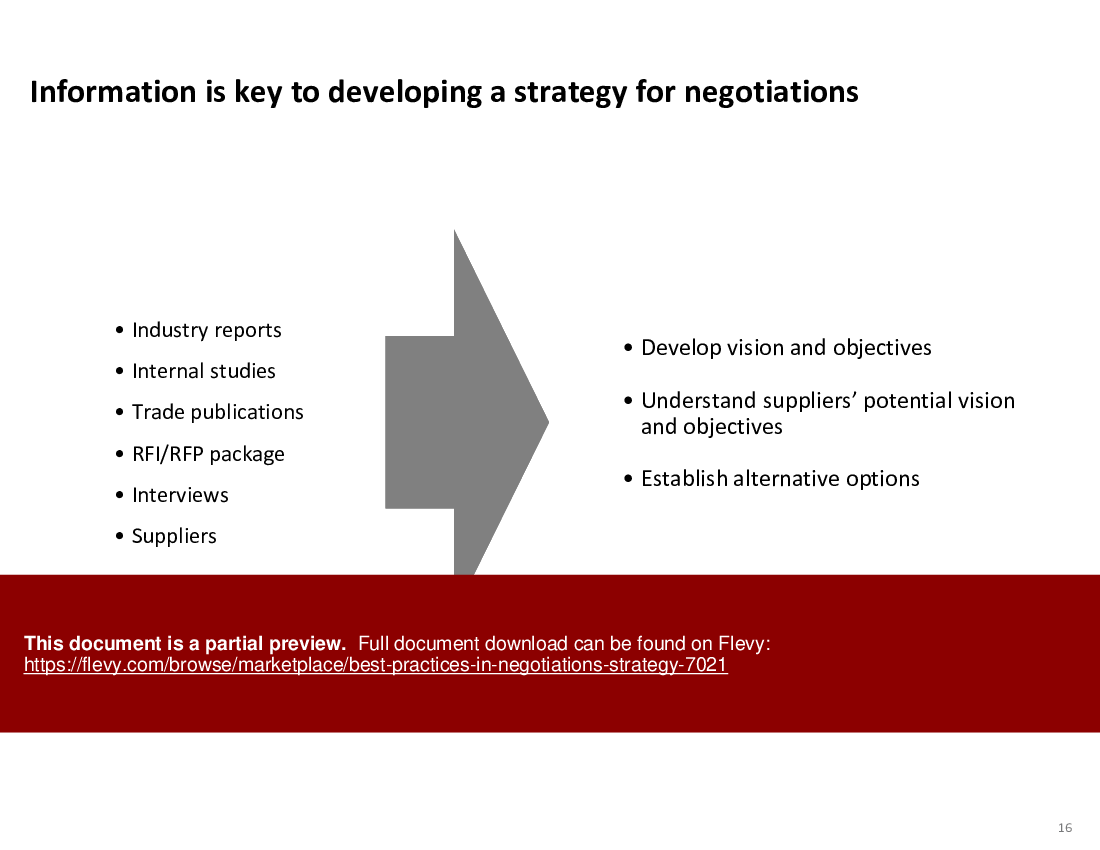
• Negotiation Strategy Development - Techniques for formulating effective negotiation strategies based on supplier analysis and market conditions.
• Preparation Techniques - Best practices for preparing negotiation sessions, including logistics, team roles, and key messages.
• Conducting Negotiations - Methods for executing negotiations effectively, focusing on communication, problem-solving, and documentation.
• Follow-Up and Feedback - Importance of post-negotiation follow-up to assess performance and maintain supplier relationships.
• Supplier Analysis - Tools for evaluating supplier proposals and leveraging insights to inform negotiation tactics.
Deliverables, Templates, and Tools
• Negotiation strategy worksheet to outline objectives and tactics
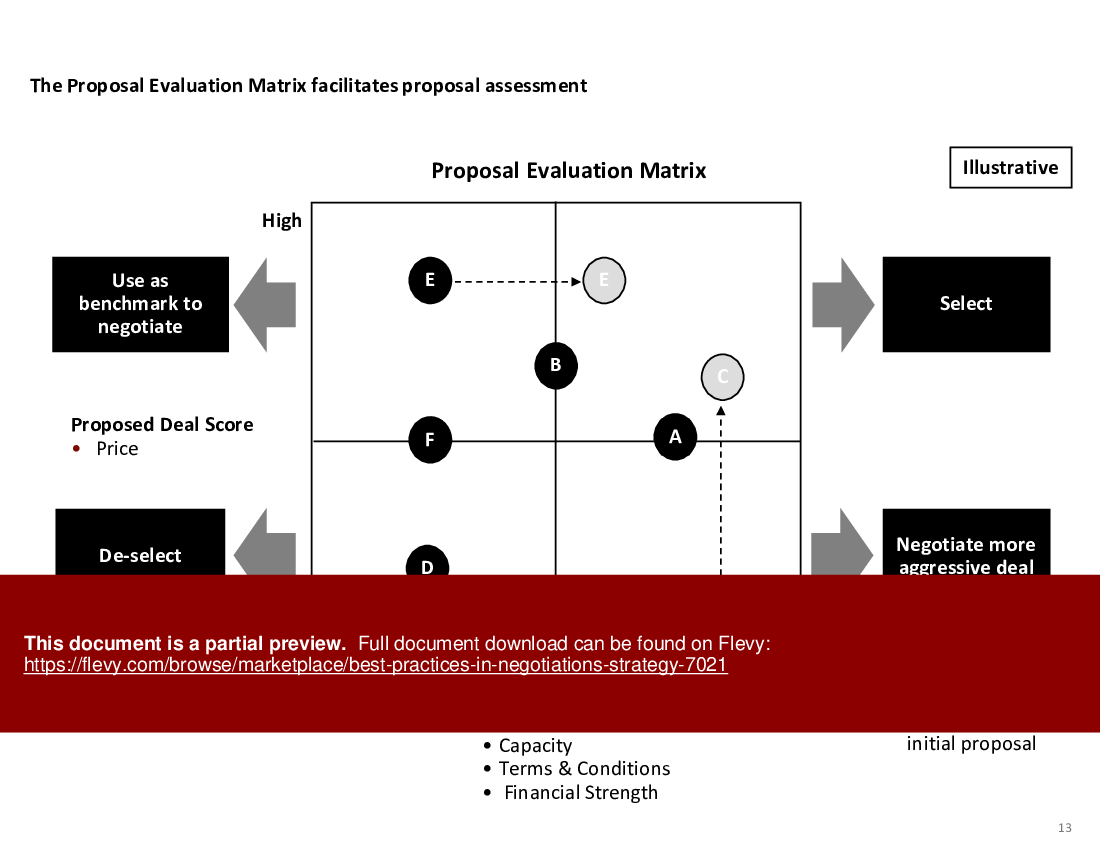
• Proposal evaluation matrix for assessing supplier submissions
• Negotiation tactics worksheet capturing key messages and anticipated responses
• Supplier presentation package template for structured communication during negotiations
• Checklist for ensuring all elements are in place before negotiations commence
• Follow-up feedback template to maintain supplier engagement post-negotiation
Slide Highlights
• Overview of the negotiation process and its significance in Strategic Sourcing
• Key strategies for developing effective negotiation tactics
• Real-world examples illustrating successful negotiation scenarios
• Visual aids for understanding supplier analysis and proposal evaluation
• Structured agenda for conducting negotiation sessions
Potential Workshop Agenda
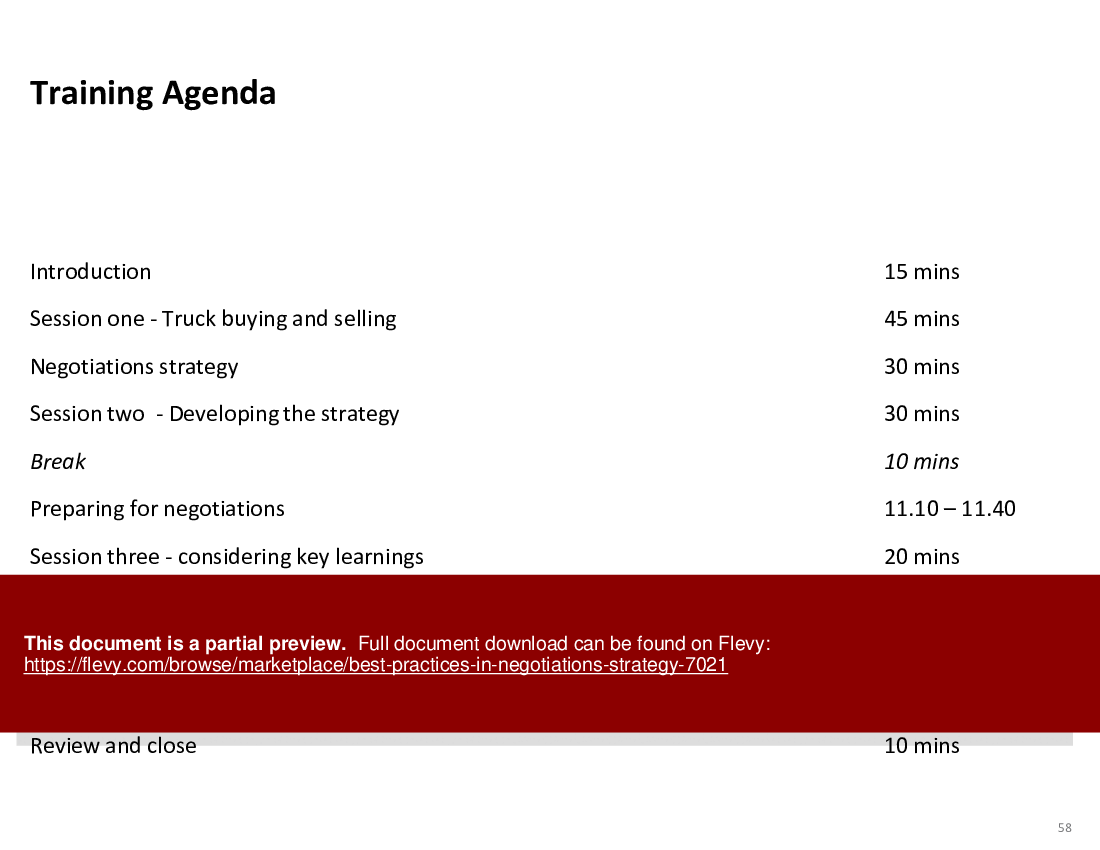
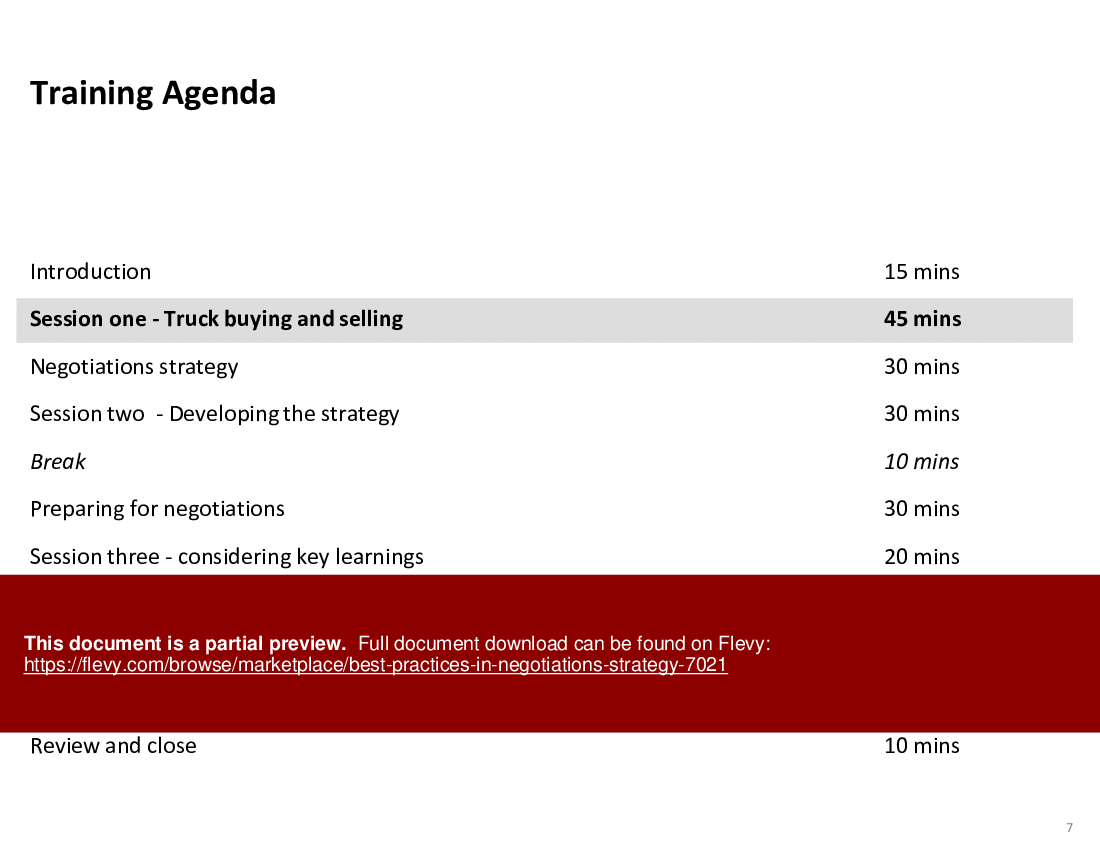
Introduction (15 mins)
• Overview of training objectives and expectations
Session One – Truck Buying/Selling (45 mins)
• Interactive discussion on practical negotiation scenarios
Negotiations Strategy (30 mins)
• Framework for developing negotiation strategies
Break (10 mins)
Preparing for Negotiations (30 mins)
• Techniques for effective preparation and team alignment
Session Three – Considering Key Learnings (20 mins)
• Reflection on key insights from the training
Conducting Negotiations (20 mins)
• Practical exercises on negotiation tactics
Break (10 mins)
Session Four – Negotiations (50 mins)
• Role-playing negotiation scenarios and feedback
Review and Close (10 mins)
• Summary of key takeaways and next steps
Customization Guidance
• Tailor negotiation strategies to specific supplier dynamics and market conditions
• Adjust team roles and responsibilities based on organizational structure
• Incorporate company-specific objectives and priorities into negotiation preparation
• Modify the agenda to fit specific training needs or time constraints
• Utilize internal data and insights to enhance supplier analysis
Secondary Topics Covered
• The role of emotional intelligence in negotiations
• Techniques for managing supplier relationships post-negotiation
• Understanding cultural differences in negotiation contexts
• The impact of market dynamics on negotiation strategies
• Leveraging technology and tools in the negotiation process
Topic FAQ
What are the typical phases of a negotiation process within strategic sourcing?
A negotiation process within strategic sourcing is presented as a sequence of stages: planning, preparation, execution (conducting negotiations), and follow-up (feedback and supplier management). Materials emphasize preparing objectives, team roles, and documentation before execution and following up after negotiations, ending with planning, preparation, execution, and follow-up.
How does supplier analysis influence negotiation strategy development?
Supplier analysis identifies strengths, weaknesses, market position, and proposal quality to shape leverage, concessions, and target outcomes. Practical tools translate analysis into tactics by scoring proposals and highlighting hot, buttons; the product maps supplier insights to negotiation tactics using a proposal evaluation matrix.
What practical templates should a procurement team use to prepare for supplier negotiations?
Key preparatory templates include a negotiation strategy worksheet to set objectives, a negotiation tactics worksheet to capture messages and anticipated responses, a proposal evaluation matrix to score bids, a supplier presentation package template for structured communication, and a negotiation checklist to confirm readiness as provided in Flevy's Best Practices in Negotiations Strategy.
How should I assess the cost-versus-value of buying negotiation training materials?
Evaluate whether materials include reusable templates, a workshop agenda, role-play exercises, supplier analysis tools, and customization guidance. Value comes from immediate applicability to real negotiations and the ability to adapt content; look for deliverables such as templates and a one-day program when assessing cost-effectiveness of Flevy's Best Practices in Negotiations Strategy.
I need to re-align my team's approach before a major supplier retender—what should pre-negotiation planning cover?
Pre-negotiation planning should align team objectives, set BATNA/LAA/MDO thresholds, assign roles, define key messages, and prepare logistics and documentation. Use structured worksheets and a checklist to capture objectives and expected supplier responses, concluding with a completed negotiation strategy worksheet.
How can I train negotiators to manage emotions and cross-cultural differences effectively?
Training should combine theory on emotional intelligence and cultural norms with practical exercises: case studies, role-plays, and debriefs to practice active listening, problem-solving, and managing hot, buttons. The deck recommends simulated negotiation exercises and case-based practice, ending with role-playing exercises.
What is the role of BATNA, LAA, and MDO in setting negotiation targets?
BATNA defines the fallback if talks fail; LAA (Least Acceptable Agreement) sets the minimum terms a team will accept; MDO (Most Desirable Outcome) defines the aspirational target. Clear definitions of BATNA, LAA, and MDO allow teams to plan concessions and tactics, as featured in Flevy's Best Practices in Negotiations Strategy.
How long should I schedule each part of a one-day negotiation workshop for procurement teams?
A one-day workshop typically mixes short presentations, interactive sessions, and role-plays—for example: 15-minute introduction, 45-minute practical scenario, 30-minute strategy development, 30-minute preparation techniques, and a 50-minute role-play session—consistent with the sample agenda and a one-day program.
Document FAQ
These are questions addressed within this presentation.
What are the key objectives of this training?
The training aims to enhance participants' understanding of the negotiation process, develop effective strategies, and practice conducting negotiations to achieve better outcomes.
Who should attend this training?
This training is ideal for procurement professionals, supply chain managers, and strategic sourcing teams involved in supplier negotiations.
What will participants learn?
Participants will learn to define negotiation stages, build strategies, prepare effectively, conduct negotiations, and follow up with suppliers.
How long is the training?
The training is structured as a one-day program, consisting of multiple sessions and breaks.
What materials will participants receive?
Participants will receive worksheets, templates, and a checklist to support their negotiation efforts.
Is there a follow-up after the training?
Yes, the training includes a follow-up feedback process to assess performance and maintain supplier relationships.
Can this training be customized for specific organizations?
Absolutely, the training can be tailored to meet the unique needs and objectives of your organization.
What is the significance of the BATNA in negotiations?
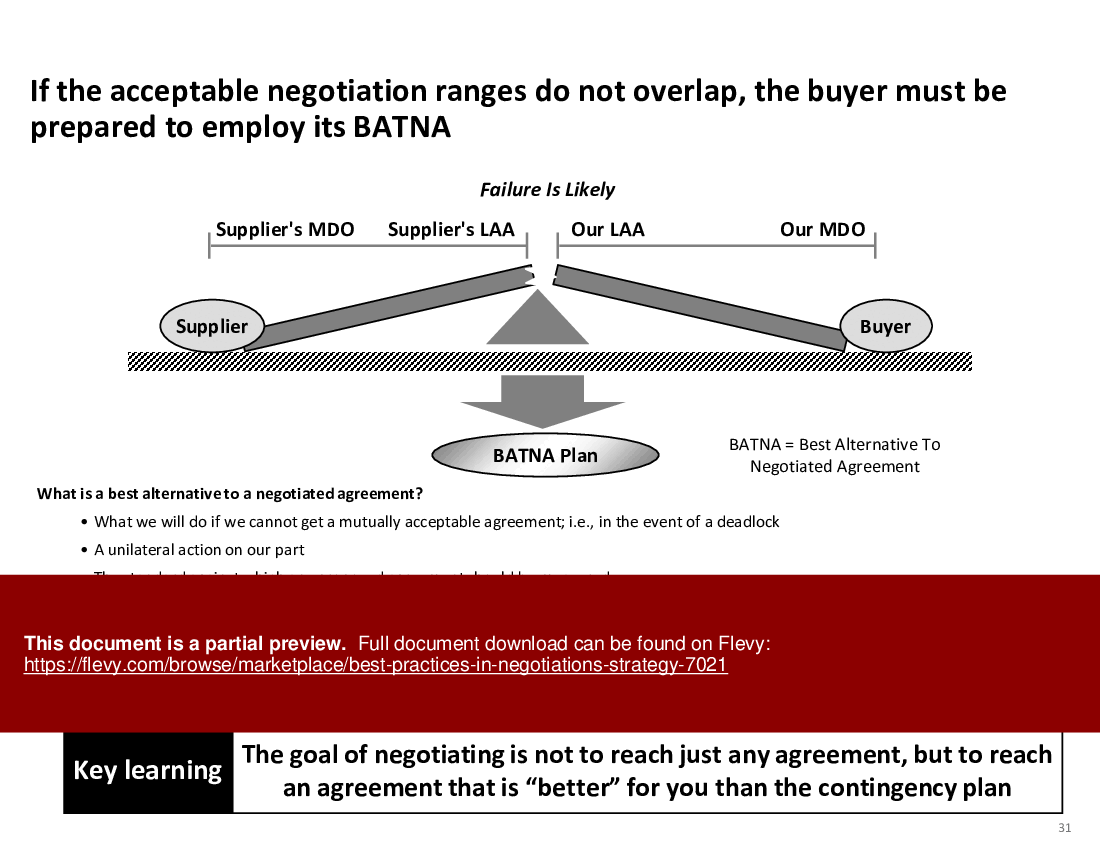
The BATNA (Best Alternative to a Negotiated Agreement) is crucial as it strengthens your position and provides a fallback if negotiations do not yield satisfactory results.
How can participants ensure effective communication during negotiations?
Participants will learn to prepare key messages, anticipate supplier responses, and maintain a consistent communication strategy throughout the negotiation process.
Glossary
• BATNA - Best Alternative to a Negotiated Agreement; the fallback option if negotiations fail.
• LAA - Least Acceptable Agreement; the minimum acceptable terms for a negotiation.
• MDO - Most Desirable Outcome; the ideal terms sought in a negotiation.
• RFP - Request for Proposal; a document soliciting proposals from suppliers.
• SWOT Analysis - A strategic planning tool assessing strengths, weaknesses, opportunities, and threats.
• Five Forces Analysis - A framework for analyzing the competitive forces within an industry.
• Proposal Evaluation Matrix - A tool for assessing supplier proposals based on various criteria.
• Negotiation Tactics - Specific strategies employed during negotiations to achieve desired outcomes.
• Supplier Scorecard - A tool for evaluating supplier performance based on set criteria.
• Follow-Up - The process of engaging with suppliers after negotiations to ensure clarity and maintain relationships.
• Strategic Sourcing - A systematic process of optimizing an organization's supply base to achieve better value.
• Negotiation Strategy - A plan outlining the approach to be taken during negotiations.
• Supplier Analysis - The assessment of potential suppliers to inform negotiation strategies.
• Team Roles - Defined responsibilities for each member of the negotiation team.
• Logistics - The planning and coordination of the negotiation process.
• Hot Buttons - Key issues or concerns that can influence negotiation dynamics.
• Communication Strategy - The approach taken to convey messages during negotiations.
• Problem Solving Cycle - The iterative process of addressing issues during negotiations.
• Active Listening - The practice of fully engaging with and understanding the speaker during discussions.
• Negotiation Checklist - A list of items to ensure all necessary elements are prepared before negotiations.
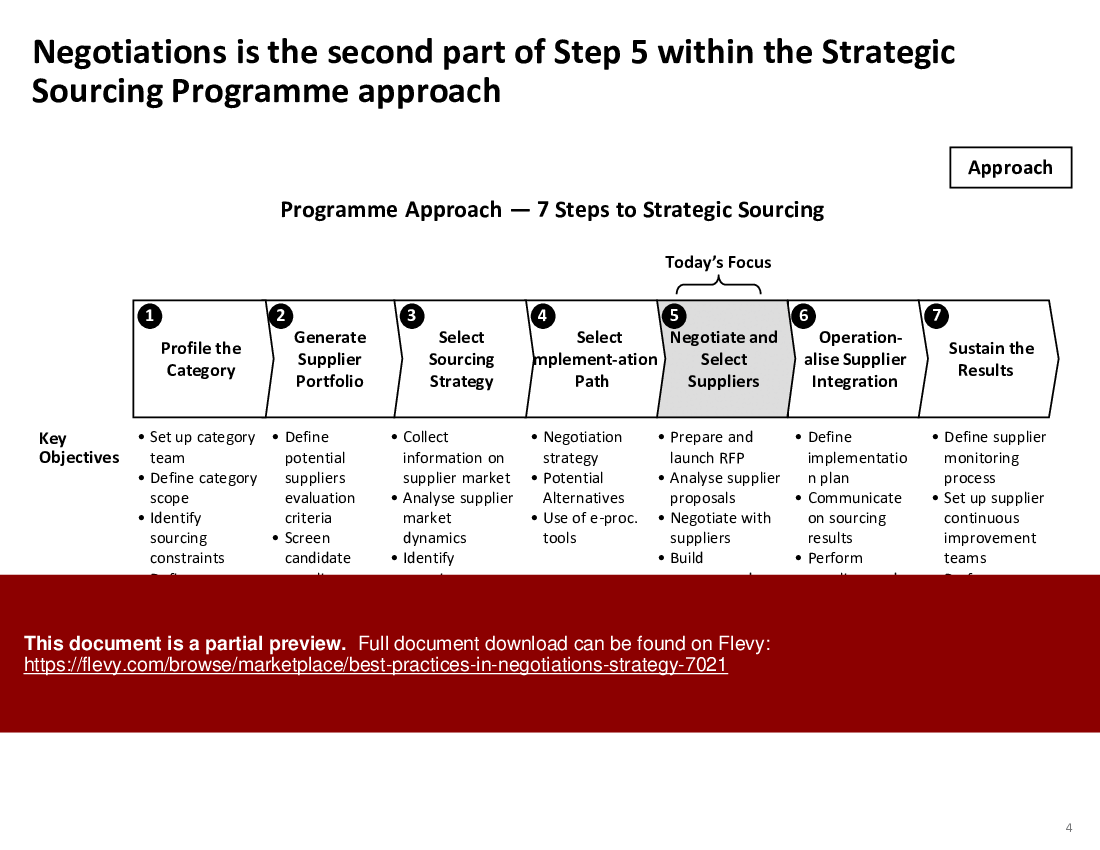
This PPT slide outlines Step 5 of strategic sourcing, focusing on negotiations and supplier selection. Key objectives include preparing and launching a Request for Proposal (RFP) to engage potential suppliers and gather proposals. Analyzing these proposals is essential for evaluating supplier offerings. Negotiating with suppliers encompasses discussions on price, terms, conditions, and value-added services, leading to informed recommendations. Successful negotiations are interconnected with earlier steps, such as category profiling and supplier portfolio generation. Ultimately, supplier selection hinges on negotiation outcomes, impacting supplier relationships and sourcing effectiveness.
This PPT slide outlines effective negotiation strategies based on 5 supplier behaviors: Attack, Escape/Avoid, Inform, Open, and Unite. For "Attack," recommended responses include asking how to improve and focusing on factual issues, while avoiding retaliatory attacks. In "Escape/Avoid" situations, maintaining an open stance and asking suppliers how they wish to address issues is advised, with caution against aggressive tactics. The "Inform" behavior highlights structured communication, emphasizing the value of insights while avoiding unnecessary interruptions. The "Open" category suggests unifying efforts in discussions, but warns against manipulation and premature sharing of sensitive information. Lastly, "Unite" focuses on exploring new options and fostering creativity, encouraging collaboration while avoiding time-wasting discussions.
This PPT slide outlines the relationship between the Least Acceptable Agreement (LAA) and the Best Alternative to a Negotiated Agreement (BATNA) in negotiation strategy. Understanding the LAA is essential after establishing the BATNA. The table presents 3 objectives: Reduced Markup, Improve Customer Service, and Improve Management Information Reporting, each with defined metrics for the LAA and the Most Desirable Outcome (MDO). For Reduced Markup, the LAA is a 25% markup, while the MDO is 15%. The Improve Customer Service objective specifies a LAA of 90% and an MDO of 98%. The Improve Management Information Reporting objective requires monthly reports, with the MDO being weekly reports. The key learning emphasizes that the client should not be in a worse position under the LAA compared to the BATNA, ensuring negotiations protect interests.
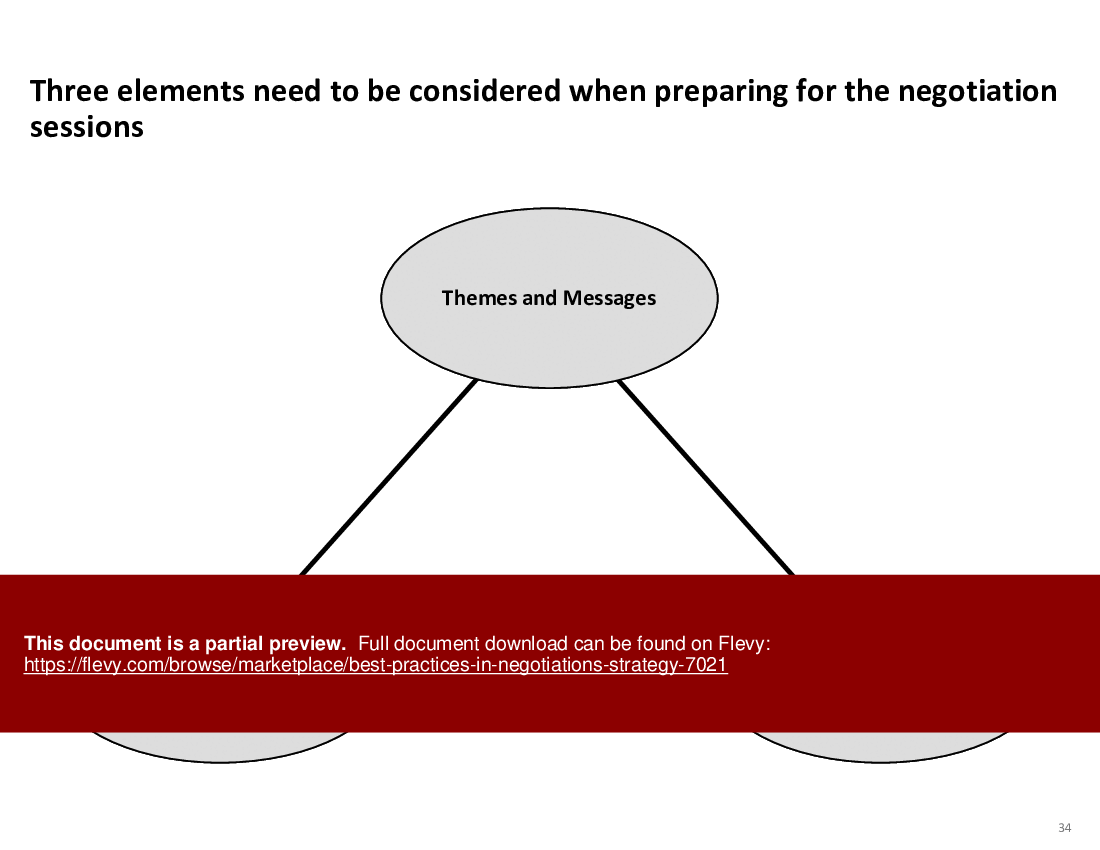
This PPT slide outlines 3 critical elements for negotiation preparation: "Themes and Messages," "Procedures and Logistics," and "Negotiation Team Roles." "Themes and Messages" emphasizes the need for a clear narrative that aligns the negotiation team's objectives with overarching themes. "Procedures and Logistics" highlights the importance of meticulous planning for scheduling, location, and materials to avoid distractions during negotiations. "Negotiation Team Roles" stresses the necessity of defining team member responsibilities to enhance collaboration and efficiency. Together, these elements underscore the interconnectedness of messaging, logistical planning, and team dynamics, essential for achieving successful negotiation outcomes.
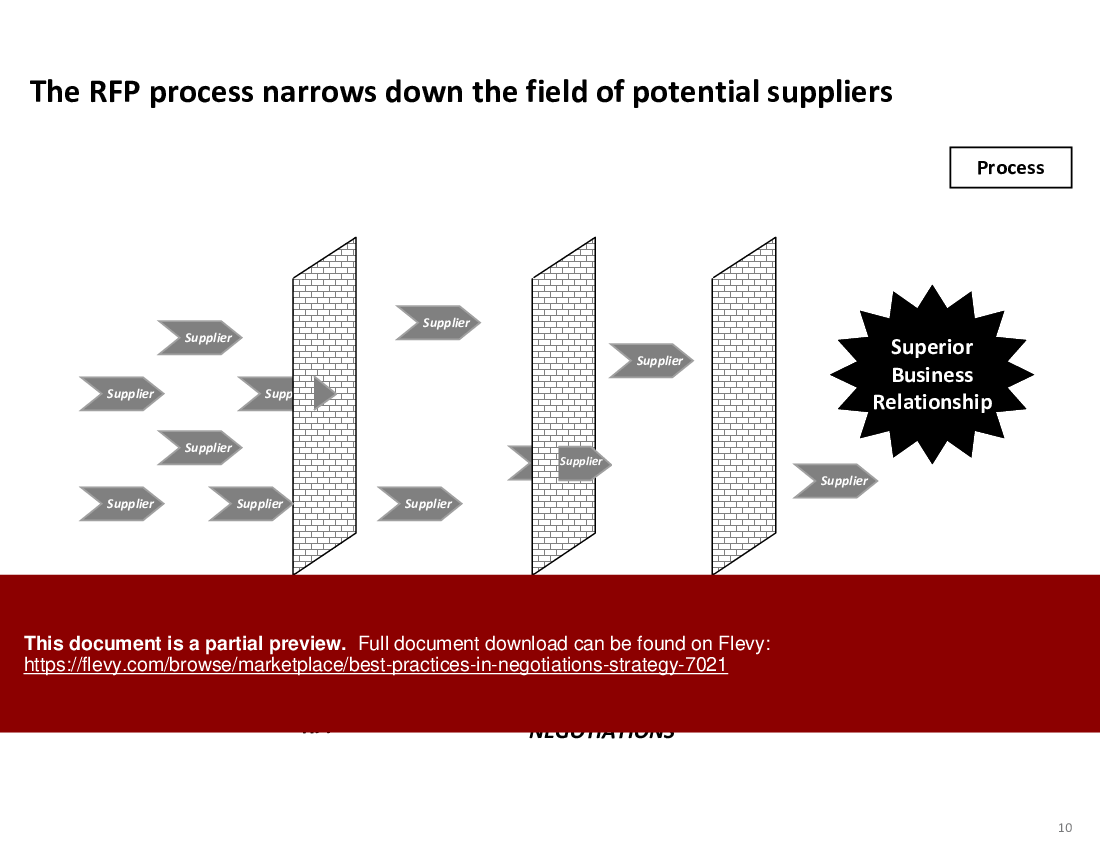
This PPT slide illustrates the Request for Proposal (RFP) process, highlighting its role in supplier selection. It features filters representing critical evaluation stages, starting with "Minimum Requirements," ensuring only qualified suppliers proceed. Subsequent filters assess attributes like pricing and performance/service, allowing organizations to systematically narrow options to cost-effective suppliers capable of meeting service levels. The process culminates in establishing a "Superior Business Relationship," emphasizing that the RFP aims to create partnerships that yield long-term benefits. This approach incorporates trust and collaboration alongside cost and service quality, aligning supplier selection with organizational goals.
This PPT slide outlines a structured approach to SWOT analysis from both client and supplier perspectives, focusing on negotiation strategies. The SWOT framework consists of 4 quadrants: Strengths, Weaknesses, Opportunities, and Threats. "Strengths" identifies internal capabilities like resources and market position, while "Opportunities" highlights external factors such as market trends. "Weaknesses" addresses internal limitations that could hinder negotiations, and "Threats" identifies external challenges like competitive actions. The arrows indicate actionable insights: leveraging strengths and opportunities for strategic alignment, and developing contingency plans to address weaknesses and threats, enhancing negotiation effectiveness.
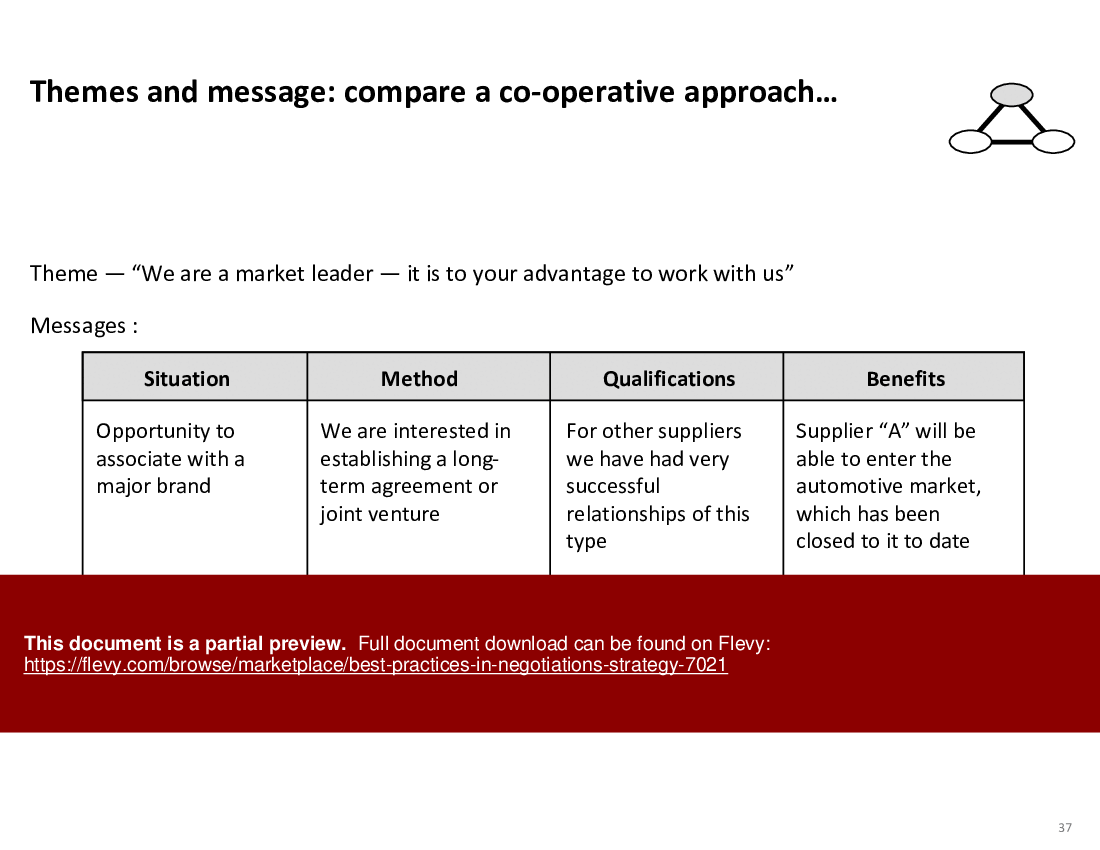
This PPT slide outlines a structured negotiation strategy with a coercive approach focused on price reduction from suppliers. The Situation column indicates the organization values its historical supplier relationship, but seeks improved pricing competitiveness. The Method column highlights a Strategic Sourcing process, emphasizing the selection of best value offers, requiring supplier adaptation. The Qualifications column warns that previous suppliers were disqualified for insufficient pricing despite long-standing relationships. The Benefits column reassures the supplier that lowering prices can lead to increased business volume and positive brand association, illustrating the tension between relationship maintenance and cost efficiency.
This PPT slide outlines a structured negotiation approach divided into 5 phases: Opening, Introduction Presentations, Proposal Exploration, Solution, and Closing.
In the Opening phase, team introductions, meeting objectives, agenda, and ground rules are established. The Introduction Presentations phase includes a standard overview of the client and supplier, highlighting the strategic sourcing program status and the supplier's capabilities.
During Proposal Exploration, the supplier presents their proposal, clarifying open questions and discussing technical and commercial issues. The Solution phase focuses on identifying areas of agreement and problem-solving, while the Closing phase summarizes key points, agreements, and defines next steps with firm due dates. This structured approach facilitates effective negotiations and collaborative outcomes.
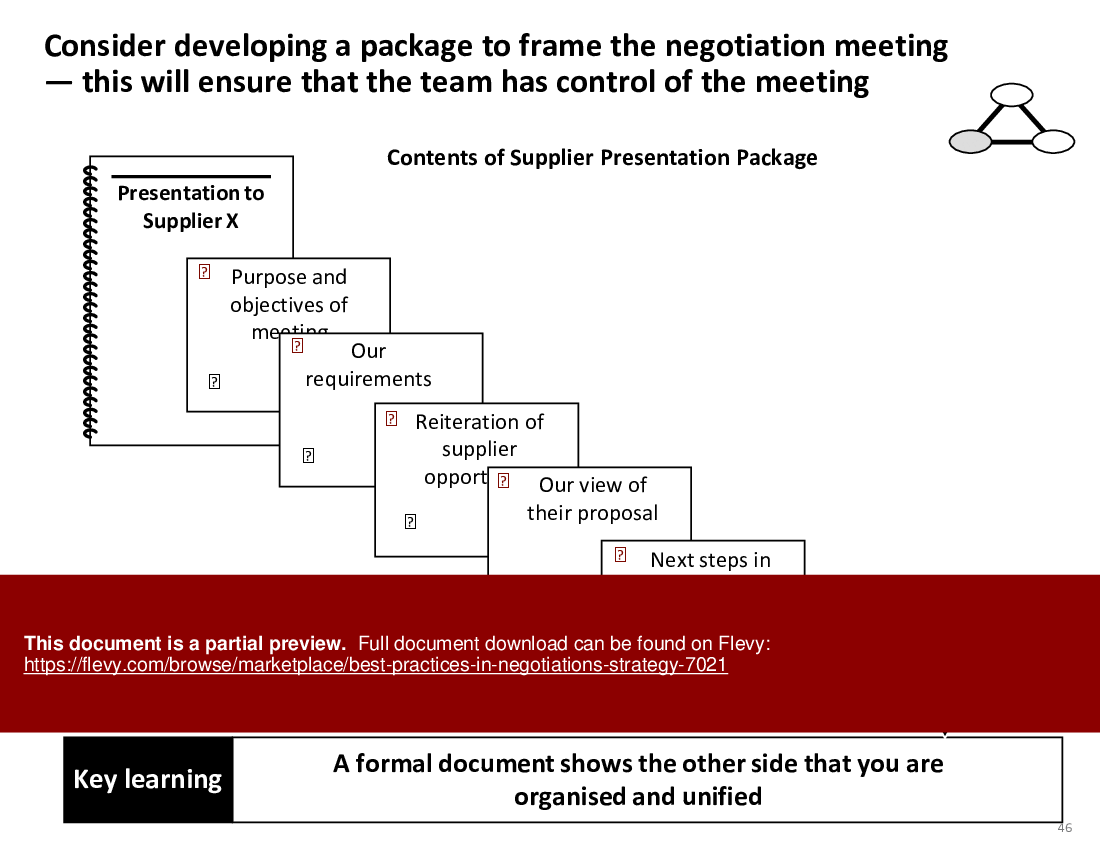
This PPT slide outlines a structured approach for preparing a negotiation presentation package with a supplier. Key elements include: "Purpose and objectives of meeting," which sets expectations; "Our requirements," detailing specific needs from the supplier; "Reiteration of supplier opportunity," reminding the supplier of potential partnership benefits; "Our view of their proposal," allowing for critical assessment of the supplier's offer; and "Next steps in the process," clarifying post-negotiation actions. This organized framework enhances communication clarity and professionalism, influencing negotiation outcomes.
This PPT slide illustrates buyer-supplier negotiation dynamics, focusing on overlapping acceptable negotiation ranges. Key terms include Least Acceptable Agreement (LAA) and Most Desired Outcome (MDO) for both parties. A successful negotiation occurs when the acceptable ranges intersect; the supplier's MDO and LAA align with the buyer's metrics. If the buyer's LAA falls within the supplier's acceptable range, a mutually agreeable outcome can be achieved. The inclusion of a "Contingency Plan" emphasizes the need for fallback strategies in case negotiations are unsuccessful. Understanding both parties' boundaries is critical for facilitating successful outcomes in complex negotiations and enhancing strategic sourcing efforts.
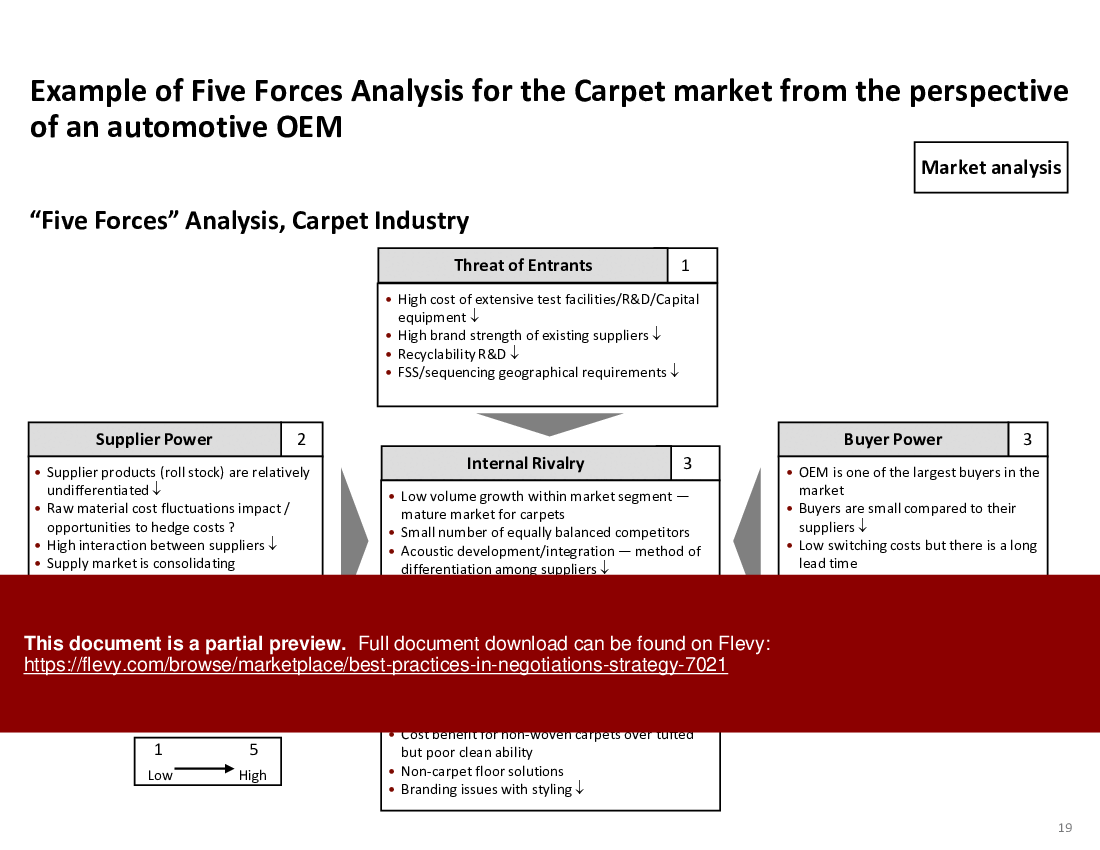
This PPT slide presents a structured framework for evaluating supplier dynamics, focusing on factors influencing supplier objectives. The "Rivalry Determinants" section highlights industry growth, product differences, and switching costs, illustrating how competitive pressures shape supplier strategies. A high concentration of competitors can intensify rivalry, prompting suppliers to innovate or reduce costs. "Entry Barriers," such as economies of scale and proprietary product differences, protect existing suppliers from new entrants, stabilizing their market position. The "Determinants of Supplier Power" identifies supplier concentration and volume importance, indicating how power dynamics shift based on supplier numbers. Finally, "Determinants of Buyer Power" and "Determinants of Substitution Threat" explore how buyer concentration and substitute availability impact supplier negotiations, providing a comprehensive view of market dynamics that suppliers must navigate.
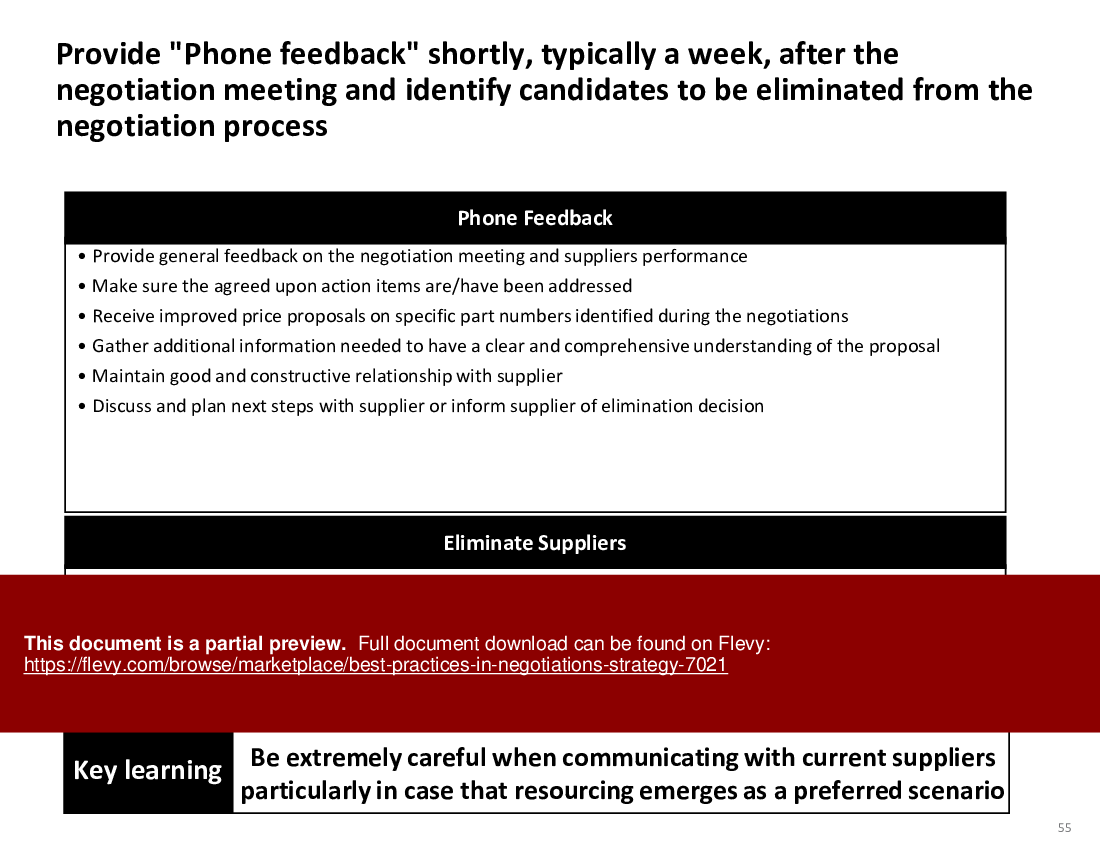
This PPT slide outlines a structured approach to supplier negotiations, focusing on the "Conducting the negotiation" phase as a pivotal point. Key post-negotiation actions include communicating areas for improvement and logistics for future negotiations, ensuring suppliers understand expectations. Revisiting strategy and tactics worksheets enhances negotiation effectiveness. Documentation of decisions and issues during negotiations is vital for updating databases, serving as a reference for future engagements. Stakeholder advisement and obtaining necessary approvals ensure alignment. A decision point indicates whether to advance the supplier; if not, a thank-you letter maintains relationships. This framework aids executives in refining negotiation processes and improving supplier relationships.
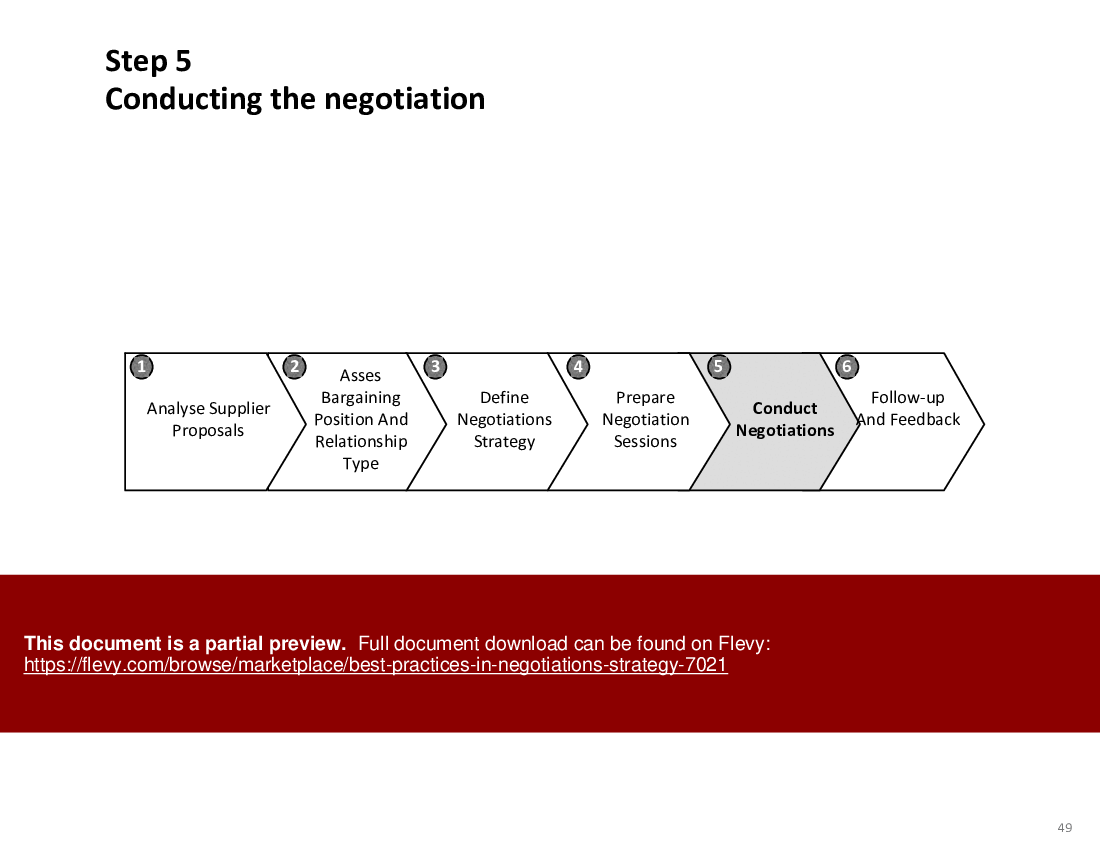
This PPT slide outlines the structured process of negotiations management, highlighting distinct stages: Preparation and Execution. The Preparation phase includes analyzing supplier proposals, assessing bargaining positions, and defining negotiation strategies. Effective strategic planning sets the direction for negotiations. The Execution phase involves conducting negotiations, requiring effective communication and cultural awareness. The process concludes with follow-up and feedback, essential for evaluating outcomes and refining future strategies. This structured approach emphasizes the importance of flexibility and adaptability in achieving successful negotiation outcomes, making it a comprehensive guide for organizations seeking to enhance their negotiation practices.
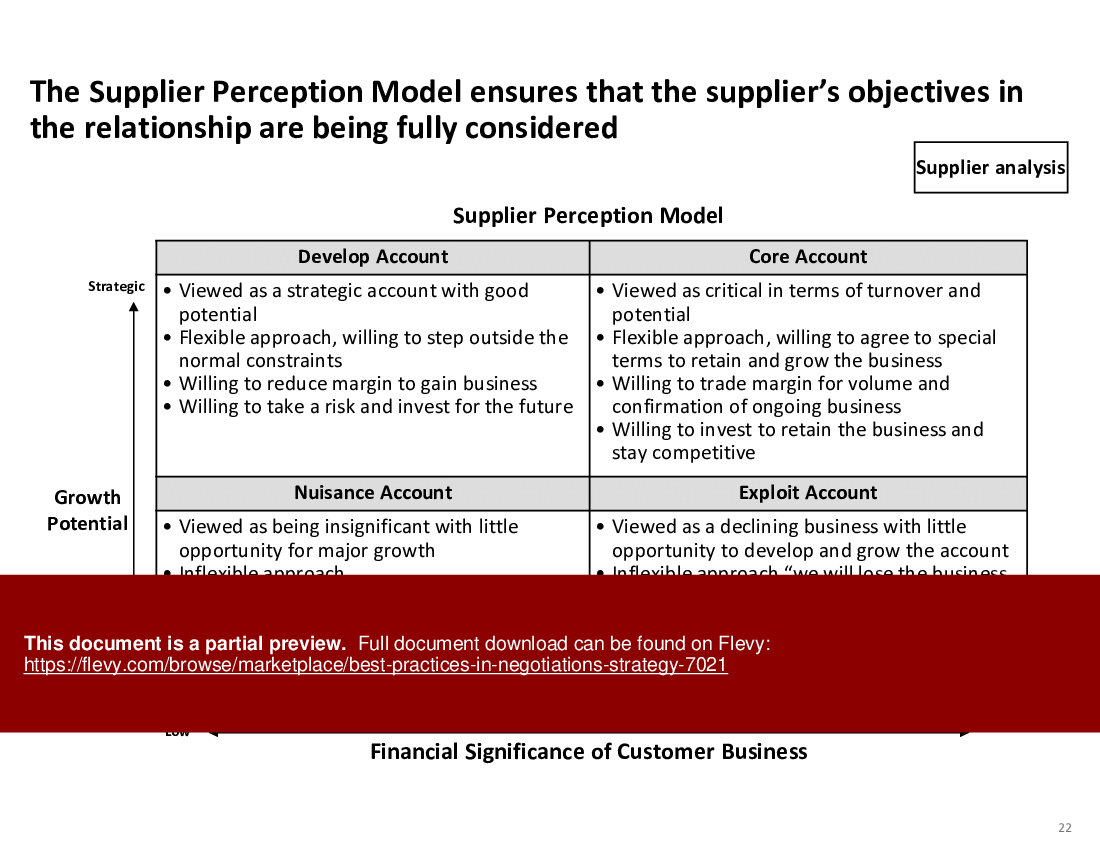
The Supplier Perception Model categorizes supplier relationships based on strategic importance and growth potential, structured in a matrix with 2 axes: strategic significance and growth potential. It includes 4 quadrants: Develop Account, Core Account, Nuisance Account, and Exploit Account.
Develop Accounts are strategic with good growth potential, requiring a flexible approach and willingness to invest, even at the cost of margins. Core Accounts are critical for turnover, emphasizing flexible terms to retain and grow these relationships. Nuisance Accounts are insignificant with limited growth, leading to minimized costs and poor service, with companies considering dropping them. Exploit Accounts are declining, focusing on maximizing profit margins with little incentive for investment.
This model provides a framework for managing supplier relationships based on perceived value and growth potential.
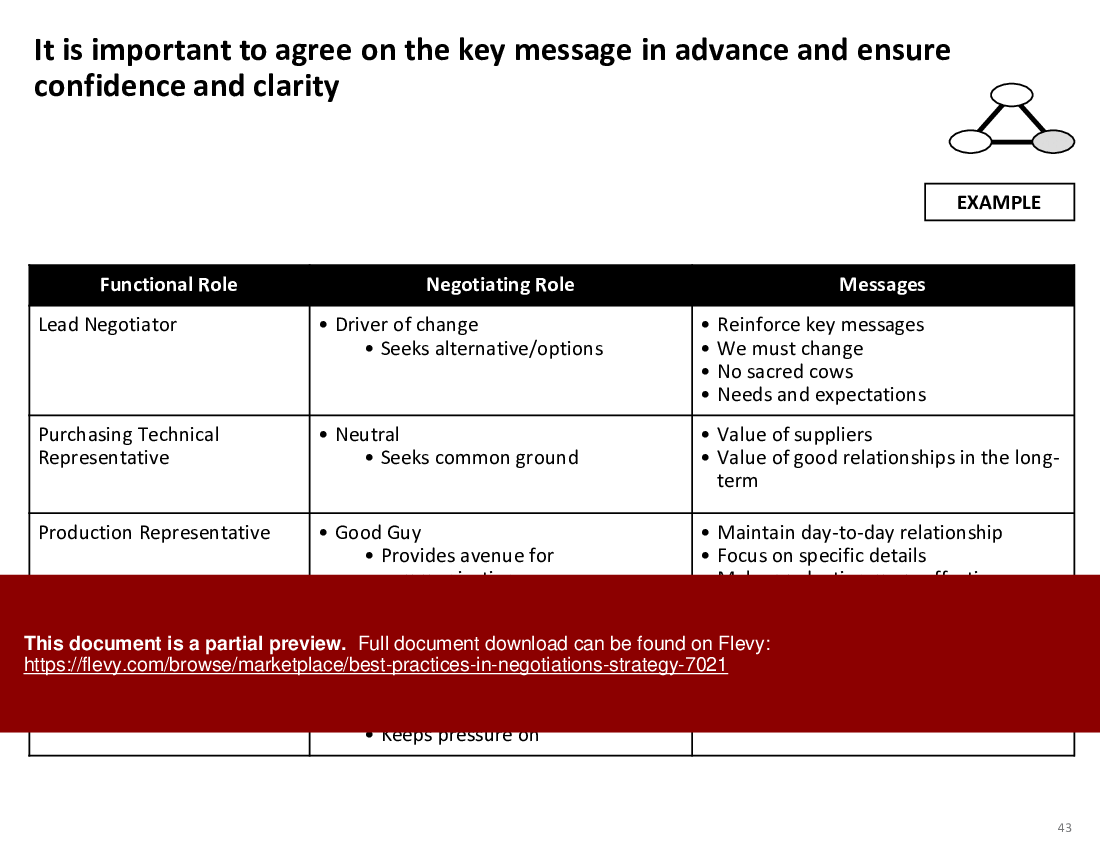
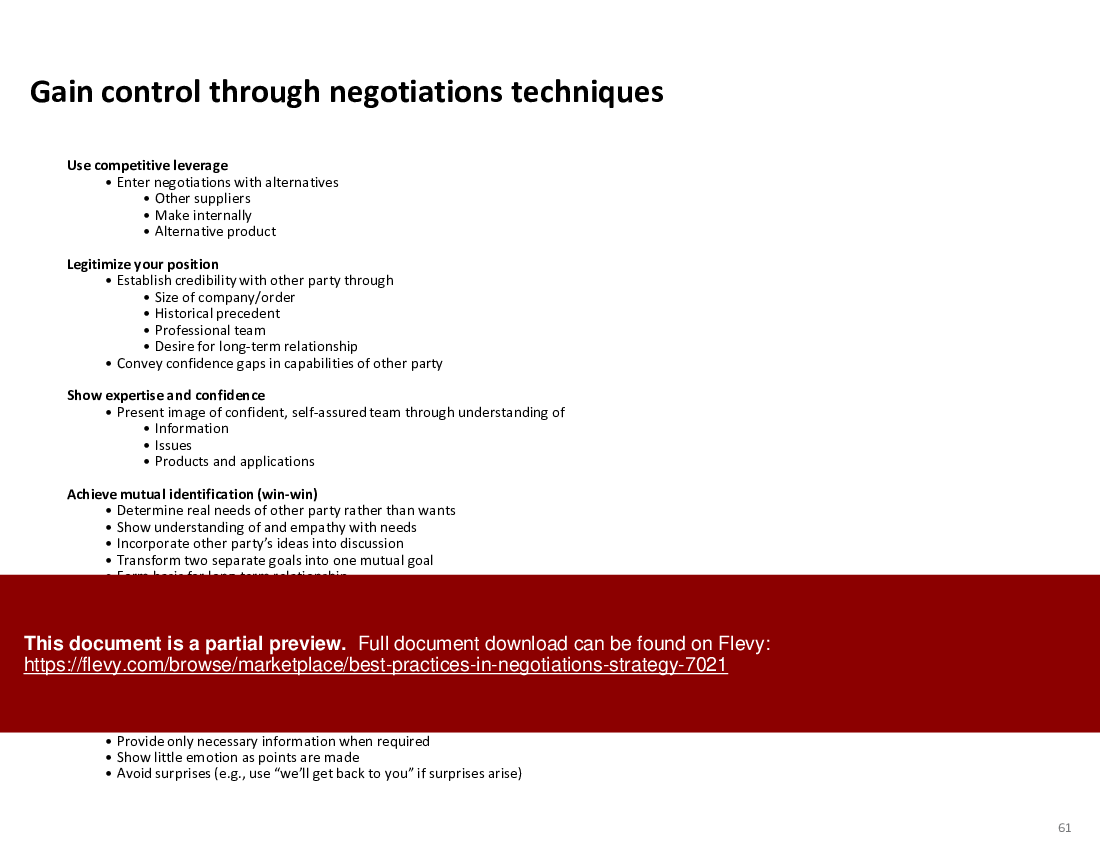
This PPT slide outlines the interplay between rational and emotional elements in negotiations. Rational components include objectives, bargaining positions, and suppliers' needs, which establish a foundation for negotiation. Emotional elements, such as "Hot Buttons" and "Tactics," influence decision-making and guide negotiation strategies. The central theme connects these aspects, crafting messages that resonate with both parties and addressing underlying emotional drivers. Additionally, a framework for messages is presented, detailing key components: Situation, Method, Qualifications, and Benefits. By leveraging both rational and emotional elements, negotiators can enhance interactions and achieve more favorable outcomes.
Source: Best Practices in Negotiations PowerPoint Slides: Best Practices in Negotiations Strategy PowerPoint (PPTX) Presentation Slide Deck, Affinity Consulting Partners
The Affinity Consulting Partnership is a global powerhouse of experienced consultants, specializing in technology and digital-driven change.
Our team is comprised of individuals across the globe who have extensive expertise and a proven track record in guiding large corporations across the globe through complex business transformations. Our partners were all at some stage senior consulting
... [read more] professionals at tier 1 global consulting firms over half our staff have been equity partners in the past at these firms.
With a combined experience of over 120 years, our partners bring a wealth of knowledge and insights to the table. Each member of our team has a distinguished background, having served as a top-level executive and trusted advisor to the C-suite of major corporations. Our partners have honed their skills and expertise through years of hands-on experience, leading successful consulting engagements across a wide range of industries, including finance, healthcare, retail, manufacturing, and more.
Our partners have a keen eye for identifying emerging trends and disruptions in the business landscape and are adept at developing innovative strategies to help our clients stay ahead of the curve.

As a team, we are dedicated to driving meaningful results for our clients, helping them navigate the complexities of technology and digital-driven change, and unlocking new opportunities for growth and success. Our partners are trusted advisors and thought leaders in the industry, and we are committed to providing exceptional service and creating lasting partnerships with our clients.

The average daily rate of a McKinsey consultant is $6,625 (not including expenses). The average price of a Flevy document is $65.
Trusted by over 10,000+ Client Organizations
Since 2012, we have provided business templates to over 10,000 businesses and organizations of all sizes, from startups and small businesses to the Fortune 100, in over 130 countries.
"I have used Flevy services for a number of years and have never, ever been disappointed. As a matter of fact, David and his team continue, time after time, to impress me with their willingness to assist and in the real sense of the word. I have concluded in fact
that it is not at all just a repository of documents/resources but, in the way that David and his team manage the firm, it is like dealing with consultants always ready to assist, advise and direct you to what you really need, and they always get it right.
I am an international hospitality accomplished senior executive who has worked and lived during the past 35 years in 23 countries in 5 continents and I can humbly say that I know what customer service is, trust me.
Aside from the great and professional service that Flevy's team provide, their wide variety of material is of utmost great quality, professionally put together and most current.
Well done Flevy, keep up the great work and I look forward to continue working with you in the future and to recommend you to a variety of colleagues around the world.
"
– Roberto Pelliccia, Senior Executive in International Hospitality
"I have used FlevyPro for several business applications. It is a great complement to working with expensive consultants. The quality and effectiveness of the tools are of the highest standards."
– Moritz Bernhoerster, Global Sourcing Director at Fortune 500
"As a consulting firm, we had been creating subject matter training materials for our people and found the excellent materials on Flevy, which saved us 100's of hours of re-creating what already exists on the Flevy materials we purchased."
– Michael Evans, Managing Director at Newport LLC
"I have found Flevy to be an amazing resource and library of useful presentations for lean sigma, change management and so many other topics. This has reduced the time I need to spend on preparing for my performance consultation. The library is easily accessible and updates are regularly provided. A wealth of great information."
– Cynthia Howard RN, PhD, Executive Coach at Ei Leadership
"Flevy is our 'go to' resource for management material, at an affordable cost. The Flevy library is comprehensive and the content deep, and typically provides a great foundation for us to further develop and tailor our own service offer."
– Chris McCann, Founder at Resilient.World
"[Flevy] produces some great work that has been/continues to be of immense help not only to myself, but as I seek to provide professional services to my clients, it gives me a large "tool box" of resources that are critical to provide them with the quality of service and outcomes they are expecting."
– Royston Knowles, Executive with 50+ Years of Board Level Experience
"FlevyPro has been a brilliant resource for me, as an independent growth consultant, to access a vast knowledge bank of presentations to support my work with clients. In terms of RoI, the value I received from the very first presentation I downloaded paid for my subscription many times over! The
quality of the decks available allows me to punch way above my weight – it's like having the resources of a Big 4 consultancy at your fingertips at a microscopic fraction of the overhead.
"
– Roderick Cameron, Founding Partner at SGFE Ltd
"As a young consulting firm, requests for input from clients vary and it's sometimes impossible to provide expert solutions across a broad spectrum of requirements. That was before I discovered Flevy.com.
Through subscription to this invaluable site of a plethora of topics that are key and crucial to consulting, I
have been able to exceed expectations and deliver quality advice and solutions to my clients. The quality and expertise of the authors are exemplary and gives me great confidence to use as part of my service offerings.
I highly recommend this company for any consultant wanting to apply international best practice standards in their service offerings.
"
– Nishi Singh, Strategist and MD at NSP Consultants
Download our free compilation of 50+ slides and templates on Organizational Design, Change Management, and Corporate Culture. Methodologies include ADKAR, Burke-Litwin Change Model, McKinsey 7-S, Competing Values Framework, etc.