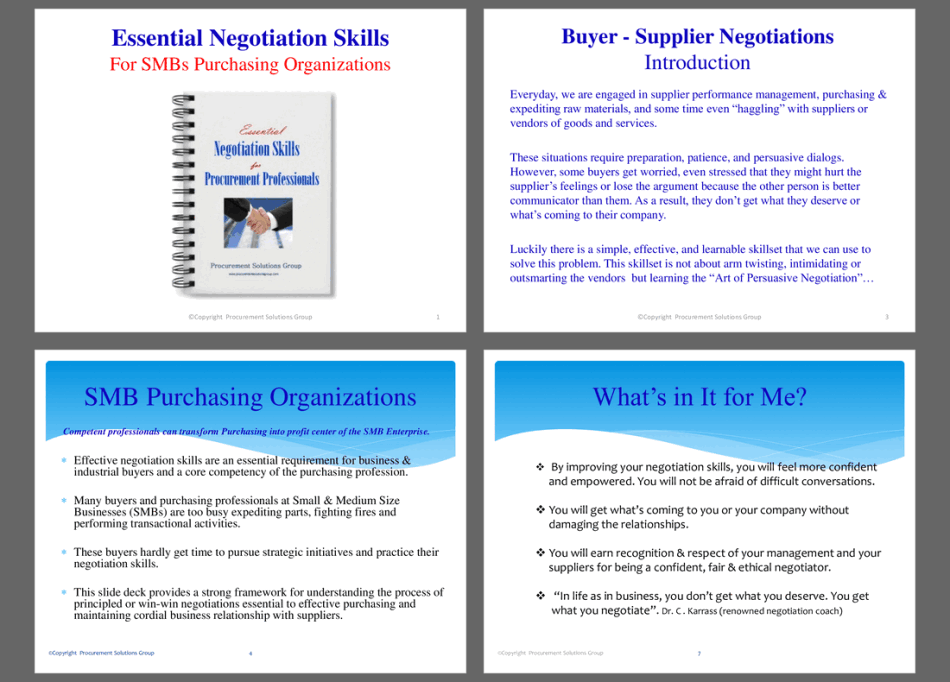
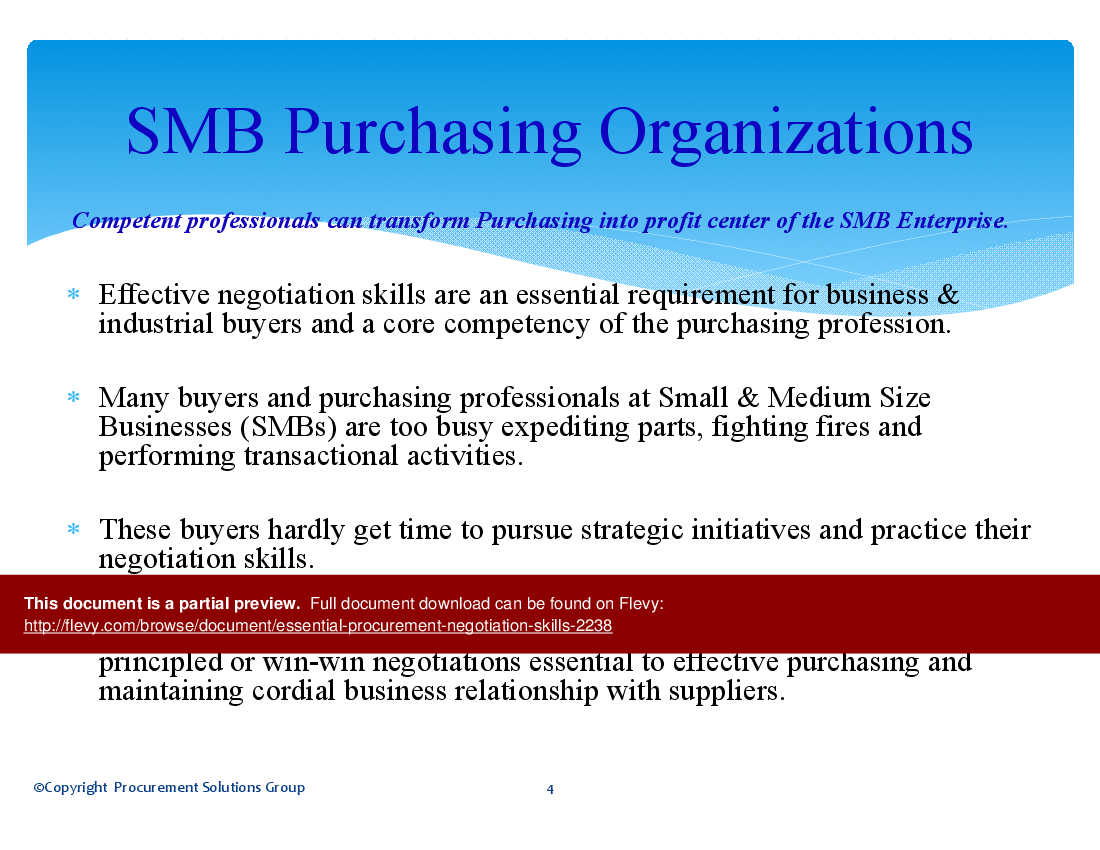
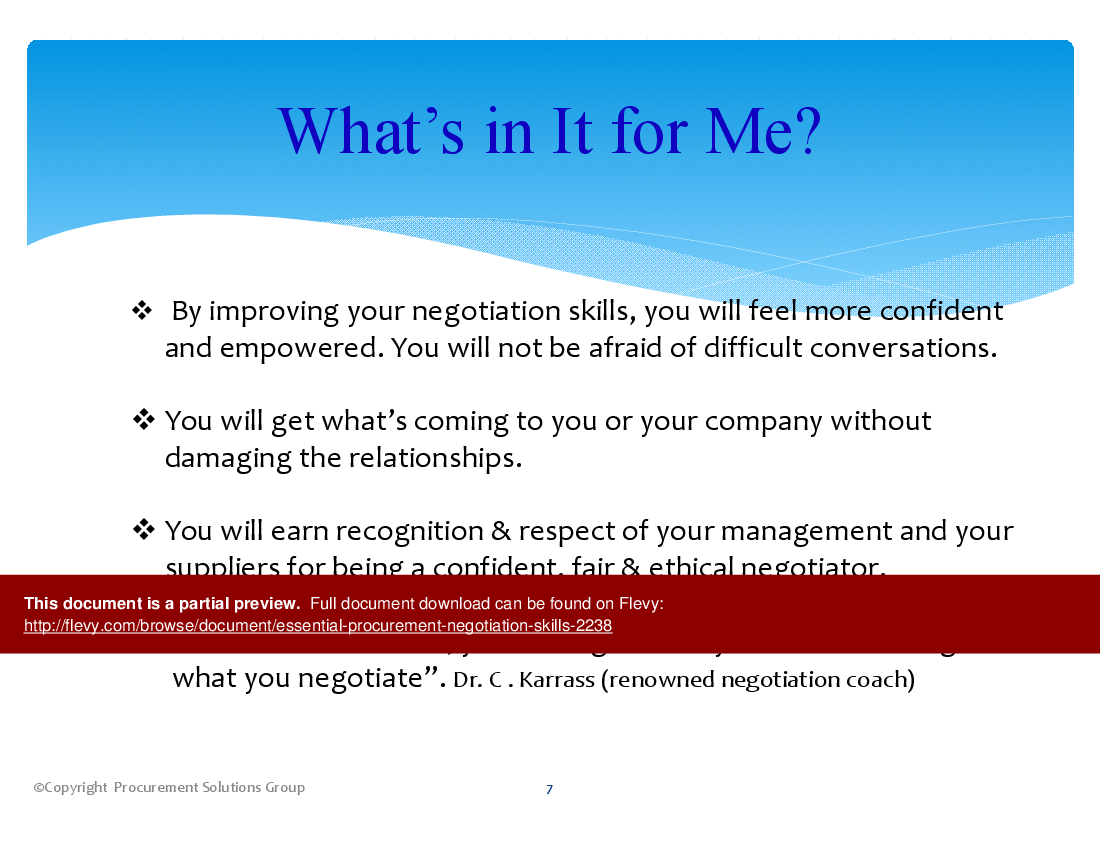
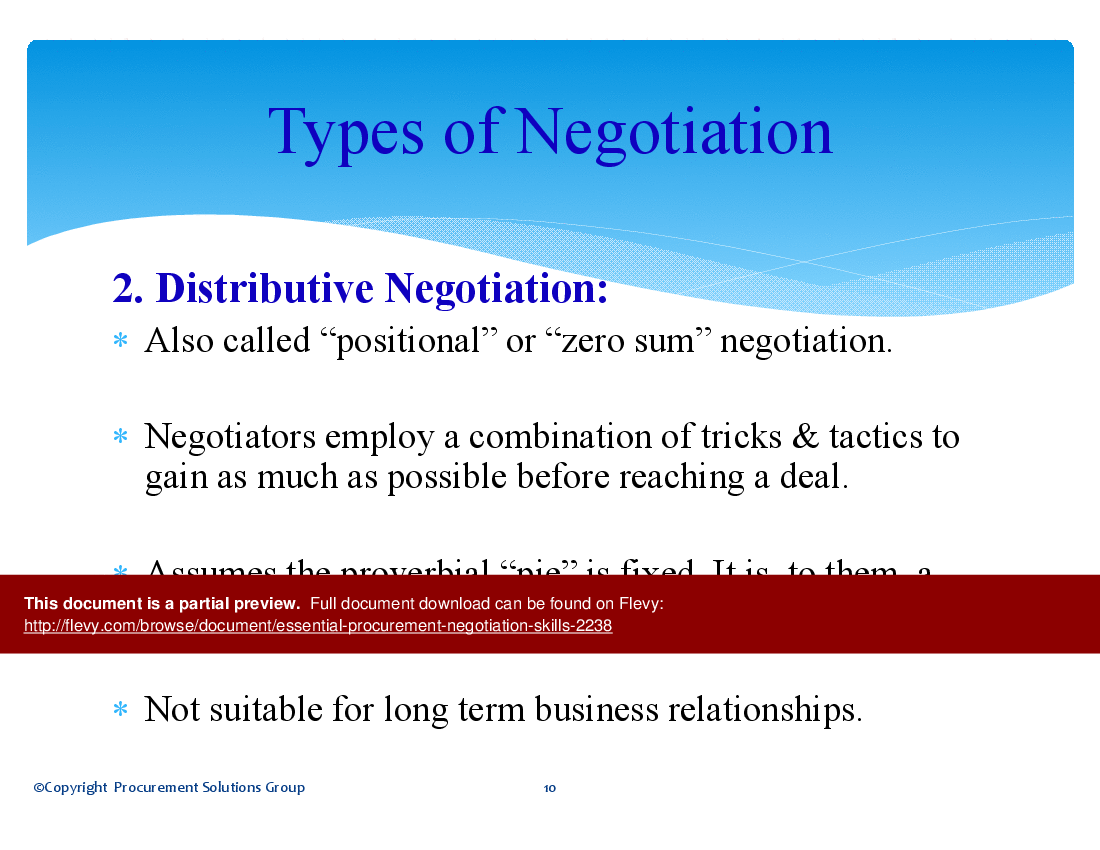

Small & medium size businesses and manufacturing companies deal with scores of external suppliers of goods & services. These dealings require some level of negotiations with goods & services suppliers, major OEM corporations, and software solution providers. While business negotiation skill is a core competency for the purchasing professionals, an SMB often does not have the same level of expertise available to them as most major suppliers, OEMs, and software solution vendors have within their organizations. Inexperienced negotiators can quickly become outmaneuvered by the more experienced negotiators from the suppliers' side, unless they are equally skillful in the art of negotiations.
The material presented here will improve your ability to explore and influence positions and alternatives to reach mutually beneficial outcomes that will gain acceptance by the other party and will also meet your organization's strategic objectives. You will learn how to respond to suppliers' price increase demands and how to negotiate from position of weakness when faced with "sole source" suppliers. You will learn how to explore and reach agreements with suppliers that will meet their needs, as well as help them understand your interests and satisfy your organizational goals. You will discover that you are far more likely to find agreeable suppliers for joint decision making, innovation, and competitive advantage if you can offer something that is important to them.
You will learn that the goal of business negotiations is not to beat the other guy senseless, rob them tactfully, or wring the last dime out of their profits. Business negotiations should be conducted, rather, in a win-win spirit aimed at benefiting both parties, while nurturing lasting business relationships. In other words, you will learn what is called "principled negotiations," a hallmark of savvy and sophisticated business professionals.
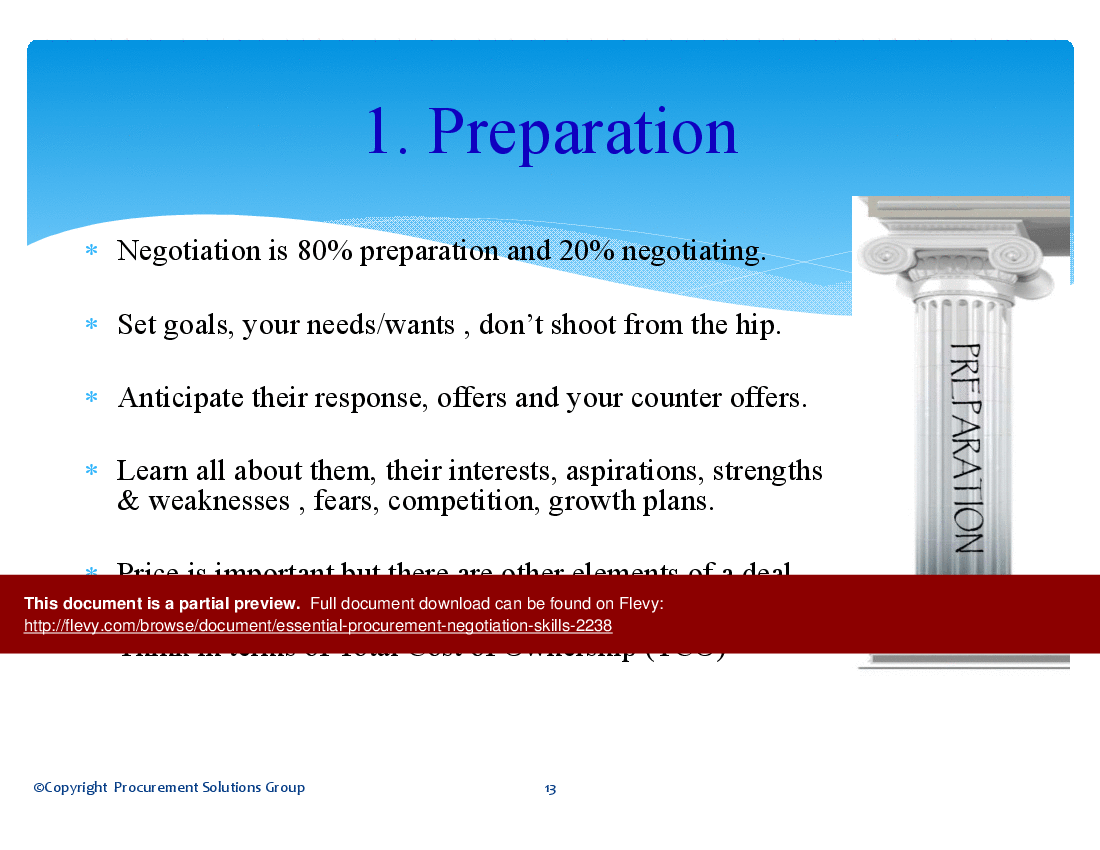
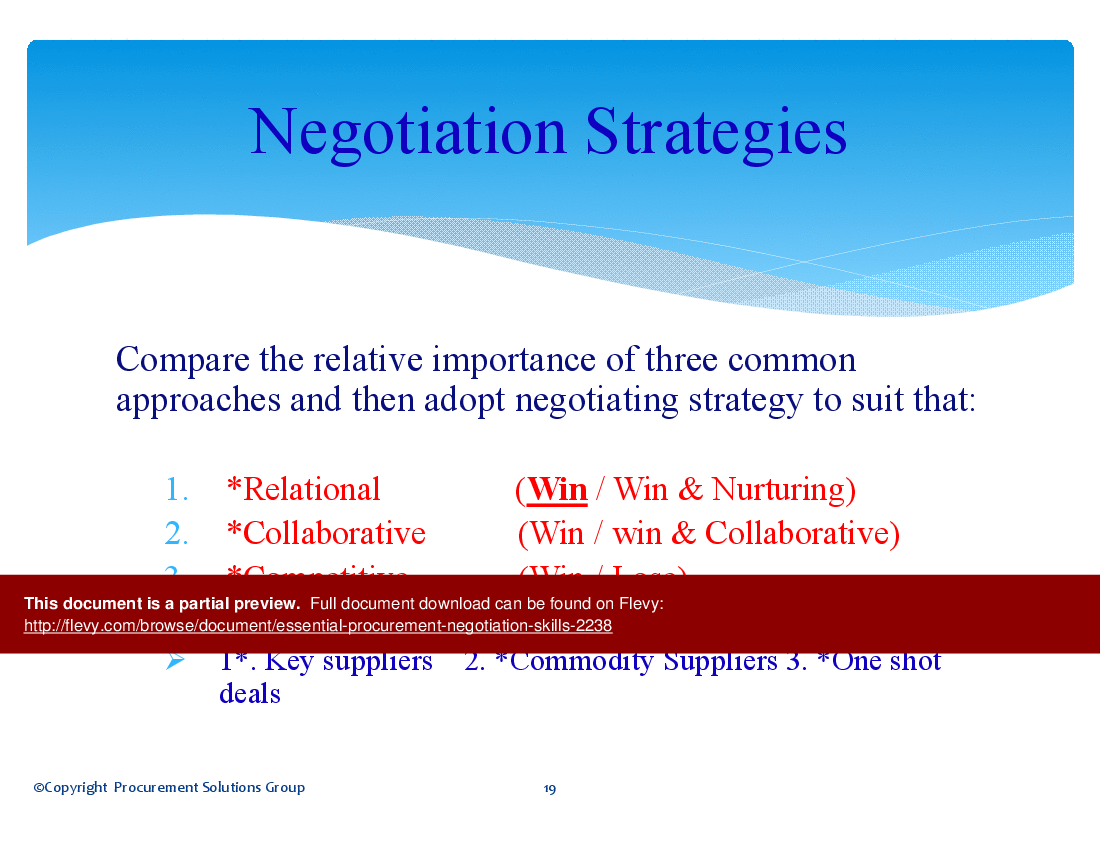
The PPT emphasizes the importance of preparation, highlighting that negotiation is 80% preparation and 20% negotiating. It also covers various types of negotiation strategies, including distributive and collaborative approaches, to suit different scenarios.
Got a question about the product? Email us at support@flevy.com or ask the author directly by using the "Ask the Author a Question" form. If you cannot view the preview above this document description, go here to view the large preview instead.
Executive Summary
This presentation titled "Essential Negotiation Skills for SMBs Purchasing Organizations" equips buyers and procurement professionals with the necessary skills to enhance their negotiation capabilities. It emphasizes the importance of preparation, patience, persistence, and perspective in achieving favorable outcomes. By mastering these skills, professionals can transform purchasing activities into strategic advantages, ensuring mutually beneficial agreements with suppliers while maintaining strong business relationships.
Who This Is For and When to Use
• Buyers and procurement professionals in Small and Medium-Sized Businesses (SMBs)
• Supply chain managers looking to improve supplier interactions
• Purchasing teams engaged in contract negotiations
• Executives seeking to enhance negotiation strategies within their organizations
Best-fit moments to use this deck:
• During training sessions for new procurement staff
• When preparing for significant supplier negotiations
• As a refresher for experienced negotiators before critical discussions
• In workshops aimed at improving team negotiation skills
Learning Objectives
• Define key negotiation concepts and their relevance in procurement
• Build effective negotiation strategies that promote win-win outcomes
• Establish a framework for preparing for negotiations, including understanding BATNA and ZOPA
• Improve communication skills to express interests and concerns effectively
• Identify and apply negotiation tactics that foster positive supplier relationships
• Develop techniques to manage emotions and maintain composure during negotiations
Table of Contents
• Introduction to Negotiation (page 3)
• Types of Negotiation (page 9)
• Principles of Negotiation (page 11)
• Four Pillars of Negotiation (page 12)
• Negotiation Process (page 17)
• Important Terms & Concepts (page 20)
• Concessions Trade-Off Strategy (page 32)
• Negotiation Check List (page 35)
• Roleplaying Negotiation Scenarios (page 36)
• Final Thoughts (page 54)
Primary Topics Covered
• Types of Negotiation - Differentiates between integrative and distributive negotiation styles, emphasizing the importance of collaborative approaches for long-term relationships.
• Principled Negotiation - Focuses on interests rather than positions, advocating for solutions that benefit both parties.
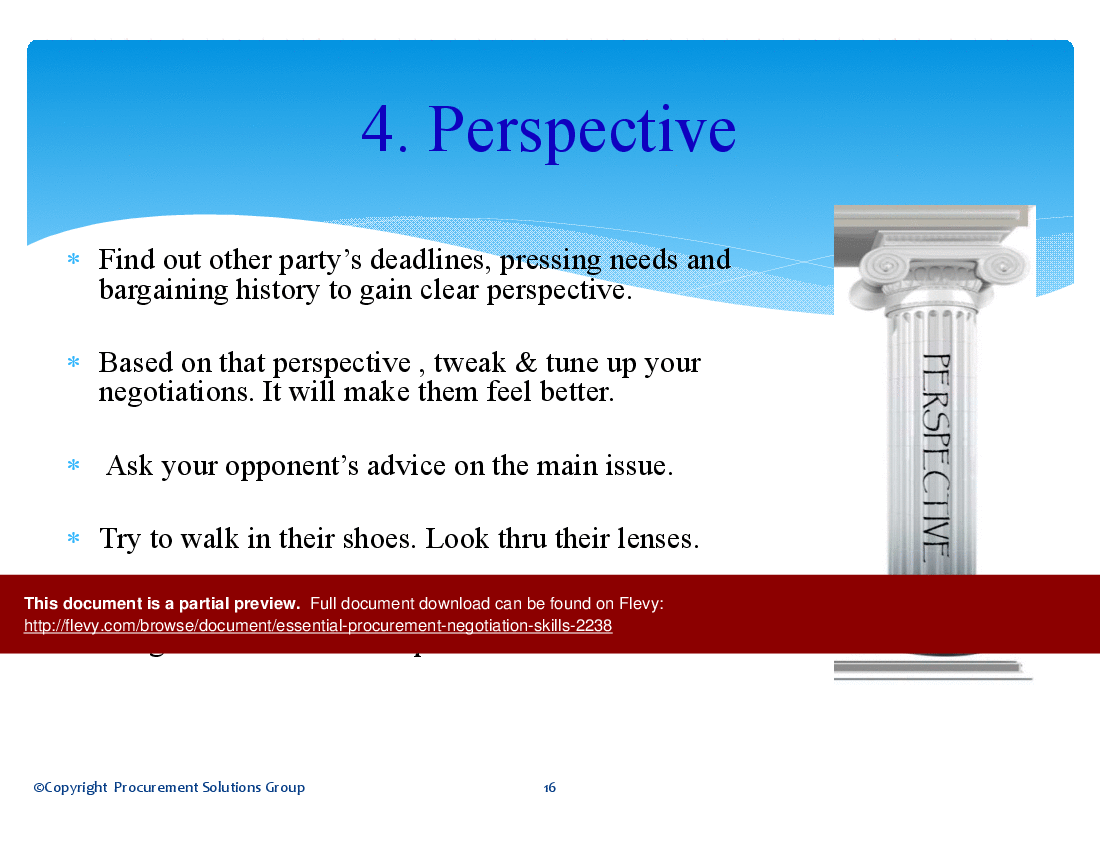
• Four Pillars of Negotiation - Highlights preparation, patience, persistence, and perspective as essential components for successful negotiations.
• Negotiation Process - Outlines the stages of negotiation, from preparation to closing, ensuring a structured approach.
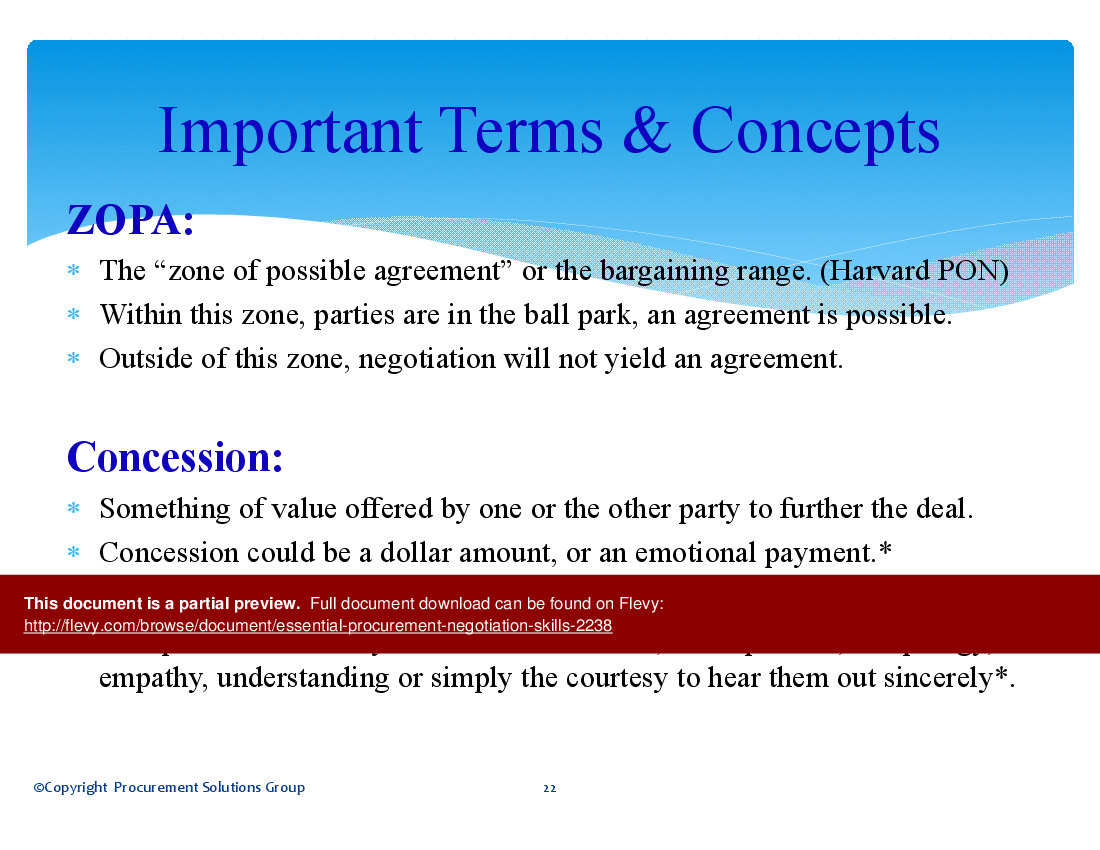
• Important Terms & Concepts - Introduces key negotiation terminology such as BATNA (Best Alternative to a Negotiated Agreement) and ZOPA (Zone of Possible Agreement).
• Concessions Trade-Off Strategy - Discusses how to create mutually beneficial options and manage concessions effectively.
Deliverables, Templates, and Tools
• Negotiation preparation checklist template
• Concessions trade-off strategy worksheet
• Role-playing scenarios for practice negotiations
• BATNA and ZOPA assessment tools
• Templates for documenting negotiation outcomes
• Guidelines for effective communication during negotiations
Slide Highlights
• Overview of the Four Pillars of Negotiation, visually representing the foundational skills necessary for success.
• Detailed explanation of the negotiation process, illustrating each phase from preparation to closing.
• Examples of effective concession strategies that promote mutual benefits.
• Role-playing scenarios designed to simulate real-world negotiation challenges.
• Key terms and concepts presented in a clear, accessible format for easy reference.
Potential Workshop Agenda
Introduction to Negotiation (30 minutes)
• Overview of negotiation principles and importance
• Discussion of common negotiation challenges
Negotiation Skills Development (60 minutes)
• Interactive exercises on the Four Pillars of Negotiation
• Role-playing scenarios to practice negotiation techniques
Concessions and Strategies (45 minutes)
• Workshop on developing concession strategies
• Group discussions on real-life negotiation experiences
Wrap-Up and Q&A Session (30 minutes)
• Summary of key takeaways
• Open floor for questions and discussion
Customization Guidance
• Tailor the negotiation scenarios to reflect industry-specific challenges and supplier relationships.
• Adjust the terminology and examples to align with organizational culture and practices.
• Incorporate company-specific policies and procedures into the negotiation preparation checklist.
Secondary Topics Covered
• Emotional intelligence in negotiations
• The impact of cultural differences on negotiation styles
• Techniques for managing difficult conversations
• The role of ethics in negotiation practices
• Strategies for long-term supplier relationship management
Topic FAQ
Document FAQ
These are questions addressed within this presentation.
What are the key skills needed for effective negotiation?
Effective negotiation requires preparation, patience, persistence, and the ability to see the situation from the other party's perspective.
How can I improve my BATNA?
Improving your BATNA involves researching alternatives and understanding the market dynamics of what you are negotiating.
What is ZOPA and why is it important?
ZOPA, or Zone of Possible Agreement, is the range in which an agreement is possible. Understanding ZOPA helps negotiators identify acceptable outcomes for both parties.
How do I handle emotions during negotiations?
Managing emotions involves being aware of both your feelings and those of the other party. Techniques include active listening and maintaining a composed demeanor.
What should I do if a supplier uses high-pressure tactics?
Remain calm and assertive. Recognize the tactic, and do not succumb to pressure. Focus on your objectives and the negotiation process.
Is it advisable to make the first offer?
It depends on the situation. If you have strong information to support your position, making the first offer can set the anchor for the negotiation.
How can I ensure a win-win outcome?
Focus on interests rather than positions, explore creative solutions, and be willing to make concessions that are valuable to both parties.
What role does preparation play in negotiation?
Preparation is crucial; it allows you to set clear goals, anticipate responses, and develop strategies that align with your objectives.
Glossary
• BATNA - Best Alternative to a Negotiated Agreement; the best option available if negotiations fail.
• ZOPA - Zone of Possible Agreement; the range within which an agreement can be reached.
• Total Cost of Ownership (TCO) - The comprehensive assessment of costs associated with a product or service over its lifecycle.
• Concession - A compromise made by one party to facilitate an agreement.
• Integrative Negotiation - A collaborative approach focused on mutual benefits.
• Distributive Negotiation - A competitive approach focused on dividing a fixed resource.
• Anchoring - The initial offer that sets the reference point for negotiations.
• Framing - Presenting information in a way that influences perception and decision-making.
• Leverage - The advantage gained in negotiations through information or position.
• Positional Bargaining - Negotiation based on fixed positions rather than interests.
• Negotiation Process - The structured series of steps taken to reach an agreement.
• Emotional Intelligence - The ability to recognize and manage emotions in oneself and others during negotiations.
• Mutually Beneficial Options (MBOs) - Solutions that satisfy the interests of both parties involved in the negotiation.
• Role Reversal Technique - A method to understand the other party's perspective by imagining oneself in their position.
• Negotiation Checklist - A tool to ensure all critical aspects of negotiation are addressed.
• Communication Skills - The ability to convey information effectively and persuasively during negotiations.
• Ethics in Negotiation - The principles that guide fair and honest negotiation practices.
• Supplier Relationship Management - Strategies for maintaining positive interactions with suppliers.
• Negotiation Tactics - Specific strategies used to influence the negotiation process.
• Preparation Techniques - Methods for effectively preparing for negotiations.
Source: Best Practices in Procurement Strategy, Supplier Management, Procurement Negotiations, Negotiations PowerPoint Slides: Procurement: Supplier Negotiation Skills PowerPoint (PPTX) Presentation Slide Deck, Procurement Solutions Group
|
Receive our FREE presentation on Operational Excellence
This 50-slide presentation provides a high-level introduction to the 4 Building Blocks of Operational Excellence. Achieving OpEx requires the implementation of a Business Execution System that integrates these 4 building blocks. |










