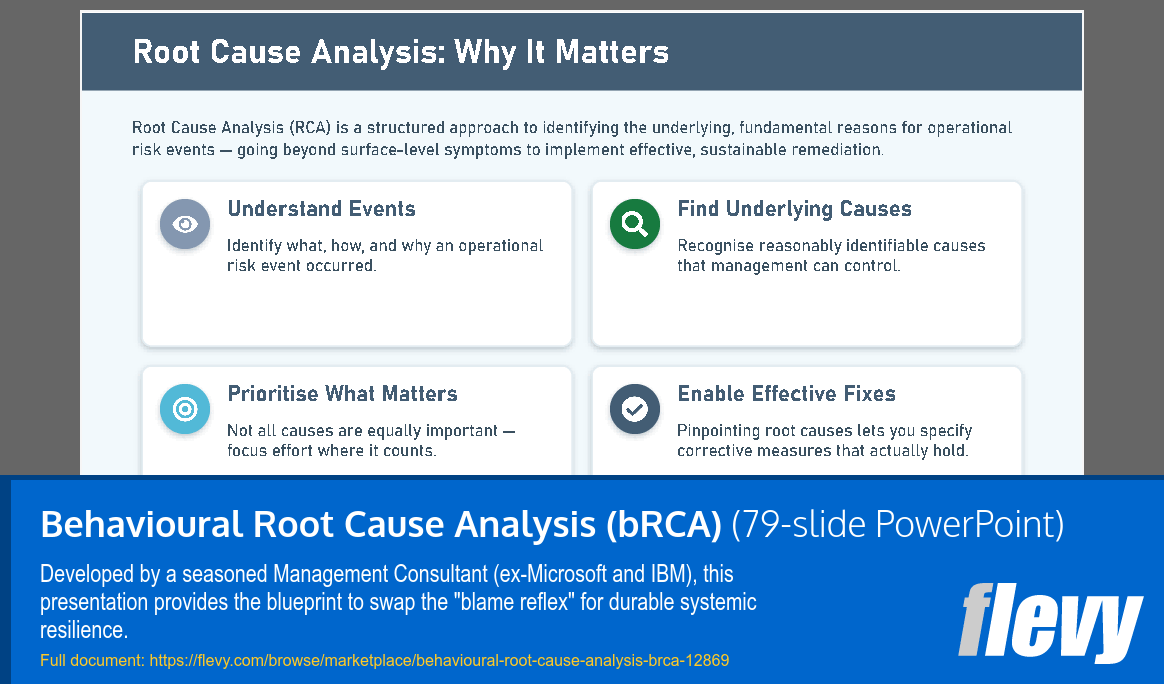

 Click main image to view in full screen. Unlock all 27 preview images:
Behavioural Root Cause Analysis (bRCA) – PowerPoint PPTX Template
PowerPoint (PPTX) 79 Slides


BENEFITS OF THIS DOWNLOADABLE POWERPOINT DOCUMENT
- Establish a "Just Culture" by shifting away from a blame reflex toward a systemic understanding.
- Reduce recurring findings using repeatable diagnostics that target deep-seated structures and mental models.
- Design durable fixes that move beyond temporary, one-off training corrections.
RCA PPT TEMPLATE DESCRIPTION
BEHAVIOURAL ROOT CAUSE ANALYSIS (bRCA) TRAINING PRESENTATION & PRACTITIONER TOOLKIT
Within complex and high-risk operational spheres, challenges rarely stem from mere process glitches; instead, they originate from human choices executed amidst structural pressures. Comprising 79 slides, this practitioner resource strategically blends Systems Thinking with Lean methodologies to steer businesses away from reflexive blame and toward long-term systemic stability. Tailored explicitly for Professionals, Risk, Audit, and HR leaders, the masterclass equips teams with behavioural diagnostics and intervention frameworks needed to tackle foundational mental models and structural elements that conventional RCA frameworks overlook.
EXECUTIVE SUMMARY
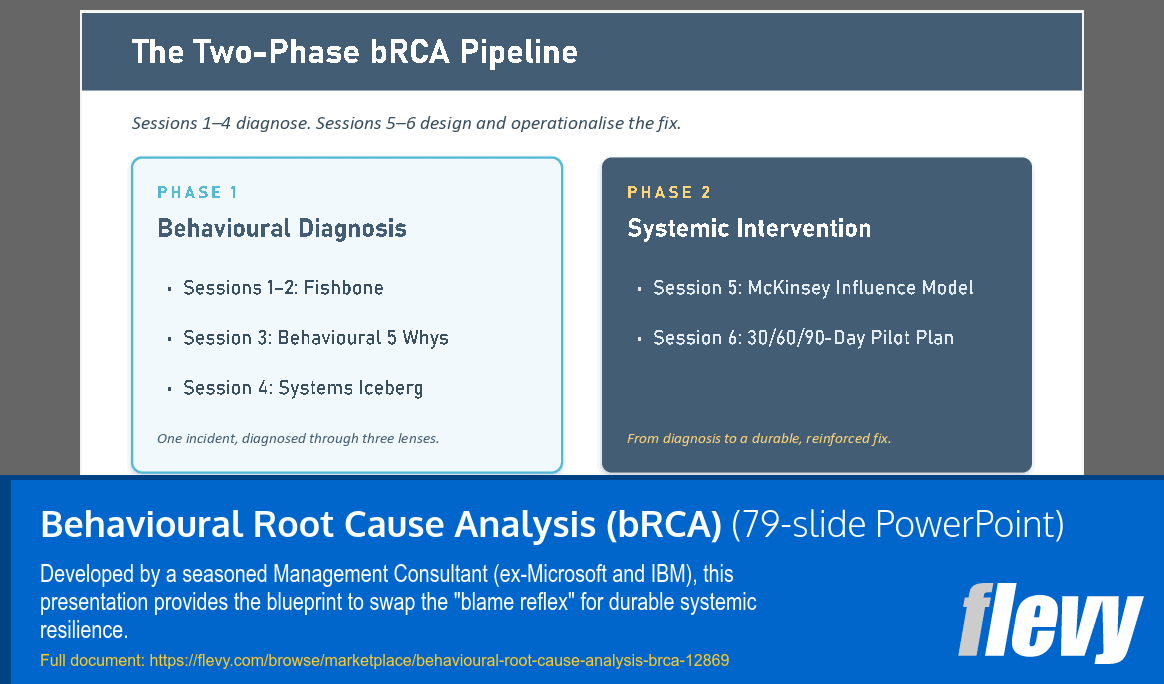
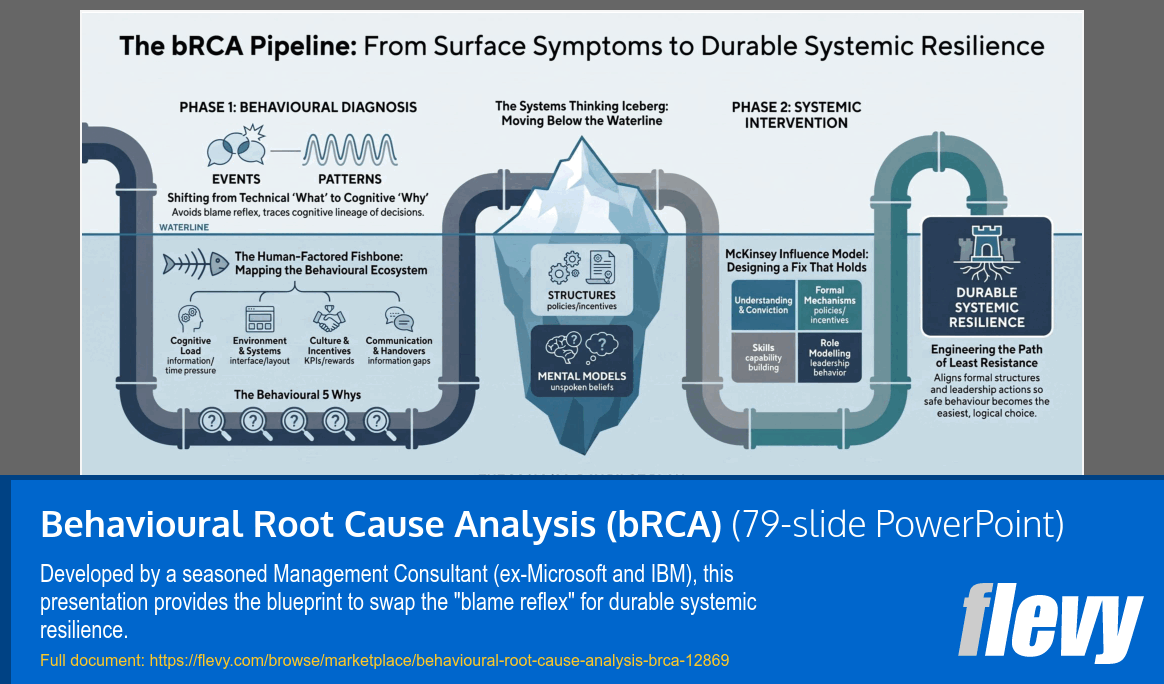
Enterprises frequently fail to permanently fix repetitive problems because root cause reviews terminate prematurely at "human error" or vague "process weakness" conclusions. Serving as a core pillar within OEC's 4-Lens Critical Thinking Model, Behavioural Root Cause Analysis (bRCA) offers a rigorous methodology to investigate the systemic and cognitive drivers dictating choice. Diverging from standard linear workflows fixated purely on technical mechanics, bRCA blends Lean principles with Systems Thinking to map out an incident's cognitive lineage. This all-inclusive resource governs a two-stage operational pipeline consisting of Behavioural Diagnosis and Systemic Intervention, guaranteeing that corrective measures target foundational root triggers rather than superficial indicators.
KEY BENEFITS
★ Establish a "Just Culture": Pivot away from instinctive blame toward deep systemic comprehension, creating a psychological space where transparent reporting occurs safely without punitive fears.
★ Reduce Recurring Findings: Provide audit and risk departments with a structured, reproducible diagnostic instrument designed to locate foundational mental models and structural drivers responsible for repeating audit gaps.
★ Design Durable Fixes: Transition past superficial training patches toward robust interventions systematically reinforced through leadership behaviours, organisational skills, and systemic design.
★ Strengthen Alpha Protection: Safeguard business execution and workplace safety by eliminating subtle systemic vulnerabilities that quietly drain enterprise value in high-stakes settings.
TARGET AUDIENCE
This toolkit is engineered specifically for practitioners tasked with governing risk through a behavioral framework:
• Operational Risk & Compliance Leaders: Designed for confirming core root causes and maintaining defensible, evidence-backed corrective actions.
• Internal Auditors: Built to expand diagnostic rigour beyond superficial process flaws.
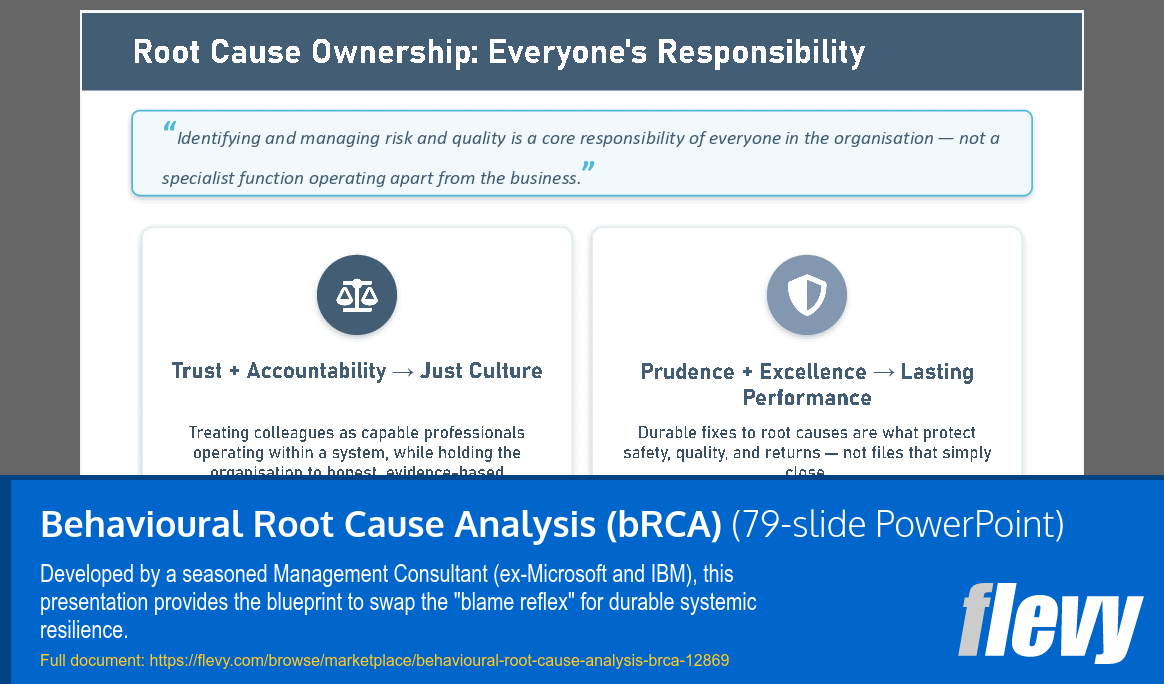
• HR & Culture Professionals: Tailored to establish "Just Culture" bedrock principles and leadership modeling structures essential for enduring transformation.
• Operations Supervisors: Formulated to comprehend environmental pressures and cognitive workloads impacting frontline workforce units.
WHAT'S INCLUDED IN THE BOX?
★ The Masterclass (79 Slides): A professional, facilitator-ready presentation guiding users through the complete bRCA lifecycle, spanning initial diagnostic inquiries through operational pilot execution.
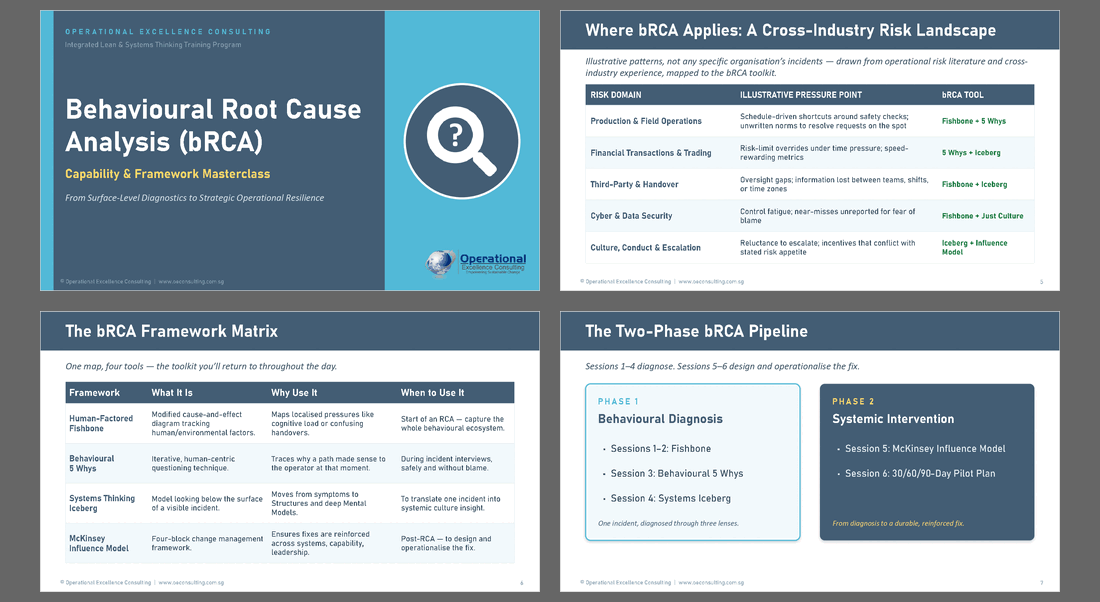
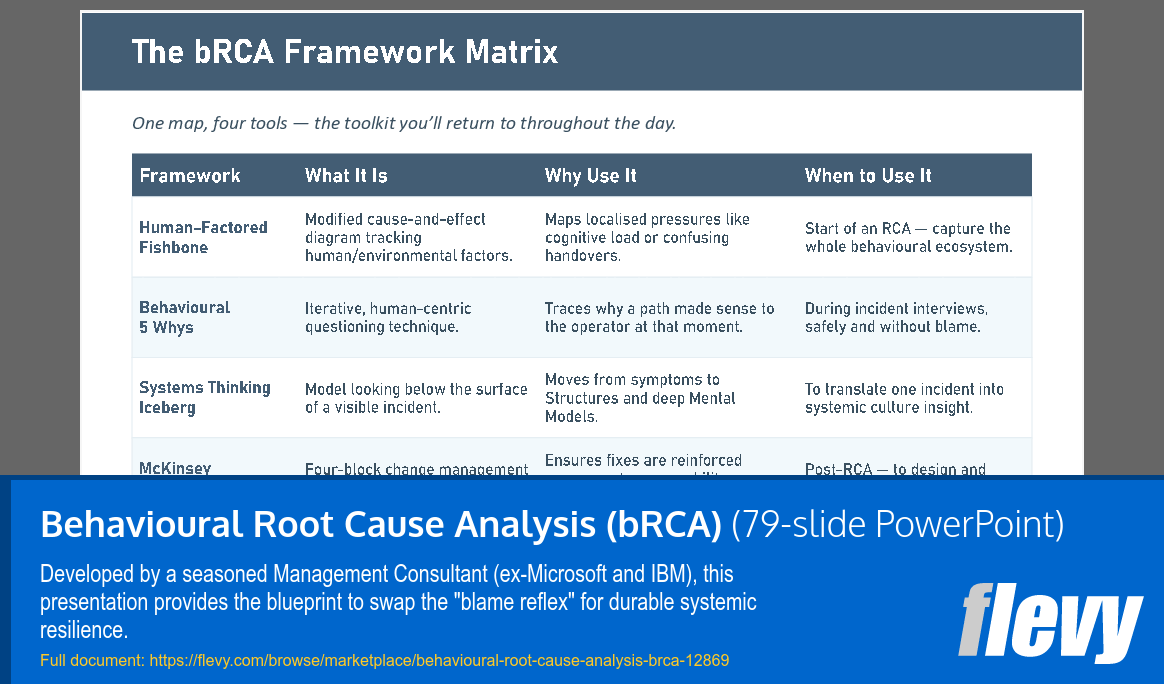
★ The bRCA Tool Library: Comprehensive reference manuals covering the Systems Thinking Iceberg, Behavioural 5 Whys, and the Human-Factored Fishbone.
★ Intervention Frameworks: Detailed instructions utilizing the McKinsey Influence Model to drive lasting behavioural modifications.
★ Interactive Workshop Templates: Practical, plug-and-play worksheets tailored for Cognitive Lineage Mapping and structured 30/60/90-Day Pilot design.
LEARNING OBJECTIVES
Upon completing this bRCA masterclass, attendees gain the capability to:
• Deepen Diagnostic Depth: Articulate why conventional people-process-systems root cause models frequently fail to uncover the rationale guiding human professional decisions.
• Facilitate Blame-Free Inquiries: Employ the Human-Factored Fishbone framework to chart out an incident's behavioral network, factoring in cultural motivations and cognitive strains.
• Trace Cognitive Lineage: Leverage the Behavioural 5 Whys technique to pivot from mechanical descriptions of events to uncovering systemic contexts that made hazardous decisions appear logical in real-time.
• Surface Deep Systemic Drivers: Implement the Systems Thinking Iceberg model to link isolated incidents with overarching behavioral patterns, structural designs, and hidden mental models.
• Engineer Sustainable Fixes: Utilise the McKinsey Influence Model to formulate comprehensive interventions anchored across four distinct areas: Understanding, Mechanisms, Skills, and Role Modelling.
DETAILED TRAINING CONTENTS
This practitioner suite is structured across six core training modules:
• Module 1: Introduction to bRCA & Human Factors: Shifting focal queries away from personal accountability and toward the operational conditions influencing a choice.
• Module 2: Human-Factored Fishbone: Progressing past traditional manufacturing 4M categories to map cultural dynamics, communication frameworks, environments, and cognitive strain.
• Module 3: Behavioural 5 Whys: Developing expertise in iterative, human-focused inquiry to unearth actionable systemic root triggers.
• Module 4: Systems Thinking Iceberg: Probing beneath surface symptoms to isolate structural forces shaping behavioural patterns.
• Module 5: McKinsey Influence Model: Architecting multi-layered solutions that position secure actions as the most natural, straightforward option.
• Module 6: Pilot Planning & Closing: Designing structured 30/60/90-day testing blueprints to effectively translate classroom learning into field operations.
PROPOSED 1-DAY WORKSHOP AGENDA
This toolkit supports an intensive, high-impact one-day training schedule:
• 09:00 – 10:30: Introduction to bRCA principles, human factor dynamics, and Just Culture philosophy.
• 10:45 – 12:00: Diagnostic Tool 1: Charting incident ecosystems utilising the Human-Factored Fishbone.
• 13:00 – 14:15: Diagnostic Tool 2: Tracking behavioural pathways via the Behavioural 5 Whys.
• 14:15 – 15:15: Diagnostic Tool 3: Penetrating sub-surface levels via the Systems Thinking Iceberg.
• 15:30 – 16:30: Intervention Design: Structuring solutions through the McKinsey Influence Model.
• 16:30 – 17:00: Pilot Implementation Planning and Team Commitments for field execution.
GLOSSARY OF KEY TERMS
• Just Culture: An operating philosophy viewing staff as competent experts functioning inside a broader ecosystem, redirecting attention away from fault-finding toward empirical systemic analysis.
• Cognitive Load: The volume of conflicting data, ambiguous variables, and scheduling constraints experienced by personnel during decision-making moments.
• Structure: Macro-level structural setups—such as performance key metrics, company guidelines, or reward incentives—rendering a particular action logical for an individual.
• Mental Model: Hidden assumptions and localised perspectives that preserve flawed operational designs.
• Influence Model: A transformation framework guaranteeing corrective actions receive multi-faceted backing across understanding, structural protocols, skill acquisition, and behavioural modelling.
• Human-Factored Fishbone: An adapted cause-and-effect matrix focused on cultural nuances, workplace surroundings, and cognitive stress rather than purely mechanical elements.
• Behavioural 5 Whys: A human-oriented inquiry methodology mapping out why a particular decision felt entirely justified to an operator at a specific moment.
• Systems Thinking Iceberg: A diagnostic instrument guiding teams from visible indicators downward into underlying operational patterns, structural frameworks, and mental paradigms.
FREQUENTLY ASKED QUESTIONS (FAQ)
How does bRCA differ from standard RCA? Conventional RCA typically terminates at "operator fault," whereas bRCA explores why that decision was rational given existing cognitive pressures and structural incentives.
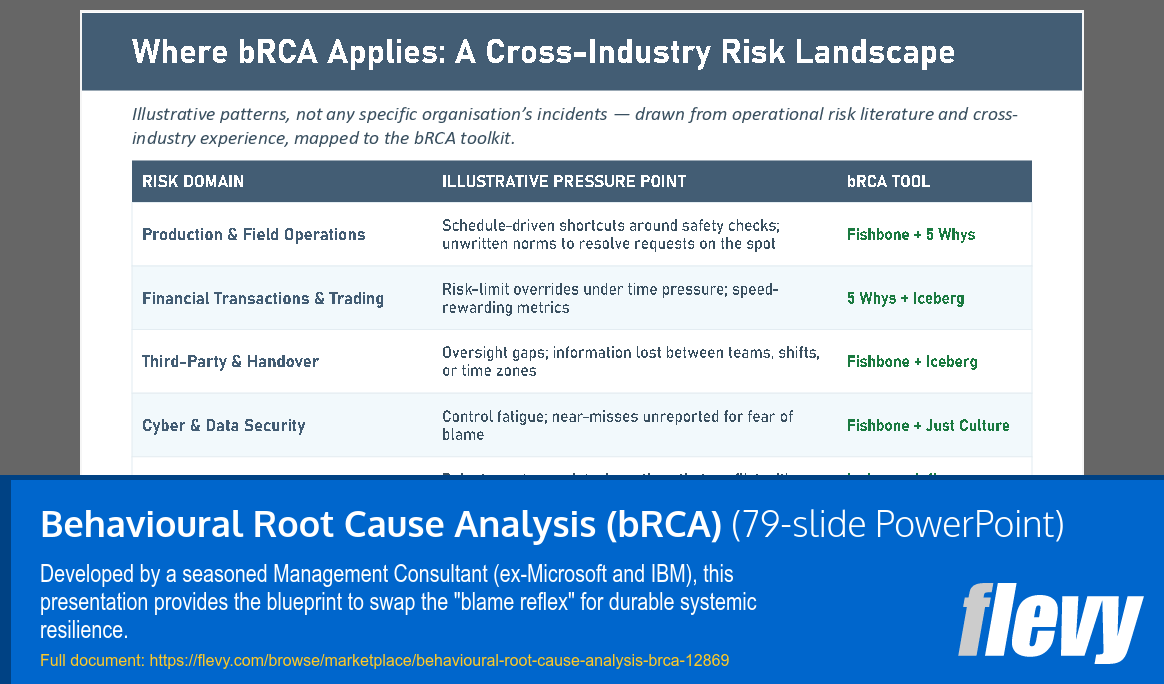
Is this methodology exclusive to Financial Services? No; although financial examples are included, the instruments are sector-agnostic and suit data security, field services, and manufacturing environments.
Is prior expertise in Systems Thinking mandatory? No, the package condenses sophisticated theories into an accessible workflow suitable for any practitioner.
Can the presentation materials be edited? Yes, the complete toolkit is delivered as an adaptable PPTX file ready for custom branding and operational context adjustments.
Who makes up the ideal audience profile? It targets multidisciplinary teams—particularly Compliance, Human Resources, Audit, and Operational Risk functions—to guarantee robust corrective outcomes.
Does it integrate with global quality guidelines? Yes, it fulfils structural problem-solving requirements outlined in frameworks like ISO 9001 while incorporating advanced human factor dimensions.
What is the ideal depth for a Behavioural 5 Whys investigation? Analysis should extend past initial technical responses until uncovering an actionable systemic driver, typically found at the Mental Model or Structure tier.
What objective does the 30/60/90-day pilot serve? It transforms classroom insights into tangible action plans, enabling teams to evaluate remediation impacts on actual problems prior to full-scale deployment.
Got a question about the product? Email us at support@flevy.com or ask the author directly by using the "Ask the Author a Question" form. If you cannot view the preview above this document description, go here to view the large preview instead.
Source: Best Practices in RCA PowerPoint Slides: Behavioural Root Cause Analysis (bRCA) PowerPoint (PPTX) Presentation Slide Deck, Operational Excellence Consulting
ABOUT THE AUTHOR

Operational Excellence Consulting, founded in 2009 by Allan Ung, draws from extensive experience at Microsoft, IBM, and Underwriters Laboratories (UL). We specialize in strategy deployment, customer experience design, and operational excellence, applying Design Thinking, Lean, and Systems Thinking to maximize customer value and minimize waste.
Our
... [read more]
Ask the Author a Question
You must be logged in to contact the author.