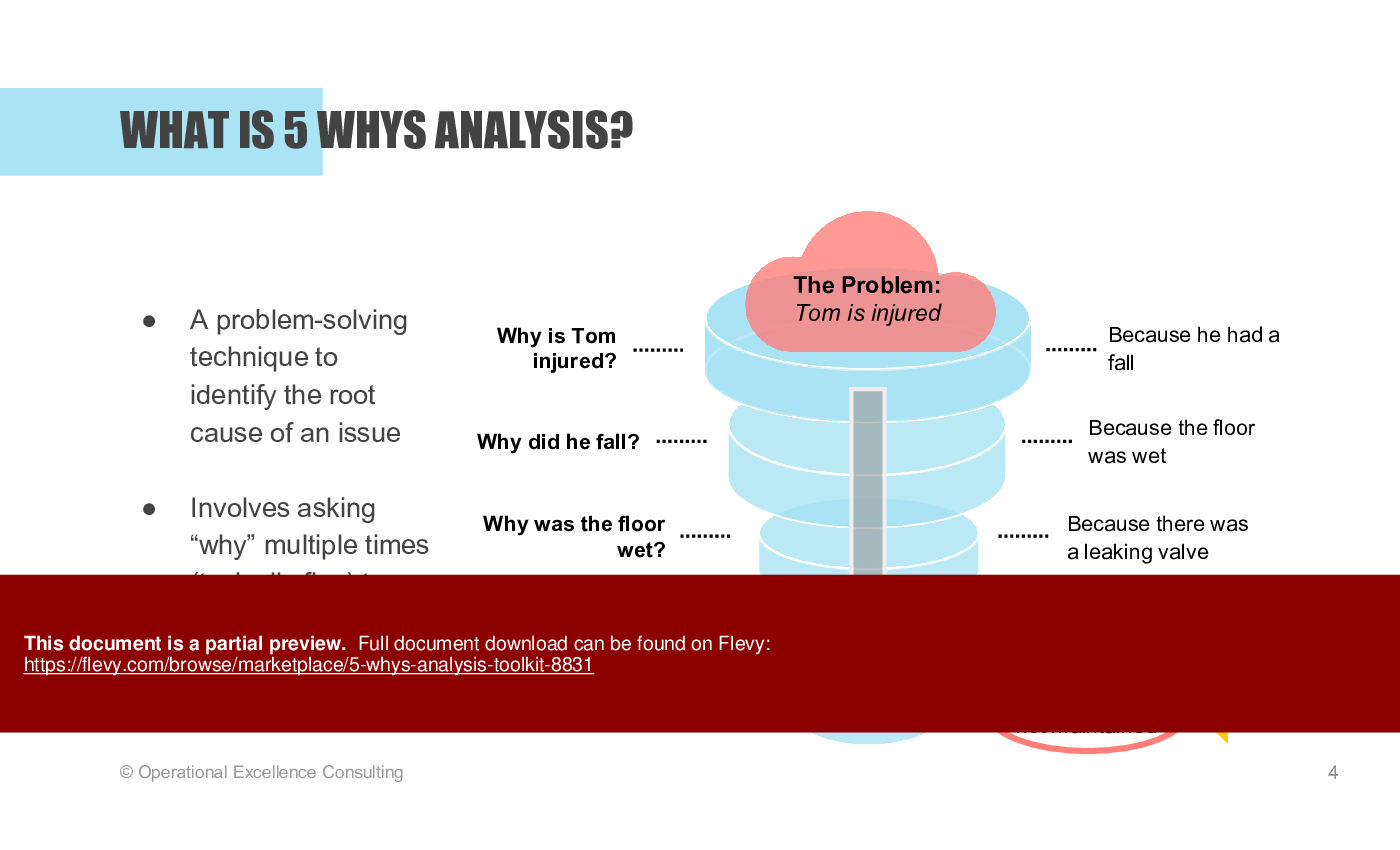

The 5 Whys Analysis may sound like a simple tool, but without a systematic approach, problem-solving teams can easily identify the wrong root causes. The 5 Whys Analysis is a powerful problem-solving method used to identify the root causes of an issue by repeatedly asking the question "Why?"—typically five times or more—until the fundamental cause is uncovered. This simple yet effective technique helps teams move beyond surface-level symptoms to address the underlying problems that lead to issues. The key role of 5 Whys Analysis in problem-solving lies in its ability to promote critical thinking and foster a deeper understanding of the factors contributing to a problem.

The 5 Whys Analysis offers numerous benefits, including improved problem-solving capabilities, enhanced team collaboration, and the implementation of lasting solutions. It is widely applicable across various industries, including manufacturing, services, healthcare, and IT. For instance, in manufacturing, it can help identify causes of equipment failure; in services, it can be used to enhance customer satisfaction by addressing recurring complaints; and in healthcare, it can improve patient safety by uncovering the root causes of medical errors.
Introducing the 5 Whys Analysis Toolkit
To help teams implement this powerful methodology effectively, we offer the 5 Whys Analysis Toolkit. This comprehensive package includes:
1. 5 Whys Analysis Instructional Guide (PowerPoint Format)
• A step-by-step presentation to help you understand and teach the 5 Whys Analysis process. Perfect for training sessions and workshops.
2. 5 Whys Analysis Template (Word and Excel Formats)
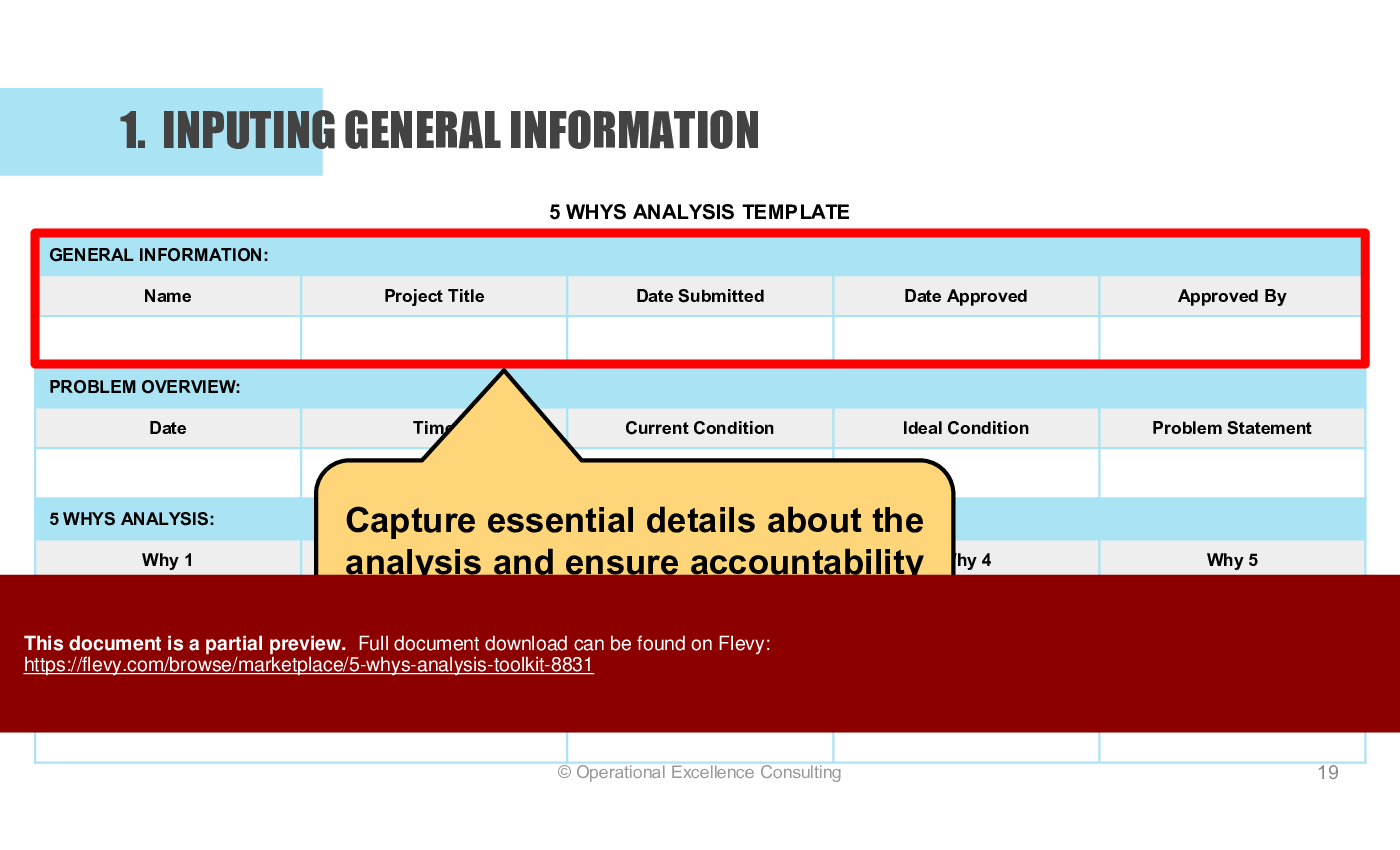
• Easy-to-use templates for documenting your analysis. These customizable formats ensure you can tailor the tool to your specific needs and keep your analysis organized.
3. 5 Whys Analysis Examples (PowerPoint Format)
• Detailed examples from both manufacturing and service industries to guide you through the process. These real-world scenarios provide a clear understanding of how to apply the 5 Whys Analysis in various contexts.
4. 5 Whys Analysis Self Checklist (Word Format)
• A comprehensive checklist to ensure you don't miss any critical steps in your analysis. This self-check tool enhances the thoroughness and accuracy of your problem-solving efforts.
Equip your team with the structured approach needed to address the root causes of problems and drive continuous improvement in your organization.
Benefits of Our 5 Whys Analysis Toolkit
1. Comprehensive and User-Friendly
• Our toolkit is designed with users in mind. It includes clear instructions, practical examples, and easy-to-use templates to make the 5 Whys Analysis accessible to everyone, regardless of their experience level.
2. Versatile Application Across Industries
• The toolkit is suitable for a diverse group of users. Whether you're working in manufacturing, services, or design, the principles and tools provided can be applied universally to improve processes and solve problems effectively.
3. Enhance Problem-Solving and Continuous Improvement
• By using the 5 Whys Analysis, you can dig deeper into problems, uncover root causes, and implement lasting solutions. This toolkit supports your efforts to foster a culture of continuous improvement and operational excellence.
Note: The 5 Whys Analysis Toolkit can be used in conjunction with our other problem-solving presentations, including:
• PDCA Problem Solving
• 8D Problem Solving
• A3 Problem Solving
• 5 Steps of Problem Solving
The 5 Whys Analysis Toolkit is designed to streamline your problem-solving process, ensuring that your team can effectively identify and address root causes. With practical templates and real-world examples, this toolkit empowers teams to take decisive action and foster a culture of accountability and continuous improvement.
Got a question about the product? Email us at support@flevy.com or ask the author directly by using the "Ask the Author a Question" form. If you cannot view the preview above this document description, go here to view the large preview instead.
Executive Summary
The 5 Whys Analysis Toolkit is an essential resource for organizations aiming to enhance problem-solving capabilities and drive continuous improvement. Developed by Operational Excellence Consulting, this toolkit provides a structured approach to identifying root causes through the 5 Whys methodology. Users will gain access to instructional guides, templates, and examples that facilitate thorough analysis and actionable outcomes. By utilizing this toolkit, corporate executives and team leaders can effectively address recurring issues, streamline processes, and foster a culture of accountability within their teams.
Who This Is For and When to Use
• Quality Assurance Managers focused on improving product reliability
• Operations Managers seeking to enhance process efficiency
• Team Leaders conducting problem-solving sessions
• Continuous Improvement Practitioners aiming to implement systematic analysis
Best-fit moments to use this deck:
• When addressing recurring operational issues
• During team workshops aimed at process improvement
• In individual analyses of complex problems
• For training sessions on root cause analysis techniques
Learning Objectives
• Define the 5 Whys methodology and its application in problem-solving
• Identify root causes of issues through systematic questioning
• Develop actionable plans based on root cause analysis
• Foster collaboration among team members during analysis sessions
• Document findings clearly for future reference and accountability
• Implement corrective actions to prevent recurrence of issues
Table of Contents
• Introduction to 5 Whys Analysis (page 5)
• Benefits of 5 Whys Analysis (page 6)
• Key Principles of 5 Whys Analysis (page 8)
• Step-by-Step Guide to 5 Whys Analysis (page 9)
• Common Mistakes in 5 Whys Analysis (page 12)
• Best Practices for Effective Analysis (page 13)
• Overview of the 5 Whys Analysis Template (page 16)
• Example Templates (page 45)
Primary Topics Covered
• 5 Whys Methodology - A problem-solving technique that involves asking "why" multiple times to drill down to the root cause of an issue.
• Root Cause Identification - The process of uncovering the underlying reasons for problems, rather than just addressing symptoms.
• Collaborative Analysis - Emphasizes teamwork and collective input during the analysis process to enhance accuracy and effectiveness.
• Action Planning - Developing specific measures to address identified root causes and prevent future occurrences.
• Documentation Practices - Guidelines for accurately recording findings and maintaining accountability throughout the analysis process.
• Continuous Improvement Culture - Encourages a proactive approach to problem-solving and process enhancement within organizations.
Deliverables, Templates, and Tools
• 5 Whys Analysis Template for structured documentation
• Instructional Guide for step-by-step implementation
• Self-check checklist to ensure thorough analysis
• Example case studies illustrating effective application
• Action plan format for tracking corrective measures
• Follow-up action plan template for ongoing monitoring
Slide Highlights
• Overview of the 5 Whys Analysis methodology and its significance
• Step-by-step guide detailing the process of conducting a 5 Whys analysis
• Common mistakes to avoid for effective problem-solving
• Best practices for ensuring thorough and collaborative analysis
• Example templates showcasing practical applications of the 5 Whys technique
Potential Workshop Agenda
Introduction to 5 Whys Analysis (30 minutes)
• Overview of the methodology and its benefits
• Discussion on the importance of root cause identification
Hands-On 5 Whys Analysis Session (60 minutes)
• Participants work in teams to analyze a provided case study
• Document findings using the 5 Whys Analysis Template
Review and Action Planning (30 minutes)
• Teams present their findings and proposed action plans
• Group discussion on implementation strategies
Customization Guidance
• Tailor the template to include specific project details and team members
• Adjust the action plan format to align with organizational standards
• Incorporate industry-specific examples to enhance relevance
• Modify the instructional guide to fit the training needs of your team
Secondary Topics Covered
• Importance of objective analysis in problem-solving
• Techniques for effective team collaboration during analysis
• Strategies for implementing corrective actions
• Monitoring and evaluating the effectiveness of solutions
Topic FAQ
Document FAQ
These are questions addressed within this presentation.
What is the 5 Whys Analysis?
The 5 Whys Analysis is a problem-solving technique that involves asking "why" multiple times to uncover the root cause of an issue.
How can this toolkit benefit my organization?
This toolkit provides a structured approach to identifying and addressing root causes, leading to improved processes and reduced recurrence of issues.
When should I use the 5 Whys Analysis?
Use this analysis when facing recurring problems, during team problem-solving sessions, or when aiming to improve processes.
What are common mistakes to avoid?
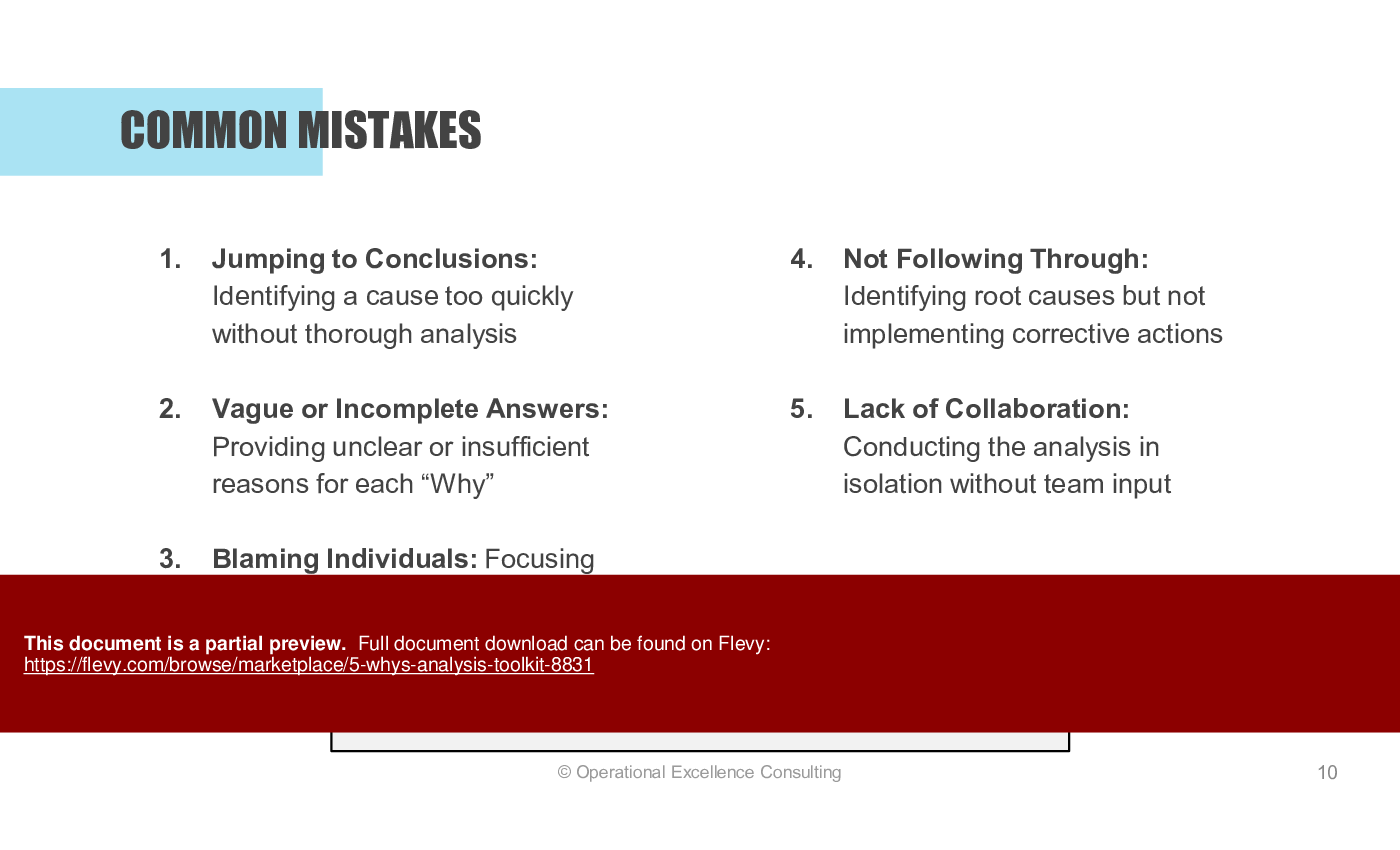
Common mistakes include jumping to conclusions, providing vague answers, and failing to follow through with corrective actions.
Can the template be customized?
Yes, the template can be tailored to fit specific project needs and organizational standards.
How do I ensure effective collaboration during the analysis?
Encourage team participation, document each "why" clearly, and focus on processes rather than individuals.
What should I do if the initial measures are ineffective?
Re-evaluate the problem statement, reconduct the 5 Whys Analysis, and identify new measures to address the root cause.
Is training provided for using this toolkit?
Yes, the toolkit includes an instructional guide to help users understand and apply the 5 Whys methodology effectively.
Glossary
• 5 Whys - A technique for identifying root causes by repeatedly asking "why."
• Root Cause - The fundamental reason for a problem, as opposed to its symptoms.
• Action Plan - A detailed plan outlining measures to address identified issues.
• Template - A structured document used to guide the analysis process.
• Continuous Improvement - Ongoing efforts to enhance products, services, or processes.
• Collaboration - Working together with team members to achieve a common goal.
• Documentation - The process of recording findings and decisions made during analysis.
• Self-Check Checklist - A tool to ensure all steps of the analysis are completed thoroughly.
• Best Practices - Recommended methods for achieving optimal results in analysis.
• Problem Statement - A concise description of the issue being analyzed.
• Ideal Condition - The expected outcome that would prevent the problem from occurring.
• Current Condition - The existing state or situation that needs improvement.
• Measure - Specific actions taken to address the root cause of a problem.
• By Whom - The individual or team responsible for implementing measures.
• By When - The timeline for completing the proposed actions.
• Remarks - Additional comments or observations related to the analysis.
• Follow-Up Actions - Steps to take if initial measures do not effectively resolve the issue.
• Training - Instruction provided to enhance understanding and application of the toolkit.
• Quality Control - Processes aimed at ensuring products meet specified standards.
• Process Improvement - Efforts to enhance the efficiency and effectiveness of organizational processes.
• Team Workshop - A collaborative session where team members work together to solve problems.
• Problem-Solving Session - A meeting focused on identifying and addressing specific issues.
Source: Best Practices in RCA, 5 Whys PowerPoint Slides: 5 Whys Analysis Toolkit PowerPoint (PPTX) Presentation Slide Deck, Operational Excellence Consulting
|
Receive our FREE presentation on Operational Excellence
This 50-slide presentation provides a high-level introduction to the 4 Building Blocks of Operational Excellence. Achieving OpEx requires the implementation of a Business Execution System that integrates these 4 building blocks. |