
Root Cause Analysis   57-slide PPT PowerPoint presentation slide deck (PPT)
$20.00

Root Cause Analysis (57-slide PPT PowerPoint presentation slide deck (PPT)) Preview Image
Log in to unlock full preview.
Root Cause Analysis (57-slide PPT PowerPoint presentation slide deck (PPT)) Preview Image
Arrow   Click main image to view in full screen.

Root Cause Analysis (PowerPoint PPT Slide Deck)

PowerPoint (PPT) 57 Slides

Top 1,000 Best Practice $20.00

Add to Cart


Immediate download
Fully editable PowerPoint
Free lifetime updates

RCA PPT DESCRIPTION

Editor Summary Root Cause Analysis is a 57-slide PowerPoint training deck by bizpi that teaches a structured, eight-step problem-solving process for identifying and eliminating underlying causes of defects and incidents. Read more

Working in the quality organization for over 20 years, our team of quality professionals continually run into corrective actions that fall short of root cause. The concepts of root cause analysis seem simple, but applying them in every aspect of your company is difficult.

"If only our employees understood why getting to root cause is so important, and how it will benefit us in the long run!"

"Why do we keep seeing the same problems come back and bite us two months later!"

Training your company has just become easier! You will be able to train anyone in your company on the proper techniques for achieving proper resolution of any type of problem, whether it be a transactional process, manufacturing issue, medical procedure, or personnel issue.

How long would it take you to develop your own course? Hours? Weeks? Unless you can develop a similar course in less than an hour, this course will pay for itself at least ten times over!

The course is yours to keep. Feel free to edit, change or modify however you want, or don't change a thing and teach directly from our material. There are a total of 56 slides, so plan on a 3-4 hour class.

No recurring costs, no "per student" charge, and no special software to download. Your employees can refer back to it anytime they like. Send it in a global email to everyone in your company, if you'd like!

Don't spend thousands of dollars hiring a consultant to come in and speak in general terms. Use your knowledge of your company's major problems to elaborate on the material we have put together. Unless you can show how these concepts relate to actual issues that your employees deal with, you will have a hard time making much of an improvement in the way problems are resolved.

This course has been thoroughly tested and is exactly what you would create on your own, if only you had the time. We have done all the hard work for you, so just follow these simple steps...

•  Download the PowerPoint course from our website
•  Edit the master slide with your company logo
•  Skim the speaker notes, maybe add a few of your own company specific examples
•  Start training your company!

The course is divided into three sections:

•  Introduction and Overview – What is a root cause, why is it important to identify, and why we don't always get there.

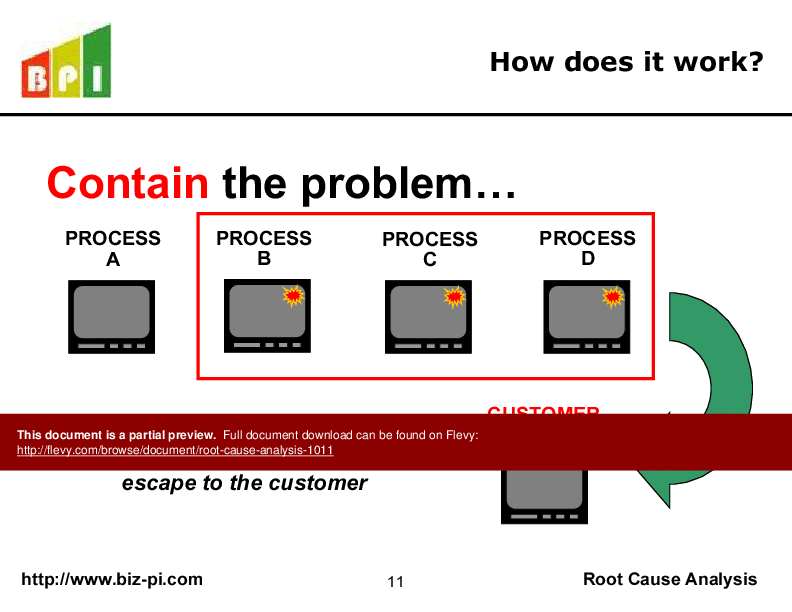
•  Problem Solving Process – a simple 8 step approach to problem solving, including containment, root cause identification, corrective action, verification and sustainment. You can always plug in your own Corrective Action process.

•  Examples – a manufacturing and business process example utilizing basic quality tools are both provided, or simply add your own example that is specific to your business or company.

Here is an outline of the course...

•  Objectives
•  Root Cause Definitions
•  Benefits
•  Root Cause Process Summary
•  Corrective Actions
•  Problem Solving Process (8 Steps)
•  Example 1 – Manufacturing
•  Example 2 – Transactional
•  Hints about RCA

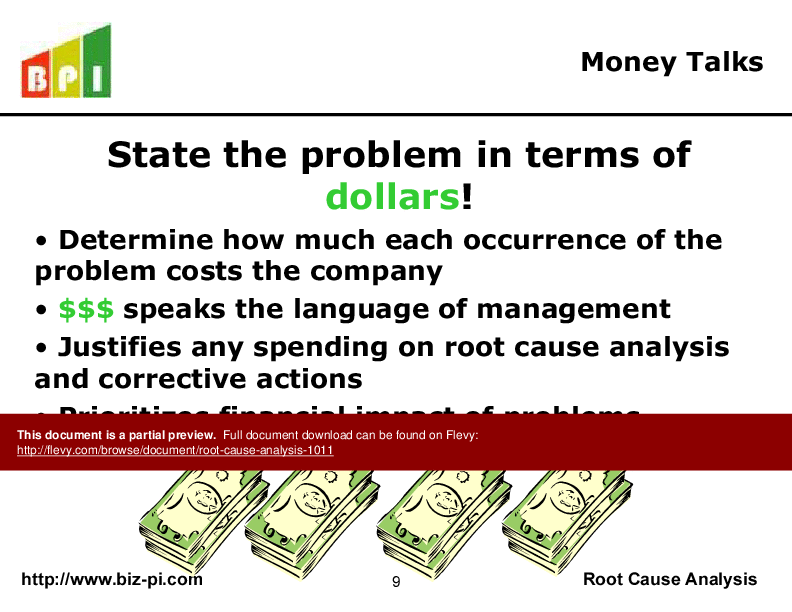
This course will equip your team with the skills to identify, contain, and prevent problems effectively. It emphasizes the financial impact of issues, ensuring management buy-in for corrective actions.

Got a question about the product? Email us at support@flevy.com or ask the author directly by using the "Ask the Author a Question" form. If you cannot view the preview above this document description, go here to view the large preview instead.

MARCUS OVERVIEW

This synopsis was written by Marcus [?] based on the analysis of the full 57-slide presentation.


Executive Summary
The Root Cause Analysis training presentation equips participants with essential skills to identify and eliminate the underlying causes of problems in various sectors, including pharmaceuticals, healthcare, and manufacturing. This comprehensive deck outlines a structured approach to problem-solving, emphasizing the importance of root cause analysis in preventing recurring issues. By utilizing key quality tools and methodologies, participants will learn to enhance operational efficiency and improve overall quality, ultimately leading to cost savings and increased profitability.

Who This Is For and When to Use
•  Quality Assurance Managers seeking to improve process reliability
•  Operations Managers focused on minimizing defects and enhancing productivity
•  Project Managers needing to address project delays and resource allocation issues
•  Healthcare Professionals aiming to reduce medical errors and improve patient safety

Best-fit moments to use this deck:
•  During team training sessions focused on quality improvement initiatives
•  When addressing specific recurring issues that impact operational performance
•  In workshops aimed at fostering a culture of continuous improvement within organizations

Learning Objectives
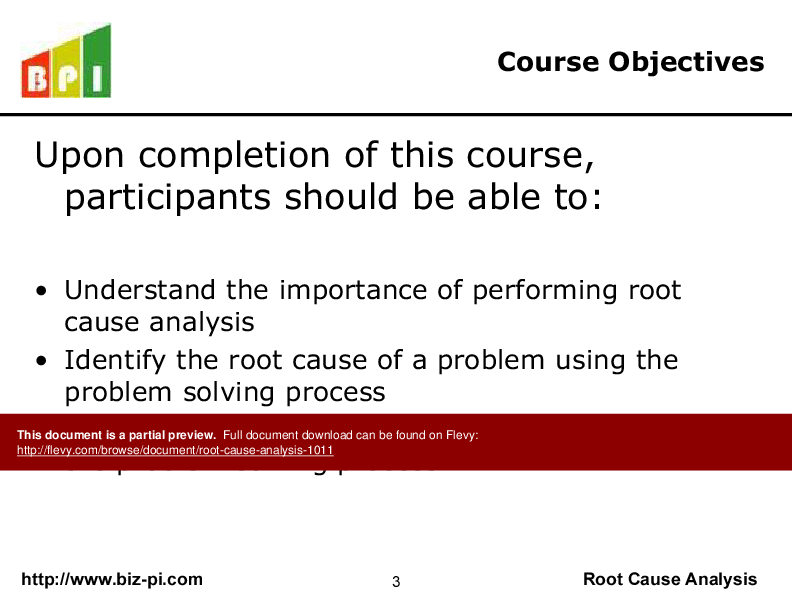
•  Understand the significance of conducting root cause analysis in problem-solving
•  Identify the root cause of a problem using systematic methodologies
•  Apply basic quality tools effectively in the problem-solving process
•  Develop a corrective action plan to address identified root causes
•  Validate and verify the effectiveness of implemented solutions
•  Foster team collaboration in identifying and solving problems

Table of Contents
•  Course Objectives (page 3)
•  What is Root Cause? (page 4)
•  Benefits (page 6)
•  Problem Solving Process (page 18)
•  Examples (page 33)
•  Root Cause “Hints” (page 55)
•  Review (page 56)
•  Additional Resources (page 57)

Primary Topics Covered
•  Root Cause Definition - The fundamental factors that, if corrected, would prevent the recurrence of identified problems.
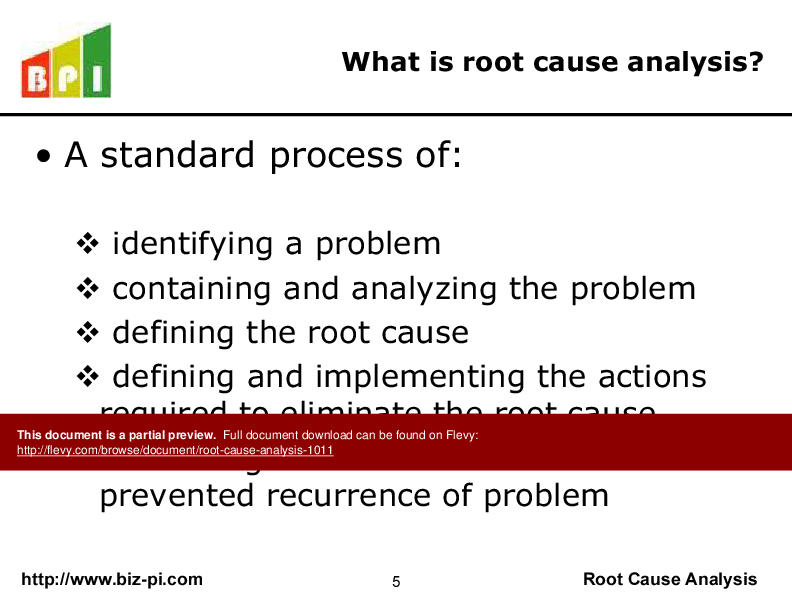
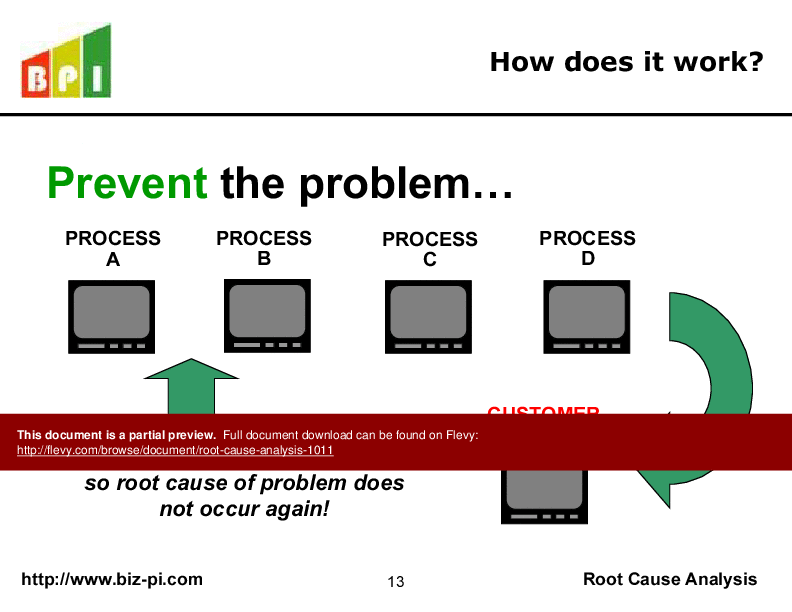
•  Root Cause Analysis Process - A structured method for identifying, containing, analyzing, and addressing the root causes of issues.
•  Benefits of Root Cause Analysis - Highlights the time and cost savings achieved by eliminating recurring problems and improving communication across teams.
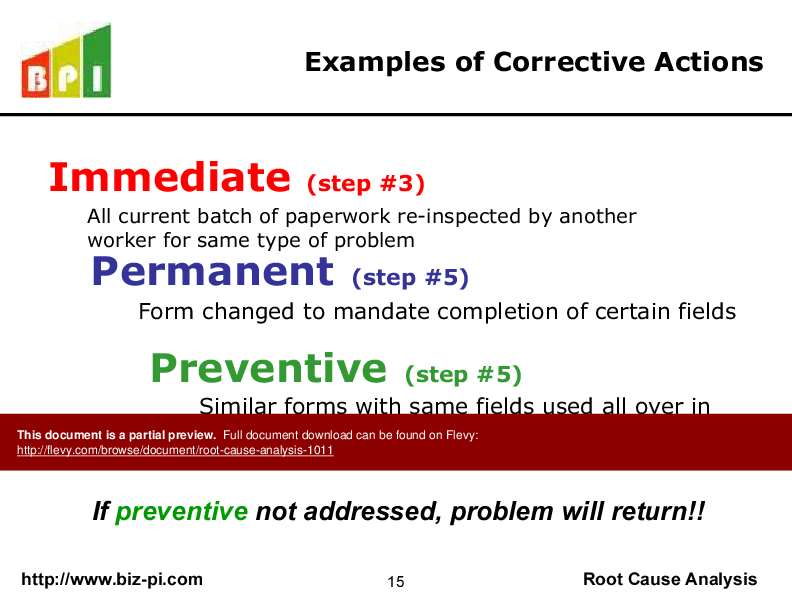
•  Corrective Actions - Different types of corrective actions, including immediate, permanent, and preventive measures to address root causes.
•  Problem Solving Steps - A detailed breakdown of the steps involved in the problem-solving process, from identifying the problem to validating solutions.
•  Team Dynamics - The importance of team collaboration in effectively addressing and solving problems.

Deliverables, Templates, and Tools
•  Root Cause Analysis templates for structured problem identification
•  Corrective Action Plan templates to outline responsibilities and timelines
•  Quality tools such as Pareto charts and Cause and Effect diagrams for analysis
•  Checklists for validating and verifying implemented solutions
•  Team roles and responsibilities framework to enhance collaboration
•  Guidelines for effective follow-up plans to ensure sustained improvements

Slide Highlights
•  Overview of the Problem Solving Process, illustrating the eight key steps involved.
•  Examples of Corrective Actions, showcasing immediate, permanent, and preventive measures.
•  The 5 Why's method illustrated with real-world examples to identify root causes.
•  Cause and Effect diagrams that visually represent the relationships between various factors contributing to problems.
•  Hints about root causes emphasizing the importance of prevention and addressing multiple root causes.

Potential Workshop Agenda
Introduction to Root Cause Analysis (30 minutes)
•  Overview of course objectives and importance of root cause analysis
•  Discussion on common problems faced in various sectors

Team Dynamics and Roles (45 minutes)
•  Identifying team members and their roles in the problem-solving process
•  Key ideas for team success and collaboration

Practical Application of Tools (60 minutes)
•  Hands-on activity using quality tools such as Pareto charts and Cause and Effect diagrams
•  Group exercise to identify root causes using the 5 Why's method

Corrective Action Planning (45 minutes)
•  Developing a corrective action plan based on identified root causes
•  Establishing follow-up plans to validate solutions

Customization Guidance
•  Modify templates to reflect specific organizational processes and terminology.
•  Tailor examples and case studies to align with industry-specific challenges.
•  Adjust the workshop agenda to fit the time constraints and focus areas of the audience.

Secondary Topics Covered
•  The distinction between immediate, permanent, and preventive corrective actions.
•  The role of financial impact in prioritizing problems for root cause analysis.
•  Strategies for effective team collaboration and communication during problem-solving.
•  The significance of validation and verification in ensuring effective solutions.
•  Insights on fostering a culture of continuous improvement within organizations.

Topic FAQ

What are the typical steps in a root cause analysis process?

A commonly used process begins with defining the problem, containing immediate impact, collecting data, conducting root cause analysis, selecting corrective actions, implementing fixes, and performing verification and sustainment activities. The training deck organizes these into a structured eight-step problem-solving process.

How does the 5 Why's technique help identify root causes?

The 5 Why's is an iterative questioning method that drills down from a symptom to increasingly deeper causes by repeatedly asking "why" until a fundamental cause is found. It pairs well with visual tools to validate causal links, and Flevy's Root Cause Analysis includes an illustrated 5 Why's example.

Which quality tools are most useful during root cause analysis?

Standard tools for RCA include Cause and Effect (fishbone) diagrams to map potential causes, Pareto charts to prioritize issues by frequency or impact, and checklists for verification. Flevy's Root Cause Analysis supplies templates for Cause and Effect diagrams and Pareto charts.

What should I look for when buying an RCA training deck or template?

Look for a clear, repeatable problem-solving process, ready-to-use RCA and Corrective Action Plan templates, example case studies, a workshop agenda, and customization guidance so you can adapt slides to your context; the Root Cause Analysis deck provides a workshop agenda and editable templates in a PowerPoint format.

How can I justify buying an RCA template instead of hiring an external consultant?

A reusable template reduces recurring training costs and enables internal trainers to teach consistent methods across teams. The course materials are editable, can be reused globally without per-student fees, and are delivered as downloadable PowerPoint slides for internal deployment.

We see the same defect every 2 months—what short workshop format should we run?

Run a focused session: brief overview and objectives, assign team roles, a 60-minute hands-on activity using Pareto and Cause and Effect diagrams, 45 minutes to draft corrective actions, and time for verification planning; the product includes a sample workshop agenda and hands-on exercise guidance.

How do I ensure corrective actions actually prevent recurrence of problems?

Use a mix of immediate containment, then implement permanent and preventive actions; document responsibilities and timelines in a Corrective Action Plan, and perform verification and validation with follow-up checklists to confirm sustained improvement and avoid recurrence.

Can an RCA course be adapted for healthcare settings to reduce medical errors?

Yes. Templates, examples, and case study guidance can be tailored to clinical processes; apply the 5 Why's and Cause and Effect diagrams to medical incidents, then build corrective actions and verification steps specific to patient-safety workflows.

Document FAQ
These are questions addressed within this presentation.

What is root cause analysis?
Root cause analysis is a systematic process for identifying the underlying causes of problems to prevent their recurrence.

When should root cause analysis be performed?
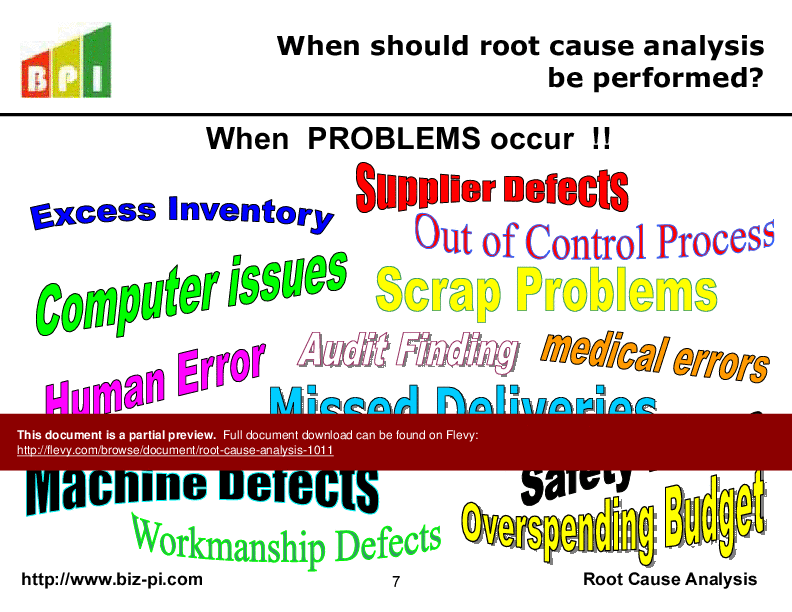
Root cause analysis should be conducted whenever problems occur that impact quality, efficiency, or safety.

What are the benefits of performing root cause analysis?
Benefits include reduced rework, improved communication, enhanced process efficiency, and long-term cost savings.

How do I identify the root cause of a problem?
Utilize structured methodologies such as the 5 Why's technique and Cause and Effect diagrams to explore potential causes.

What types of corrective actions can be implemented?
Corrective actions can be immediate, permanent, or preventive, depending on the nature of the problem and its underlying causes.

How can I ensure the effectiveness of corrective actions?
Verification and validation of implemented solutions are crucial to ensure that the root cause has been effectively addressed.

What tools can be used in the root cause analysis process?
Common tools include Pareto charts, Cause and Effect diagrams, and checklists for action plans.

How important is team collaboration in root cause analysis?
Team collaboration is essential for leveraging diverse perspectives and expertise, leading to more effective problem-solving.

Glossary
•  Root Cause - The fundamental factor that, if corrected, would prevent recurrence of a problem.
•  Corrective Action - Steps taken to eliminate the root cause of a problem.
•  Preventive Action - Measures implemented to prevent the occurrence of potential problems.
•  5 Why's - A problem-solving technique that involves asking "why" multiple times to drill down to the root cause.
•  Cause and Effect Diagram - A visual tool used to identify and organize potential causes of a problem.
•  Pareto Chart - A bar graph that represents the frequency of problems or causes in descending order.
•  Validation - The process of ensuring that a solution works effectively over time.
•  Verification - The process of confirming that an action taken will achieve its intended outcome without causing new issues.
•  Immediate Action - Quick fixes implemented to isolate the effects of a problem.
•  Permanent Action - Long-term solutions designed to eliminate the root cause of a problem.
•  Team Champion - A designated leader who guides and supports the problem-solving team.
•  Follow-Up Plan - A strategy for monitoring the effectiveness of implemented solutions over time.
•  Quality Tools - Various methodologies and techniques used to analyze and improve processes.
•  Problem Statement - A clear description of the issue that needs to be addressed.
•  Stakeholders - Individuals or groups with an interest in the outcome of the problem-solving process.
•  Process Improvement - Efforts aimed at enhancing the efficiency and effectiveness of organizational processes.
•  Operational Continuity - The ability of an organization to maintain essential functions during and after a crisis.
•  Team Dynamics - The interactions and relationships among team members that affect their performance.
•  Continuous Improvement - Ongoing efforts to enhance products, services, or processes.

Source: Best Practices in RCA, Corrective and Preventative Action PowerPoint Slides: Root Cause Analysis PowerPoint (PPT) Presentation Slide Deck, bizpi


$20.00

Add to Cart
  

ABOUT THE AUTHOR

Author: bizpi
Additional documents from author: 3

Ask the Author a Question

You must be logged in to contact the author.

Click here to log in Click here register

Did you know?
The average daily rate of a McKinsey consultant is $6,625 (not including expenses). The average price of a Flevy document is $65.


Trusted by over 10,000+ Client Organizations
Since 2012, we have provided business templates to over 10,000 businesses and organizations of all sizes, from startups and small businesses to the Fortune 100, in over 130 countries.
AT&T GE Cisco Intel IBM Coke Dell Toyota HP Nike Samsung Microsoft Astrazeneca JP Morgan KPMG Walgreens Walmart 3M Kaiser Oracle SAP Google E&Y Volvo Bosch Merck Fedex Shell Amgen Eli Lilly Roche AIG Abbott Amazon PwC T-Mobile Broadcom Bayer Pearson Titleist ConEd Pfizer NTT Data Schwab



Read Customer Testimonials

 
"As an Independent Management Consultant, I find Flevy to add great value as a source of best practices, templates and information on new trends. Flevy has matured and the quality and quantity of the library is excellent. Lastly the price charged is reasonable, creating a win-win value for "

– Jim Schoen, Principal at FRC Group
 
"FlevyPro has been a brilliant resource for me, as an independent growth consultant, to access a vast knowledge bank of presentations to support my work with clients. In terms of RoI, the value I received from the very first presentation I downloaded paid for my subscription many times over! The "

– Roderick Cameron, Founding Partner at SGFE Ltd
 
"I have used FlevyPro for several business applications. It is a great complement to working with expensive consultants. The quality and effectiveness of the tools are of the highest standards."

– Moritz Bernhoerster, Global Sourcing Director at Fortune 500
 
"If you are looking for great resources to save time with your business presentations, Flevy is truly a value-added resource. Flevy has done all the work for you and we will continue to utilize Flevy as a source to extract up-to-date information and data for our virtual and onsite presentations!"

– Debbi Saffo, President at The NiKhar Group
 
"I have used Flevy services for a number of years and have never, ever been disappointed. As a matter of fact, David and his team continue, time after time, to impress me with their willingness to assist and in the real sense of the word. I have concluded in fact "

– Roberto Pelliccia, Senior Executive in International Hospitality
 
"As a consultant requiring up to date and professional material that will be of value and use to my clients, I find Flevy a very reliable resource.

The variety and quality of material available through Flevy offers a very useful and commanding source for information. Using Flevy saves me time, enhances my expertise and ends up being a good decision."

– Dennis Gershowitz, Principal at DG Associates
 
"I am extremely grateful for the proactiveness and eagerness to help and I would gladly recommend the Flevy team if you are looking for data and toolkits to help you work through business solutions."

– Trevor Booth, Partner, Fast Forward Consulting
 
"I like your product. I'm frequently designing PowerPoint presentations for my company and your product has given me so many great ideas on the use of charts, layouts, tools, and frameworks. I really think the templates are a valuable asset to the job."

– Roberto Fuentes Martinez, Senior Executive Director at Technology Transformation Advisory


Customers Also Bought These Documents


Customers Also Like These Documents

Explore Templates on Related Management Topics


Your Recently Viewed Documents
Receive our FREE presentation on Operational Excellence

This 50-slide presentation provides a high-level introduction to the 4 Building Blocks of Operational Excellence. Achieving OpEx requires the implementation of a Business Execution System that integrates these 4 building blocks.









