 Click main image to view in full screen.
AI-DLC ROI & Business Case Model – Excel XLSX
Excel (XLSX) + supplemental PDF


BENEFITS OF THIS DOWNLOADABLE EXCEL DOCUMENT
- Produces a payback period, Year-1 ROI, and multi-year NPV calculated from the buyer's own delivery costs rather than a third-party productivity benchmark.
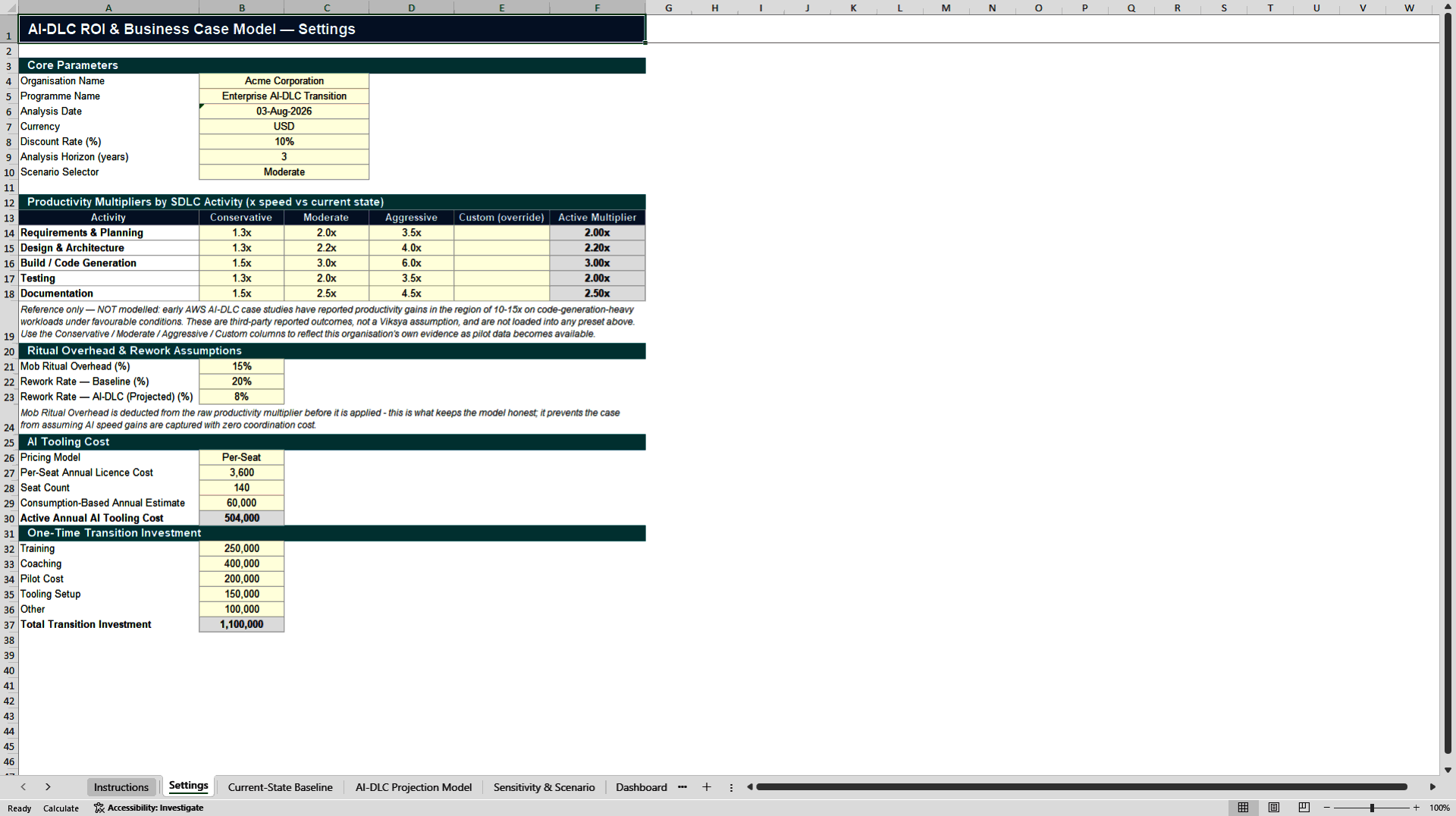
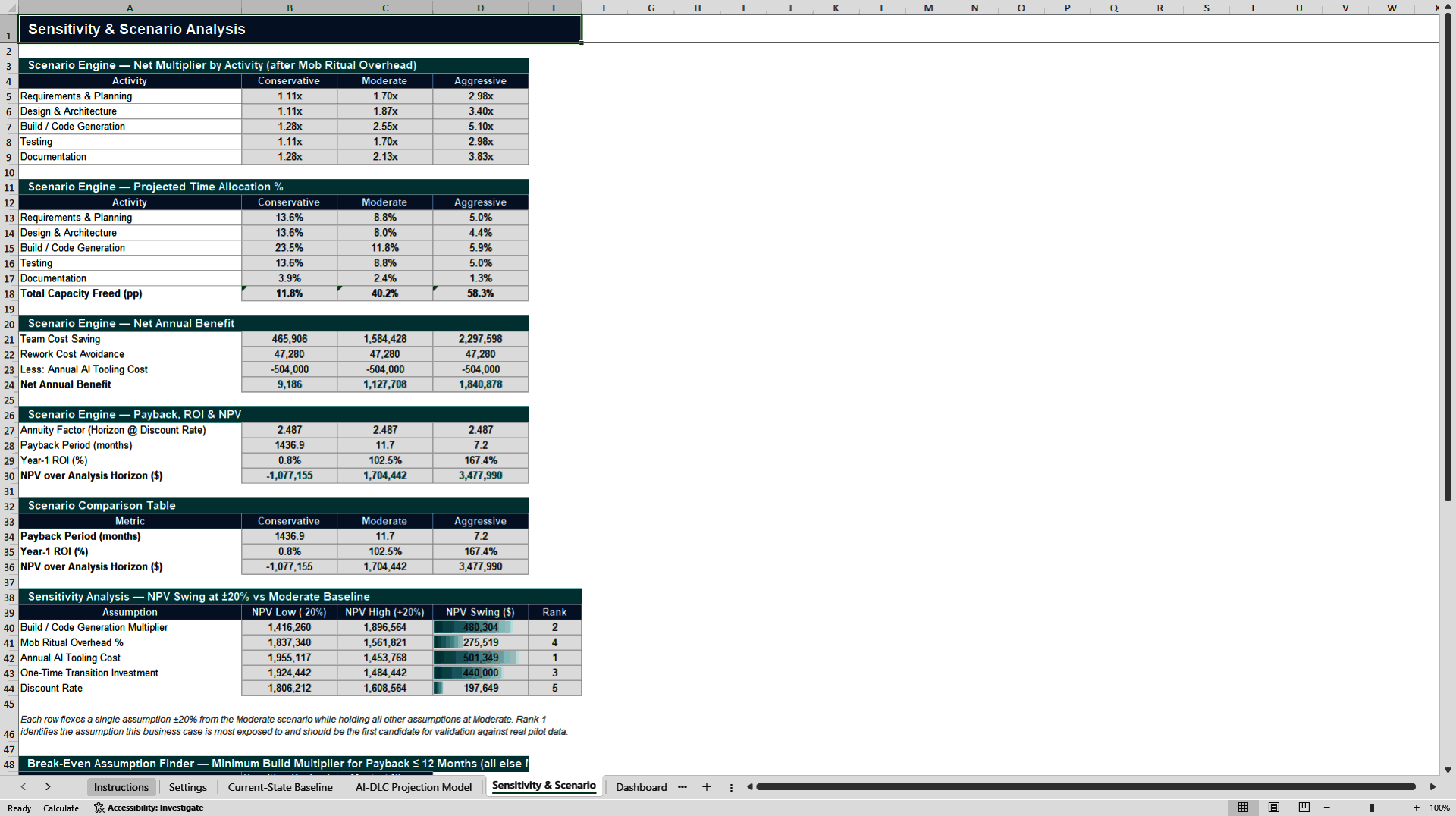
- Models Conservative, Moderate, and Aggressive productivity scenarios across five SDLC activities, net of a Mob Ritual Overhead deduction for coordination and review time.
- Includes a ranked sensitivity table and break-even multiplier finder that show exactly which assumption the business case is most exposed to.
ARTIFICIAL INTELLIGENCE EXCEL DESCRIPTION
A business case for AI-Driven Development Lifecycle (AI-DLC) adoption built on someone else's published productivity numbers rarely survives a first conversation with Finance. Steering committees and CFOs tend to ask the same question before approving investment: how do we know this benefit applies to our own delivery organisation? A single optimistic assumption, with no range and no visibility into coordination overhead, leaves that question unanswered.
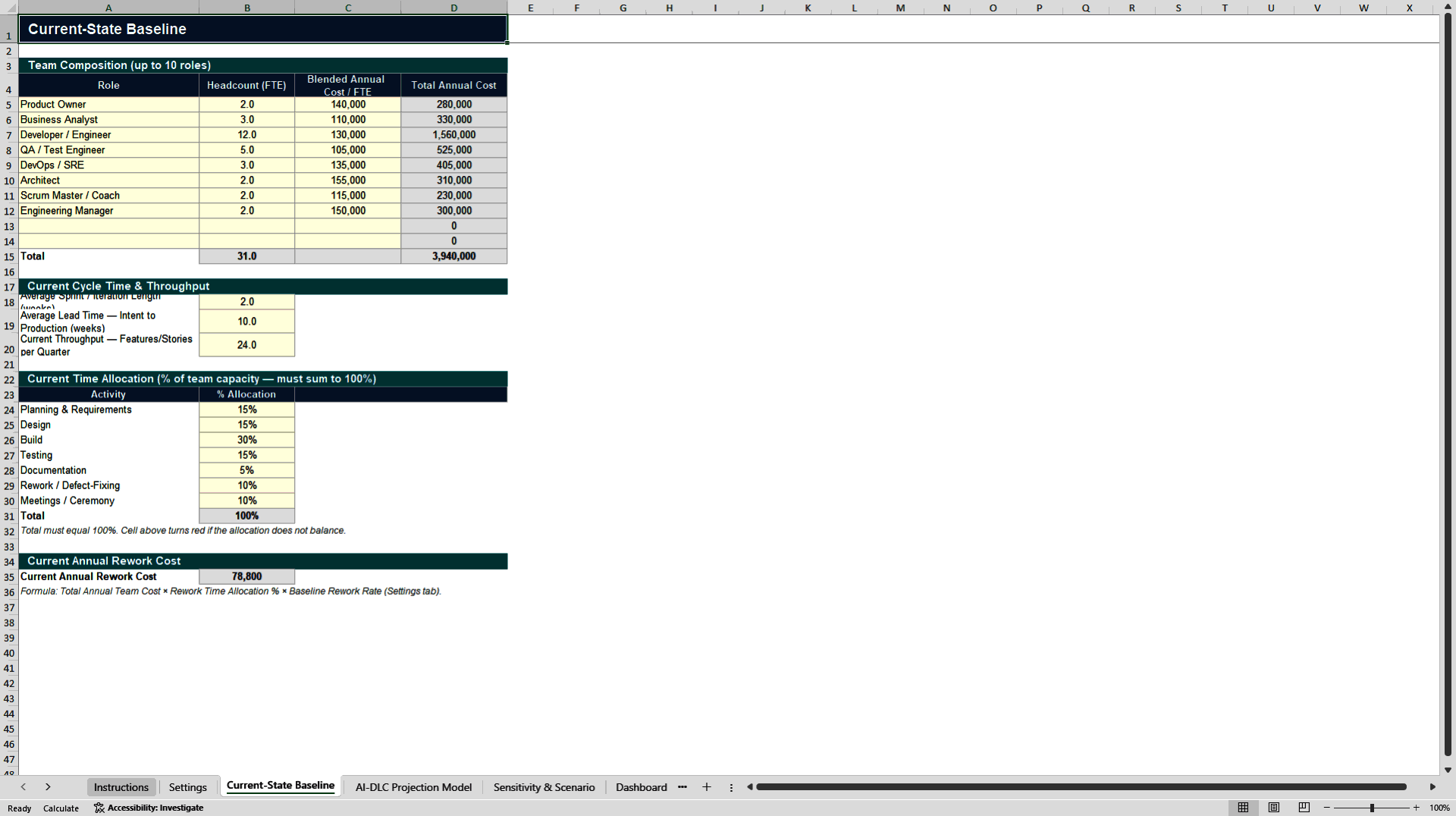
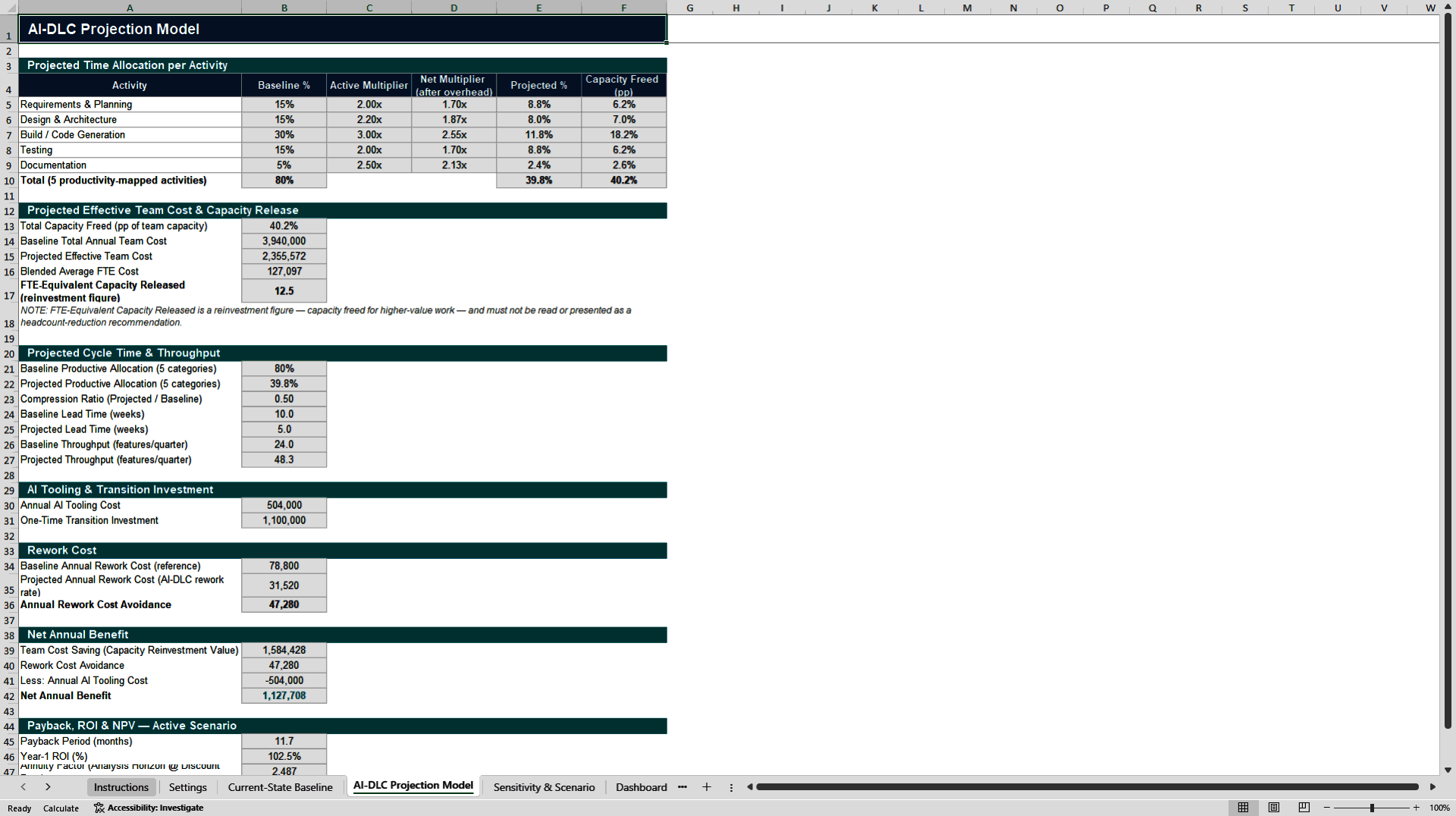
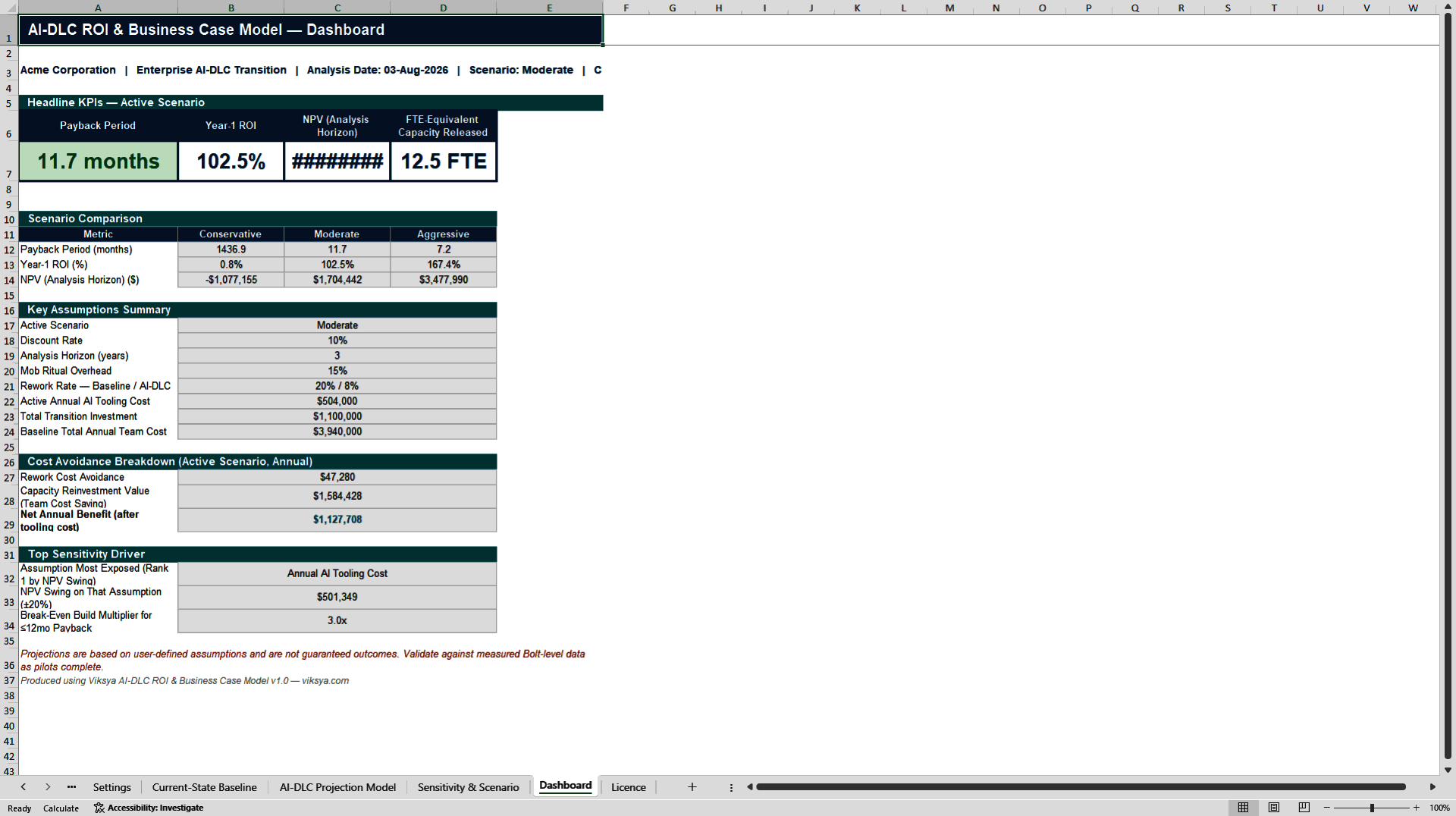
This Excel workbook builds the business case from an organisation's own delivery economics rather than a borrowed case study. Starting from current-state team cost, cycle time, throughput, and time allocation, it applies Conservative, Moderate, and Aggressive productivity multipliers across five SDLC activities, net of a Mob Ritual Overhead deduction that accounts for the planning, review, and coordination time an AI-DLC transition still requires. The output is a payback period in months, Year-1 ROI, a multi-year NPV discounted at the organisation's own cost of capital, and an FTE-equivalent capacity figure framed explicitly as a reinvestment number rather than a headcount target.
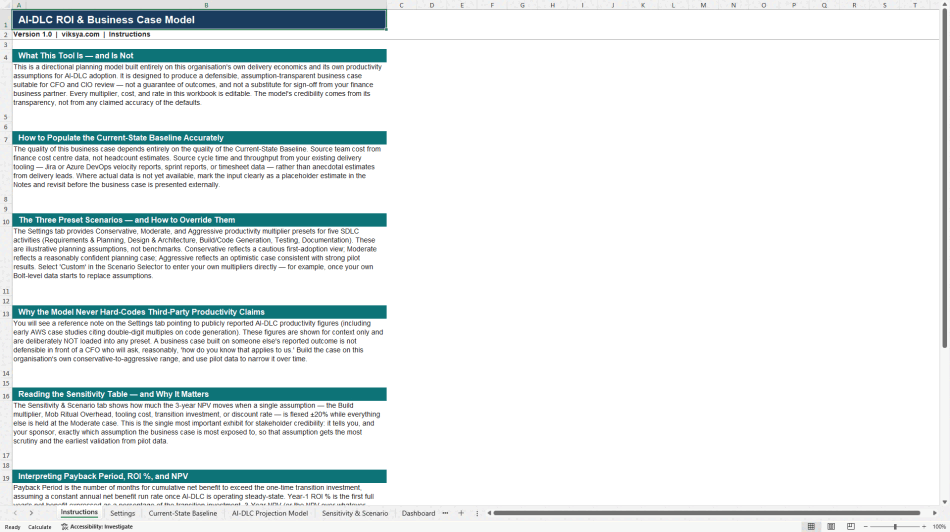
The workbook is organised across six tabs. An Instructions tab walks through populating the baseline, selecting a scenario, and reading the outputs. A Settings tab holds every assumption in one place: multipliers, overhead, rework rates, tooling cost, and transition investment, with a custom-override option. Current-State Baseline is the single input tab for team composition and delivery metrics. AI-DLC Projection Model, Sensitivity & Scenario, and Dashboard are locked and calculate automatically: the projection model computes capacity freed and net annual benefit by activity, the sensitivity tab ranks which single assumption moves NPV most and locates the break-even multiplier, and the dashboard consolidates the case into a single print-ready page for a CFO or steering committee.
It is built for programme managers and VPs of Engineering preparing the initial investment case, for CFOs and FP&A partners reviewing it against their own cost-centre data and discount rate, and for management consultants who need a repeatable, defensible AI-DLC business case without building a financial model from scratch for every client engagement.
Format: Excel (.xlsx), no macros, built for Excel 2016 and later. A 15-page PDF user guide is included. The workbook is a directional planning model, not a guarantee of outcomes; it does not constitute financial advice, and benefit assumptions should be validated with Finance before use.
Published by Viksya. Seller licence terms are included within the document and take precedence over platform defaults
Got a question about the product? Email us at support@flevy.com or ask the author directly by using the "Ask the Author a Question" form. If you cannot view the preview above this document description, go here to view the large preview instead.
Source: Best Practices in Artificial Intelligence, Return on Investment Excel: AI-DLC ROI & Business Case Model Excel (XLSX) Spreadsheet, Viksya
ABOUT THE AUTHOR

Viksya builds decision frameworks for leaders who answer to a board, not a hunch. Our Excel workbooks and playbooks are developed by a transformation leader with hands-on experience directing $100M+ AI and cloud portfolios inside large enterprises -- the same instruments used to justify, select, estimate, and govern real programmes, productized. The catalog spans three tracks: AI Transformation ... [read more]
Ask the Author a Question
You must be logged in to contact the author.




























