
The pressure on Boards and Directors to raise their game has remained acute. A survey of more than 770 directors from public and private companies across the industries around the world suggested that some are responding more energetically than others. There is a dramatic difference between how directors allocate their time among boardroom activities and the effectiveness of the Boards. One in four directors assessed their impact as moderate or lower, while others reported as having a high impact across Board functions.
In the area of Strategy, the call to becoming more forward looking is further highlighted. Strategy Development has always been complex. This is further emphasized when the Board and Management are pressured to find the best answers to global business concerns and issues. Yet, when Strategy Development is undertaken, it becomes invaluable. It does not only lead to clearer strategies but also the creation of alignment essential in making bolder moves.
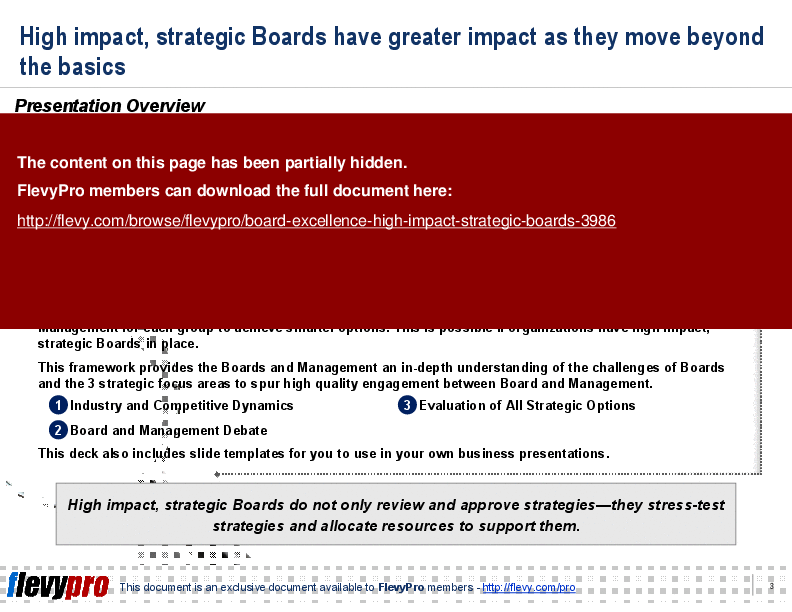
While these are essential, there is a need to raise the quality of engagement on Strategy between the Board and Management for each group to achieve smarter options. This is possible if organizations have high impact, strategic Boards in place. High impact, strategic Boards do not only review and approve strategies. They also stress-test strategies and allocate resources to support them.
This framework provides the Boards and Management an in-depth understanding of the challenges of Boards and the 3 strategic focus areas to spur high quality engagement between Board and Management.
1. Industry and Competitive Dynamics
2. Board and Management Debate
3. Evaluation of All Strategic Options
This deck also includes slide templates for you to use in your own business presentations.
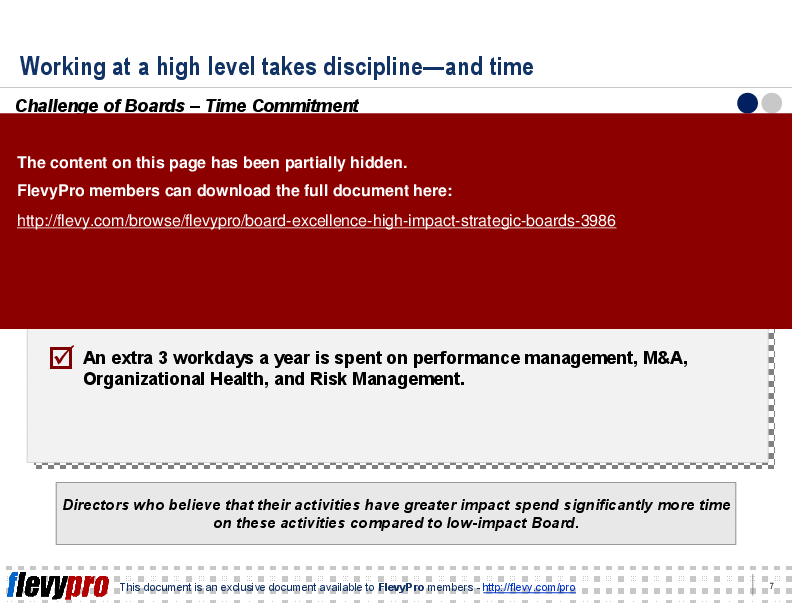
High-impact Boards invest significantly more time on strategy, dedicating up to 8 extra workdays annually. They engage in rigorous practices such as reducing decision biases and evaluating resource reallocation.
Got a question about this document? Email us at flevypro@flevy.com.
Executive Summary
The "Board Excellence: High Impact, Strategic Boards" presentation is designed to elevate board engagement and strategic decision-making. Developed by former McKinsey and Big 4 consultants, this framework emphasizes the need for boards to move beyond basic oversight to actively stress-test strategies and allocate resources effectively. By focusing on 3 strategic areas—Industry and Competitive Dynamics, Board and Management Debate, and Evaluation of All Strategic Options—this presentation equips boards with the tools necessary for high-quality engagement and informed decision-making.
Who This Is For and When to Use
• Board members seeking to enhance their strategic impact
• Corporate executives focused on improving board engagement
• Consultants advising organizations on governance and strategy
• Management teams looking to align with board expectations
Best-fit moments to use this deck:
• During board strategy sessions to foster deeper discussions
• When preparing for annual strategy reviews or assessments
• In workshops aimed at improving board-management collaboration
Learning Objectives
• Define the characteristics of high-impact boards and their strategic roles
• Build a framework for effective board engagement in strategy development
• Establish processes for evaluating industry dynamics and competitive landscapes
• Develop skills for facilitating productive board-management debates
• Create a robust set of strategic options and resource allocation plans
• Enhance understanding of the board's role in stress-testing strategies
Table of Contents
• Overview (page 3)
• Challenge of Boards (page 5)
• Strategy Focus Areas (page 12)
• Templates (page 17)
Primary Topics Covered
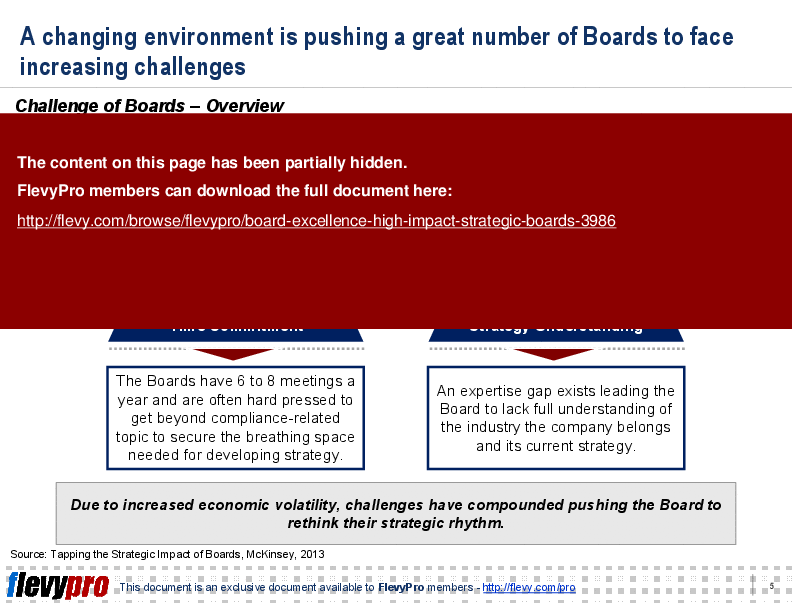
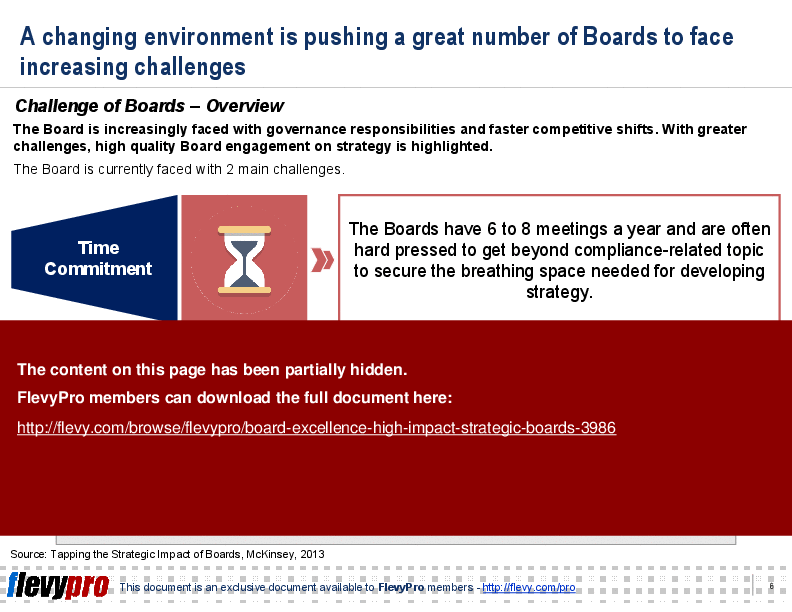
• Challenge of Boards - Boards face significant challenges, including time constraints and expertise gaps, which hinder effective engagement in strategy development.
• Time Commitment - High-impact boards dedicate more time to strategic discussions, significantly impacting their effectiveness.
• Strategy Understanding - A limited understanding of the organization's strategy can lead to reduced board engagement and ineffective decision-making.
• Industry and Competitive Dynamics - Boards must grasp industry dynamics to support informed strategic discussions and decisions.
• Board and Management Debate - Establishing a strong dialogue between the board and management is crucial for developing shared strategic understanding.
• Evaluation of All Strategic Options - Boards should rigorously evaluate all strategic options, ensuring thorough discussions on resource allocation and execution.
Deliverables, Templates, and Tools
• Framework for assessing board engagement in strategy
• Template for evaluating industry dynamics and competitive landscapes
• Guidelines for conducting effective board-management debates
• Checklist for evaluating strategic options and resource allocation
• Presentation slides for board strategy sessions
• Tools for tracking board engagement and decision-making processes
Slide Highlights
• Overview of the challenges faced by boards in today’s volatile environment
• Insights into the time commitment required for high-impact board activities
• Framework for understanding industry dynamics and competitive pressures
• Strategies for fostering effective board-management dialogue
• Evaluation metrics for assessing strategic options and resource allocation
Potential Workshop Agenda
Board Engagement Strategy Session (90 minutes)
• Discuss the current challenges faced by the board
• Review the strategic focus areas for enhanced engagement
• Develop action items for improving board-management collaboration
Industry Dynamics Workshop (60 minutes)
• Analyze current industry trends and competitive pressures
• Identify key value drivers affecting the organization
• Formulate strategies for addressing identified challenges
Customization Guidance
• Tailor the framework to reflect specific industry dynamics relevant to your organization
• Adjust templates to align with your board's unique governance structure
• Incorporate organizational terminology and metrics for consistency in discussions
Secondary Topics Covered
• Governance responsibilities of boards in a changing environment
• The importance of time management for effective board engagement
• Strategies for overcoming expertise gaps within the board
• Best practices for aligning board and management objectives
Topic FAQ
Document FAQ
These are questions addressed within this presentation.
What are the key characteristics of high-impact boards?
High-impact boards actively engage in strategy development, stress-test options, and allocate resources effectively, dedicating significant time to these activities.
How can boards improve their understanding of industry dynamics?
Boards should conduct independent research, engage in discussions with executives, and analyze performance metrics to enhance their understanding of industry dynamics.
What is the role of management in board discussions?
Management should provide critical insights into competitive trends, performance metrics, and strategic capabilities to facilitate informed board discussions.
How can boards ensure effective resource allocation?
By rigorously evaluating strategic options and maintaining open dialogue with management, boards can make informed decisions regarding resource allocation.
What templates are included in this presentation?
The presentation includes templates for assessing board engagement, evaluating industry dynamics, and facilitating board-management debates.
How can boards track their engagement effectiveness?
Boards can utilize checklists and metrics provided in the presentation to monitor engagement levels and decision-making processes.
What are the benefits of fostering board-management debates?
Encouraging open dialogue between the board and management leads to a shared understanding of strategic objectives and enhances decision-making quality.
How often should boards review their strategic focus areas?
Boards should regularly assess their strategic focus areas, ideally during each quarterly meeting or annual strategy review.
What resources are available for further learning?
Additional frameworks and resources can be accessed through the FlevyPro library, offering a wealth of materials on business strategy and governance.
Glossary
• Board Engagement - The active involvement of board members in strategic discussions and decision-making processes.
• Strategic Options - Various pathways or choices available to the board for achieving organizational objectives.
• Resource Allocation - The process of distributing resources among various projects or business units.
• Industry Dynamics - The factors that influence the competitive landscape within a specific industry.
• Governance Responsibilities - The obligations and duties of the board to oversee and guide the organization effectively.
• Time Commitment - The amount of time board members dedicate to their roles and responsibilities.
• Management Debate - The discussions between board members and management aimed at aligning strategic objectives.
• Competitive Trends - The evolving patterns and shifts within the competitive landscape that impact business strategy.
• Value Drivers - Key factors that contribute to the creation of value within an organization.
• Performance Metrics - Measurements used to assess the effectiveness and efficiency of organizational strategies.
• Strategic Alignment - The process of ensuring that the board's objectives are in sync with management's goals.
• Stress-Test Strategies - The evaluation of strategies under various scenarios to assess their robustness and effectiveness.
Source: Best Practices in Strategy Development, Board PowerPoint Slides: Board Excellence: High Impact, Strategic Boards PowerPoint (PPT) Presentation Slide Deck, LearnPPT Consulting
Did you need more documents?
Consider a FlevyPro subscription from $39/month. View plans here.
For $10.00 more, you can download this document plus 2 more FlevyPro documents. That's just $13 each.
|
Download our FREE Strategy & Transformation Framework Templates
Download our free compilation of 50+ Strategy & Transformation slides and templates. Frameworks include McKinsey 7-S, Balanced Scorecard, Disruptive Innovation, BCG Curve, and many more. |