
Editor Summary
Agile at Scale in Software Development is a 48-slide PPTX consulting deck developed by Affinity Consulting Partners that guides implementation of Agile methodologies across large-scale software projects.
Read moreIncludes templates and tools such as an Agile transformation roadmap template, sprint planning and backlog management templates, retrospective meeting framework, performance measurement dashboard, user story mapping tool, and visual project board template. Targeted at corporate executives, integration leaders, project managers, and consultants. Sold as a digital download on Flevy.
Use this deck when an organization is preparing or executing an enterprise Agile transformation—during planning, process assessment, team training, or workshop facilitation.
Corporate executives aligning portfolio priorities and tracking Agile KPIs to improve time-to-market and customer satisfaction.
Integration leaders developing and sequencing an Agile transformation roadmap across interdependent teams.
Project managers running sprint planning, backlog prioritization, and visual project-board coordination for cross-functional teams.
External consultants facilitating workshops, retrospectives, and implementation strategies.
The deck’s emphasis on enterprise scaling, role definition, and program-level alignment reflects practices used in scaled Agile frameworks such as SAFe, LeSS, and DAD.
This PPT deck and Word document consider Agile methodologies, such as Scrum, Kanban, and Extreme Programming, that have transformed software development by emphasizing iterative progress, collaboration, and adaptability. However, scaling Agile for large projects and enterprise-level development presents unique challenges and requires specific strategies.
Challenges of Scaling Agile:
• Complex Coordination: Large projects require extensive synchronization among teams working on interdependent components.
• Consistent Practices: Different interpretations of Agile principles across teams can lead to process inconsistencies.
• Cultural Shift: Transitioning to Agile involves significant changes in organizational culture, moving from hierarchical structures to self-organizing teams.
• Tool Integration: Seamlessly integrating various tools for project management, continuous integration, and communication is essential.
Strategies for Scaling Agile:
-Scaled Agile Framework (SAFe): SAFe provides structured guidelines for roles, responsibilities, and processes at the enterprise level, aligning teams around value streams.
• Large-Scale Scrum (LeSS): LeSS extends Scrum principles to larger projects, emphasizing simplicity, clear vision, and strong team collaboration.
• Disciplined Agile Delivery (DAD): DAD offers a hybrid approach incorporating elements from Scrum, Lean, and Kanban, tailored to the organization's needs.
• Agile Program Management: Establishing an Agile Program Management Office (APMO) ensures alignment with strategic goals, monitors progress, and facilitates communication.
Case Studies:
• Spotify: Spotify's model organizes teams into "squads," "tribes," "chapters," and "guilds," promoting autonomy and alignment.
• ING Bank: ING Bank reorganized into small, cross-functional teams called "squads," improving responsiveness to market changes and customer needs.
Benefits of Scaling Agile:
• Improved Responsiveness: Organizations can swiftly adapt to market changes and customer feedback.
• Enhanced Collaboration: Agile fosters a culture of collaboration and continuous improvement.
• Increased Transparency: Enhanced visibility into project progress aids in informed decision-making.
• Higher Quality: Iterative development and continuous testing lead to higher-quality software.
The deck explores how Agile in software creation involves navigating significant challenges but offers substantial benefits. By adopting suitable frameworks and learning from successful implementations, organizations can achieve a more responsive, collaborative, and transparent development process, leading to high-quality software and business success.
Got a question about the product? Email us at support@flevy.com or ask the author directly by using the "Ask the Author a Question" form. If you cannot view the preview above this document description, go here to view the large preview instead.
MARCUS OVERVIEW
This synopsis was written by Marcus [?] based on the analysis of the full 48-slide presentation.
Executive Summary
This presentation, titled "Agile at Scale in Software Development," offers a consulting-grade toolkit designed to guide organizations in implementing Agile methodologies across large-scale software projects. Drawing from extensive experience with leading high-tech companies, this deck provides actionable insights into overcoming challenges associated with Agile transformation. It equips corporate executives and integration leaders with the strategies necessary to enhance operational efficiency, foster innovation, and accelerate time-to-market for new products and services. By leveraging Agile practices, organizations can optimize workflows, improve collaboration, and ultimately deliver higher-quality software solutions.
Who This Is For and When to Use
• Corporate executives overseeing software development initiatives
• Integration leaders managing Agile transformation projects
• Project managers responsible for cross-functional team collaboration
• Consultants advising organizations on Agile methodologies
Best-fit moments to use this deck:
• During the planning phase of an Agile transformation initiative
• When assessing current software development processes and identifying bottlenecks
• To train teams on Agile practices and methodologies
• For workshops aimed at refining Agile implementation strategies
Learning Objectives
• Define the key differences between Agile and traditional software development methodologies
• Identify the core principles of Agile that enhance flexibility and responsiveness
• Establish best practices for implementing Agile at scale across multiple teams
• Develop a comprehensive Agile transformation roadmap tailored to organizational needs
• Create an environment that fosters continuous improvement and team empowerment
• Measure the effectiveness of Agile practices through relevant KPIs
Table of Contents
• Introduction to Agile vs. Traditional Development (page 4)
• Incorporating Agile Methodologies into Practice (page 17)
• Key Success Factors for Applying Agile at Scale (page 34)
• Considerations for Large Scale Implementation (page 44)
Primary Topics Covered
• Agile vs. Waterfall - Agile methodologies prioritize customer satisfaction through iterative development, contrasting with the linear, phase-gated Waterfall model.
• Agile Principles - Emphasizes flexibility, collaboration, and responsiveness to change, allowing teams to adapt to evolving requirements.
• Implementation Strategies - Provides a structured approach for integrating Agile practices across multiple teams and projects.
• Team Empowerment - Focuses on creating self-organizing teams that take ownership of their work and are accountable for deliverables.
• Continuous Improvement - Encourages regular retrospectives and feedback loops to enhance team performance and product quality.
• Performance Metrics - Identifies key performance indicators (KPIs) to measure the success of Agile implementations and drive organizational alignment.
Deliverables, Templates, and Tools
• Agile transformation roadmap template for planning and execution
• Sprint planning and backlog management templates
• Retrospective meeting framework for continuous improvement
• Performance measurement dashboard for tracking Agile KPIs
• User story mapping tool to prioritize customer requirements
• Visual project board template for managing workflow and progress
Slide Highlights
• Overview of Agile vs. Waterfall methodologies, highlighting key differences in approach and outcomes
• Case studies demonstrating successful Agile transformations in high-tech companies
• Visual representations of Agile processes, including sprint cycles and daily stand-ups
• Metrics illustrating the impact of Agile on project delivery times and customer satisfaction
• Best practices for building cross-functional, empowered teams
Potential Workshop Agenda
Agile Transformation Kickoff (90 minutes)
• Introduce Agile principles and methodologies
• Discuss current challenges in software development
• Identify goals for Agile transformation
Sprint Planning Workshop (120 minutes)
• Define user stories and prioritize the backlog
• Create a sprint plan with actionable tasks
• Establish team roles and responsibilities
Retrospective and Continuous Improvement Session (60 minutes)
• Review sprint outcomes and team performance
• Identify areas for improvement and action items
• Foster a culture of feedback and adaptation
Customization Guidance
• Tailor the Agile transformation roadmap to align with specific organizational goals and challenges
• Adjust sprint planning templates to reflect team capacity and project timelines
• Incorporate industry-specific compliance and security requirements into Agile practices
• Modify performance metrics to align with organizational objectives and stakeholder expectations
Secondary Topics Covered
• Challenges of scaling Agile in complex organizations
• Strategies for maintaining alignment between Agile teams and business objectives
• The role of leadership in fostering an Agile culture
• Tools and technologies that support Agile development practices
• Case studies of successful Agile implementations in various industries
Topic FAQ
What are the main differences between Agile and Waterfall in software development?
Agile emphasizes iterative development, frequent customer feedback, and adaptability to changing requirements, while Waterfall is a linear, phase-gated approach that requires complete requirements upfront. Agile organizes work into time-boxed iterations such as sprints, whereas Waterfall progresses through distinct sequential phases.
How should an organization measure success when implementing Agile at scale?
Common metrics include time-to-market, customer satisfaction, defect rates, and team productivity. Measuring these often requires a consolidated view through dashboards that track delivery cadence, quality, and stakeholder outcomes; Flevy's Agile at Scale in Software Development includes a performance measurement dashboard to support this.
Which enterprise frameworks are available for scaling Agile across large organizations?
The author guidance names several scaling approaches: Scaled Agile Framework (SAFe), Large-Scale Scrum (LeSS), and Disciplined Agile Delivery (DAD). It also recommends establishing an Agile Program Management Office (APMO) to coordinate alignment and governance across value streams.
How can teams ensure continuous improvement in Agile practices?
Teams should run regular retrospectives and feedback loops to surface improvements, capture action items, and adapt processes. The product includes a retrospective meeting framework and workshop agendas designed to institutionalize continuous improvement through recurring reflection and action.
What should I look for when choosing an Agile-at-scale toolkit for my company?
Buyers should prioritize usable templates for roadmap planning, sprint planning, backlog management, retrospective facilitation, and KPI tracking, plus customization guidance and case studies to adapt practices to context; for example, look for an Agile transformation roadmap template and a performance measurement dashboard.
How much time and internal resources are typically needed to run the kickoff and sprint planning workshops in this kind of toolkit?
The sample workshop agendas in the deck specify realistic durations: an Agile Transformation Kickoff at 90 minutes, a Sprint Planning Workshop at 120 minutes, and a Retrospective and Continuous Improvement Session at 60 minutes, which can be staffed by product owners, Scrum Masters, and team leads.
I just merged 2 development organizations—what practical first steps should I take to implement Agile across teams?
Start by assessing current processes to identify bottlenecks, run a planning-phase kickoff to set goals, and build a tailored Agile transformation roadmap; use training and targeted workshops to align practices and use tools like a user story mapping tool and the Agile transformation roadmap template.
How can leadership reduce resistance and support an enterprise Agile transformation?
Leadership should engage stakeholders early, provide resources and training, and demonstrate early wins to build momentum. Establishing program-level governance and an Agile Program Management Office (APMO) helps maintain alignment, monitoring, and communication across teams.
Document FAQ
These are questions addressed within this presentation.
What are the key differences between Agile and Waterfall methodologies?
Agile focuses on iterative development and flexibility, allowing for changes throughout the project lifecycle, while Waterfall is a linear approach that requires complete requirements upfront.
How can organizations effectively implement Agile at scale?
Successful implementation requires a structured approach, including training, clear communication, and alignment with organizational goals.
What metrics should be used to measure Agile success?
Key performance indicators include time-to-market, customer satisfaction, defect rates, and team productivity.
How can teams ensure continuous improvement in Agile practices?
Regular retrospectives and feedback loops help teams identify areas for improvement and adapt their processes accordingly.
What role do leadership and management play in Agile transformation?
Leadership is crucial for fostering a supportive culture, providing resources, and ensuring alignment with business objectives.
How can Agile methodologies be adapted for different industries?
Customization of Agile practices to meet industry-specific requirements and compliance standards is essential for successful implementation.
What are common pitfalls in Agile implementation?
Common pitfalls include treating Agile as merely a development practice, neglecting stakeholder involvement, and failing to conduct retrospectives.
How can organizations overcome resistance to Agile transformation?
Engaging stakeholders early, providing training, and demonstrating quick wins can help alleviate resistance and build support for Agile practices.
Glossary
• Agile - A methodology emphasizing iterative development and flexibility in response to change.
• Waterfall - A linear project management approach requiring complete requirements upfront.
• Sprint - A time-boxed period during which specific work is completed and made ready for review.
• Backlog - A prioritized list of work items or features to be completed in a project.
• User Story - A brief description of a feature from the perspective of the end user.
• Retrospective - A meeting held at the end of a sprint to reflect on the team's performance and identify improvements.
• KPI - Key Performance Indicator, a measurable value that demonstrates how effectively an organization is achieving key business objectives.
• Cross-Functional Team - A group of individuals with different expertise working together towards a common goal.
• Continuous Integration - A practice where code changes are automatically tested and merged into a shared repository frequently.
• Scrum - An Agile framework for managing complex projects, emphasizing teamwork, accountability, and iterative progress.
• Lean - A methodology focused on minimizing waste and maximizing value in processes.
• Empowered Team - A team that has the authority and autonomy to make decisions regarding their work.
• Stakeholder - An individual or group with an interest in the outcome of a project.
• Increment - A portion of the product that is delivered at the end of a sprint, representing a step towards the final product.
• Product Owner - The individual responsible for defining and prioritizing the product backlog.
• Scrum Master - The facilitator for the Scrum team, ensuring that Agile practices are followed.
• Test-Driven Development (TDD) - A software development approach where tests are written before the code itself.
• Burn Down Chart - A visual representation of work completed versus work remaining in a sprint.
• Visual Project Board - A tool used to manage and visualize project progress and tasks.
• Feature - A distinct aspect of a product that delivers value to the user.
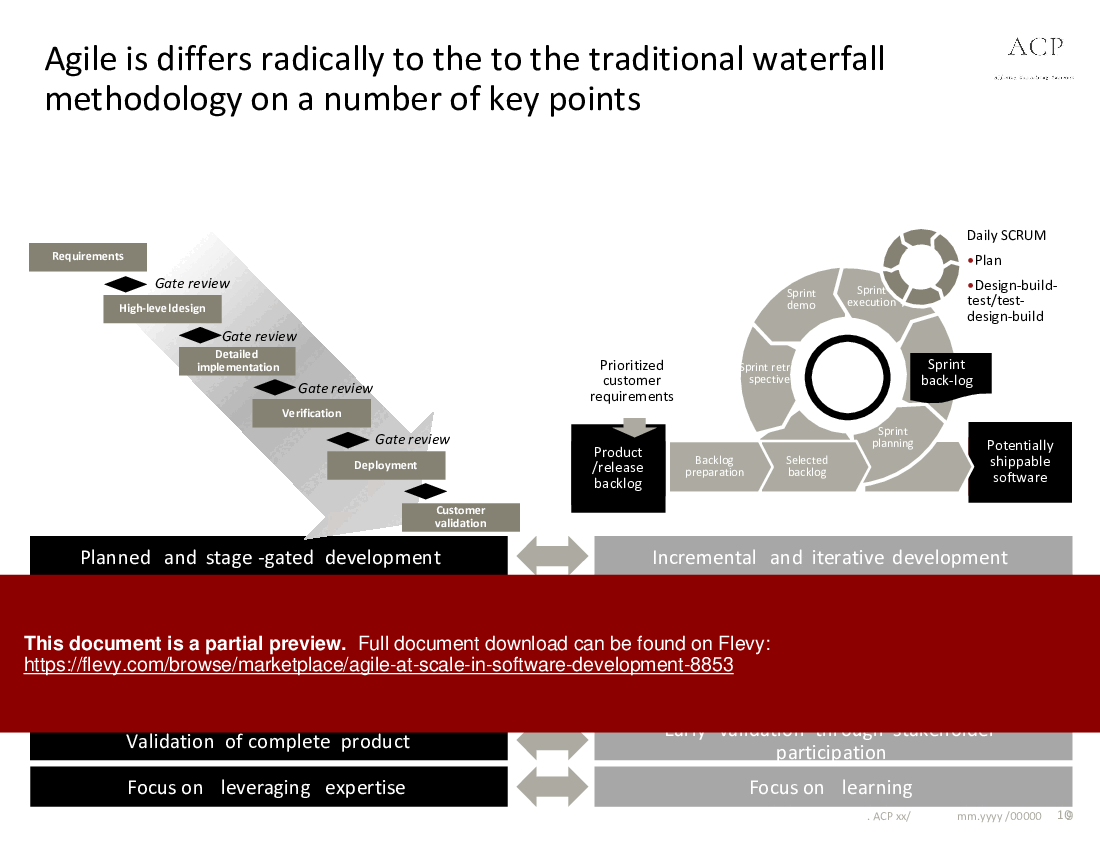
This PPT slide contrasts Agile methodology with the traditional waterfall approach in software development. The waterfall model follows a linear sequence of stages: requirements gathering, high-level design, detailed implementation, verification, and deployment, characterized by gate reviews and structured decision-making, leading to inflexibility. In contrast, Agile is an iterative process emphasizing incremental development, frequent delivery, and customer-oriented backlogs that prioritize requirements. Agile teams are empowered for end-to-end processes, promoting collaboration and adaptability through daily SCRUM meetings and sprint planning. The waterfall model's rigidity contrasts with Agile's flexibility, highlighting the potential for improved customer satisfaction and project outcomes for organizations considering a shift to Agile practices.
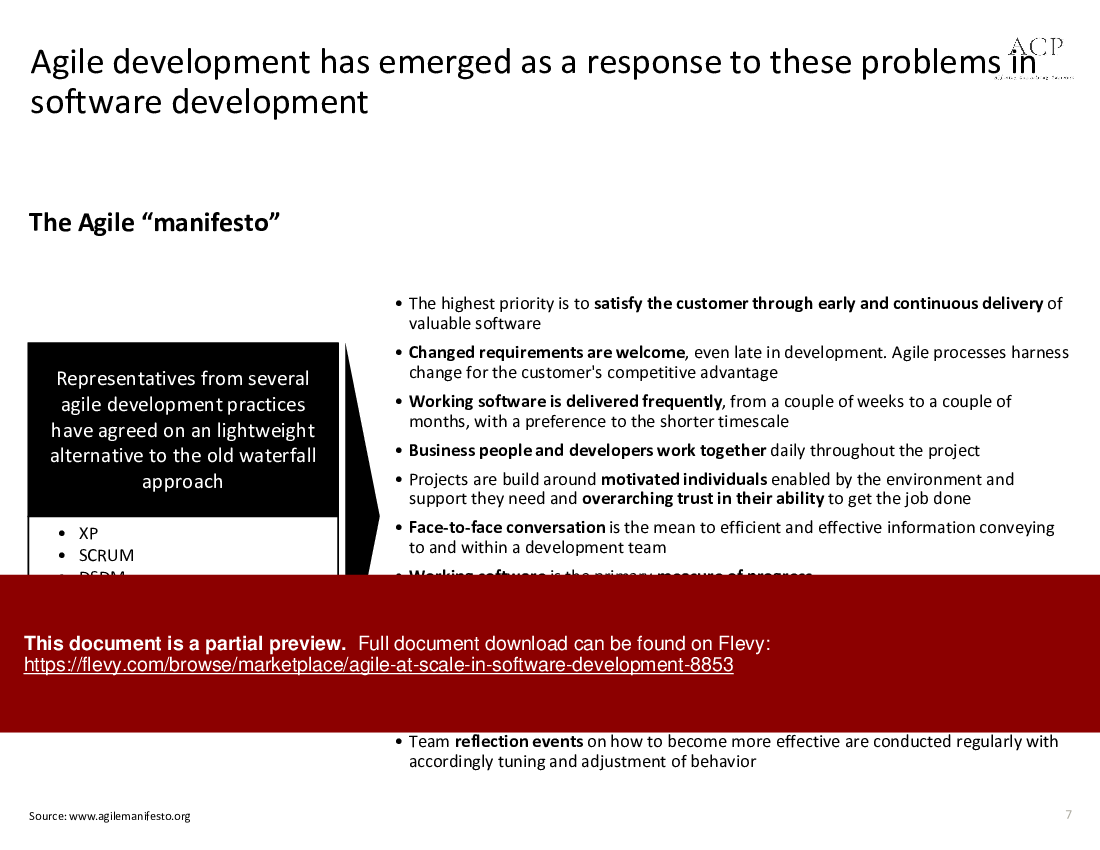
Agile development emerges as a response to the limitations of traditional waterfall methodologies in software development. The Agile manifesto prioritizes customer satisfaction through early and continuous delivery of valuable software, characterized by flexibility and adaptability to late changes in requirements. Key principles include frequent delivery of working software, fostering shorter feedback loops, and collaboration between business stakeholders and developers. Direct communication, particularly face-to-face conversations, is advocated as the most efficient means of information exchange. Progress is measured by the delivery of working software, aligning efforts with tangible outcomes. Agile practices promote sustainability through a consistent pace, ensuring productivity over time, while continuous attention to technical excellence and good design guarantees quality outputs. Simplicity is vital, emphasizing the need to maximize the amount of work not done for more efficient processes and better results.
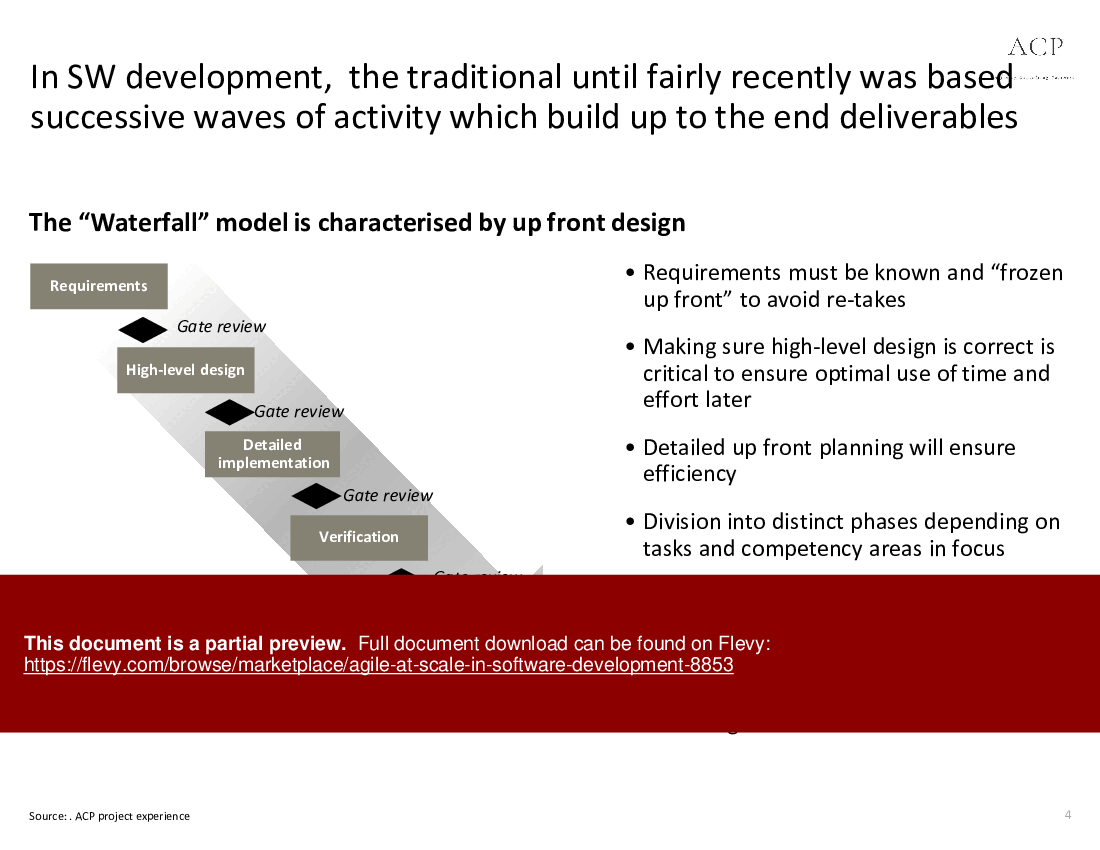
This PPT slide provides an overview of the Waterfall model in software development, characterized by its structured, sequential phases: Requirements, High-level design, Detailed implementation, Verification, and Deployment, each with gate reviews. Upfront design and planning are essential, with clearly defined and "frozen" requirements minimizing rework and optimizing resource allocation and time management. Detailed planning enhances efficiency, leading to better project outcomes. The model organizes tasks and competencies methodically, facilitating smoother transitions between stages. Strict gate reviews ensure thorough completion of each phase, reinforcing quality control. Extensive documentation supports knowledge transfer, emphasizing the model's reliance on thorough record-keeping for continuity and clarity in project management.
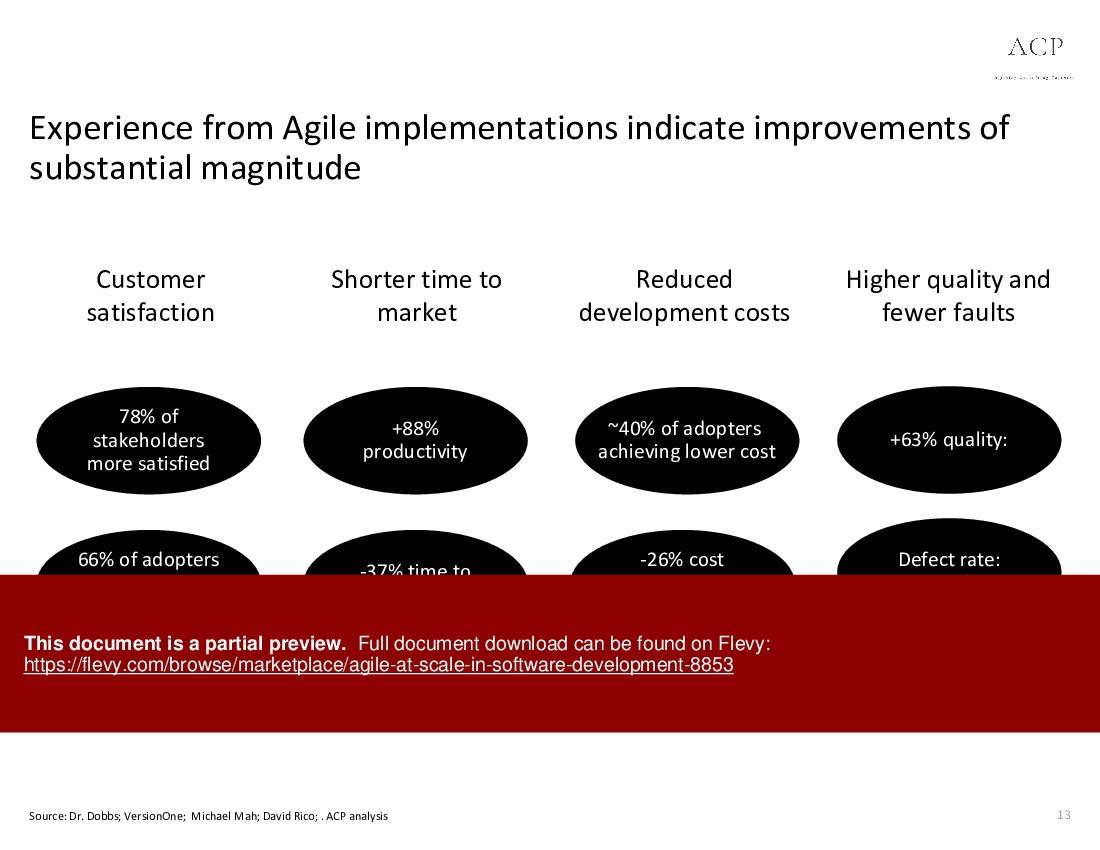
This PPT slide presents key metrics illustrating the benefits of Agile methodologies across 4 categories: Customer Satisfaction, Shorter Time to Market, Reduced Development Costs, and Higher Quality and Fewer Faults. In Customer Satisfaction, 78% of stakeholders report increased satisfaction, and 66% observe improved business and IT alignment. The Shorter Time to Market section highlights an 88% productivity gain and a 37% reduction in time to market, indicating Agile's efficiency. Reduced Development Costs show that 40% of Agile adopters achieve lower costs, with a median reduction of 26%. Finally, the Higher Quality and Fewer Faults category reports a 63% improvement in quality and a 70% decrease in defect rates, underscoring Agile's effectiveness in enhancing product quality.
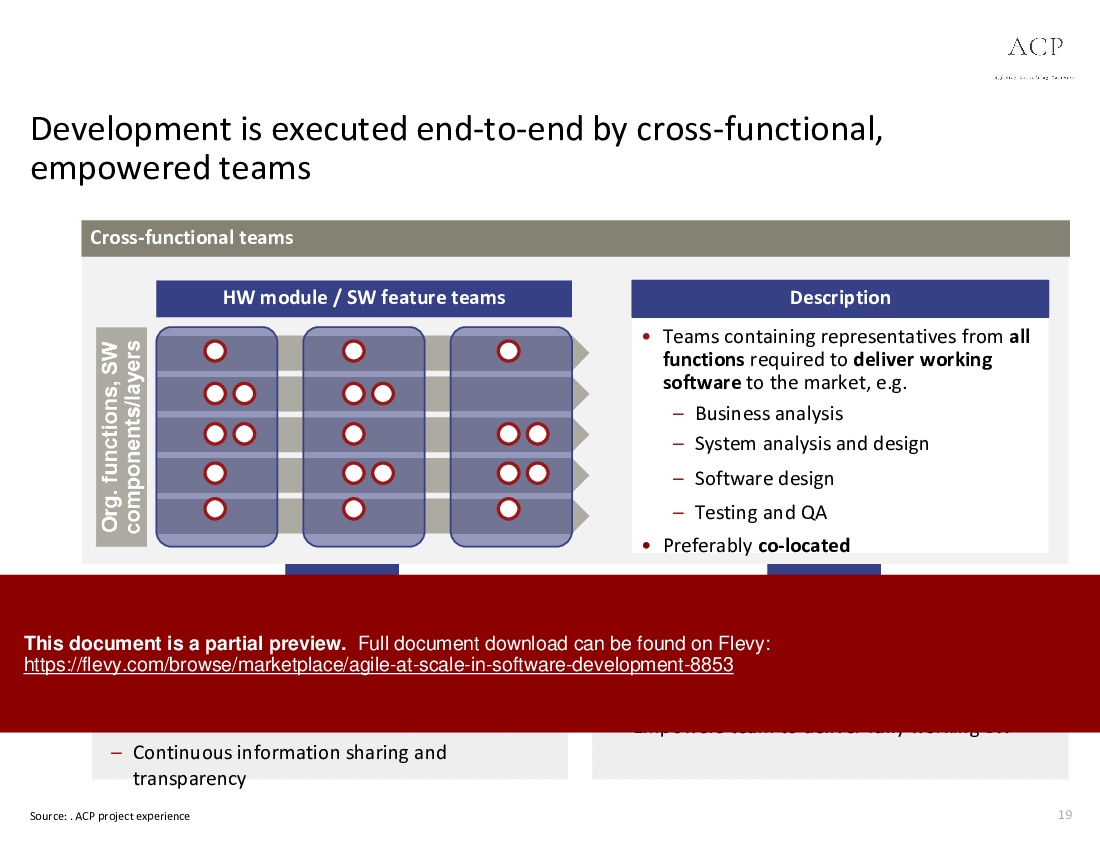
This PPT slide outlines a framework for executing development through cross-functional teams, emphasizing an end-to-end approach. Cross-functional teams consist of representatives from business analysis, system analysis and design, software design, and testing and quality assurance, enhancing collaboration through co-location. The diagram categorizes teams into hardware module and software feature teams, indicating a structured organization that allows for specialized focus while maintaining a holistic project view. Key benefits include shorter lead times, achieved by breaking down silos and promoting joint problem-solving, along with increased efficiency from considering end-to-end requirements from the outset. This empowerment of teams enables the swift delivery of fully functional software to meet market demands.
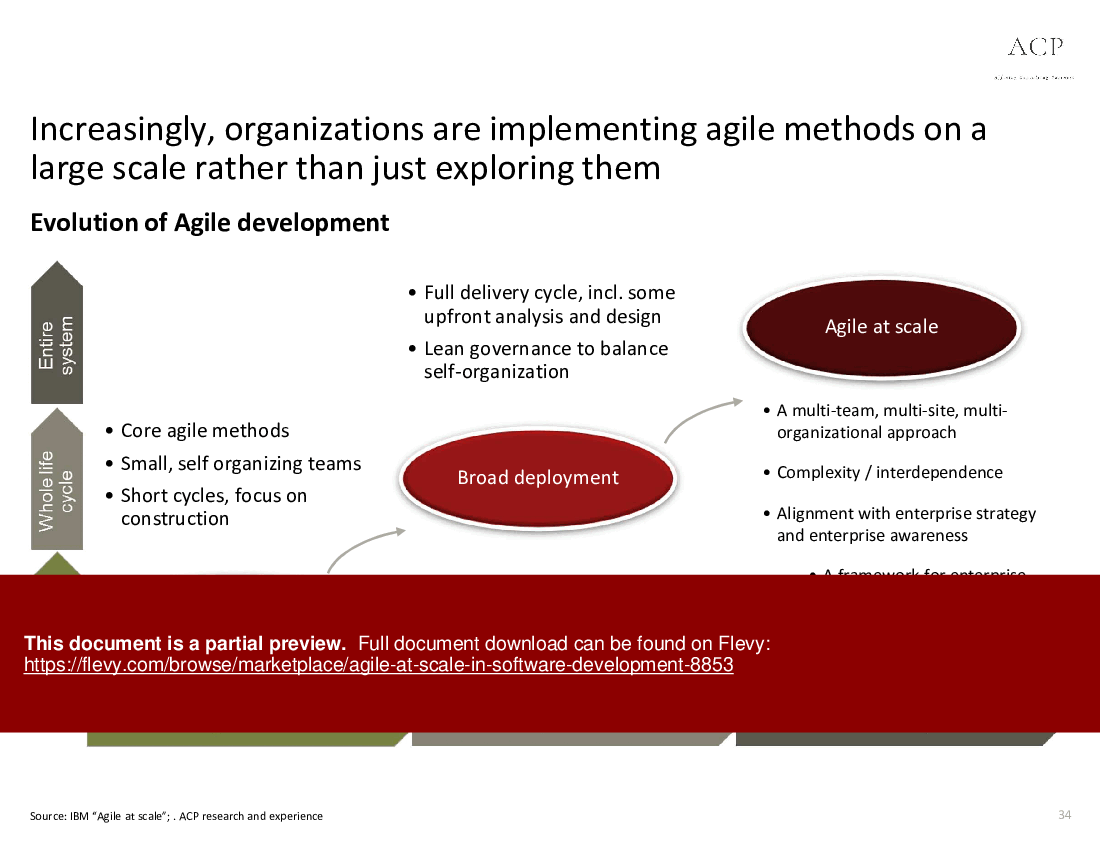
This PPT slide outlines the evolution of Agile development, categorizing practices into 3 levels: Single feature, Whole life cycle, and Entire system. At the Single feature level, Agile pilots involve small, self-organizing teams focusing on short cycles and construction, allowing organizations to test methodologies in a controlled environment. The Whole life cycle level adopts core Agile methods for the full delivery cycle, incorporating upfront analysis, design, and lean governance to balance self-organization with oversight. The Entire system level introduces Agile at scale, employing a multi-team, multi-site approach that addresses complexities in larger projects, aligning with enterprise strategy and managing portfolios effectively. This structured evolution illustrates the transition from isolated Agile practices to cohesive, enterprise-wide implementation.
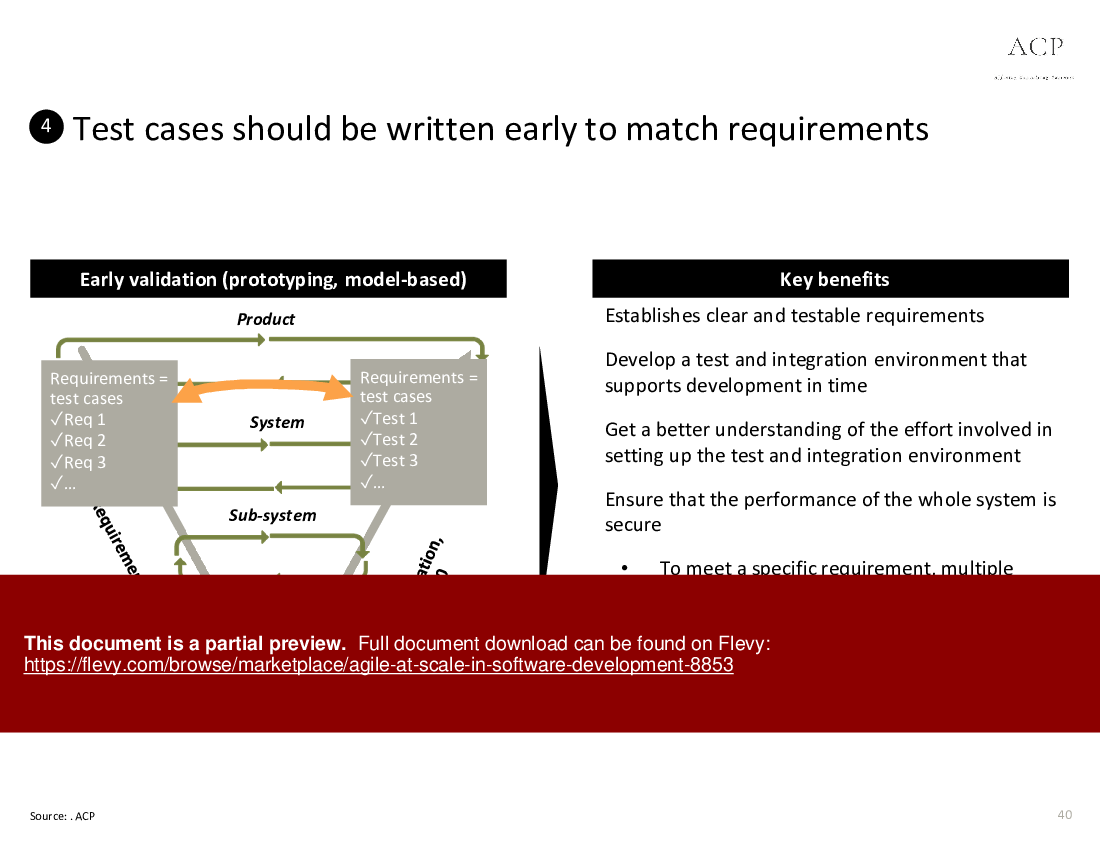
This PPT slide emphasizes the importance of writing test cases early in the software development process to align with project requirements. It presents a structured approach that includes early validation through prototyping and model-based methodologies. Each product requirement must correspond to a specific test case, ensuring clarity in validation throughout the development cycle. Key benefits include establishing clear and testable requirements, fundamental for effective project execution. Developing a test and integration environment supports timely development, with an emphasis on the collaboration required among teams to meet performance security requirements. This proactive testing strategy enhances product quality and mitigates risks associated with performance issues from disjointed team efforts, promoting efficiency in software development processes.
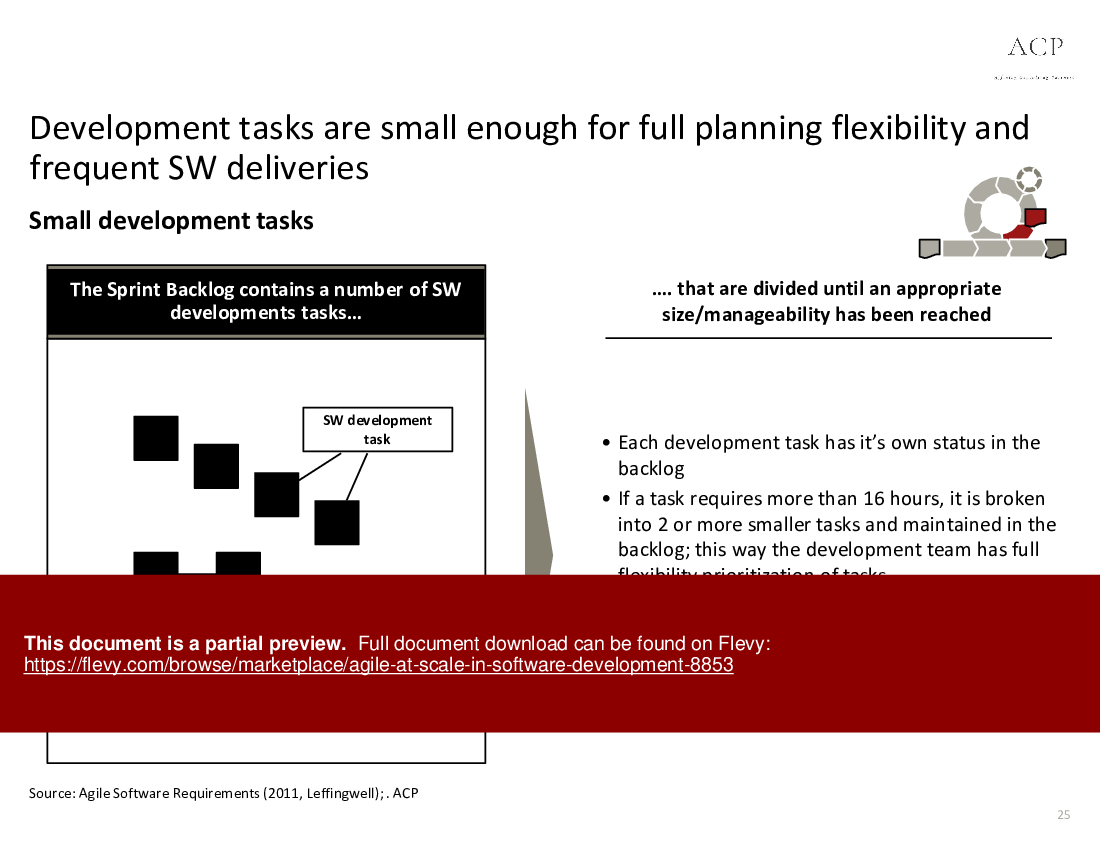
This PPT slide focuses on managing development tasks within a software development framework, specifically the Sprint backlog. Tasks should be small enough for effective planning and frequent software deliveries. If a task is estimated to take more than 16 hours, it should be divided into smaller components to allow flexible prioritization and adaptability to changing project needs. This methodology enhances the team's ability to deliver software frequently and mitigates the risk of over-planning, which can lead to inefficiencies. The Sprint backlog maintains a clear overview of development tasks, fostering an agile environment that supports rapid adjustments and continuous software delivery. Task management is essential for operational efficiency and responsiveness in software development.
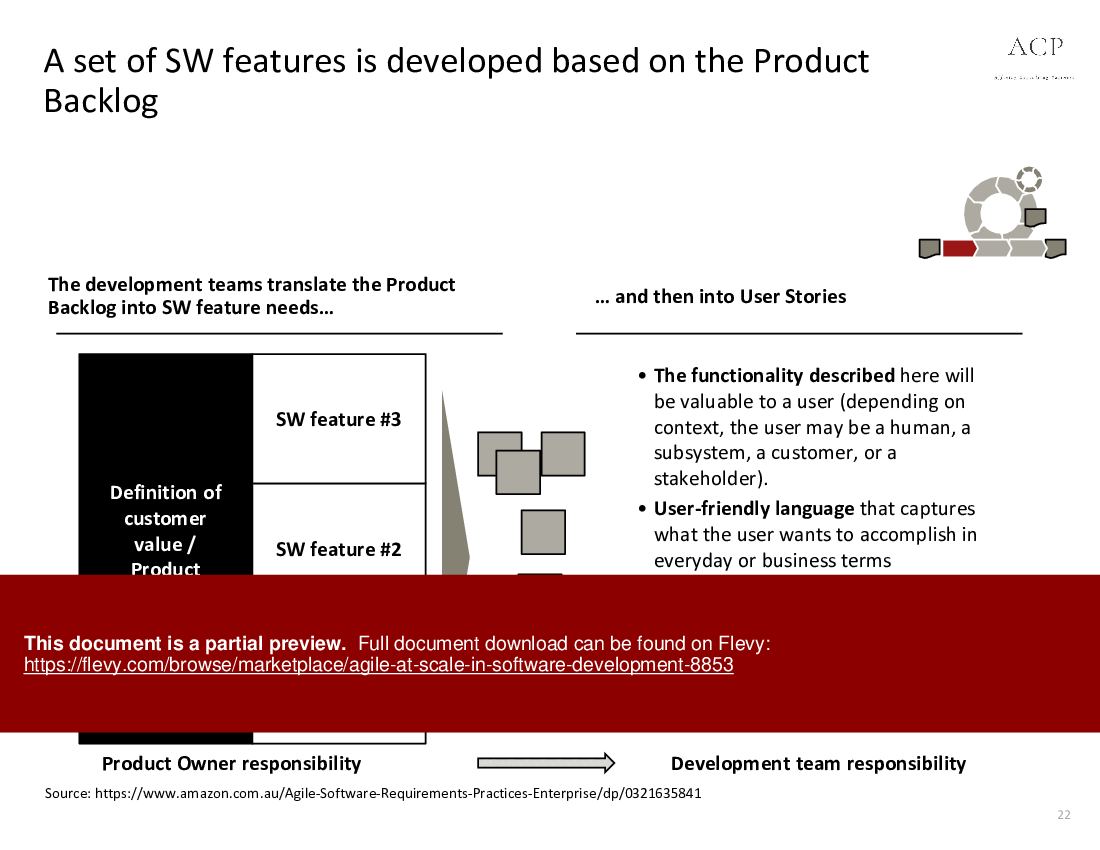
This PPT slide outlines a structured approach to software development, focusing on translating a Product Backlog into software features and user stories. Development teams interpret the Product Backlog based on customer value, aligning software features with user needs. Three prioritized software features are identified, reflecting their importance in meeting customer requirements. The transition from software features to user stories is critical, as it converts technical specifications into relatable narratives. User stories emphasize the context of the user, which can range from individuals to subsystems, allowing broader application across scenarios. The shift from documenting requirements to actively representing user needs fosters a dynamic, user-centered development approach, enhancing alignment with market demands and improving user satisfaction.
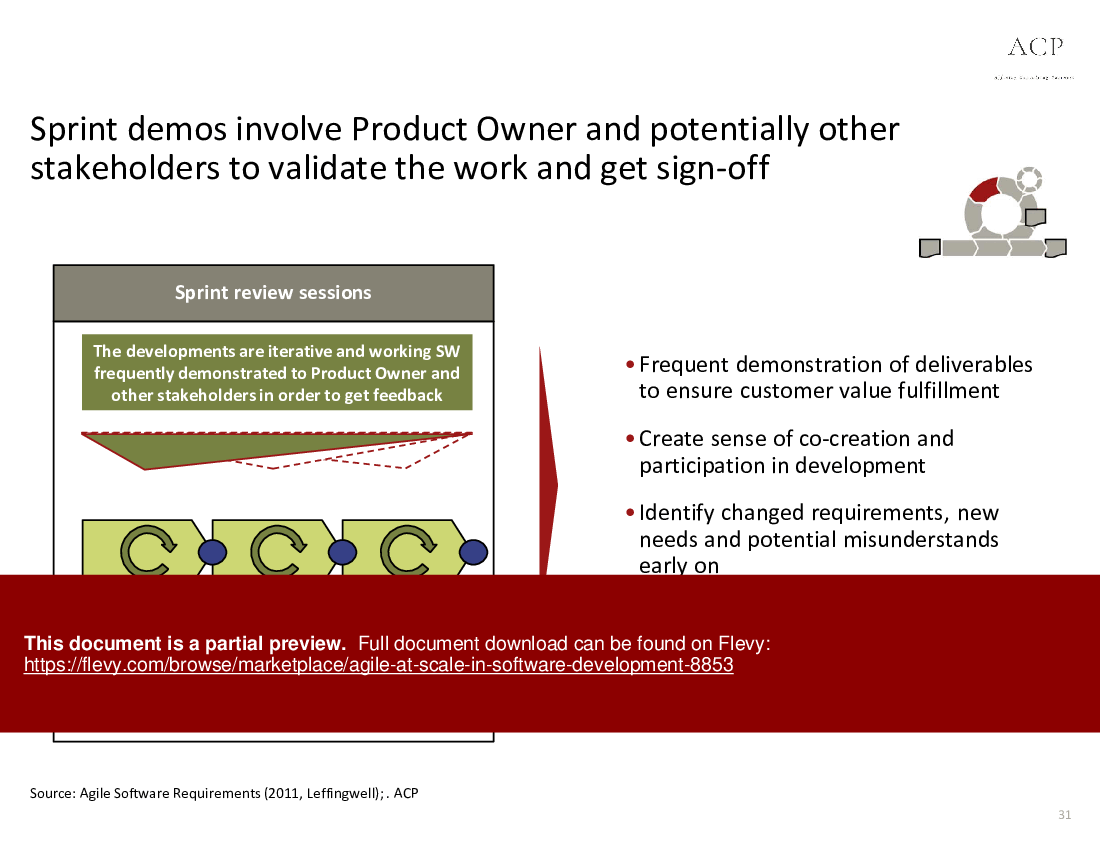
This PPT slide outlines the significance of Sprint review sessions in the Agile software development framework. It emphasizes the iterative nature of development, where working software is regularly demonstrated to the Product Owner and stakeholders for feedback and validation. Frequent demonstrations confirm customer value and foster collaboration, encouraging active stakeholder participation and co-creation. Identifying changed requirements and misunderstandings early allows teams to adapt to evolving needs without delays, enabling immediate corrective actions to keep projects on track. The content underscores the value of iterative feedback loops in Agile methodologies, illustrating how structured review sessions enhance alignment with stakeholder expectations and improve software quality. Regular stakeholder engagement is critical for successful project outcomes.
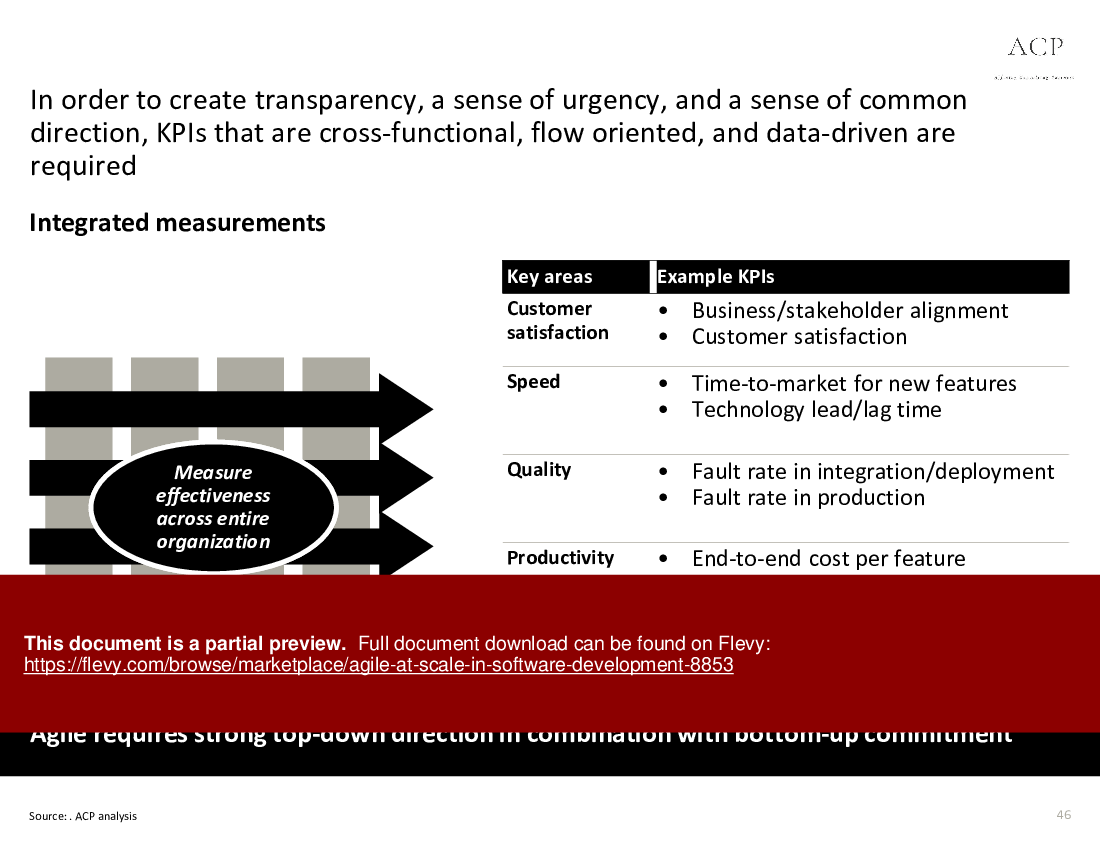
This PPT slide highlights the necessity of integrated measurements for transparency and urgency in organizations. Key performance indicators (KPIs) should be cross-functional, flow-oriented, and data-driven, unifying departments under common metrics. It focuses on measuring effectiveness across the organization through a holistic view of performance metrics. Four key areas are identified: customer satisfaction, speed, quality, and productivity. Suggested KPIs for customer satisfaction include business/stakeholder alignment and direct customer metrics. Speed is measured by time-to-market for new features and technology lead/lag time. Quality is assessed through fault rates during integration and production, while productivity is evaluated via end-to-end cost per feature. This structured KPI approach helps streamline processes and align teams toward common goals.
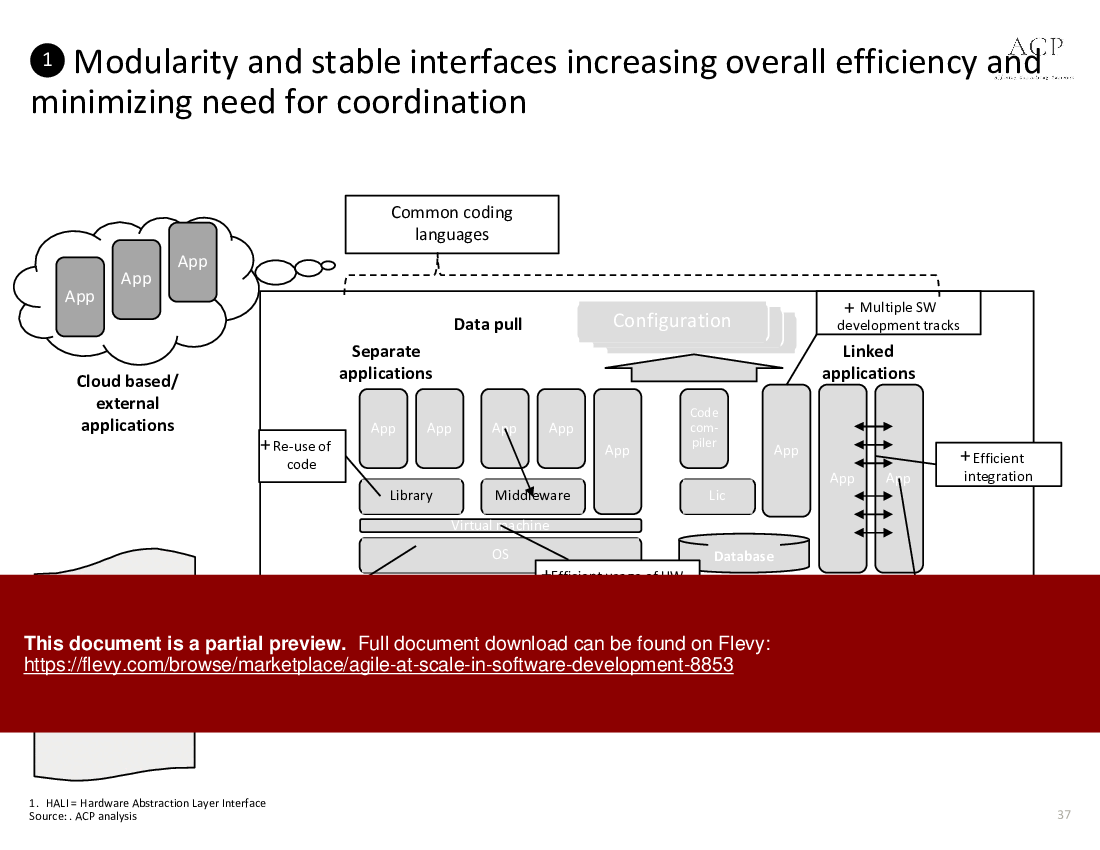
This PPT slide presents a framework for enhancing software development efficiency through modularity and stable interfaces. Key components include a data pull mechanism for structured data management and the concept of reusing code to reduce redundancy and streamline development. Software layering is highlighted as a strategy for organizing components to improve maintainability and scalability. The "Configuration" section indicates concurrent management of multiple development tracks, emphasizing agility and flexibility in project management. Efficient usage of hardware and operating system resources is critical for optimizing costs. By adopting these principles, organizations can minimize coordination overhead and enhance productivity, supporting scalable software development efforts responsive to market demands.
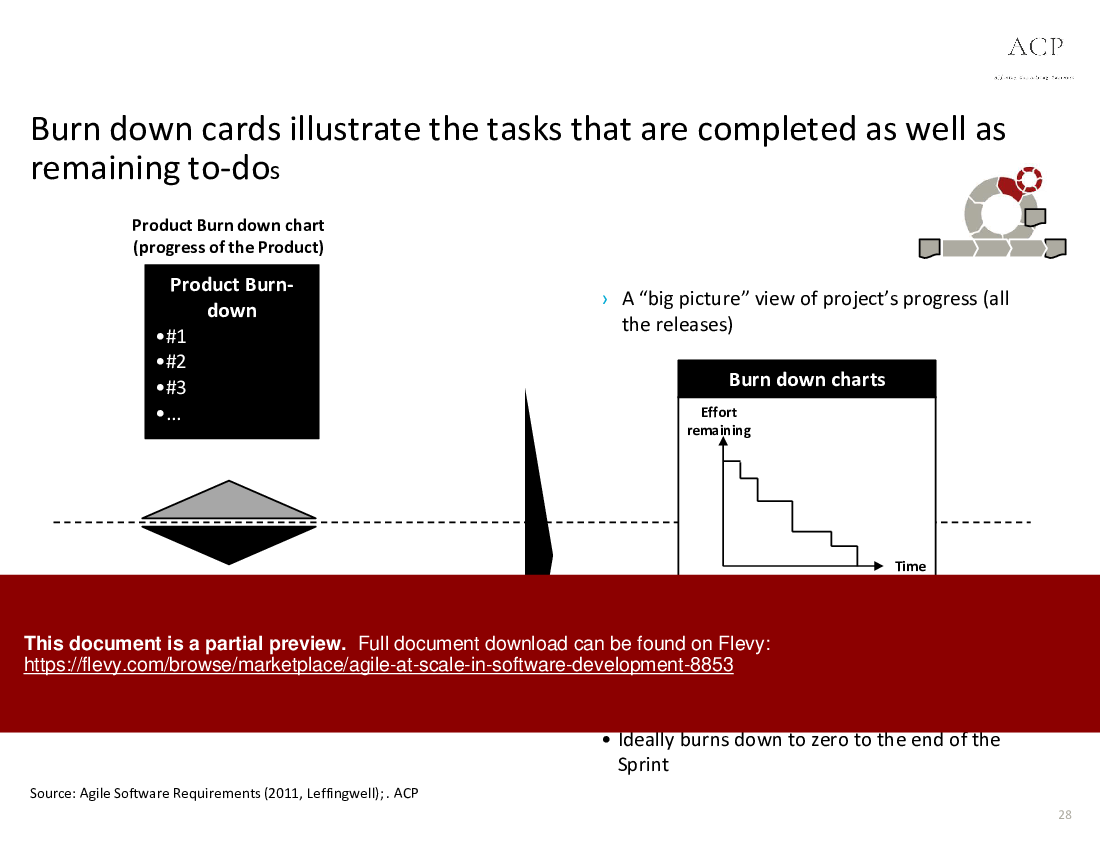
This PPT slide focuses on burn down charts, essential tools in agile project management. The Product Burn down chart illustrates overall product progress, listing key tasks as Product Burn-down #1, #2, #3, etc., providing a high-level view of completed and remaining work across all releases. The Sprint Burn down chart details progress within a specific sprint, showing total Sprint Backlog hours remaining daily, which is crucial for monitoring work pace and identifying delays. It also indicates estimated time to release, aiding in resource allocation and timeline adjustments. Burn down charts enhance transparency and focus in agile methodologies.
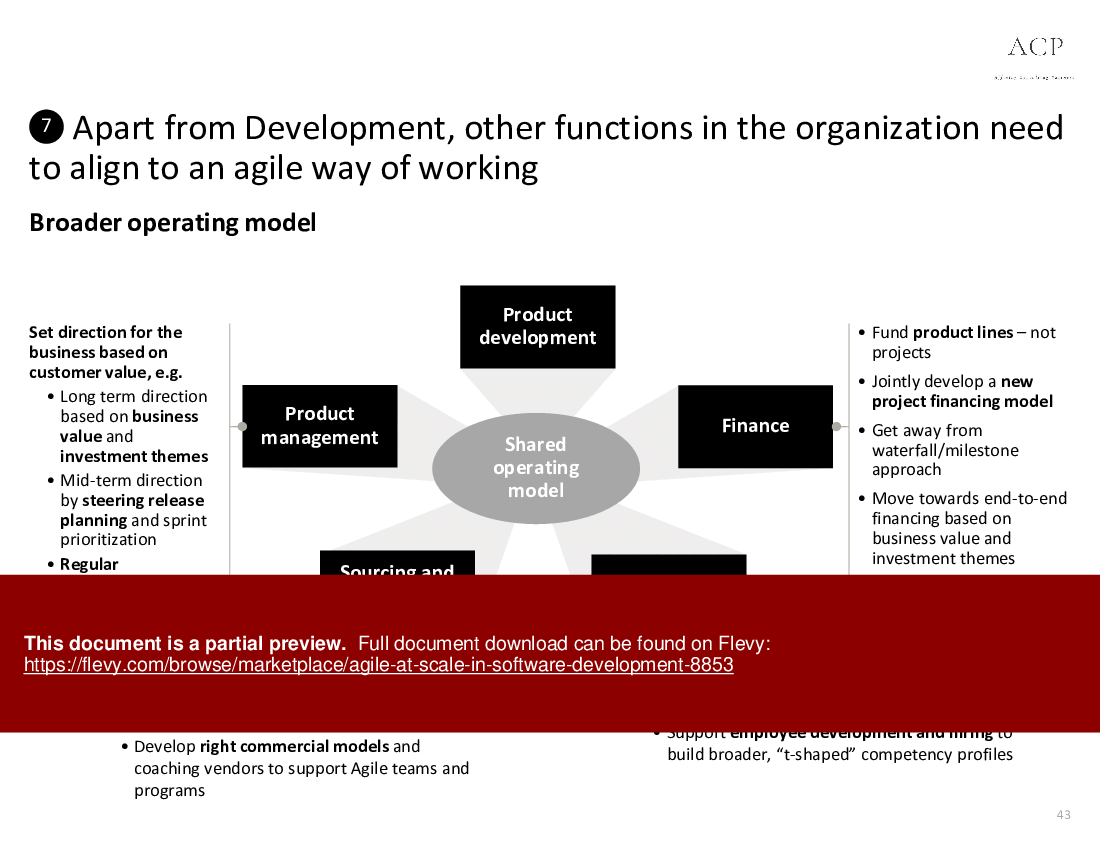
This PPT slide emphasizes the need for various organizational functions to adopt an agile operational framework, centered on a "Broader operating model." Key components include setting business direction informed by customer value, establishing long-term strategies based on business value, and mid-term guidance through release planning and sprint prioritization. Regular participation in sprint demos is essential for transparency and collaboration.
The 4 main functions—Product Management, Product Development, Finance, and Human Resources—are interconnected. Product Management steers product direction; Finance shifts from project-based funding to end-to-end funding based on business value; Human Resources adapts to Agile team skill requirements; and Sourcing and Vendor Management promotes intelligent vendor collaboration. This unified approach to agility enhances efficiency and responsiveness to customer demands.
Source: Best Practices in Agile, Software PowerPoint Slides: Agile at Scale in Software Development PowerPoint (PPTX) Presentation Slide Deck, Affinity Consulting Partners
The Affinity Consulting Partnership is a global powerhouse of experienced consultants, specializing in technology and digital-driven change.
Our team is comprised of individuals across the globe who have extensive expertise and a proven track record in guiding large corporations across the globe through complex business transformations. Our partners were all at some stage senior consulting
... [read more] professionals at tier 1 global consulting firms over half our staff have been equity partners in the past at these firms.
With a combined experience of over 120 years, our partners bring a wealth of knowledge and insights to the table. Each member of our team has a distinguished background, having served as a top-level executive and trusted advisor to the C-suite of major corporations. Our partners have honed their skills and expertise through years of hands-on experience, leading successful consulting engagements across a wide range of industries, including finance, healthcare, retail, manufacturing, and more.
Our partners have a keen eye for identifying emerging trends and disruptions in the business landscape and are adept at developing innovative strategies to help our clients stay ahead of the curve.

As a team, we are dedicated to driving meaningful results for our clients, helping them navigate the complexities of technology and digital-driven change, and unlocking new opportunities for growth and success. Our partners are trusted advisors and thought leaders in the industry, and we are committed to providing exceptional service and creating lasting partnerships with our clients.

The average daily rate of a McKinsey consultant is $6,625 (not including expenses). The average price of a Flevy document is $65.
Trusted by over 10,000+ Client Organizations
Since 2012, we have provided business templates to over 10,000 businesses and organizations of all sizes, from startups and small businesses to the Fortune 100, in over 130 countries.
"The wide selection of frameworks is very useful to me as an independent consultant. In fact, it rivals what I had at my disposal at Big 4 Consulting firms in terms of efficacy and organization."
– Julia T., Consulting Firm Owner (Former Manager at Deloitte and Capgemini)
"As a niche strategic consulting firm, Flevy and FlevyPro frameworks and documents are an on-going reference to help us structure our findings and recommendations to our clients as well as improve their clarity, strength, and visual power. For us, it is an invaluable resource to increase our impact and value."
– David Coloma, Consulting Area Manager at Cynertia Consulting
"I have used FlevyPro for several business applications. It is a great complement to working with expensive consultants. The quality and effectiveness of the tools are of the highest standards."
– Moritz Bernhoerster, Global Sourcing Director at Fortune 500
"If you are looking for great resources to save time with your business presentations, Flevy is truly a value-added resource. Flevy has done all the work for you and we will continue to utilize Flevy as a source to extract up-to-date information and data for our virtual and onsite presentations!"
– Debbi Saffo, President at The NiKhar Group
"Flevy.com has proven to be an invaluable resource library to our Independent Management Consultancy, supporting and enabling us to better serve our enterprise clients.
The value derived from our [FlevyPro] subscription in terms of the business it has helped to gain far exceeds the investment made, making a subscription a no-brainer for any growing consultancy – or in-house strategy team."
– Dean Carlton, Chief Transformation Officer, Global Village Transformations Pty Ltd.
"I have found Flevy to be an amazing resource and library of useful presentations for lean sigma, change management and so many other topics. This has reduced the time I need to spend on preparing for my performance consultation. The library is easily accessible and updates are regularly provided. A wealth of great information."
– Cynthia Howard RN, PhD, Executive Coach at Ei Leadership
"Flevy is our 'go to' resource for management material, at an affordable cost. The Flevy library is comprehensive and the content deep, and typically provides a great foundation for us to further develop and tailor our own service offer."
– Chris McCann, Founder at Resilient.World
"[Flevy] produces some great work that has been/continues to be of immense help not only to myself, but as I seek to provide professional services to my clients, it gives me a large "tool box" of resources that are critical to provide them with the quality of service and outcomes they are expecting."
– Royston Knowles, Executive with 50+ Years of Board Level Experience
Download our FREE Digital Transformation Templates
Download our free compilation of 50+ Digital Transformation slides and templates. DX concepts covered include Digital Leadership, Digital Maturity, Digital Value Chain, Customer Experience, Customer Journey, RPA, etc.