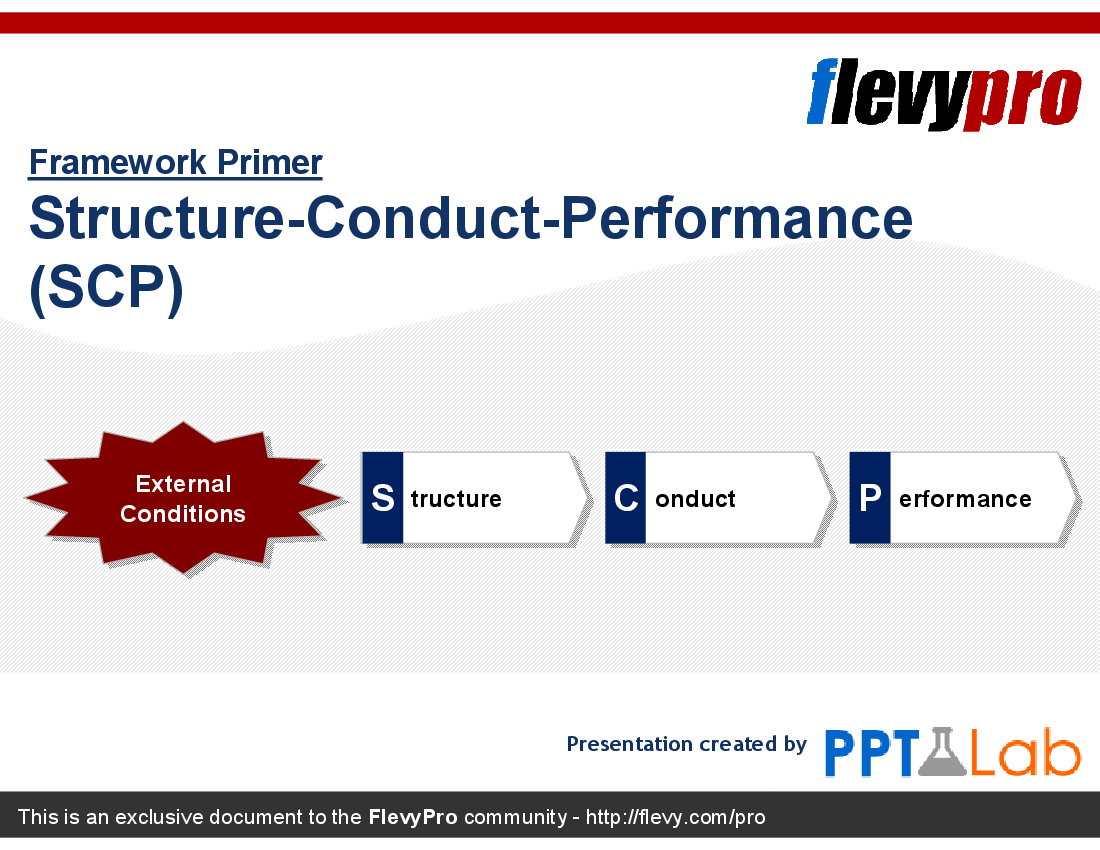

Structure-Conduct-Performance (SCP) is a framework for industry situation analysis. It makes relations among market structure, market conduct, and market performance. Within this construct, it provides a complete understanding of current industry structure, players, conduct and their competitive performance over time. SCP also offers a causal theoretical explanation for firm performance through economic conduct on incomplete markets.
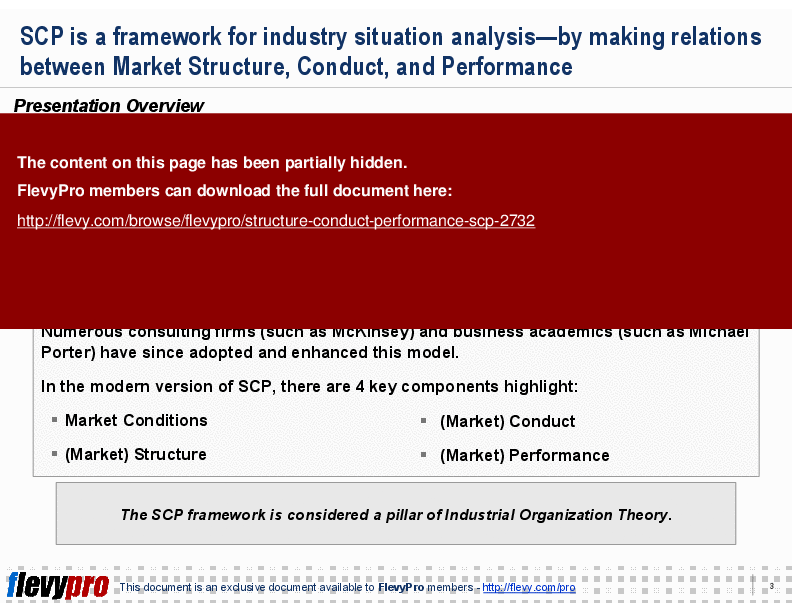
SCP was first published by economists Edward Chamberlin and Joan Robinson in 1933; and later further developed by Joe S. Bain in his book "Industrial Organization" in 1959. Numerous consulting firms (such as McKinsey) and business academics (such as Michael Porter) have since adopted and enhanced this model.
In the modern version of SCP, there are 4 key components highlight:
• Market Conditions
• (Market) Structure
• (Market) Conduct
• (Market) Performance
The SCP framework is considered a pillar of Industrial Organization Theory.
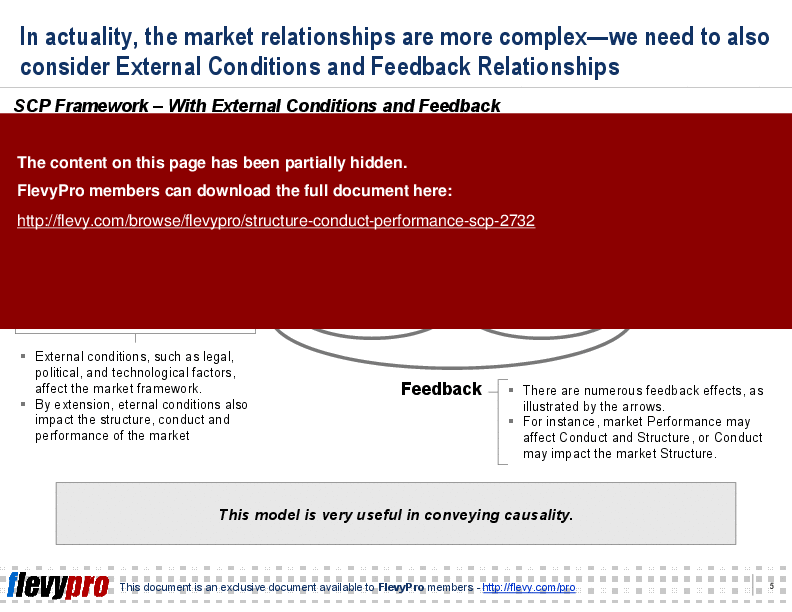
The SCP framework is invaluable for dissecting the intricate dynamics of market interactions. By examining the interplay between market structure, conduct, and performance, executives can pinpoint the underlying factors driving industry trends. This PPT offers a granular look at how external conditions like legal, political, and technological factors influence market behavior, providing a comprehensive toolkit for strategic decision-making.
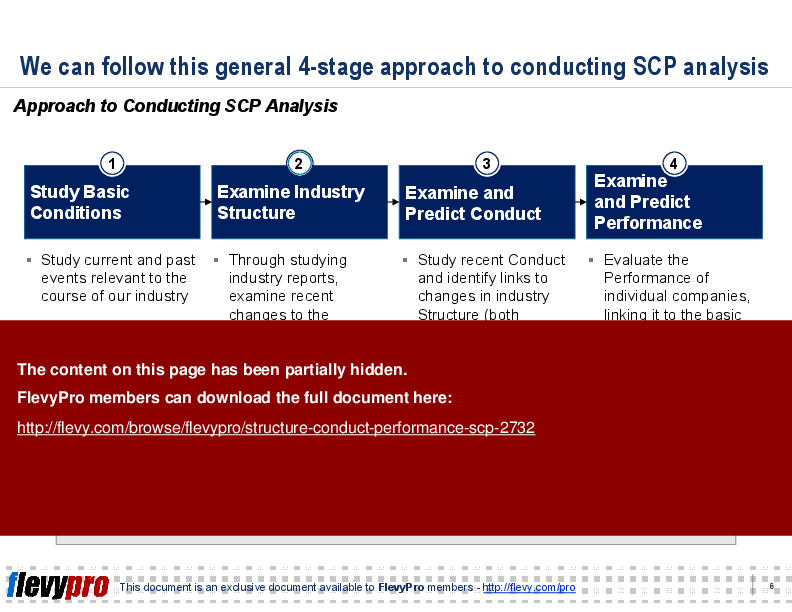
The presentation breaks down the SCP analysis into a structured 4-stage approach. It starts with studying basic conditions and moves through examining industry structure, predicting conduct, and evaluating performance. This methodical approach ensures that all relevant aspects are considered, making it easier to identify actionable insights and predict future market movements.
The document also highlights the importance of feedback loops within the SCP framework. It explains how market performance can influence conduct and structure, and vice versa. This cyclical understanding is crucial for developing strategies that are both adaptive and robust, ensuring long-term competitive advantage.
Got a question about this document? Email us at flevypro@flevy.com.
Executive Summary
The Structure-Conduct-Performance (SCP) framework is a pivotal model for industry analysis, focusing on the interrelationships between market structure, conduct, and performance. This presentation provides a comprehensive overview of the SCP framework, detailing its historical context and modern applications. By utilizing this framework, corporate executives and consultants can analyze industry dynamics, understand competitive behaviors, and predict performance outcomes based on structural conditions. The SCP model is essential for strategic decision-making and offers insights into how external factors influence market dynamics.
Who This Is For and When to Use
• Corporate executives seeking to understand industry dynamics and competitive behavior.
• Business consultants conducting market analyses for clients.
• Strategic planners involved in long-term business forecasting.
• Analysts focused on economic performance and market structure.
Best-fit moments to use this deck:
• During strategic planning sessions to evaluate market conditions.
• When conducting competitive analysis and benchmarking.
• For training sessions on industry analysis methodologies.
• In workshops aimed at enhancing strategic decision-making processes.
Learning Objectives
• Define the Structure-Conduct-Performance framework and its relevance in strategic management.
• Analyze the impact of market structure on firm conduct and performance.
• Identify key external conditions that influence industry dynamics.
• Evaluate the causal relationships between structure, conduct, and performance.
• Predict future performance based on historical conduct and structural analysis.
• Develop actionable insights for strategic planning and decision-making.
Table of Contents
• Overview (page 3)
• SCP Components (page 4)
• Templates (page 12)
Primary Topics Covered
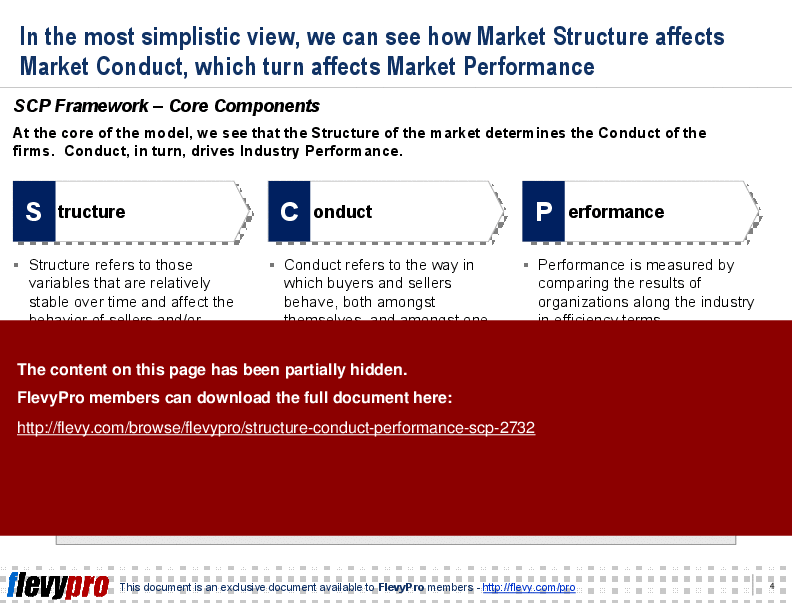
• Market Structure - Refers to stable variables that influence seller and customer behavior, including product nature and technology.
• Market Conduct - Describes the behaviors of buyers and sellers, including strategic choices and pricing behavior.
• Market Performance - Measured through efficiency and profitability metrics, reflecting the outcomes of market conduct.
• External Conditions - Factors outside industry control, such as legal and economic influences, that significantly impact market dynamics.
Deliverables, Templates, and Tools
• SCP framework template for conducting industry analysis.
• Example templates for evaluating market structure and performance metrics.
• Guidelines for linking external conditions to market outcomes.
• Framework for assessing competitive conduct and performance.
Slide Highlights
• Overview of the SCP framework illustrating the relationships between structure, conduct, and performance.
• Detailed breakdown of external conditions affecting market dynamics.
• Visual representation of the feedback loops within the SCP model.
• Step-by-step approach for conducting SCP analysis.
Potential Workshop Agenda
Introduction to SCP Framework (30 minutes)
• Overview of SCP components and their significance.
• Discussion on historical context and evolution of the framework.
Conducting SCP Analysis (60 minutes)
• Step-by-step guide on analyzing market structure.
• Group exercise on linking conduct to performance outcomes.
External Conditions Impact (30 minutes)
• Identifying key external factors influencing market dynamics.
• Case study discussion on real-world applications of SCP analysis.
Customization Guidance
• Tailor the SCP framework template to specific industry contexts for relevance.
• Adjust performance metrics based on organizational goals and market conditions.
• Incorporate specific external conditions relevant to the industry being analyzed.
Secondary Topics Covered
• Historical development of the SCP framework.
• Comparison of SCP with other industry analysis models.
• Case studies illustrating successful applications of the SCP model.
Topic FAQ
Document FAQ
These are questions addressed within this presentation.
What is the SCP framework?
The SCP framework analyzes the relationships between market structure, conduct, and performance to understand industry dynamics.
How can I apply the SCP framework in my organization?
Use the framework to evaluate market conditions, assess competitive behavior, and predict performance outcomes based on structural analysis.
What are external conditions in the SCP model?
External conditions are factors outside the industry's control, such as legal, political, and economic influences, that significantly impact market dynamics.
How does market structure affect conduct?
Market structure establishes the environment in which firms operate, influencing their strategic choices and behaviors.
What metrics are used to assess market performance?
Metrics include efficiency ratios, profitability levels, market share, and growth trends relative to competitors.
Can the SCP framework be used in dynamic industries?
Yes, the SCP model is adaptable for both static and dynamic industry settings, allowing for comprehensive analysis.
What are the key components of the SCP framework?
The key components are market structure, market conduct, market performance, and external conditions.
How does feedback influence the SCP model?
Feedback loops indicate that changes in performance can affect conduct and structure, creating a dynamic interplay within the market.
Glossary
• Structure - The stable characteristics of a market that influence behavior.
• Conduct - The behavior of firms and consumers in the market.
• Performance - The outcomes of market conduct, typically measured in efficiency and profitability.
• External Conditions - Factors outside of the industry that impact market dynamics.
• Feedback - The reciprocal effects between structure, conduct, and performance.
• Market Dynamics - The patterns and trends that characterize market behavior over time.
• Competitive Analysis - The assessment of competitors' strengths and weaknesses in the market.
• Strategic Planning - The process of defining an organization's direction and making decisions on allocating resources.
• Industry Analysis - The examination of the competitive forces and market conditions within a specific industry.
• Causal Relationships - The connections that explain how one factor influences another within the SCP framework.
• Profitability Metrics - Measures used to evaluate a firm's financial performance relative to its peers.
• Market Conditions - The current state of the market, including demand, supply, and competitive landscape.
Source: Best Practices in Market Analysis, Industrial Organization, SCP, Structure Conduct Performance PowerPoint Slides: Structure-Conduct-Performance (SCP) PowerPoint (PPT) Presentation Slide Deck, PPT Lab
Did you need more documents?
Consider a FlevyPro subscription from $39/month. View plans here.
For $10.00 more, you can download this document plus 2 more FlevyPro documents. That's just $13 each.
|
Download our FREE Strategy & Transformation Framework Templates
Download our free compilation of 50+ Strategy & Transformation slides and templates. Frameworks include McKinsey 7-S, Balanced Scorecard, Disruptive Innovation, BCG Curve, and many more. |










