
This framework is developed by a team of former McKinsey and Big 4 consultants. The presentation follows the headline-body-bumper slide format used by global consulting firms.
Explore a comprehensive 8-phase Stakeholder Analysis and Engagement Framework, crafted by ex-McKinsey and Big 4 consultants, to enhance stakeholder dynamics. Stakeholder Analysis and Engagement Framework Primer is a 26-slide PPT PowerPoint presentation slide deck (PPTX) available for immediate download upon purchase.
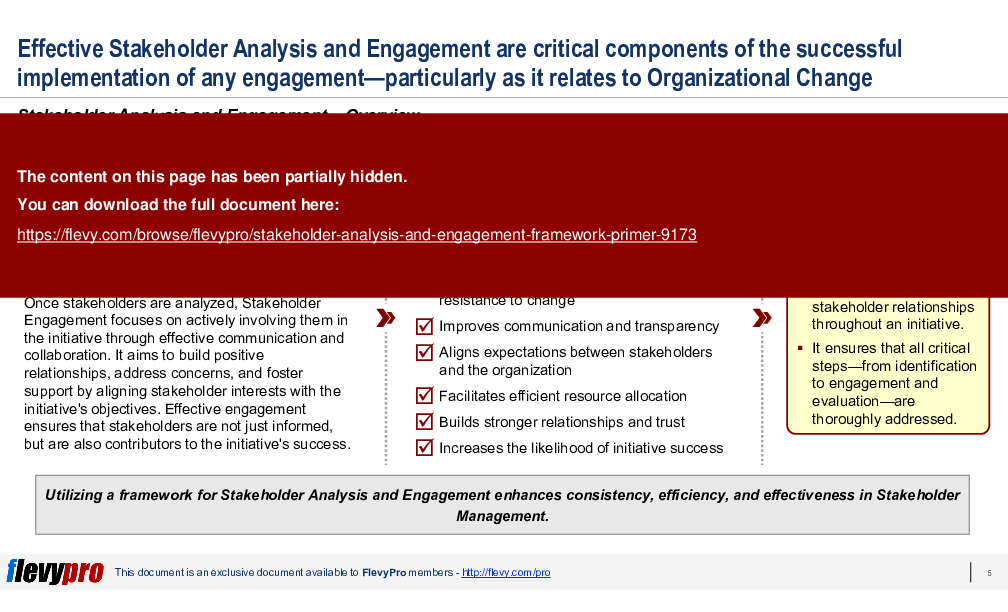
Stakeholder Analysis and Engagement is a strategic process that involves identifying all parties affected by an initiative and understanding their interests, influence, and expectations.
Through this process, we can identify key influencers and decision-makers, bolster stakeholder support and buy-in, mitigate risk and reduce potential resistance to change, improve communication and transparency, facilitate efficient resource allocation, build stronger relationships and trust, among other benefits.
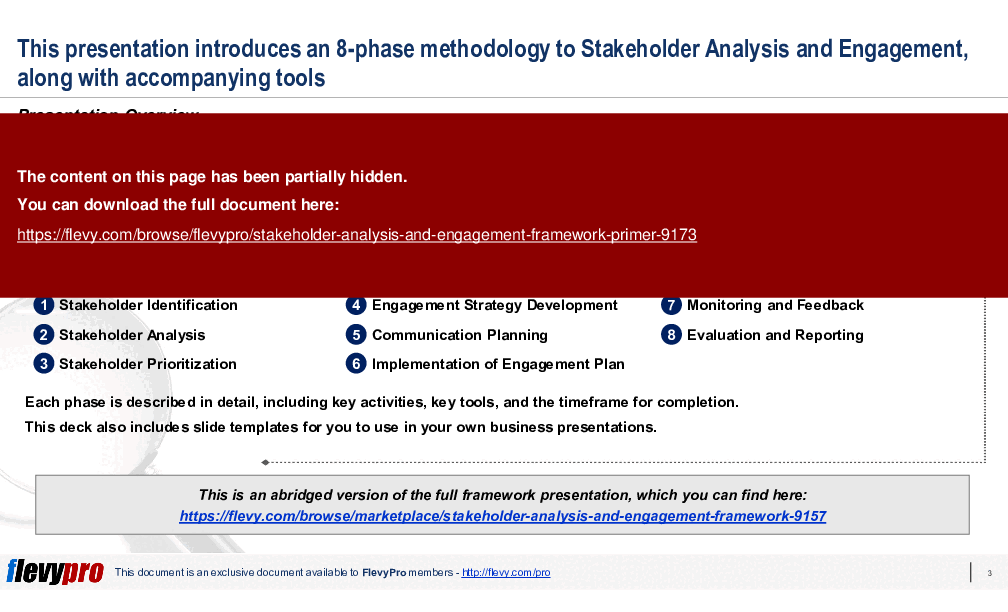
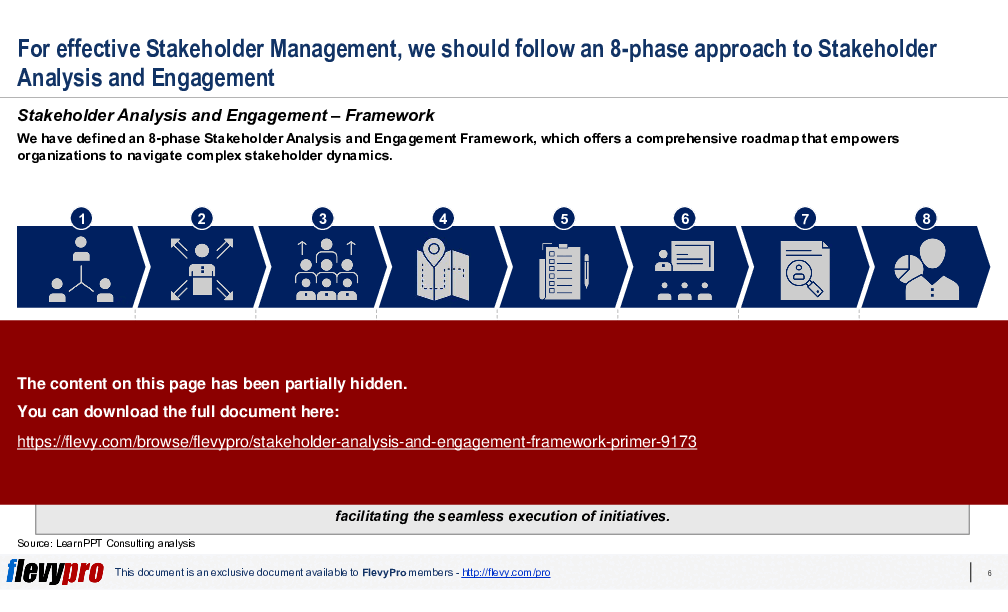
In this PowerPoint presentation, we provide a primer to the 8-phase Stakeholder Analysis and Engagement Framework, which offers a comprehensive roadmap that empowers organizations to navigate complex stakeholder dynamics.
1. Stakeholder Identification
2. Stakeholder Analysis
3. Stakeholder Prioritization
4. Engagement Strategy Development
5. Communication Planning
6. Implementation of Engagement Plan
7. Monitoring and Feedback
8. Evaluation and Reporting
Each phase is described in detail, including key activities, key tools, and the timeframe for completion.
This deck also includes slide templates for you to use in your own business presentations.
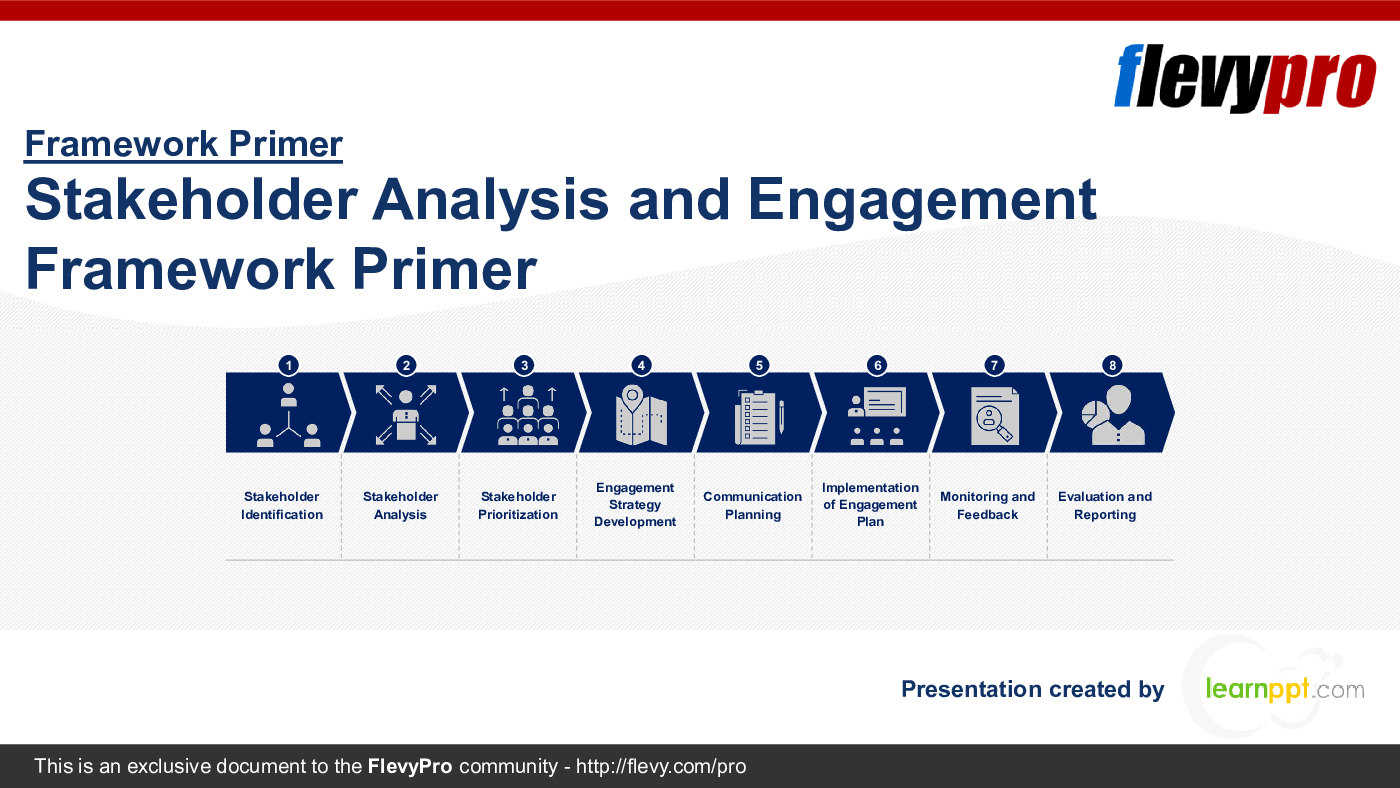
This PPT slide outlines an 8-phase framework for Stakeholder Analysis and Engagement. The first phase, Stakeholder Identification, focuses on recognizing all relevant stakeholders, setting the stage for analysis and prioritization. The second phase, Stakeholder Analysis, assesses the interests, influence, and needs of stakeholders for informed decision-making. Stakeholder Prioritization categorizes stakeholders based on their significance and impact on initiatives. Engagement Strategy Development involves crafting tailored strategies for different stakeholder groups. Communication Planning outlines how to convey information to stakeholders, maintaining transparency and trust. The Implementation of Engagement Plan phase executes the strategies developed. Monitoring and Feedback tracks engagement effectiveness and gathers stakeholder input for strategy adaptation. Finally, Evaluation and Reporting assesses the impact of stakeholder engagement activities, informing future initiatives. This structured approach fosters meaningful stakeholder relationships, driving support and facilitating initiative execution.
This PPT slide outlines the Stakeholder Identification phase, essential for recognizing individuals, groups, and organizations impacted by an initiative. It emphasizes a systematic approach to ensure comprehensive stakeholder identification, which includes defining initiative goals, identifying affected departments, and considering both internal and external impacts. Key activities involve defining the initiative's scope, listing potential stakeholders, and utilizing mapping tools like organizational charts and business process maps. Conducting brainstorming sessions fosters collaboration, while reviewing past project records and stakeholder registers provides insights to avoid overlooking relevant stakeholders. Engaging key informants, such as department heads and subject matter experts, helps uncover less obvious stakeholders. The timeframe for this phase typically ranges from 2 to 8 weeks, depending on the initiative's scope and organization size.
The implementation phase of an engagement plan focuses on executing engagement and communication strategies through 3 key activities.
1. Executing engagement activities includes conducting meetings, workshops, and distributing communications like emails and newsletters to facilitate stakeholder participation.
2. Ensuring consistent messaging involves aligning key messages across communications, providing regular updates, and monitoring clarity and effectiveness to resonate with the audience.
3. Empowering stakeholders encourages feedback and active participation, creating opportunities for idea sharing and recognizing contributions to foster ownership and collaboration.
Key tools include meeting agendas, communication platforms, and feedback mechanisms, indicating an ongoing process throughout the initiative for effective stakeholder engagement.
This PPT slide outlines an 8-phase methodology for Stakeholder Analysis and Engagement, essential for understanding the interests, influence, and expectations of stakeholders in an initiative. Key phases include Stakeholder Identification, Stakeholder Analysis, Stakeholder Prioritization, Engagement Strategy Development, Communication Planning, Implementation of Engagement Plan, Monitoring and Feedback, and Evaluation and Reporting. Each phase encompasses specific activities, tools, and timelines, indicating a structured approach to stakeholder engagement. The framework enhances communication, transparency, and resource allocation while building trust among stakeholders, making it a practical resource for organizations navigating complex stakeholder dynamics.
Source: Best Practices in Stakeholder Analysis, Stakeholder Management PowerPoint Slides: Stakeholder Analysis and Engagement Framework Primer PowerPoint (PPTX) Presentation Slide Deck, LearnPPT Consulting
This framework is developed by a team of former McKinsey and Big 4 consultants. The presentation follows the headline-body-bumper slide format used by global consulting firms.
For $10.00 more, you can download this document plus 2 more FlevyPro documents. That's just $13 each.
ABOUT FLEVYPRO
This document is part of the FlevyPro Library, a curated knowledge base of documents for our FlevyPro subscribers.
FlevyPro is a subscription service for on-demand business frameworks and analysis tools. FlevyPro subscribers receive access to an exclusive library of curated business documents—business framework primers, presentation templates, Lean Six Sigma tools, and more—among other exclusive benefits.
The average daily rate of a McKinsey consultant is $6,625 (not including expenses). The average price of a Flevy document is $65.
Trusted by over 10,000+ Client Organizations
Since 2012, we have provided business templates to over 10,000 businesses and organizations of all sizes, from startups and small businesses to the Fortune 100, in over 130 countries.
"One of the great discoveries that I have made for my business is the Flevy library of training materials.
As a Lean Transformation Expert, I am always making presentations to clients on a variety of topics: Training, Transformation, Total Productive Maintenance, Culture, Coaching, Tools, Leadership Behavior, etc. Flevy
It is well worth the money to purchase these presentations. Sure, I have the knowledge and information to make my point. It is another thing to create a presentation that captures what I want to say. Flevy has saved me countless hours of preparation time that is much better spent with implementation that will actually save money for my clients.
"
– Ed Kemmerling, Senior Lean Transformation Expert at PMG
"[Flevy] produces some great work that has been/continues to be of immense help not only to myself, but as I seek to provide professional services to my clients, it gives me a large "tool box" of resources that are critical to provide them with the quality of service and outcomes they are expecting."
– Royston Knowles, Executive with 50+ Years of Board Level Experience
"FlevyPro has been a brilliant resource for me, as an independent growth consultant, to access a vast knowledge bank of presentations to support my work with clients. In terms of RoI, the value I received from the very first presentation I downloaded paid for my subscription many times over! The
quality of the decks available allows me to punch way above my weight – it's like having the resources of a Big 4 consultancy at your fingertips at a microscopic fraction of the overhead.
"
– Roderick Cameron, Founding Partner at SGFE Ltd
"I am extremely grateful for the proactiveness and eagerness to help and I would gladly recommend the Flevy team if you are looking for data and toolkits to help you work through business solutions."
– Trevor Booth, Partner, Fast Forward Consulting
"I have used FlevyPro for several business applications. It is a great complement to working with expensive consultants. The quality and effectiveness of the tools are of the highest standards."
– Moritz Bernhoerster, Global Sourcing Director at Fortune 500
"Flevy is now a part of my business routine. I visit Flevy at least 3 times each month.
Flevy has become my preferred learning source, because what it provides is practical, current, and useful in this era where the business world is being rewritten.

many challenges and there is the need to make the right decisions in a short time, with so much scattered information, we are fortunate to have Flevy. Flevy investigates, selects, and puts at our disposal the best of the best to help us be successful in our work.
"
– Omar Hernán Montes Parra, CEO at Quantum SFE
"As an Independent Management Consultant, I find Flevy to add great value as a source of best practices, templates and information on new trends. Flevy has matured and the quality and quantity of the library is excellent. Lastly the price charged is reasonable, creating a win-win value for
the customer, Flevy and the various authors. This is truly a service that benefits the consulting industry and associated clients. Thanks for providing this service.
"
– Jim Schoen, Principal at FRC Group
"The wide selection of frameworks is very useful to me as an independent consultant. In fact, it rivals what I had at my disposal at Big 4 Consulting firms in terms of efficacy and organization."
– Julia T., Consulting Firm Owner (Former Manager at Deloitte and Capgemini)
Download our free compilation of 50+ slides and templates on Organizational Design, Change Management, and Corporate Culture. Methodologies include ADKAR, Burke-Litwin Change Model, McKinsey 7-S, Competing Values Framework, etc.









