
This framework is created by former McKinsey, BCG, Deloitte, EY, and Capgemini consultants and details a robust framework for stakeholder analysis and engagement used by consultants with their clients.
Provides a robust 8-phase methodology to Stakeholder Analysis and Engagement, along with accompanying frameworks, templates, and tools.
Identify key influencers and decision-makers; bolster stakeholder support and buy-in; and mitigate risk and reduce potential resistance to change.
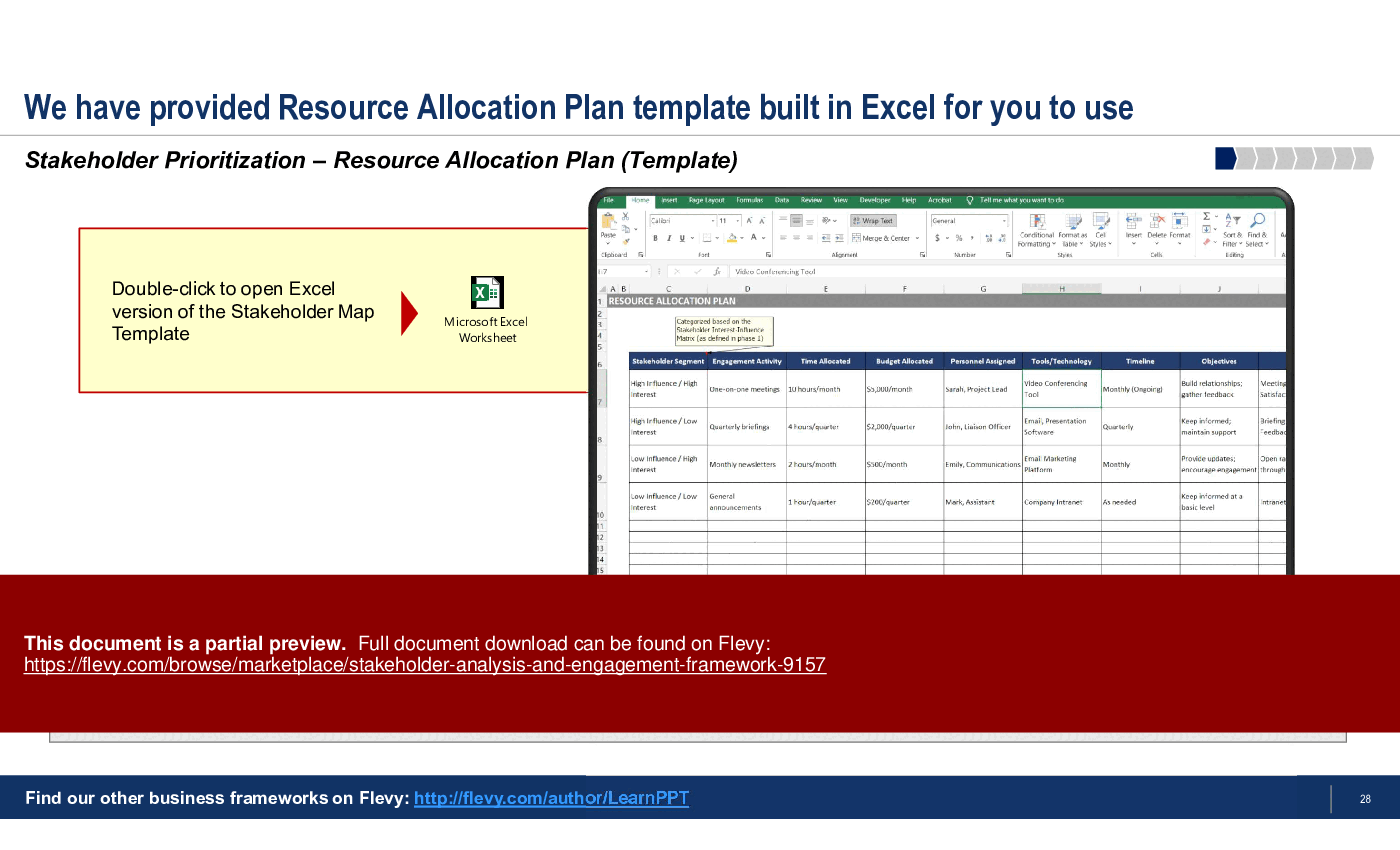
Includes Excel templates for: Stakeholder Map, Resource Allocation Plan, and Communication Plan.
STAKEHOLDER MANAGEMENT PPT DESCRIPTION
This product (Stakeholder Analysis and Engagement Framework) is a 63-slide PPT PowerPoint presentation slide deck (PPTX) with a supplemental Excel document, which you can download immediately upon purchase.
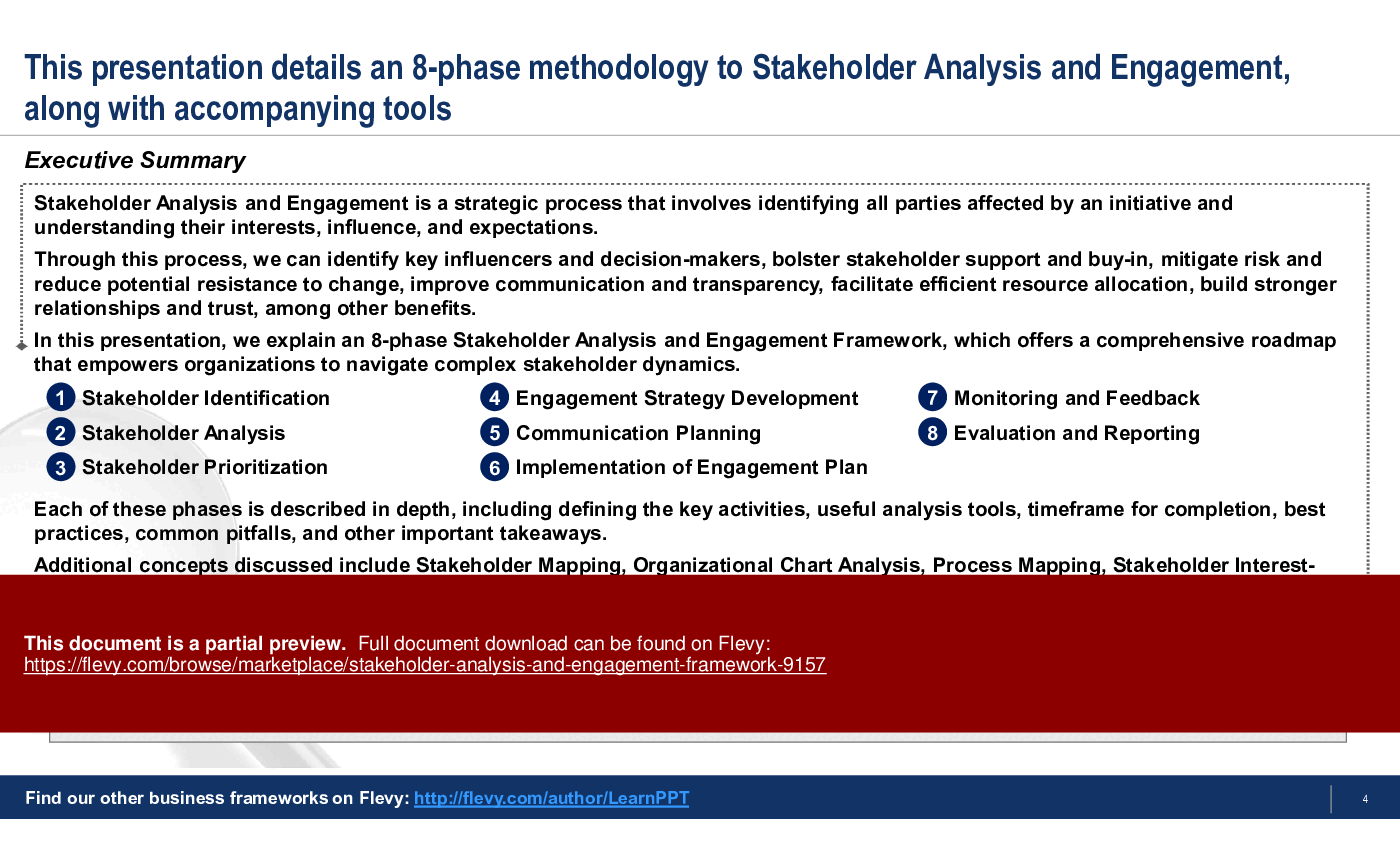
Stakeholder Analysis and Engagement is a strategic process that involves identifying all parties affected by an initiative and understanding their interests, influence, and expectations.
Through this process, we can identify key influencers and decision-makers, bolster stakeholder support and buy-in, mitigate risk and reduce potential resistance to change, improve communication and transparency, facilitate efficient resource allocation, build stronger relationships and trust, among other benefits.
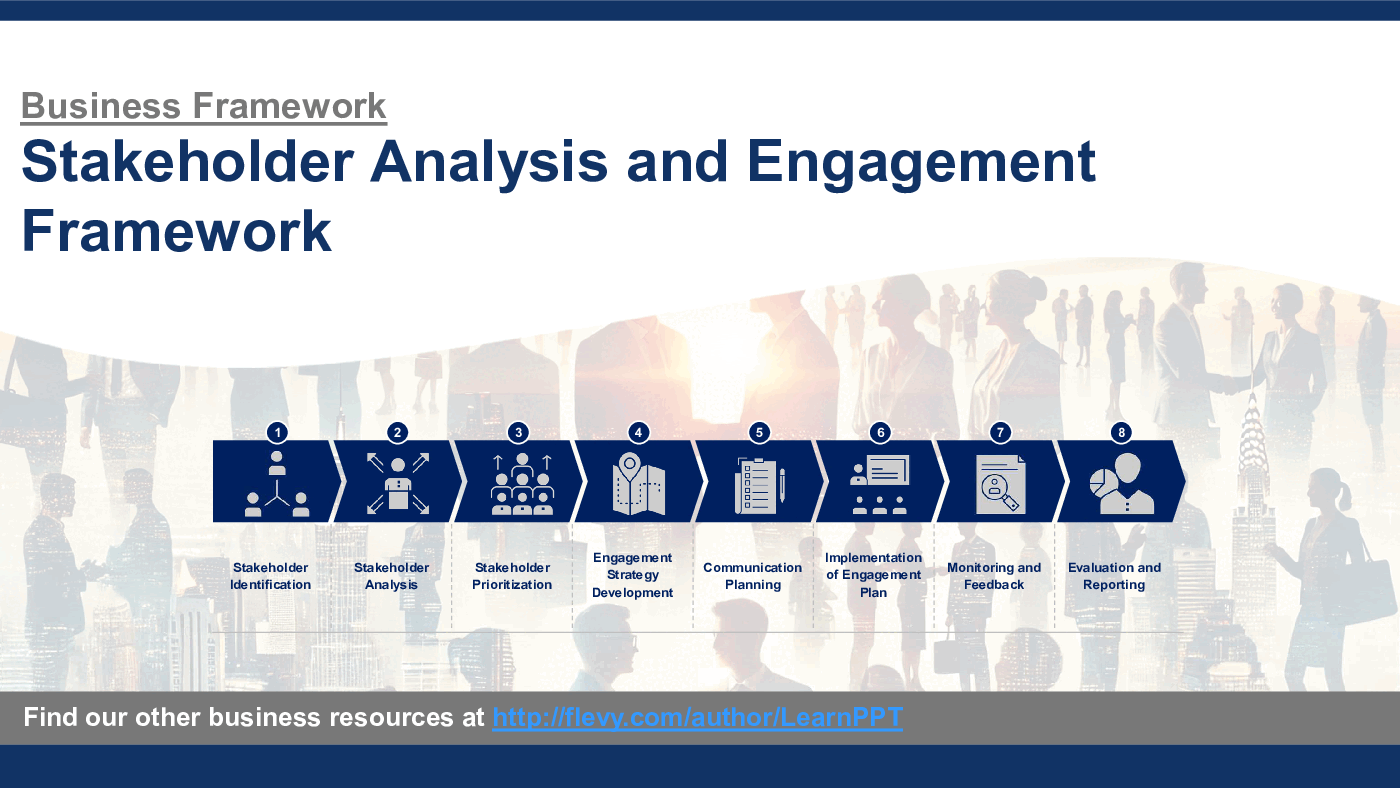
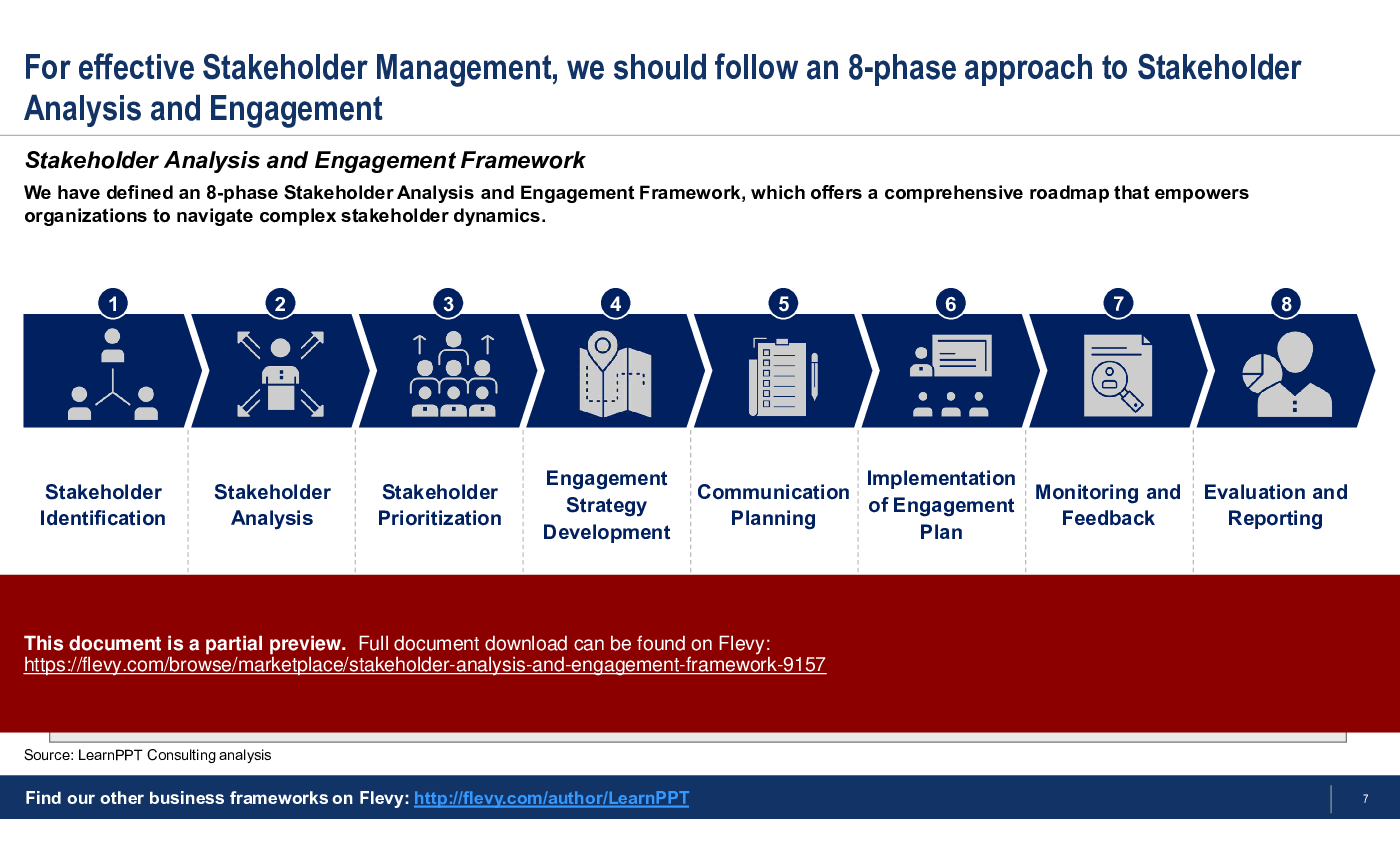
In this PowerPoint presentation, we explain an 8-phase Stakeholder Analysis and Engagement Framework, which offers a comprehensive roadmap that empowers organizations to navigate complex stakeholder dynamics. These 8 phases are:
1. Stakeholder Identification – This phase focuses on identifying all individuals, groups, or organizations that have an interest in or are affected by the initiative. Early and thorough stakeholder identification is crucial to ensure that no critical parties are overlooked, which can significantly impact the success of the engagement.
2. Stakeholder Analysis – This phase focuses on evaluating each identified stakeholder to understand their interests, level of influence, and potential impact on the initiative. A thorough analysis enables tailored engagement strategies that address stakeholders' specific needs and concerns, increasing the likelihood of the initiative's success.
3. Stakeholder Prioritization – This phase involves ranking stakeholders based on their level of influence and interest in the initiative. Prioritization ensures that resources and engagement efforts are allocated efficiently, focusing on stakeholders who can significantly impact the initiative's success.
4. Engagement Strategy Development – This phase focuses on developing customized engagement approaches for each stakeholder or stakeholder group. By aligning strategies with stakeholders' interests and influence, the initiative can foster positive relationships and proactively address concerns.
5. Communication Planning – This phase involves developing a comprehensive communication plan to ensure stakeholders receive timely, consistent, and relevant information about the initiative. Effective communication builds transparency, trust, and alignment among stakeholders.
6. Implementation of Engagement Plan – This phase puts the engagement and communication strategies into action. It involves interacting with stakeholders as planned, delivering messages, and facilitating their participation in the initiative.
7. Monitoring and Feedback – This phase involves continuously observing stakeholder engagement levels and collecting feedback to assess the effectiveness of engagement strategies. Adjustments are made as necessary to address issues and enhance stakeholder support.
8. Evaluation and Reporting – This final phase evaluates the overall success of the stakeholder engagement efforts, measures outcomes against objectives, and reports findings. Lessons learned are documented to inform future initiatives and enhance organizational practices.
Each of these phases is described in depth, including defining the key activities, useful analysis tools, timeframe for completion, best practices, common pitfalls, and other important takeaways. This framework outlines a systematic approach to identify, analyze, prioritize, and engage stakeholders to ensure smooth implementation of important initiatives.
Additional concepts discussed include Stakeholder Mapping, Organizational Chart Analysis, Process Mapping, Stakeholder Interest-Influence Matrix, Stakeholder Segmentation, Resource Allocation Planning, among other relevant topics.
This PPT presentation also includes accompanying Excel templates of a Stakeholder Map, Resource Allocation Plan, and Communication Plan.
Got a question about the product? Email us at support@flevy.com or ask the author directly by using the "Ask the Author a Question" form. If you cannot view the preview above this document description, go here to view the large preview instead.
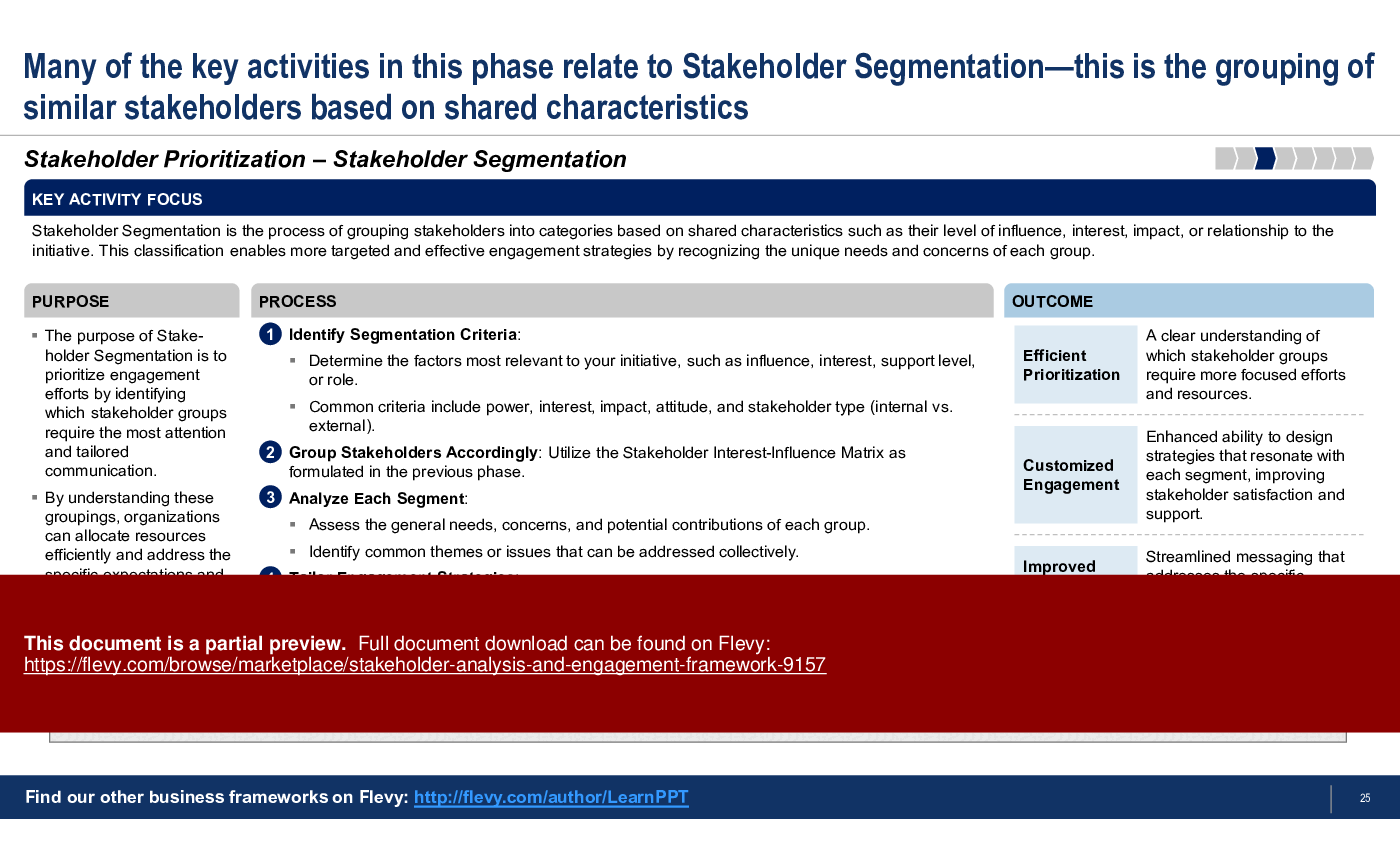
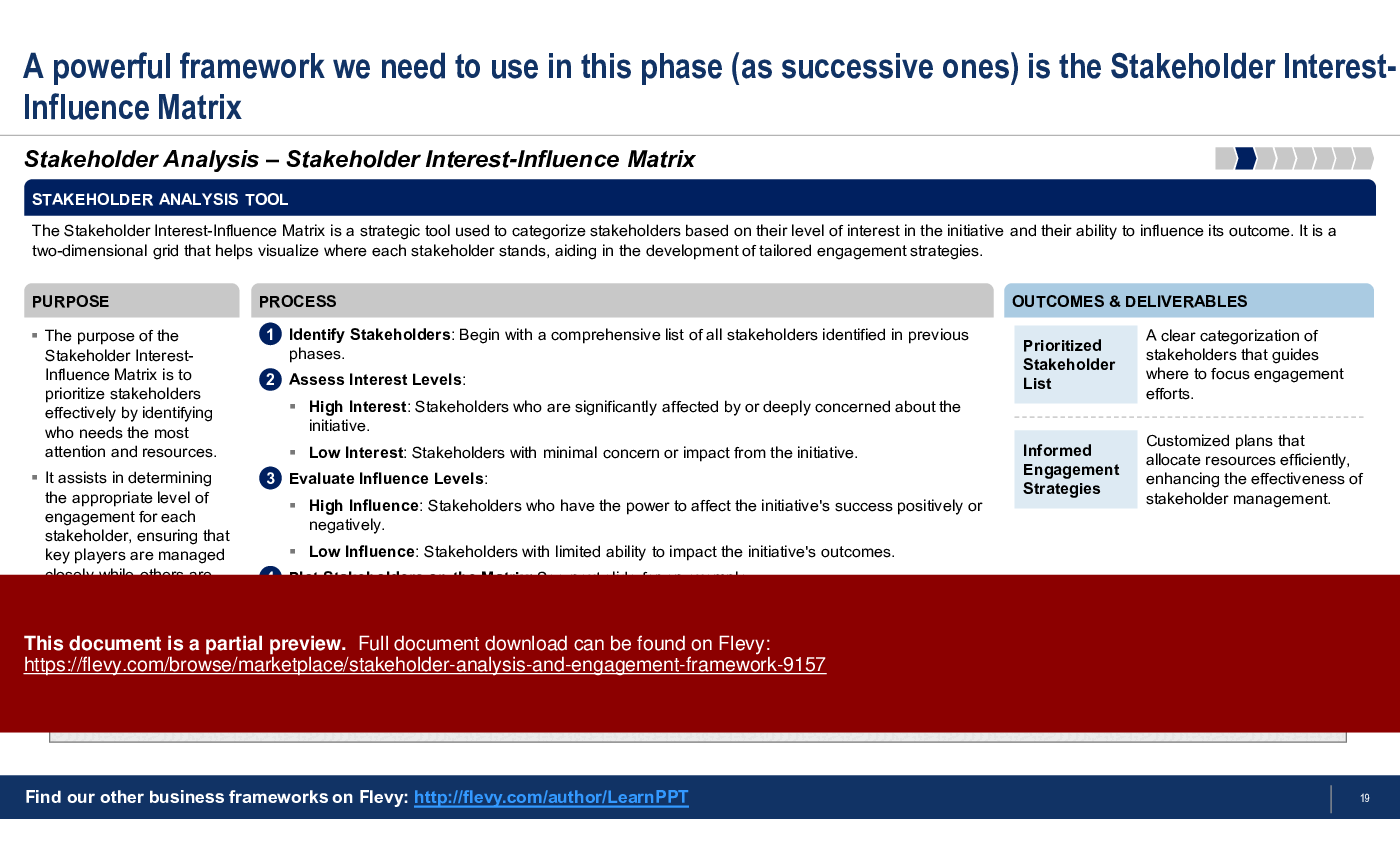
The Stakeholder Interest-Influence Matrix categorizes stakeholders based on their interest and influence levels across 4 quadrants. The "Meet their needs" quadrant includes stakeholders with high influence, but low interest, requiring attention to meet their needs due to their potential impact on project outcomes. The "Manage closely" quadrant features stakeholders with both high interest and high influence, necessitating active management to align their interests with project goals. The "Keep into account" quadrant contains stakeholders with low influence and low interest, who should be monitored with minimal engagement. The "Keep informed" quadrant includes stakeholders with high interest, but low influence, where maintaining their support is crucial. This matrix clarifies stakeholder power dynamics, identifies potential allies and adversaries, and guides strategic decisions for effective stakeholder engagement and risk mitigation.
This slide focuses on Stakeholder Analysis and Engagement as critical components for successful organizational change initiatives. Stakeholder Analysis is a strategic process that identifies affected parties, their interests, influence, and expectations, enabling organizations to anticipate reactions and prioritize engagement. Tailored engagement strategies address specific stakeholder concerns, while Stakeholder Engagement actively involves stakeholders through effective communication and collaboration, fostering support and aligning interests with initiative objectives. Benefits of this framework include identifying key influencers, enhancing stakeholder buy-in, mitigating resistance risks, and improving communication and transparency. A structured Stakeholder Analysis and Engagement Framework ensures a systematic approach to managing relationships, addressing all critical steps from identification to evaluation, which is essential for consistency, efficiency, and effectiveness in stakeholder management.
This slide focuses on Stakeholder Mapping, a vital tool for analyzing stakeholder dynamics and interrelationships. It consists of 3 main sections: Purpose, Process, and Influence. The Purpose section aims to uncover the network of influence, identify key players, and reveal indirect relationships affecting the initiative, highlighting power dynamics and potential alliances. The Process section details 3 components: Stakeholder Roles, which categorizes decision-makers and influencers; Relationships, depicting formal and informal networks; and Influence Lines, illustrating the direction and level of influence stakeholders exert over one another. Stakeholder Mapping reveals both visible and hidden stakeholders, enabling tailored strategies for effective stakeholder engagement.

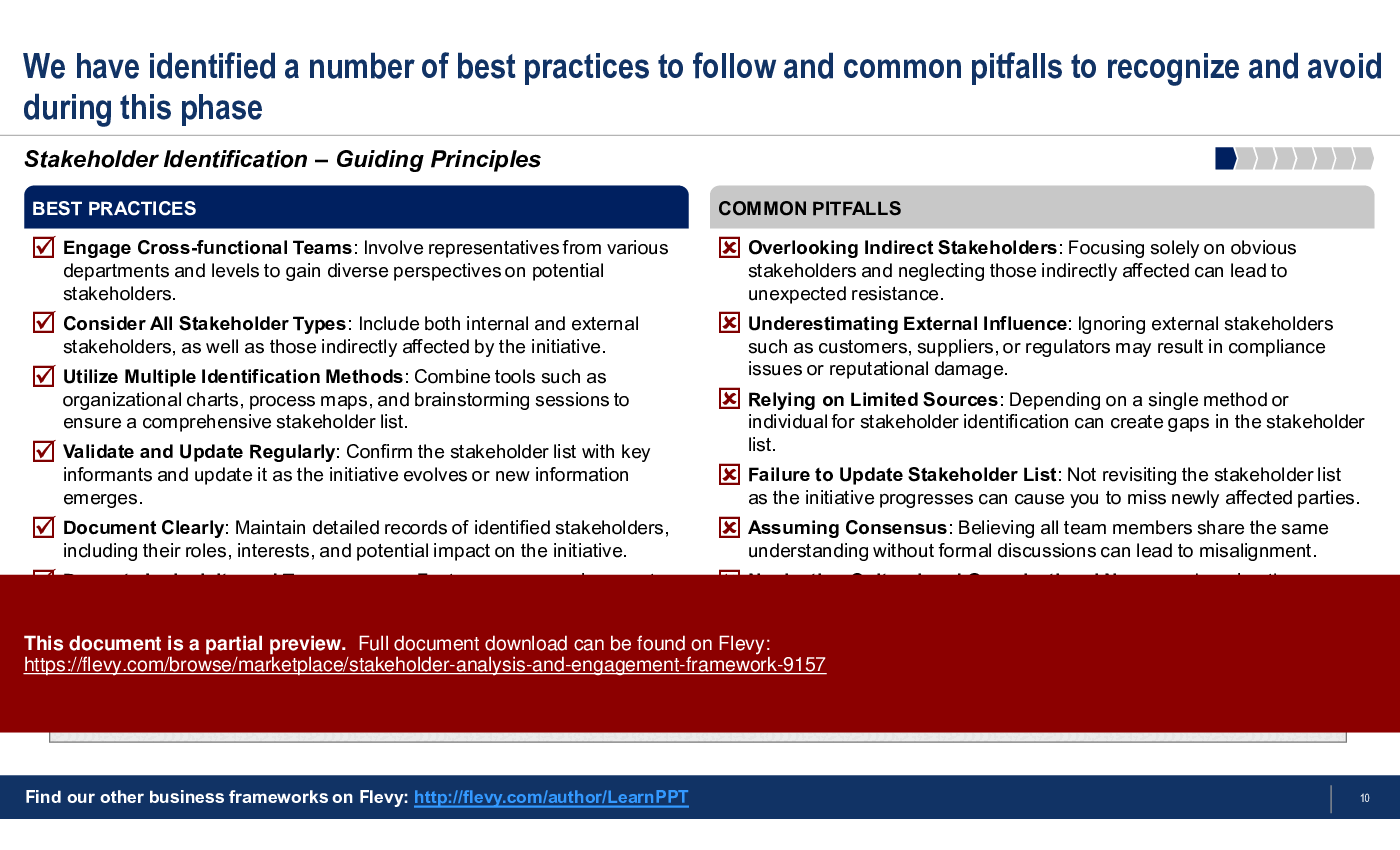
The initial phase of Stakeholder Identification focuses on recognizing all individuals, groups, and organizations impacted by an initiative. Key activities include defining the initiative's scope, outlining goals, and identifying affected departments. Listing potential stakeholders involves identifying internal stakeholders, such as employees and managers, and external ones like customers and suppliers. Utilizing stakeholder mapping tools, such as organizational charts and business process mapping, helps pinpoint decision-makers. Consulting documentation, including past project records and stakeholder registers, provides insights for identifying relevant stakeholders. Engaging with key informants, like department heads and subject matter experts, uncovers less obvious stakeholders. This phase typically spans 2 to 8 weeks, depending on the initiative's scope and organization size, laying the groundwork for effective engagement and communication strategies.
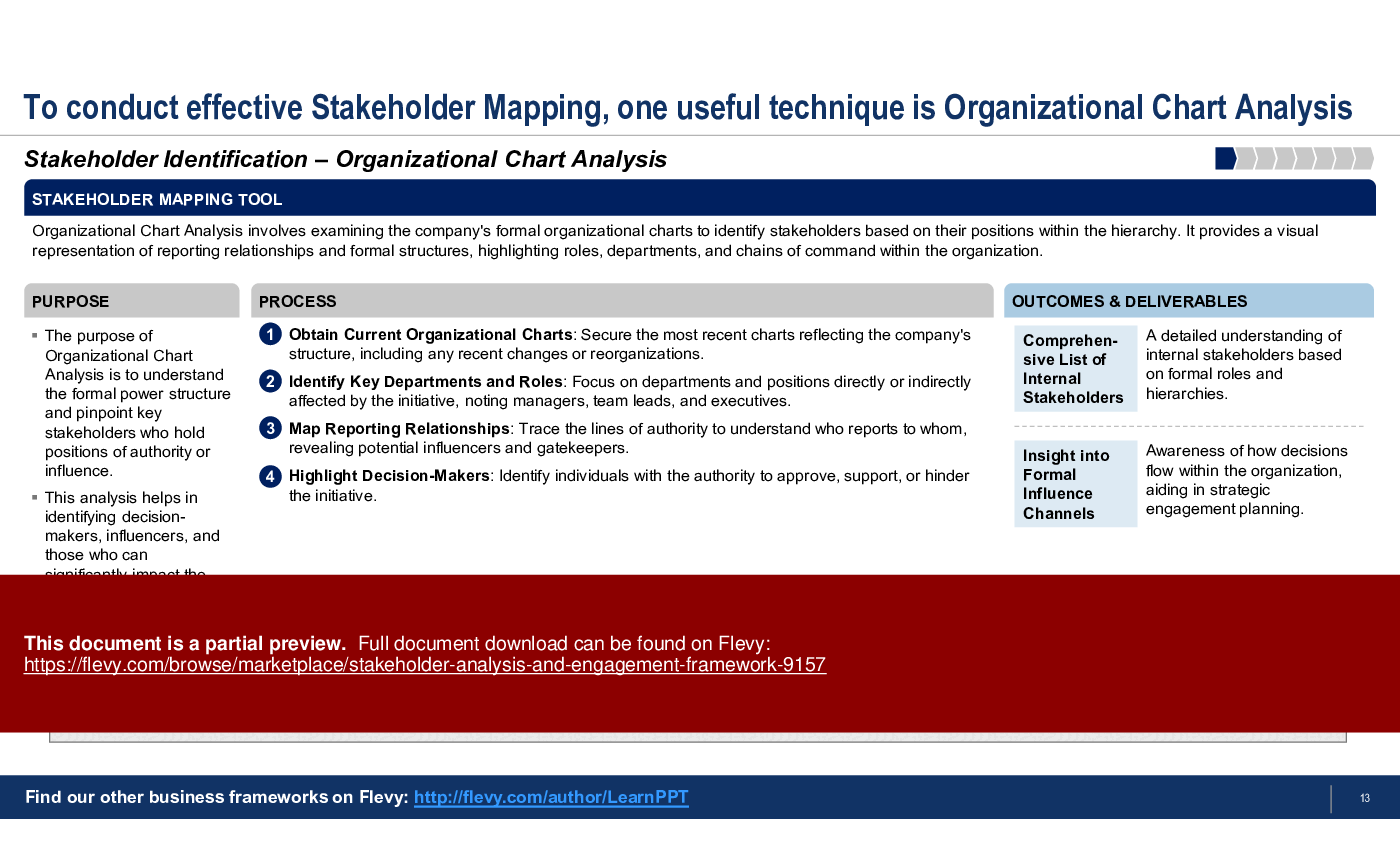
This slide outlines a framework for stakeholder mapping through Organizational Chart Analysis, focusing on the formal power structure within an organization. The process includes 4 steps: obtaining current organizational charts to reflect the latest structure, identifying key departments and roles such as managers and executives, mapping reporting relationships to clarify influencers and gatekeepers, and highlighting decision-makers with authority to approve or hinder initiatives. The outcomes provide a comprehensive list of internal stakeholders based on formal roles and insights into influence channels, enhancing strategic engagement and planning initiatives aligned with key stakeholders.
This slide outlines the Communication Planning phase, essential for stakeholder engagement. Key activities include "Develop Key Messages," which focuses on crafting clear messages that articulate the initiative's purpose and align with organizational values. "Choose Communication Channels" emphasizes identifying effective platforms, including traditional and digital channels like email and social media, tailored to stakeholder preferences. "Establish Communication Schedule" involves determining communication frequency and timing, coordinating with key milestones to maintain transparency. Recommended tools include communication plan templates, message maps, and communication calendars. The typical timeframe for this phase is 1 to 2 weeks, often overlapping with the engagement strategy development.
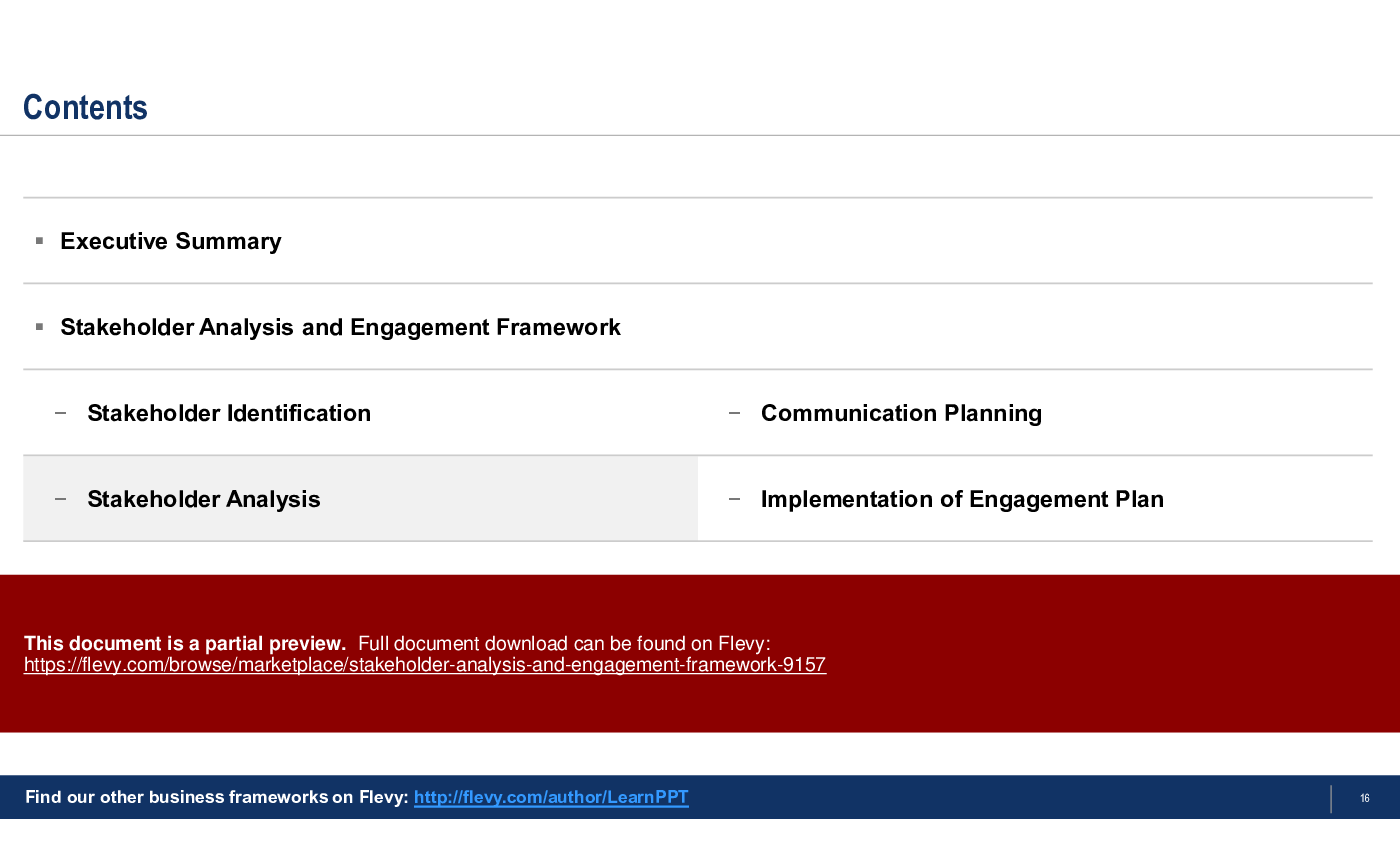
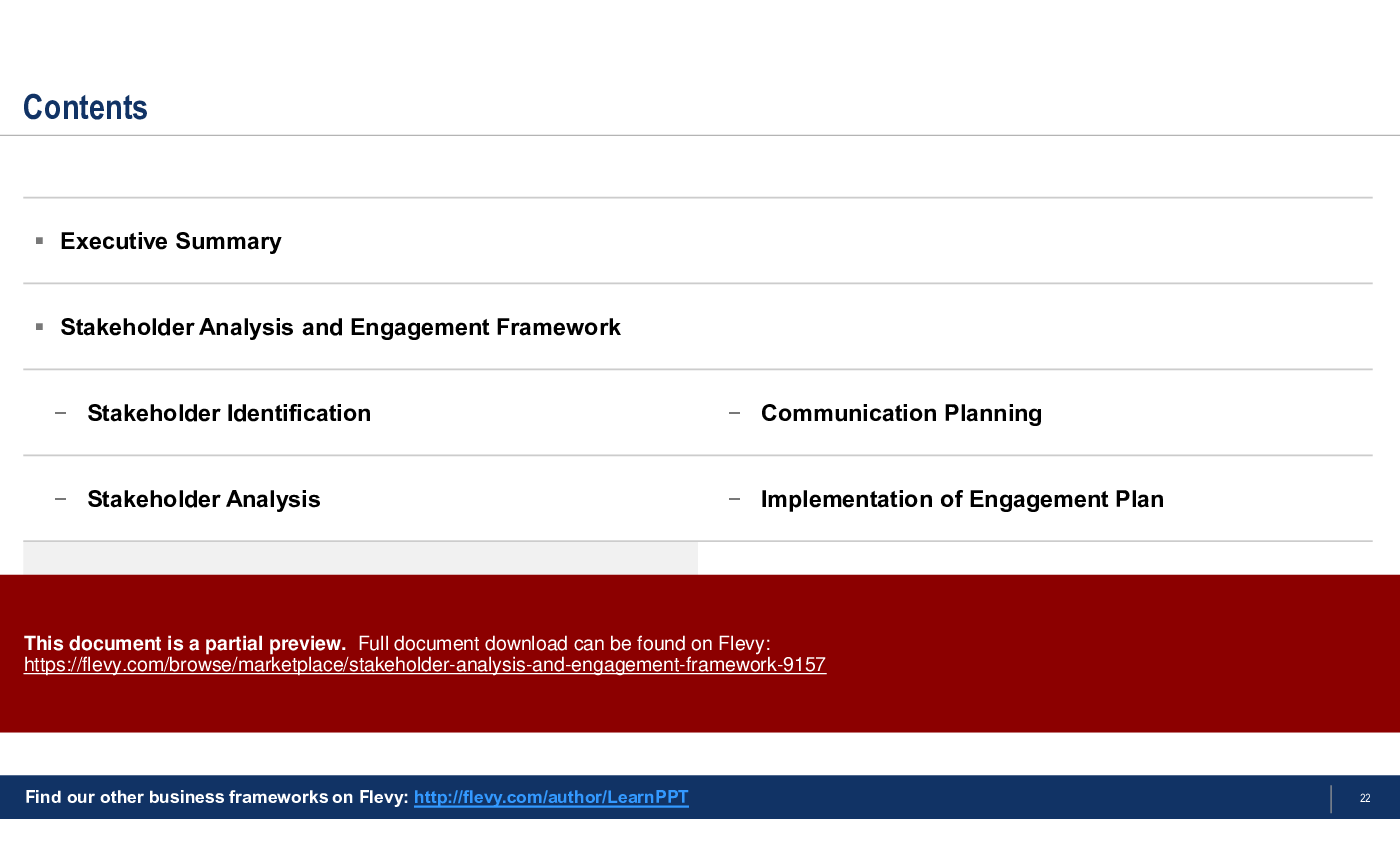
The slide outlines an 8-phase framework for effective stakeholder analysis and engagement, essential for managing complex stakeholder dynamics and ensuring successful project execution. The phases include Stakeholder Identification, where relevant stakeholders are recognized; Stakeholder Analysis, assessing their needs, interests, and influence; and Stakeholder Prioritization, which focuses on prioritizing stakeholders effectively. Engagement Strategy Development involves crafting tailored strategies for prioritized stakeholders, while Communication Planning ensures clarity and consistency in messaging. The Implementation of Engagement Plan phase executes these strategies, requiring coordination and resource allocation. Monitoring and Feedback assess engagement effectiveness, leading to necessary adjustments. Finally, the Evaluation and Reporting phase analyzes outcomes and reports findings, enhancing stakeholder interactions and project success rates.
Source: Best Practices in Stakeholder Management PowerPoint Slides: Stakeholder Analysis and Engagement Framework PowerPoint (PPTX) Presentation Slide Deck, LearnPPT Consulting
This framework is created by former McKinsey, BCG, Deloitte, EY, and Capgemini consultants and details a robust framework for stakeholder analysis and engagement used by consultants with their clients.
We are a team of management consultants trained by top tier global consulting firms (including McKinsey, BCG, Deloitte, EY, Capgemini) with a collective experience of several decades. We specialize in business frameworks based on real-life consulting engagements.
We have served 100s of clients that range from Fortune 500 companies to tech startups to
... [read more] $1B+ private companies.
Utilize our consulting frameworks to apply structured thinking & analysis to address your business challenges, uncover strategic insights, and implement workable solutions. Our PowerPoint presentations follow traditional consulting slide design formats, starting with a clear slide headline. Easily customize and repurpose our slides for your own business presentations.
Beyond business frameworks & methodologies, we also offer PowerPoint templates and other business templates. Our templates are professionally designed and have been used in thousands of deliverables & work products across hundreds of clients.
The average daily rate of a McKinsey consultant is $6,625 (not including expenses). The average price of a Flevy document is $65.
Trusted by over 10,000+ Client Organizations
Since 2012, we have provided best practices to over 10,000 businesses and organizations of all sizes, from startups and small businesses to the Fortune 100, in over 130 countries.
Read Customer Testimonials
"FlevyPro has been a brilliant resource for me, as an independent growth consultant, to access a vast knowledge bank of presentations to support my work with clients. In terms of RoI, the value I received from the very first presentation I downloaded paid for my subscription many times over! The
quality of the decks available allows me to punch way above my weight – it's like having the resources of a Big 4 consultancy at your fingertips at a microscopic fraction of the overhead.
"
– Roderick Cameron, Founding Partner at SGFE Ltd
"I have used Flevy services for a number of years and have never, ever been disappointed. As a matter of fact, David and his team continue, time after time, to impress me with their willingness to assist and in the real sense of the word. I have concluded in fact
that it is not at all just a repository of documents/resources but, in the way that David and his team manage the firm, it is like dealing with consultants always ready to assist, advise and direct you to what you really need, and they always get it right.
I am an international hospitality accomplished senior executive who has worked and lived during the past 35 years in 23 countries in 5 continents and I can humbly say that I know what customer service is, trust me.
Aside from the great and professional service that Flevy's team provide, their wide variety of material is of utmost great quality, professionally put together and most current.
Well done Flevy, keep up the great work and I look forward to continue working with you in the future and to recommend you to a variety of colleagues around the world.
"
– Roberto Pelliccia, Senior Executive in International Hospitality
"As a niche strategic consulting firm, Flevy and FlevyPro frameworks and documents are an on-going reference to help us structure our findings and recommendations to our clients as well as improve their clarity, strength, and visual power. For us, it is an invaluable resource to increase our impact and value."
– David Coloma, Consulting Area Manager at Cynertia Consulting
"Flevy is our 'go to' resource for management material, at an affordable cost. The Flevy library is comprehensive and the content deep, and typically provides a great foundation for us to further develop and tailor our own service offer."
– Chris McCann, Founder at Resilient.World
"As a young consulting firm, requests for input from clients vary and it's sometimes impossible to provide expert solutions across a broad spectrum of requirements. That was before I discovered Flevy.com.
Through subscription to this invaluable site of a plethora of topics that are key and crucial to consulting, I
have been able to exceed expectations and deliver quality advice and solutions to my clients. The quality and expertise of the authors are exemplary and gives me great confidence to use as part of my service offerings.
I highly recommend this company for any consultant wanting to apply international best practice standards in their service offerings.
"
– Nishi Singh, Strategist and MD at NSP Consultants
"I have found Flevy to be an amazing resource and library of useful presentations for lean sigma, change management and so many other topics. This has reduced the time I need to spend on preparing for my performance consultation. The library is easily accessible and updates are regularly provided. A wealth of great information."
– Cynthia Howard RN, PhD, Executive Coach at Ei Leadership
"As a consultant requiring up to date and professional material that will be of value and use to my clients, I find Flevy a very reliable resource.
The variety and quality of material available through Flevy offers a very useful and commanding source for information. Using Flevy saves me time, enhances my expertise and ends up being a good decision."
– Dennis Gershowitz, Principal at DG Associates
"I am extremely grateful for the proactiveness and eagerness to help and I would gladly recommend the Flevy team if you are looking for data and toolkits to help you work through business solutions."
Download our free compilation of 50+ slides and templates on Organizational Design, Change Management, and Corporate Culture. Methodologies include ADKAR, Burke-Litwin Change Model, McKinsey 7-S, Competing Values Framework, etc.