
This framework is developed by a team of former McKinsey and Big 4 consultants. The presentation follows the headline-body-bumper slide format used by global consulting firms.
Explore the Six Sigma Maturity Model, crafted by ex-McKinsey & Big 4 consultants, to benchmark and enhance your organization's Six Sigma journey. Six Sigma Maturity Model is a 25-slide PPT PowerPoint presentation slide deck (PPT) available for immediate download upon purchase.
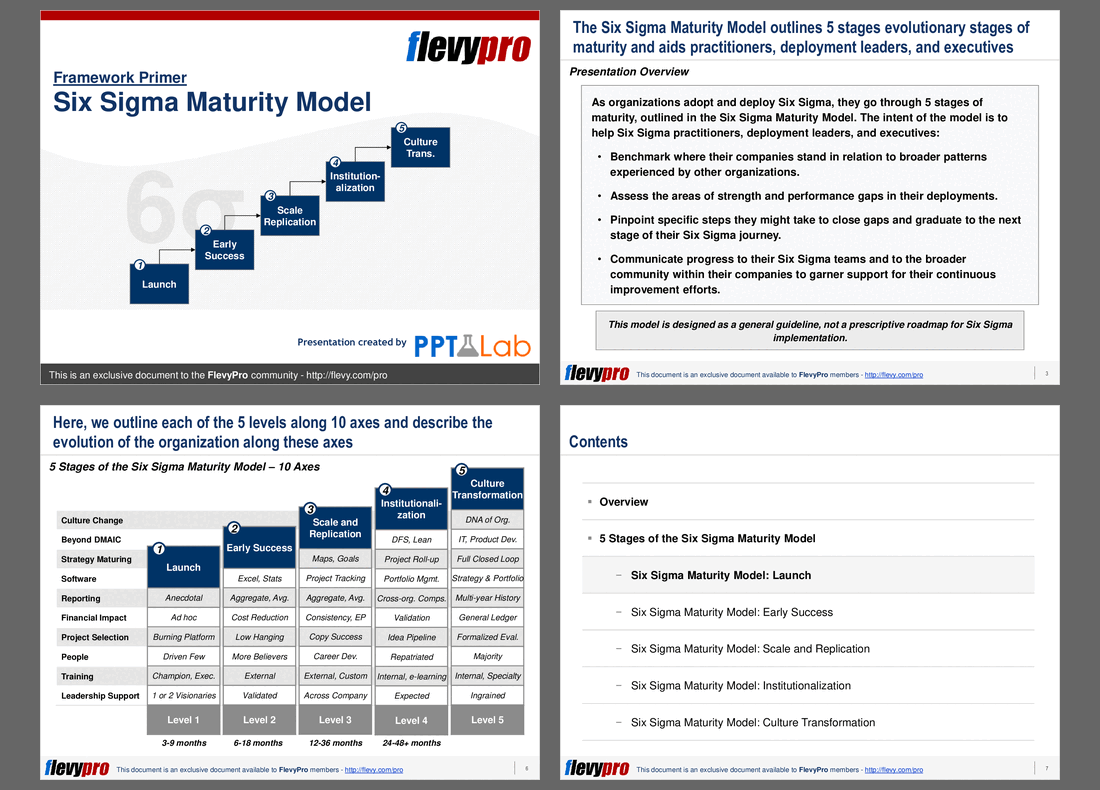
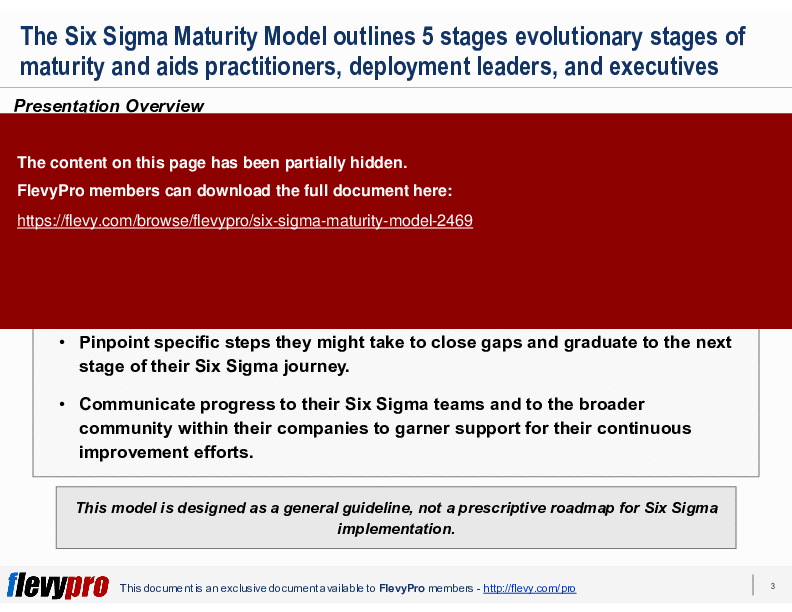
As organizations adopt and deploy Six Sigma, they go through 5 stages of maturity, outlined in the Six Sigma Maturity Model. The intent of the model is to help Six Sigma practitioners, deployment leaders, and executives:
• Benchmark where their companies stand in relation to broader patterns experienced by other organizations.
• Assess the areas of strength and performance gaps in their deployments.
• Pinpoint specific steps they might take to close gaps and graduate to the next stage of their Six Sigma journey.
• Communicate progress to their Six Sigma teams and to the broader community within their companies to garner support for their continuous improvement efforts.
This presentation provides a high level overview to the Six Sigma Maturity Model. This model is designed as a general guideline, not a prescriptive roadmap for Six Sigma implementation.
The Six Sigma Maturity Model PPT delves into the structured progression of Six Sigma adoption within organizations. It provides a clear depiction of the five stages: Launch, Early Success, Scale and Replication, Institutionalization, and Culture Transformation. Each stage is meticulously detailed, offering insights into the key challenges and characteristics that organizations typically face. The model emphasizes the importance of leadership support, training, and strategic alignment to ensure successful Six Sigma deployment.
The document highlights the critical role of early successes in gaining organizational buy-in and scaling Six Sigma efforts. It underscores the necessity of consistent methodology application and financial impact validation as the organization moves towards institutionalization. The final stage, Culture Transformation, signifies the embedding of Six Sigma into the company's DNA, ensuring sustained success and continuous improvement.
This comprehensive guide is an invaluable resource for Six Sigma practitioners and deployment leaders. It provides actionable steps and benchmarks to assess and enhance Six Sigma maturity within their organizations. The model serves as a strategic tool to communicate progress, garner support, and drive continuous improvement efforts across the enterprise.
The fourth stage of the Six Sigma maturity model, "Institutionalization," focuses on embedding successful practices within each company unit rather than merely replicating them. This stage highlights the financial impact of Six Sigma, emphasizing the importance of metrics such as average project impact and cycle time for performance assessment. Key challenges include ensuring consistency in Six Sigma execution through standardized processes for project selection, approvals, and financial impact measurement, while accommodating sector variations. The institutionalization phase typically spans 2 to 4 years or longer, requiring organizations to commit to multiple years of Six Sigma practice for full integration across departments, making it a core operational philosophy.
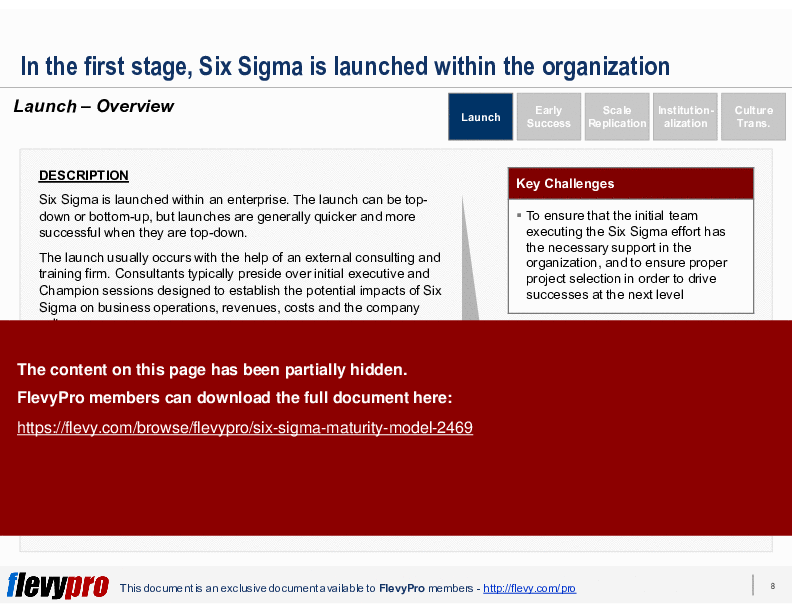
This PPT slide outlines the initial phase of Six Sigma implementation, focusing on the launch process through top-down or bottom-up approaches, with a preference for top-down due to its efficiency. External consulting and training firms play a critical role, leading executive and Champion sessions that demonstrate Six Sigma's impact on operations and revenue. Securing buy-in for training sessions, especially for Black Belts and Master Black Belts, is essential for effective integration of Six Sigma into the organizational culture. Organizations typically appoint a vice president or director of Six Sigma to ensure clear support for deployment. Senior leadership support is crucial for selecting the right projects, particularly in bottom-up launches. The initial phase lasts 3 to 9 months, with progression contingent on completing training and starting projects, establishing a structured approach for successful Six Sigma implementation.
The Scale and Replication Axes of the Six Sigma Maturity Model highlight critical components for successful Six Sigma implementation. Leadership Support is essential, ensuring top management commitment to foster a culture embracing Six Sigma principles. Training involves multiple waves and tailored content, utilizing external trainers to equip employees with effective Six Sigma methodologies. The People aspect positions Six Sigma as a career advancement pathway, motivating change agents to engage with its principles. Project Selection emphasizes leveraging successful patterns from past projects to tackle similar operational challenges. Financial Impact, Reporting, and Software require robust systems for tracking Six Sigma project effectiveness, aligning financial reporting with organizational goals. Strategy Maturity necessitates strategy maps to ensure Six Sigma initiatives align with corporate priorities and contribute to overall strategic objectives.
The "Early Success" stage in the Six Sigma maturity model focuses on initial projects that yield significant financial benefits, validating support for the initial team. This phase, termed the "show me" stage, emphasizes demonstrating early successes to the organization to mitigate uncertainty about Six Sigma initiatives. Key challenges include ensuring timely project completion and delivering meaningful financial results, essential for maintaining organizational buy-in and momentum. Companies typically spend 6 to 18 months in this stage, transitioning to the next level when initial successes inspire broader adoption of Six Sigma methodologies. This progression is crucial for embedding Six Sigma principles organization-wide and maximizing overall impact.
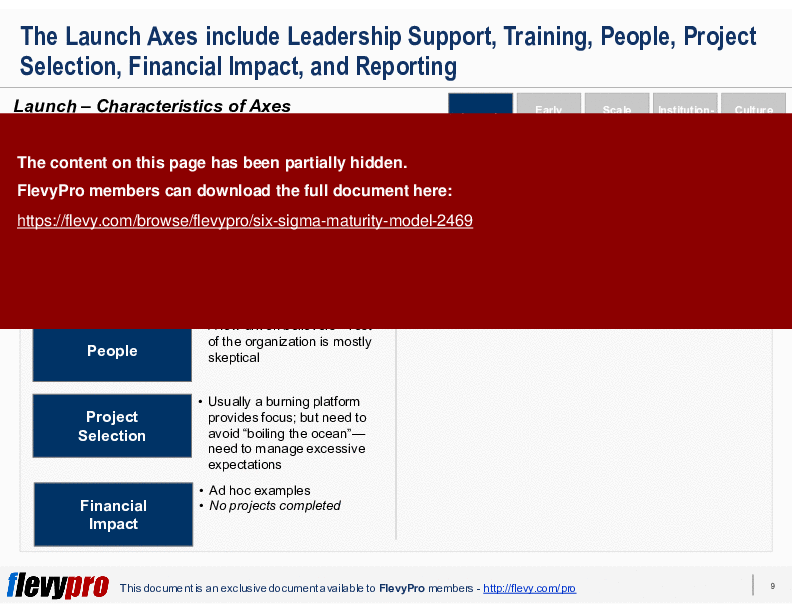
This PPT slide outlines critical axes for launching a Six Sigma initiative: Leadership Support, Training, People, Project Selection, Financial Impact, and Reporting. Leadership Support requires influential leaders to drive adoption through top-down or bottom-up approaches. Training emphasizes executive buy-in and structured skill development, including Champion training and initial Black Belts. The People axis highlights the challenge of fostering a culture of change amidst skepticism. Project Selection focuses on urgent issues, termed a "burning platform," while cautioning against overwhelming the organization with too many initiatives. Financial Impact notes the lack of completed projects and quantifiable benefits, raising concerns about immediate effectiveness. Reporting relies on anecdotal evidence, indicating gaps in demonstrating tangible outcomes, which could affect stakeholder confidence.
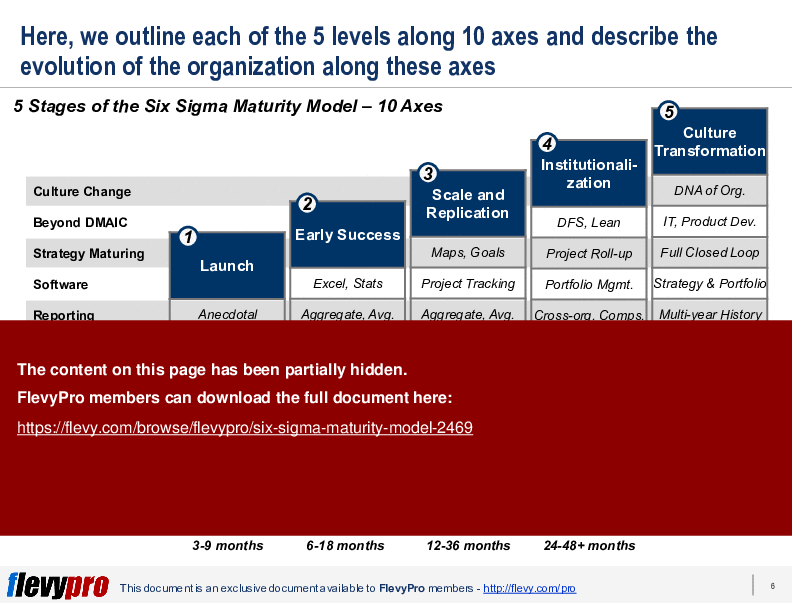
The "Five Stages of the Six Sigma Maturity Model" outlines the progression of organizations through Six Sigma implementation across ten axes.
Level 1, "Launch," features anecdotal reporting and ad hoc financial impacts, focusing on immediate issues with minimal leadership support.
Level 2, "Early Success," shifts to structured approaches, with aggregated reporting and recognized cost reductions. Project selection improves, emphasizing low-hanging fruits and increased stakeholder buy-in.
Level 3, "Scale and Replication," establishes project tracking mechanisms and systematic training for career development.
Level 4, "Institutionalization," integrates Six Sigma practices into the organizational framework, standardizing validation processes and project roll-ups.
Level 5, "Culture Transformation," signifies the deep-rooted integration of Six Sigma principles, focusing on long-term strategies and a closed feedback loop, embedding Six Sigma into the organizational culture.
Source: Best Practices in Maturity Model, Six Sigma Maturity Model, Six Sigma PowerPoint Slides: Six Sigma Maturity Model PowerPoint (PPT) Presentation Slide Deck, PPT Lab
This framework is developed by a team of former McKinsey and Big 4 consultants. The presentation follows the headline-body-bumper slide format used by global consulting firms.
For $10.00 more, you can download this document plus 2 more FlevyPro documents. That's just $13 each.
ABOUT FLEVYPRO
This document is part of the FlevyPro Library, a curated knowledge base of documents for our FlevyPro subscribers.
FlevyPro is a subscription service for on-demand business frameworks and analysis tools. FlevyPro subscribers receive access to an exclusive library of curated business documents—business framework primers, presentation templates, Lean Six Sigma tools, and more—among other exclusive benefits.
The average daily rate of a McKinsey consultant is $6,625 (not including expenses). The average price of a Flevy document is $65.
Trusted by over 10,000+ Client Organizations
Since 2012, we have provided business templates to over 10,000 businesses and organizations of all sizes, from startups and small businesses to the Fortune 100, in over 130 countries.
"The wide selection of frameworks is very useful to me as an independent consultant. In fact, it rivals what I had at my disposal at Big 4 Consulting firms in terms of efficacy and organization."
– Julia T., Consulting Firm Owner (Former Manager at Deloitte and Capgemini)
"If you are looking for great resources to save time with your business presentations, Flevy is truly a value-added resource. Flevy has done all the work for you and we will continue to utilize Flevy as a source to extract up-to-date information and data for our virtual and onsite presentations!"
– Debbi Saffo, President at The NiKhar Group
"One of the great discoveries that I have made for my business is the Flevy library of training materials.
As a Lean Transformation Expert, I am always making presentations to clients on a variety of topics: Training, Transformation, Total Productive Maintenance, Culture, Coaching, Tools, Leadership Behavior, etc. Flevy
It is well worth the money to purchase these presentations. Sure, I have the knowledge and information to make my point. It is another thing to create a presentation that captures what I want to say. Flevy has saved me countless hours of preparation time that is much better spent with implementation that will actually save money for my clients.
"
– Ed Kemmerling, Senior Lean Transformation Expert at PMG
"I am extremely grateful for the proactiveness and eagerness to help and I would gladly recommend the Flevy team if you are looking for data and toolkits to help you work through business solutions."
– Trevor Booth, Partner, Fast Forward Consulting
"I have used Flevy services for a number of years and have never, ever been disappointed. As a matter of fact, David and his team continue, time after time, to impress me with their willingness to assist and in the real sense of the word. I have concluded in fact
that it is not at all just a repository of documents/resources but, in the way that David and his team manage the firm, it is like dealing with consultants always ready to assist, advise and direct you to what you really need, and they always get it right.
I am an international hospitality accomplished senior executive who has worked and lived during the past 35 years in 23 countries in 5 continents and I can humbly say that I know what customer service is, trust me.
Aside from the great and professional service that Flevy's team provide, their wide variety of material is of utmost great quality, professionally put together and most current.
Well done Flevy, keep up the great work and I look forward to continue working with you in the future and to recommend you to a variety of colleagues around the world.
"
– Roberto Pelliccia, Senior Executive in International Hospitality
"Flevy is now a part of my business routine. I visit Flevy at least 3 times each month.
Flevy has become my preferred learning source, because what it provides is practical, current, and useful in this era where the business world is being rewritten.

many challenges and there is the need to make the right decisions in a short time, with so much scattered information, we are fortunate to have Flevy. Flevy investigates, selects, and puts at our disposal the best of the best to help us be successful in our work.
"
– Omar Hernán Montes Parra, CEO at Quantum SFE
"Flevy.com has proven to be an invaluable resource library to our Independent Management Consultancy, supporting and enabling us to better serve our enterprise clients.
The value derived from our [FlevyPro] subscription in terms of the business it has helped to gain far exceeds the investment made, making a subscription a no-brainer for any growing consultancy – or in-house strategy team."
– Dean Carlton, Chief Transformation Officer, Global Village Transformations Pty Ltd.
"As a small business owner, the resource material available from FlevyPro has proven to be invaluable. The ability to search for material on demand based our project events and client requirements was great for me and proved very beneficial to my clients. Importantly, being able to easily edit and tailor
the material for specific purposes helped us to make presentations, knowledge sharing, and toolkit development, which formed part of the overall program collateral. While FlevyPro contains resource material that any consultancy, project or delivery firm must have, it is an essential part of a small firm or independent consultant's toolbox.
"
– Michael Duff, Managing Director at Change Strategy (UK)
Download our free compilation of 50+ slides and templates on Organizational Design, Change Management, and Corporate Culture. Methodologies include ADKAR, Burke-Litwin Change Model, McKinsey 7-S, Competing Values Framework, etc.